
Stop Small Roof Leaks Before They Become Major Repairs
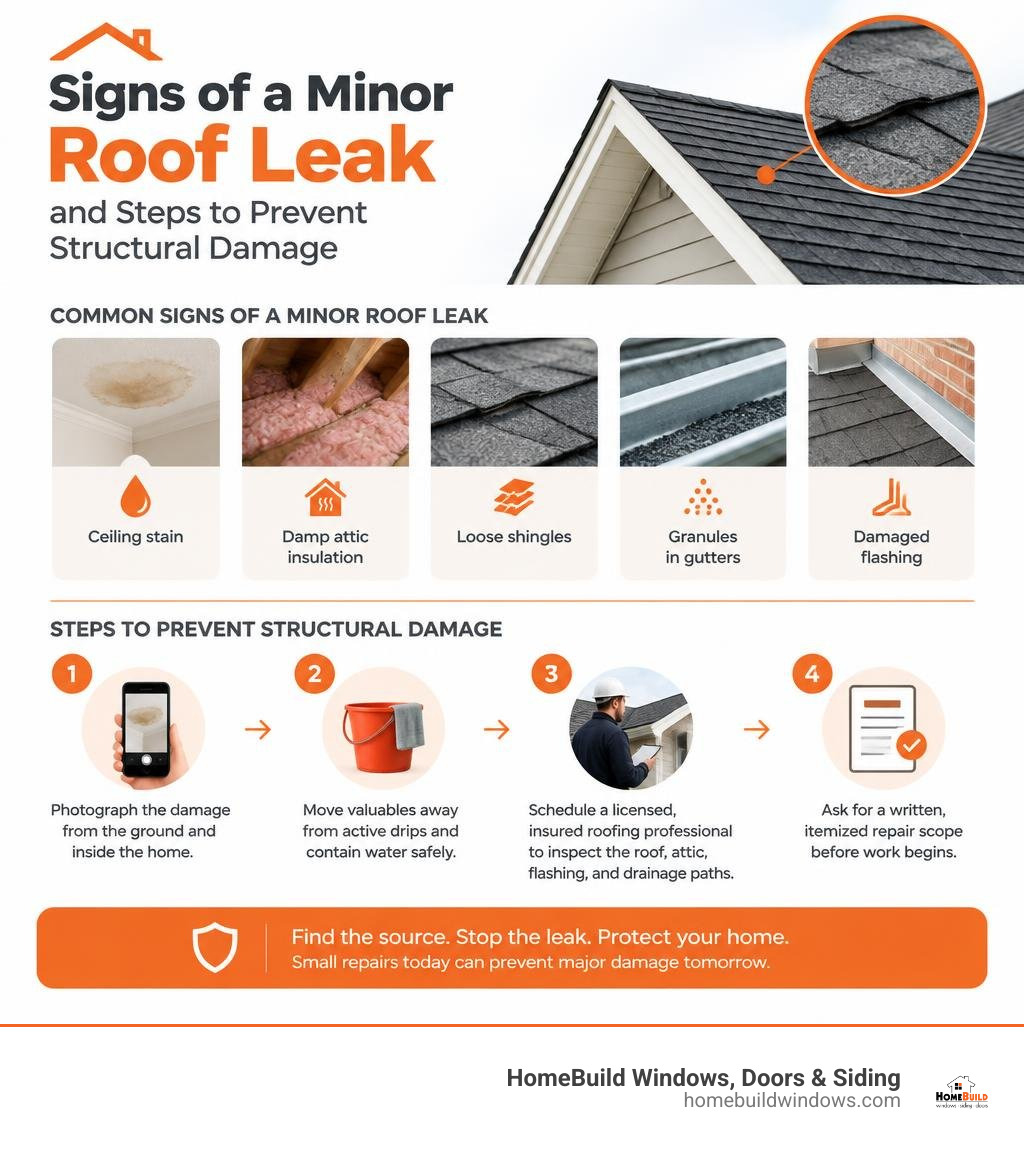
Expert roof repair starts with finding the true source of water entry, not simply covering the visible stain or missing shingle. If you notice a ceiling stain, damp attic insulation, loose shingles, granules in gutters, or damaged flashing, take these steps:
- Photograph the damage from the ground and inside the home.
- Move valuables away from active drips and contain water safely.
- Schedule a licensed, insured roofing professional to inspect the roof, attic, flashing, and drainage paths.
- Ask for a written, itemized repair scope before work begins.
A small leak can spread through insulation, roof decking, framing, and drywall long before it becomes obvious indoors. In Chicago’s freeze-thaw weather, trapped water can also worsen cracks, lift shingles, and contribute to ice-dam damage. Fast diagnosis helps protect your home’s structure and may prevent a limited repair from turning into a larger replacement project.
I am Steve Mlynek, founder of HomeBuild Windows, Doors & Siding, with more than 20 years of experience helping Chicago-area homeowners protect and improve their exterior systems. My work in Expert roof repair and exterior renovation focuses on clear guidance, durable materials, and professional workmanship suited to Midwest weather.
Expert roof repair terms at a glance:
Warning Signs: How to Spot Roof Damage Before Structural Failure
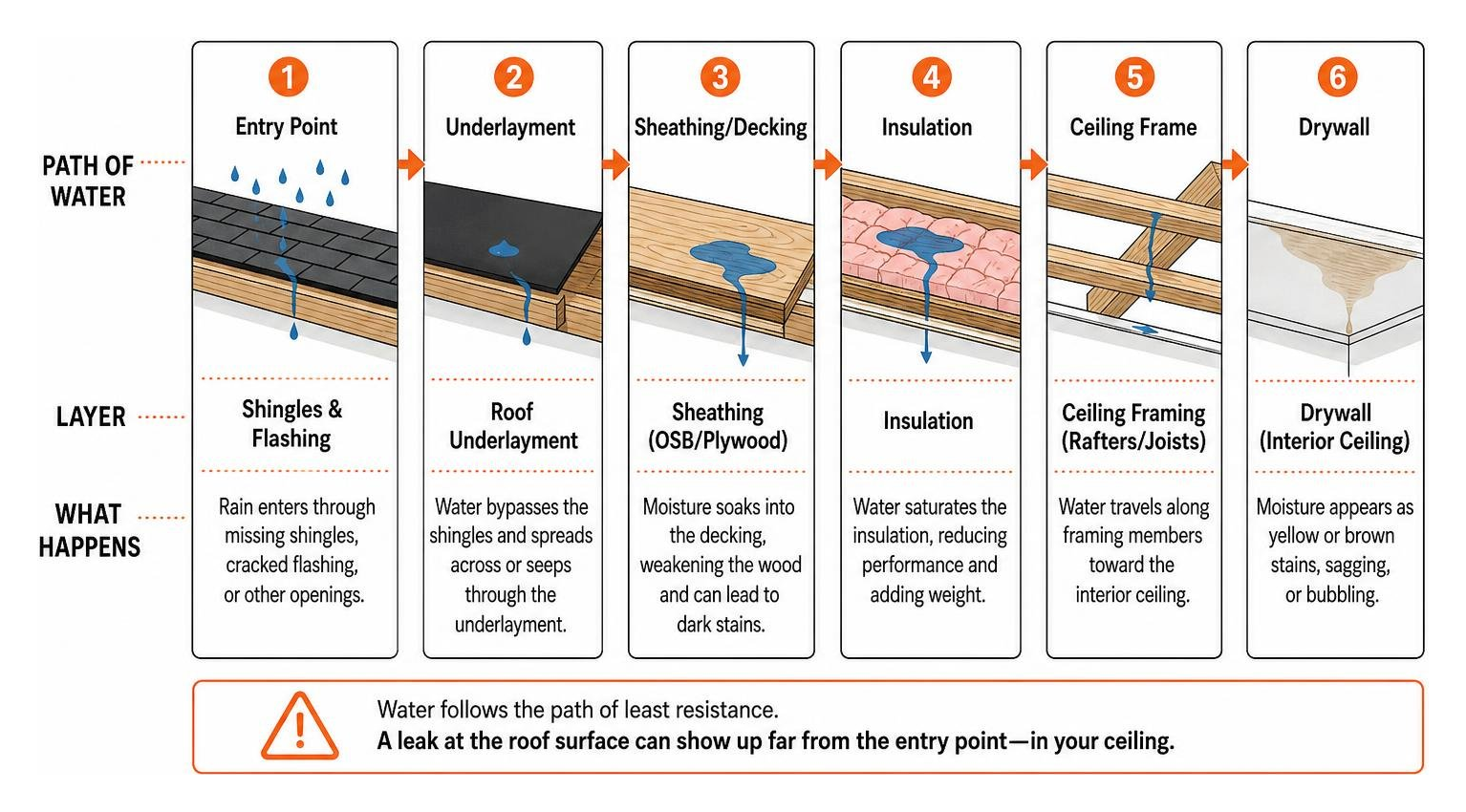
Water is remarkably resourceful. It follows the path of least resistance, which means an entry point on your roof ridge might travel several rafters down before revealing itself as a drip over your dining table. Recognizing early physical symptoms allows you to intervene before a small water trail compromises your home’s framing.
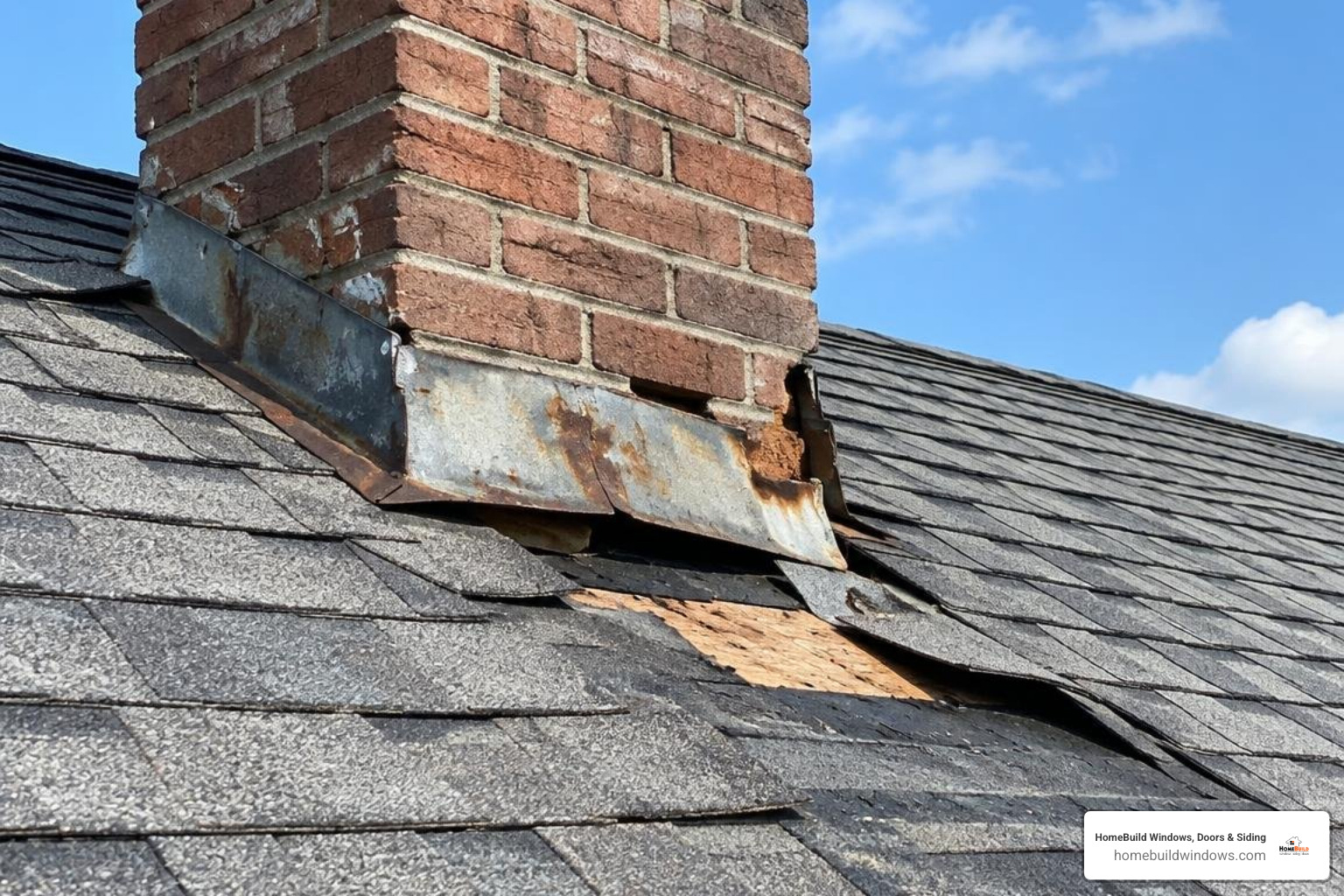
The primary warning signs include:
- Missing, cracked, or curled shingles: Wind gusts or thermal cycling can snap shingle tabs or break adhesive seals, leaving the underlayment exposed.
- Heavy granule accumulation in gutters: While subtle granule loss is normal over time, excessive loss signals that the asphalt layer is vulnerable to ultraviolet degradation.
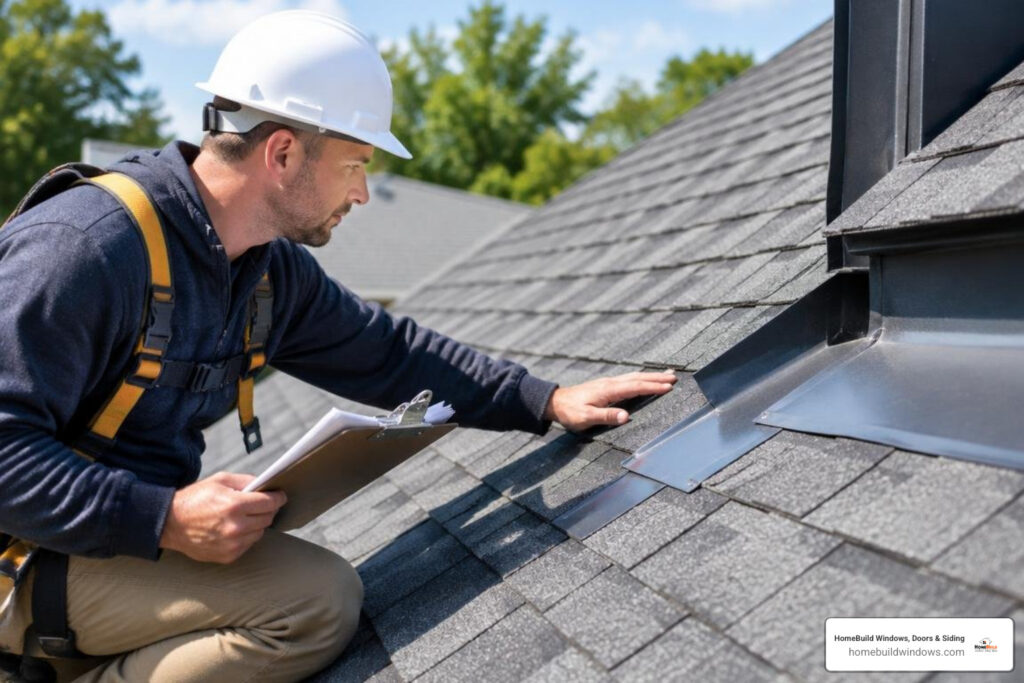
- Compromised flashing: Rust, cracked sealant, or bent metal around chimneys, sidewalls, and vent stacks create easy entryways for rain.
- Attic moisture and dark sheathing: Checking your attic during or after heavy rainfall often reveals problems long before interior ceilings show stains.
Learning how to evaluate these changes helps with identifying roof leak warning signs before structural components suffer moisture damage.
Interior vs. Exterior Symptoms of Water Intrusion
Exterior roof damage does not always present instant interior leaks, and interior moisture spots do not always point straight up to the sky. Differentiating between these symptoms helps homeowners explain the issue accurately to our inspection crews.
| Location | Symptom Observed | Potential Root Cause |
|---|---|---|
| Interior | Yellow/brown rings on drywall ceilings | Active penetration through underlayment and insulation |
| Interior | Sagging plaster or bubbling wall paint | Water traveling down wall studs from exterior penetrations |
| Interior | Musty odors or dark mildew in the attic | Inadequate ventilation combined with pinhole roof leaks |
| Exterior | Lifted shingle edges along eaves | Ice buildup or failed starter strip adhesion |
| Exterior | Cracked rubber collars on plumbing vents | UV degradation and seasonal thermal contraction |
In northern Illinois, dramatic seasonal temperature shifts place tremendous stress on roofing materials. When winter temperatures hover around freezing, heat escaping from under-insulated attics melts roof snow, which refreezes at cold eaves. Knowing about ice dam damage repair solutions is essential for maintaining watertight performance through harsh winters.
Assessing Hidden Damage and When to Call for Expert Roof Repair
Surface fixes rarely solve structural moisture issues. When water bypasses the outer layer, it attacks the moisture barrier and saturates the oriented strand board (OSB) or plywood decking beneath. Over time, saturated wood delaminates, loses its fastener-holding strength, and becomes a breeding ground for wood-decay fungi.
Professional roofers use non-invasive moisture meters and infrared thermal imaging to trace moisture pathways without tearing off undamaged sections. Securing professional roof leak repair the moment you observe interior stains or exterior displacement protects the decking and preserves the structural framework of your home.
Step-by-Step Diagnostic Process for Expert Roof Repair
A proper diagnostic assessment looks at the entire building envelope rather than isolated shingles. Roof performance relies on balanced airflow, watertight transitions, and secure drainage planes.
Our diagnostic methodology begins with an exterior inspection, examining valleys, transition flashings, sidewalls, and roof penetrations. Following high-wind events or severe weather, reviewing post-storm roof inspection steps helps homeowners safely identify debris impacts or displaced ridge caps before calling our technicians.
| Repair Scope | Components Addressed | Diagnostic Complexity | Expected Longevity |
|---|---|---|---|
| Minor Spot Repair | Replacing individual damaged shingles, resealing pipe boots, clearing valley debris | Low to Moderate; focuses on isolated exterior defects | Matches remaining lifespan of existing roof field |
| Major Structural Repair | Re-decking rotted plywood, replacing transition step flashing, rebuilding chimney crickets | High; requires underlayment tie-ins and structural reinforcement | Long-term restoration with comprehensive system warranties |
What to Expect During an Expert Roof Repair Service
When you schedule professional repair work, the process should be transparent, organized, and thorough. Our team focuses on complete restoration rather than temporary cosmetic patches.
- Comprehensive Assessment: We evaluate the roof deck, attic space, and exterior penetrations to pinpoint the entry source.
- Detailed Documentation: High-resolution photos show you the exact nature of the damage and the proposed repair zone.
- Targeted Tear-Off and Deck Prep: Damaged shingles and wet underlayment are cleanly removed down to sound decking.
- Precision Installation: We install ice-and-water barrier protection, code-compliant step flashing, and matching shingles.
- Magnetic Clean-Up & Final Review: We run magnetic sweeps across your lawn and walkways to collect stray fasteners, leaving the property clean.
Choosing full-service expert roof repair services guarantees that repairs meet current building codes and manufacturer specifications.
Emergency Protocols and Temporary Tarping
Severe summer thunderstorms, hail, or sudden winter gale winds can cause immediate water entry that cannot wait for clear skies. In these situations, emergency stabilization stops water from ruining hardwood floors, insulation, and interior ceilings.
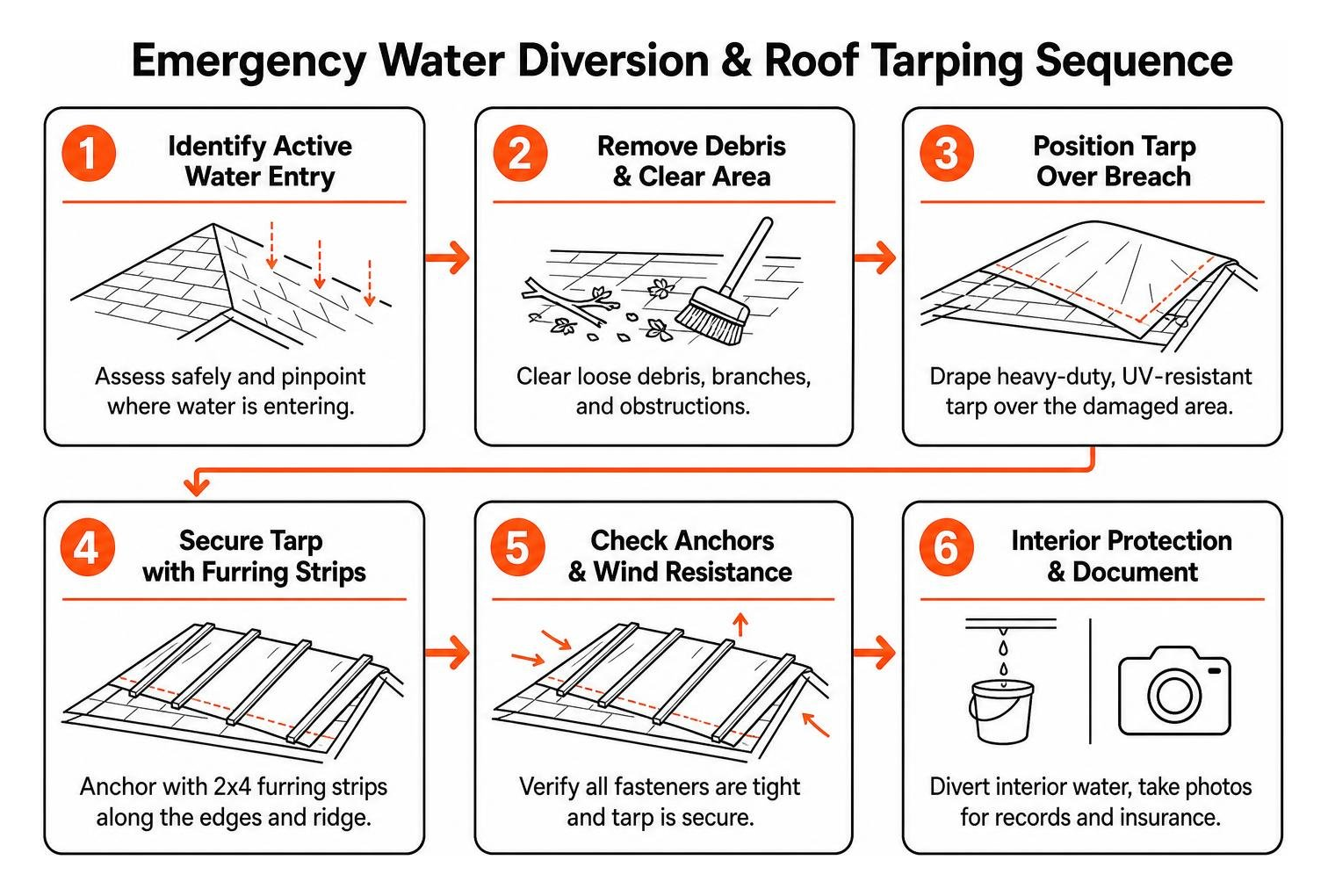
Trained crews secure heavy-duty, UV-resistant tarps over the roof ridges and anchor them with 2×4 furring strips to prevent wind uplift. Homeowners needing immediate assistance rely on Chicagoland emergency roof repair to seal active breaches, provide photo records for insurance adjusters, and prepare the home for permanent repairs.
Repair vs. Replacement: Making the Right Long-Term Decision
A common question among property owners is whether an aging roof requires spot repairs or a full overhaul. Industry data indicates that roughly 60% of homeowner calls initially requesting a new roof actually only require targeted, high-quality repairs to restore reliable weather protection.

A thorough assessment considers:
- System Age: An architectural shingle roof under 15 years old with isolated wind damage is often an ideal candidate for targeted repair.
- Decking Condition: If the underlying plywood remains firm and dry, localized repairs are structurally sound.
- Granule Integrity: If shingles across the entire field are brittle, curling, or losing substantial granule coverage, repeated spot repairs become impractical.
- Extent of Damage: If damage spans more than 25–30% of the entire roof area, complete replacement typically delivers better long-term performance and warranties.
When balancing these variables, reviewing a roof replacement decision guide helps you weigh the life expectancy of your roof against the long-term protection of a full system upgrade.
Architectural Shingle Longevity and Spot Fixes
Modern dimensional shingles offer robust wind resistance, impact defense, and refined curb appeal compared to traditional 3-tab materials. During spot repairs, using compatible, high-performance products ensures that the repaired section integrates smoothly with the surrounding roof.
We often rely on the reinforced fastening strip and wind protection of Owens Corning Duration shingle performance to ensure repairs hold fast against strong prairie winds and seasonal storms.
Navigating Insurance Claims and Storm Documentation
When severe weather impacts your neighborhood, the repair process often involves your property insurance carrier. Large hail can bruise shingle mats beneath the surface, while strong wind gusts break seal strips along shingle rows.
To streamline the claim process:
- Schedule an inspection with a licensed professional immediately following the storm.
- Ensure all wind and hail impacts are documented with detailed photographs.
- Coordinate with your roofing specialist to meet the insurance adjuster on-site, ensuring all flashing, gutter, and siding collateral damage is included.
Homeowners dealing with recent weather events can turn to dedicated storm damage repair strategies and read our recommendations for navigating homeowner roof insurance claims to secure a fair, comprehensive scope of work.
Choosing the Right Local Roofing Specialist
Your roof is your home’s first line of defense against the elements. Choosing a qualified contractor ensures your repairs are completed safely, correctly, and with materials backed by manufacturer warranties.
When vetting local contractors, verify:
- Licensing & Full Insurance: Ensure the contractor holds an active Illinois roofing license and carries adequate general liability and workers’ compensation insurance.
- Proven Track Record: Look for long-standing local community involvement, an A+ Better Business Bureau rating, and verified positive customer reviews.
- Manufacturer Certifications: Certified installers maintain factory-trained crews and offer extended non-prorated material and workmanship warranties.
Before committing to work, consult our guide on finding the best roofing contractor in 2026 to partner with a trusted local professional.
Questions to Ask Before Signing a Work Order
Before signing any agreement, ask these essential questions:
- Will you provide an itemized scope of work covering tear-off, decking repairs, underlayment, and flashing?
- Are your installation crews factory-trained and overseen by an experienced project manager?
- What workmanship warranty do you provide beyond the manufacturer’s material warranty?
- How will you protect my landscaping, driveways, and siding during material staging and disposal?
For a deeper checklist of qualifications, review our guide to choosing a roofing company.
Frequently Asked Questions About Roof Repair
What factors determine the scope of a roof repair?
Repair scopes depend on the severity of the damage, the accessibility and pitch of the roof, and the specific materials required. A straightforward plumbing boot replacement or localized shingle patch requires fewer materials and labor hours than a complex valley rebuild involving rotten plywood and custom copper flashing. Our team always provides a clear, itemized scope during our free consultation so you understand every aspect of the project before work begins.
How quickly should an active roof leak be fixed?
Active leaks should be addressed immediately. Water traveling through roof decking can saturate attic insulation within hours, cutting its thermal resistance and promoting mold growth in as little as 24 to 48 hours. If active rain prevents permanent installation, temporary tarping stabilizes the structure until permanent repairs can be completed safely.
Can a leaking roof always be repaired without full replacement?
Not always, but very often. If the leak is isolated to a specific mechanical failure—such as damaged flashing around a chimney, a shifted valley, or a few blown-off shingles—and the rest of the roof remains flexible and well-adhered, a localized repair is an effective solution. However, if the shingles are brittle throughout or the underlying decking is widely rotted, a full replacement is the safer choice for long-term home protection.
Conclusion
Your home’s exterior envelope functions as an integrated protective system. When your roof, siding, windows, and gutters perform in harmony, your home stays comfortable, draft-free, and protected against intense Midwest winters and humid summer storms. Ignoring small warning signs—like a cracked pipe collar or an attic water spot—risks turning a minor maintenance project into extensive structural repairs.
At HomeBuild Windows, Doors & Siding, we take pride in serving homeowners across Chicago and the northwest suburbs with over 20 years of hands-on exterior improvement expertise. As a locally owned business with owner-supervised projects, an Angi Super Service Award winner, Nextdoor Neighborhood Faves honoree, and holder of over 200 positive Google reviews, our commitment is always exceptional craftsmanship and lasting protection. Whether you are addressing storm wear, upgrading your siding, or exploring durable residential roofing solutions, our licensed and insured team delivers the quality your home deserves. Contact us today to schedule your comprehensive exterior inspection and free estimate.