


Is Your Roof Leaking? Here Is What to Do First
Roof inspection for leaks is the fastest way to find hidden water damage before it destroys your home’s structure — and your budget.
Quick answer — what to check right now:
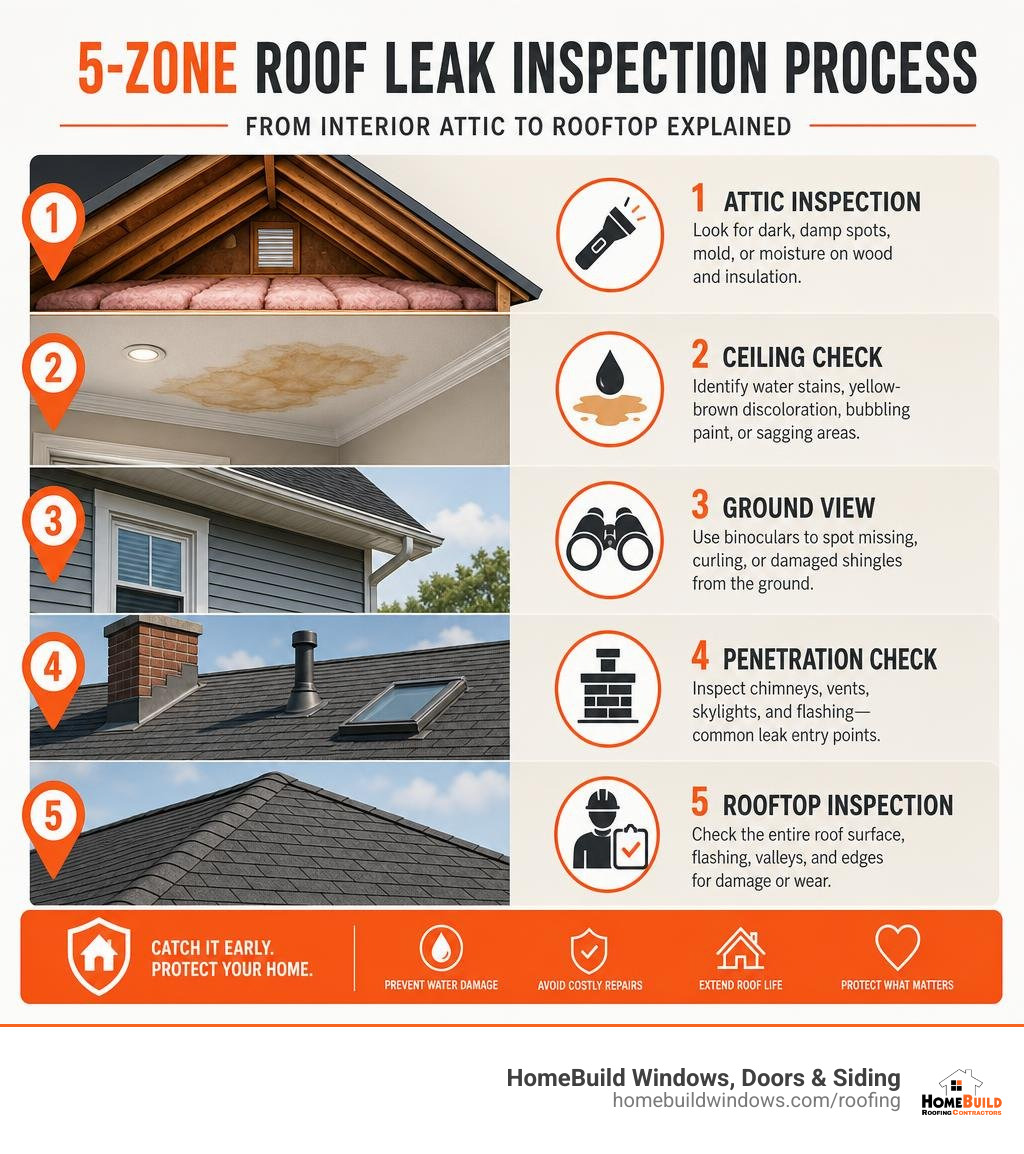
- Look at your attic — grab a flashlight and look for dark, damp spots on the wood or insulation
- Check your ceilings — yellow-brown stains or bubbling paint are warning signs
- Inspect from the ground — use binoculars to spot missing, curling, or damaged shingles
- Look at roof penetrations — chimneys, vents, and skylights are the most common leak sources
- Call a licensed roofer — if you see any of the above, get a professional inspection before the damage spreads
Here is the hard truth: by the time you notice a water stain on your living room ceiling, the damage to your roof decking, insulation, and drywall is already done — and the repair bill is growing.
Most homeowners in Schaumburg, Hoffman Estates, and the Chicago suburbs don’t discover a leak until it forces their hand. That’s a costly mistake. Research shows that waiting until a leak is visible can make the final repair cost three times higher — and can cut your roof’s lifespan in half.
Chicagoland weather makes this worse. Ice dams in winter, freeze-thaw cycles, heavy spring rains, and summer hailstorms put constant stress on your roof. Even a small gap in flashing or a handful of missing shingles can let water work its way deep into your home’s structure over months — silently.
The good news? Most leaks are predictable and preventable with the right inspection process.
I’m Steve Mlynek, CEO and founder of HomeBuild Windows, Doors & Roofing, with over 20 years of hands-on experience helping Chicago-area homeowners protect their homes — including performing roof inspections for leaks on hundreds of properties across the Northwest and West suburbs. In this guide, I’ll walk you through exactly what to look for, when to call a professional, and how to stop a small problem before it becomes a structural nightmare.
Common Causes of Water Intrusion in Chicagoland Homes
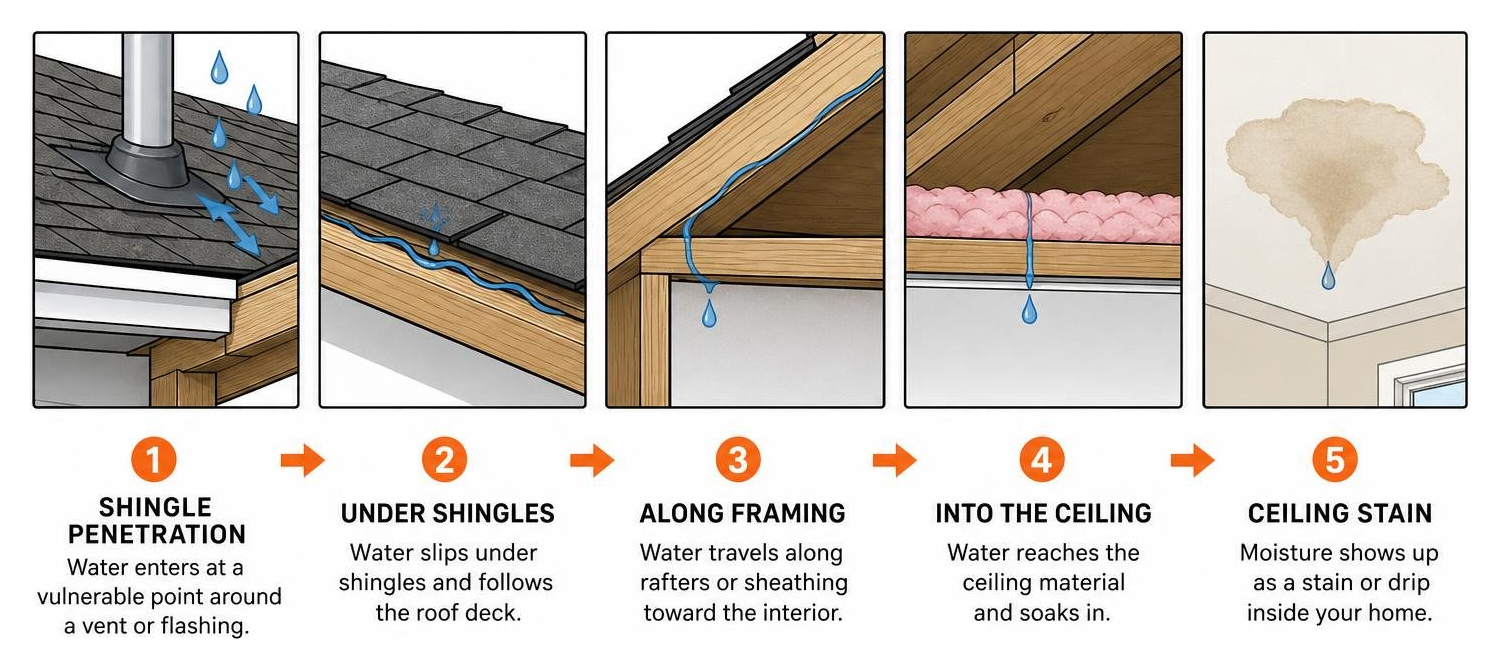
Water is a sneaky intruder. It enters through tiny cracks and travels along rafters before dripping onto your ceiling. In our 20-plus years of serving the Chicago area, we have seen how local weather tests residential roofs.
Severe storms bring heavy rain and high winds. These forces push water under weak shingles. If your home has storm damage, you must act fast. You can learn more about our local storm services by visiting our page on Storm Damage Roofing In Chicagoland.
Most leaks do not start in the middle of a shingle field. They start at transition points. Chimneys, roof valleys, and vent pipes are common failure areas.
Metal flashing seals these vulnerable spots. Over time, temperature changes cause flashing to expand and contract. This movement breaks the watertight seals.
Clogged gutters also cause major roof leaks. When gutters fill with leaves, water backs up under the lower edge of your shingles. This standing water rots the wooden roof deck.
Ice Dams and Freeze-Thaw Cycles
Winter in Chicagoland brings freezing temperatures and heavy snow. This weather creates a dangerous cycle on your roof.
Warm air escapes from your living space into the attic. This heat warms the roof deck and melts the snow above. The meltwater runs down the roof until it reaches the cold eave.
At the eave, the water freezes again. This ice forms a thick barrier called an ice dam.
Subsequent meltwater pools behind this ice dam. It backs up under your shingles and leaks into your home.
Proper attic ventilation stops this destructive cycle. It keeps your roof deck cold. You can read about preventing ice dams on our page about Roof Ventilation Attic Airflow In Chicagoland.
Damaged Shingles and Wind Wear
High winds can tear or lift asphalt shingles. This exposes the underlayment below to rain and snow.
As asphalt shingles age, they lose their protective mineral granules. This granule loss leaves the asphalt backing vulnerable to hot summer sun. The sun dries out the shingles, causing them to curl or crack.
Once shingles curl, wind can easily catch and lift them. Water then slips directly underneath during the next storm.
Improper nailing during installation also causes slow, hidden leaks. If a nail is placed too close to a shingle joint, water will find it. For a detailed look at how shingle damage leads to leaks, check out this Roof Leaks: diagnosis & repair guide .
How to Monitor Your Home for Water Damage
You do not have to climb onto your roof to check for leaks. In fact, we recommend staying on the ground for safety. You can monitor your roof system from inside your home and from ground level.
Regular monitoring helps you catch issues 12 to 18 months before they become active indoor leaks. This proactive approach saves you thousands of dollars in structural repairs.
Look for early warning signs inside your living areas. These signs include peeling paint near ceilings, water spots on drywall, and musty odors. If you spot these issues, you need a professional Roof Inspections service to find the source.
Ground-Level Visual Checks with Binoculars
A high-quality pair of binoculars is a great tool for home maintenance. Walk around your yard and scan your roof surface.
Look for shingles that are missing, torn, or lifting. Pay close attention to the roof valleys and the areas around your chimney.
Check your gutters from the ground. Are they sagging or pulling away from the fascia board? Sagging gutters indicate water is pooling instead of draining.
Look for popped nails that have pushed up through the shingles. These small metal bumps are prime entry points for water.
DIY Roof Inspection for Leaks in the Attic
Your attic is the best place to find early evidence of a roof leak. Go into your attic with a bright flashlight after a heavy rainstorm.
Look at the underside of your roof deck. Search for dark stains, damp wood, or active dripping.
Pay close attention to the wood around chimneys, vents, and valleys. These are the most common leak locations.
Check your attic insulation. Damp or matted insulation is a clear sign of water intrusion.
Be aware that high attic moisture is not always a roof leak. Sometimes, bathroom exhaust fans vent directly into the attic instead of outside. This releases warm, wet air that mimics a roof leak.
Wood decay fungi become active when wood moisture hits 20%. The fungi start to reproduce at 27% moisture. Catching these damp spots early prevents structural wood rot. For more tips on tracking attic moisture, refer to the Roof Leaks: diagnosis & repair guide .
Professional Roof Inspection for Leaks vs. Forensic Analysis
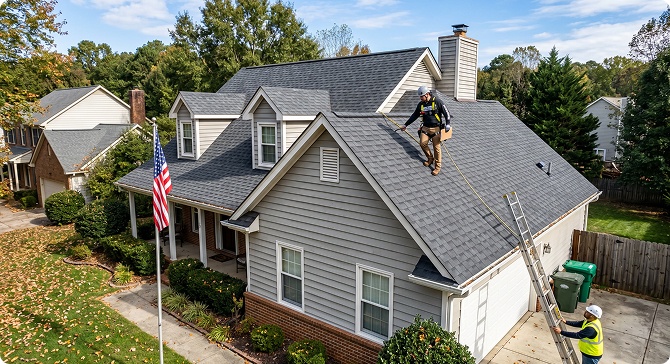
There is a big difference between a standard visual roof check and a forensic analysis. Homeowners often get confused by these terms.
Standard home inspections often miss roof leaks. In fact, over 85% of homes are sold with existing roof damage or leaks. This happens because general home inspectors lack the specialized training and tools of roofing professionals.
If you are buying a home or dealing with storm damage, you need a targeted roof inspection. This protects your investment and helps you navigate any necessary Roof Insurance Claim processes.
Standard Roof Inspection for Leaks
A standard professional roof inspection is a comprehensive visual check of your entire roofing system. We use a thorough 5-zone methodology.
We inspect the interior ceilings, the attic space, the garage, the home perimeter, and the rooftop surface. This inside-out approach ensures we do not miss hidden clues.
We check the condition of your shingles, flashing, gutters, and ventilation. We look for wear and tear from normal aging and storm damage.
This inspection provides a clear picture of your roof’s current health. You can learn more about our standard process on our Roof Inspections page.
Forensic Roof Leak Cause Analysis
A forensic roof leak cause analysis is a scientific, deep-dive investigation. It is used for complex leaks, legal disputes, or denied insurance claims.
Standard inspections show where a leak is. A forensic analysis proves why and how the leak happened.
The inspector acts like a detective. They trace the water path from the interior stain back to the exact exterior entry point.
They examine building codes, past weather reports, and installation workmanship. This process delivers an unbiased, detailed report. To understand what goes into this technical document, read Your Guide to a Roof Leak Cause Analysis Report .
Advanced Tools Professionals Use to Trace Water Intrusion
Sometimes, visual checks are not enough to find a tricky leak. Water can enter in one spot and travel 20 feet horizontally before dripping.
Professional roofers use advanced, non-destructive tools to trace these hidden paths. This technology saves you money by pinpointing the exact repair area. It prevents the need to tear up large sections of your roof just to find a leak.
Using high-tech tools ensures an accurate diagnosis. You can read about these professional diagnostic services at Leak Detection Analysis Services | Find Moisture & Cracks Fast .
Thermal Imaging and Infrared Scans
Thermal imaging, or thermography, is a highly effective way to find hidden roof moisture. This technology uses infrared cameras to detect temperature differences.
Wet roof insulation retains heat longer than dry insulation. When the sun goes down and the roof cools, wet spots stand out on our thermal cameras.
This method is completely non-destructive. It allows us to map moisture trapped under the roof membrane without cutting into your roof.
Thermography works best in the early morning or late evening when temperature changes are stable. For a technical explanation of thermal leak detection, visit Detect roof leaks with thermography – Expert inspection [FREE] Quote within 24 hours. .
Moisture Meters and Destructive Testing
Moisture meters are essential tools for verifying active leaks. They measure the moisture content of wood, drywall, and insulation.
These meters help us determine if a stain is old and dry or currently wet. We use them in the attic to test the wooden roof decking and rafters.
On flat or low-sloped roofs, we sometimes perform core cut testing. This involves taking a small physical sample of the roof layers.
We analyze the sample to check for subsurface moisture and deck rot. We then seal the test area immediately to keep it watertight. This standard practice follows the D7053/D7053M Standard Guide for Determining and Evaluating Causes of Water Leakage of Low-Sloped Roofs .
Frequently Asked Questions about Roof Leaks
We hear many of the same questions from homeowners in Villa Park, St. Charles, and Deerfield. Here are direct answers to help you make informed decisions.
How much does a professional roof inspection cost?
The average roof inspection costs $331. Most homeowners spend between $125 and $571 depending on the roof’s size, pitch, and material.
Specialty inspections, like infrared thermal scans, usually cost between $400 and $600. While some companies offer “free estimates” as sales pitches, a true professional inspection is a paid service.
This fee ensures you get an unbiased, detailed report on your roof’s condition. You can read more about inspection pricing on our Roof Inspections page.
How do I know if a ceiling stain is active or old?
You cannot determine if a stain is active just by looking at it. A dry, yellow stain might be from a leak that was fixed years ago.
The most reliable way to check is with a professional moisture meter. If the moisture level in the drywall is high, the leak is active.
If you do not have a meter, you can lightly touch the stain. Active leaks will feel damp or soft.
Always monitor the stain during the next heavy rainstorm. Draw a light pencil line around the edge of the stain to see if it grows.
Does homeowners insurance cover roof leak repairs?
Homeowners insurance usually covers roof leaks if they are caused by a sudden, accidental peril. This includes hail damage, windstorms, or falling tree limbs.
Insurance typically does not cover leaks caused by age, normal wear, or deferred maintenance. If your roof leaks because it is 25 years old and worn out, the repair is your responsibility.
That is why annual inspections are so important. They prove you have maintained your roof, which helps during a Roof Insurance Claim.
Conclusion
Ignoring a small roof leak is an expensive gamble. A tiny drip can quickly rot your roof deck, ruin your insulation, and cause toxic mold growth.
Investing just 1% to 2% of your roof’s replacement cost in regular maintenance can extend its lifespan by up to 40%. Proactive inspections catch problems early, keeping your home safe and dry.
At HomeBuild Roofing, we make the process stress-free. Founded by Steve Mlynek in 2004, we serve Chicago and the Northwest and West suburbs — including Schaumburg, Hoffman Estates, Villa Park, St. Charles, Deerfield, and Wood Dale.
Every project is owner-sold, owner-supervised, and owner-approved. We never use subcontractors or middle-men.
Our commitment to quality has earned us a 4.9-star Google rating across 180-plus reviews. We also won the Angi Super Service Award 2025 and Nextdoor Neighborhood Faves 2025.
We are fully licensed and insured, and we always provide honest repair-versus-replace guidance.
Do not wait for the next heavy storm to test your roof. Contact us today to schedule your professional Roof Repair or leak inspection.