


When a Roof Emergency Strikes: Your Quick Guide
A roof emergency is a stressful experience requiring immediate attention to prevent further damage. This guide walks you through identifying emergencies, finding reliable contractors, and understanding the repair process. With over 20 years in Chicago’s home exterior industry, HomeBuild provides the expert guidance you need during these critical moments.
What to Do Immediately When You Spot a Roof Leak
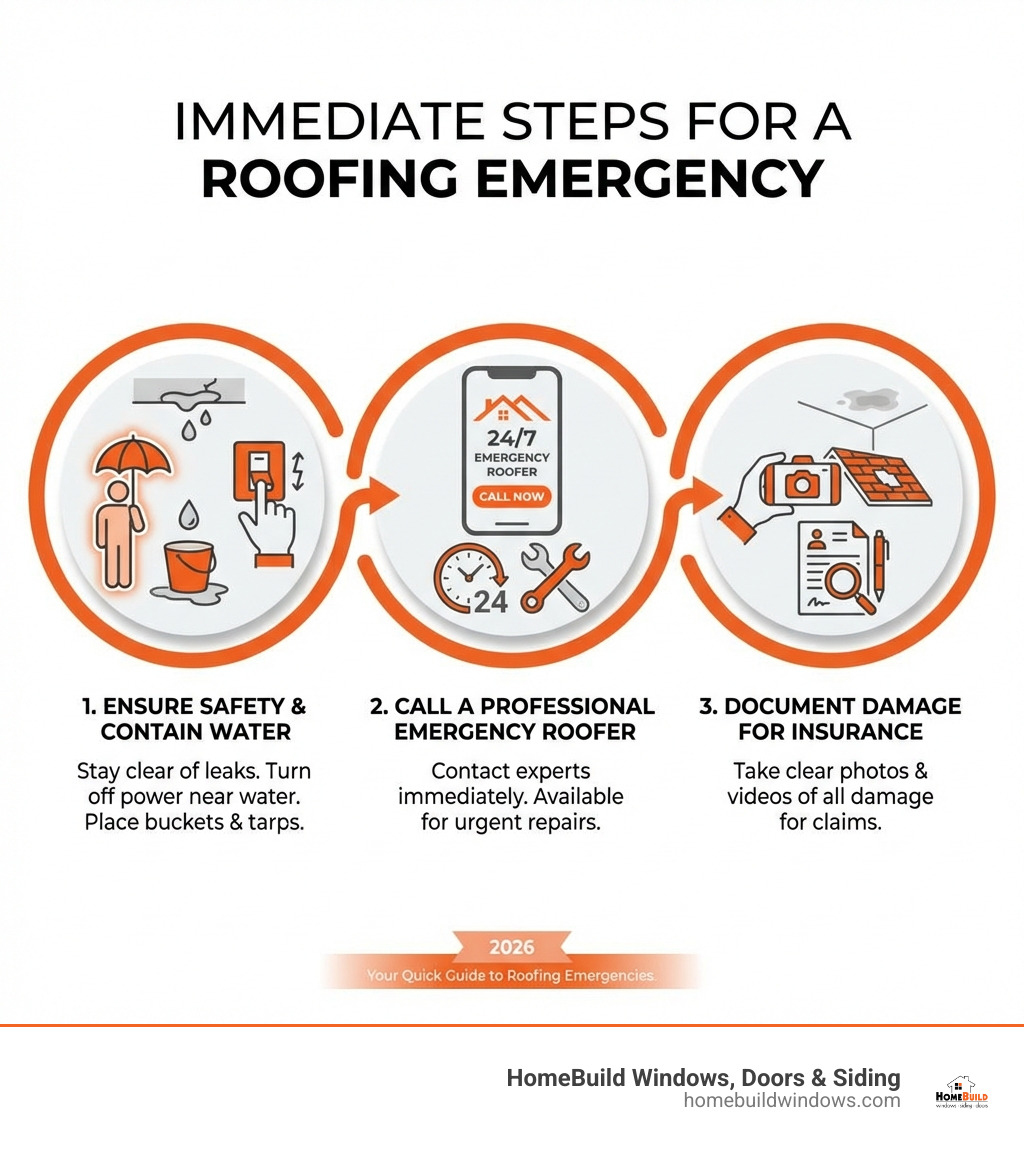
When you notice damage, act quickly but safely. A true roofing emergency compromises your home’s safety and requires immediate intervention. Use this checklist to identify one:
- Active Leaks: Water dripping or pooling inside from ceilings or walls.
- Water Intrusion: Rapidly growing stains or dampness in the attic.
- Significant Storm Damage: Missing shingles, sagging decks, or damage from fallen limbs.
- Fire Damage: Any fire damage that weakens the roof’s integrity.
- Electrical Hazards: Leaks near outlets or wiring.
Step 2: Protect Your Home and Document the Damage
While waiting for emergency roofers near me, prioritize safety and minimize damage. Do not climb onto the roof.

- Safety First: Turn off power at the breaker if water is near electrical components.
- Move Valuables: Relocate furniture and electronics; cover heavy items with plastic.
- Contain the Water: Place buckets under active drips.
- Document Damage: Take photos and videos for your insurance claim.
How to Find and Hire Reputable Emergency Roofers Near Me
Finding a reliable roofer in Chicago is vital during an emergency. We pride ourselves on quality and service, and we believe every homeowner deserves that standard.
What to Look for in a Local Roofing Contractor
Consider these factors when searching for emergency roofers near me:

- Local Experience: A roofer familiar with Chicago weather understands the challenges of snow, wind, and storms.
- Licensing and Insurance: Verify the contractor is licensed in Illinois and carries liability insurance.
- Workmanship Warranty: Ensure they offer a warranty on their labor.
- Check Reviews: Look for honest testimonials and reviews on search engines regarding their emergency response.
- Get Estimates: If time allows, compare at least three estimates.
- BBB Accreditation: Check the Better Business Bureau for ratings and history.
Key Questions to Ask
- Are you available 24/7?
- What is your typical response time in Chicago or the North-West Suburbs?
- Do you have experience with my specific roof type?
- Can you assist with insurance claims?
- What is your process for temporary versus permanent repairs?
- What warranties do you offer?
The Emergency Repair Process: What to Expect
Knowing the process can alleviate stress. Here is the typical approach for emergency roofers near me in the Chicago area.
The Initial Response
- 24/7 Dispatch: A coordinator gathers details and mobilizes a crew.
- Rapid Deployment: You receive an ETA for the emergency team.
- On-Site Inspection: The crew assesses damage and identifies leak sources.
- Safety Protocols: The team secures the scene and protects your interior with tarps.
- Temporary Mitigation: The first goal is stopping water intrusion via professional tarping or sealing.
- Securing the Site: Debris is removed to prevent further hazards.
The Permanent Fix: Repair vs. Replacement
- Damage Report: A detailed report with photos supports your insurance claim.
- Options and Pricing: You receive clear pricing for repairs or replacement.
- Targeted Repairs: This involves replacing shingles or fixing flashing.
- Full Replacement: Recommended for severe damage or roofs nearing the end of their 20-25 year lifespan.
- Siding Impact: Roof work may require updates to your Siding Installation Replacement to ensure a watertight seal.
- Final Inspection: A walkthrough ensures quality and site cleanup.
Navigating Costs and Insurance for Your Repair
Understanding Emergency Repair Costs
| Factor | Description |
|---|---|
| Extent of Damage | Larger or structural damage increases costs. |
| Roof Materials | Asphalt is affordable; metal, slate, or tile are premium. |
| Roof Complexity | Steep pitches and multiple levels require more labor. |
| Accessibility | Difficult access can add to the overall cost. |
| Emergency Fee | Rapid, after-hours response often carries a premium. |
| Repair Type | Temporary tarping is billed separately from permanent fixes. |
How to Work with Your Homeowner’s Insurance
- Contact Your Insurer: Report damage immediately.
- Document Everything: Use your photos and the roofer’s report as evidence.
- Meet the Adjuster: Have your contractor present to point out specific damage.
- Understand Coverage: Confirm your deductible and covered perils (like wind or hail).
- Choose a Reputable Contractor: Select a company experienced in insurance claims to ensure the job is done right.
What to Do Immediately When You Spot a Roof Leak
Step 1: Identify if It’s a True Roofing Emergency
Assess the situation from the ground. A true emergency involves sudden damage that compromises your property’s safety. If water is entering your home, it is an emergency.
- Active Leaks: Water dripping or pooling inside.
- Water Intrusion: Growing stains on walls or ceilings.
- Storm Damage: Missing shingles, sagging roof lines, or fallen tree limbs.
- Fire Damage: Even small burned areas allow water entry.
- Electrical Hazards: Leaks near wiring or outlets require urgent attention.
Step 2: Protect Your Home and Document the Damage
- Safety First: Turn off power if water is near electricity.
- Move Valuables: Relocate or cover items with plastic.
- Contain the Water: Use buckets and towels to catch drips.
- Avoid DIY: Do not climb on a wet or damaged roof.
- Document: Take photos of all damage to support your insurance claim.
How to Find and Hire Reputable Emergency Roofers Near Me
What to Look for in a Local Roofing Contractor
- Local Experience: Choose a roofer who understands Chicago’s unique weather patterns.
- Licensing: Ensure they are licensed in Illinois and fully insured.
- Warranty: Look for workmanship warranties.
- Reviews: Check honest testimonials and reviews on search engines.
- Estimates: Compare written estimates if the situation is stable.
- BBB Rating: Verify their standing with the Better Business Bureau.
Key Questions to Ask
- Are you available 24/7 for emergencies?
- What is your response time in my neighborhood?
- Do you have experience with my roof type?
- Can you help with insurance documentation?
- What is the difference between your temporary and permanent fixes?
The Emergency Repair Process: What to Expect
The Initial Response
- Dispatch: A coordinator confirms your address and damage details.
- Deployment: A crew is sent with an estimated arrival time.
- Inspection: The team identifies the leak source and damage extent.
- Safety: The area is secured with safety equipment and tarps.
- Mitigation: Temporary measures stop active water intrusion.
- Site Security: Debris is removed to prevent further damage.
The Permanent Fix
- Damage Report: You receive a summary for your records and insurer.
- Options: The roofer explains repair versus replacement costs.
- Repairs: Missing shingles or damaged flashing are replaced.
- Replacement: If the roof is old or severely damaged, a full replacement is discussed.
- Siding: Roofline work may involve your Siding Installation Replacement.
- Completion: A final inspection and warranty review conclude the project.
Navigating Costs and Insurance for Your Repair
Understanding Emergency Repair Costs
| Factor | Description |
|---|---|
| Damage Extent | Localized leaks cost less than structural repairs. |
| Materials | Asphalt is the most budget-friendly option. |
| Complexity | Steep or multi-level roofs increase labor time. |
| Accessibility | Hard-to-reach areas can raise the price. |
| Emergency Fee | Expect a premium for same-day or after-hours service. |
| Repair Scope | Tarping is usually billed separately from permanent work. |
How to Work with Your Homeowner’s Insurance
- Report Promptly: Notify your provider immediately.
- Documentation: Share photos and roofer reports with the adjuster.
- Adjuster Visit: Coordinate with your contractor to be present.
- Review Policy: Confirm your deductible and covered causes.
- Select a Pro: Choose a contractor experienced in insurance work.
What to Do Immediately When You Spot a Roof Leak
Step 1: Identify if It’s a True Roofing Emergency
A roofing emergency is any sudden damage requiring quick attention to protect your home. Use this checklist:
- Active Leaks: Running water from ceilings or walls.
- Water Intrusion: Damp areas in the attic or growing stains.
- Storm Damage: Missing shingles, sagging lines, or fallen branches.
- Fire Damage: Charred sections that allow water entry.
- Electrical Hazards: Leaks near fixtures or outlets.
Step 2: Protect Your Home and Document the Damage
- Prioritize Safety: Shut off power if water is near electricity.
- Protect Belongings: Relocate or cover furniture in the leak area.
- Control Water: Use containers under drips and towels on floors.
- Avoid Roof Access: Never climb on the roof yourself.
- Document: Take clear photos of interior and exterior damage for insurance.
How to Find and Hire Reputable Emergency Roofers Near Me
What to Look for in a Local Roofing Contractor
- Local Experience: Contractors in Chicago and the North-West Suburbs understand regional codes and weather.
- Licensing: Confirm Illinois licensing and liability insurance.
- Warranty: Ask about workmanship guarantees.
- Reviews: Look for honest testimonials and reviews on search engines.
- Estimates: Compare written estimates to understand your options.
- BBB Rating: Use the Better Business Bureau to evaluate reputation.
Key Questions to Ask
- Are you available 24/7 for emergency service?
- What is your usual response time to my neighborhood?
- What experience do you have with my roofing material?
- Will the work be completed by in-house crews?
- Can you provide documentation for my insurance claim?
- Do you have references from nearby communities like Des Plaines or Schaumburg?
The Emergency Repair Process: What to Expect
The Initial Response
- Triage: A coordinator verifies your address and damage details.
- Deployment: A crew is assigned with an estimated arrival time.
- Assessment: The crew examines the roof and interior for active leaks.
- Safety: The team secures the work area and protects landscaping.
- Tarping: Temporary solutions stop water intrusion immediately.
- Securing Site: Loose materials are fastened to prevent wind damage.
The Permanent Fix
- Damage Report: You receive a summary with photos and measurements.
- Pricing: The roofer provides itemized pricing for repairs or replacement.
- Repairs: Localized damage to shingles or flashing is addressed.
- Replacement: Extensive damage may require a full roof replacement.
- Siding: Roofline repairs may affect your Siding Installation Replacement.
- Final Inspection: The crew cleans the site and reviews warranty details with you.
Navigating Costs and Insurance for Your Repair
Understanding Emergency Repair Costs
| Factor | Description |
|---|---|
| Damage Extent | Costs depend on the size and structural impact of damage. |
| Materials | Asphalt is generally less expensive than metal or tile. |
| Complexity | Steep slopes and skylights add to labor time. |
| Accessibility | Ease of access affects the final labor price. |
| Emergency Fee | Rapid mobilization often includes a service premium. |
| Repair Type | Tarping costs are separate from permanent restoration. |
How to Work with Your Homeowner’s Insurance
- Notify Insurer: Report the incident as soon as possible.
- Share Evidence: Provide photos and roofer documentation to your adjuster.
- Be Present: Try to have your roofer present during the adjuster’s inspection.
- Clarify Coverage: Understand your deductible and covered perils.
- Select a Pro: Choose a contractor with a solid reputation for insurance-related repairs.