
What to Check Before You Buy a Front Door with Sidelights
To buy a front door with sidelights online, first confirm your rough opening size, jamb depth, and door swing. Then compare door materials, sidelight glass, and energy ratings. Check whether the unit arrives prehung or needs assembly, and review delivery and warranty terms before you order. Sidelights can brighten your entry without requiring a double door.
I’m Steve Mlynek, founder of HomeBuild Windows, Doors & Siding, and I’ve helped Chicago-area homeowners choose and install entry doors for over 20 years. If your search was buy front door with sidelights, this guide will help you sort through the choices that matter most.
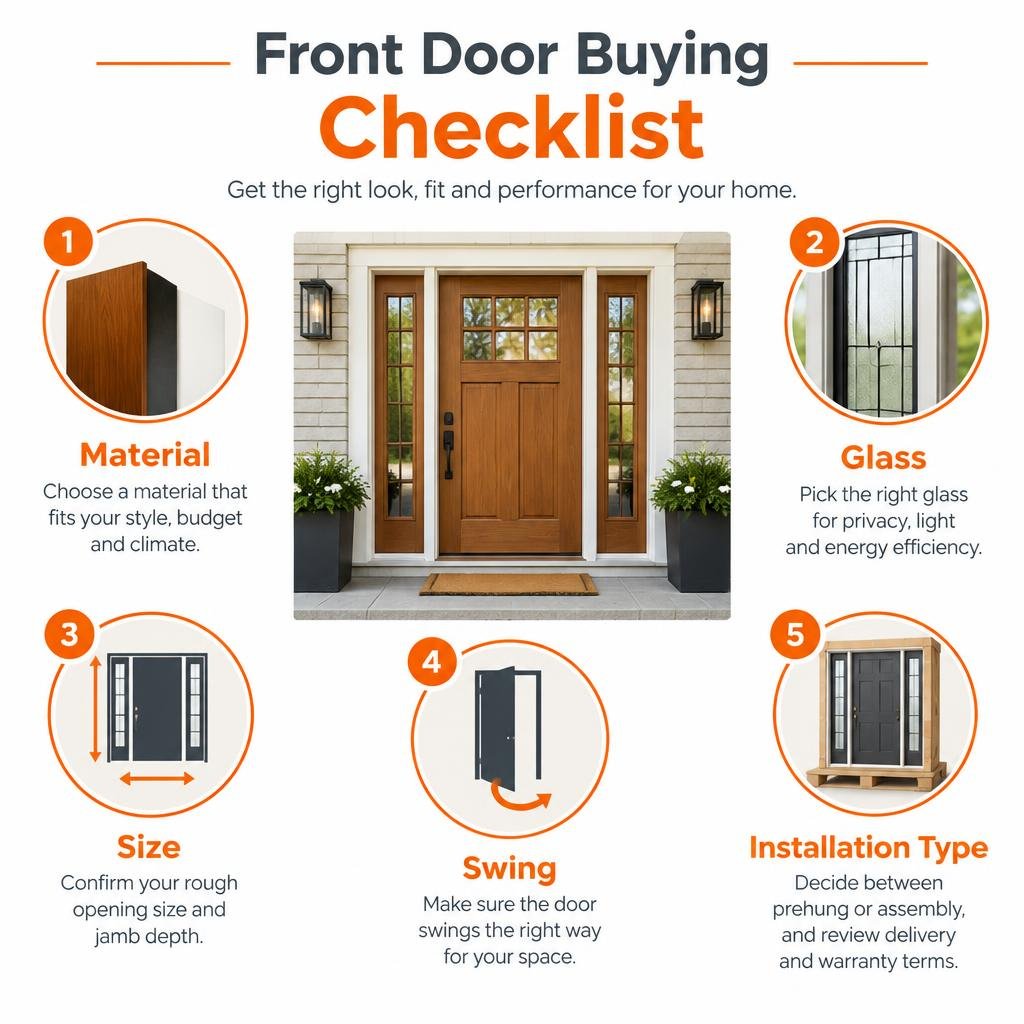
Buy front door with sidelights terms you need:
How to Buy a Front Door with Sidelights
How to buy a front door with sidelights for your home
A single door with two sidelights surrounds the door with narrow glass panels that match it. The result is a wider entry that fills the foyer with natural light. Many homeowners see it as the middle ground between a standard single door and a full double-door entry.
In our experience, the setup suits two kinds of projects:
- New builds, where the opening can be framed for the wider unit from the start.
- Entry renovations, where an older, dark doorway is replaced to improve light, curb appeal, and the first impression.
In the Chicago area, we often see it on bungalows and two-flats with dim vestibules. It also works well on colonials and ranches that have enough wall width beside the door.
Sidelights raise two practical questions. How much privacy do you want, and how much glass can your entry handle in a cold, windy climate? The sections below walk through both.
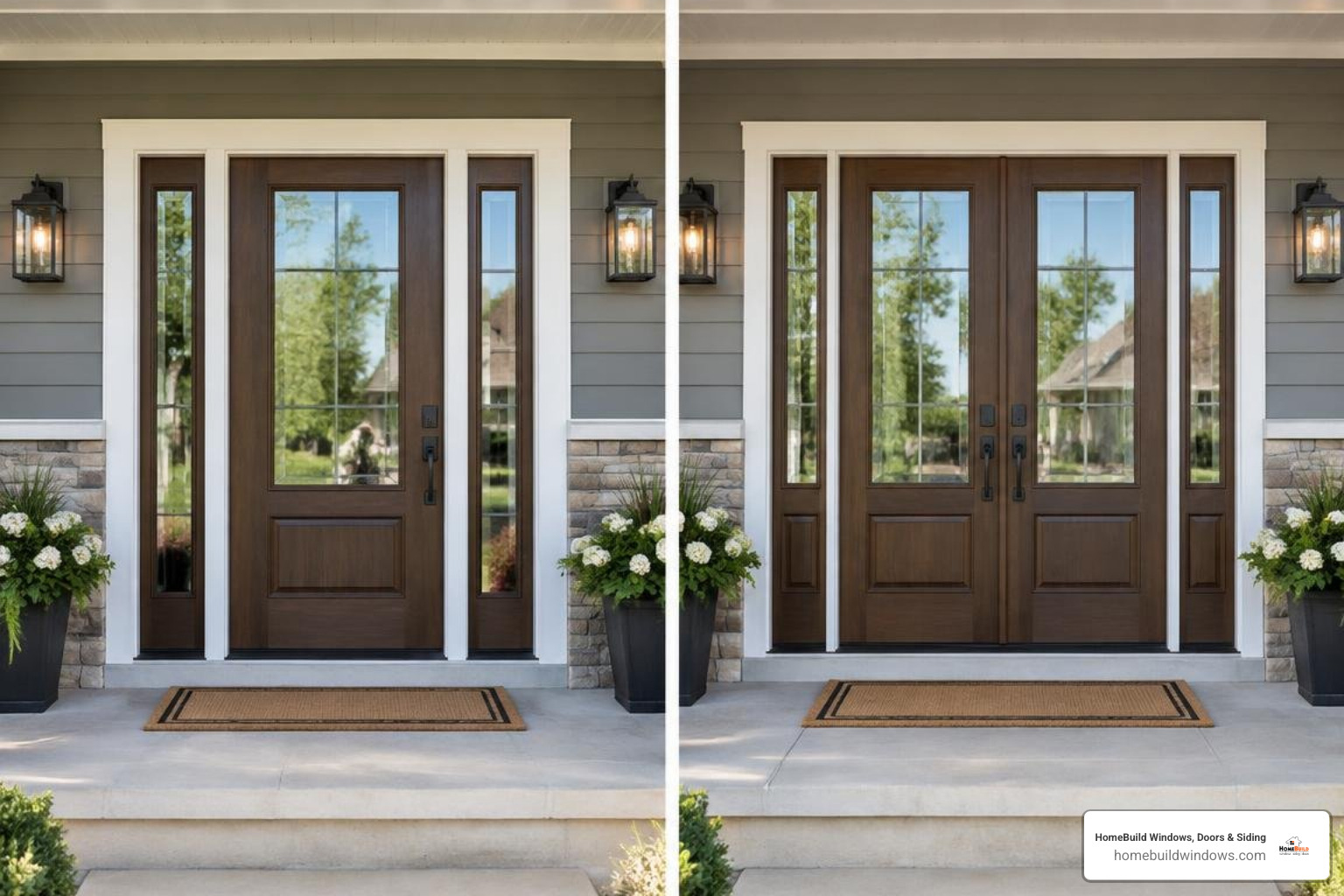
If you are also weighing a wider two-door entry, our guide to double entry doors with sidelites covers that layout in detail.
When sidelights make more sense than a double door
A double door is dramatic, but it needs a lot of width and swing space. A single door with sidelights gives you a wide look while keeping one operable door. That is easier to live with every day.
Sidelights usually make more sense when:
- Wall space is limited. Most sidelight units run about 60 to 69 inches wide overall, which fits many existing openings. Double doors often need a larger structural change.
- Furniture or a staircase sits near the entry. Two swinging leaves need clearance. One door does not.
- Everyday use matters most. You will use a single 36-inch door almost every time. The second leaf of a double door often stays latched.
- You want light without a large moving door. Fixed sidelights add glass without adding hardware to maintain.
The tradeoff is glass exposure. Sidelights put glass close to the lockset and the street, so privacy and security choices matter more. We cover both below.
Compare Door Materials, Styles, Glass, and Performance
Before you compare products, look at the ENERGY STAR guidance for residential windows, doors, and skylights. It explains the efficiency ratings that appear on spec sheets and is a reliable starting point for Chicago’s climate zone.
Choose a material and style for Chicago weather
Our winters are cold, lake wind pushes air through weak seals, and freeze-thaw cycles stress frames and finishes. Humid summers add moisture swings. Those conditions shape which material holds up best.
- Wood (mahogany, knotty alder) offers a rich, natural look and can be stained. Solid-core wood insulates well, but it needs regular finish upkeep.
- Fiberglass has a polyurethane foam core and a skin that resists warping, rotting, dents, and rust. It can mimic wood grain and needs little maintenance.
- Steel is strong and typically uses a polystyrene core. Galvanized steel resists rust, but dents and scratches need touch-ups.
- Iron is a specialty option with a dramatic, custom look. It is usually paired with glass and decorative grilles.
| Material | Insulation | Durability | Maintenance | Customization |
|---|---|---|---|---|
| Wood | Good with a solid core | Good if the finish is kept up | Highest: refinish periodically | Stain, carve, or paint |
| Fiberglass | Very good with a foam core | Very good against moisture and dents | Low: wash and inspect | Paint or wood-look stain |
| Steel | Good with an insulated core | Strong, but dents and scratches can rust | Low to moderate: touch up chips | Paint, mostly primed finishes |
| Iron | Depends on the glass and thermal break | Very strong | Moderate: protect finishes | Highly custom designs |
Style matters too. The main looks you will see:
- Traditional: raised panels and lites that suit colonials and brick two-flats.
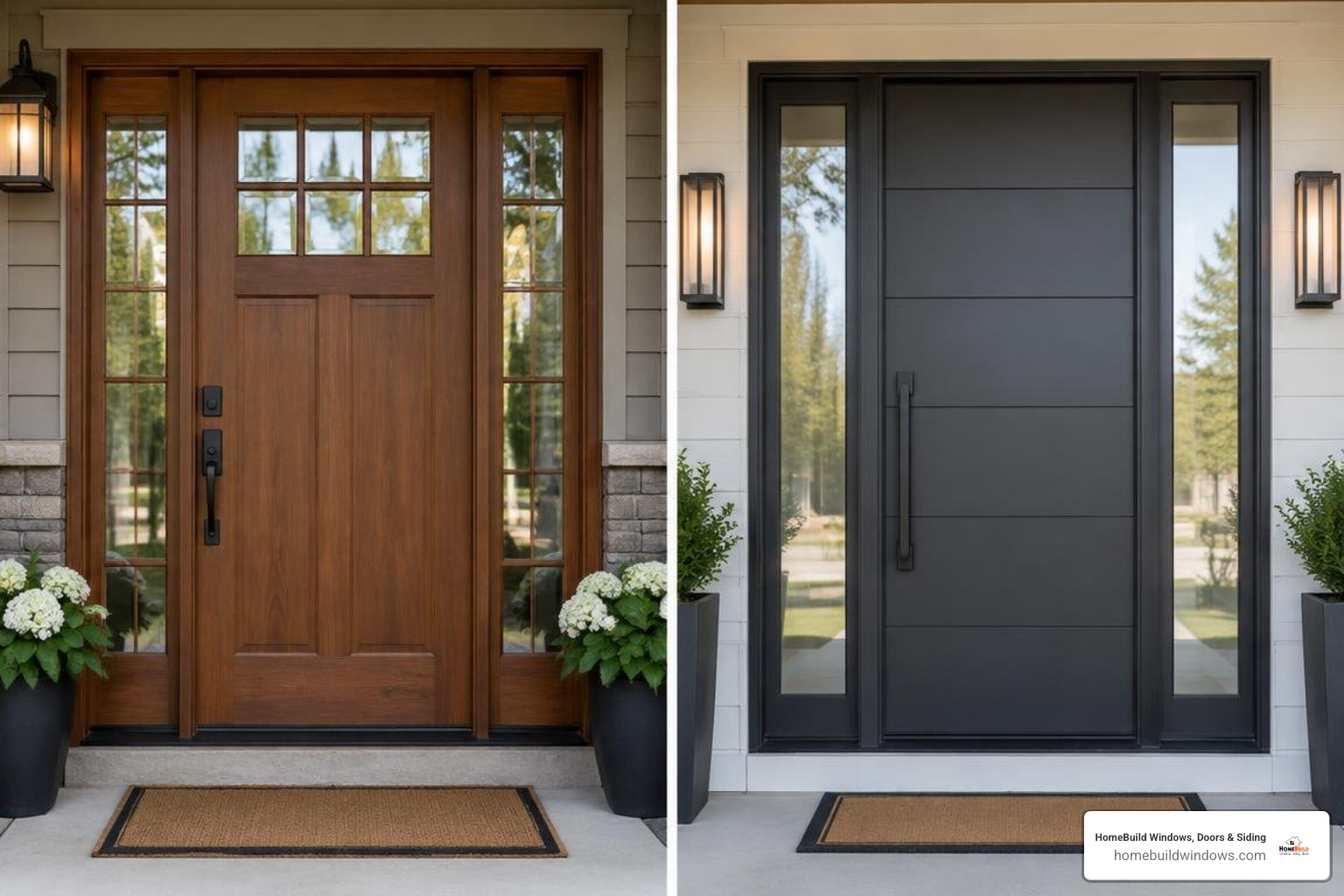
- Craftsman: a stepped top rail and multi-lite upper panel, a natural fit for Chicago bungalows. See our Craftsman door sidelites guide for examples.
- Modern: clean lines and large or full lites. Our guide to contemporary front doors with sidelights shows how.
- Mediterranean: arched tops, rustic wood tones, and ironwork. Our article on arched front doors with sidelights covers the shape.
Match the sidelights to the door. Coordinated lite counts, glass types, and panel styles make the unit look intentional.
Select sidelight glass for privacy, light, and efficiency
Glass is the biggest design decision on a sidelight unit. It controls privacy, brightness, and heat loss.
- Clear glass gives the most light and view. It also has no privacy; some spec sheets give it a privacy rating of 0 out of 10.
- Frosted or obscure glass diffuses light while hiding detail. It is a common choice on streets with close neighbors.
- Decorative glass uses texture, patterns, or caming to filter light and add character.
- Beveled glass adds angled edges that catch light, often in traditional designs.
- Iron grilles add privacy and style over or between glass layers.
For performance, look for:
- Insulated, dual-pane glass, which slows heat loss in winter and heat gain in summer.
- Low-E coatings, which reflect heat back toward its source and help hold indoor temperatures steady.
- Tempered glass, which is a safety standard for glass near doors. It breaks into small pieces.
Our double glazed front door and side panel buying tips go deeper on glazing choices.
Check energy efficiency, security, and upkeep
Energy ratings. Two numbers matter most. U-factor measures how fast heat passes through the unit, so lower is better. R-value measures resistance to heat flow, so higher is better. One fiberglass sidelight unit we reviewed lists a U-factor of 0.17 and an R-value of about 5.88. Those are strong figures for a unit that includes glass. Ask for the rating on the whole unit, not just the door slab.
Other features that matter in our climate:
- An insulated core in the door slab, usually foam in fiberglass and polystyrene in steel.
- Compression weatherstripping around the door to block lake wind.
- An adjustable sill that can be set to seal the threshold as the house settles.
- Rot-resistant composite jambs and brickmould, which handle freeze-thaw cycles and humidity better than raw lumber.
For more on this, see our overview of energy efficient entry doors.
Security. A door is only as strong as its lock area and frame. Look for a reinforced lock block, a predrilled bore for the lockset, and strong hinges and strike hardware. Sidelights themselves are fixed, tempered, and insulated glass, which is harder to break than single-pane glass. You can lower the risk further by using frosted or decorative glass near the lockset. It also prevents anyone from seeing the lock or the hallway.
Upkeep.
- Wood: inspect the finish every year and refinish when it dulls or cracks. Chicago sun and moisture wear south and west exposures fastest.
- Fiberglass: wash with mild soap and check the finish and weatherstripping.
- Steel: touch up chips promptly so rust cannot start.
Verify the Size, Swing, Unit Type, and Purchase Details
What to verify before you buy a front door with sidelights online
Online listings use several different numbers, and mixing them up is the most common ordering mistake. A typical setup has a 36-inch door with two 14-inch sidelights, which gives a nominal width of 64 inches. With 12-inch sidelights, the nominal width is 60 inches. Many listings sit in the 60 to 64 inch range at 80 inches tall.
| Measurement | What it means | Example |
|---|---|---|
| Slab and sidelight size | The door and glass panels themselves | 36-inch door, two 14-inch sidelights, 64 inches nominal |
| Overall unit size | The prehung unit including jambs | 68.5 inches by 81.75 inches |
| Rough opening | The framed hole in the wall | About 69 inches by 82.25 inches |
| With brickmould | Unit plus exterior trim | About 71 inches by 83 inches |
Brickmould typically adds about 2.5 inches to the width and 1.25 inches to the height. Jamb depth matters too. A 4-9/16 inch jamb fits a standard 2×4 wall, but older Chicago brick homes and some two-flats have thicker walls. Measure the wall, not just the opening.
Take field measurements yourself, then have a professional confirm them. A small error can mean a unit that does not fit or a lead time that restarts. Some buyers report delivery waits of several months on custom sizes, so confirm timing before you commit.
Our replace front door and sidelights page explains what a replacement involves.
Confirm handing and installation format
Handing. Stand outside, facing the door. If the hinges are on the left and the door swings into the house, it is a left-hand inswing. Hinges on the right means right-hand inswing. Most sidelight units are inswing. Outswing is usually special order, and listings often do not offer it online. Make sure the handing matches how the door opens in your entry, especially if a wall, railing, or stair is close.
Prehung or knock-down. A prehung unit arrives with the door already hung in its frame, with the sidelights attached and the lock bore drilled. A knock-down unit ships as separate parts: the slab, sill, sidelights, jambs, hinges, and brickmould. Those parts are assembled on site.
A prehung unit is the easier format, and the one we recommend for most homeowners. A knock-down unit can work, but the frame assembly has to be square, level, and sealed. Errors there lead to drafts and water leaks.
Professional installation. A sidelight unit is heavy. One fiberglass example weighs about 149 pounds. Installation involves removing the old frame, checking the opening for rot, flashing the sill, setting and shimming the unit, sealing it, and trimming it. Skipping any step can void a warranty and let in water. Check local building codes before you start, since requirements vary by municipality. Our custom entry door installation guide explains how the job works.
Review finish choices, warranty terms, and seller support
Finish. Many doors ship primed, which gives you the freedom to choose any exterior paint color. Others are factory stained or sold unfinished so you can match your trim. Finish the door and the brickmould soon after delivery.
Warranty. Read the manufacturer warranty before you order. Look for these points:
- Six-side finishing. Many warranties require you to paint or seal all six sides of a primed slab, including the top and bottom edges.
- Glass coverage. Check how long seal failure and fogging are covered.
- Hardware exclusions. Locks and handles are often sold separately and may not be covered.
- Installation requirements. Some terms require proper installation.
Seller support. Before buying, confirm:
- How delivery is inspected and what to do if the unit arrives damaged.
- The return policy, and whether custom-sized units can be returned at all.
- The lead time.
- Who answers questions if the door arrives with a defect.
Frequently Asked Questions About Front Doors with Sidelights
Can I paint a primed door and its sidelights?
Yes. A primed door is designed to be painted, and the brickmould usually comes primed too. Use a high-quality exterior paint compatible with the door material, and follow the manufacturer’s instructions on prep, coats, and drying time. Finish all six sides of the slab to protect the warranty, and paint the trim at the same time so the whole entry matches. Darker colors absorb more heat, so check the manufacturer’s guidance on color limits.
Do sidelights affect privacy or home security?
They can affect both, but good choices reduce the risk. For privacy, pick obscure, frosted, or decorative glazing instead of clear glass. For security, choose a unit with a reinforced lock area, solid hinges, and a quality deadbolt. Tempered, insulated glass is harder to break than ordinary glass. Glass placement also matters: frosted sidelights next to the lockset limit what someone can see.
What should I confirm before ordering a replacement unit?
Check these before you pay:
- Rough opening width and height.
- Handing and swing direction.
- Jamb depth, matched to your wall thickness.
- Glass selection for privacy and efficiency.
- Frame condition, including any rot or water damage behind the old trim.
- Local requirements, such as building codes.
Conclusion
A door with sidelights can make a Chicago entry brighter, wider, and more welcoming, as long as you choose the right material, glass, size, and swing for our climate. The most important steps are accurate measurements, a well-sealed installation, and glazing that fits your privacy needs.
HomeBuild Windows, Doors & Siding is a locally owned contractor serving the Chicago area since 2004. We work with Pella, Andersen, and ProVia products, and we are an Elite Platinum Pella Certified Contractor and an Andersen Premier Certified Contractor. Every project is installed by our own crews, never subcontractors, and I supervise on site. We back each installation with a 10-year labor warranty and a complimentary VIP Protection Plan of 1, 2, or 5 years depending on project size. You can read the warranty details on our site.
When you are ready, explore entry door options and then schedule a free estimate. We will measure your opening, review your options, and handle the installation from start to finish.