
Why Your Front Door and Sidelights Matter More Than You Think
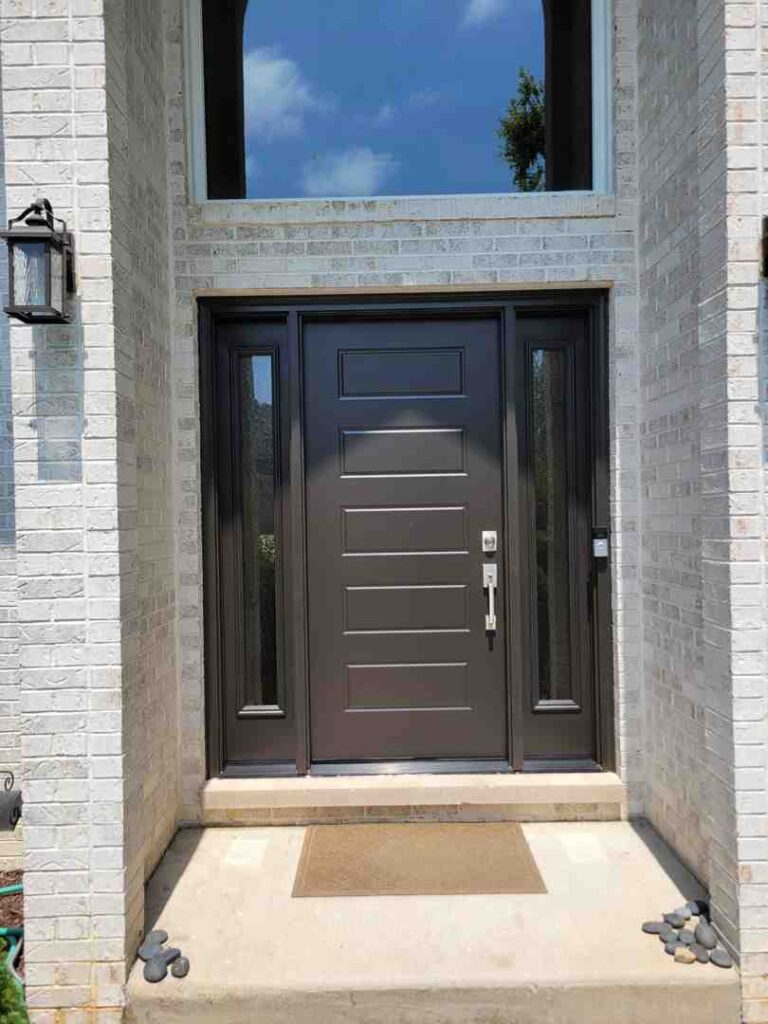
A front door and sidelights system transforms your home’s entrance from ordinary to exceptional. Here’s what you need to know:
- Natural Light: Sidelights are narrow vertical windows flanking your door that flood your entryway with daylight
- Curb Appeal: They make your entrance appear larger and more welcoming, boosting home value
- Common Sizing: Standard configuration is a 36″ door with 12″ sidelights on each side
- Cost Range: Expect $1,600 for one sidelight, $2,500+ for two sidelights
- Privacy Options: Choose from clear, frosted, rain, or decorative glass patterns
- Energy Efficiency: Modern designs use Low-E glass and insulation to match your door’s performance
Your front door is often the first thing visitors notice—and it’s consistently ranked among the top home improvements for return on investment. Adding sidelights takes this impact further by creating a grand, proportional entrance that welcomes more natural light while maintaining security and privacy.
The challenge? Most Chicago homeowners aren’t sure which glass type offers the right balance of light and privacy, or whether their existing doorway can even accommodate sidelights without major structural work.
I’m Steve Mlynek, and over 20 years I’ve helped thousands of Chicagoland homeowners upgrade their entryways with beautiful, energy-efficient front door and sidelights installations that stand up to our harsh winters. Let me walk you through exactly what you need to know to make the right choice for your home.
Similar topics to front door and sidelights:
What are Sidelights and Why Should You Install Them?
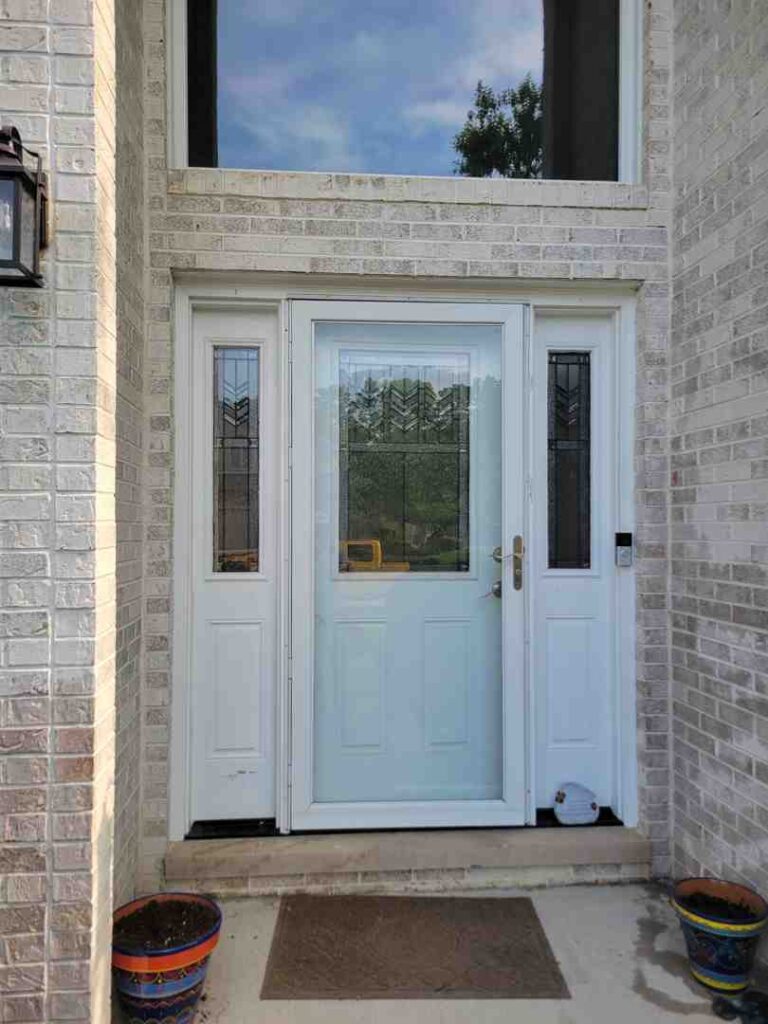
When we talk about a front door and sidelights, we are referring to the thin, vertical windows that flank one or both sides of your entry door. In architectural terms, they serve as a bridge between the solid presence of your door and the surrounding walls. But in practical terms for those of us living in places like Arlington Heights or Glenview, they are the difference between a dark, cramped foyer and a bright, airy welcome.
The primary reason most of our clients choose to install sidelights is the massive influx of natural light. Traditional Chicago homes, especially those in the North-West Suburbs with deeper floor plans, often suffer from “dark hallway syndrome.” Sidelights solve this without compromising the structural integrity of your front wall. By expanding the glass area, you’re not just seeing more of the outside; you’re making the entire entryway feel almost double in size.
From a design perspective, sidelights offer a better sense of proportion. A standard 36-inch door can sometimes look “lost” on a wide house. Adding 12-inch or 14-inch sidelights creates a grander architectural statement. This isn’t just about vanity, either—upgrading your front door is consistently listed among the top home-improvement projects for the greatest return on investment. If you’re looking to build equity in your house, a high-quality door system is a savvy move.
Beyond aesthetics, sidelights provide a functional “glimpse” of the world. They allow you to see who is at the door without relying on a tiny peephole, and they give pets and small children a safe way to look outside. When you consider the Entry Door Replacement Cost, adding sidelights is a high-impact way to maximize the value of that investment. For more on the design philosophy behind these choices, you can explore How to Choose the Right Exterior Door.
Choosing the Right Glass for Privacy and Light
The biggest concern we hear from homeowners in neighborhoods like Palatine or Buffalo Grove is: “Won’t people be able to see right into my house?”
It’s a fair question! While clear glass offers the best views, it’s not always the best choice for a door that faces a busy sidewalk. Thankfully, modern glass technology allows us to balance light and privacy perfectly. Here are the most popular options we install:
- Frosted Glass: This is a classic choice. It allows a massive amount of light to enter but completely obscures shapes and details from the outside.
- Rain Glass: This texture looks like water trickling down a windowpane. It’s elegant, modern, and provides excellent privacy.
- Decorative Patterns: From leaded glass to intricate geometric designs, decorative glass can tie into your home’s unique character.
- Tinted Glass: Great for reducing glare and adding a layer of daytime privacy.
For technical specifications on how these glass types perform, you can check out this Entry doors info sheet.
In our Chicago climate, the “invisible” features of the glass are just as important as the texture. We always recommend Low-E (Low-Emissivity) coatings. These reflect infrared light, keeping heat inside during our freezing winters and outside during our humid summers. Furthermore, modern sidelights often feature Argon gas between the panes. This colorless, odorless gas is denser than air and acts as a superior insulator.
Finally, security is paramount. All the glass we use in our front door and sidelights systems is tempered glass. If it ever breaks, it crumbles into small, dull cubes rather than sharp shards, making it much safer and harder for intruders to exploit.

Material and Design Options for a Front Door and Sidelights
Choosing the material for your door and sidelights is a decision that balances beauty, budget, and the brutal Chicago weather.
Fiberglass is our top recommendation for most homeowners in the North-West Suburbs. It is incredibly durable, doesn’t warp like wood, and doesn’t dent like steel. It can be molded to have a realistic wood grain, giving you the look of Mahogany or Knotty Alder without the high maintenance.
Real Wood (like Mahogany or Knotty Alder) is the gold standard for luxury. It offers a warmth and weight that nothing else can match. However, it does require regular staining or painting to protect it from the elements. If your entryway is protected by a deep porch, wood is a fantastic choice.
Steel is often chosen for its security and budget-friendly price point. While it’s very strong, you have to be careful with dents and scratches which can lead to rust if not addressed. You can learn more about the Advantages and Disadvantages of Steel Replacement Doors to see if this fits your needs.
One of the most exciting design trends we’re seeing is the use of Simulated Divided Panels. These are grids applied to the surface of the glass or the door skin to give the appearance of multiple smaller panes of glass. It provides a traditional, high-end look while maintaining the energy efficiency of a single, large piece of insulated glass.
Popular Configurations for a Front Door and Sidelights
The configuration you choose dictates how much light enters and how “grand” the entrance feels.
- Full Light Sidelights: The glass extends from the top of the unit all the way to the bottom. This maximizes light but requires the most consideration for privacy glass.
- 3/4 Light: The glass goes about 75% of the way down, usually ending at a solid panel that matches the door’s bottom rail. This is a great “middle ground” for style.
- Craftsman Light: Typically features a small area of glass at the top of the sidelight, often with three small panes, and a long solid panel below. This is perfect for Bungalows and Craftsman-style homes in areas like Evanston or Wilmette.
- Single vs. Double: If space is tight, a single sidelight on the handle side can still provide a significant boost in light. However, double sidelights offer the most symmetrical and impressive look.
Matching Your Home’s Architectural Style
A front door and sidelights system should never look like an afterthought. It needs to “speak the same language” as your home’s architecture.
- Victorian Homes: Often call for decorative, etched glass and ornate wood carvings. Symmetry is key here.
- Modern/Contemporary: Sleek lines, full-length clear or frosted glass, and minimalist hardware. Think bold colors or natural wood finishes.
- Colonial: Usually features a solid panel door with a transom window above and simple, multi-pane sidelights.
Alignment is the secret to a professional-looking installation. The “lites” (glass panes) in your sidelights should align with the glass or panels in your door. If they are mismatched, the entrance will feel “off” to the eye. If you currently have a door you love but hate the glass, you might consider Changing Glass on Front Door as a way to refresh the look without a full replacement.
Practical Considerations: Sizing, Security, and Efficiency
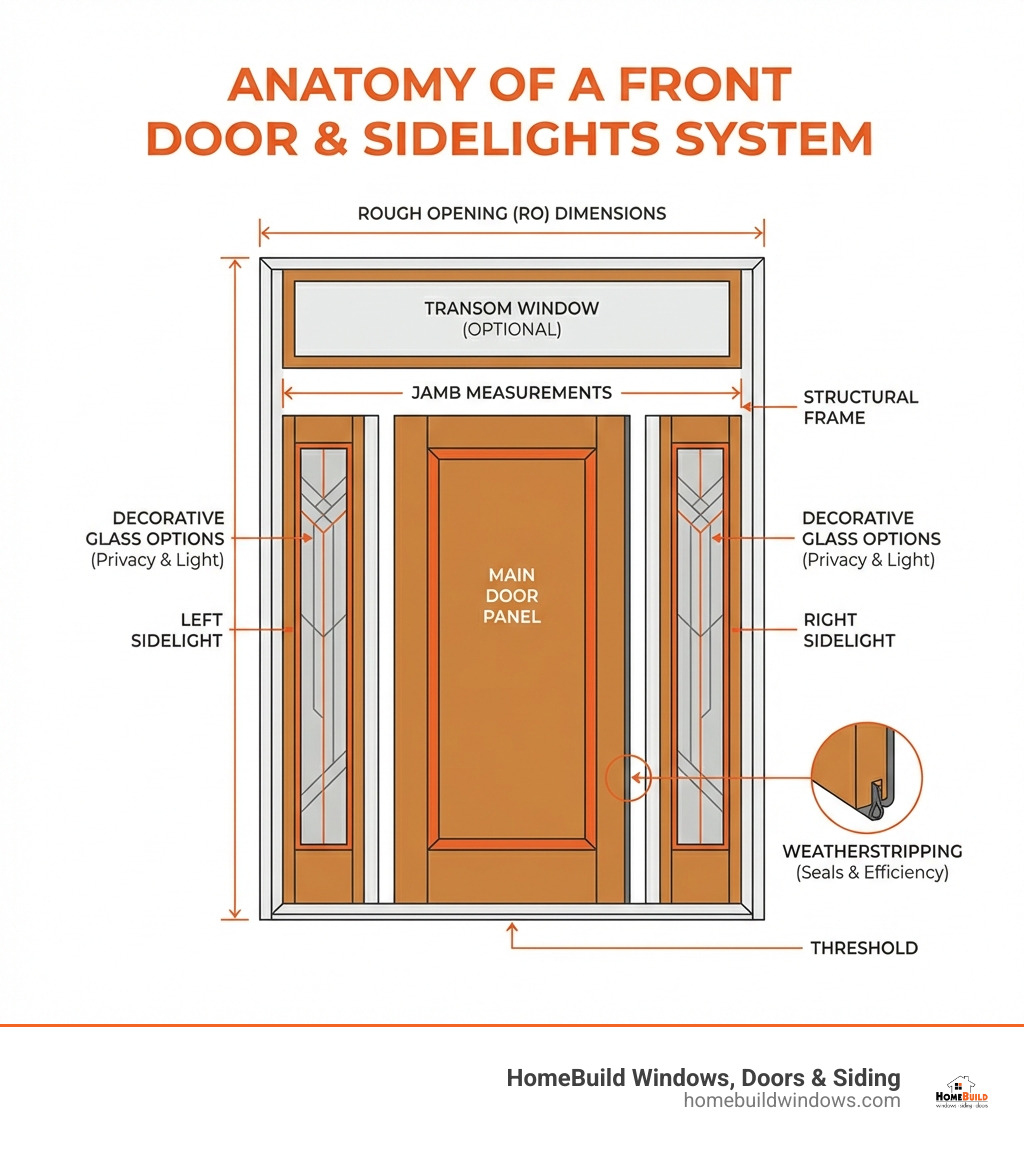
Before we get carried away with paint colors and glass patterns, we have to talk about the “bones” of the project. A standard front door is 36 inches wide and 80 inches tall. When you add two 12-inch sidelights, your “rough opening” (the hole in your wall) needs to be approximately 62 to 64 inches wide.
In our experience across the Chicago area, many older homes have non-standard openings. This is why professional measurement is non-negotiable. For a deep dive into the technical side of things, check out our Front Door Installation Guide 2025.
Material Comparison Table
| Material | Durability | Maintenance | Relative Cost | Best For… |
|---|---|---|---|---|
| Fiberglass | Excellent | Very Low | Moderate | Chicago Weather |
| Wood | Good | High | High | Historic Homes |
| Steel | High | Low | Budget-Friendly | Security / Value |
Measuring Your Front Door and Sidelights
Measuring for a front door and sidelights is significantly more complex than measuring for a single door. We use a “three-point measurement” system:
- Width: We measure at the top, middle, and bottom of the opening.
- Height: We measure at the left, center, and right.
- Jamb Width: This is the thickness of your wall. Getting this wrong means your trim won’t sit flush against your drywall.
We always recommend a 3-inch allowance for trim and framing. If you’re wondering Who Installs Exterior Doors Near Me?, look for a team that emphasizes these precision measurements. One wrong inch can lead to drafts, sticking doors, or a complete inability to fit the unit into the wall.
Security and Energy Performance
Security is the #1 job of any door. A system with sidelights has traditionally been viewed as a weak point, but modern engineering has changed that. We use reinforced frames and multi-point locking systems that secure the door to the frame at three different locations (top, middle, and bottom) rather than just at the deadbolt.
Energy efficiency is the other half of the coin. In Chicago, a drafty door is a direct drain on your bank account. We ensure every unit is Energy Star certified and features high-performance weatherstripping that creates a tight seal. A “thermal break” in the door’s construction prevents the cold from the outside metal or fiberglass from transferring to the inside of your home. If you’re curious about the mechanics of the install, see our guide on Installing a Prehung Exterior Door.
Frequently Asked Questions about Front Doors and Sidelights
Can I add sidelights to an existing door?
This is a common question in areas like Mount Prospect and Schaumburg. Technically, yes, but it’s rarely as simple as cutting a hole. Adding sidelights to an existing door usually requires a new structural header (the beam that supports the weight of the wall above the door).
In 90% of cases, it is more cost-effective and structurally sound to buy a pre-hung unit. This means the door and sidelights come already mounted in a single, reinforced frame from the factory. This ensures a perfect fit and the best possible energy seal.
How much does a front door with sidelights typically cost?
Budgeting is important. A basic front door with one sidelight typically starts around $1,600. If you want a door with two sidelights, the price usually begins at $2,500 and can go up significantly depending on the material (Fiberglass vs. Mahogany) and the complexity of the glass.
Labor is also a factor. Installing a full system with sidelights is a two-person job that requires expert precision to ensure everything is level and plumb. While it’s a larger upfront investment, the increase in curb appeal and energy savings often pays for itself over time.
Are sidelights secure against break-ins?
Yes, provided they are built correctly. We use tempered, dual-pane glass which is very difficult to break quietly. Additionally, because sidelights are narrow (usually 12-14 inches), the actual opening is too small for most people to crawl through even if they did break the glass.
The biggest security benefit of sidelights is actually visibility. Being able to see who is on your porch without opening the door is a huge safety advantage for families in the city and suburbs alike.
Conclusion
Upgrading your entryway with a front door and sidelights is one of the most rewarding home improvements you can make. It solves the problem of dark foyers, adds a touch of modern elegance, and significantly boosts your home’s value in the competitive Chicago real estate market.
At HomeBuild Windows, Doors & Siding, we pride ourselves on being the local experts who understand the unique needs of Chicagoland homeowners. From the windy streets of the city to the quiet cul-de-sacs of Lake Zurich and Barrington, we’ve seen it all and installed it all. We don’t just sell doors; we provide professional service, expert installation, and the peace of mind that your home is secure and energy-efficient.
Ready to transform your home’s first impression? Whether you’re in Arlington Heights, Crystal Lake, or anywhere in between, we’re here to help. Get a quote for entry doors today and let’s build something beautiful together.