
How to Tell If Your Roof Can Be Repaired
The repair of roofing often makes sense when damage is limited and the roof deck is sound. Start by checking from the ground for missing shingles or loose flashing. Indoors, look for ceiling stains or attic moisture. If water is entering your home, protect the area below the leak and call a qualified roofer promptly. Widespread damage or repeated leaks may call for replacement instead.
Chicago’s wind and freeze-thaw cycles can make small roof problems worse. A professional inspection can identify where water is getting in and whether a targeted repair will hold.
I’m Steve Mlynek, founder of HomeBuild Windows, Doors & Siding, with over 20 years of experience working on Chicago-area home exteriors. I’ll explain what homeowners should know about the repair of roofing and when to seek a qualified roofer.
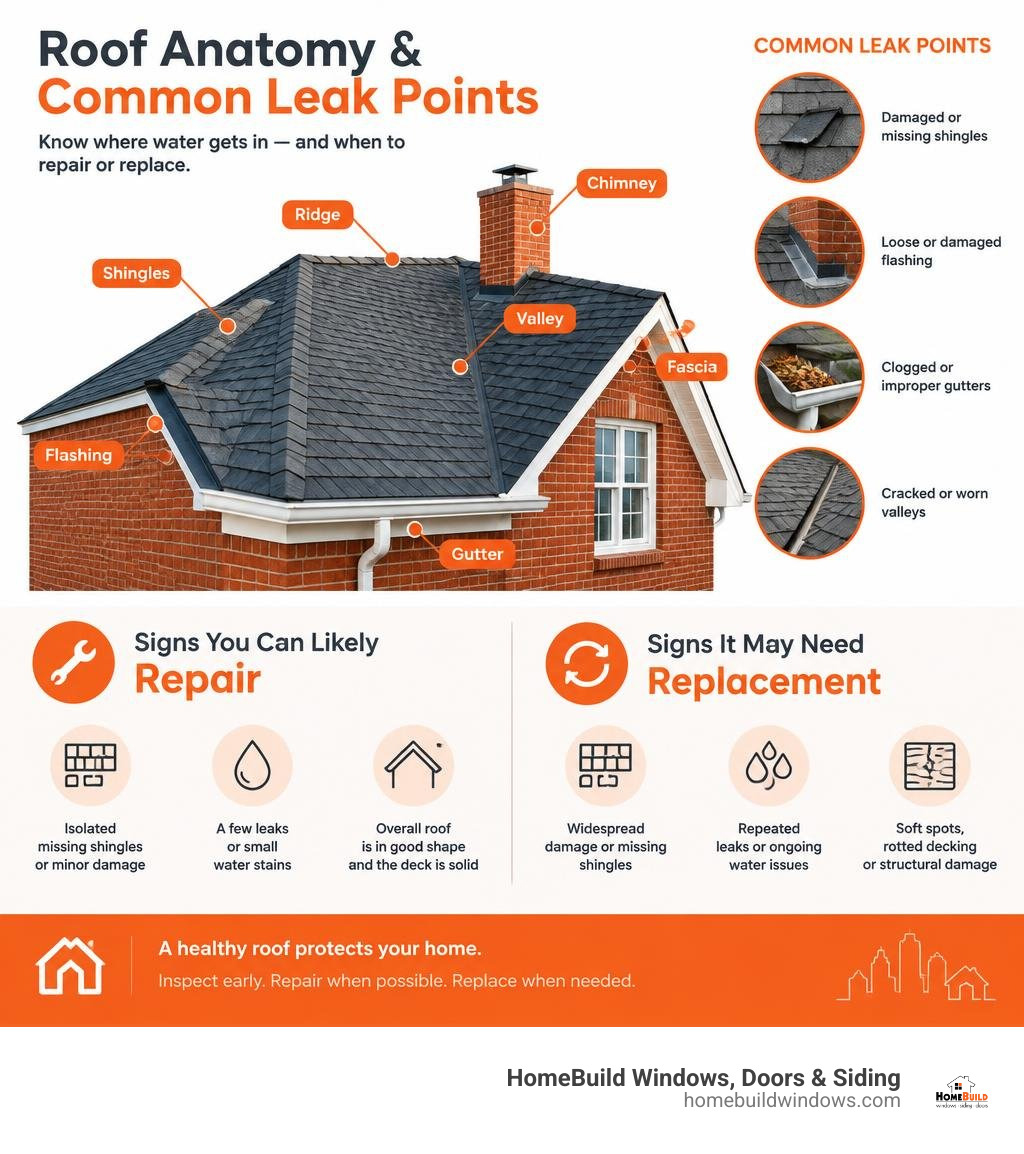
Important repair of roofing terms:
Signs Your Home Needs Urgent Roofing Repair
Living in Chicagoland means exposing your exterior to rapid temperature swings, severe thunderstorms, and lakefront wind gusts. Recognizing the initial signs of exterior distress allows you to take action before moisture migrates deeper into your rafters and insulation.
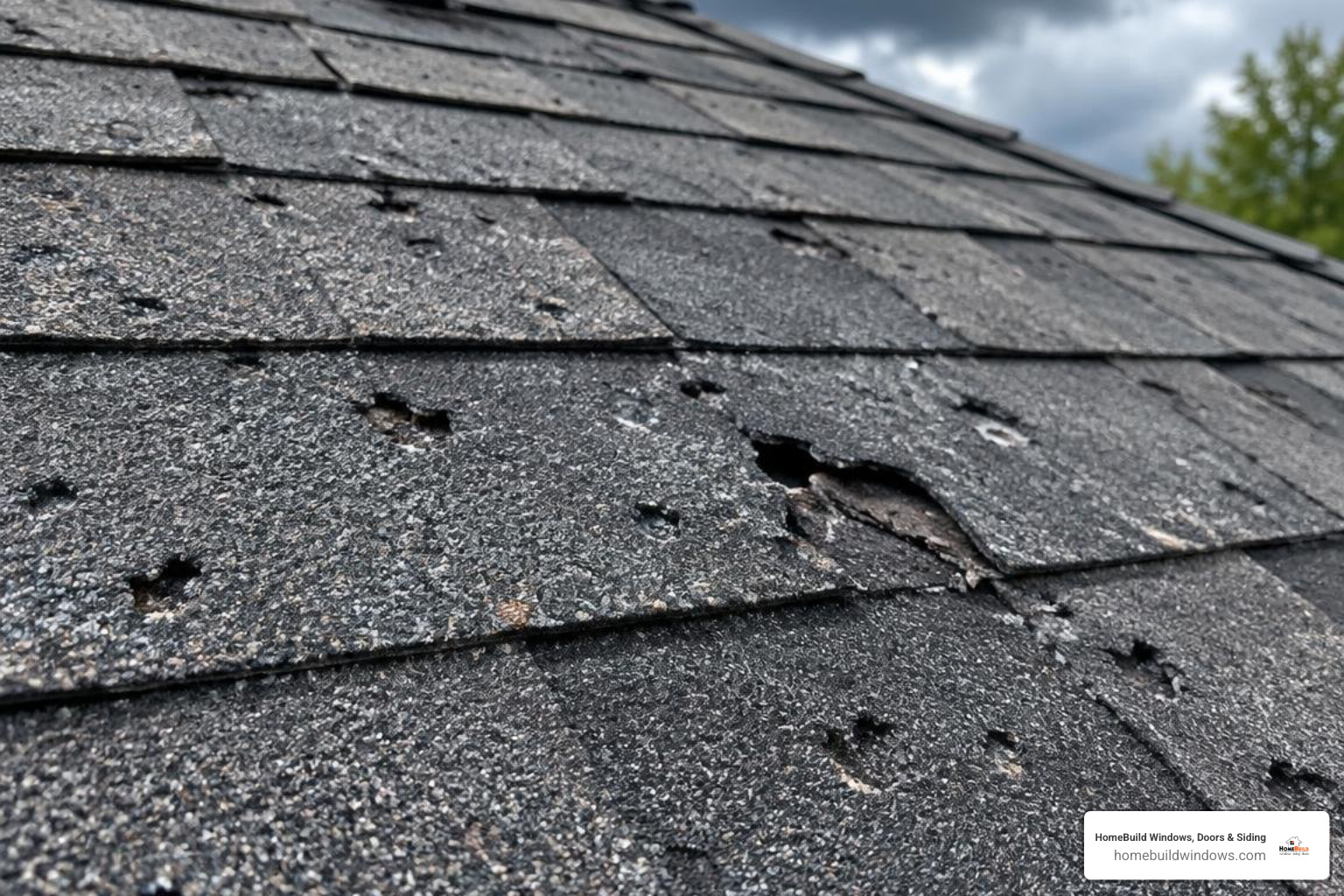
Homeowners should monitor both the exterior perimeter and interior living spaces for clear warning signs:
- Curled or Cupped Shingle Edges: Exposure to intense sunlight followed by freezing weather causes asphalt shingles to lose flexibility, curling upward and catching wind uplift.
- Granule Loss in Gutters: Finding coarse granules accumulating in your gutters indicates the protective mineral coating is shedding, leaving underlying fiberglass mats vulnerable to moisture.
- Flashing Gaps and Separations: Sheet metal around chimneys, sidewalls, and dormers can lift or pull away from brickwork as mortar joints weather.
- Interior Ceiling Discoloration: Yellow, ringed water stains or bubbling paint on drywall reveal water is bypassing the exterior envelope.
- Attic Moisture and Mold: Musty odors, damp insulation, or frost accumulation on the underside of roof sheathing during winter indicate ongoing water penetration.
When severe weather impacts your property, immediate mitigation prevents widespread water damage. In high-wind scenarios where large roof sections are exposed, securing emergency roof repair ensures temporary protection while long-term restoration is planned.
Evaluating the Feasibility for the Repair of Roofing Systems
Not every roofing issue warrants a complete structural tear-off. When the underlying decking remains rigid and dry, isolated fixes provide an effective, long-lasting solution.
We evaluate residential roof sections by checking the surrounding components:
- Localized Wind Damage: Shingle tabs blown loose during a single storm can be replaced individually without disturbing the surrounding field.
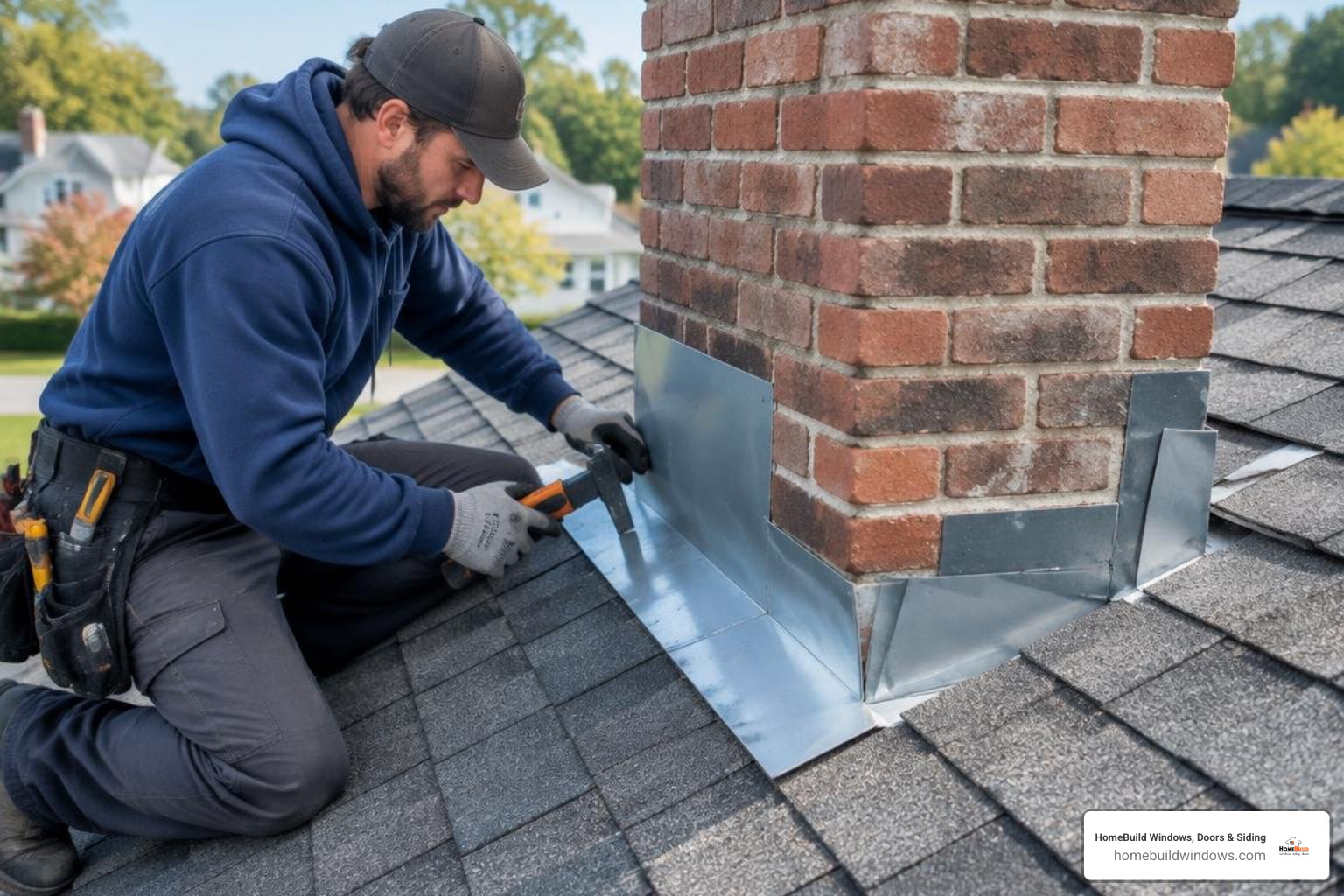
- Chimney Flashing Failures: Failed step or counterflashing can be ground out, resealed, and integrated into existing masonry joints.
- Cracked Plumbing Vent Boots: Neoprene and rubber seals on vent pipes deteriorate faster than asphalt shingles, requiring boot replacement while keeping adjacent materials intact.
When handled through expert roof leak repair, targeted procedures restore moisture resistance and maintain structural integrity.
Identifying Winter and Ice Dam Vulnerabilities
Subzero winter conditions across Northern Illinois create distinct roofing hazards. When warm indoor air escapes into an under-insulated attic, snow on the upper roof melts, runs down to the cold eaves, and refreezes into a thick ice ridge.
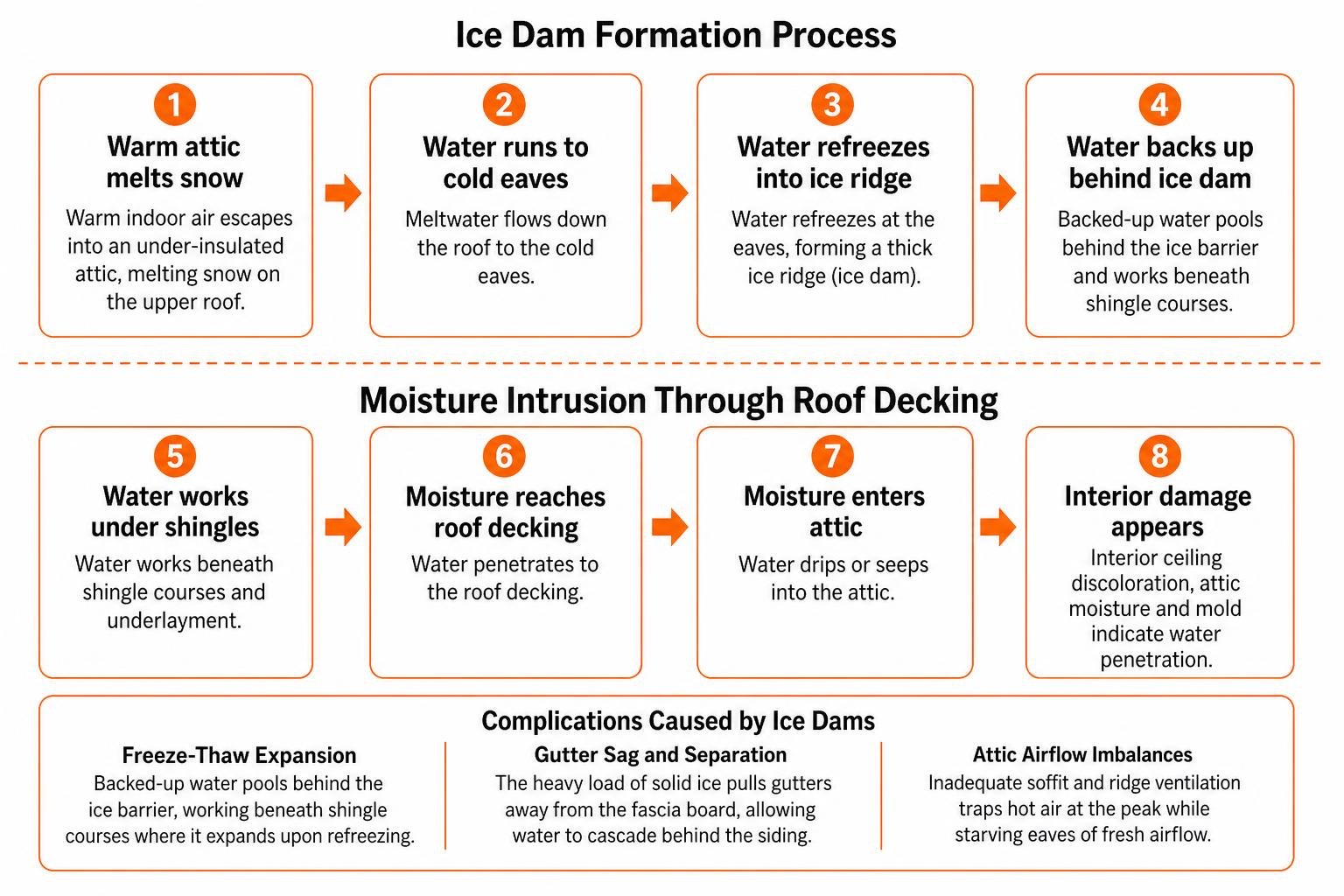
This cycle causes serious complications:
- Freeze-Thaw Expansion: Backed-up water pools behind the ice barrier, working beneath shingle courses where it expands upon refreezing.
- Gutter Sag and Separation: The heavy load of solid ice pulls gutters away from the fascia board, allowing water to cascade behind the siding.
- Attic Airflow Imbalances: Inadequate soffit and ridge ventilation traps hot air at the peak while starving eaves of fresh airflow.
Addressing these issues requires specialized ice dam damage roof repair to replace compromised underlayment and seal vulnerable roof edges against capillary water action.
Understanding the Professional Repair of Roofing for Chicago Homes
Industry studies show that 60 to 70 percent of roof leaks stem from improper installation rather than pure material failure. When fasteners are driven crooked, underlayment seams are improperly lapped, or flashing transitions are poorly aligned, water finds an open path.
Understanding the technical factors involved in residential repairs helps homeowners make informed maintenance decisions.
Step-by-Step Professional Process for the Repair of Roofing Leaks
Professional roofing repair requires methodical diagnostics rather than surface-level patching:
- Water Tracing and Thermal Diagnostics: Because water travels down rafters, purlins, and truss plates before dripping onto ceilings, technicians trace moisture paths back to the external point of entry.
- Underlayment and Deck Inspection: Shingles in the affected area are removed carefully to check the condition of the moisture barrier and structural plywood sheathing.
- Step Flashing Integration: At wall intersections and chimneys, individual metal L-flashing pieces are woven into each shingle course with proper overlaps.
- Valley Sealing and Membrane Installation: Closed-cut and woven valleys receive reinforced waterproofing membranes to handle concentrated stormwater runoff.
Following established industry standards ensures repairs withstand regional weather extremes. Working with dedicated crews for professional roof repair guarantees these standards are met without cutting corners.
Storm and Hail Damage Restoration Procedures
Midwestern storm systems bring high winds and hail that compromise the structural integrity of your roof:
- Hail Impact Bruising: Hailstones fracture the internal fiberglass mat of the shingle, loosening surface granules and creating micro-tears that leak over time.
- Uplifted Shingle Tabs: Wind speeds exceeding 50 mph break thermal seal strips, allowing shingles to flap and tear away from their fasteners.
- Emergency Tarping Protocols: Technicians secure heavy-duty tarps with wooden batten strips to prevent interior water damage while repairs are scheduled.
- Insurance Claim Documentation: Thorough photographic records, date-stamped damage maps, and itemized scope sheets simplify the claim filing process.
Addressing these conditions promptly through storm damage roof repair prevents progressive structural rot inside your roof deck.
Roof Repair vs Roof Replacement: Making the Right Choice
Determining whether to perform a localized repair or transition to a full system replacement depends on roof age, overall damage, and structural health. A standard shingled roof typically lasts 15 to 30 years, depending on ventilation, maintenance, and weather exposure.
| Evaluation Metric | Choose Targeted Roof Repair | Choose Full Roof Replacement |
|---|---|---|
| System Age | Under 12–15 years with sound materials | Over 18–20 years approaching end of lifespan |
| Damage Extent | Isolated to under 20% of surface area | Widespread over 30% of total roof plane |
| Decking Condition | Plywood is solid, dry, and structurally sound | Spongy decking, widespread rot, or sagging |
| Leak History | First-time isolated leak near a penetration | Chronic leaks across multiple rooms and valleys |
| Aesthetic Match | Existing shingles retain color for clean blend | Severe granule fading creates obvious patch lines |
When damage is localized and the rest of your roof remains sound, targeted repair is the sensible path. However, when repeated leaks or structural decking failures occur across multiple slopes, exploring roof replacement options can help you evaluate long-term value.
Preventive Maintenance to Avoid Costly Structural Damage
Regular preventive care extends the operating life of your roof and protects your home against seasonal moisture intrusion.
A consistent maintenance routine should include:
- Semi-Annual Exterior Inspections: Check your roof each spring and autumn for lifted shingles, rusted valley metal, or damaged pipe boots.
- Gutter and Downspout Clearing: Keep drainage channels free of leaves, twigs, and debris so stormwater flows freely away from fascia boards.
- Tree Canopy Trimming: Prune overhanging branches at least six to eight feet away from your roofline to prevent abrasion and reduce fallen limb hazards during storms.
- Attic Ventilation Balancing: Ensure balanced intake at the soffits and exhaust at the ridge to maintain consistent temperatures and reduce moisture buildup.
Scheduling a comprehensive roof inspection allows trained professionals to detect hidden vulnerabilities before they turn into costly structural repairs.
Frequently Asked Questions About Roof Repairs
Can you repair an isolated section of a roof without replacing the whole system?
Yes. If your roof is relatively young and the surrounding decking is in sound structural condition, isolated sections damaged by wind, fallen branches, or failed flashing can be replaced independently. A professional technician will carefully integrate new underlayment, shingles, and fasteners into the existing system to ensure a watertight seal.
What are the most common causes of roof leaks in residential homes?
The most frequent causes of residential roof leaks include deteriorated plumbing boot collars, damaged or improperly sealed step flashing around chimneys and dormers, backed-out roofing nails, unsealed valleys, and moisture migration caused by winter ice dams.
How do Chicago weather conditions impact the lifespan of roof repairs?
Chicago’s climate subjects roofing materials to severe thermal shock. Summer temperatures on asphalt shingles can exceed 140°F, while winter temperatures can drop well below zero. These extreme temperature swings cause building materials to expand and contract repeatedly, stressing sealants, fasteners, and flashing joints over time.
Conclusion
Taking care of your roof protects your home’s structural framing, insulation, and interior finishes from costly water damage. HomeBuild Windows, Doors & Siding is a locally owned contractor serving the Chicago area since 2004 (over 20 years). Every project is installed exclusively by in-house crews (never subcontractors) and supervised on site by owner Steve Mlynek, who visits every job.
Our team holds Elite Platinum Pella Certified Contractor and Andersen Premier Certified Contractor designations, alongside ProVia solutions. We are proud recipients of the Angi Super Service Award 2025 and the 2025 Nextdoor Neighborhood Faves Winner recognition, supported by a 4.9-star rating from 220+ Google reviews. Every installation includes our 10-year labor warranty and a complimentary VIP Protection Plan (1, 2, or 5 years depending on project size). For complete terms, visit our warranty coverage details.
Contact us at (224) 580-1405 or (630) 501-0212, or visit our office at 1830 N Winchester Ave, Chicago, IL 60622. Explore our expert roofing services or schedule a free estimate through HomeBuild today.