Services
Roof Repair
Honest Diagnosis Before You Commit to Replacement
4.9/5
(180+ Reviews)
Angi Super Service Award
2025
Nextdoor Faves
2025
Owens Corning
Certified Installer
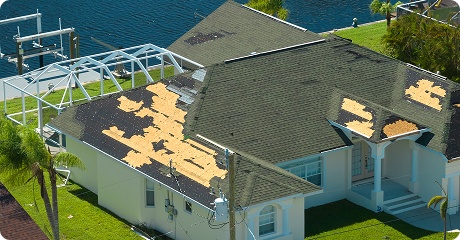
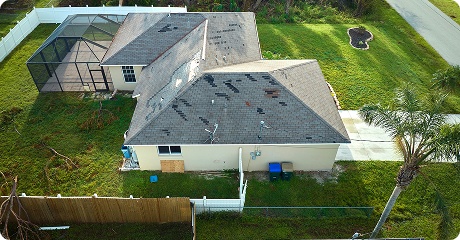
In Chicagoland, leaks, missing shingles, and flashing failures rarely show up alone.
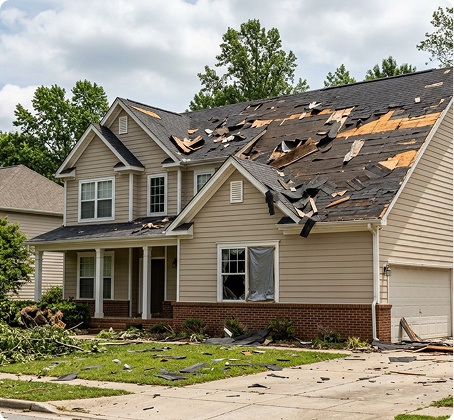
Midwest weather wears multiple roof components at the same time — and what looks like a single small problem from the ground is usually one of three or four issues we find from the roof.
This page covers what we actually do on a repair call: leak diagnosis and repair, missing or damaged shingle replacement, flashing repair around chimneys and valleys, vent boot replacement, skylight leak repair, and soffit and fascia repair. We do not push replacement when repair makes sense. We do not push repair when the roof is past saving. What to expect:
A free on-site inspection,
A written diagnosis
And a clear repair-or-replace recommendation based on what is actually on your roof
not what produces the bigger ticket.
How Do You Know If Your Roof Needs Repair or Replacement?
Most Chicagoland roofs can be repaired — not replaced — when damage is localized and the roof still has at least 8 years of expected service life left. A full replacement is usually the better call when damage spans multiple areas or the roof is past 17 years old.
Roof age under 15 years
repair is usually the right call
Damage limited to one area
one slope, one valley, one chimney) — repair candidate
Decking still sound underneath
repair candidate
Multiple leaks across separate areas
replacement likely needed
Visible curling, granule loss across the whole roof
replacement likely needed
Roof age past 18 years
replacement is usually the better investment
Most Roof Leaks in Chicagoland Start at Flashing, Not Shingles
When a homeowner in Schaumburg or Hoffman Estates calls about a roof leak, the first instinct is usually to blame the shingles.
But shingles are rarely the source. In more than 70% of leak callouts across Chicagoland, the actual point of failure is flashing — the metal components that seal the seams where the roof meets something else.
Flashing fails in predictable places:
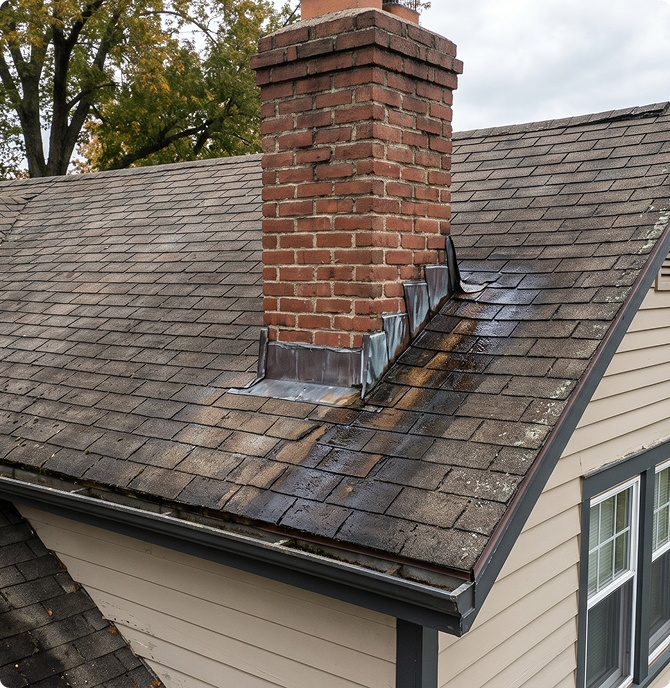
- Around chimneys, where step flashing and counter flashing seal the brick-to-roof transition
- Around vent boots, where rubber gaskets crack and degrade after 8 to 12 years of UV exposure
- Around skylights, where the perimeter flashing and curb seal lose adhesion
- In roof valleys, where two slopes meet and water concentrates during heavy rain
- Around plumbing stacks and roof penetrations
Chicagoland weather is especially hard on flashing. Freeze-thaw cycles flex every metal seam over the winter. Summer heat expands the same metal in the opposite direction. Spring storms drive water against every seam at high velocity. Over time, even well-installed flashing works loose, cracks at solder points, or pulls away from the surrounding shingles.
The good news: flashing failures are almost always repairable. We diagnose the source, isolate the failed component, and repair or replace just that section — without disturbing the surrounding roof.
Repair Makes Sense When Your Roof Has 8+ Years of Service Life Remaining
The question every Chicagoland homeowner asks first is whether repair is even worth it — or whether the money should go straight into a full replacement instead. The honest answer
depends on three factors, and we evaluate all of them in writing during a free on-site inspection.
Factor 1
Remaining service life.
If the roof has at least 8 years of expected service left, repair is almost always the better investment. Spending money to fix a localized problem on an otherwise healthy roof extends its useful life without overbuilding.
Factor 2
Scope of damage.
If the damage is limited to one area — one slope, one chimney, one valley — repair makes sense. If we find separate issues on multiple parts of the roof, the underlying problem is usually age-related deterioration, not isolated failure. At that point, replacement is the more durable solution.
Factor 3
Decking condition.
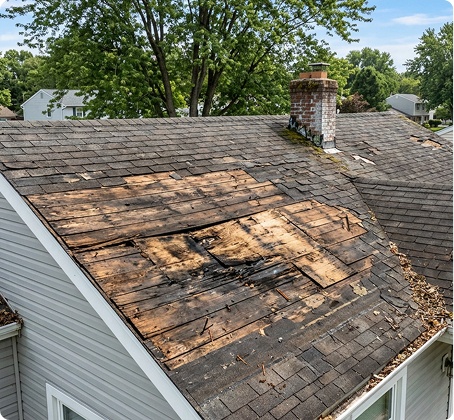
What we find underneath the shingles matters more than what is on top. If the decking is sound, repair is straightforward. If we find soft spots, rot, or visible damage during the inspection, the scope of work — and the repair-or-replace question — changes.
A typical Chicagoland roof reaches end of service life between 18 and 25 years. A 17-year-old roof rarely justifies repair investment, because any money spent now will need to be spent again — and more — within a few years. A 10-year-old roof with one bad valley is almost always
repairable.
Our job is to give you a written diagnosis and a clear recommendation. Your job is to make the call. We do not make the decision for you — and we do not pressure replacement when repair is the right answer.
Chimney Flashing Is the Most Common Repair Point on Chicagoland Roofs
Across Palatine, Arlington Heights, and the broader Chicagoland market, chimney-related leaks are the single most common roof repair scope we handle. Homeowners typically notice water stains on interior walls near the chimney chase, rust streaks running down the brick, or dampness in the attic on the side closest to the chimney.
The leak almost never comes from the chimney itself. The actual failure points are:
Step flashing
the L-shaped pieces of metal that overlap shingle courses where they meet the chimney
Counter flashing
he metal embedded into mortar joints that covers the step flashing
Cricket or saddle flashing
the small peaked structure behind chimneys on a slope, which directs water around instead of pooling behind
Sealant and caulking
at the flashing-to-masonry junction
Each of these components has a different service life and different failure mode. Step flashing can pull loose during storm cycles. Counter flashing can pop out of mortar joints as masonry deteriorates. Cricket flashing can develop pinhole leaks from years of debris pooling. Sealants typically last 5 to 10 years before they need replacement.
In older Chicagoland neighborhoods with established homes and original masonry chimneys, mortar deterioration compounds the issue. The chimney itself may need tuckpointing in addition to the flashing repair — something we identify during inspection and flag in writing for you to address separately.
A chimney flashing repair, done right, lasts as long as the surrounding roof. Done quickly with caulk and patch tar — the way many discount roofers handle it — it fails again within two seasons.
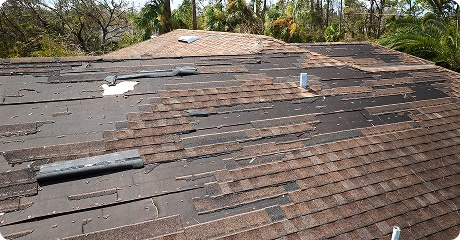
Routine Roof Maintenance Prevents Most Emergency Repairs
Most of the emergency roof repair calls we handle in Wheaton, Elmhurst, and across
Chicagoland could have been prevented with a simple annual or biannual inspection. A failed
vent boot does not happen overnight — it cracks gradually over months. A lifted shingle does not appear out of nowhere — it works loose across multiple wind events. The damage is visible long before water finds its way inside. A routine roof inspection includes:
Visual inspection of every slope, valley, and ridge
Close examination of all flashing — chimney, vents, skylights, plumbing stacks
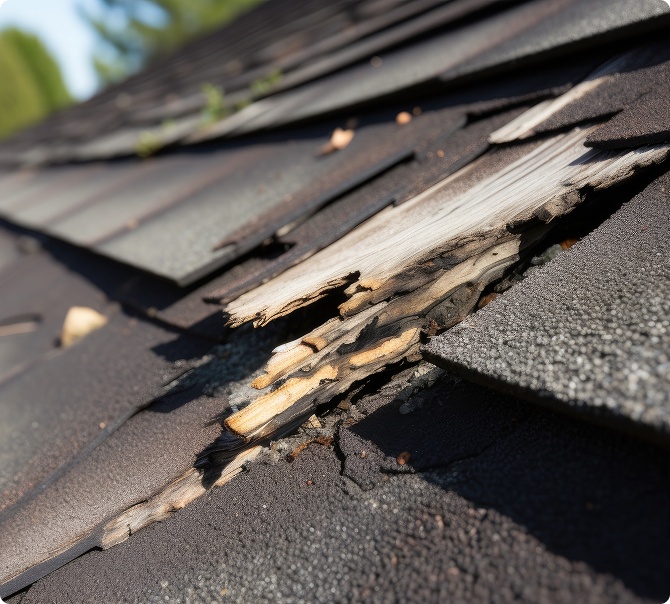
Inspection of shingles for curling, granule loss, lifted tabs, and damage
Inspection of soffits and fascia for water damage, animal entry, and ventilation blockage
Attic inspection where accessible — checking for water staining, daylight, and insulation damage
Photo documentation of every finding
A written report with prioritized recommendations
We recommend two inspection windows for Chicagoland homeowners: early spring (after winter freeze-thaw, before storm season) and late fall (after summer hail and wind season, before snow load).
Either window alone catches most issues. Both together catch nearly everything before it becomes interior damage.
This is one of the lowest-cost, highest-return decisions a homeowner can make. A small repair caught in a routine inspection is a fraction of the work — and a fraction of the disruption — of an emergency leak repair after a ceiling stain appears.
The Right Repair Materials Depend on What Is Already on Your Roof
A clean, durable repair looks and performs like an extension of the existing roof — not a patch.
That depends on matching three things: shingle type, color, and underlying material compatibility.
Shingle type matching.
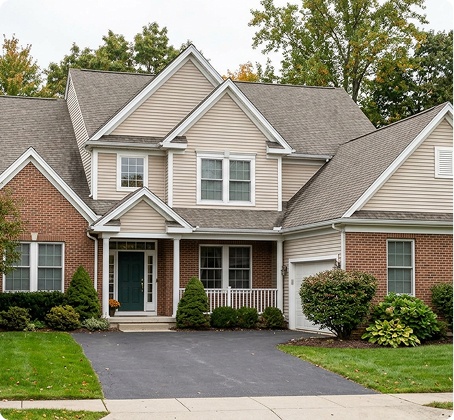
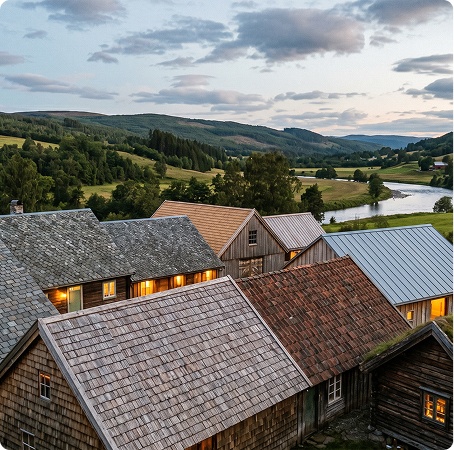
Most Chicagoland homes built since 2000 use asphalt architectural shingles. Some older homes use 3-tab shingles. A few have cedar shake, slate, or metal. Repair materials need to match the existing type — not just visually, but in how they install and weatherproof.
Color matching.
Asphalt shingles fade over time, so even brand-new shingles in the exact same product line will not perfectly match a 10-year-old roof. We minimize the difference by sourcing the closest available current production color, and by placing repair shingles in less visually prominent areas where possible.
Underlying compatibility.
Underlayment, ice and water shield, and flashing materials need to be compatible with the existing roof system. Mixing incompatible underlayments — or installing flashing that does not match the shingle profile — creates new failure points instead of solving the original problem.
We source repair materials to match. We do not patch with whatever is on the truck. And we
document what was installed in writing, so you have a clear record of what is on the roof if you ever need to file a claim or sell the home.
Roof Repair Services Across Chicagoland
A complete list of the repair work we handle across Chicago’s Northwest and West suburbs.
Roof Leak Repair
Diagnose the actual source, isolate the failed component, repair without disturbing surrounding roof. Most leaks resolved in a single visit.
Chimney Flashing Repair
Step flashing, counter flashing, cricket flashing, and sealant replacement. The most common single repair scope we perform.
Missing or Damaged Shingle
Replacement Color-matched architectural or 3-tab shingle
replacement after wind damage, storm impact, or isolated failure.
Valley Flashing Repair
Repair or replacement of open or closed-cut valleys where two slopes meet. Critical drainage point — often the second most common leak source.
Vent Boot Repair
Replacement of cracked rubber boots around plumbing stacks and vent pipes. A 30-minute fix that prevents major interior damage.
Skylight Leak Repair
Perimeter flashing, curb seal, and glass seal repair. Skylights need specialized attention — we do not over-caulk and call it done.
Soffit and Fascia Repair
Water damage, rot, and animal entry repair at the roof edge. Often related to gutter or ventilation problems we identify during inspection.
Roof Maintenance and Inspection
Annual or biannual visual inspection with photo documentation and prioritized written recommendations.
Our Roof Replacement Process
Replacing a roof should never feel like a guessing game. Here is exactly what happens from your first call to the final walkthrough.
1
Free On-Site Inspection
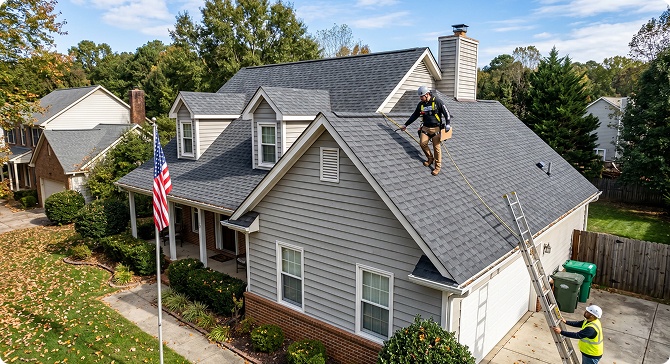
A roofing specialist visits your home, examines the roof from top to eaves, and documents conditions with photos. We diagnose the actual source of the problem — not just the symptom.
2
Written Repair-or-Replace Diagnosis
You receive a written report with our findings, the recommended scope of work, and an honest assessment of whether repair makes more sense
than replacement. We walk through it with you in person or by phone.
3
Repair Scheduling
Once you approve the work, we schedule the repair around your calendar and Chicagoland weather. Most repairs are completed in a single visit.
4
Repair Completion and Cleanup
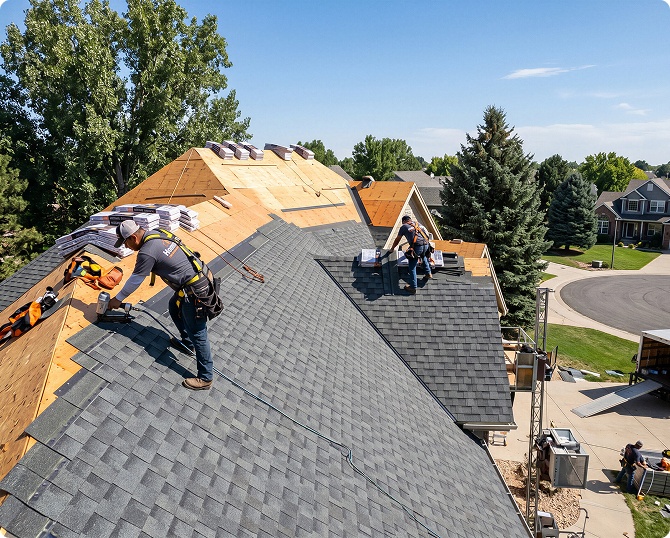
The repair is performed using matched materials. The site is cleaned with a magnetic nail sweep. You receive documentation of what was installed.
Roof Repair Across Chicago's Northwest and West Suburbs
HomeBuild Roofing handles repair work across Chicago’s Northwest and West suburban communities — the markets we know best and serve with rapid response times.
Northwest Suburbs
West Suburbs
If your town is not on this list, call us — we may still serve your neighborhood depending on
schedule and project scope.
Frequently Asked Questions About Roof Repair in Chicagoland
How do I know if my Chicagoland home needs roof repair or full replacement?
HomeBuild Roofing installs Owens Corning shingles, including the Duration® series with SureNail® Technology. Owens Corning is one of the most recognized residential roofing brands in North America, backed by industry-leading manufacturer warranties.
Is it cheaper to repair than replace my Chicagoland roof?
Yes, when damage is isolated and the roof still has years of service life remaining. No, when damage is widespread or the roof is past expected service age. A free on-site inspection gives you a written diagnosis so you can decide based on actual condition, not guesswork.
Can a leaking roof be repaired without replacing the whole roof?
HomeBuild Roofing installs Owens Corning shingles, including the Duration® series with SureNail® Technology. Owens Corning is one of the most recognized residential roofing brands in North America, backed by industry-leading manufacturer warranties.
How long does a roof repair last?
HomeBuild Roofing installs Owens Corning shingles, including the Duration® series with SureNail® Technology. Owens Corning is one of the most recognized residential roofing brands in North America, backed by industry-leading manufacturer warranties.
Do you repair leaks around chimneys?
HomeBuild Roofing installs Owens Corning shingles, including the Duration® series with SureNail® Technology. Owens Corning is one of the most recognized residential roofing brands in North America, backed by industry-leading manufacturer warranties.
Should I get a roof inspection if I have not had a leak yet?
HomeBuild Roofing installs Owens Corning shingles, including the Duration® series with SureNail® Technology. Owens Corning is one of the most recognized residential roofing brands in North America, backed by industry-leading manufacturer warranties.
Honest Diagnosis. Real Repair. No Pressure to Replace.
A free on-site inspection. A written diagnosis. A clear recommendation — repair when it makes sense, replacement when it does not. Two decades of experience and 180+ five-star reviews behind every call.