How to Replace Rubber Seals on uPVC Windows
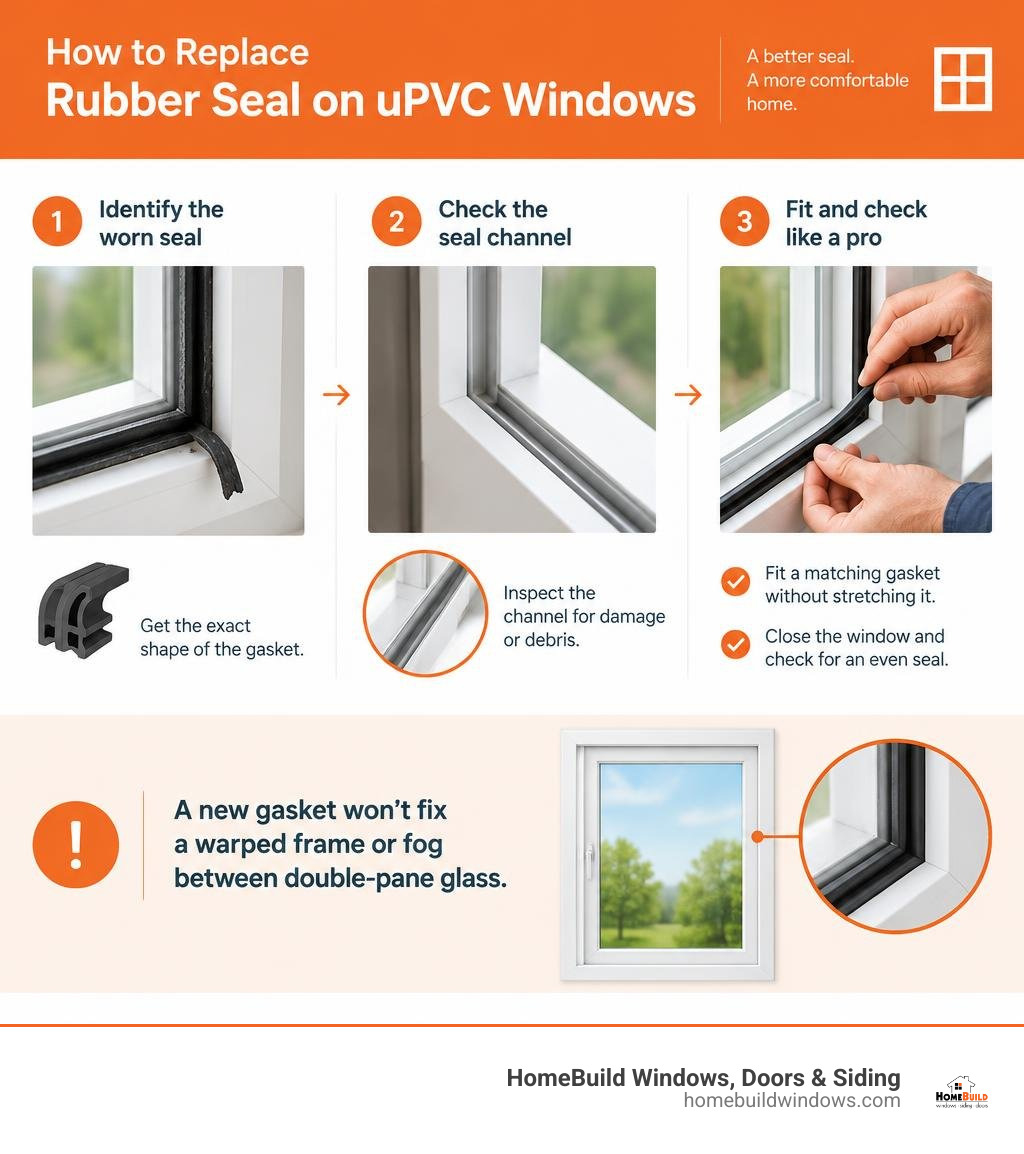
To replace rubber seals on uPVC windows, first confirm the draft is coming from the opening sash and identify the gasket’s exact shape. A window professional can remove the worn seal, inspect its channel, fit a matching gasket without stretching it, and check that the closed window seals evenly. A new gasket will not fix a warped frame or fog between double-pane glass.
Chicago winters can make a small gap feel much worse. I’m Steve Mlynek, founder of HomeBuild Windows, Doors & Siding, and I’ve spent over 20 years helping Chicago-area homeowners assess drafty windows. If you want to understand how to replace rubber seals on uPVC windows, this guide will help you recognize when the gasket needs attention and when the problem goes deeper.
Helpful guides for evaluating window performance and repairs:
Signs Your uPVC Window Rubber Seals Need Replacement
When freezing winds sweep off Lake Michigan, any compromise in your window envelope becomes instantly noticeable. The rubber weatherstripping and perimeter gaskets on uPVC (vinyl) windows are designed to flex and compress thousands of times over their lifecycle. However, decades of harsh Midwest freeze-thaw cycles, blazing summer humidity, and direct sunlight eventually degrade the rubber compound.
A failing seal allows conditioned indoor air to escape while drawing cold outdoor air inside. Consulting an energy efficient windows guide can help you understand how air leakage compromises your home’s thermal boundary. Reviewing MEA – Weatherstripping guidance also highlights how air infiltration impacts household comfort and utility performance.
Visual and Physical Signs of Seal Degradation
Over time, environmental stressors alter the physical properties of synthetic rubber:
- Loss of Elasticity and Flattening: Healthy rubber springs back immediately when compressed. Failed gaskets take on a permanent compression set, remaining completely flat even when the window sash is swung open.
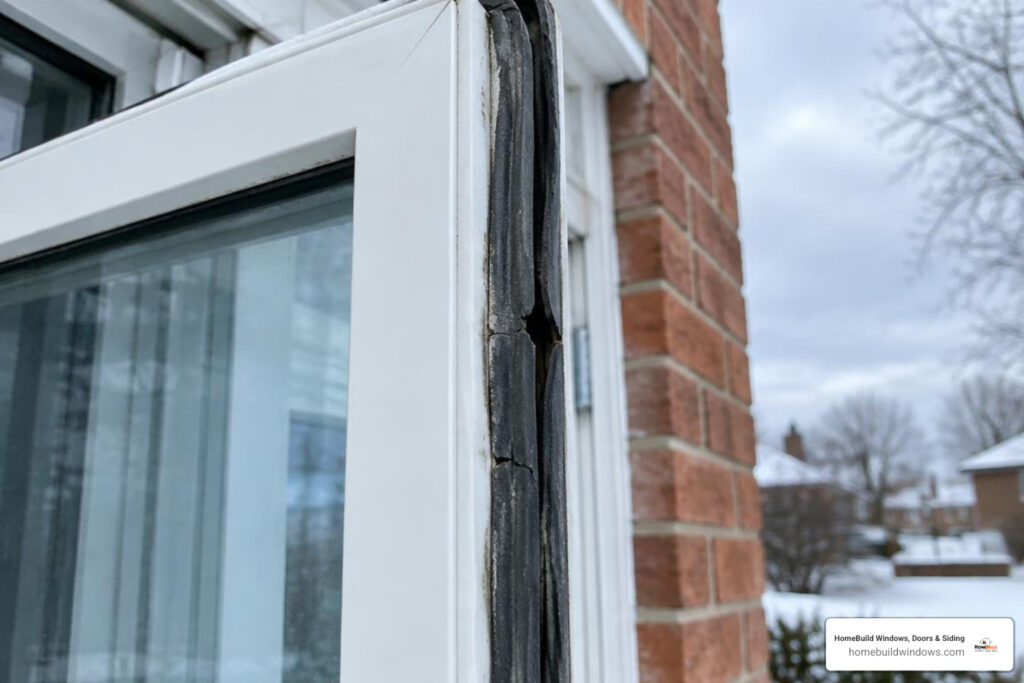
- Cracking and Embrittlement: Extended UV exposure breaks down polymer chains, turning soft rubber dry, brittle, and cracked.
- Shrinkage at the Corners: As rubber ages, it contracts. You will often see the gasket pulling away from the frame corners, leaving visible 1/4-inch to 1/2-inch gaps where cold air enters.
- Black Residue and Perishing: Severely degraded seals leave a powdery black residue on your fingers when touched, signaling total material breakdown.
- Perimeter Moisture and Mildew: When seals fail to create an airtight barrier, warm indoor air meets the cold outer frame edge, creating perimeter condensation and black mold growth along the vinyl sill.
The Paper Test and Draft Detection
If you are unsure whether your seals have failed, a few simple diagnostic checks can confirm air leakage:
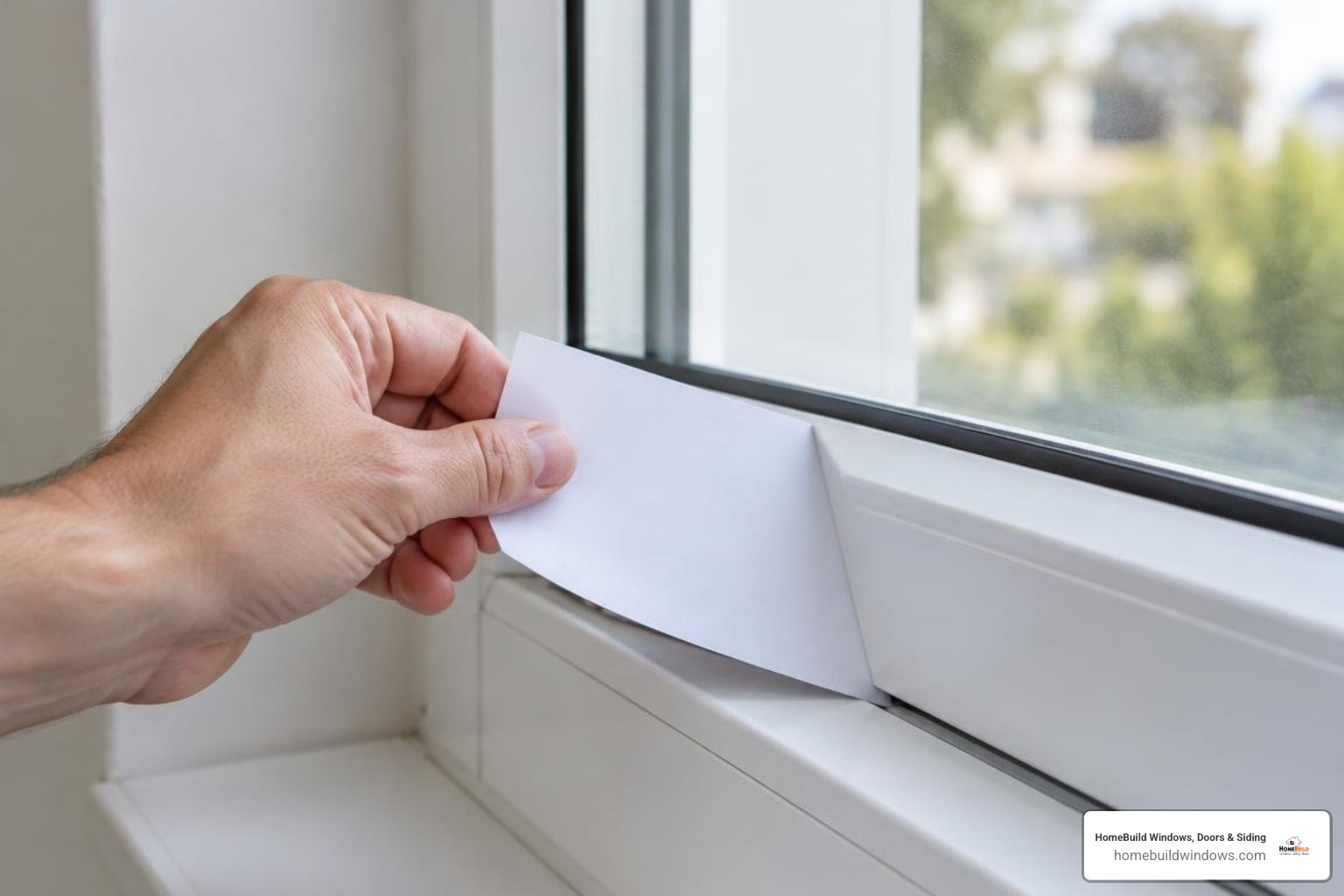
- The Paper Test: Open your window, place a standard sheet of paper across the frame gasket, and latch the window shut. Try to pull the paper out. If it slips out with zero resistance, the gasket is no longer compressing against the sash. Repeat this test at the top, bottom, hinge side, and lock side.
- The Light Leak Test: At dusk or at night, have someone shine a bright flashlight around the exterior perimeter of the closed window while you observe from a darkened room inside. Any visible slivers of light indicate an unsealed gap.
- The Thermal / Draft Check: In classic Chicago brick bungalows or two-flats, drafts frequently concentrate near exterior-facing sashes. Running your hand slowly around the sash boundary on a blustery day will immediately pinpoint localized cold air infiltration.
Understanding Gaskets and Professional uPVC Window Seal Replacement
Understanding how to replace rubber seals on uPVC windows starts with recognizing that window gaskets are precision-engineered components, not generic rubber strips. Vinyl window frames feature extruded channels into which a specific gasket profile is fitted.
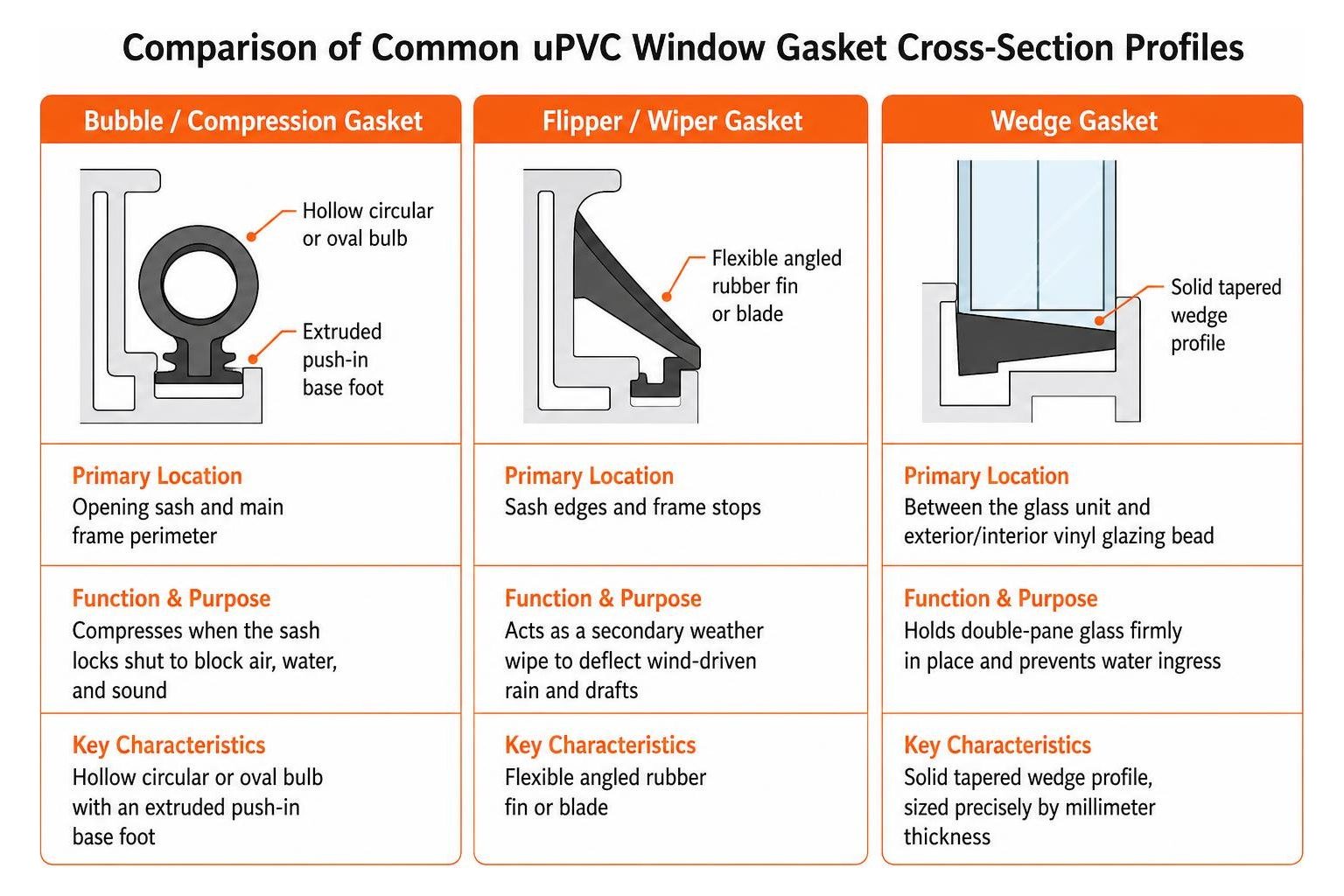
| Gasket Profile Type | Primary Location | Function & Purpose | Key Characteristics |
|---|---|---|---|
| Bubble / Compression Gasket | Opening sash and main frame perimeter | Compresses when the sash locks shut to block air, water, and sound | Hollow circular or oval bulb with an extruded push-in base foot |
| Flipper / Wiper Gasket | Sash edges and frame stops | Acts as a secondary weather wipe to deflect wind-driven rain and drafts | Flexible angled rubber fin or blade |
| Wedge Gasket | Between the glass unit and exterior/interior vinyl glazing bead | Holds double-pane glass firmly in place and prevents water ingress | Solid tapered wedge profile, sized precisely by millimeter thickness |
Identifying Gasket Profiles and Push-Fit Channels
Most modern uPVC and vinyl window systems utilize specialized push-fit gaskets that lock securely into an integrated groove. These channels differ significantly in width, depth, and retaining lip design depending on the frame manufacturer.
Using an incorrect profile creates serious issues. If a replacement gasket is too thick, it places excessive strain on the hinges and locking hardware, making the window nearly impossible to close. If it is too thin, it will fail to compress, leaving drafts unresolved.
What Professional uPVC Window Seal Replacement Involves
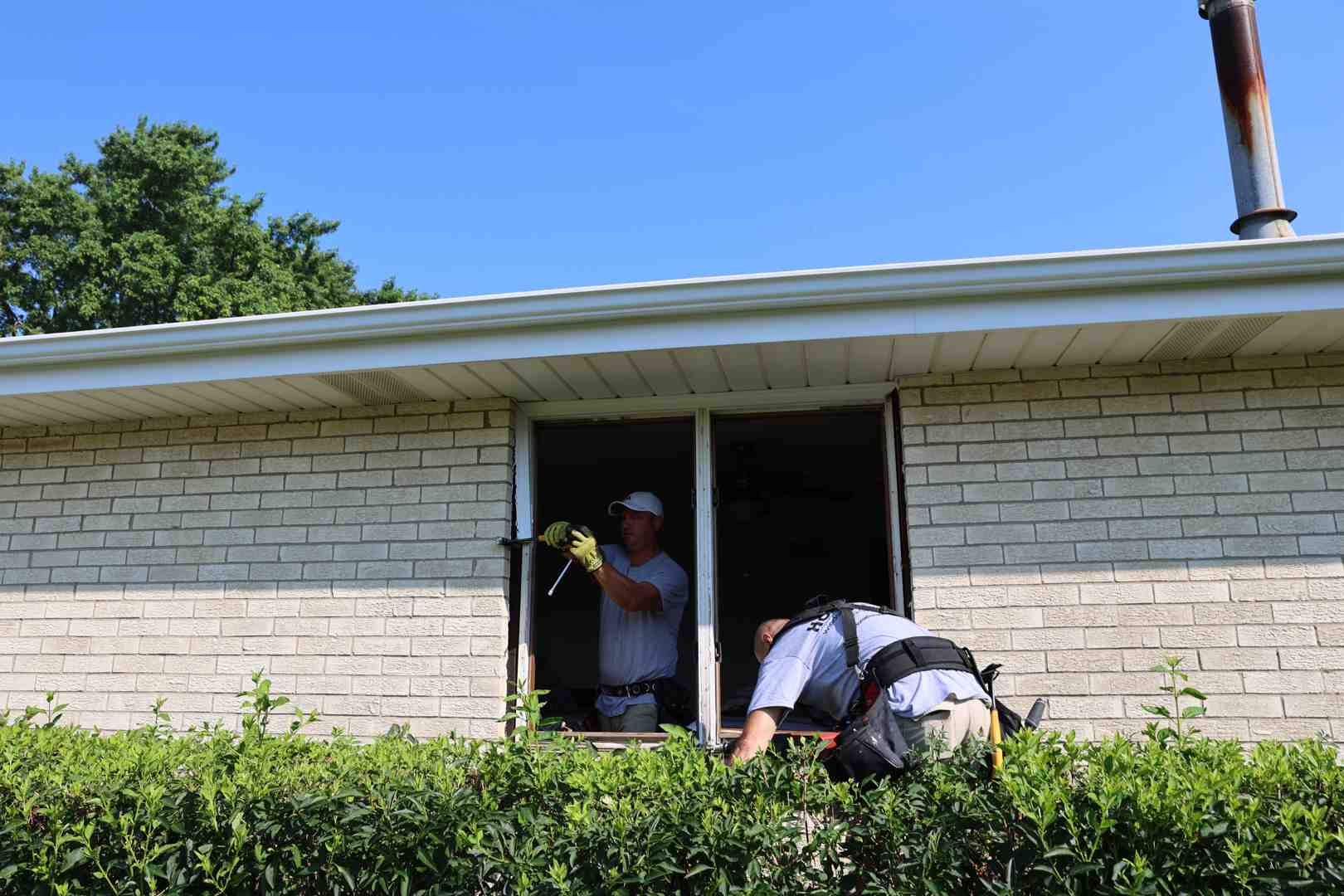
Replacing perimeter seals is a meticulous process that requires precision to ensure a lasting, airtight fit. When a professional technician assesses and reseals an opening sash, the service entails:
- Profile Extraction and Sizing: Extracting a clean sample of the degraded gasket to cross-reference its exact cross-sectional geometry and base-channel dimensions.
- Channel Cleaning and Clearing: Thoroughly cleaning the vinyl groove of rotted rubber fragments, built-up grime, and factory weld flash (excess plastic left inside frame corners during fabrication) that prevents flat seating.
- Zero-Tension Installation: Hand-pressing the new gasket into the retention track continuously around the frame without stretching the material.
- Corner Joint Alignment: Cutting and joining corners cleanly—often utilizing precise 45-degree angle relief cuts or continuous wrap techniques—to eliminate corner bunching or gaps.
- Compression Testing: Conducting multi-point closure tests to verify uniform compression along all four sides of the sash.
Precision Fitting and Preventing Seal Shrinkage
The most critical mistake made during gasket installation is pulling or stretching the rubber to make it reach a corner. Rubber has natural elastic memory. If it is installed under tension, it will gradually contract over the following months, pulling out of the corners and re-introducing air leaks.
Professional installers take material relaxation into account, feeding excess length into the channel and applying targeted silicone-safe adhesives at critical joint junctions to guarantee an enduring barrier against Chicago’s freeze-thaw cycles.
When Window Drafts Indicate More Than Just Gasket Wear
A worn gasket is not always the sole culprit behind a cold, drafty room. In many cases, air leaks stem from deeper structural or mechanical issues within the window assembly. Reviewing a window replacement complete guide 2026 helps distinguish between simple surface maintenance and underlying unit failure.
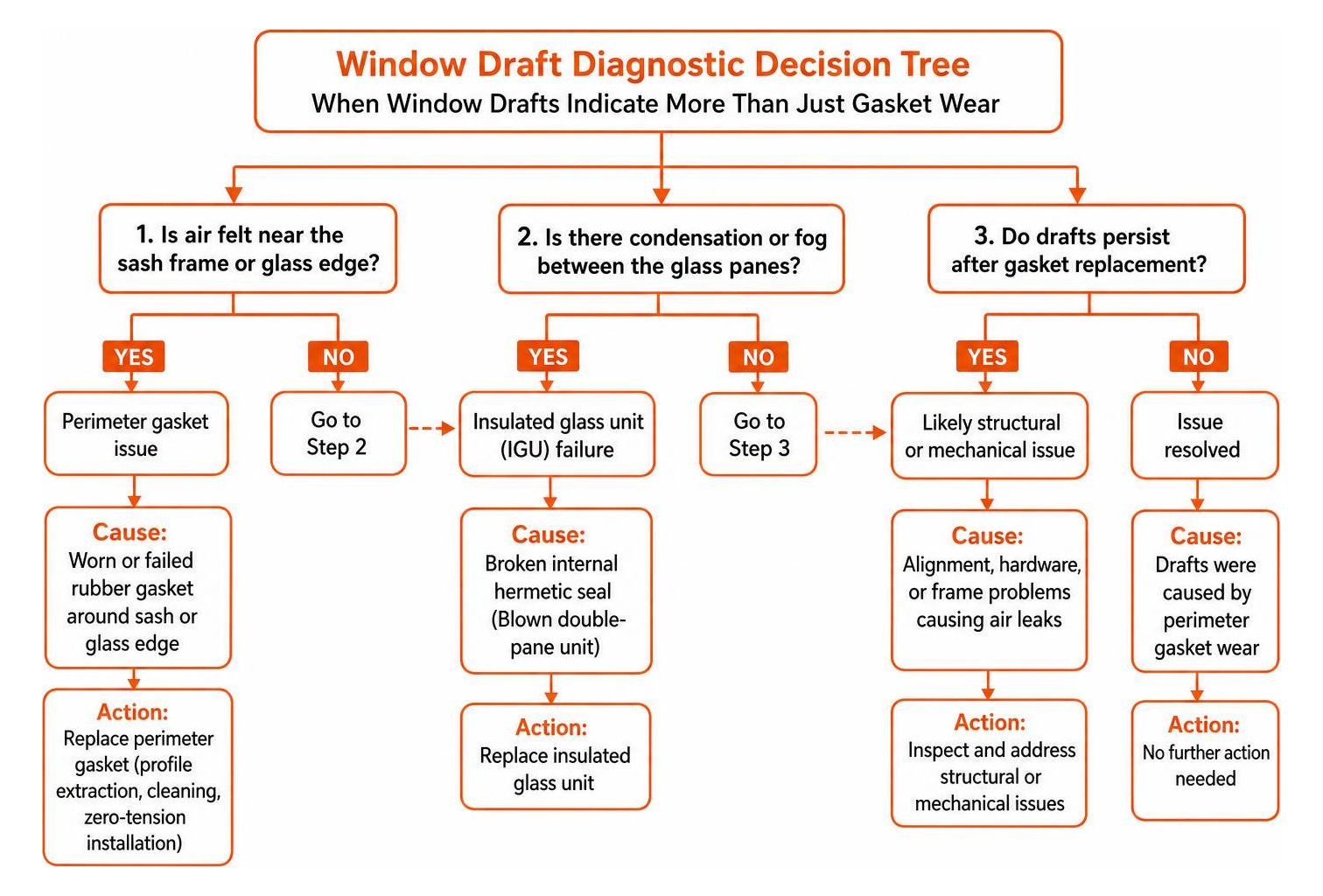
Blown Double-Pane Units vs. Perimeter Gasket Failure
It is vital to distinguish between a perimeter rubber gasket and the insulated glass unit’s (IGU) internal hermetic seal:
- Perimeter Frame Gaskets: The visible rubber seals around the sash and glass edge that block drafts and rainwater from entering your home.
- Hermetic IGU Edge Seals: The factory-bonded seal that bonds two panes of glass together around a sealed spacer bar filled with desiccant and insulating gas (such as argon).
If you notice moisture, fog, or cloudy condensation trapped between the two panes of glass, the insulated glass unit has failed (a “blown” window). Replacing the outer rubber gasket will not resolve internal fogging; the entire glass unit or sash must be replaced to restore thermal performance.
Structural Distortions and Hardware Wear
Even a brand-new rubber gasket cannot seal an opening if the window frame itself is out of square. Common mechanical issues include:
- Hinge Drop and Sash Sagging: Over time, the friction stays or hinges on heavy casement windows wear down, causing the sash to drop slightly in the frame and leave an open gap at the top corner.
- Distorted or Warped Vinyl: Lower-grade vinyl frames subjected to intense summer heat and winter freezes can bow or warp along their span, pulling away from the gasket line.
- Worn Multi-Point Locks: If the locking cams or keepers become loose or misaligned, the lock mechanism can no longer draw the sash tight against the frame seals.
Frequently Asked Questions About uPVC Window Seal Replacement
How long do uPVC window rubber seals typically last?
Quality compression seals on well-built uPVC and vinyl windows generally last between 10 and 20 years. However, their lifespan depends heavily on environmental conditions. Seals on south- and west-facing windows exposed to intense, direct ultraviolet light degrade faster than those in shaded areas. Periodic visual inspections every 5 to 10 years help catch embrittlement before drafts cause winter heating spikes.
Will replacing the rubber seal stop condensation between the glass panes?
No. Replacing the perimeter rubber seal around your window frame will eliminate drafts and reduce edge condensation on the indoor glass surface, but it cannot cure fogging or mist between the double-pane glass. Moisture between panes indicates that the insulated glass unit’s factory hermetic seal has ruptured, requiring replacement of the glass unit itself.
When is it better to replace the entire window instead of resealing?
If your windows are over 20 to 25 years old, feature failing balances or warped frames, exhibit blown double-pane glass, or become difficult to open and lock, replacing individual rubber seals is only a temporary band-aid. Upgrading to modern high-performance replacement windows restores total structural integrity, acoustic insulation, and maximum energy efficiency.
Conclusion
Drafty windows and degraded seals can significantly reduce your home’s comfort and drive up heating bills during severe Chicago winters. While understanding the mechanics of window gaskets helps you identify seal failure, addressing deep-seated drafts, warped frames, or blown glass units requires experienced evaluation.
When your windows show signs of severe wear or structural draftiness, we recommend a professional on-site evaluation. HomeBuild Windows, Doors & Siding is a locally owned contractor proudly serving Chicago and the surrounding suburbs since 2004. With over 20 years of dedicated local experience, every project is installed exclusively by our trusted in-house crews—never subcontractors—and supervised on site by our owner, Steve Mlynek, who personally visits every job.
Our team is proud to be an Elite Platinum Pella Certified Contractor and an Andersen Premier Certified Contractor, recognized as an Angi Super Service Award 2025 winner, a 2025 Nextdoor Neighborhood Faves winner, and rated 4.9 stars across 220+ Google reviews. Every full window installation is backed by our comprehensive 10-year labor warranty and includes our complimentary VIP Protection Plan (covering 1, 2, or 5 years depending on project scope)—learn more on our warranty details page.
To explore your home improvement options, consult our comprehensive replacement window buying guide, or contact our local team today to schedule your free estimate.