
Why Your Home Needs a Window Replacement Guide
Welcome to your essential window replacement guide! This guide is packed with facts to help you make smart choices for your home.
Here’s what you should know right away:
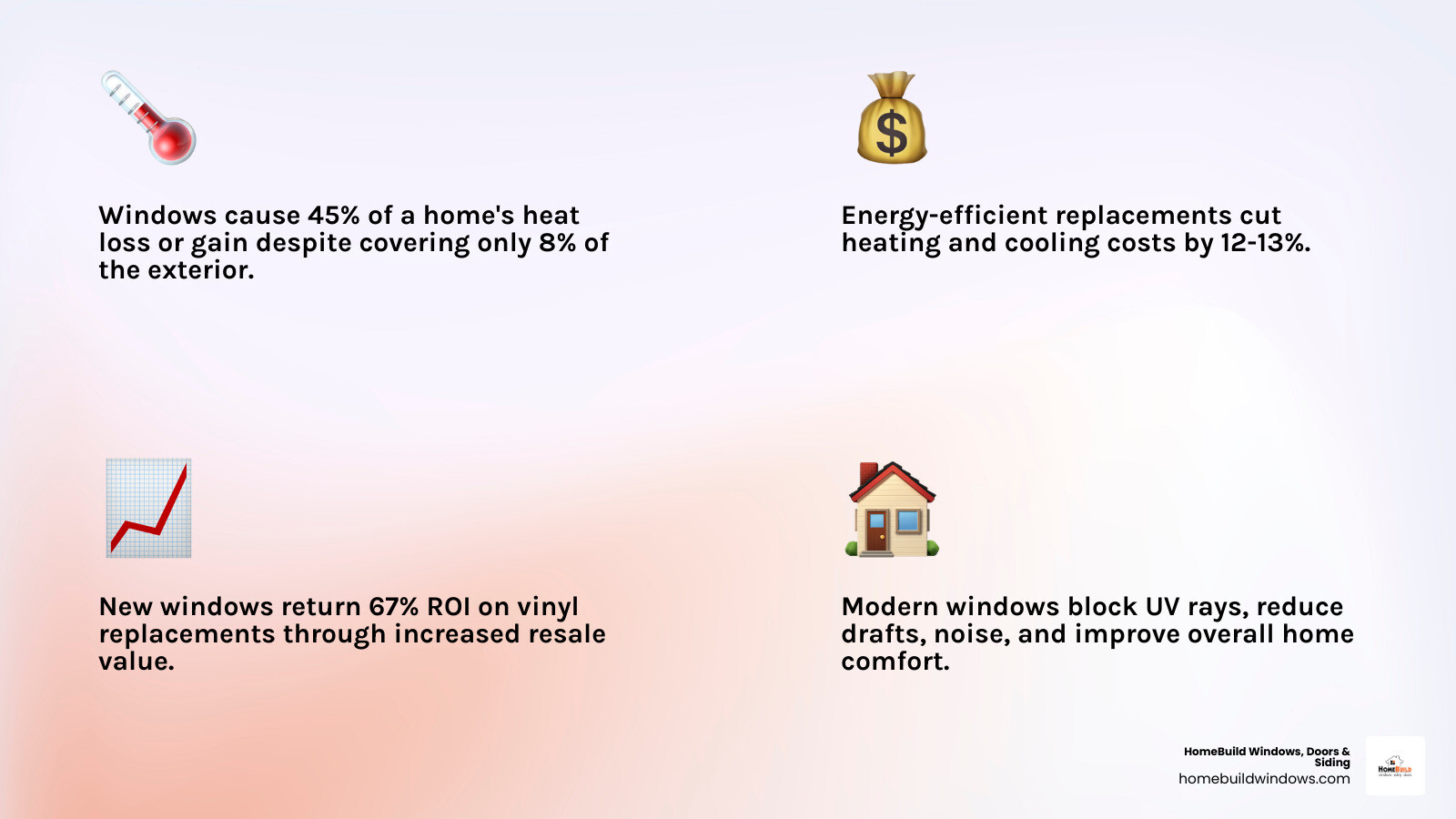
- Windows can waste a lot of energy. They cause about 45% of heat loss or gain in a home, even though they are a small part of your exterior.
- New windows save money. Energy-efficient windows can cut heating and cooling costs by 12-13%. Replacing just 10 old windows can save hundreds each year.
- They add value to your home. New windows boost curb appeal and can increase resale value. You can even get back 67% of the cost for vinyl windows when you sell.
- Enjoy a more comfortable home. Say goodbye to drafts, noise, and uneven temperatures.
New windows do more than just look good. They make your home more comfortable, quieter, and cheaper to run. Plus, they can significantly increase its value.
I’m Steve Mlynek, CEO and founder of HomeBuild. With over 20 years in the industry, I’ve built one of Chicago’s most trusted names in window installation, and this window replacement guide is built from that experience. My team and I are committed to delivering high-quality window solutions and expert craftsmanship for your home.
Is It Time for an Upgrade? A Window Replacement Guide
Have you checked on your windows lately? It is easy to take them for granted until the utility bill arrives or a draft makes you shiver in your own living room. Windows are the “eyes” of your home, but when they age, they become a major source of energy waste.
Research shows that while windows only take up about 8% of your home’s exterior surface, they account for approximately 45% of the heat gain or loss. If your home has history, it will inevitably need a new set of windows. To help you decide if it’s time, check out this resource: Is it Time to Replace Your Windows?.

If you are tired of feeling the Chicago winter through the glass, you can find more info about energy efficient replacement windows to see how modern technology keeps the heat where it belongs.
Signs of Window Failure
How do you know for sure that your windows are “done”? Here are the red flags we see most often in Chicagoland:
- Single-Pane Glass: These provide 5 to 10 times less thermal protection than an insulated wall. They are essentially a hole in your home’s thermal envelope.
- Rotted Sills and Sashes: If the wood is soft or crumbling, moisture has moved in, and structural damage isn’t far behind.
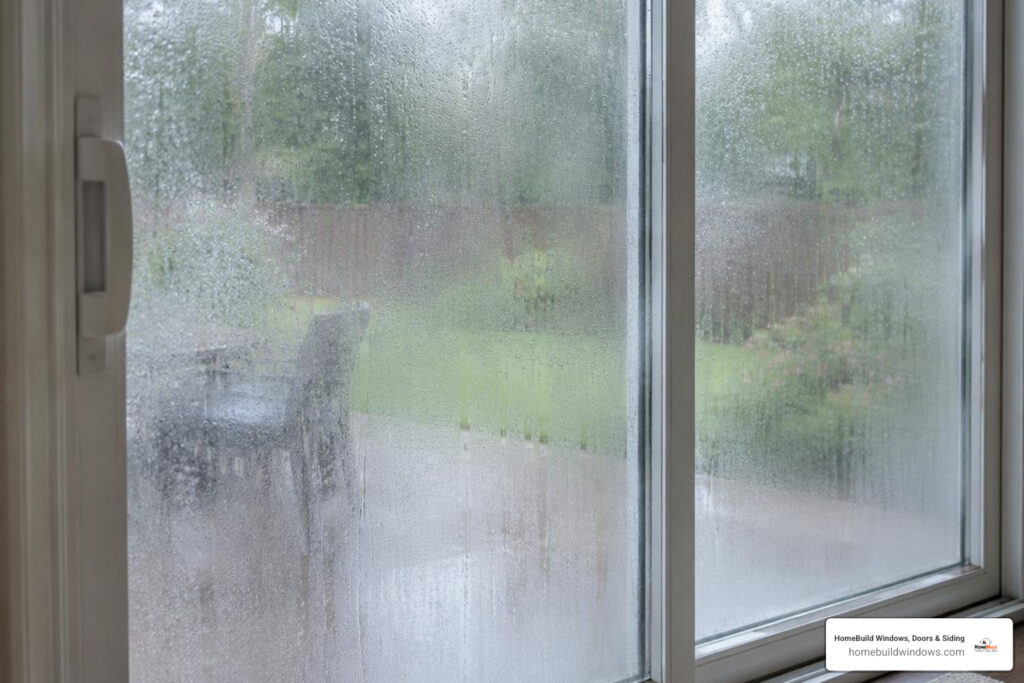
- Condensation Between Panes: This “foggy” look means the seal has failed, and the insulating gas (like Argon) has escaped.
- Stuck Sashes: Windows that won’t open or stay up are a safety hazard, especially in an emergency.
- Noise Pollution: If you can hear every car passing on the street as if you were standing on the sidewalk, your windows aren’t providing the sound barrier they should.
If you’re debating between different glass options, we have more info about double pane vs triple pane windows to help you weigh the insulation benefits.
Benefits of Timely Replacement
Upgrading isn’t just about fixing a problem; it’s an investment. On average, homeowners see a 12-13% reduction in annual heating and cooling costs. In the northern U.S., replacing 10 single-pane windows with Energy Star models can save an average of $568 per year.
Beyond the monthly savings, new windows protect your interior. Modern Low-E coatings block UV rays that fade your carpets and furniture. Furthermore, studies on home resale value consistently show that window replacement is one of the best ways to recoup your investment, with vinyl replacements often seeing a 67% ROI.
Understanding Window Types and Energy Efficiency
When you start browsing this window replacement guide, the terminology can feel like a foreign language. “U-factor,” “SHGC,” “Argon gas”—what does it all mean?
At HomeBuild, we want you to be an informed shopper. Here is a quick breakdown of the two main installation types:
| Feature | Pocket (Insert) Replacement | Full-Frame Replacement |
|---|---|---|
| Scope | Fits into the existing frame. | Entire window and frame are removed. |
| When to Choose | Frame is square and rot-free. | Frame is rotted or you want a new size. |
| Cost | Generally lower. | Higher due to labor and materials. |
| Benefit | Preserves original trim. | Maximizes glass area and seals leaks. |
To understand how these choices impact your budget, we provide more info about window replacement costs.
Choosing the Right Style for Your Window Replacement Guide
The style you choose should match your home’s architecture and your functional needs.
- Double hung windows: A classic choice where both the top and bottom sashes move. They are very easy to clean!
- Casement windows: These crank outward and offer excellent ventilation and a tight seal against wind.
- Picture windows: These are fixed and do not open, designed to frame a view and let in maximum light.
- Awning windows: Hinged at the top, these allow you to keep the window open even during a light rain.
Decoding the NFRC Label
Every quality window comes with a National Fenestration Rating Council (NFRC) label. This is your “nutrition label” for energy.
- U-Factor: Measures heat loss. Lower numbers are better (aim for 0.30 or less in Chicago).
- Solar Heat Gain Coefficient (SHGC): Measures how much heat from the sun enters. In our climate, a moderate SHGC helps with “passive solar” heating in winter.
- Visible Transmittance: How much light comes through.
- Air Leakage: How much air “leaks” through the window’s joints.
Always look for the Energy Star label, which confirms the window meets Energy Star standards for the Northern climate zone. You can learn more about these ratings at Residential Windows, Doors and Skylights.
The 7-Step Installation Process
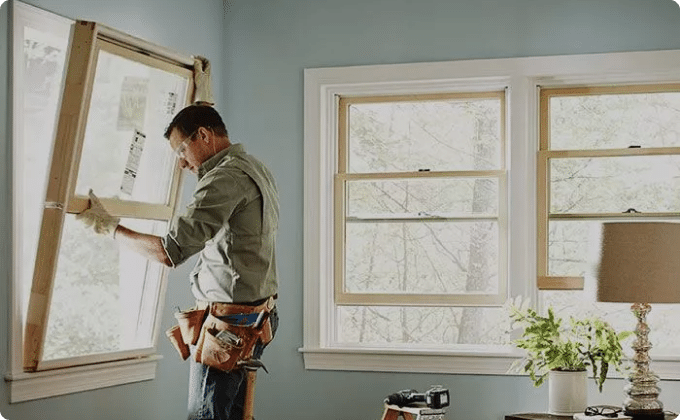
Whether you are a brave DIYer or hiring us to do the heavy lifting, knowing the process ensures a quality job. A poorly installed window can leak water and air, leading to structural rot. You can even use the DOE Window Replacement Checklist to keep track of the quality.
Step 1: Measuring for Your Window Replacement Guide
This is the most critical step. “Measure twice, order once” is our motto. If your measurements are off by even half an inch, the window won’t seal properly.
- Width: Measure at the top, middle, and bottom between the jambs. Use the smallest number.
- Height: Measure at the left, middle, and right from the sill to the head. Use the smallest number.
- Depth: Ensure you have at least 3 1/4 inches of clear space for a pocket replacement.
- Squareness: Measure the diagonals. If they aren’t the same, the window is “out of square,” and you’ll need shims to level it.
For a deeper dive into the technical side, check out more info about window installation.
Steps 2-7: From Removal to Finishing
Once you have your custom windows (which typically take 6-12 weeks to manufacture), the real work begins.
- Removal: Carefully score the paint seals and remove the old sashes. If your home was built before 1978, be extremely careful of lead paint.
- Preparation: Clean the opening of all debris. Inspect for rot. If the wood is soft, it must be replaced before the new window goes in.
- Flashing and Dry-Fitting: Apply waterproof flashing tape to the sill. Place the new window in the opening (without caulk) to ensure it fits.
- Setting and Shimming: Apply a bead of silicone caulk to the stops. Set the window and use wood shims to ensure it is perfectly level, plumb, and square.
- Insulating and Sealing: Use low-expansion foam (specifically for windows and doors) to fill the gaps. Do not use high-expansion foam, as it can bow the frame! Apply a high-quality exterior caulk to the outside.
- Finishing: Reinstall the interior trim and exterior flashing. Test the window to make sure it opens and locks smoothly.
For residents in our local area, we have more info about Chicagoland window replacement specifically tailored to our local building styles.
Professional vs. DIY: Costs and Warranties
Can you do this yourself? Yes, if you have the tools and the time (expect 4-6 hours for your first window). However, most homeowners find that the stakes are too high. One mistake can lead to a water leak that costs thousands in repairs.
Evaluating Installation Quotes
When looking for a contractor in Arlington Heights, Schaumburg, or anywhere in the Chicagoland area, don’t just go with the lowest bid. Look for:
- Licensing and Insurance: This is non-negotiable.
- Certifications: Look for Installation Masters certification or the American Window and Door Institute.
- Lead-Safe Certification: For homes built before 1978, the EPA requires lead-safe certified contractors.
- Detailed Bids: A good quote should list the brand, model, size, and exact labor costs.
You can find more info about window replacement companies and more info about home window replacement costs to help you compare.
Understanding Warranty Fine Print
There are usually two warranties involved:
- Manufacturer Warranty: Covers the product (glass, frame, hardware) for 10-20 years.
- Labor Guarantee: Covers the installation. At HomeBuild, we pride ourselves on our workmanship, but some companies only offer 1 year. Always check if the warranty is transferable if you sell your home.
For more details on what to look for, see our more info about Chicago window replacement.
Frequently Asked Questions about Window Replacement
How much does window replacement cost?
Professional installation averages about $465 per window in labor for a standard vinyl unit. A full project for 10 windows typically ranges from $5,600 to $10,300 depending on the materials and complexity. You can find more info about the cost to replace a window to help you budget.
Should I replace all windows at once?
Contractors are much more efficient when doing a whole house. Most pros recommend replacing at least 8-12 windows at a time to get the best “per-window” price. If you have more questions, the Frequently Asked Questions on the Energy Star site is a great resource.
Are there tax credits for new windows?
Yes! Through 2032, you can claim a 30% federal tax credit (up to $600 annually) for installing Energy Star’s “Most Efficient” windows. This is a great way to offset the cost. Read more info about energy efficient windows to see which models qualify.
Conclusion
Replacing your windows is one of the most impactful home improvements you can make. From the 67% ROI at resale to the 13% drop in your energy bills, the numbers speak for themselves.
At HomeBuild Windows, Doors & Siding, we specialize in helping homeowners throughout Chicago and the North-West Suburbs—from Elmhurst to Crystal Lake—find the perfect fit for their homes. We bring professionalism, top-quality products, and expert installation to every job.
Ready to start your project? Check out our Replacement Window Buying Guide or contact us today for a consultation. Let’s make your home more comfortable together!