

How to Hang an Exterior Storm Door That Fits and Closes Well
To hang an exterior storm door correctly, professional installers evaluate the entryway framing, ensure the exterior trim is structurally sound, and align the hinge rail so hardware operates without binding. A properly installed storm door shields your primary entryway from harsh Chicago weather, improves overall thermal performance, and provides seasonal ventilation while welcoming natural light into your home.
I’m Steve Mlynek, founder of HomeBuild Windows, Doors & Siding, a locally owned, licensed, and insured Chicago-area contractor serving homeowners since 2004. Over the past two decades, our team has completed entryway installations across Chicagoland, from historic brick bungalows in the city to suburban split-levels in Schaumburg and Arlington Heights. This guide explains what goes into precision fitting, why proper alignment is crucial for longevity, and how professional installation protects your home investment.
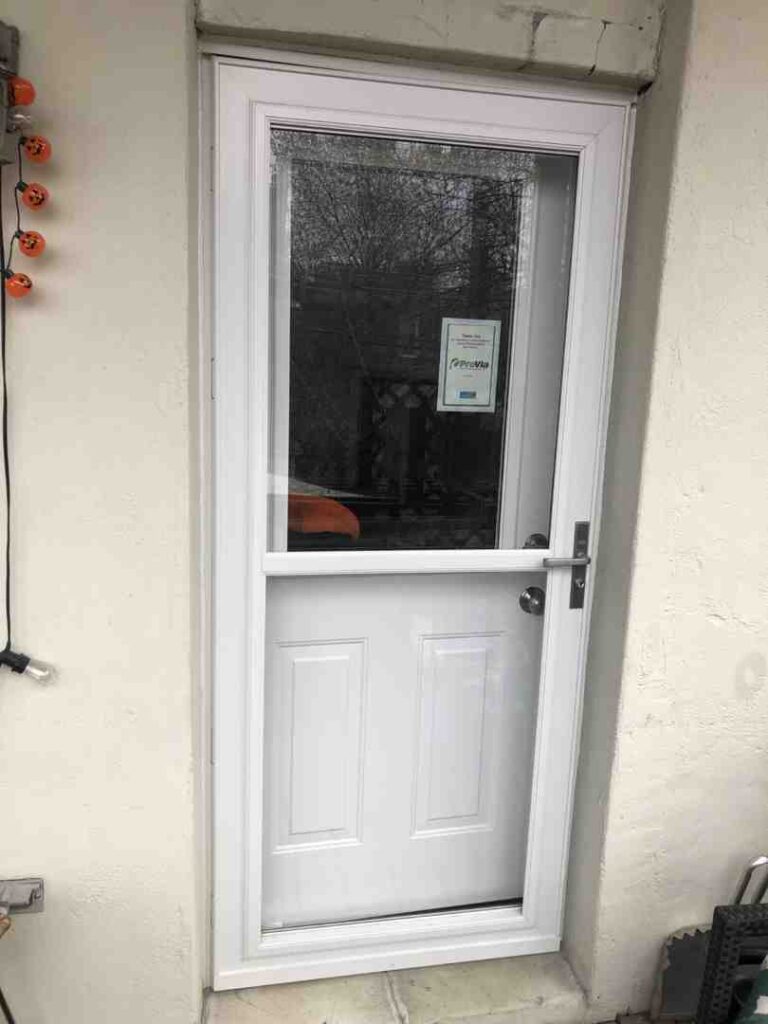
Understanding the installation process helps homeowners recognize the value of expert craftsmanship when upgrading their front or rear entrances with durable units from leading manufacturers like ProVia, Pella, and Andersen.
Tools, Materials, and Pre-Installation Measurements
Living in the Chicago area means preparing your entryway for extreme temperature swings, fierce Lake Michigan wind gusts, and recurring freeze-thaw cycles. Whether your home is a historic brick bungalow in Chicago, a classic two-flat, or a suburban split-level in Schaumburg or Arlington Heights, proper preparation ensures a tight, protective barrier.
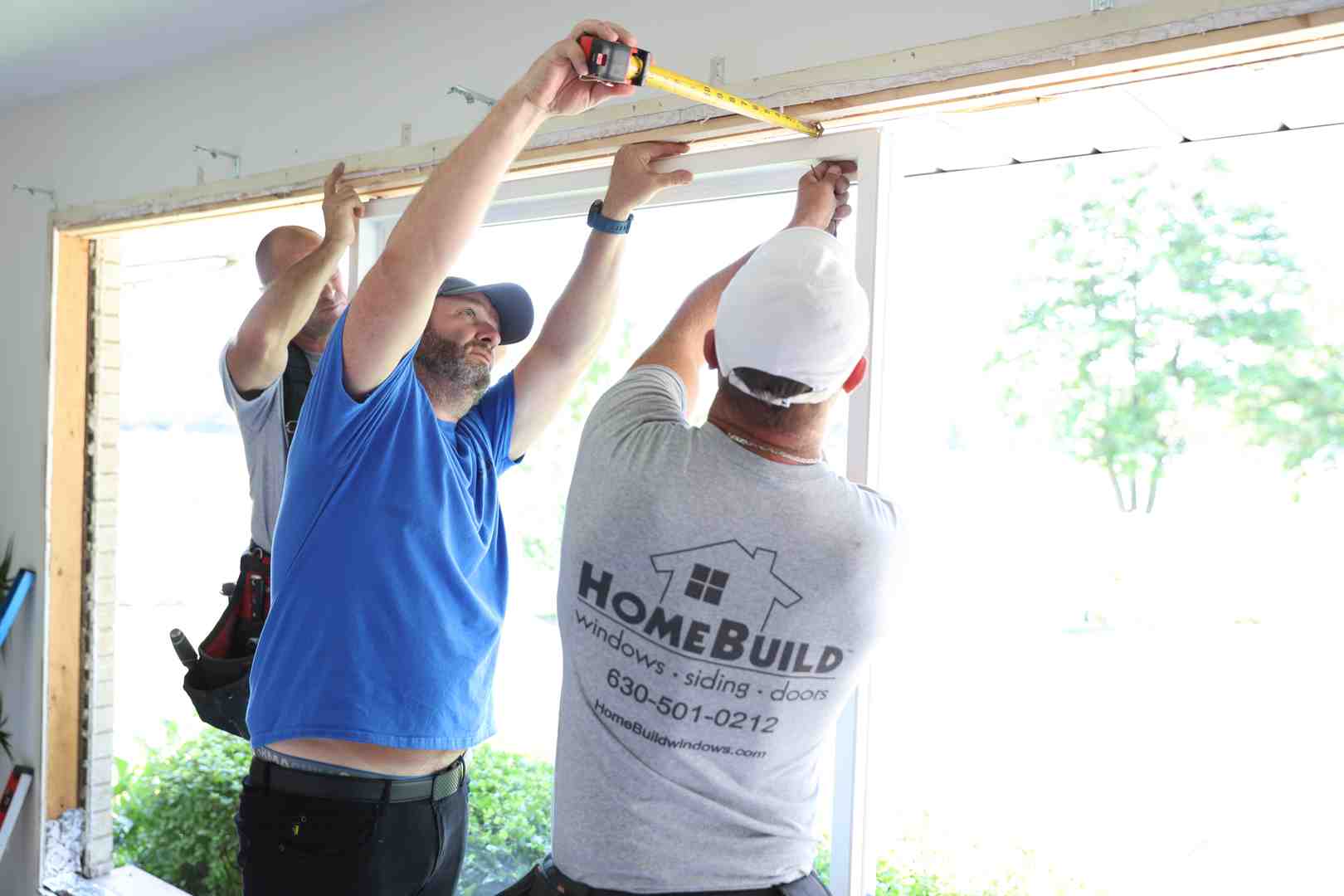
To achieve precision storm door fitting, experienced technicians rely on commercial-grade tools including a tape measure, cordless drill, 1/8-inch drill bit, self-centering bit, hacksaw, level, safety glasses, work gloves, and high-performance exterior caulk. These tools allow for clean rail sizing, accurate pilot holes, and a weathertight seal around the finished opening.
Determining Door Handing and Clearance Requirements
Before mounting hardware, specialists verify proper door swing and clearances:
- Hinge Handing: The hinge orientation is typically matched to the primary entry door so both panels open in unison without obstructing entryway traffic.
- Mounting Depth: The exterior brickmold or casing must provide at least 1 inch of flat recessed mounting depth along the jamb.
- Face Surface: A minimum of 3/4 inch of flat trim face is needed to anchor the mounting rails securely.
- Hardware Clearance: At least 2-1/2 inches of clearance between the entry door face and the storm door glass prevents exterior handlesets from colliding with the primary entry handle.
Measuring Opening Width and Height Dimensions
Accurate multi-point measurements prevent drafts and prevent the door frame from binding during seasonal shifts common to Chicago’s humid summers and bitterly cold winters.
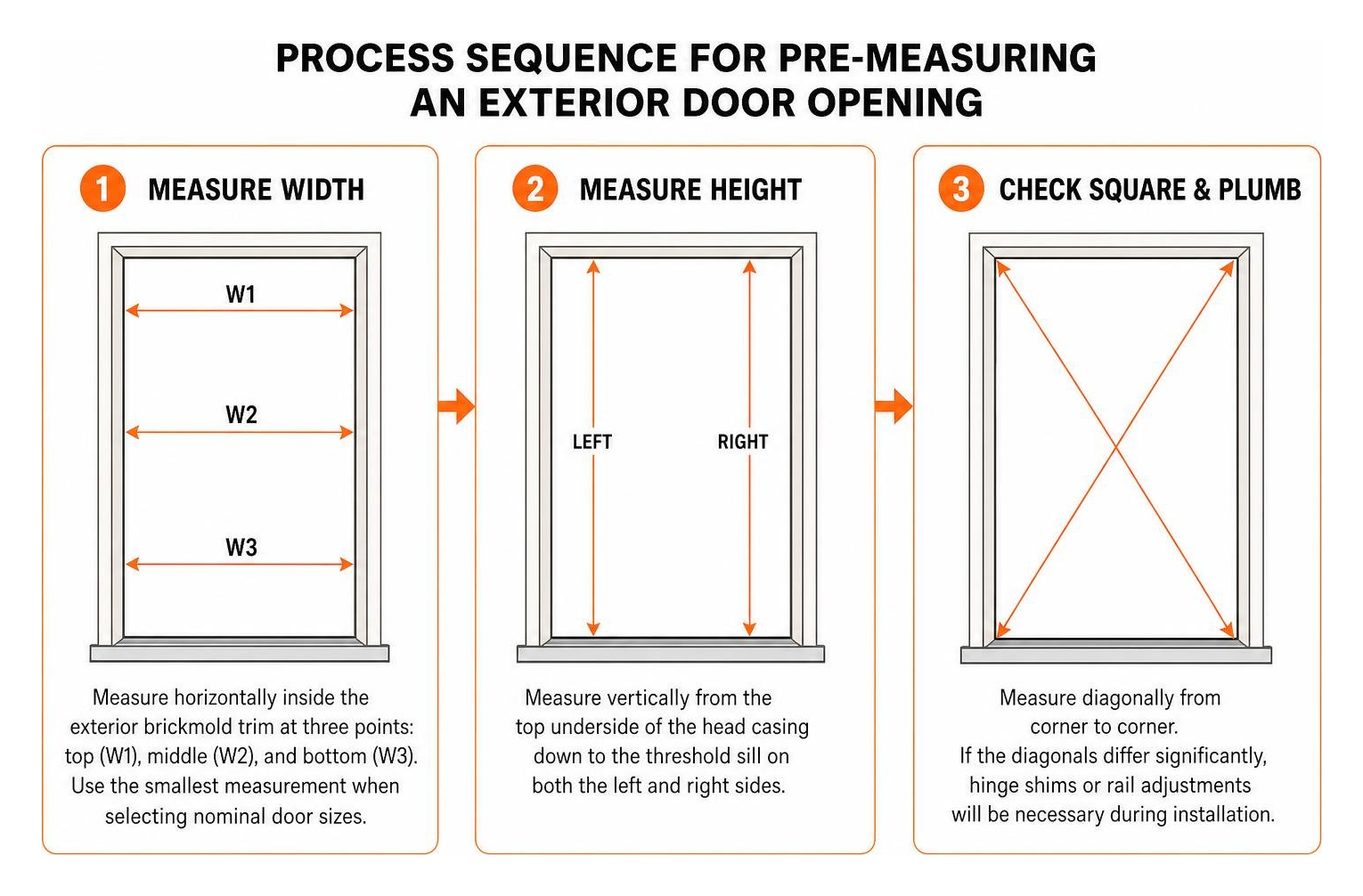
- Width Verification: Measurements are taken across the interior brickmold at the top, middle, and bottom to account for settled framing.
- Height Verification: Height is checked from the top head casing to the threshold sill on both left and right sides.
- Square and Plumb Assessment: Diagonal checks determine if the rough opening has shifted, identifying whether custom shimming will be necessary before the unit can be properly set and secured.
Because older homes may have settled over decades, these measurements often reveal subtle irregularities that only trained eyes catch, which is why many Chicagoland homeowners rely on professionals rather than attempting the project themselves.
Step-by-Step Guide to Hang Exterior Storm Door Assemblies
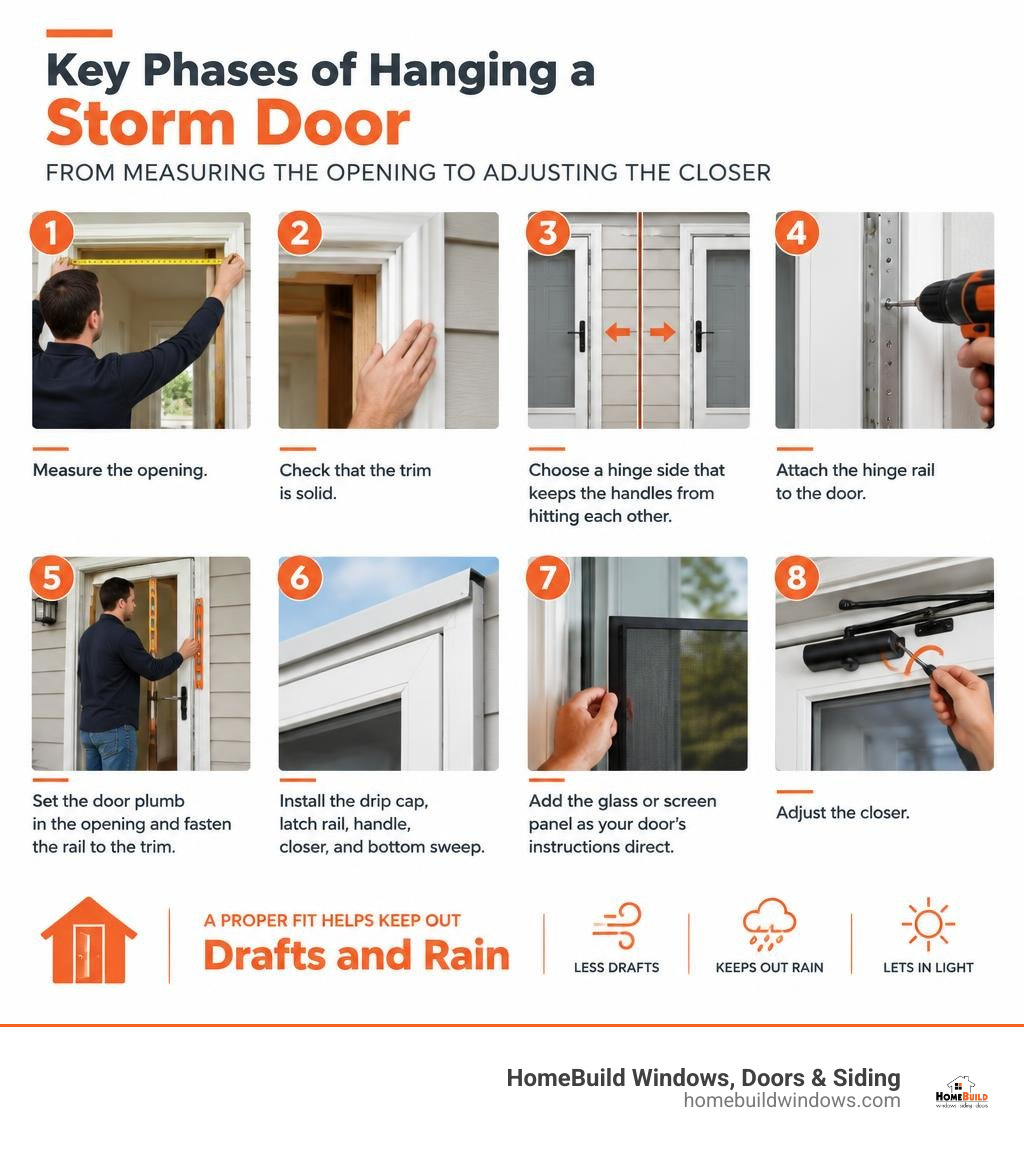
When certified technicians hang exterior storm door assemblies, they follow strict manufacturer tolerances to ensure smooth operation, weather resistance, and structural stability. For homeowners curious about the overall workflow, our guide on how to hang a storm door in 5 easy steps outlines the process from start to finish.
How to Hang Exterior Storm Door Hinges and Align the Door Panel
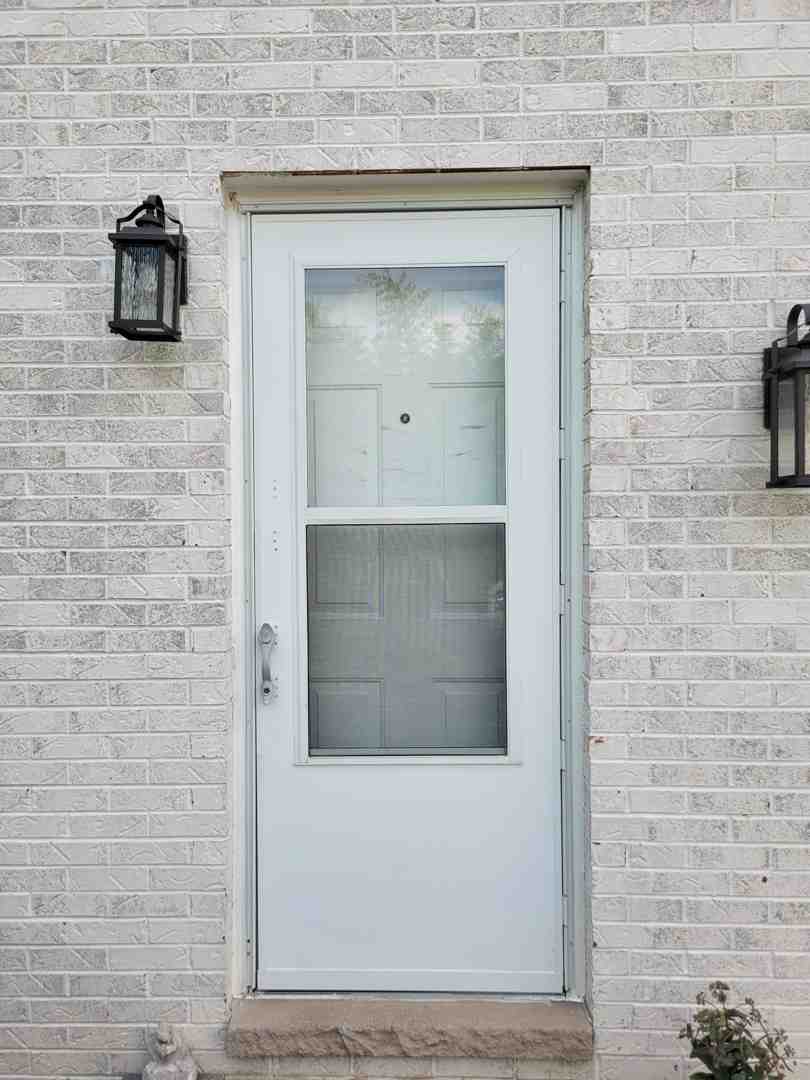
The hinge rail (or Z-bar) supports the entire operational weight of the storm door. Installers size and deburr the aluminum rail with a hacksaw, align it with the pre-drilled panel channels, drive placeholder screws, and mount it plumb against the exterior casing according to manufacturer installation instructions. Exact vertical alignment is critical; even a minor fractional tilt can cause heavy full-view glass doors to sag or bind over time, especially as Chicago’s freeze-thaw cycles cause seasonal wood movement in older casings.
Installing the Drip Cap, Latch Rail, and Weatherstripping
Protecting the entryway from moisture infiltration requires careful sealing and reveal adjustments:
- Drip Cap Sealing: The top rain cap is leveled and bedded in high-grade exterior caulk along the header casing to channel water away from the door opening.
- Latch Rail Spacing: The latch rail is secured on the strike side using spacer clips, maintaining a uniform 3/16-inch reveal along the door edge for consistent latching and draft prevention.
- Concealed Fasteners: Protective screw cover strips are snapped in place across the mounting channels to defend fasteners against Chicago’s winter road salt and moisture.
Installing Hardware, Pneumatic Closers, and Seasonal Panels
Proper hardware integration ensures daily convenience, airtight closure, and easy transitions between seasons.
Hardware Calibration and Closer Adjustment
Professional installers carefully mount the exterior handle, interior lever, and deadbolt mechanisms, ensuring the spindle operates smoothly without friction. The bottom expander sweep is positioned to create a firm seal against the sill without dragging. Pneumatic closers are then calibrated to balance closing speed and latching power, accounting for pressure differences when the main interior entry door is closed.
Interchangeable Glass and Retractable Screens
Modern storm doors from ProVia, Pella, and Andersen feature heavy-duty retainer systems that hold insulated glass firmly during freezing winter months. When mild weather arrives, homeowners can switch to screens or operate retractable screens to invite fresh airflow while keeping pests outside.
Overcoming Mounting Clearance and Frame Obstacles
Historic and older Chicago-area homes often present framing challenges such as settling, non-standard casing widths, or decorative moldings. The table below illustrates common entryway obstacles and how professional installers solve them.
| Frame Obstacle | Underlying Cause | Corrective Technique |
|---|---|---|
| Shallow Jamb Depth (<1") | Projecting trim or decorative exterior casing | Install custom build-out casing or specialized Z-bar extenders |
| Out-of-Square Opening | Structural foundation settling | Apply precision hinge shims behind the rail to true the door panel |
| Handle Interference | Protruding primary entry lockset | Reorient hinge handing or specify low-profile hardware |
| Deteriorated Brickmold | Moisture exposure or seasonal rot | Re-anchor or replace damaged trim with composite exterior casing |
| Complex Sidelight Trim | Wide multi-panel entryway configurations | Utilize specialized adapter brackets designed for black front door with sidelights setups |
For challenging entry configurations, opting for professional storm door hanging ensures a durable, weather-tight fit that protects your home’s entrance.
Why Choose Professional Installation with HomeBuild
While storm doors may appear straightforward, achieving an airtight seal, perfectly balanced closer tension, and flawless latching requires experience. An improper installation can cause air leaks, water penetration into the subfloor, and premature hardware failure.
HomeBuild Windows, Doors & Siding brings over 20 years of dedicated craftsmanship to every project. As an Elite Platinum Pella Certified Contractor and Andersen Certified Contractor, we install premium entry, patio, and storm door products from industry leaders including ProVia, Pella, and Andersen. Founder Steve Mlynek personally supervises every installation to maintain our strict quality standards, earning our company a 4.9-star rating across 200+ Google reviews, the Angi Super Service Award 2025, and recognition as a 2025 Nextdoor Neighborhood Faves Winner.
Frequently Asked Questions About Storm Door Installation
Which side should a storm door be hinged on?
In most installations, the storm door is hinged on the same side as the main entry door so both open in the same direction. However, if the main entry door features an oversized exterior handle or architectural obstruction, hinging the storm door on the opposite jamb provides necessary clearance and prevents damage.
How is the closing speed on a pneumatic closer adjusted?
Pneumatic closers feature an adjustment screw at the end of the cylinder barrel. Turning the screw clockwise restricts internal airflow to slow down closing, while turning it counterclockwise increases speed. Professional installers calibrate this tension so the door latches securely without slamming shut.
What are the minimum trim dimensions required for a storm door?
A standard storm door requires exterior brickmold or casing with a minimum flat mounting depth of 1 inch, a front face surface of at least 3/4 inch, and 2-1/2 inches of clearance between the entry door face and the storm door panel to house handle hardware.
How does a storm door improve entryway energy efficiency?
A storm door creates a dead air space between itself and your primary entry door, significantly reducing convective heat loss in winter and solar heat transfer in summer while stopping drafts around the primary door perimeter.
Ready to upgrade your home’s entryway protection and comfort? Contact us today to schedule your free estimate with our expert team.