


Why Professional Storm Door Hanging Makes All the Difference for Chicago Homeowners
Professional storm door hanging is one of the most impactful upgrades you can make to a Chicago-area home — protecting your entry door from harsh Midwest winters, improving energy efficiency, and boosting curb appeal all at once.
Here’s what you need to know right away:
- What it is: Professional storm door hanging means a certified installer measures, fits, and secures a storm door to your existing entry — with proper sealing, alignment, and hardware calibration.
- Why it matters: DIY installations have a 30% higher failure rate than professionally installed doors, largely due to improper sealing and misalignment.
- Energy impact: A properly hung storm door can reduce energy costs by up to 20% annually.
- Lifespan difference: Professionally installed storm doors typically last 15–20 years — nearly double the lifespan of DIY installations.
- Who should do it: Any homeowner dealing with drafts, an aging entry door, or Chicago’s punishing winters will benefit from a professional installation.
In Chicago and the surrounding suburbs, where temperatures swing from brutal winters to humid summers, a poorly hung storm door isn’t just an inconvenience — it’s a real source of heat loss, water infiltration, and wasted energy.
The stakes are higher than most homeowners expect. Getting the fit wrong by even a fraction of an inch can mean a door that won’t latch, seals that fail, or hardware that binds. That’s why the installation itself matters just as much as the door you choose.
I’m Steve Mlynek, CEO and founder of HomeBuild Windows, Doors & Siding, and over my 20+ years leading exterior remodeling projects across Chicagoland, professional storm door hanging has consistently been one of the upgrades homeowners tell me they wish they’d done sooner. In the sections below, I’ll walk you through exactly what a professional installation involves — so you know what to expect and what questions to ask.

Terms related to professional storm door hanging:
DIY vs. Professional Storm Door Hanging: Why Precision Matters
Many homeowners look at a storm door in its retail packaging and assume it is a quick weekend project. However, the physical reality of older framing, out-of-square entryways, and heavy glass panels quickly turns a simple project into a frustrating structural puzzle.
When a door is installed even slightly out of plumb, it places uneven stress on the hinges, leads to drafty gaps, and prevents the latch from engaging smoothly.
To help put the decision into perspective, here is how a DIY approach compares to hiring choosing the best storm door experts in Chicago:
| Feature | DIY Installation | Professional Installation |
|---|---|---|
| Average Lifespan | 8 to 12 years | 15 to 20 years |
| Failure Rate | 30% higher due to alignment issues | Extremely low; backed by structural warranties |
| Energy Efficiency | Variable; prone to perimeter air leaks | Maximized; creates a sealed insulating air pocket |
| Installation Time | 4 to 8+ hours (plus tool runs) | 1 to 2 hours of seamless labor |
| Warranty Protection | Easily voided by improper drilling/cutting | Fully protected; manufacturer certifications intact |
| Hardware Function | Common issues with binding and dragging | Perfectly calibrated latching and closing speed |
Why DIY Fails and Professional Storm Door Hanging Wins
The high failure rate of DIY installations usually comes down to three main issues:
- Improper Sealing: Without a perfectly flat mounting surface, the perimeter Z-bars cannot sit flush. This creates microscopic gaps that allow Chicago’s freezing winter winds to bypass the door entirely, rendering the insulation useless.
- Hinge Bind and Door Drag: If the hinge rail is secured to a warped jamb without proper shimming, the door frame will twist. This causes “hinge bind,” where the door springs back open or drags heavily across the threshold. Over time, this ruins the door’s structural integrity.
- Warranty Voiding: Top-tier manufacturers have strict installation guidelines. If a DIYer cuts a Z-bar incorrectly, drills handle holes off-center, or mounts closer brackets in the wrong position, the manufacturer’s warranty is often voided.
The Anatomy of Professional Storm Door Hanging Prep
Before a single screw is driven, a professional installer performs a detailed assessment of the entryway. This preparation phase ensures that the new door will integrate perfectly with the home’s existing architecture.
Accurate Measurement and Sizing Protocols
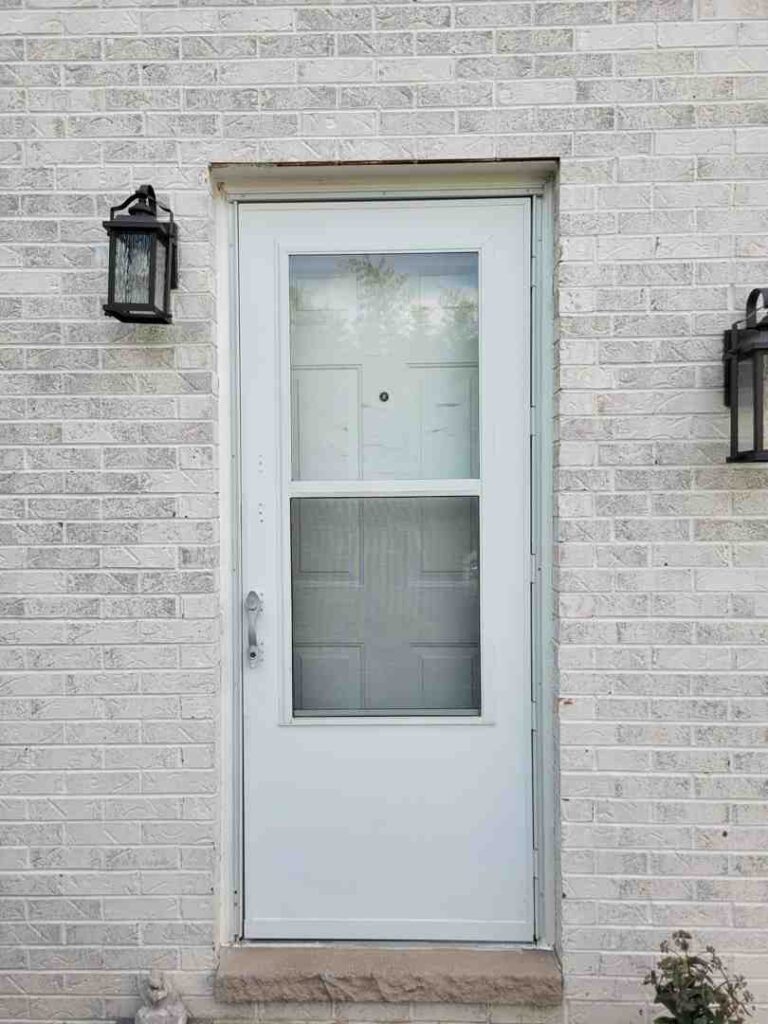
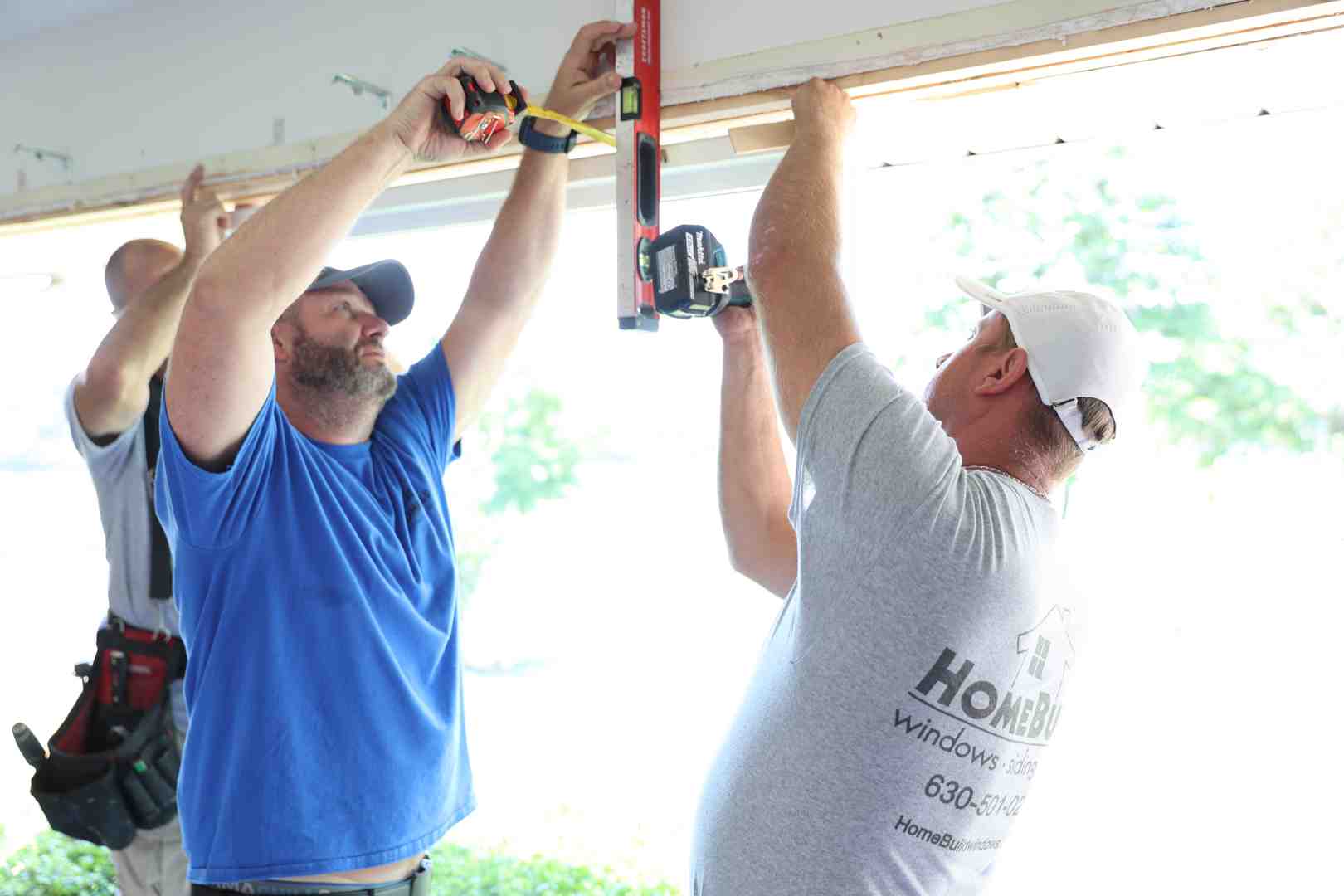
A professional does not rely on a single width and height measurement. Wood frames warp, settle, and shift over time. To ensure a perfect fit, installers follow a strict measurement protocol:
- Width Measurements: The width is measured in three distinct places: the top, center, and bottom of the opening, measuring from the inside of the brickmould or exterior trim. The smallest of these three measurements is used to select the nominal door size.
- Height Measurements: The height is measured from the top underside of the header trim down to the highest point of the bottom sill.
- Clearance and Depth Checks: According to the Andersen Storm Door Technical Guide, a standard installation requires a minimum of 3/4-inch flat trim width, a 1-inch trim depth, and at least 2.5 inches of entry frame depth (extending to 3 1/8 inches for handle clearance) to prevent the storm door hardware from colliding with your main entry door handle.
Removing the Existing Storm Door Safely
If you are replacing an old, worn-out door, the removal process must be handled with care to prevent damage to the surrounding wood trim.
First, the closing hardware and brackets are disconnected. Next, the door slab is unhinged, and the old Z-bar frame is carefully unscrewed and pried away from the brickmould.
Once the old frame is out, the installer inspects the underlying wood jamb for rot, water damage, or structural weakness. Any soft wood must be repaired or replaced before the new door is hung.
Additionally, for homes built before 1978 in older suburbs like Evanston, IL or Oak Park, IL, installers must follow EPA RRP lead-safe work practices to ensure any lead-based paint disturbed during the removal is safely contained.
For a broader look at how these steps fit into a complete entryway upgrade, you can read our guide on how to hang a storm door.
Navigating Storm Door Installation Systems and Challenging Trim
Storm door manufacturers have developed different installation systems to accommodate varying architectural styles and installer preferences.
- Rapid Install Systems: These systems feature pre-assembled Z-bars, pre-drilled handle holes, and integrated components designed to reduce installation time. They work beautifully on modern, perfectly square entryways with standard flat wood trim.
- Pro Install Systems: These systems ship with full-length Z-bars that must be custom-cut on-site. While they require more technical skill, they allow professionals to achieve a tailored fit on older, non-standard, or slightly out-of-square openings.
Handling Non-Standard Openings and Shimming
In many historic Chicago suburbs, such as Barrington, IL or Glenview, IL, entryways feature decorative trim, faux columns, or polyurethane foam molding. These decorative surfaces present unique challenges because they lack the structural strength to hold mounting screws.
- Polyurethane and Foam Trim: Standard wood screws will pull right out of decorative foam trim. To solve this, professionals use extra-long fasteners that pass completely through the decorative trim and anchor securely into the structural wood framing behind it.
- Inside Mount Kits: When there is no flat exterior mounting surface available, an inside mount kit is used to secure the storm door within the interior jamb rather than on the face of the brickmould.
- Out-of-Square Openings and Shimming: If the opening is wider than the standard door tolerances, professionals install custom wood or PVC shims behind the hinge rail. According to the Pella Storm Door Installation Manual, using 8-to-12-inch shim sections prevents the Z-bar from bowing when the mounting screws are tightened, ensuring the door remains perfectly square even if the house has settled.
The Step-by-Step Process of Professional Storm Door Hanging
Once the prep work is complete, the physical installation of the door follows a precise, sequential order to guarantee structural stability and weather protection.
1. Preparing the Door Slab
The door slab is placed on padded saw horses. The bottom expander and vinyl sweeps are positioned, and the hinge rail is aligned on the correct side of the door. The installer verifies the door’s handing (left-handed or right-handed) based on how the main entry door swings.
2. Mounting the Hinge Rail
The hinge rail is secured to the door panel first. A small overhang (typically 3/32 of an inch) is maintained at the top to ensure proper clearance for the header piece.
3. Hanging the Door
With the help of a second installer, the door is lifted into the opening. The hinge rail is pressed tight against the exterior brickmould and secured with initial placement screws. The installer uses a level to check for plumb before driving the remaining mounting screws.
4. Installing the Drip Cap
The drip cap (or rain cap) is mounted horizontally across the top of the frame. It must sit flush with the hinge rail to divert rainwater away from the top of the door.
5. Securing the Latch-Side Rail
The door is closed, and the latch-side Z-bar is positioned. Installers use temporary spacer pads to maintain a consistent 3/16-inch gap between the door slab and the rail, ensuring the door will never bind or rub.
For a deeper dive into the mechanics of hanging exterior doors, consult our comprehensive exterior door installation guide.
Weatherproofing and Sealing for Midwest Winters
A storm door’s primary job in Illinois is to act as a barrier against extreme weather. To maximize its insulating power, professionals pay close attention to sealing:
- The Insulating Air Pocket: When properly sealed, a storm door traps a layer of air between itself and the main entry door. This dead-air space acts as an incredibly effective thermal barrier, reducing heat loss in the winter and heat gain in the summer.
- Sweep Adjustment: The bottom expander sweep must be adjusted so that the flexible vinyl fins lightly touch the sill. If they are too tight, they will tear and bind; if they are too loose, drafts will blow right underneath.
- High-Grade Caulking: Installers apply a bead of premium, exterior-grade silicone caulk along the outer edge of the drip cap and Z-bars where they meet the house trim, preventing water from sneaking behind the frame.
Hardware Calibration and Post-Installation Care
The final step of professional storm door hanging is calibrating the moving parts.
- Closer Speed Calibration: Most high-quality storm doors feature pneumatic or hydraulic closers. Turning the adjustment screw clockwise slows the door down to prevent slamming, while turning it counterclockwise increases the speed to ensure the door latches securely against wind resistance.
- Handle and Lock Alignment: Multi-point locking systems must align perfectly with the strike plate. Even a half-millimeter of misalignment can prevent the deadbolt from turning smoothly.
- Post-Installation Maintenance: To keep the door operating like new, homeowners should follow a simple care routine:
- Clean the glass and aluminum frame with mild, non-abrasive soap and water.
- Periodically lubricate the hinges and lock mechanisms with a dry silicone spray.
- Inspect the vinyl bottom sweep annually and replace it if the fins become torn or brittle.
Frequently Asked Questions About Professional Storm Door Hanging
What are the benefits of professional storm door hanging in Chicago?
Professional installation ensures that your door is perfectly plumb, square, and sealed against the elements. This maximizes your home’s energy efficiency, protects your expensive main entry door from rain and snow, and ensures the door operates smoothly without dragging or binding.
How long does a professional storm door hanging project take?
For an experienced, two-person crew, a standard pre-hung storm door installation typically takes between 1 and 2 hours. This includes removing the old door, preparing the frame, hanging the new door, installing the hardware, and cleaning up the workspace.
Are storm doors necessary for every home?
While highly recommended for most homes in the Midwest, they may not be necessary if your entryway has a deep porch overhang that completely protects it from sun and rain. In fact, if an entry door receives intense, direct afternoon sunlight without any shade, a full-view glass storm door can trap excessive heat, which can damage the paint or finish on your main entry door. In these cases, a screen or ventilating storm door is a much better choice.
Conclusion
A high-quality storm door is only as good as the precision of its installation. By choosing professional storm door hanging, you protect your investment, lower your energy bills, and ensure your entryway remains secure and beautiful for decades to come.
When you are ready to upgrade your home’s exterior, work with a trusted, locally owned contractor with over 20 years of experience in Chicagoland. At HomeBuild Windows, Doors & Siding, we are proud to be an Elite Platinum Pella® Certified Contractor and an Andersen Certified Contractor. Every project we take on is owner-supervised, ensuring our high standards of craftsmanship and accountability are met on every job.
With over 200 positive Google reviews, an Angi Super Service Award, and a Nextdoor Neighborhood Faves designation, we are dedicated to delivering reliable exterior remodeling solutions to our neighbors in Arlington Heights, Schaumburg, Glenview, and across the Chicago suburbs.
Contact us today to schedule your consultation and take the first step toward a beautiful, professionally installed entryway with our professional storm door installation services.