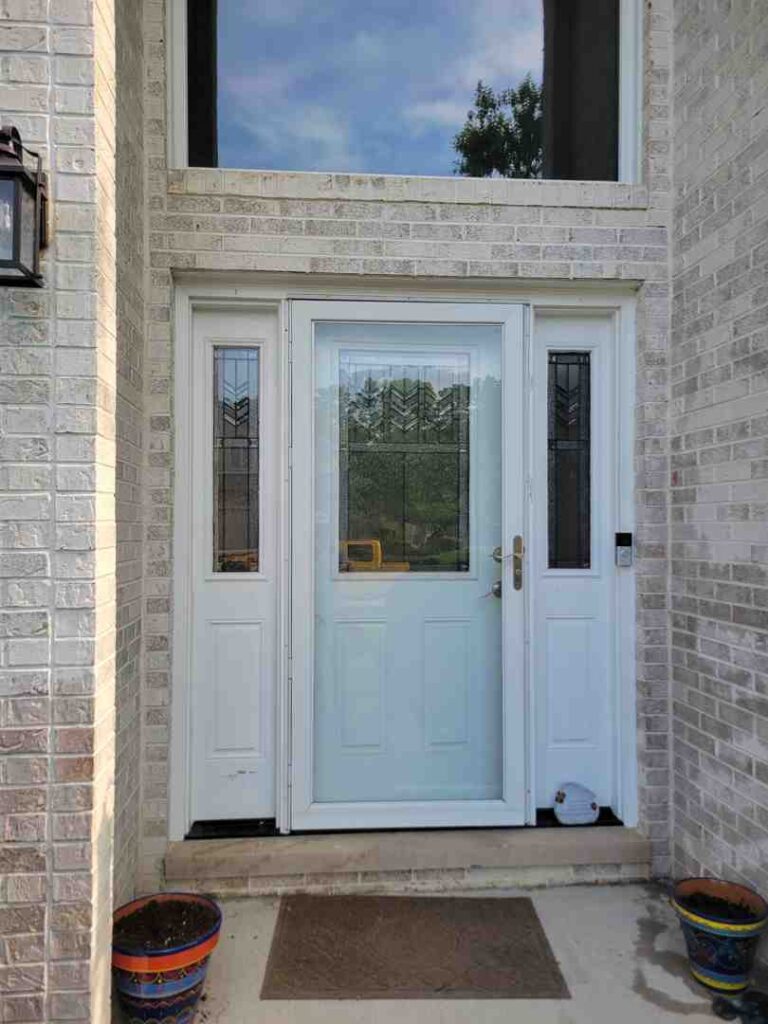
Choosing an Entrance Door with Side Windows
An entrance door with side windows, also called sidelights, can brighten a foyer without making the door itself glass. Start by choosing one or two sidelights to suit your entryway. Then pick clear glass for the most open view or textured glass for more privacy. For Chicago weather, look for insulated glass with a Low-E coating, and have the full opening measured before ordering.
I’m Steve Mlynek, founder of HomeBuild Windows, Doors & Siding. I’ve worked on door replacements across the Chicago area for over 20 years, and I supervise every project, including each entrance door with side windows.
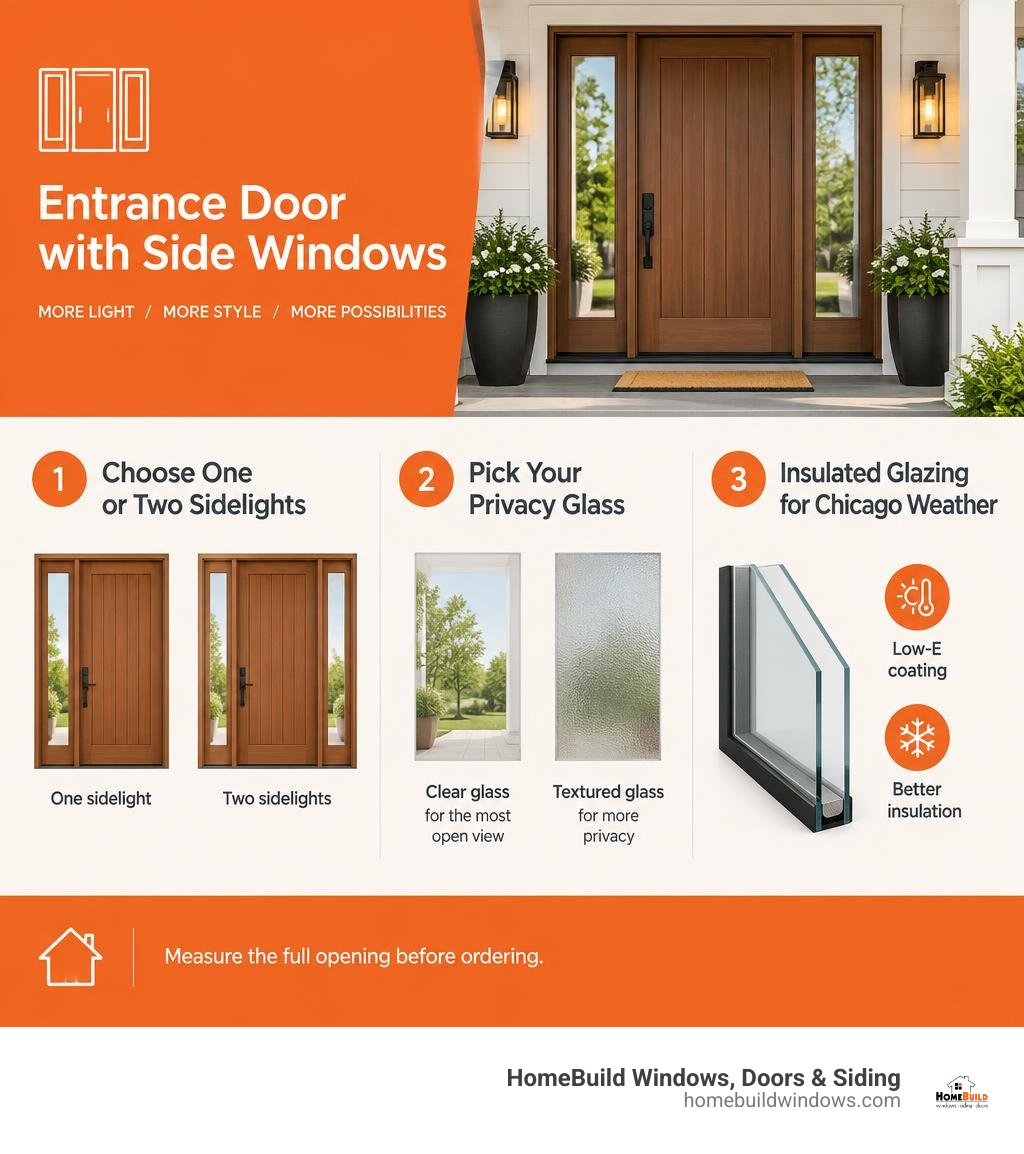
Entrance door with side windows terms explained:
Architectural Styles for an Entrance Door with Side Windows
The architectural profile of your front entry sets the tone for your entire home. Whether you live in a classic Chicago brick bungalow in Portage Park, a sprawling colonial in Arlington Heights, or a split-level in Schaumburg, choosing the right door configuration elevates curb appeal and ensures exterior harmony. You can explore comprehensive configuration ideas in our complete guide to front doors with sidelights.
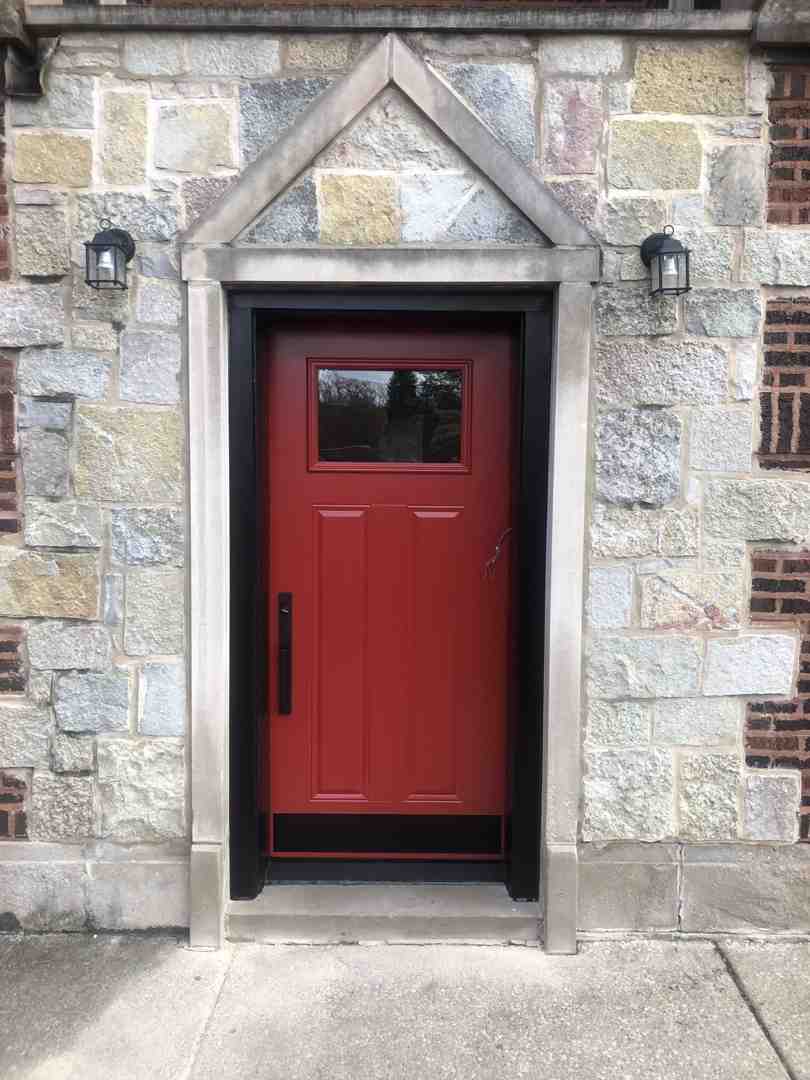
Craftsman and Traditional Aesthetics
Craftsman architecture relies on warmth, balanced proportions, and handcrafted detailing. When pairing an entrance door with sidelights on a Craftsman or traditional home, look for:
- Divided Lites and Grilles: Geometric grid patterns on both the door slab and side panels echo classic early 20th-century styling.
- Dentil Shelves: A decorative molding shelf placed just below the door glass adds rich architectural character.
- Rich Wood Grains: Deep stains such as mahogany, walnut, or warm oak complement natural exterior brick and stone.
- Symmetrical Flanking: Placing identical sidelights on both sides of a 36-inch slab creates the grounded, stately balance traditional colonials demand.
Homeowners seeking authentic period detailing can explore timeless design balance through our craftsman door sidelite design principles.
Modern and Contemporary Configurations
Contemporary homes, urban new builds, and updated mid-century ranches in suburbs like Glenview or Northbrook often favor clean geometry and open sightlines.
Modern styles frequently utilize full-view glass panels within sleek, narrow stiles. Asymmetrical layouts—such as a single oversized sidelight on the strike side—break traditional symmetry to deliver a striking visual edge. Bold dark frames in matte black, iron ore, or charcoal create crisp contrast against light stone or cedar siding. For expanded design inspiration, review modern ideas in our guide to contemporary front door styling.
Material Selection: Wood, Fiberglass, and Steel Performance
Chicago’s harsh climate demands durable entry systems. Our freeze-thaw cycles, sub-zero winter winds off Lake Michigan, and humid summers require materials that resist moisture infiltration, warping, and energy loss. When selecting high-quality exterior doors, the primary core and surface materials determine long-term performance.
Material Comparison and Structural Integrity
| Material | Weather Resistance | Maintenance Needs | Thermal Insulation | Structural Durability |
|---|---|---|---|---|
| Fiberglass | Exceptional; resists rot, warping, and denting | Very Low; durable factory finishes | Superior; dense polyurethane foam core | High; composite stiles and rails |
| Steel | High; impervious to moisture expansion | Low; requires touch-ups if scratched | High; thermal break and insulating core | Maximum; high-gauge impact resistance |
| Solid Wood | Moderate; sensitive to humidity and direct sun | High; periodic sealing or staining required | Good; natural thermal mass | High; heavy, solid construction |
Fiberglass remains a top choice throughout Chicagoland because its composite framing and polyurethane insulating cores withstand rapid temperature swings without expanding or contracting. Steel provides unbeatable structural security and tight seals against howling winter drafts. Solid wood offers unmatched organic beauty, though it performs best when protected beneath a deep porch overhang to guard against moisture and UV exposure.
Leading Manufacturers and Build Quality
We partner exclusively with industry-leading manufacturers that engineer doors designed for northern climates:
- Pella: Renowned for innovative fiberglass and wood collections, featuring rot-resistant composite frames and advanced weatherstripping systems.
- Andersen: Exceptional craftsmanship utilizing durable composite materials, multi-point hardware integration, and superior thermal engineering.
- ProVia: Industry benchmark for custom heavy-duty steel and premium fiberglass entry systems, built with polyurethane insulation and durable finishes.
To learn more about how composite materials protect side glazing, see our composite door sidelights guide.
Glazing Options: Balancing Natural Light, Energy Efficiency, and Privacy
Sidelights brighten dark foyers and interior hallways, but homeowners often worry about privacy and heat loss. Modern glass fabrication solves both concerns through textured coatings, insulating gas fills, and Low-E glass technology.
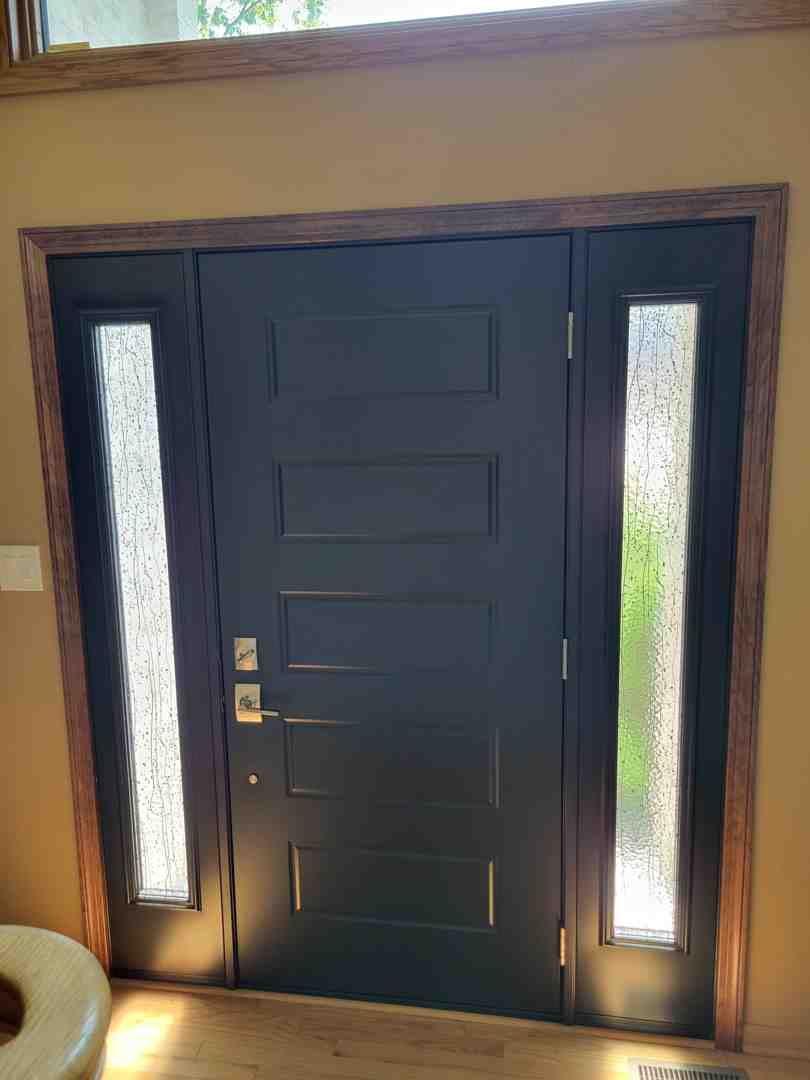
Privacy Glass Textures and Tints
You do not have to sacrifice daytime illumination to keep your home private. Textured glass diffuses incoming sunlight while obscuring the view from the street:
- Frosted / Sandblasted Glass: Provides a clean, modern aesthetic with high opacity, blocking direct sightlines day and night.
- Rain Glass: Mimics gentle vertical water droplets running down a pane, adding organic texture that disguises indoor silhouettes.
- Flemish Glass: Offers an old-world, hand-blown appearance with fluid waves that distort views without impeding daylight.
- Beveled Glass: Angled edges act as prisms, refracting sunlight into subtle rainbows while providing mild visual distortion.
Energy-Efficient Glass Technology
A large glass opening must protect your home against winter drafts and summer heat gain. High-performance sidelights utilize double-pane or triple-pane tempered safety glass units engineered with specific thermal features:
- Low-E Coatings: Microscopically thin metallic layers in low-emissivity glass reflect radiant heat back indoors during winter and block solar infrared heat during summer.
- Argon Gas Fills: Inert gas placed between glass panes insulates significantly better than plain air, reducing convective heat transfer.
- NFRC Performance Metrics: Look for ratings certified by the National Fenestration Rating Council, including a low U-Factor (measuring heat transfer rate) and a balanced Solar Heat Gain Coefficient (SHGC) to maintain consistent indoor temperatures.
Pairing energy-efficient glazing with durable weatherstripping ensures your entryway meets strict energy-efficient entry doors performance standards.
Technical Specifications and Professional Installation Considerations
Installing a continuous frame that incorporates a door slab alongside one or two side panels requires exact carpentry. Because the unit spans a wide rough opening, even slight settling or framing flaws can cause air leaks, latch sticking, or water infiltration.
Sizing and Configuration for an Entrance Door with Side Windows
Choosing the right dimensions depends on your existing rough opening and entryway width:
- Single Sidelight Systems: Ideal for standard openings around 48 to 54 inches wide, utilizing a 36-inch active door paired with a 12-inch or 14-inch sidelight.
- Double Sidelight Systems: Standard across openings ranging from 60 to 74 inches wide, centering a 36-inch slab between two 12-inch or 14-inch panels.
- Jamb Depth and Wall Thickness: Typical Chicagoland construction requires 4-9/16-inch jambs for standard 2×4 framing or 6-9/16-inch jambs for 2×6 framing and masonry brick veneer.
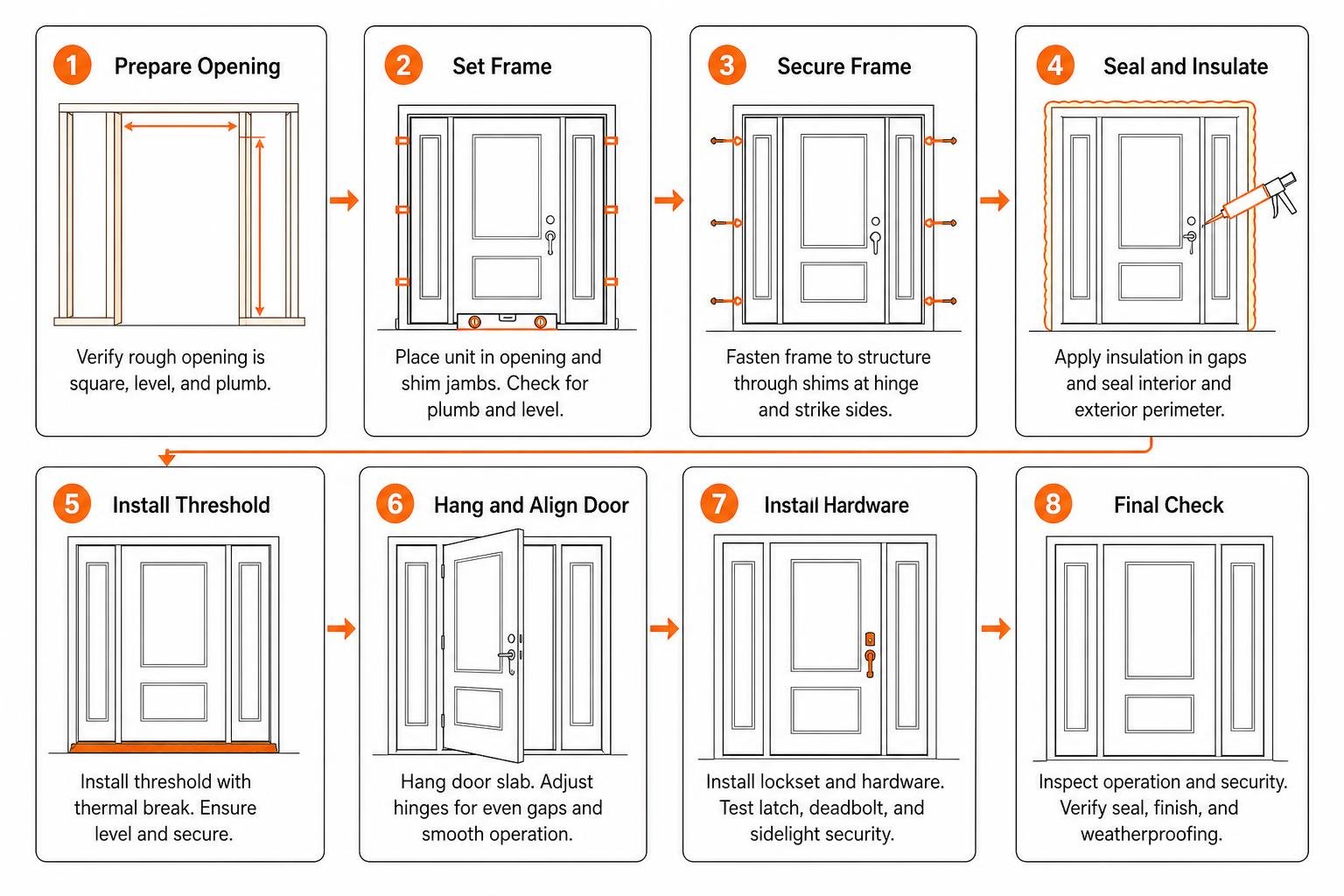
Professional installers evaluate header load requirements, plumb the jambs with precision shims, and install heavy-duty aluminum thresholds with thermal breaks to keep moisture outside. Homeowners can review the full process in our custom entry door installation guide.
Security and Hardware for an Entrance Door with Side Windows
Side windows sit close to the locking hardware, making security engineering essential:
- Multipoint Locking Systems: Rather than relying on a single deadbolt, multipoint locks secure the door slab into the frame at three distinct points (top, middle, and bottom) with a single turn of the key, preventing pry attempts and eliminating winter door bowing.
- Tempered Safety Glass: Sidelight glass is heat-treated to resist blunt impact. If broken, it crumbles into small granules rather than jagged shards.
- Reinforced Strike Plates and Extended Screws: Installing three-inch structural screws through the strike plate directly into the home’s rough wall framing ensures the door jamb cannot be easily kicked in.
Frequently Asked Questions about Entry Doors with Sidelights
How do sidelights affect the security of my front entrance?
Modern sidelights do not compromise security when built with tempered glass, reinforced jamb framing, and high-security hardware. Sidelights from top manufacturers like Pella, Andersen, and ProVia feature impact-resistant laminated or tempered safety glass set into structural frames. Pairing these with heavy-duty deadbolts, reinforced strike plates anchored directly into wall studs, or multipoint locking mechanisms ensures your entryway remains secure.
What is the best way to maintain privacy with side windows?
The most permanent and visually clean way to maintain privacy is to choose factory-textured glazing—such as frosted, rain, Flemish, or glue-chip glass. These textures allow abundant natural light to filter in while obscuring interior views from passersby. Alternatively, custom-fitted narrow blinds, plantation shutters, or translucent sidelight shades can be mounted on the interior frame for adjustable privacy.
Can sidelights be added to an existing single door opening?
Yes, but it requires professional structural reframing. If your home currently has a single 36-inch door without side panels, the wall opening must be widened. This involves removing interior and exterior trim, cutting back siding or brickwork, reframing the rough opening, and installing a wider structural header to support the load above the door. Our team handles every stage of this structural modification to ensure code compliance and structural integrity.
Conclusion
Upgrading your entryway with a custom door and sidelight system transforms your home’s exterior aesthetic, floods your interior foyer with natural sunlight, and delivers superior thermal efficiency against the harsh Chicago elements.
At HomeBuild Windows, Doors & Siding, we are a locally owned, licensed, and insured exterior contractor proudly serving homeowners across the Chicago area and Northwest suburbs since 2004. With over 20 years of dedicated service, every project is personally owner-supervised by Steve Mlynek to ensure meticulous craftsmanship. As an Elite Platinum Pella Certified Contractor and Andersen Certified Contractor—recognized as an Angi Super Service Award 2025 winner, 2025 Nextdoor Neighborhood Fave, and backed by a 4.9-star rating across 200+ Google reviews—we bring unmatched expertise to your door replacement project.
Ready to brighten your foyer and boost your home’s curb appeal? Learn more when you explore custom entry doors tailored to your home’s architecture, or contact our team today at our Chicago office (1830 N Winchester Ave, Chicago, IL 60622) to schedule your free estimate.