

Why Northwest Suburbs Homeowners Are Prioritizing Storm Door Replacement
If you need storm door replacement in the northwest suburbs, here is what you should know right away:
Quick answers for northwest suburbs homeowners:
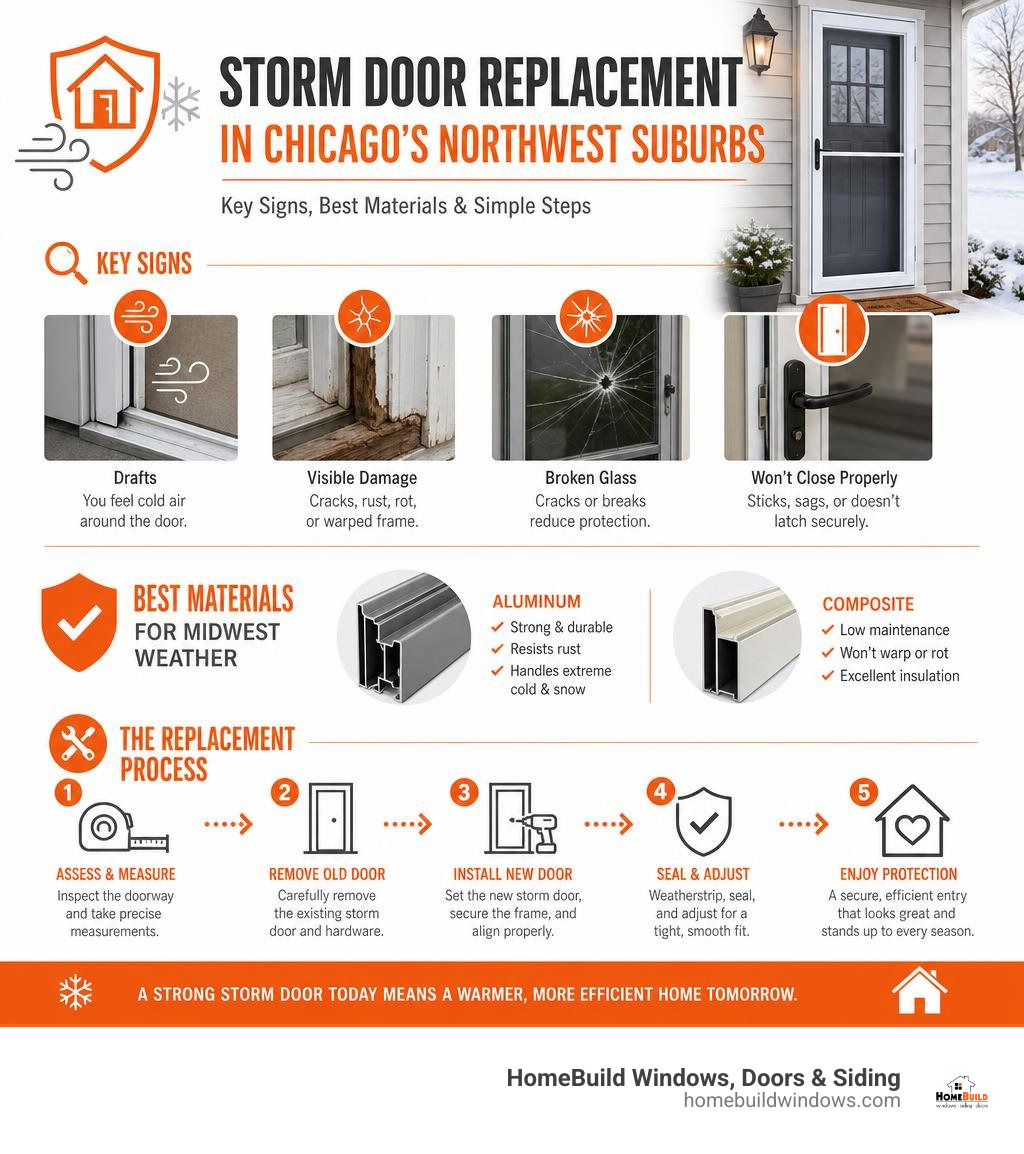
- Best time to replace: When you notice drafts, visible frame damage, broken glass, or a door that no longer closes properly
- Installation time: A professional can complete a standard replacement in 3 to 5 hours
- Best materials for the Midwest: Aluminum and composite frames hold up best against Chicago-area winters, heavy snow, and temperature swings
- Who can help: Look for a licensed, locally experienced installer with manufacturer certifications and strong local reviews
- Compatibility: Most single exterior doorways work well — sliding patio doors and double doors have limitations
Living in the northwest suburbs means dealing with brutal winters, icy winds off the lake, and dramatic temperature swings between seasons. Your storm door is the first line of defense for your entryway — and when it starts failing, you feel it immediately in drafts, rising energy bills, and a front entrance that just looks worn down.
A damaged or aging storm door does more than look bad. It lets cold air in, puts extra strain on your primary entry door, and can signal deeper problems like wood rot or frame damage that only get worse over time.
I’m Steve Mlynek, CEO and founder of HomeBuild Windows, Doors & Siding, and with over 20 years of hands-on experience overseeing exterior door projects across Chicagoland, I’ve helped hundreds of northwest suburbs homeowners navigate storm door replacement in the northwest suburbs — from choosing the right materials to ensuring a weathertight, lasting installation. In the sections below, I’ll walk you through everything you need to make a confident decision.
Quick storm door replacement northwest suburbs definitions:
Key Indicators It Is Time for a Storm Door Replacement in the Northwest Suburbs

When we drive through beautiful neighborhoods in Arlington Heights, Schaumburg, or Glenview, we see gorgeous homes that are meticulously maintained. However, the one element that often gets overlooked until it is completely failing is the storm door. Because these doors are designed to take the brunt of the heavy snow, hail, wind, and summer heat, they naturally degrade over time.
The average lifespan of a standard storm door is roughly 25 years. However, high-end models that are properly cared for can last up to 50 years. If your door is approaching these milestones, or if it has faced years of harsh Midwest seasons without regular upkeep, you may start noticing some clear warning signs.
The most common indicators that you need a total replacement include:
- Wood Rot and Frame Warping: If your storm door has a wood core or is mounted to an older wood frame, water from melting snow and heavy spring rains will eventually find its way into the fibers. Once wood rot sets in, the structural integrity of the entryway is compromised. You might notice the frame swelling in the summer and shrinking in the winter, making it incredibly difficult to open or close.
- Persistent Drafts: If you stand near your foyer during a blustery January night in Palatine or Buffalo Grove and feel a distinct chill, your storm door is no longer doing its job. Over time, weatherstripping degrades, and the door frame can warp slightly, breaking the tight seal required to keep cold air out.
- Physical Damage: Dents in aluminum, cracked glass panels, or torn screens not only ruin your home’s curb appeal but also allow pests and moisture to invade your entryway.
- Squeaking, Dragging, or Failing Closers: If the pneumatic closer is leaking oil, or if the door slams shut violently or fails to close all the way, it poses a safety hazard to children and pets.
If you are experiencing these issues, it is highly beneficial to read our detailed guide on Chicagoland Storm Door Replacement: Keep the Drafts Out and the Light In to understand how a new installation can instantly restore comfort to your home.
Repair vs. Replacement for Aging Entryways
Many homeowners ask us if they can simply repair their existing door rather than replacing the entire unit. While some minor issues can be fixed, structural problems usually require a full replacement.
- Hinge Wear: If the hinges are slightly loose, tightening the screws might buy you some time. However, if the screw holes in the door frame have stripped or rotted out, the door will sag. A sagging door drags against the threshold, ruins the weather seal, and can damage your primary entry door.
- Glass Cracks: Replacing a single pane of glass in an older, outdated storm door is sometimes possible, but finding matching parts for a door that is decades old is incredibly difficult. Modern storm doors feature tempered safety glass that is highly durable and vastly superior to older materials.
- Structural Integrity: If the core of the door has warped, or if the outer aluminum skin has separated from the inner wood or composite core, no amount of adhesive or hardware replacement will fix it.
When the structural integrity of the door is gone, investing in repairs is simply putting a temporary patch on a permanent problem. For a complete overview of what to look for when assessing your entire entryway, check out our Door Replacement Near Me Complete Guide.
Selecting the Best Storm Door Materials for the Midwest Climate
Our local climate in the northwest suburbs demands materials that can handle extreme temperature fluctuations. In July, your front door might bake in 90-degree heat, while in January, it must withstand sub-zero wind chills. Choosing the wrong material can lead to premature failure, fading, or warping.
Here are the primary materials used in modern storm doors and how they perform in our climate:
- Aluminum Frames: Aluminum is the gold standard for storm doors in our region. It is lightweight, incredibly strong, and entirely rust-resistant. High-quality aluminum doors feature a thick-gauge frame with a baked-on enamel or powder-coated finish that will not chip, fade, or peel when exposed to intense sunlight or heavy snow.
- Composite Materials: Composite storm doors utilize advanced polymer blends that mimic the look of natural wood without any of the maintenance. They offer outstanding thermal insulation, do not absorb moisture, and are completely immune to wood rot and insect damage.
- Vinyl Options: Vinyl doors are highly resistant to moisture and never require painting. However, in extremely cold temperatures, lower-grade vinyl can become brittle. If you choose vinyl, ensure it is a high-quality, multi-chambered vinyl frame reinforced with internal metal supports.
To explore how different materials perform and to see what might work best for your specific architectural style, you can read more about professional Storm Door Installation options. We work with trusted industry brands like Pella, Marvin, and Therma-Tru to ensure that whatever material you select, it is built to last.
Choosing the Right Features for Storm Door Replacement in the Northwest Suburbs
Beyond the frame material, you need to decide how you want your storm door to function. Modern doors offer incredible versatility, allowing you to customize your entry to your exact lifestyle needs.
- Full-View Glass: A full-view storm door features a large, single pane of glass that showcases your beautiful primary entry door. This is an excellent option if you have a high-end wood or fiberglass entry door from brands like Simpson or Therma-Tru and want to show it off while keeping it protected from rain and wind.
- Retractable Screens: If you love letting fresh air into your home during the pleasant spring and autumn months, a retractable screen door (often called a roll-screen or self-storing door) is a game-changer. The screen is rolled up inside the top frame of the door and can be pulled down easily when you want ventilation, disappearing completely when you want a clear view.
- Seasonal Ventilation: Traditional split-lite doors feature two moving glass panels that slide up and down to expose a fixed screen. This classic design is highly reliable and perfect for homes in active suburban neighborhoods like Mount Prospect or Des Plaines where natural airflow is highly desired.
- Security Locks: For added peace of mind, high-security storm doors feature multi-point locking systems, heavy-duty deadbolts, and reinforced metal grilles that prevent unauthorized entry while allowing you to keep your main door open for light.
To learn more about tailoring these features to your home, take a look at our guide on Door Installation and Replacement Chicago.
The Professional Installation Process: What to Expect
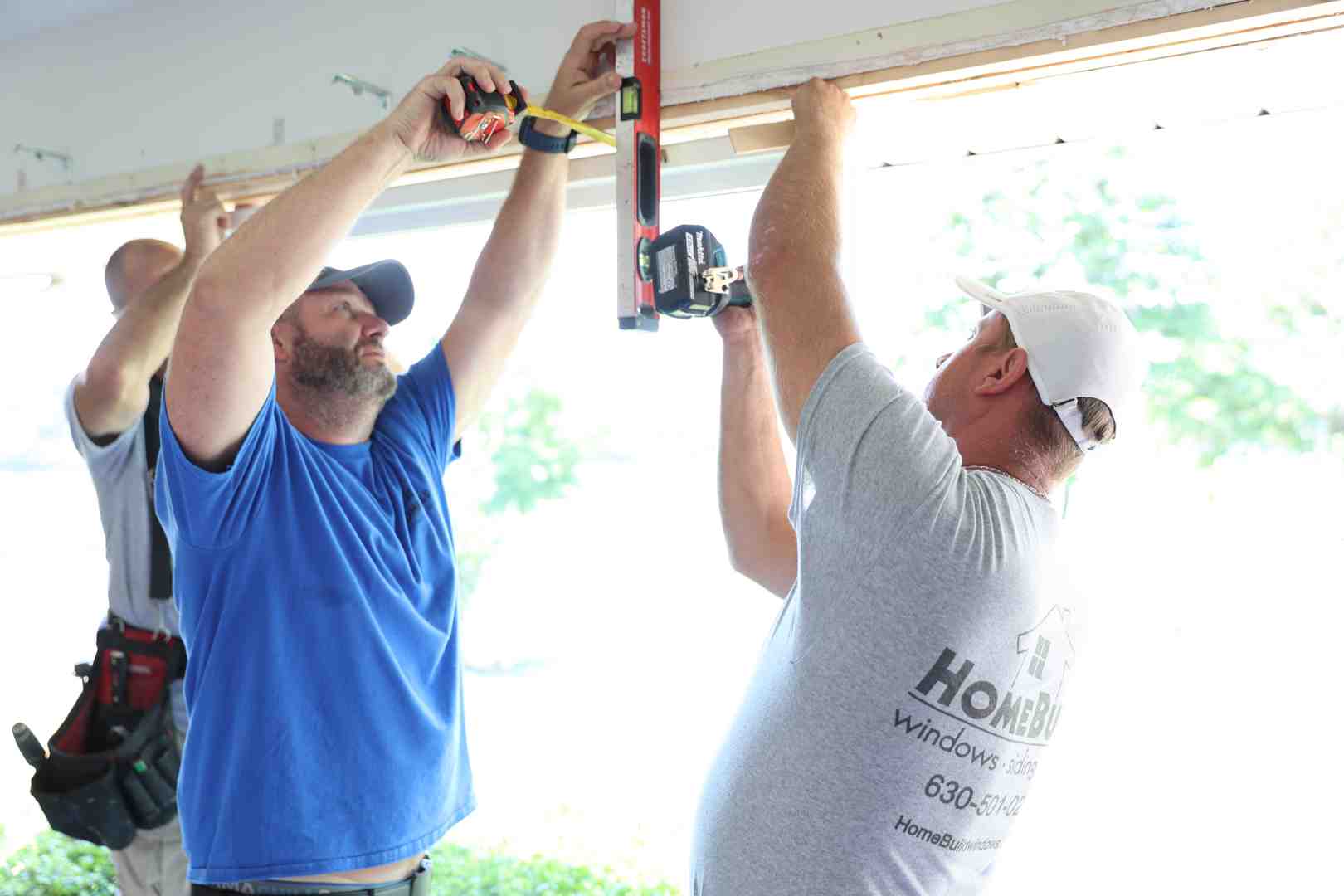
Many homeowners wonder what actually happens on the day of their installation. While some might consider this a weekend DIY project, hiring a professional ensures that the door is hung square, seals perfectly, and operates smoothly for decades.
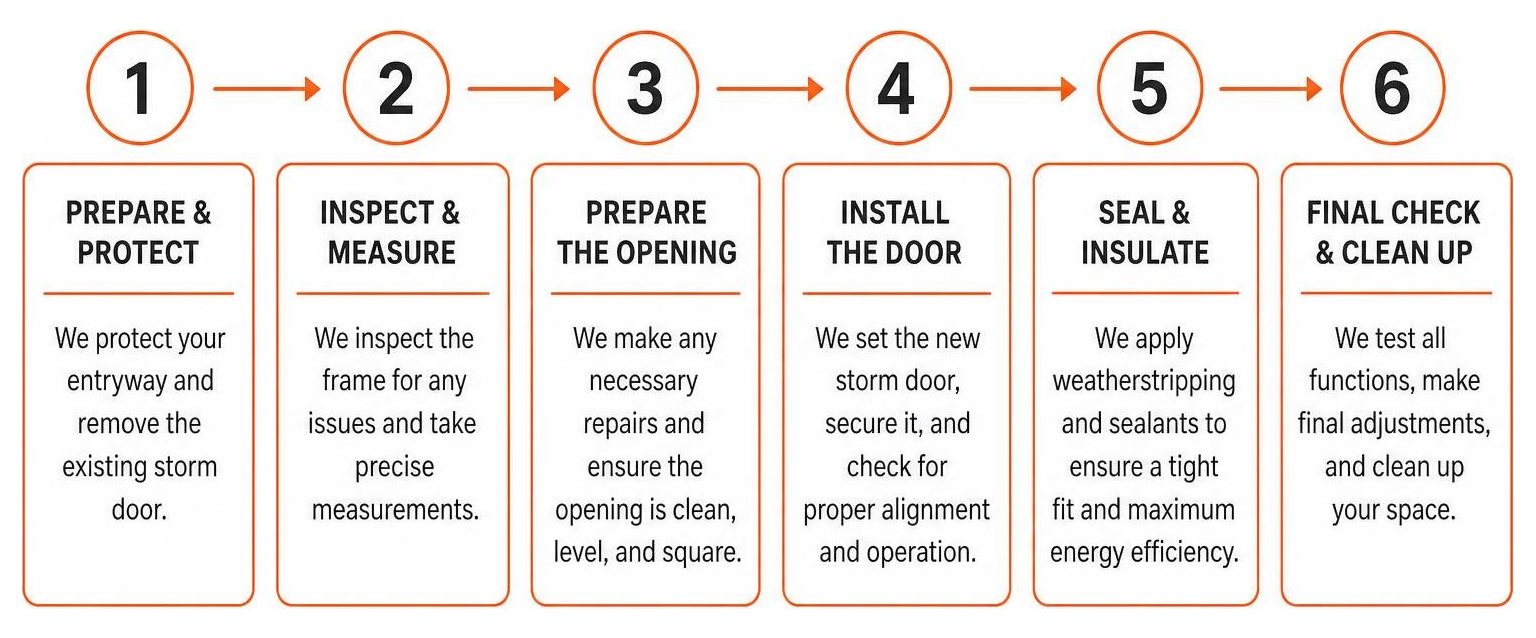
A typical professional storm door replacement is a streamlined process that takes between three to five hours to complete, provided the existing door opening is in good structural condition. If our team encounters hidden issues like wood rot in the underlying brickmould or framing, we will address those repairs first, which can extend the project timeline but guarantees a solid foundation.
Here is a step-by-step breakdown of how a professional installation unfolds:
To get a deeper understanding of why professional hanging is so critical to the performance of your door, read our article, Don’t Swing It Alone: The Guide to Professional Storm Door Hanging.
Avoiding Common Mistakes During Storm Door Replacement in the Northwest Suburbs
When homeowners attempt to tackle a storm door installation on their own, they often run into unexpected hurdles. Here are the most common mistakes we see and how our professional team avoids them:
- Incorrect Measurements: This is the number one issue. Homeowners often measure the door itself rather than the opening of the exterior trim (the brickmould). If the measurements are off by even a quarter of an inch, a standard pre-hung storm door will not fit, or it will leave massive gaps that allow drafts and moisture to bypass the door entirely.
- Ignoring Wood Rot: Installing a brand-new, heavy storm door onto a rotting wood frame is a recipe for disaster. The screws will eventually pull out of the soft wood, causing the door to sag or fall. Our team always inspects and replaces compromised wood before hanging the new door.
- Poor Alignment: If the door is not perfectly level, plumb, and square, the pneumatic closer will struggle, the latch will not align with the strike plate, and the weatherstripping will wear out prematurely.
If you are curious about the mechanics of the installation process, you can read our step-by-step guide on How to Hang a Storm Door in 5 Easy Steps to see exactly how we achieve a flawless fit.
Door Compatibility and Structural Limitations
It is important to note that while storm doors are incredibly versatile, they cannot be installed on every single type of exterior door.
- Sliding Patio Doors: Sliding glass doors utilize their own track systems and cannot support the weight or clearance of an additional storm door.
- Double Entry Doors: Double doors require specialized double storm door kits with an active door and an inactive door that locks into place with flush bolts.
- Manufactured/Mobile Homes: Homes in manufactured communities often require lightweight storm doors with slimmer frames specifically engineered to avoid putting excessive stress on the lighter wall framing.
- Frame Depth: Your exterior door trim must have sufficient depth (typically at least 1 inch of flat mounting surface) to accommodate the storm door frame and handle clearance. If your primary door has a handle that protrudes significantly, we must carefully select a storm door with adequate clearance to prevent the two handles from colliding.
For more technical details on frame requirements and compatibility, check out our Exterior Door Installation FAQs.
Frequently Asked Questions About Storm Door Upgrades
Does installing a storm door improve home energy efficiency and property value?
Absolutely. A high-quality, professionally installed storm door acts as a buffer zone of dead air between the harsh outdoor elements and your primary entry door. This extra layer of insulation significantly reduces heat loss in the winter and heat gain in the summer, lowering your energy consumption.
Additionally, it protects expensive wood or fiberglass entry doors from rain, snow, and UV damage, preserving their beauty and extending their lifespan. From a property value perspective, a beautiful storm door enhances curb appeal, creating a welcoming first impression for visitors and potential buyers alike. To find out more about maximizing your entryway’s potential, read How to Choose the Best Storm Door Experts in Chicago.
What is the typical lifespan of a high-quality storm door?
A standard storm door typically lasts around 25 years. However, premium models constructed with heavy-duty aluminum or advanced composites can easily last up to 50 years when properly maintained. To maximize the lifespan of your door, we recommend:
- Cleaning the glass and frame periodically with mild soap and water.
- Lubricating the hinges and the pneumatic closer rod annually with a silicone spray.
- Replacing worn weatherstripping and sweep gaskets as soon as you notice them tearing or flattening out.
- Checking that the mounting screws remain tight so the door stays perfectly aligned.
What should homeowners look for when hiring a local installer?
When searching for a contractor for your storm door replacement in the northwest suburbs, you should prioritize local experience, proper licensing, and robust manufacturer certifications. Look for a company that:
- Is fully licensed, bonded, and insured to protect your property.
- Holds certifications from top manufacturers (such as being an Elite Platinum Pella® Certified Contractor or an Andersen Certified Contractor).
- Has a solid track record of positive local reviews from homeowners in your immediate area.
- Provides owner-supervised projects to ensure the highest standards of workmanship and accountability.
To understand why working with certified specialists makes such a massive difference in your overall satisfaction, read our article on why Professional Storm Door Experts Are the Key to Your Happiness.
Conclusion
A storm door is far more than just a piece of glass in front of your entry door. It is a shield against the unpredictable Midwest weather, an energy-saving asset, and a major contributor to your home’s overall curb appeal. When it is time for a replacement, choosing the right materials and ensuring a precise, professional installation is key to enjoying these benefits for decades to come.
At HomeBuild Windows, Doors & Siding, we have spent over 20 years helping homeowners across Chicago and the northwest suburbs upgrade their homes with durable, beautiful, and energy-efficient exterior solutions. As a trusted, locally owned contractor, we take immense pride in our work. Every single project we take on is owner-supervised, ensuring that our high standards of quality and attention to detail are met without exception.
Our commitment to excellence has earned us prestigious recognitions, including:
- Elite Platinum Pella® Certified Contractor status
- Andersen Certified Contractor status
- The Angi Super Service Award
- Recognition as a Nextdoor Neighborhood Fave
- Over 200+ positive Google reviews from your neighbors in the northwest suburbs
Whether you are in Arlington Heights, Schaumburg, Palatine, or Glenview, our team is ready to help you find the perfect storm door for your home. We work with industry-leading brands like Pella, Marvin, and Therma-Tru to deliver results that look beautiful and stand up to the toughest winters.
Ready to protect your entryway and boost your home’s energy efficiency? Schedule your professional storm door installation consultation with HomeBuild Windows, Doors & Siding today, and let us help you keep the drafts out and the light in! To learn more about the financial aspects of your project, you can also explore The Real Cost of Adding a Storm Door to Your Home for a comprehensive breakdown of what to expect.


