Why Metal Siding Contractors Are Transforming Home Exteriors in Chicago
Metal siding contractors are specialists who install, repair, and replace steel, aluminum, and zinc siding systems on residential and commercial properties. Here’s a quick snapshot of what you need to know:
- Materials available: Steel, aluminum, zinc, and copper
- Typical lifespan: 40–70 years with proper installation and maintenance
- Key benefits: Weather resistance, fire safety, low maintenance, energy efficiency, and improved curb appeal
- How to find one: Search local directories, check reviews, verify licensing and insurance, and request a free estimate
- Best for Chicago homeowners: Metal siding handles Midwest freeze-thaw cycles, high winds, and hail better than most alternatives
More Chicago-area homeowners are turning to metal siding as aging wood and vinyl exteriors wear down under harsh Midwest winters. It’s a durable, low-maintenance upgrade that also improves a home’s energy performance and street presence — and choosing the right contractor makes all the difference in how long it lasts.
I’m Steve Mlynek, CEO and founder of HomeBuild Windows, Doors & Siding, and with over 20 years of experience helping Chicago-area homeowners improve their exteriors, I’ve seen how the right metal siding contractors can transform a home’s protection and appearance. In the sections below, I’ll walk you through everything you need to make a confident, informed decision.
The Unmatched Benefits of Hiring Metal Siding Contractors
When we talk to homeowners in Arlington Heights or Schaumburg, the conversation often starts with durability. Chicago weather is notoriously “moody”—one day it’s a deep freeze, the next it’s a humid thunderstorm. Metal siding contractors are seeing a surge in demand because metal is uniquely equipped to handle these extremes without the warping or cracking common in other materials.
Weather and Fire Resistance
Metal siding provides an incredible shield against the elements. Unlike wood, it doesn’t rot or succumb to moisture damage during our wet spring seasons. It is also highly resistant to high winds and hail, which is a significant concern for those living in the North-West Suburbs. Beyond weather, metal is non-combustible. This fire safety aspect provides immense peace of mind, especially in densely populated Chicago neighborhoods.
Pest Protection and Sustainability
Termites and carpenter ants have no interest in steel or aluminum. By choosing metal, you eliminate the risk of pest infestations that can compromise a home’s structural integrity. Furthermore, metal is one of the most sustainable building materials available. Most metal panels are made from recycled content and are 100% recyclable at the end of their long life.
Energy Efficiency
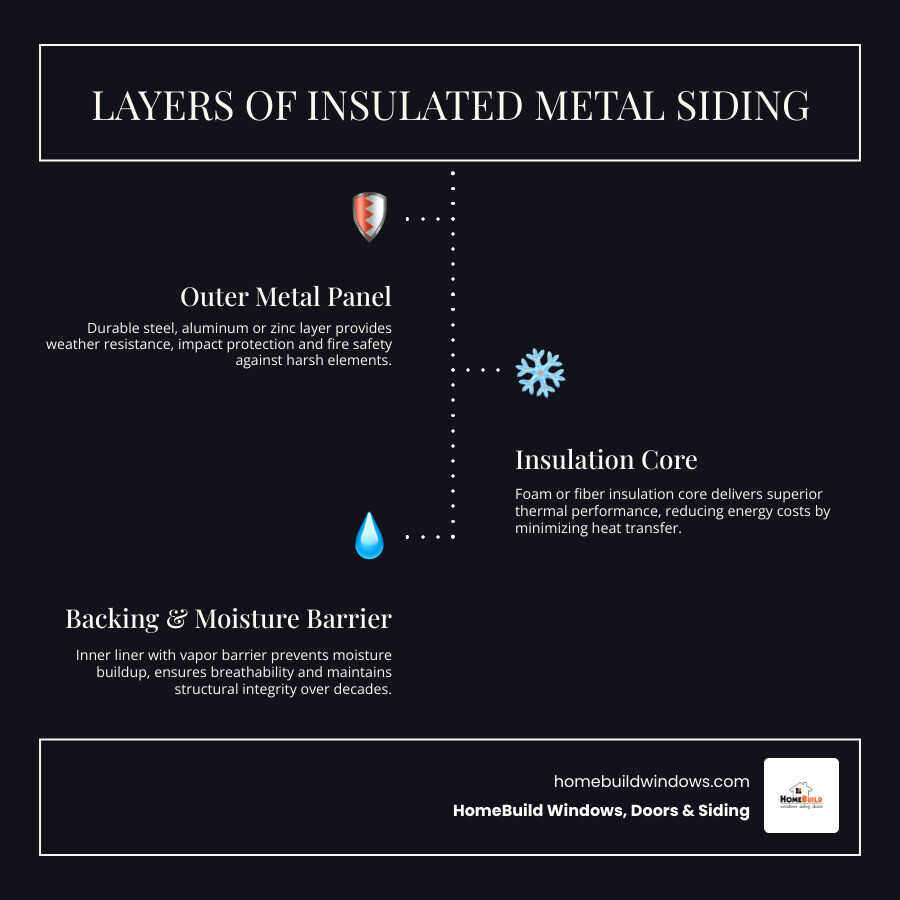
Modern metal siding is often paired with reflective coatings that deflect solar heat. When combined with professional insulation, it can significantly lower your utility bills. You might wonder how can vinyl siding make your home more energy efficient, and while vinyl has its merits, metal’s ability to host thick insulation boards and reflect radiant heat makes it a heavyweight champion in the energy efficiency arena.
Exploring Metal Siding Materials and Styles
One common misconception we hear at HomeBuild is that metal siding only looks like a “tin shed.” That couldn’t be further from the truth. Today’s materials offer architectural versatility that can match a historic home in Barrington or a sleek modern build in the city.
| Feature | Steel Siding | Aluminum Siding | Zinc Siding |
|---|---|---|---|
| Durability | Extremely High | High | Very High |
| Corrosion Resistance | Moderate (if coated) | High | Excellent (Self-healing) |
| Weight | Heavy | Lightweight | Moderate |
| Best Use | Impact resistance | Coastal/Humid areas | High-end architectural |
Popular Styles and Finishes
- Standing Seam: Characterized by clean, vertical lines, this style is popular for modern aesthetics and offers superior water shedding.
- Corrugated Panels: These provide a rhythmic, industrial look that is increasingly popular in contemporary residential design.
- Horizontal Lap: This mimics the look of traditional wood siding but with the longevity of metal.
- Woodgrain Textures: Advanced coatings allow metal siding contractors to install panels that look remarkably like cedar or oak from the curb but require zero staining or painting.
If you are weighing these options against other premium materials, you might find our deep dive into fiber cement siding panels helpful for comparison. Both offer high durability, but metal typically wins on lifespan and recyclability.
The Professional Installation Process

The secret to a 50-year exterior isn’t just the material; it’s the installation. At HomeBuild, we follow a rigorous process to ensure every panel is “Midwest-proof.”
- Surface Preparation: We start by removing old, damaged materials and inspecting the sheathing. Any rot is repaired to ensure a solid foundation.
- Moisture Barriers: We install high-quality house wrap to prevent moisture from reaching the wooden structure of your home.
- Thermal Expansion Considerations: Metal expands and contracts with temperature changes. Professional metal siding contractors know exactly how much “room to breathe” to leave at the fasteners so the panels don’t buckle in the summer heat.
- Weather-Tight Seals: We pay special attention to flashing around windows and doors to prevent leaks.
- Final Walkthrough: Our projects are owner-supervised, meaning we don’t leave until the job meets our high standards for precision and cleanliness.
For a broader look at how we handle these projects, visit our page on siding installation in Chicago.
Why Experience Matters for Metal Siding Contractors
Installing metal is a specialized skill. It requires precision cutting tools and a deep understanding of structural integrity. Unlike vinyl, which can be somewhat forgiving, a misplaced cut in a steel panel is a significant error. Experienced contractors ensure that the seams are straight and the edges are flawless, providing that “custom-built” look.
How to Vet Local Metal Siding Contractors
Don’t settle for the first name that pops up in a search. To protect your investment, look for the following:
- Licensing and Insurance: Ensure they are fully licensed to work in Illinois and carry comprehensive liability and workers’ comp insurance.
- Workmanship Warranties: A confident contractor will stand behind their labor, not just the manufacturer’s product warranty.
- Local Reputation: Check for reviews from homeowners in your specific suburb, like Naperville or Des Plaines.
- Owner Supervision: This is a hallmark of HomeBuild. Having an owner involved ensures accountability that larger, “assembly-line” companies often lack.
For more tips on this process, read our guide on choosing the best siding contractor near you.
Maintenance and Longevity in the Midwest Climate
One of the biggest selling points of metal is its lifespan. While vinyl and wood typically last 20 to 40 years, steel and aluminum can easily reach 50 to 70 years. In a climate like ours, where we deal with heavy snow in Buffalo Grove and intense sun in Palatine, this longevity is a major long-term advantage.
Keeping Your Siding Pristine
Maintenance is refreshingly simple. Unlike wood, which needs painting every few years, metal siding generally only requires a periodic wash with a garden hose and mild detergent. This removes salt, dust, and debris that could eventually dull the finish.
Impact and Rust Prevention
Modern steel siding is treated with zinc (galvanized) or a mix of aluminum and zinc (Galvalume) to prevent rust. Even if a stray hailstone or a rogue baseball hits the siding, the impact resistance of heavy-gauge steel is remarkable. If you’re wondering if it’s time for an upgrade, check out our article on when to consider siding installation or replacement.
Frequently Asked Questions about Metal Siding
How long does metal siding last compared to vinyl or wood?
Metal is the clear winner here. Wood requires constant maintenance to reach 30 years, and vinyl can become brittle and crack after 20 years of Chicago winters. Metal siding, specifically steel and aluminum, is rated for 40 to 70 years. It doesn’t fade as quickly as vinyl and won’t rot like wood, making it a “one-and-done” solution for most homeowners.
Does homeowners insurance cover metal siding repairs?
Generally, yes—if the damage is caused by a “covered peril” like a severe hailstorm, fallen tree limb, or fire. However, insurance typically does not cover general wear and tear or aging. Because metal is so impact-resistant, you may even find that some insurance providers offer lower premiums because the risk of fire and wind damage is reduced. It is always best to check with your specific agent in the Chicagoland area.
Can metal siding be installed over existing siding?
In many cases, yes. This is known as a “retrofit.” Installing over existing siding can provide an extra layer of insulation. However, a professional inspection is required first. If the underlying siding has rot or mold, it must be removed. Metal siding contractors will also ensure the home’s structure can handle the weight of the new panels.
Conclusion
Choosing the right exterior for your home is a big decision, but you don’t have to make it alone. At HomeBuild Windows, Doors & Siding, we bring over 20 years of local experience to every project. Whether you are in the heart of Chicago or the surrounding suburbs like Glenview or Lake Zurich, we understand the unique challenges our climate presents.
As an Elite Platinum Pella® Certified Contractor and an Andersen Premier Certified Contractor, we pride ourselves on using only the best materials. Our owner-supervised projects and 200+ positive Google reviews are a testament to our commitment to your home’s beauty and protection. If you’re ready to see why metal siding contractors are the talk of the town, schedule a free estimate for your siding project today. Let us help you build a home that is as tough as it is beautiful.