
Choosing a Secure Storm Door for Your Chicago Home
For a secure storm door in Chicago, look for a sturdy frame, a keyed lock, tight weather seals, and a closer that keeps the door from swinging in strong wind. Check the main entry door and its frame, too. A storm door adds a barrier, but it does not replace a properly locked main door.
Chicago’s snow, ice, and changing temperatures can affect how a door closes and latches. A good fit and sound installation help the door stay secure through the seasons.
I’m Steve Mlynek, founder of HomeBuild Windows, Doors & Siding, and I’ve worked in Chicago-area door replacement and installation for over 20 years. If you’re searching for “secure storm door Chicago,” I’ll help you understand what to check before choosing or replacing a door.
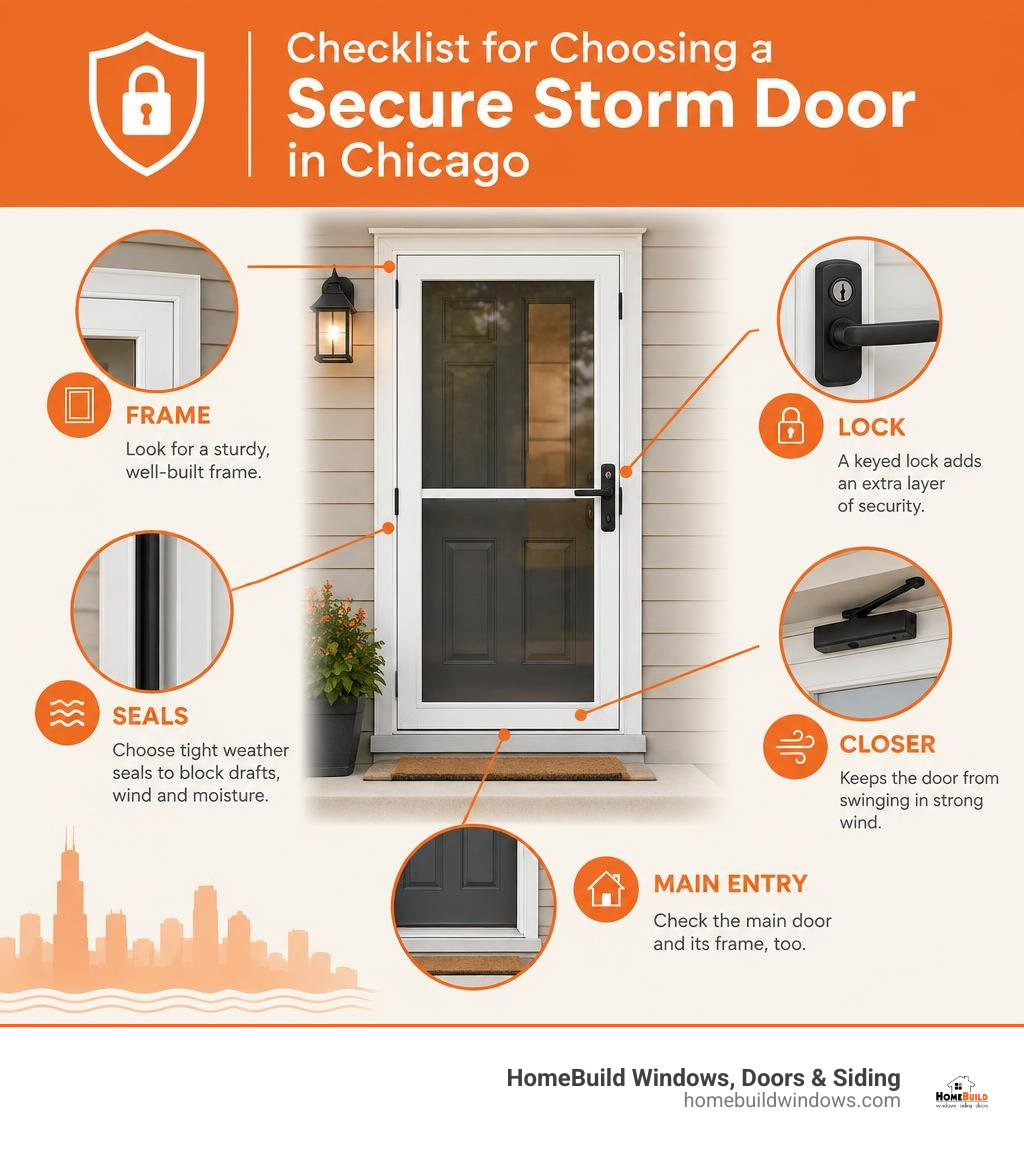
Secure storm door Chicago terms made easy:
Why Storm Doors Fail in Chicago—and Where Security Gaps Start
Entryways across Chicago endure intense weather shifts. From freezing winter gale-force winds coming off Lake Michigan to high summer humidity, the constant expansion and contraction put significant stress on exterior building components. Over time, heavy weather exposure weakens structural connections. When exterior brick or wood trim moves, the outer door frame separates, pulling fasteners loose and allowing winter drafts to seep into the living space.
Physical wear quickly turns into security liabilities:
- Hinges and Fasteners: Weak hinges secured with standard, short factory screws often pull out of aging wood jambs after repeated wind gusts catch the door.
- Door Closers: Loose or poorly calibrated pneumatic closers fail to pull the door completely shut against freezing drafts, preventing the latch from fully engaging.
- Glass and Glazing: Thin, unsecured single-pane glass panels can crack under extreme thermal shock or break easily during an attempted entry.
- Alignment Gaps: Latch misalignment prevents deadbolts from throwing completely into the strike, leaving the entryway vulnerable to basic prying.
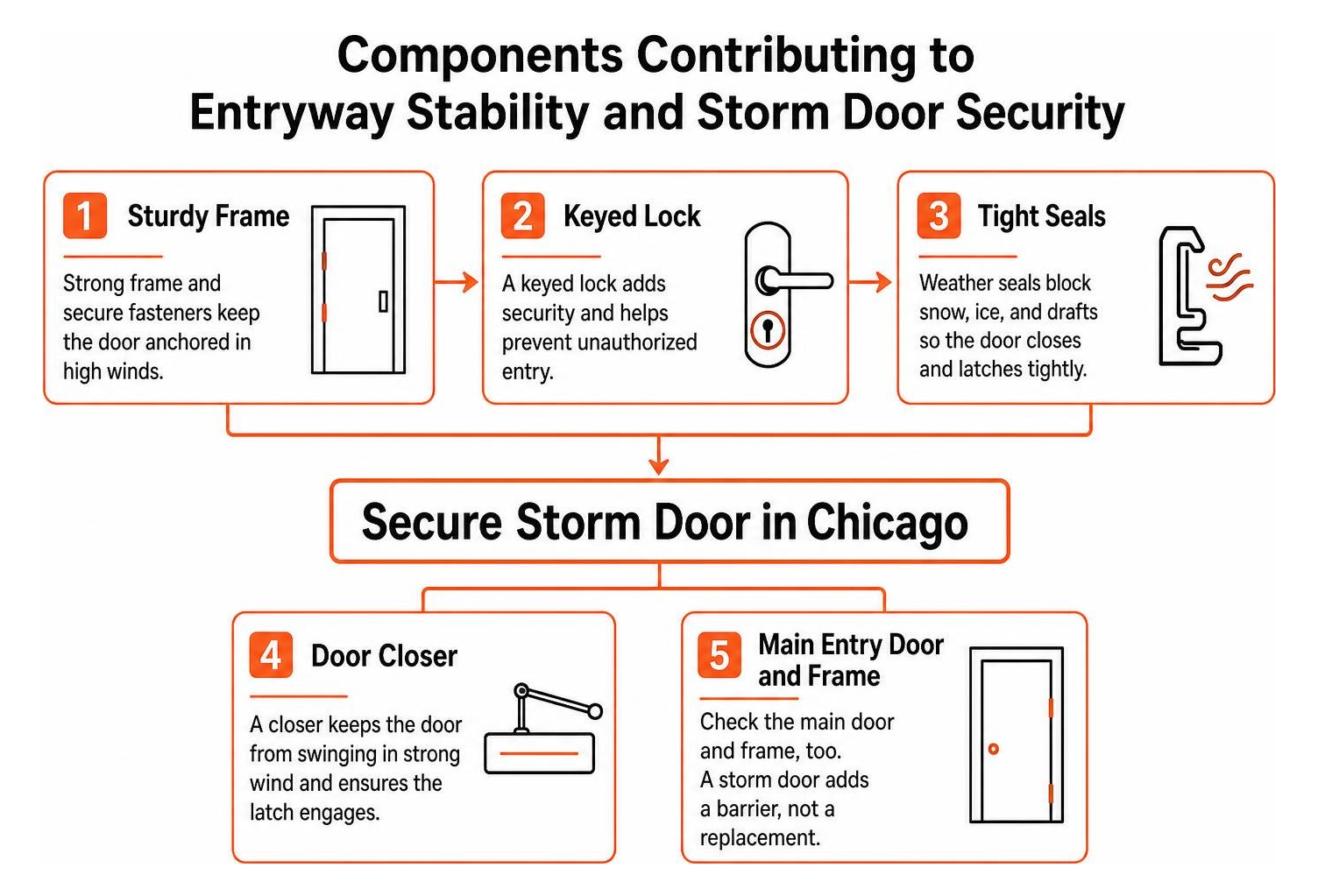
Common Break-In Vulnerabilities in Chicago Storm Doors
Standard storm doors are often designed purely for ventilation rather than physical security. Basic models feature lightweight aluminum outer shells with hollow or foam cores that offer minimal resistance against forced impact.
Exposed hinge pins provide another weak point, allowing intruders to compromise the door by removing external hardware. Basic push-button handle sets rely on surface-mounted plastic or thin zinc strike plates anchored with short screws into the exterior brickmould rather than the structural rough opening. Furthermore, removable seasonal screens or lightweight glass clips allow easy panel removal from the outside. Upgrading your entryway hardware eliminates these vulnerabilities by integrating heavy-gauge materials directly into the home’s framing.
How a Secure Storm Door in Chicago Handles Snow, Ice, and Wind
The local climate presents specific physical hurdles. Chicago experiences an average of 30 to 40 severe thunderstorms each year, accompanied by sudden microbursts and sustained winds. A standard door can be wrenched outward by a strong gust, bending the frame and tearing the jamb screws completely free.
Winter brings frequent freeze-thaw cycles. Melted snow pools along the threshold during the day, freezing solid overnight. This ice buildup blocks the bottom sweep, preventing the door from closing flush against the weatherstripping. In older Chicago bungalows and brick two-flats, seasonal settling magnifies these threshold clearance issues. High summer humidity then swells wooden jambs, causing latches to bind. A properly engineered storm door uses heavy-wall aluminum extrusions, commercial-grade corner gussets, and corrosion-resistant finishes to resist seasonal racking and thermal distortion.
What to Look for in a Secure Storm Door in Chicago
A reliable storm door system combines rigid structural support, advanced locking hardware, and high-performance perimeter seals to defend your home from both intruders and the elements.
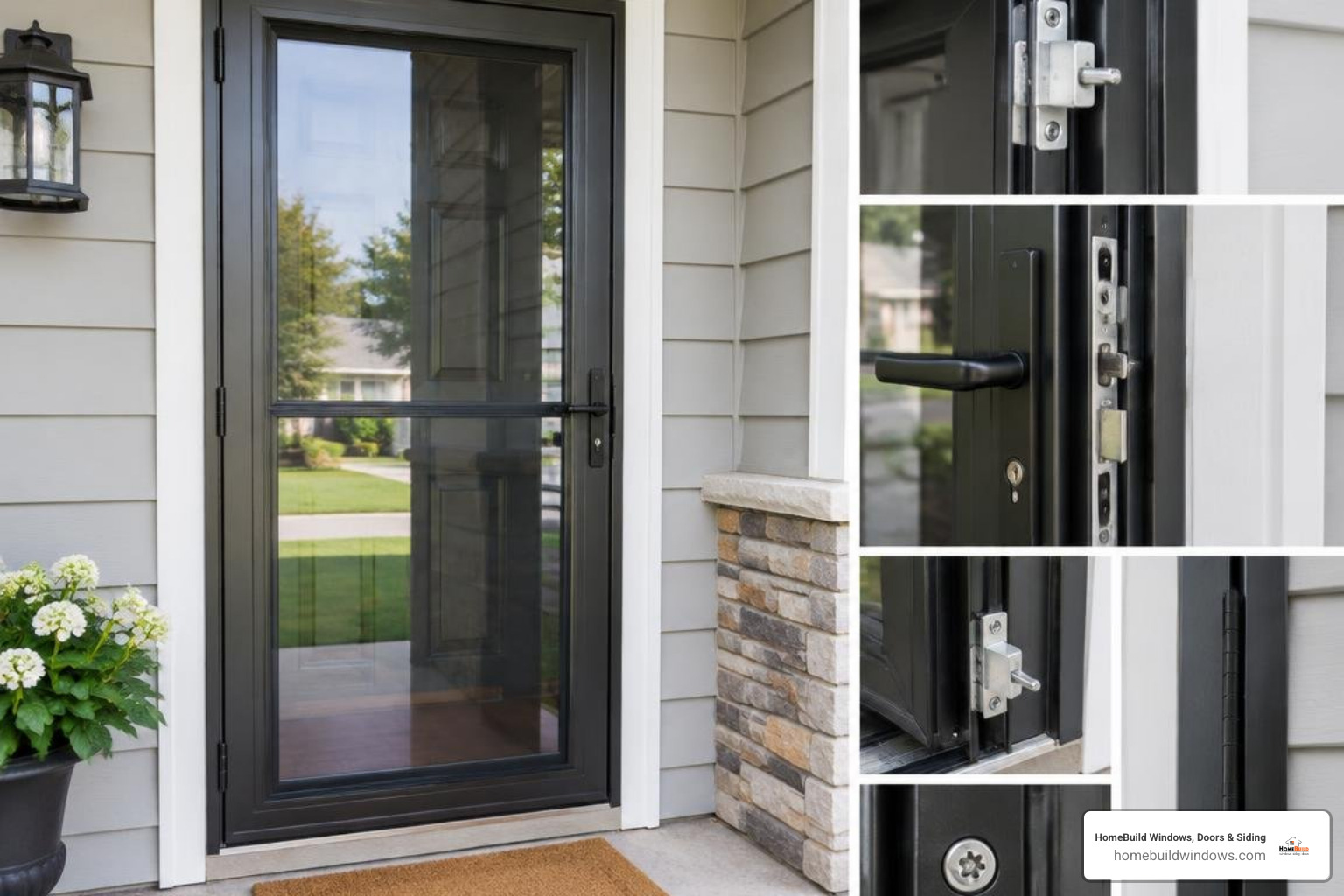
Key protective features include:
- Heavy-Gauge Aluminum Frames: Extruded aluminum frames with multi-chambered internal reinforcement resist twisting and forced entry.
- Piano Hinges: Full-length continuous hinges distribute the door’s weight evenly from top to bottom, eliminating sagging and preventing prying along the hinge jamb.
- Tamper-Resistant Fasteners: Hardened steel installation screws driven deep into the home’s primary framing studs provide anchoring that resists leverage tools.
- Multipoint Locking Mechanisms: Systems that secure the door at the top, center, and bottom simultaneously provide superior structural integrity compared to single-latch handles.
- Laminated Safety Glass: Impact-resistant glass bonded with an internal interlayer stays intact even when cracked, blocking forced access.
- Dual Pneumatic or Heavy-Duty Closers: Dual closer systems at the top and bottom stabilize the door panel against sudden wind gusts.
Choosing a Secure Storm Door in Chicago: Materials, Locks, and Models
When selecting models suited for Chicagoland residences—from ranches in Schaumburg to historic brick colonials in Evanston—material quality is the deciding factor. We install durable, proven product lines from industry leaders including Pella, Andersen, and ProVia.
ProVia storm doors, for instance, utilize thick aluminum profiles with reinforced corner brackets and factory-welded joints that prevent frame sagging over decades of use. Andersen storm doors offer retractable screen configurations with heavy-duty aluminum framing and multipoint keyed deadbolts. Pella storm doors provide dependable weather barriers and integrated glass designs engineered to withstand seasonal wind loads.
Selecting the right locking mechanism is equally essential. Avoid surface-mounted latches in favor of mortised, keyed deadbolts with hardened steel throw-bolts. A proper deadbolt extends at least one full inch into a reinforced steel strike plate secured directly to the wall studding.
Secure Versus Standard Storm Doors
Investing in high-performance entry protection delivers measurable improvements in home security, seasonal comfort, and energy savings. According to building science research, homes equipped with tightly sealed storm doors can reduce entryway energy loss by up to 15% annually by creating an insulating dead-air space in front of the main entry door.
| Feature | Standard Storm Door | Secure Storm Door |
|---|---|---|
| Frame Material | Thin, roll-formed aluminum or hollow vinyl | Heavy extruded aluminum with reinforced corner keys |
| Hinge System | 2–3 small leaf hinges with short screws | Continuous heavy-duty piano hinge |
| Locking Mechanism | Basic push-button spring latch | Mortised keyed deadbolt or multipoint latching |
| Glass Type | Standard tempered glass | Laminated security glass or heavy tempered safety glass |
| Draft Protection | Basic vinyl perimeter strips | Dual-fin high-density weatherstripping with bottom expander |
| Wind Resistance | Single light-duty closer | Dual heavy-duty closers with internal shock absorption |
Over 60% of Chicago homeowners consider storm doors an essential upgrade for combined security and severe weather protection. Local crime prevention data also indicates that residential burglary attempts decrease significantly in neighborhoods where reinforced exterior doors are standard.
Installation, Code Checks, and Ways to Reinforce an Existing Door
A secure storm door is only as strong as the frame that holds it. If the underlying brickmould or subframe is rotted, out of square, or improperly fastened, even the heaviest door cannot protect the home.
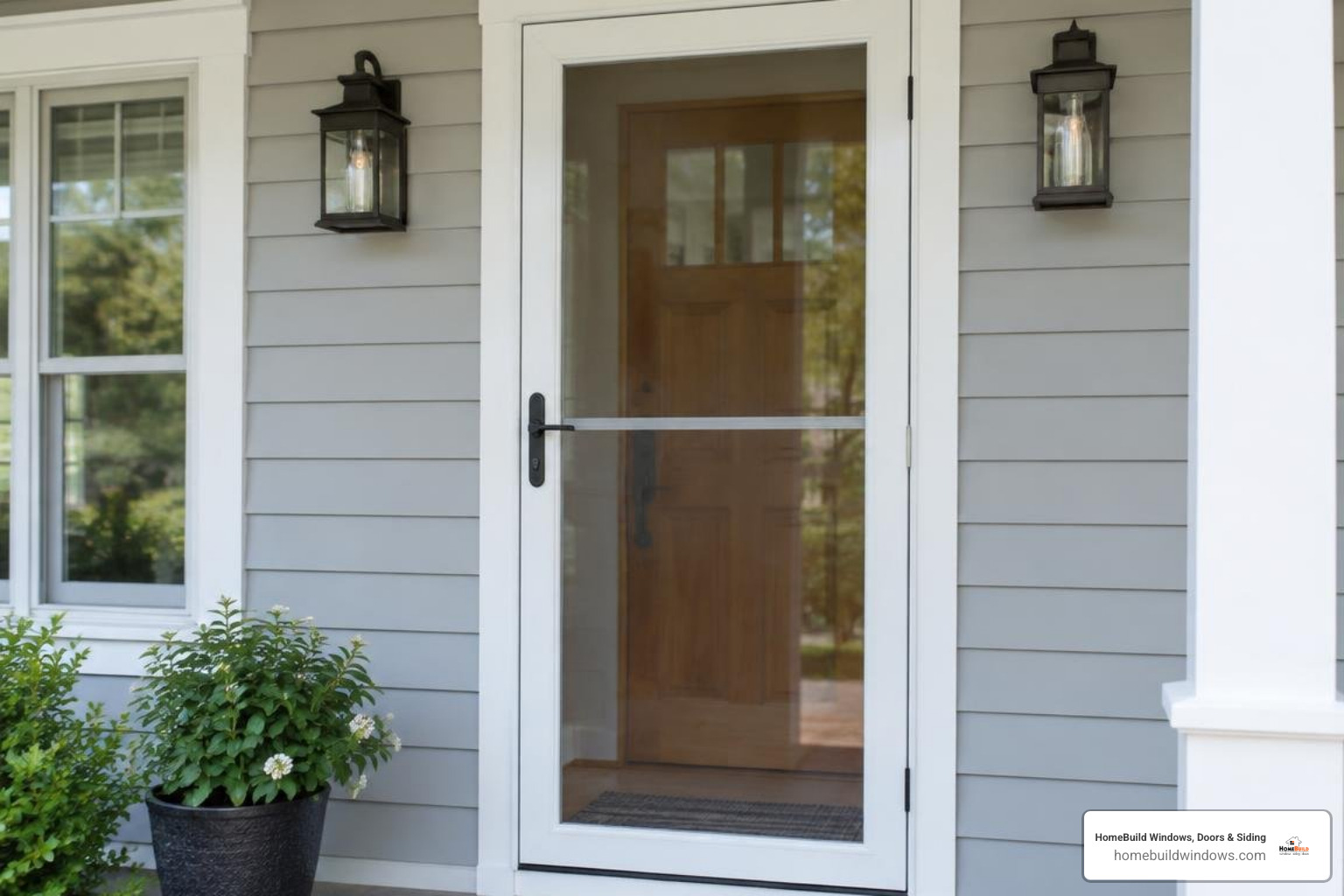
Professional fitting ensures that the rough opening is thoroughly inspected before installation begins. In older Chicago housing stock, frames frequently settle out of plumb. Compensating for these structural variances requires custom aluminum shimming, heavy-duty threshold adjustments, and precision latch alignment so the deadbolt throws smoothly without binding during temperature swings. Homeowners seeking reliable performance often rely on professional storm door installation in Chicago to verify jamb integrity and ensure tight, continuous perimeter sealing.
Professional Installation and Chicago Code Considerations
Exterior door installations must comply with local safety requirements and building guidelines. Egress rules dictate that storm doors must not impede rapid exit during an emergency, meaning locking systems must operate smoothly from the interior without requiring special keys or complex tools.
When planning an exterior update, verify specific municipal requirements through the Chicago building and permit guidance portal. Homeowners residing within designated landmark districts or properties managed by strict homeowners associations (HOAs) must often obtain architectural approvals regarding frame colors, full-view glass styling, and hardware finishes. If you have unique architectural features, reviewing how to handle a black front door with sidelights can help balance aesthetic guidelines with modern security requirements. Before hiring a contractor, take time for screening local storm door installers to ensure they have verifiable local experience with regional framing types.
Reinforcing an Existing Storm Door Without Replacing It
If your current storm door is structurally intact but needs better performance, a professional reinforcement service can improve security without a full replacement. This work typically involves inspecting the hinge-side framing, upgrading fasteners and strike hardware, calibrating door closers, and replacing worn bottom sweeps. A trained installer will also check for cracked, bowed, or corroded frame corners, because surface reinforcements are only temporary fixes when the underlying structure is compromised. In those cases, full replacement provides the only reliable long-term protection.
Frequently Asked Questions About Secure Storm Doors in Chicago
Do I need HOA or city approval to install a storm door?
In most Chicago single-family homes, replacing an existing storm door within an existing opening does not require a complex building permit, but you should always verify current municipal guidelines. If you live in a condominium association, townhouse development, or designated historic preservation district, you will likely need architectural review board approval regarding exterior colors, decorative grilles, and frame styles prior to installation.
Can a storm door stop a break-in?
A heavy-duty storm door serves as a formidable physical and psychological deterrent. Featuring laminated glass, a reinforced frame, and a mortised deadbolt, it forces potential intruders to make excessive noise and spend substantial time trying to bypass an outer barrier before they can even reach the primary entry door. However, a storm door is designed to complement—never replace—a secure, fully locked primary exterior door.
When should I replace an existing storm door?
You should replace your storm door if the outer frame is warped, the corner joints are separated, the piano hinge has pulled away from the jamb, or drafts blow noticeably around the frame edges. Repeated ice freezing along the sill that prevents full latching, along with failing lock mechanisms that bind seasonally, are clear signs that the door has reached the end of its serviceable lifespan.
Conclusion
Securing your home’s entryway against extreme Chicago weather and forced entry requires durable materials, precision engineering, and expert installation. HomeBuild Windows, Doors & Siding is a locally owned contractor serving the Chicago area since 2004. With over 20 years of dedicated craftsmanship, we complete every project using our own skilled in-house crews—never subcontractors—with every job supervised on site by owner Steve Mlynek.
As an Elite Platinum Pella Certified Contractor and an Andersen Premier Certified Contractor, we uphold the highest installation standards across the city and northwest suburbs. Our commitment to excellence has earned us the Angi Super Service Award 2025, the 2025 Nextdoor Neighborhood Faves recognition, and an outstanding 4.9-star rating across more than 220 Google reviews. We back our craftsmanship with a 10-year labor warranty on every installation, paired with a complimentary VIP Protection Plan covering 1, 2, or 5 years depending on project size. You can review our full coverage on our warranty details page.
To protect your entryway and enhance your home’s energy efficiency, contact our team to schedule a free estimate or learn more about how we help homeowners plan storm door installation and replacement.