
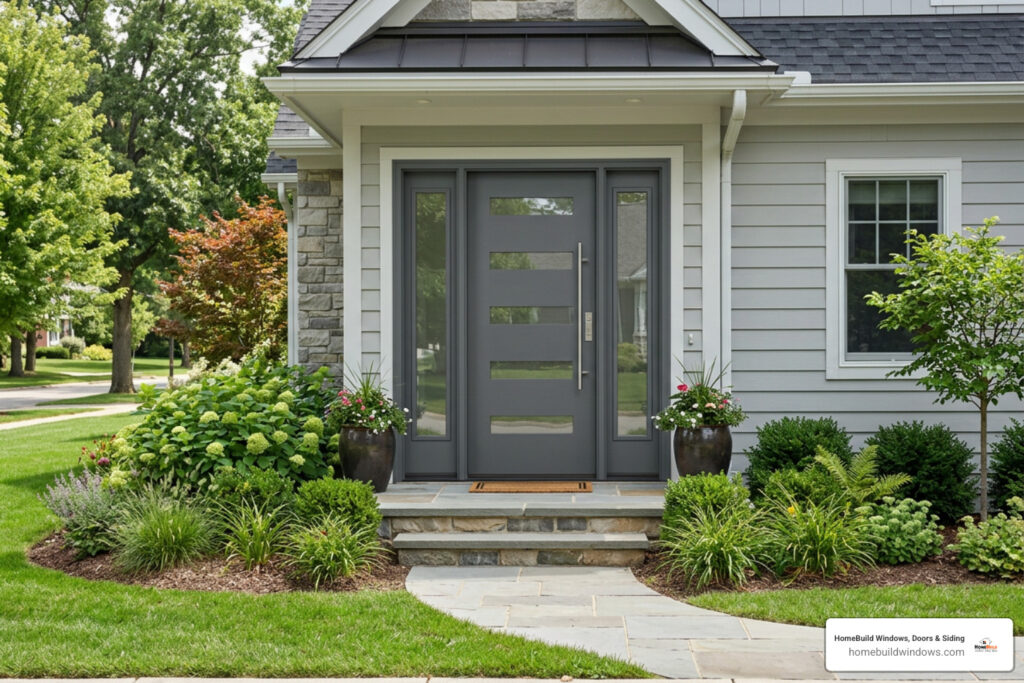
Why Choose a Composite Front Door with Sidelights Over Other Materials?
Choosing the right material for your front entry unit is one of the most important decisions you will make when updating your home’s exterior. A composite front door with sidelights brings together multiple materials into a single design engineered to outperform single-material alternatives like traditional wood, standard steel, or single-layer fiberglass.
Composite doors feature robust outer skins—often crafted from glass-reinforced plastic (GRP) or protective aluminum cladding over high-density timber and insulation cores. This multi-layer construction effectively shields your home from external moisture, severe cold, and physical impacts while preserving structural stability over decades of daily use.
When exploring High Quality Exterior Doors, comparing how different door materials handle real-world wear and climate stress helps clarify why composite units stand out:
| Feature / Performance | Composite Doorsets | Traditional Wood | Gauge Steel | Standard Fiberglass |
|---|---|---|---|---|
| Structural Core | Multi-material laminated timber & high-density insulation core | Solid or engineered wood slab | Hollow or foam-filled metal casing | Foam core with fiberglass skins |
| Warp & Twist Resistance | Superior; engineered core resists thermal expansion | Poor to Fair; prone to swelling and twisting with weather changes | Good; but subject to thermal bridging | Fair to Good; can bow under extreme direct sunlight |
| Surface Durability | Exceptional GRP or powder-coated protective skin; impact-resistant | Requires frequent sanding, staining, or repainting | Prone to denting, scratching, and potential rust if scratched | Prone to surface cracking or fading if unmaintained |
| Thermal Efficiency | Excellent whole-unit U-values; insulated core & tight weather seals | Moderate; natural wood insulates but expands, creating draft gaps | Poor to Moderate; metal transfers heat and cold easily | Good; thermal foam interior provides reliable insulation |
| Maintenance Need | Minimal; routine soap and water cleaning | High; regular sealing, painting, and weatherstripping upkeep | Moderate; requires paint touch-ups to prevent oxidation | Low to Moderate; occasional cleaning and seal checks |
Material Durability and Structural Integrity
The core advantage of composite construction lies in how its materials complement one another. Traditional solid wood doors present unmatched natural beauty, but Chicago’s extreme seasonal humidity swings cause timber to swell in summer and contract during freezing winter spells. Over time, this movement causes sticking, drafty frame gaps, and misaligned latches.
A composite door leaf combines the structural stiffness of an engineered timber internal frame with dense polyurethane insulation foam and tough outer skins. This structural sandwich prevents bowing, warping, and twisting regardless of temperature spikes or plunging Midwest weather. Additionally, durable GRP skins resist impact from hail, kicked debris, and everyday family wear without denting like steel or rotting like raw timber.
Curb Appeal and Style Customization
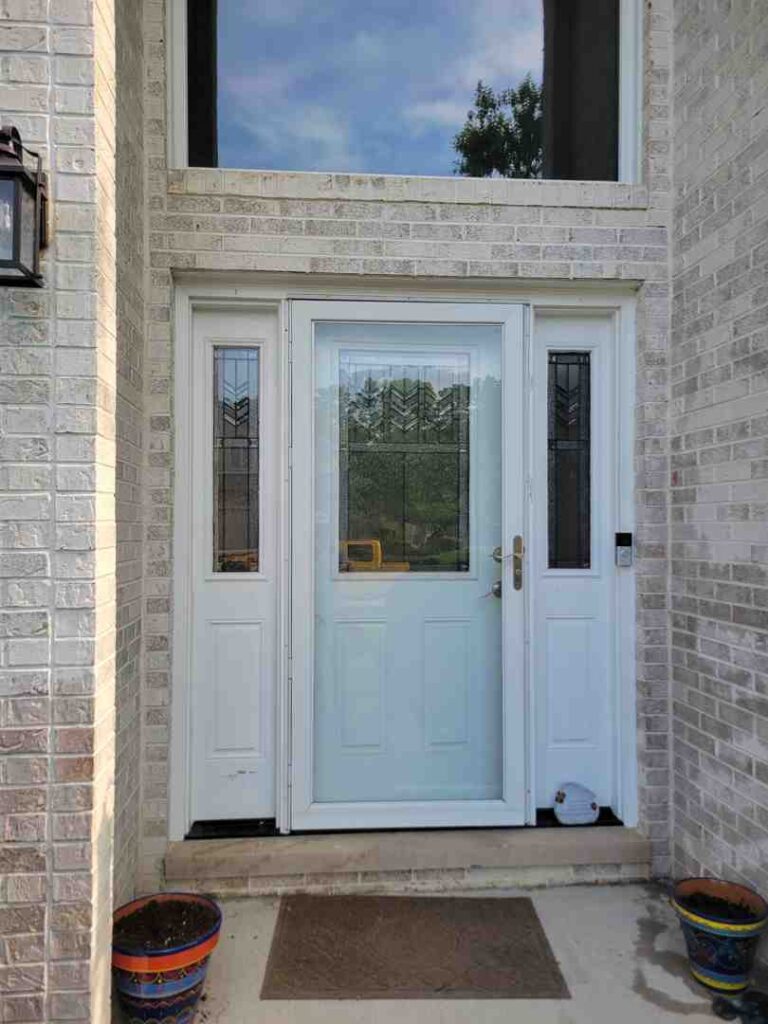
Upgrading your entryway with a composite front door with sidelights instantly transforms your home’s aesthetic appeal. Sidelights frame your front door, introducing architectural symmetry and dramatic visual width that elevates the entire front façade.
You can customize composite doorsets to match any architectural theme—from classic Craftsman homes to modern contemporary designs:
- RAL Color Palettes and Stains: Choose from rich architectural hues, crisp whites, bold blacks, or natural woodgrain textures that capture the authentic warmth of real oak, mahogany, or walnut.
- Glass Configurations: Select decorative glass patterns, clear glazing, sandblasted privacy glass, or obscure Flemish and satin finishes. Options range from 3-panel 6-light patterns to full-height 8-light sidelights. Check out The Complete Guide to Front Doors Sidelights for style inspiration.
- Hardware Finish Options: Complete your unit with premium handlesets, letterboxes, escutcheon plates, and low thresholds in brushed nickel, oil-rubbed bronze, matte black, or polished chrome.
Energy Efficiency and Thermal Insulation Performance
A major reason Chicagoland homeowners replace older entry systems is thermal performance. Legacy wood or metal doors account for significant envelope heat loss, especially around drafty sidelight perimeter joints. Modern composite systems address thermal transfer across every component of the opening.
A complete composite doorset achieves high insulation performance by combining high-density polyurethane cores with warm-edge spacers, thermal breaks, and low-emissivity (Low-E) glass panels. Whole-unit thermal insulation is measured by its overall U-value (or thermal transmittance). Lower U-values indicate superior resistance to heat transfer, helping maintain uniform indoor temperatures during icy winter winds and summer heatwaves.
To explore options that lower energy bills while improving home comfort, review our selection of Energy Efficient Entry Doors.
Triple Glazing and Thermal Separation in a Composite Front Door with Sidelights
Because sidelights consist primarily of glass, their thermal performance dictates the comfort level of your entire foyer. Double glazing provides good standard insulation, but high-performance composite entry systems can feature factory-integrated triple-glazed glass units.
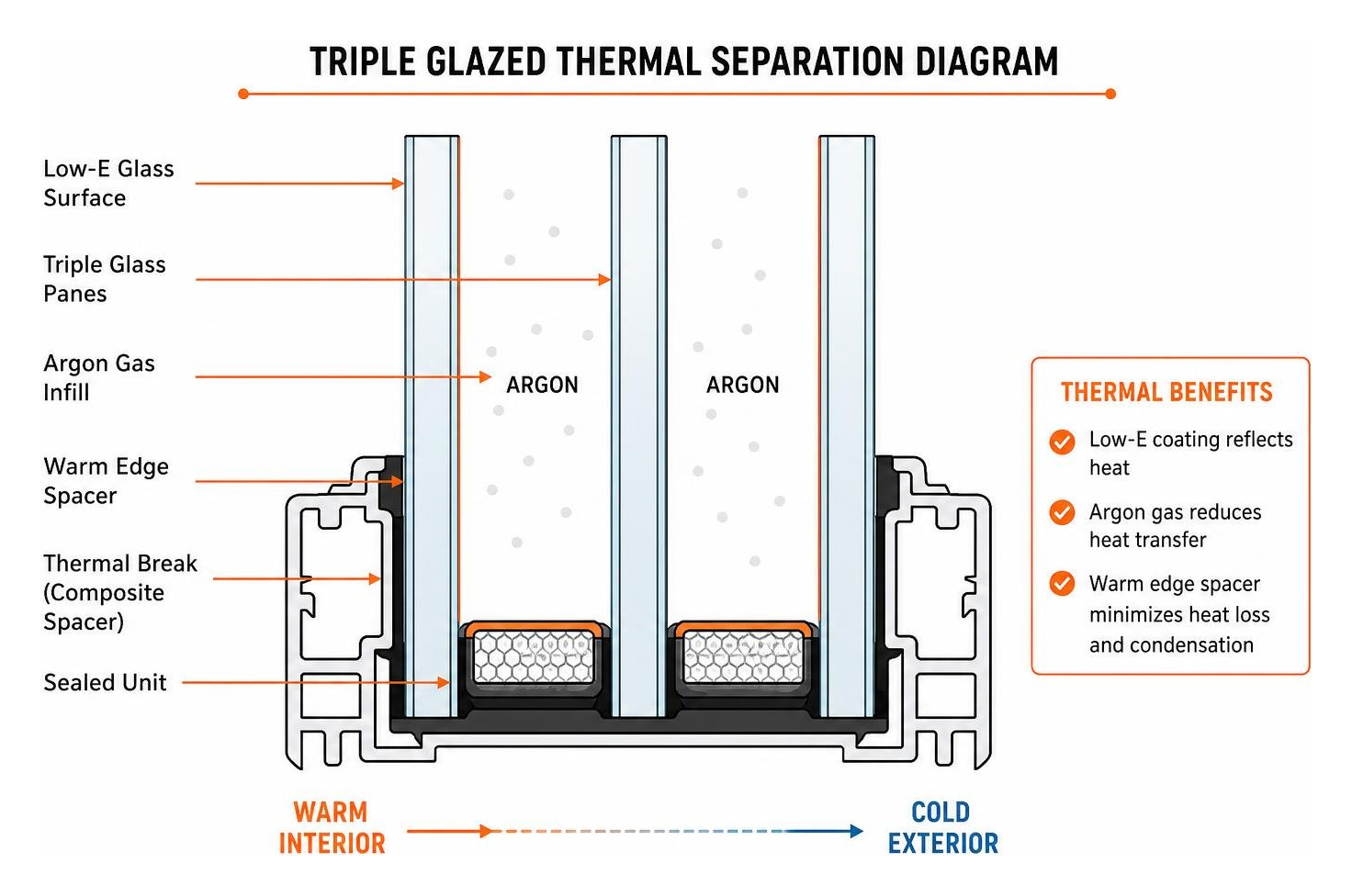
- Ug-Values and Low-E Glass: While standard single-pane glass transfers heat readily, insulated glass units (IGUs) coated with microscopic metallic Low-E coatings reflect interior heat back into your home. Center-of-glass ratings (Ug-values) drop from standard 1.1–1.2 W/m²K double glazing down to 0.5–0.7 W/m²K in triple-glazed units.
- Argon Gas Infill: The sealed cavities between glass panes are filled with inert argon gas, which conducts significantly less heat than standard atmospheric air.
- Warm Edge Spacers: Advanced composite glass spacers replace traditional aluminum spacer bars along the perimeter of the glass, eliminating thermal bridging and reducing condensation risk near the edge of the glass.
Weather Seals and Draft Prevention
Even the highest-rated insulating door slab cannot stop cold air if the frame seals allow drafts. Professional installation ensures that continuous weatherstripping, adjustable threshold caps, and factory-milled frame grooves form an airtight barrier around both the active door leaf and fixed sidelights.
When undertaking a complete project to Replace Front Door and Sidelights, custom-fitted factory seals ensure excellent air permeability resistance and watertightness. This shields your entryway flooring from driven rain, melting snow, and intrusive wind patterns.
Advanced Security Features for Doors with Sidelights
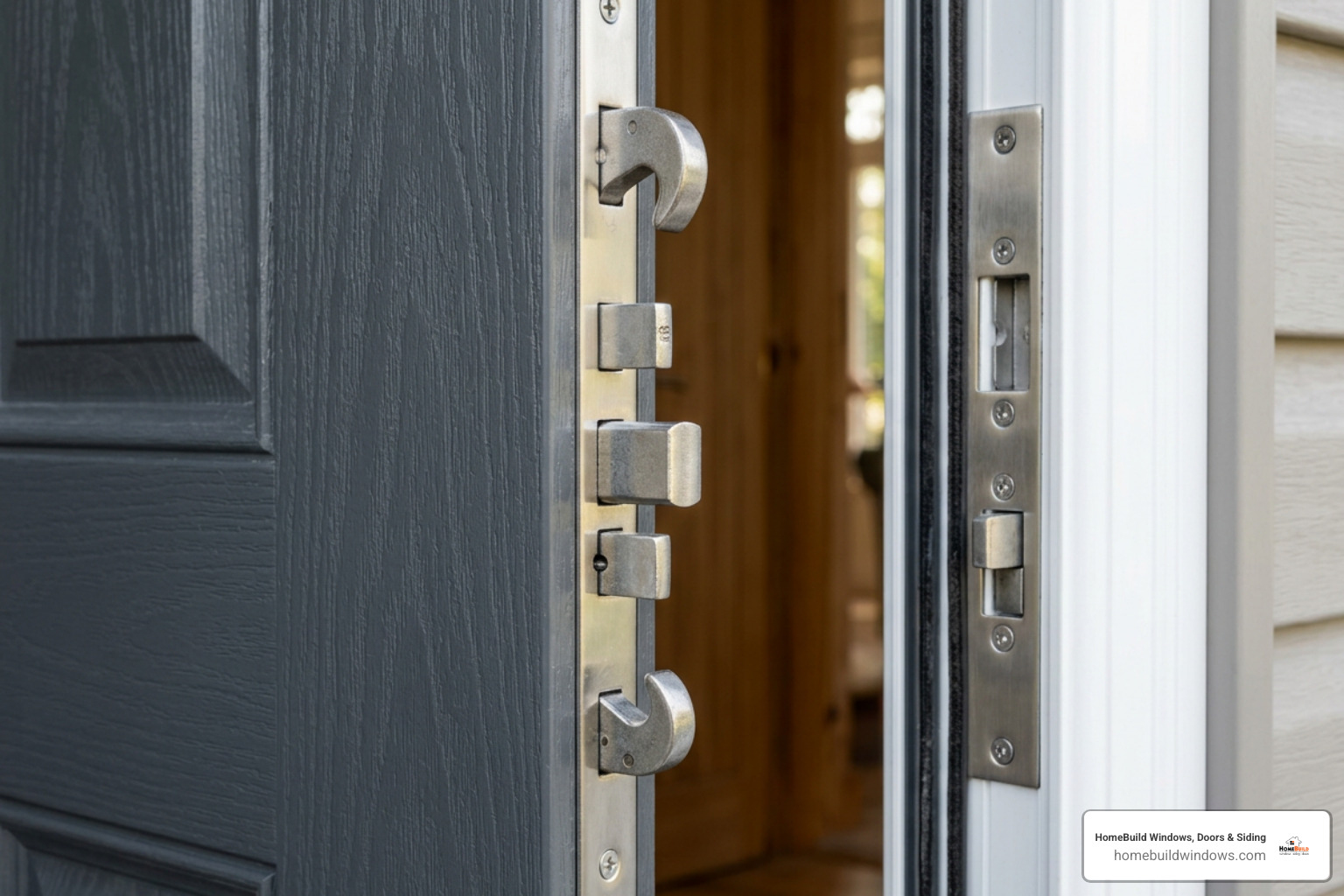
Home security starts at the front entrance. Older front doors with glass sidelights were historically viewed as security vulnerabilities if an intruder could break a pane to reach an interior thumbturn. Modern high-performance composite entrance units solve this issue through structural reinforcement, advanced locking hardware, and high-security safety glazing.
Quality composite door systems can be constructed with heavy-duty internal steel reinforcements and hardened lock strike plates that distribute forced entry loads evenly across the wall opening.
To learn more about designing entryways that combine security with style, read Sidelight Delight Choosing the Perfect Custom Entry Doors.
Key security features engineered into modern composite doorsets include:
- Multi-Point Locking Systems: Rather than relying on a single deadbolt, multi-point locks engage strong steel hooks, deadbolts, and roller cams into the frame at three or more points along the top, side, and bottom edges with a single turn of the key or handle.
- Anti-Pick, Anti-Bump, and Anti-Drill Cylinders: High-security lock cylinders prevent common lock manipulation techniques, ensuring peace of mind whether you are home or away.
- PAS 24 and Security Certifications: Industry-standard security certifications verify that the complete doorset, including the frame, hinges, sidelight stops, and lock hardware, has undergone rigorous physical attack testing.
- Heavy-Duty Adjustable Hinges: Heavy-duty security hinges feature non-removable hinge pins and multi-axis adjustment capability to keep the heavy composite door leaf perfectly aligned inside its frame over time.
Glazing Safety and Building Code Compliance
Building codes enforce clear safety standards for glass installed near exterior doors. Under residential building rules (including UK Approved Document K and local US IRC regulations), safety glass is mandatory in specific hazard zones near entry points.
- The 300mm / 12-Inch Proximity Rule: Any glass panel situated within 300 mm (approximately 12 inches) of a door opening edge, or where the exposed bottom edge of glazing sits lower than 800 mm (approx. 31.5 inches) from the floor level, must utilize approved safety glass.
- Toughened Safety Glass: Heat-treated toughened glass is up to five times stronger than standard float glass. If impacted severe enough to shatter, it crumbles into small, blunt-edged fragments rather than dangerous jagged shards.
- Laminated Safety Glass: Laminated glass consists of two glass panes bonded together by a tough polyvinyl butyral (PVB) inner interlayer. If struck, the glass cracks but remains securely adhered to the inner plastic interlayer, preserving barrier integrity against forced entry and high winds.
For full specification guidelines on high-performance timber and alu-clad entry systems, review technical data such as the Triple-Glazed Entrance Door Specifications.
Frame Sizing, Measurement, and Custom Fitting Guidelines
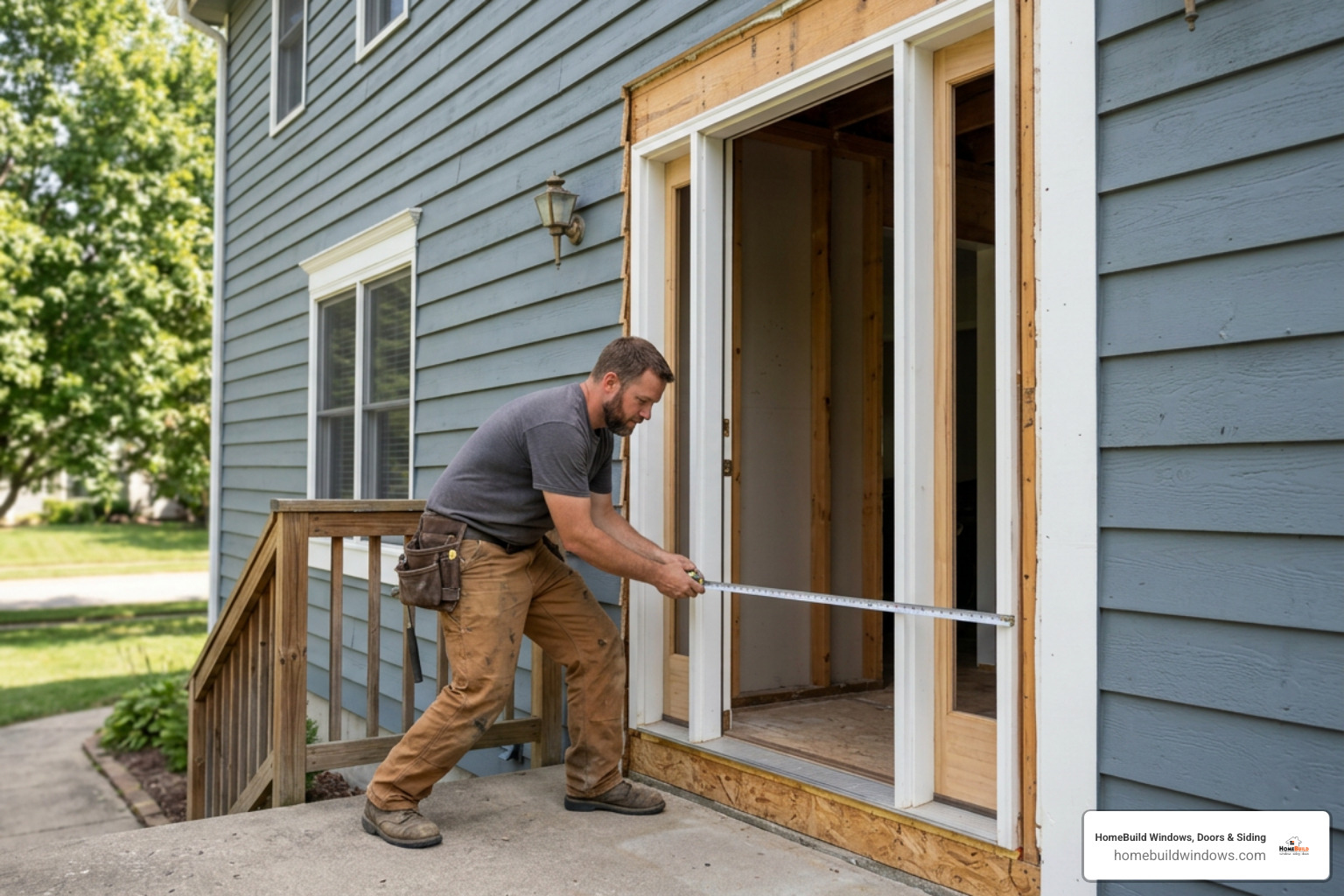
Installing a composite front door with sidelights requires precise structural measuring. Unlike replacing a single door slab inside an existing jamb, a door-and-sidelight assembly is installed as an integrated prehung unit. The frame holds both the swinging door leaf and the fixed glass sidelights in one unified structural envelope.
When preparing for a New Entry Door Installation, taking accurate rough wall opening measurements ensures the prehung frame fits securely without structural distortion.
Sizing Specifications for a Composite Front Door with Sidelights
Standard rough openings for single door units with sidelights typically come in wide entry dimensions:
- Single Sidelight Units: Standard overall frame widths often span 48 inches to 54 inches.
- Dual Sidelight Units (Sidelights on Both Sides): Standard prehung unit frame widths typically measure 60 inches, 62 inches, 64 inches, or 68 inches wide, with standard height dimensions of 80 to 96 inches.
When calculating your exact order frame size from a raw masonry or rough wood wall opening, experienced installers follow a clear fitting rule:
- Calculate the Rough Opening: Measure wall-to-wall width at three points (top, middle, bottom) and floor-to-header height at two points. Take the smallest measurement.
- Deduct Clearance Allowances: Subtract 2 to 3 cm (roughly 3/4 inch to 1 inch) from total opening width and height. This deduction allows room to level, plumb, square, and insulate the frame with low-expansion foam and perimeter weather sealant.
- Verify Swing Direction: Specify inward vs. outward door swing and right-hand or left-hand hinge placement based on interior entryway traffic flow and exterior porch clearance.
- Choose Threshold and Trickle Vents: Select low-profile aluminum thresholds for easy transition access, and consider frame trickle vents if your home requires extra background ventilation without compromising security.
Homeowners browsing prehung options can evaluate various panel configurations, from single-sidelight units to full dual-sidelight entry systems, to match their home’s architectural style and lighting preferences.
Frequently Asked Questions About Composite Entry Doors
What safety glass requirements apply to sidelights?
Because sidelights are adjacent to primary door openings, local building codes mandate safety glass for glazing within 300 mm (12 inches) of the door frame or lower than 800 mm from floor height. Toughened safety glass or laminated safety glass must be specified. Toughened glass crumbles safely into small, dull pieces upon impact, while laminated glass holds shattered fragments firmly to a inner protective film layer.
How do composite entry doors perform during extreme winter cold?
Composite entry doors are engineered specifically to withstand severe Midwest winters and freezing temperatures. Unlike natural wood, which shrinks and cracks when exposed to cold dry air, or steel, which readily transfers thermal energy, composite doors feature insulated polyurethane cores and warp-free outer skins. Combined with durable perimeter weatherstripping, composite doors maintain an airtight thermal barrier that eliminates drafts and prevents heat loss throughout freezing winter months.
What maintenance is required for a composite front door and sidelights?
Composite doorsets are exceptionally low-maintenance and designed for a long service life—often up to 50 years with basic care. They do not require regular sanding, painting, or staining. Upkeep simply involves wiping down the door surface and glass sidelights with a soft cloth and warm soapy water every few months. Additionally, applying light lubricant oil to the multi-point lock mechanisms and hinges once a year keeps hardware operating smoothly.
Conclusion
A composite front door with sidelights provides an optimal combination of natural lighting, thermal efficiency, durable weather resistance, and home protection. By selecting a high-quality composite system engineered with an insulating core, safety glazing, and multi-point locking hardware, you ensure a warm, bright, and welcoming entryway that stands strong against the harshest seasonal climate conditions.
At HomeBuild Windows, Doors & Siding, we bring over 20 years of dedicated experience helping homeowners across Chicago and the northwest suburbs upgrade their entryways. As a trusted, locally owned contractor, our team works closely with you to deliver custom exterior replacement solutions tailored to your home’s unique style and energy needs.
Our commitment to quality workmanship and customer satisfaction is reflected in our industry credentials, including recognized manufacturer certifications, the Angi Super Service Award, being named a Nextdoor Neighborhood Fave, and holding over 200 positive Google reviews. Fully licensed and insured, we ensure your entry door installation is executed with professional care from initial measurement to final sealing.
To explore premium Entry Doors or schedule a consultation with our experienced entryway specialists, contact HomeBuild Windows, Doors & Siding today to request a free consultation.