


Emergency Roof Repair: What to Do First
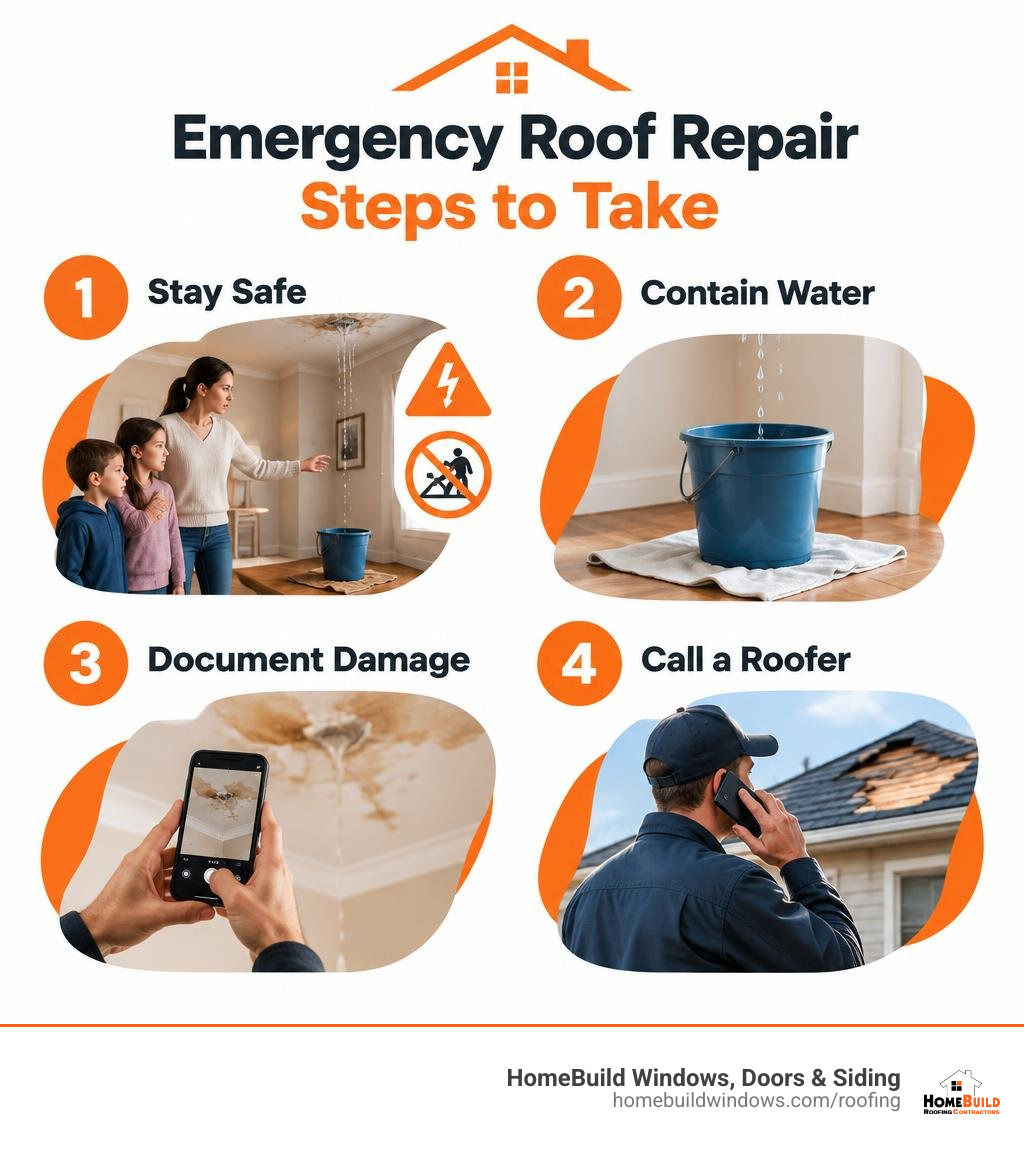
If water is coming through your roof, keep everyone away from wet electrical areas and sagging ceilings. Stay off the roof. Move valuables if it is safe, place buckets under leaks, and take photos from the ground. Then call a local emergency roofer to protect the opening and plan a lasting repair.
You do not need to decide whether the whole roof needs replacing tonight. Ask what can be made safe now and request a written estimate for the work that follows.
I’m Steve Mlynek, founder of HomeBuild Windows, Doors & Siding, with over 20 years of experience in Chicagoland exterior projects. HomeBuild is licensed and insured, and I bring that background to our owner-supervised roofing services, including emergency roof repair. The Federal Emergency Management Agency recommends documenting damage and contacting your insurance company promptly after a storm, which aligns with the steps we guide homeowners through during a roofing crisis.
Identifying a True Crisis: When Do You Need Emergency Roof Repair?
Not every missing shingle demands an immediate midnight phone call. Minor cosmetic issues can wait for normal morning business hours. True emergencies require fast intervention to prevent catastrophic interior water damage.
A roofing crisis involves active water entering living spaces, compromised structural wood, or large exposed sections of roof decking. Ignoring these issues causes drywall collapses, ruined insulation, and rapid mold growth within 24 to 48 hours. Knowing how to spot the warning signs of a leak helps you make fast, informed decisions during severe weather events.
Structural Breaches and Sudden Storm Impacts
Severe summer thunderstorms and violent windstorms sweep through Cook County, DuPage County, and Lake County each year. Heavy wind gusts lift older asphalt shingles, break sealant strips, and rip metal flashing away from chimneys.

When falling tree limbs puncture the roof decking, rain pours directly into your attic space. This direct breach weakens rafters and damages ceiling joists below. Hail stones can also fracture shingle mats, creating hidden entry paths that allow water to cascade downward into your home.
Chicagoland Winter Hazards: Ice Dams and Freeze-Thaw Cracks
Winter weather in Northern Illinois presents unique structural challenges for residential roofs. Heavy snowfall creates significant deadweight on roof planes and inside vulnerable valleys. When attic heat escapes through inadequate insulation, snow melts on upper roof slopes.
This runoff refreezes at the colder eaves, forming massive ice dams that trap melting water. Trapped water pushes backward underneath shingles and leaks into exterior wall cavities. The severe freeze-thaw cycles expand existing cracks in flashings and seals. When these cold-weather failures strike your home, calling for prompt emergency roof repair in Chicagoland prevents extensive rot and structural sagging.
Immediate Action Steps and Homeowner Safety Protocols
Discovering roof damage can feel overwhelming. Staying calm and following proven safety protocols protects both your family and your property.
Never climb onto a wet, icy, or wind-battered roof during an active storm. Wet asphalt shingles and roof decking become slick instantly, creating severe fall hazards. Instead, perform an initial visual inspection safely from ground level using binoculars or a flashlight.
Containing Interior Water Leaks and Electrical Hazards
Take immediate steps inside your home to stop water from spreading across ceilings and floors:
- Turn off the main electrical breaker if water runs near outlets, light fixtures, or service panels.
- Move furniture, electronics, and rugs into dry rooms immediately.
- Place plastic buckets or heavy-duty storage totes directly under active drips.
- Line floors with thick towels or plastic drop cloths to capture stray water splashes.
- Relieve ceiling pressure if drywall sags or bubbles by poking a small hole in the center with a screwdriver to guide water cleanly into a bucket.
Capture clear photographs and video footage of interior leaks, damaged drywall, and fallen exterior debris. These clear records help your insurance adjuster assess the initial impact accurately. If you need a checklist for assessing conditions safely, review our guide to post-storm roof inspection before professionals arrive.
What to Expect During the Emergency Roof Repair Response Process
When you call our local team, our dispatchers quickly gather essential details about your home’s damage and location. We provide immediate safety instructions over the phone while sending an emergency crew to your address.
Our service trucks arrive equipped with heavy-duty tarps, synthetic underlayments, specialized fasteners, and roof sealants. Technicians evaluate the damage, remove loose storm debris, and install tight weather barriers over all roof openings. This rapid stabilization stops water intrusion immediately, protecting your living areas until we perform permanent repairs.

Temporary Tarp Stabilization vs. Permanent Restoration
Understanding the clear difference between temporary containment and permanent restoration eliminates surprises after severe weather strikes.
Temporary tarping is an emergency measure designed to stop ongoing water leaks immediately. It acts as a heavy-duty bandage for your home during severe weather. A permanent repair restores structural integrity using color-matched shingles, new underlayment, and durable metal flashing.
| Feature / Consideration | Emergency Tarp Stabilization | Permanent Roof Restoration |
|---|---|---|
| Primary Goal | Stop active leaks and prevent secondary damage | Restore structural integrity and roof lifespan |
| Expected Durability | Several weeks to a few months | 20 to 50+ years depending on materials |
| Weather Conditions | Installed during or right after storms | Installed in dry, stable weather conditions |
| Materials Used | Heavy tarps, 2×4 furring strips, cap nails | Asphalt shingles, ice & water shield, flashing |
| Aesthetics | Visible utility cover on roof surface | Seamless match with existing roofing materials |
| Insurance Role | Covered under required damage mitigation | Covered under primary structural dwelling loss |
Relying on a tarp as a long-term solution leads to moisture buildup, mold, and premature wood rot. Once weather stabilizes, schedule a lasting roof repair to restore your home’s exterior envelope.
Navigating Insurance Claims and Avoiding Storm Chasers
Handling property insurance after severe weather can be stressful. Standard homeowners policies cover sudden, accidental storm damage from high winds, hail, and fallen trees. However, policies require homeowners to take reasonable steps to prevent further property damage.
Prompt emergency tarping satisfies this mitigation clause, protecting your claim from denial due to avoidable water damage. For a comprehensive overview of how storms affect local properties, consult our guide on storm damage roofing in Chicagoland.
How Insurance Covers Emergency Roof Repair Services
Most insurance policies treat emergency stabilization costs as part of the overall property claim. Keep all invoices, written estimates, and photo records provided by your emergency roofing contractor.
When filing your paperwork, submit these emergency expenses alongside your main structural claim. Itemized documentation confirms that your emergency expenses directly stopped secondary damage inside the home. You can learn more about managing this process in our guide to filing a roof insurance claim.
Selecting a Vetted Local Contractor Over Out-of-State Crews
Major hail and wind storms attract out-of-state storm chasers who travel between storm zones. These transient crews often use aggressive sales tactics, demand large upfront cash payments, and deliver rushed repairs before leaving town.
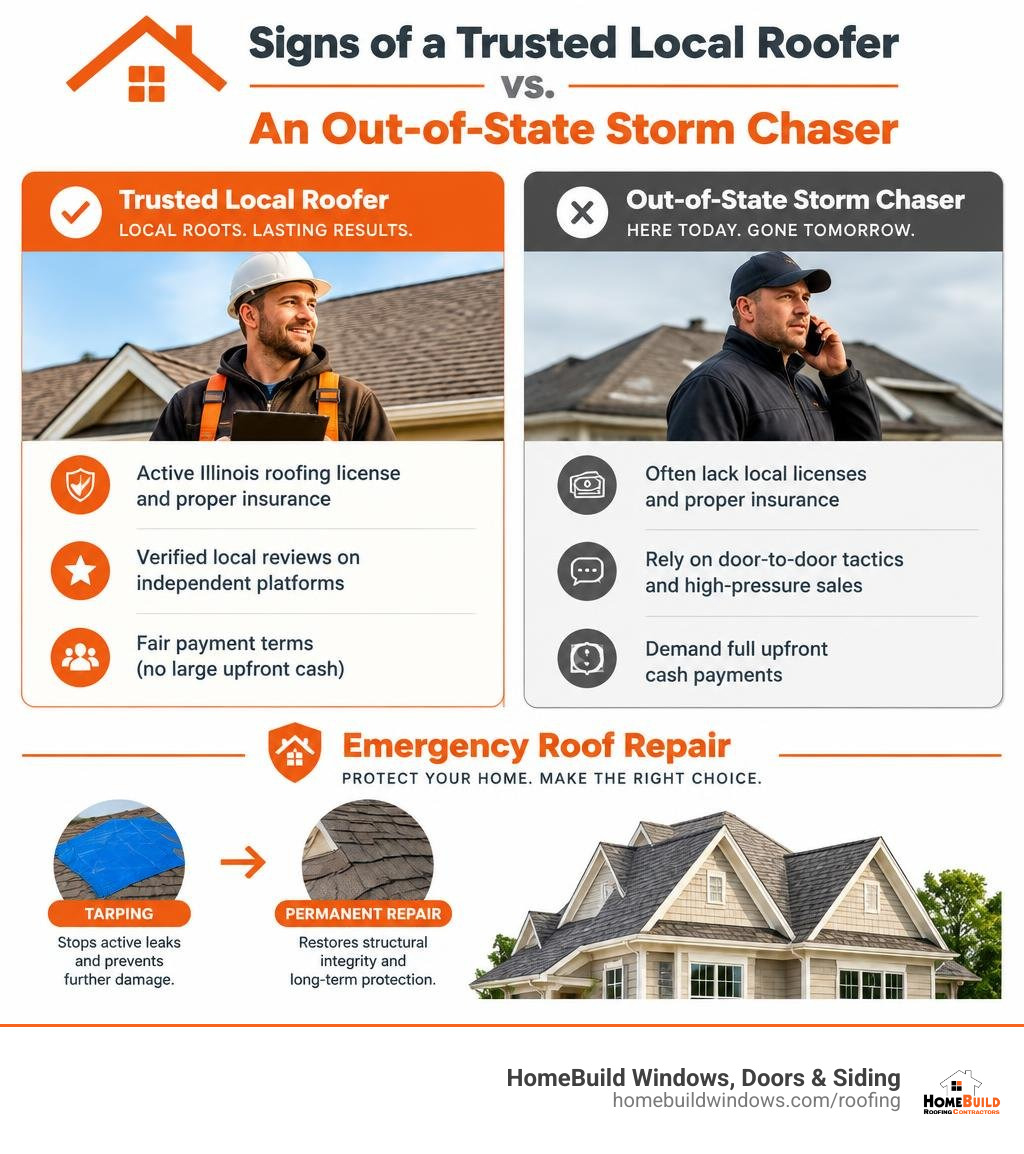
Protect your property by partnering with an established local contractor who maintains deep roots in your community:
- Verify an active Illinois state roofing license and valid certificates of general liability insurance.
- Look for verified local reviews across independent platforms rather than relying on door-to-door flyers.
- Avoid contractors who demand full upfront payment before any stabilization work begins.
- Choose local companies that provide thorough, photo-documented roof inspections to support your insurance claim.
Frequently Asked Questions About Roof Emergencies
Can emergency repairs be completed during active winter storms?
Yes, crews can install emergency tarps and temporary barriers in winter conditions, snow, and freezing rain. Technicians safely clear snow around the breach, secure heavy-duty tarps with furring strips, and seal vulnerable edges. Permanent shingle installation and roof cement applications require dry weather and milder temperatures for proper adhesion.
Should I call my insurance company or a roofing contractor first?
Call a local emergency roofing contractor first to secure the property and stop active water infiltration. Insurance policies require policyholders to mitigate active damage immediately to avoid claim reductions. Once the leak is contained, contact your insurance provider with photos and the contractor’s written report to start your claim.
How is the cost of emergency stabilization determined?
Emergency repair costs depend on several specific property and damage factors:
- The pitch and steepness of the roof line.
- The total square footage requiring protective tarping.
- Safe accessibility to the damaged roof section.
- Severe weather conditions during the emergency service call.
- The amount of storm debris requiring removal before securing the tarp.
Conclusion
A roofing emergency is stressful, but acting quickly stops minor leaks from turning into major structural disasters. Containing active water leaks and scheduling rapid stabilization protects your home’s structure and interior living spaces.
At HomeBuild Roofing, we bring over two decades of local exterior experience to homeowners across Schaumburg, Hoffman Estates, Arlington Heights, Villa Park, and the entire Chicagoland area. Every project is owner-supervised and owner-approved by Steve Mlynek, eliminating middlemen and subcontractors.
We are fully licensed and insured, backed by a 4.9-star Google rating across 180+ reviews, the Angi Super Service Award 2025, and Nextdoor Neighborhood Faves 2025 recognition. Contact HomeBuild today to schedule a free roof inspection or estimate and secure lasting protection for your home.