What to Expect When You Vinyl Side a Home in 2026?
When planning to upgrade your home’s exterior, understanding the installation process, material options, and long-term benefits of a vinyl siding project is essential for Chicago-area homeowners.
Vinyl remains one of the most popular exterior cladding options on the market, chosen for roughly 27% of new single-family homes across the U.S. due to its durability, low maintenance, and excellent weather protection. Homeowners can review national siding trends through the U.S. Census Bureau’s Characteristics of New Housing data.
I’m Steve Mlynek, CEO and founder of HomeBuild Windows, Doors & Siding. After 20+ years helping Chicago-area homeowners plan their exterior renovations, I’ve seen how the right material choice and professional installation protect your home for decades. Read on for a full breakdown of everything that shapes a successful siding project in the Midwest climate.
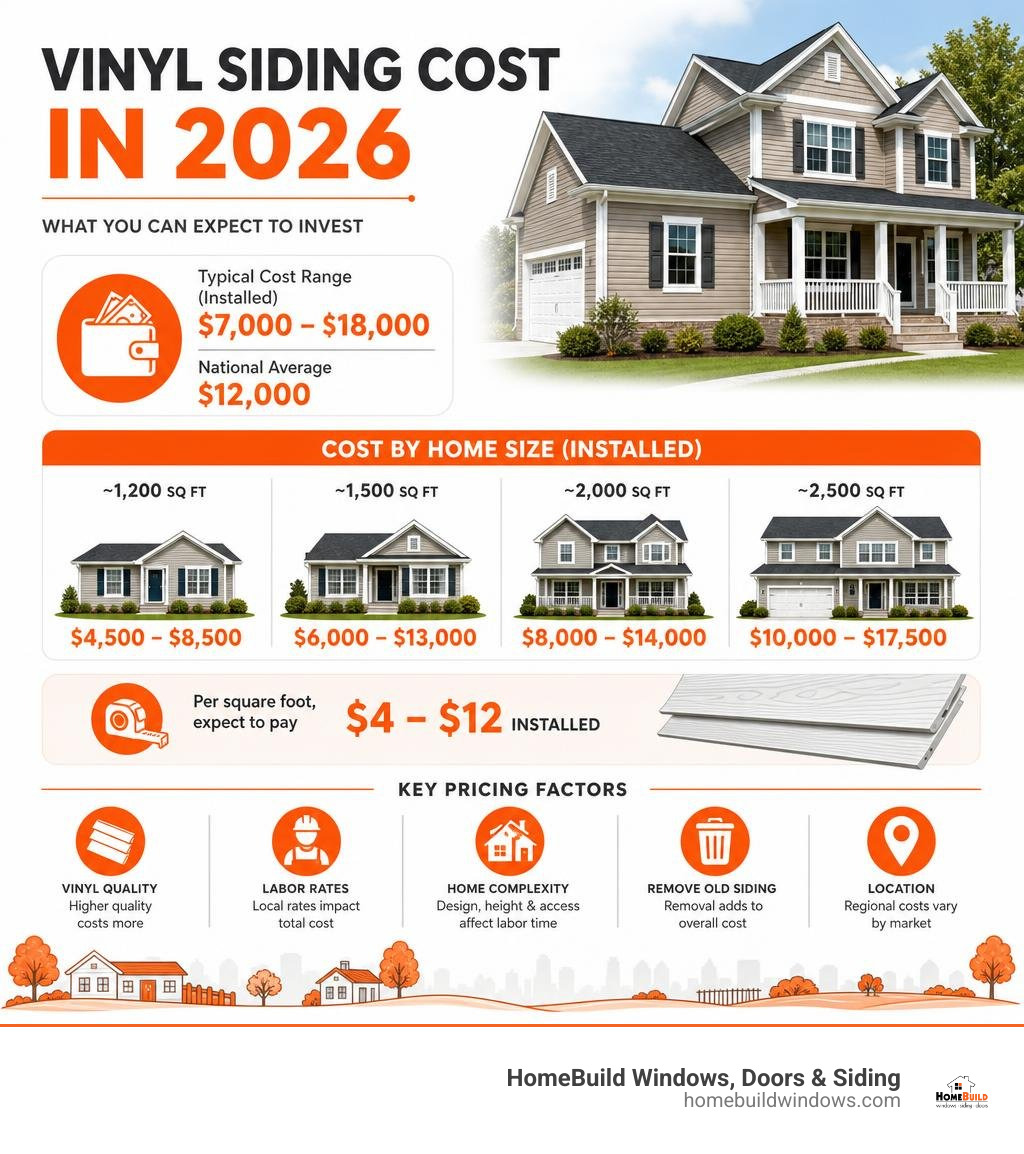
Vinyl siding planning resources:
Key Factors Influencing a Vinyl Siding Project

When planning a siding project, it helps to look at your home as a unique puzzle. No two houses are identical, and several variables will determine the overall scope of your project. If you are preparing for a full exterior renovation, reviewing our ultimate guide to siding replacement is an excellent starting point to understand the entire scope of the project.
Here are the primary factors that will shape your installation:
- Siding Thickness and Grade: Economy-grade vinyl (.040 mm) has a shorter lifespan. Standard residential (.044 mm) and premium or insulated vinyl (.046 mm or thicker) offer superior wind resistance, better dent protection, and longer warranties.
- Labor and Regional Location: Installation requirements vary across the country. In Chicago and nearby suburbs like Schaumburg, IL or Arlington Heights, IL, installation techniques must reflect the expertise required to handle seasonal freeze-thaw cycles.
- Old Siding Removal and Disposal: Tearing off old wood, aluminum, or damaged vinyl siding and disposing of it safely is a critical step to ensure a clean surface for the new installation.
- Architectural Complexity: A simple, rectangular ranch home is fast and straightforward to side. Homes with multiple stories, steep gables, dormers, bay windows, or complex rooflines require more intricate cuts, specialized staging, and extra safety equipment.
For homeowners who want to understand accepted installation practices, the Vinyl Siding Institute installation manual is a helpful industry resource.
How Home Size and Layout Affect a Vinyl Siding Project
It is a common mistake to assume that your home’s interior square footage matches your siding square footage. Siding is calculated by the actual exterior wall area, measured in “squares” (one square equals 100 square feet of wall space).
For example, a two-story 2,000-square-foot home typically has between 2,000 and 2,500 square feet of exterior wall area. Localized installation requirements and regional material differences play a massive role in how these square-footage calculations translate to your project.
When we calculate wall area, we do not subtract standard windows and doors from the total. This extra material is necessary to account for the 10% waste factor that naturally occurs when cutting panels to fit around openings, gables, and trim. If your home has a complex layout with multiple corners, dormers, or high peaks, the waste factor can jump to 15%.
Choosing the Right Contractor to Manage Your Vinyl Siding Project
While it might be tempting to hire an uncertified crew or attempt a DIY installation, siding is your home’s primary defense against water damage, mold, and pests. Improperly installed vinyl siding can buckle, rattle in high winds, trap moisture against your sheathing, and completely void the manufacturer’s warranty.
When choosing a siding contractor in Chicago, look for a team that is fully licensed, insured, and certified by major manufacturers. A reputable contractor will provide a detailed proposal that includes:
- Permit requirements and local municipal inspections.
- Tear-off, disposal, and clean-up.
- High-quality house wrap and flashing around windows, doors, and penetrations.
- A clear workmanship warranty to protect your home.
To avoid common pitfalls, we highly recommend reading our guide on how to choose the best siding contractor near you so you feel confident in your decision.
Material Quality: Standard vs. Insulated Vinyl Siding
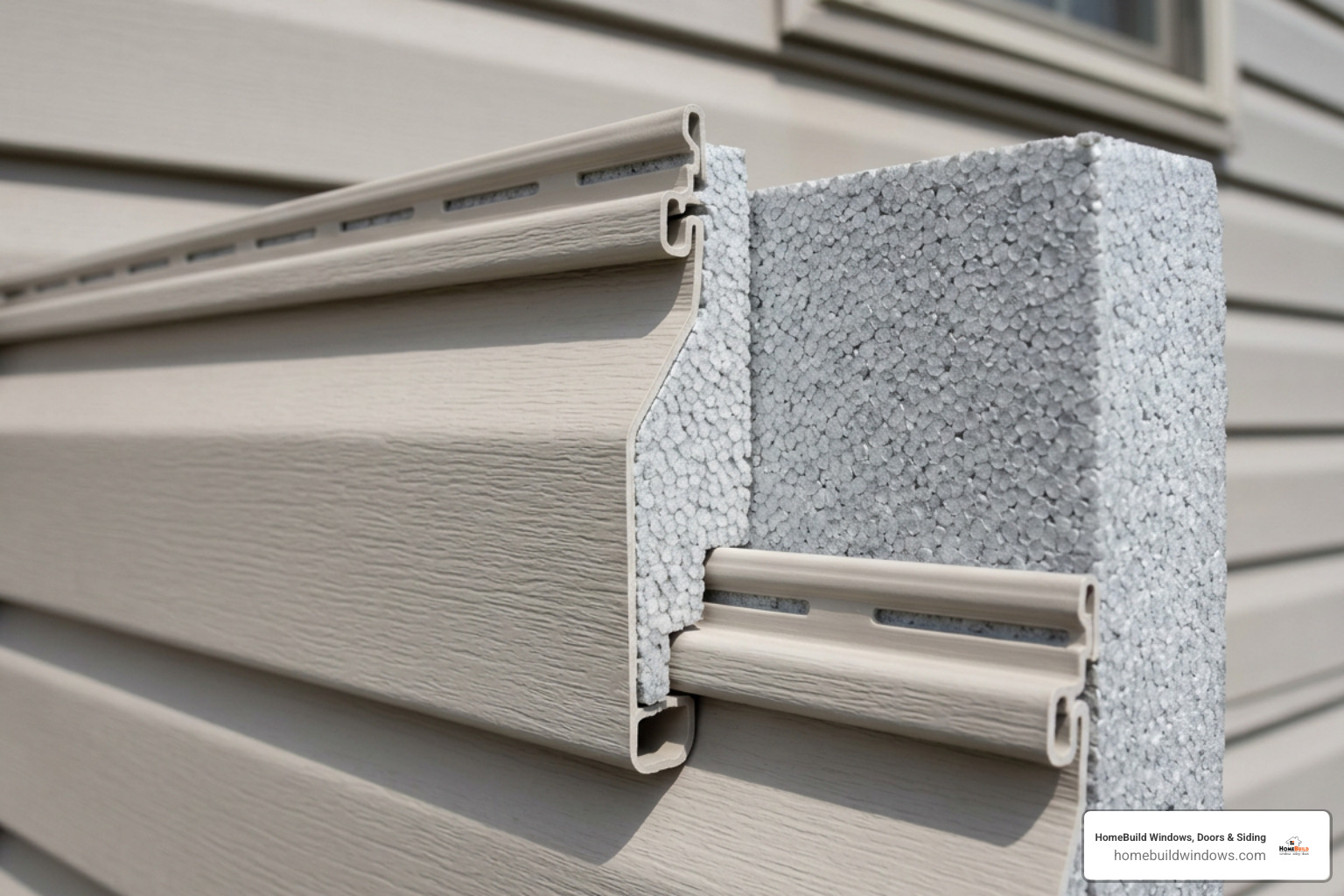
Vinyl siding has come a long way since the thin, plasticky panels of the 1970s. Today, homeowners can choose from a wide range of styles, colors, and performance tiers. The most significant choice you will make is between standard hollow-back vinyl and premium insulated vinyl siding.
Standard vinyl siding is installed directly over a house wrap. Insulated vinyl siding features a contoured foam backing laminated directly to the panel. This foam backing fills the gap behind the siding, which dramatically improves the home’s energy efficiency and structural rigidity.
But how do they stack up side-by-side? Let’s take a look:
| Feature | Standard Vinyl Siding | Insulated Vinyl Siding |
|---|---|---|
| Typical Lifespan | 20 – 30 years | 30 – 50 years |
| R-Value (Insulation) | Minimal (approx. 0.6) | Adds R-2.0 to R-4.0 |
| Impact Resistance | Moderate (can dent or crack in hail) | High (foam back absorbs impacts) |
| Appearance | May show wall imperfections; more seams | Lay flatter against walls; fewer visible seams |
| Noise Reduction | Standard | Reduces exterior noise by up to 45% |
By preventing “thermal bridging”—the transfer of heat through the wooden studs of your home’s walls—insulated siding keeps your indoor spaces warmer in our freezing Chicago winters and cooler during humid summers. To learn more about how this works, read our article on how can vinyl siding make your home more energy efficient?.
Working with trusted brands like Alside ensures that whether you choose standard or insulated panels, you are getting modern UV stabilizers that resist fading, warping, and cracking in extreme temperatures.
Siding Replacement Process: Tear-Off vs. Overlay
One of the most common questions we get at HomeBuild is: “Can you just install the new vinyl siding over my old siding?”
This is called an overlay, and while it is technically possible in some situations—such as installing vinyl over flat, dry, structurally sound wood lap siding—it is rarely the best long-term choice.
At HomeBuild, our default recommendation is always a full tear-off. Here is why:
- Exposing Hidden Damage: Tearing off the old siding is the only way to inspect the underlying wood sheathing. If your home has hidden water damage, wood rot, or pest infestations, covering it up with new vinyl will only allow the rot to spread, leading to massive structural damage down the road.
- Installing Modern House Wrap: Modern building codes require a high-quality weather-resistant barrier (like Tyvek house wrap) under siding. An overlay prevents us from installing this crucial moisture barrier correctly.
- Proper Flashing Integration: To keep water out, flashing around windows, doors, and rooflines must be integrated directly with the house wrap and sheathing. This is impossible to execute flawlessly during an overlay.
- Flat, Clean Aesthetics: Vinyl siding is flexible and will follow the contours of whatever is beneath it. If your old siding is warped, buckled, or uneven, your new vinyl siding will look wavy and uneven too.
Investing in a complete siding installation replacement ensures that your home’s structural envelope is dry, healthy, and fully protected before the new beautiful panels are hung.
Frequently Asked Questions About Vinyl Siding
Should old siding be removed before installing new vinyl siding?
Yes, in almost all residential applications, we highly recommend a complete tear-off. Removing the old siding allows our crew to perform a thorough rot inspection on your sheathing, replace any soft or damaged wood, install a modern vapor barrier, and tape all flashing around windows and doors. This is the only way to guarantee a watertight seal and protect your home’s structural integrity.
How does vinyl siding compare to premium options like fiber cement or wood?
Vinyl siding is a highly durable and low-maintenance option. It never needs to be painted, stained, or sealed – you simply wash it down with a garden hose once a year.
Premium options like James Hardie fiber cement or real wood offer incredible curb appeal and longevity but require a more extensive installation process. Fiber cement is fire-resistant and lasts up to 50 years, but it is heavy and requires specialized installation. Real wood offers unmatched natural beauty but demands regular painting or staining every 3 to 5 years to prevent rot. For a deeper look at fiber cement, check out our guide to fiber cement siding. If you love the look of real wood but want the low maintenance of vinyl, you might also explore why cedar impressions siding is making real wood jealous.
What is the best season to schedule a siding replacement in Illinois?
While siding can be installed year-round, spring and fall are generally considered the best seasons.
Midwest winters bring freezing temperatures that can make vinyl panels brittle and prone to cracking during the cutting and nailing process. Summer heat, on the other hand, causes the vinyl to expand significantly. If a crew nails vinyl panels too tightly during a hot summer day, the siding won’t have room to contract when winter hits, leading to buckling and warping.
An experienced contractor knows how to hang vinyl panels loosely – centering the nails in the slots – to allow for natural thermal expansion and contraction, regardless of the season.
Conclusion
Upgrading your home’s exterior is a significant decision, but it is also one of the smartest investments you can make to improve energy efficiency, boost curb appeal, and protect your property value.
When you choose HomeBuild Windows, Doors & Siding, you are partnering with a trusted, locally owned contractor with over 20 years of experience serving Chicago and the northwest suburbs. We take pride in our work, which is why every single project is owner-supervised to ensure the highest standards of craftsmanship and accountability.
Our industry credentials speak for themselves:
- Elite Platinum Pella® Certified Contractor
- Andersen Premier Certified Contractor
- Angi Super Service Award winner
- Nextdoor Neighborhood Faves honoree
- 200+ positive Google reviews from your neighbors in Chicagoland
- Fully licensed and insured for your peace of mind
Whether you are in Barrington, Schaumburg, Glenview, or Chicago itself, we work with industry-leading brands like Pella, Andersen and ProVia to deliver beautiful, durable remodeling solutions tailored to the Midwest climate.
Ready to transform your home? Contact us today to schedule your free consultation and discuss a customized siding plan for your project. Visit our HomeBuild Siding Installation Chicago page to take the first step toward a beautiful, worry-free home exterior!