


Is Composite Window Replacement Right for Your Home?
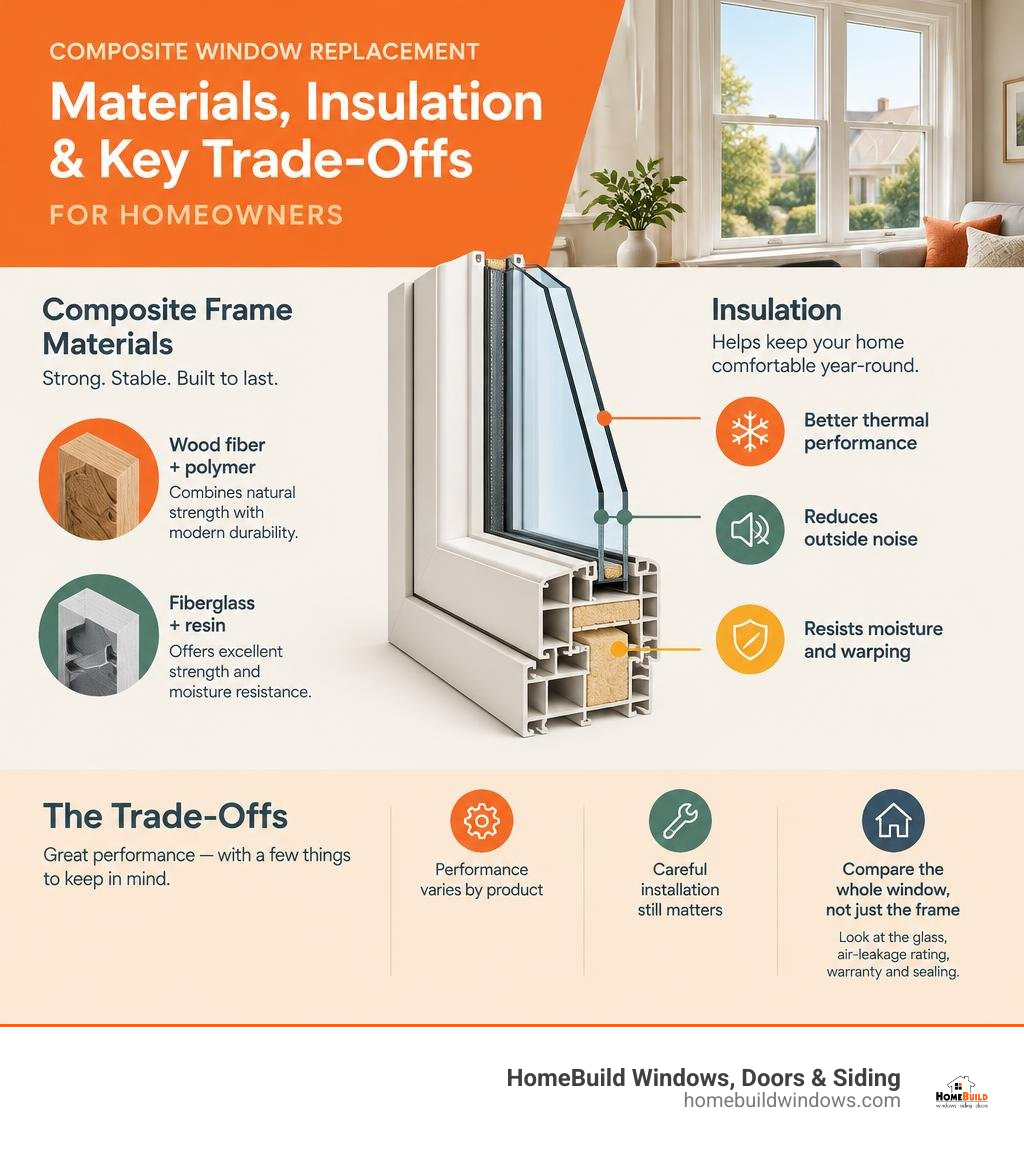
Composite window replacement is worth considering if you want durable, low-maintenance frames that can help limit drafts. Composite frames combine materials such as wood fiber and polymer or fiberglass and resin. They resist moisture better than wood and tend to stay more stable through temperature swings than standard vinyl. The trade-off: performance varies by product, and careful installation still matters.
For a Chicago-area home, compare the whole window, not just the frame. Look at the glass, air-leakage rating, warranty, and how the installer will seal the opening.
I’m Steve Mlynek, founder of HomeBuild Windows, Doors & Siding. I’ve worked in window replacement for over 20 years, and I personally supervise every project at our locally owned, licensed, and insured Chicago-area company, serving homeowners since 2004; in this guide, I’ll help you weigh the pros and cons of composite window replacement.
Terms related to composite window replacement:
What Are Composite Windows and How Are They Engineered?
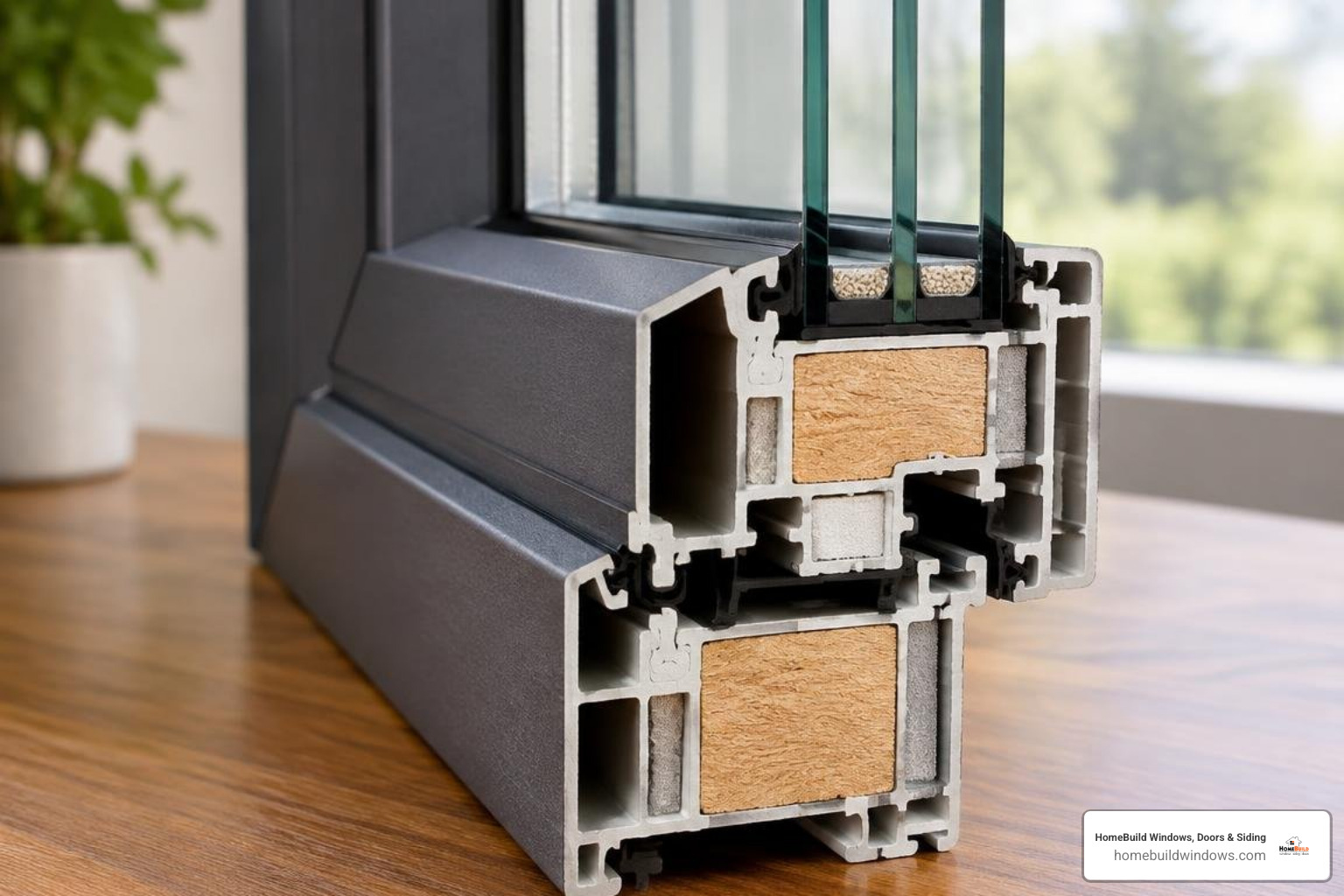
Composite windows are built by blending two or more distinct materials to create a framing compound that outperforms individual traditional components. Instead of relying solely on solid timber or extruded hollow vinyl, engineers combine structural fibers with polymer matrices. This manufacturing process produces a rigid, dense lineal that captures the architectural warmth and strength of natural wood while eliminating vulnerability to moisture decay, rot, and insect damage.
The engineering behind these frames focuses on dimensional stability and load-bearing performance. Modern composites utilize high-grade binders such as thermoplastic resins or thermoset polymers reinforced with reclaimed wood fibers, glass fibers, or structural polymers. By embedding reinforcing strands inside a protective resin matrix, the material gains exceptional tensile and compressive strength.
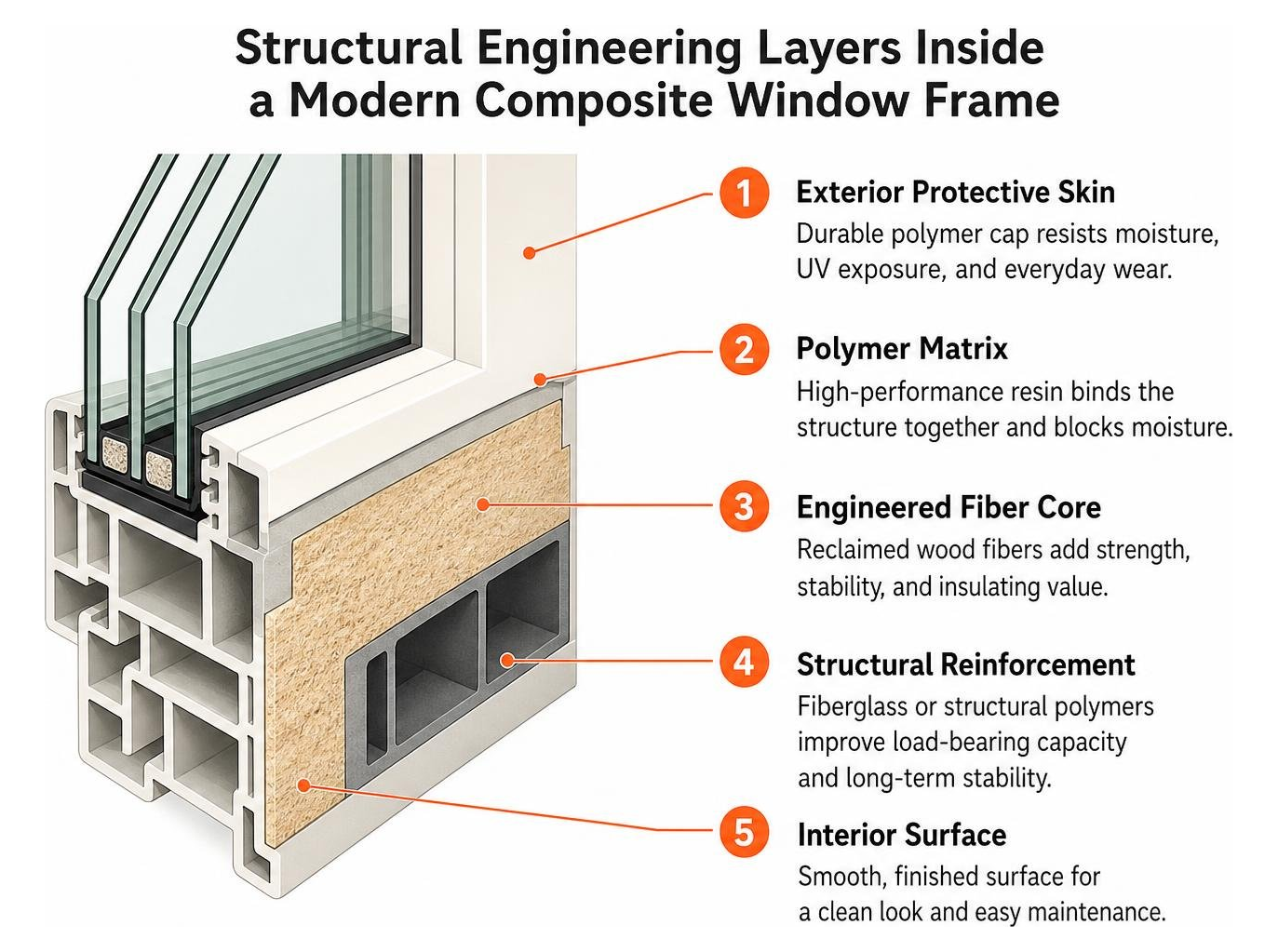
This engineering design resists thermal transfer, helping eliminate the cold drafts common around older frames during sub-zero winter blasts off Lake Michigan.
Types of Materials in Composite Window Frames
Manufacturers utilize several distinct formulations to engineer composite window lines, each offering unique performance characteristics:
- Wood-Plastic Composites (WPC): These blend pulverized wood fibers (often reclaimed from millwork manufacturing) with thermoplastic polymers like polyvinyl chloride. A prime example is Andersen’s Fibrex® material, which provides twice the structural rigidity of standard vinyl while incorporating recycled content.
- Fiberglass-Reinforced Polymers (FRP): Using continuous strands of glass fiber saturated in structural resin and pulled through heated dies (pultrusion), FRP composites achieve immense tensile strength. For high-demand applications, FRP Window Frames & System Profiles | F1 Composite demonstrate how structural profiles handle significant structural loads with virtually zero thermal movement.
- Polymer-Modified Blends: Formulations like Glastra® combine high-durability polymers with glass fibers to deliver a lightweight, impact-resistant profile that resists surface chalking, blistering, and UV degradation.
- Cellular PVC Composites: Engineered with a microscopic cellular foam structure, these materials replicate the density and workability of clear pine while offering total resistance to water absorption and rot.
Evaluating Composite Window Replacement vs Vinyl and Wood
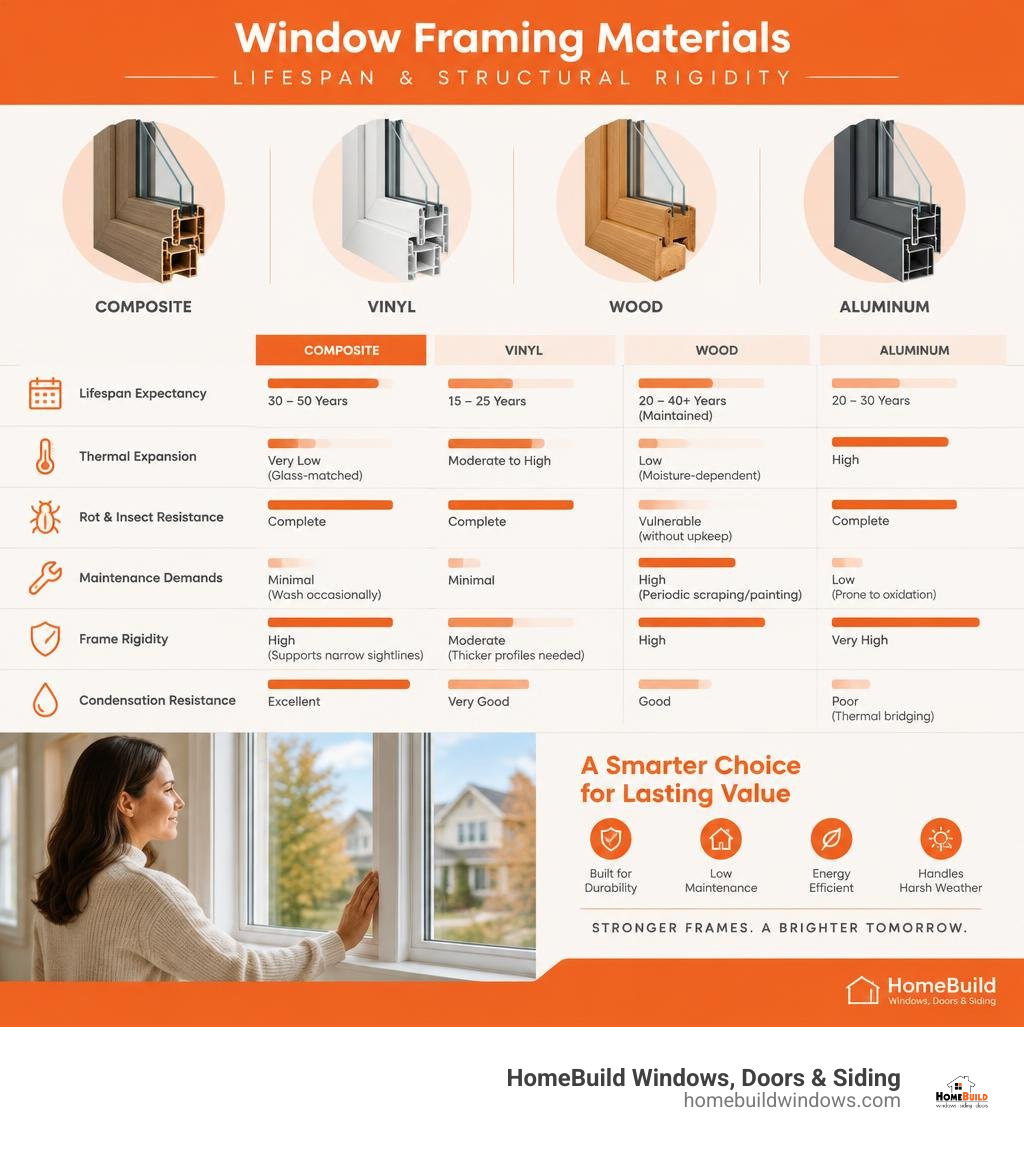
Choosing the right window requires evaluating structural strength, maintenance demands, and long-term performance under demanding weather conditions. Homeowners navigating options in our replacement window buying guide for 2026 often weigh these four primary framing materials:
| Feature / Metric | Composite Frames | Standard Vinyl | Natural Wood | Extruded Aluminum |
|---|---|---|---|---|
| Lifespan Expectancy | 30 to 50 Years | 15 to 25 Years | 20 to 40+ Years (Maintained) | 20 to 30 Years |
| Thermal Expansion | Very Low (Glass-matched) | Moderate to High | Low (Moisture-dependent) | High |
| Rot & Insect Resistance | Complete | Complete | Vulnerable without upkeep | Complete |
| Maintenance Demands | Minimal (Wash occasionally) | Minimal | High (Periodic scraping/painting) | Low (Prone to oxidation) |
| Frame Rigidity | High (Supports narrow sightlines) | Moderate (Thicker profiles needed) | High | Very High |
| Condensation Resistance | Excellent | Very Good | Good | Poor (Thermal bridging) |
The Benefits and Drawbacks of Composite Window Replacement

Upgrading to composite frames offers long-term reliability for residential architecture across Chicago and the surrounding suburbs. From classic brick bungalows in Norwood Park to two-flats in Logan Square, mid-century ranches in Schaumburg, and colonials in Arlington Heights, homeowners need framing materials that hold up against brutal seasonal shifts.
Key Advantages of Composite Framing Technology
Composite windows provide structural and aesthetic advantages that resolve many common window frustrations:
- Superior Moisture and Rot Resistance: Because the fibers are fully encapsulated within protective resin matrices, composite frames do not absorb water, swell, or foster fungal decay, even during prolonged rainy spring seasons.
- Narrow Frame Profiles and Larger Glass Area: The enhanced stiffness of composite materials allows manufacturers to design thinner frames and sashes. This maximizes the glass surface area, letting more natural daylight into your living spaces without sacrificing energy performance.
- Factory-Fused, Fade-Resistant Colors: Advanced units, such as the Andersen 28 in. x 54 in. 100 Series White Single Hung Insert Replacement Composite Window with Low-E Glass, White Int & Hardware, utilize exterior finishes fused directly to the substrate during extrusion. This resists peeling, blistering, and chalking under intense summer sun.
- Acoustic Insulation: Dense composite frame walls absorb sound vibrations effectively. When paired with multi-pane insulating glass units, they significantly reduce street noise, airport traffic, and neighborhood commotion.
- Paintability Options: Unlike standard vinyl, which cannot easily be painted after manufacturing, many composite surfaces accept exterior-grade acrylic latex paints if you ever decide to alter your home’s exterior palette.
- Environmental Benefits: Many composite profiles incorporate reclaimed wood flour and recycled polymers, diverting manufacturing scrap from regional landfills.
Potential Drawbacks and Considerations
While composite frames deliver remarkable performance, there are important factors to consider before replacing your windows:
- Frame Weight: High-density composites and glass-reinforced profiles weigh substantially more than hollow vinyl units, demanding experienced handling and robust structural anchoring during installation.
- Specialized Manufacturing: Because composite lineals require precision pultrusion and specialized tooling, custom lead times can be longer than standard off-the-shelf vinyl windows.
- Strict Installation Tolerances: Due to their structural rigidity, composite windows do not tolerate out-of-square openings or improper shimming. Partnering with certified window replacement companies ensures the frames are installed plum, level, and true to prevent air infiltration and hardware binding.
Energy Efficiency and Performance Across Changing Climates
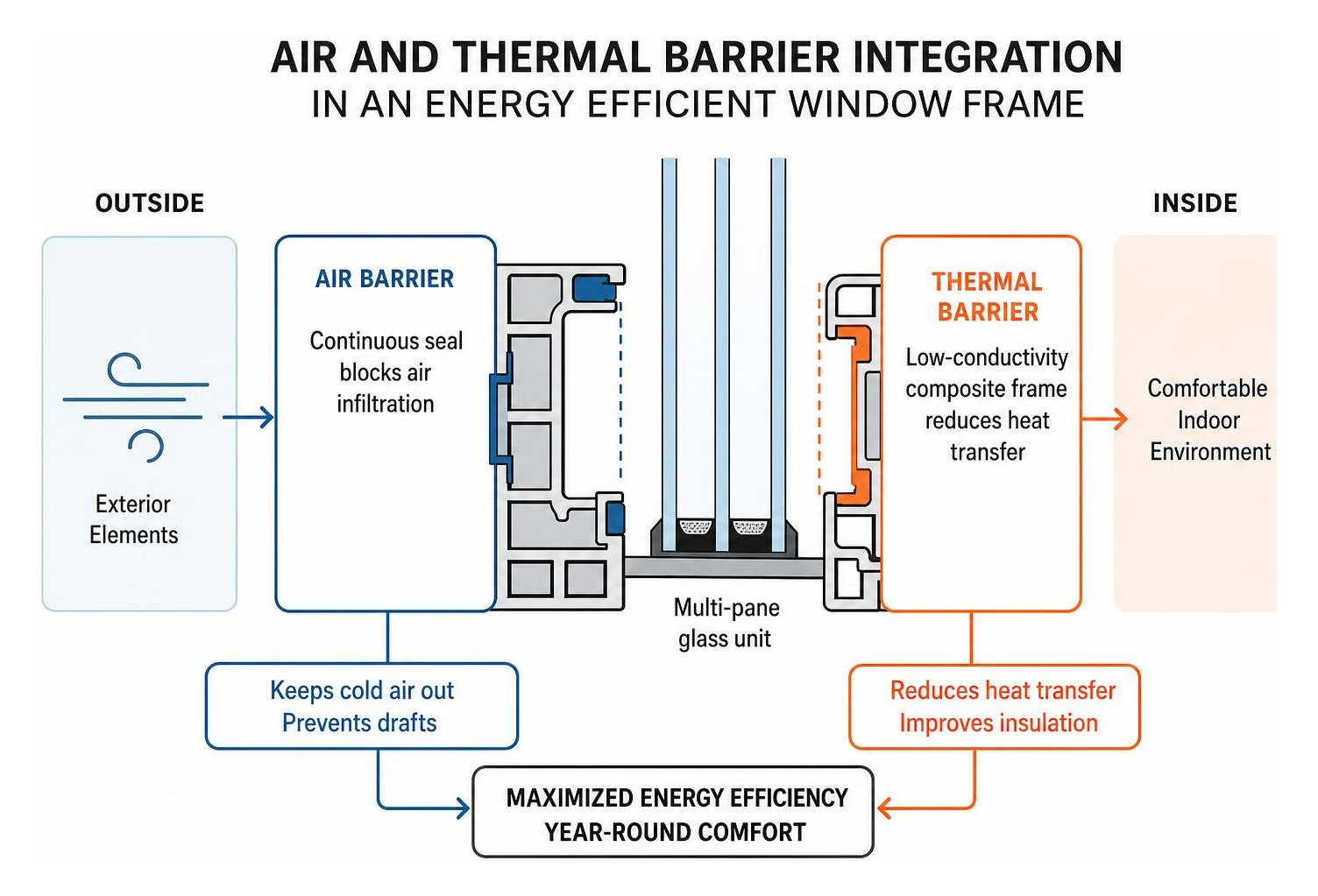
Chicagoland weather is notorious for extremes: biting winter winds, deep freeze-thaw cycles, and humid summer heatwaves. Window frames endure repeated mechanical stress throughout the year. Reviewing an energy efficient windows guide highlights the importance of whole-unit performance, where the frame, glass package, spacer system, and perimeter seal work together seamlessly.
Thermal Performance and Thermal Expansion Control
One of the biggest causes of premature window seal failure is differential thermal expansion. When a window frame expands and contracts at a radically different rate than the glass unit it holds, the perimeter seals experience continuous shear stress. Over time, this stress causes seal failure, allowing insulating argon gas to escape and moisture to build up between the panes.
As the data shows, composite materials expand and contract at rates remarkably close to architectural glass. This low coefficient of thermal expansion keeps weatherstripping tightly compressed during sub-zero nights in Lake Zurich or Glenview, preventing drafts and maintaining high condensation resistance.
Precision Installation for Composite Window Replacement
Achieving optimal performance from composite windows requires careful, professional installation. Because composite profiles are exceptionally rigid, they cannot be forced or bowed into out-of-square rough openings without compromising sash alignment and weather seals.
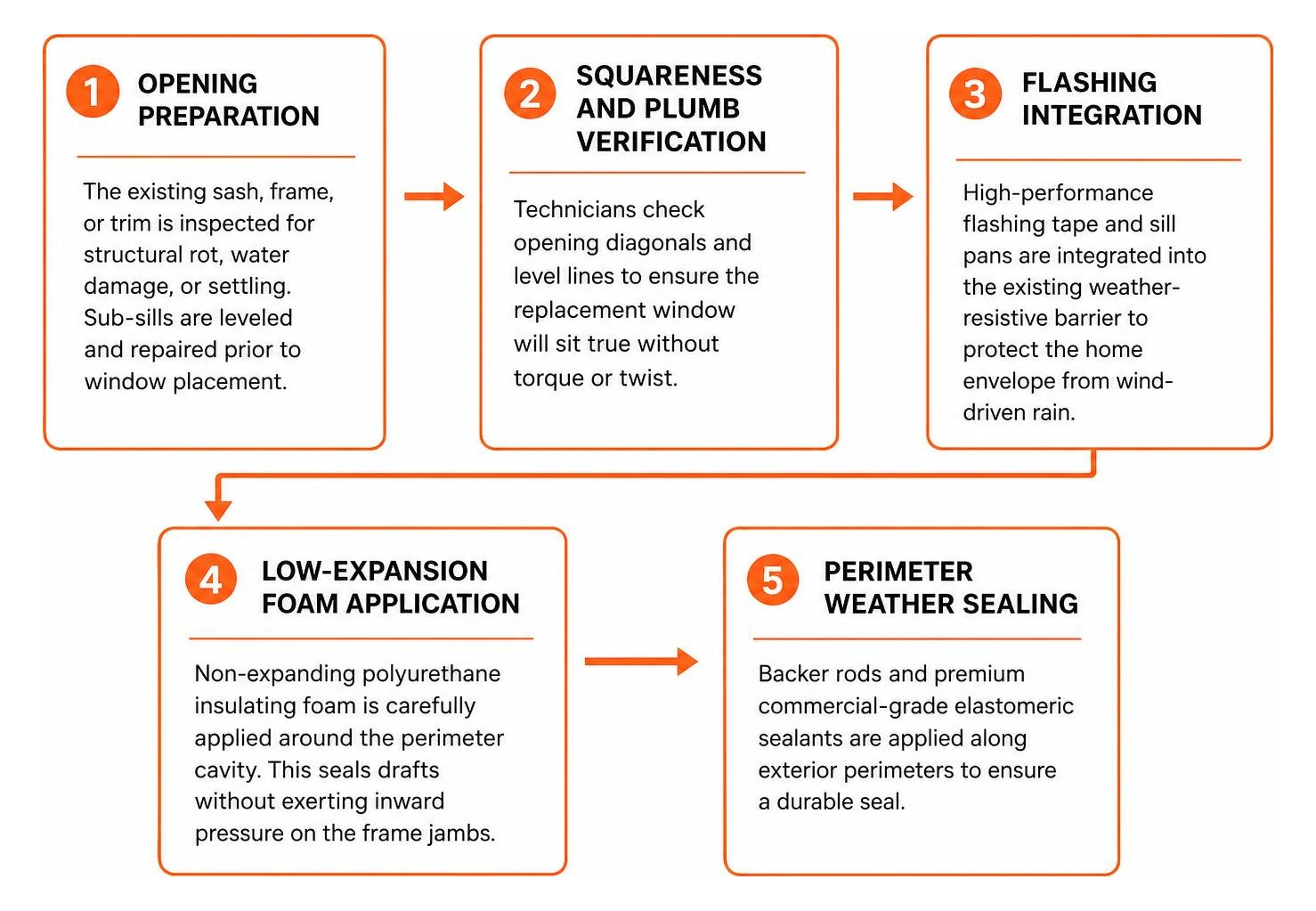
- Opening Preparation: The existing sash, frame, or trim is inspected for structural rot, water damage, or settling. Sub-sills are leveled and repaired prior to window placement.
- Squareness and Plumb Verification: Technicians check opening diagonals and level lines to ensure the replacement window will sit true without torque or twist.
- Flashing Integration: High-performance flashing tape and sill pans are integrated into the existing weather-resistive barrier to protect the home envelope from wind-driven rain.
- Low-Expansion Foam Application: Non-expanding polyurethane insulating foam is carefully applied around the perimeter cavity. This seals drafts without exerting inward pressure on the frame jambs.
- Perimeter Weather Sealing: Backer rods and premium commercial-grade elastomeric sealants are applied along exterior perimeters to ensure a durable seal.
For a comprehensive breakdown of installation approaches, consult our window installation guide.
Frequently Asked Questions About Composite Windows
How long do composite window frames typically last?
Quality composite window frames typically deliver a service life of 30 to 50 years when installed by certified professionals. Because their structural polymer and resin blends do not absorb atmospheric moisture, they resist rot, fungal growth, and structural sagging. Paired with high-performance low-E dual or triple glazing, these units provide decades of reliable thermal performance and effortless operation.
Can composite window frames be painted or stained?
Yes. Unlike standard vinyl, which resists paint adhesion and can warp under the heat absorption of dark aftermarket paints, many composite frames can be painted with exterior-grade acrylic latex coatings. Always check the manufacturer guidelines from brands like Andersen, Pella, or ProVia before applying paints to ensure color choices and preparation methods preserve your warranty protection.
How do composite windows perform in extreme seasonal climates?
Composite windows perform exceptionally well in extreme climates. Their low rate of thermal expansion matches glass closely, which prevents seal rupture and keeps weatherstripping tightly sealed against frame stops during freezing winter cold or humid summer heat. This thermal stability keeps sashes gliding smoothly year-round without sticking or binding in high humidity.
Conclusion
Composite window replacement delivers the ideal blend of natural wood aesthetics, exceptional frame rigidity, and low maintenance. By resisting seasonal expansion, rot, and thermal transfer, composite framing materials keep your home draft-free, quiet, and comfortable through every season.
When choosing windows for your home, turn to proven industry manufacturers such as Andersen, Pella, and ProVia, installed by a dedicated team that prioritizes craftsmanship and precision.
HomeBuild Windows, Doors & Siding is a locally owned, licensed, and insured contractor serving Chicago and the surrounding suburbs since 2004. With over 20 years of hands-on experience, every single project is owner-supervised by Steve Mlynek to guarantee meticulous installation standards. As an Elite Platinum Pella Certified Contractor and Andersen Premier Certified Contractor, we are proud to hold the Angi Super Service Award 2025, have been recognized as a 2025 Nextdoor Neighborhood Faves Winner, and maintain a 4.9-star rating across 200+ Google reviews.
We invite you to visit our Chicago location at 1830 N Winchester Ave, Chicago, IL 60622, explore our detailed replacement window buying guide to research your options, or reach out to our team directly.
Ready to eliminate drafts and upgrade your home’s comfort? Schedule your free estimate today with our expert team!