


Understanding Awning Window Opening Mechanisms
Awning window side open 90 degree angle outward window systems blend the weather protection of traditional awning windows with improved ventilation.
Key Features:
- Top-hinged design opens outward from the bottom
- 90-degree opening angle for maximum airflow (vs. standard 45 degrees)
- Crank operation for easy control
- Rain protection – can stay open during light showers
- Multi-point locking for improved security
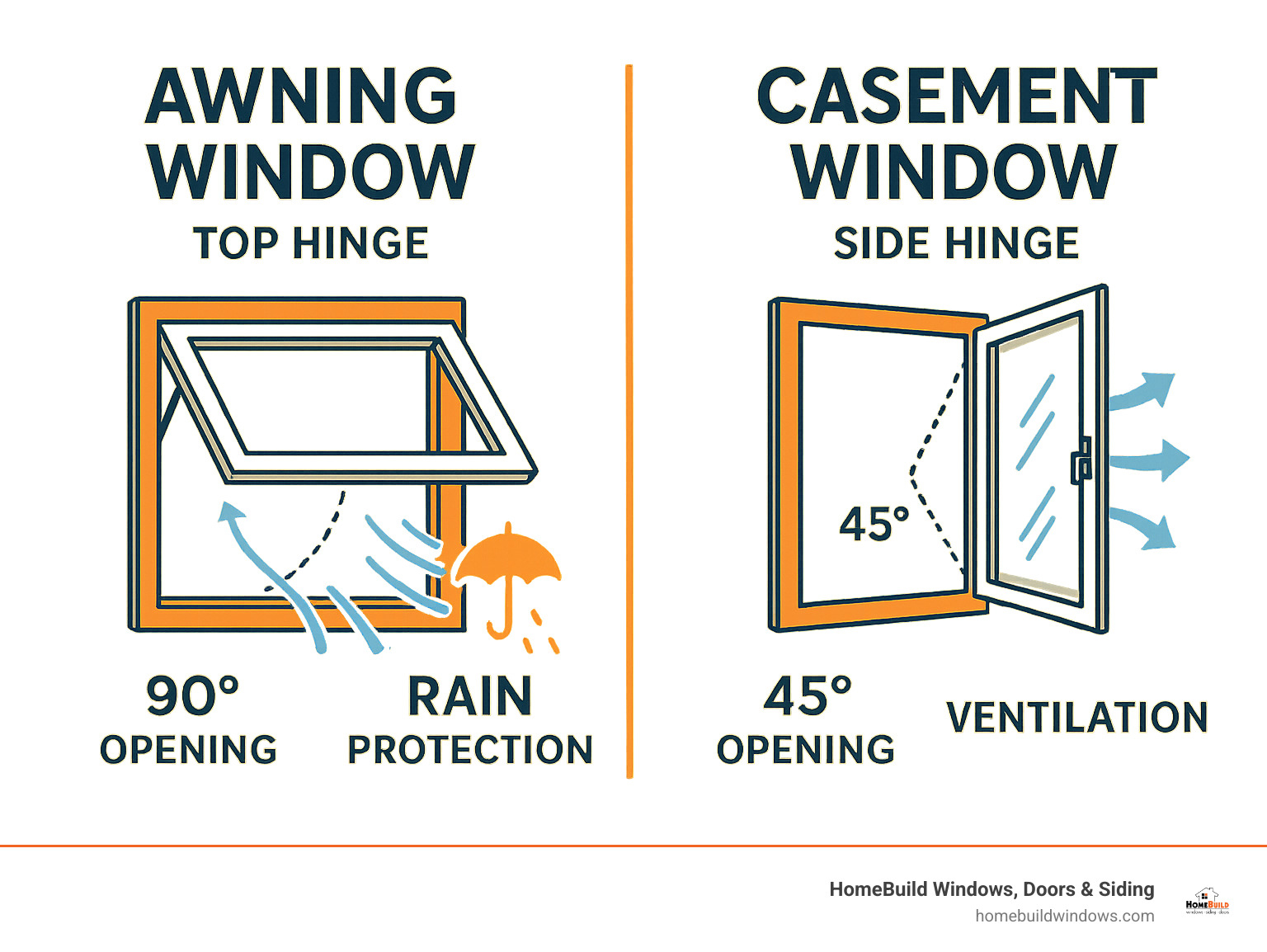
Common Confusion: The term “side open” often refers to casement windows, not awning windows. Awning windows are top-hinged and open outward from the bottom, while casement windows are side-hinged and open like a door.
When homeowners want fresh air without worrying about rain, modern awning windows that open to 90 degrees are a smart answer. As Steve Mlynek, CEO of HomeBuild Windows with over 20 years of Chicago installation experience, I’ve seen how these mechanisms deliver reliable airflow and energy efficiency in our variable climate.
What Are Awning Windows and How Do They Open?
Picture a window that works like a clever umbrella – that’s exactly what awning windows do for your home. These ingenious windows are hinged at the top and swing outward from the bottom, creating a natural canopy that keeps rain out while letting fresh air flow in.
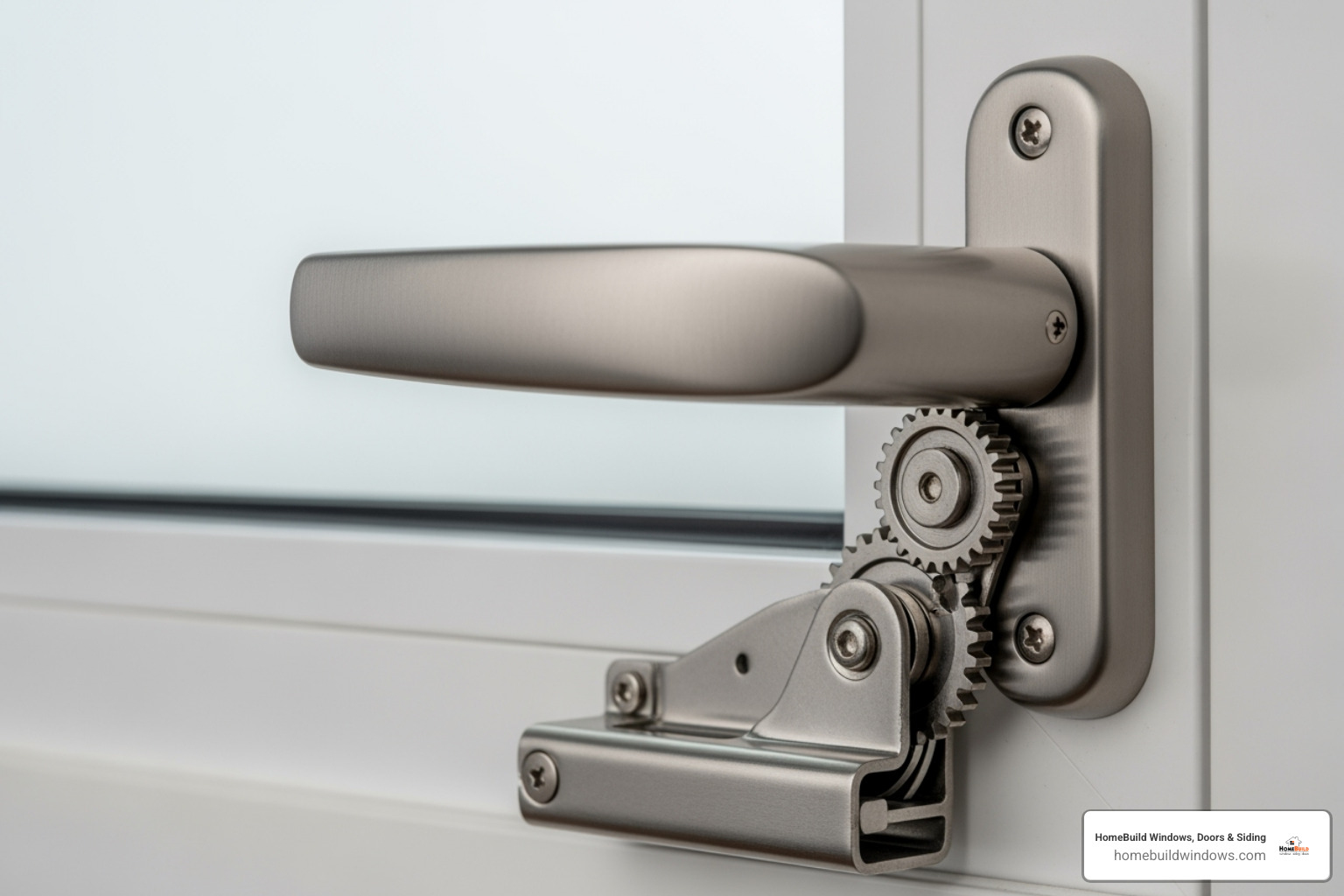
The magic happens with a simple crank handle that you turn from inside your home. As you rotate the handle, the bottom of the window pushes outward, opening at whatever angle you prefer. It’s incredibly satisfying to operate – smooth, controlled, and effortless.
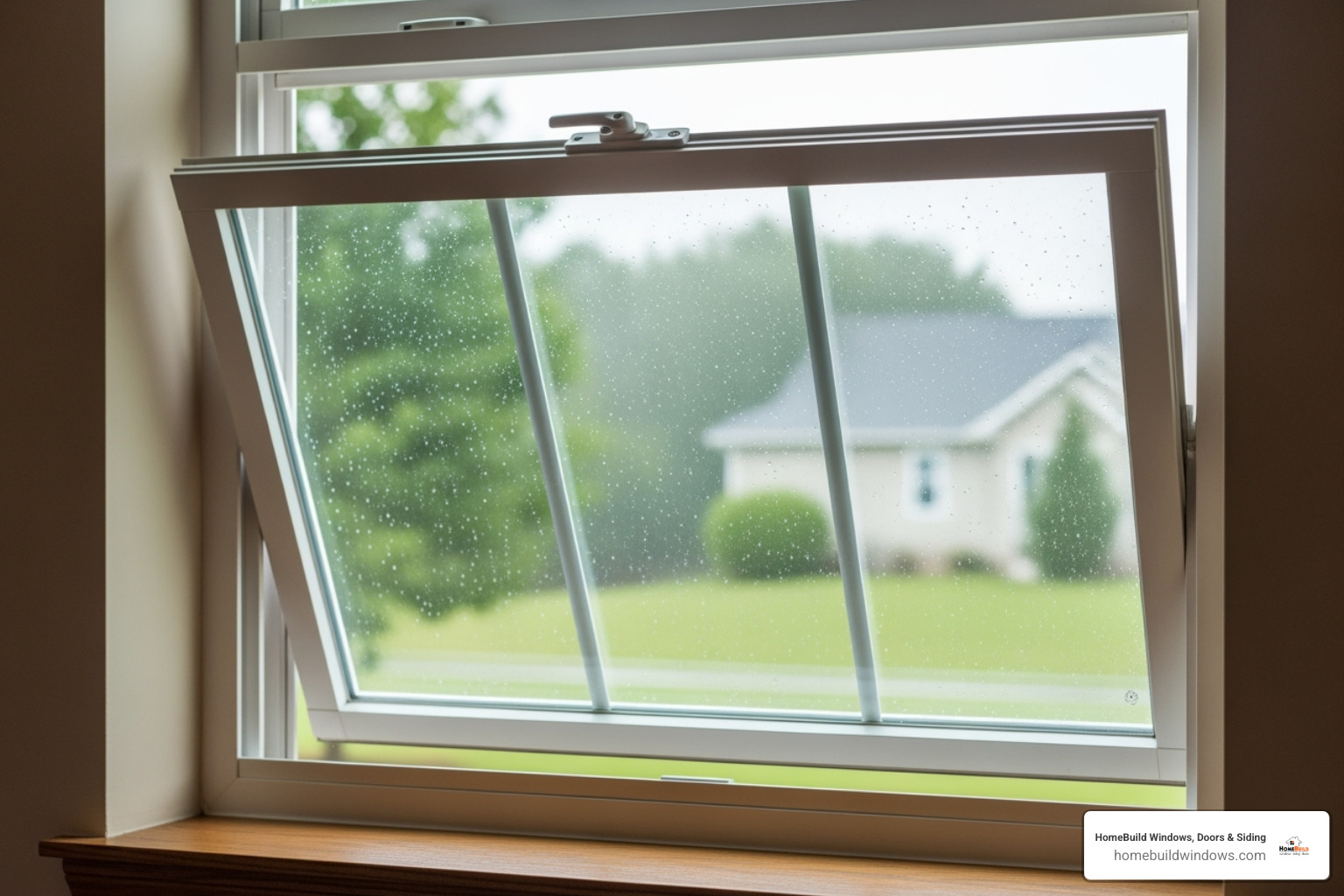
What makes awning windows truly special is their weather protection. Because they open from the bottom while staying attached at the top, the glass itself becomes a shield. Light rain? No problem. You can keep your windows open and enjoy that fresh, clean air without a drop making it inside your home.
For more details on how awning windows compare to other styles, check out our Comparison of Awning and Casement Windows.
Awning vs. Casement: Clarifying the “Side Open” Confusion
Here’s where things get a bit mixed up, and honestly, we don’t blame anyone for the confusion. When people search for “side open” windows, they’re usually thinking of casement windows, not awning windows.
Casement windows are the true “side openers.” They’re hinged on the left or right side and swing out like a door. When fully open, casement windows give you completely unobstructed views and create a wide-open feeling that’s perfect for living rooms or anywhere you want to maximize your connection to the outdoors.
Awning windows, on the other hand, are strictly top-hinged. They open outward from the bottom, which means there’s always a sash extending out from your window opening. While this might slightly affect your view compared to a fully open casement window, it’s exactly what gives awning windows their superpower – all-weather ventilation.
Both window types use crank handles, which adds to the confusion. The key difference is where they pivot. Think of it this way: casement windows open like your front door, while awning windows open like the hood of your car.
If you want maximum views and don’t mind closing windows during rain, casement windows are fantastic. But if you love fresh air regardless of the weather, awning windows are your best friend.
The Opening Angle: From 45 to 90 Degrees
Traditional awning windows open to about 45 degrees, and there’s good reason for this angle. It provides excellent ventilation while maintaining that protective awning effect that keeps rain from sneaking into your home. For decades, this has been the sweet spot that homeowners have loved.
But here’s where modern window technology gets exciting. Today’s awning window side open 90 degree angle outward window models can open much wider – all the way to 90 degrees. This dramatic increase in opening angle transforms your ventilation game completely.
At 90 degrees, you’re getting maximum airflow without sacrificing the rain protection that makes awning windows so special. It’s like getting the best of both worlds – the weather resistance of a traditional awning window with the airflow of a much larger opening.
This wider opening also makes cleaning easier. While reaching the outside of an awning window from inside your home has always been a bit tricky, the 90-degree opening gives you much better access. Some modern awning windows even feature removable sashes, making maintenance a breeze from the comfort of your home.
The 90-degree opening is particularly popular in kitchens and bathrooms, where you want maximum ventilation but can’t always predict when you’ll need to keep windows open during unexpected weather changes.
The Advantages of an Awning Window Side Open 90 Degree Angle Outward Window
When you’re looking at window options, awning window side open 90 degree angle outward window designs stand out. They combine weather protection, security, and superior ventilation—ideal for Chicago homes.
You get strong ventilation, all-weather airflow, and improved security, all with simple crank operation. Their versatile placement suits kitchens, bathrooms, basements, and more, while their clean, modern look complements a wide range of styles.
Maximizing Airflow and Views
Opening to a full 90 degrees dramatically increases air circulation compared to traditional 45-degree awning windows. Used in pairs or series, they create effective cross-ventilation that cools spaces naturally.
Closed, you still enjoy clear sightlines thanks to slim profiles. To push efficiency further, explore More on energy-efficient options.
Best Weather Resistance and Security
The top-hinge design provides reliable rain deflection, letting you ventilate during light showers. Multi-point locking systems and an internal crank mechanism add security and help form a tight, energy-saving seal—especially valuable in windy conditions.
Design, Materials, and Ideal Placement
When it comes to awning window side open 90 degree angle outward window designs, you’re not just choosing a functional upgrade – you’re making a statement about your home’s style and character. These windows beautifully complement both sleek modern homes and charming traditional properties, adapting seamlessly to your architectural vision.
The material you choose will shape both how your windows look and how they perform for years to come. Vinyl windows are the go-to choice for homeowners who want beautiful results without the hassle. They resist our Chicago weather like champions – no worrying about UV damage, moisture problems, or that annoying swelling that can make windows stick. Plus, they’re gentle on your budget and practically maintain themselves.
If you’re looking for something with serious staying power, fiberglass windows are incredibly impressive. They’re eight times stronger than vinyl, which means they’ll handle whatever Mother Nature throws at them. Yes, they cost a bit more upfront, but their energy efficiency and durability make them a smart long-term investment. Think of them as the marathon runners of the window world.
For those who love that classic, timeless appeal, wood windows are simply gorgeous. They provide excellent insulation and can be painted or stained to match your exact vision. The trade-off? They need regular care – painting, staining, and protection from moisture. It’s like having a beautiful vintage car – stunning, but it needs attention.
| Material | Pros | Cons |
|---|---|---|
| Vinyl | Often the least expensive option; Low maintenance; Resistant to UV light, moisture, rust, degradation, and swelling; Good energy efficiency | Can be less rigid than other materials; May have limited color options compared to painted materials; Some perceive it as less premium than wood or fiberglass |
| Fiberglass | Highly durable and strong (8x stronger than vinyl); Excellent energy efficiency; Resists warping, rotting, and corrosion; Lower price than wood, higher than vinyl; Can be painted | Higher initial cost than vinyl; May have fewer standard color options than vinyl, though painting is possible |
| Wood | Classic, natural aesthetic; Excellent insulation properties; Can be stained or painted to match decor; Offers a traditional, warm feel | High maintenance (requires frequent painting/staining to prevent rotting, deterioration); Susceptible to moisture damage, pests, and fire risk; Most expensive option; Can be prone to swelling/shrinking |
Where to Install Your Awning Window Side Open 90 Degree Angle Outward Window
The beauty of awning windows lies in how perfectly they solve common household challenges. Let me share where they truly shine in your home.
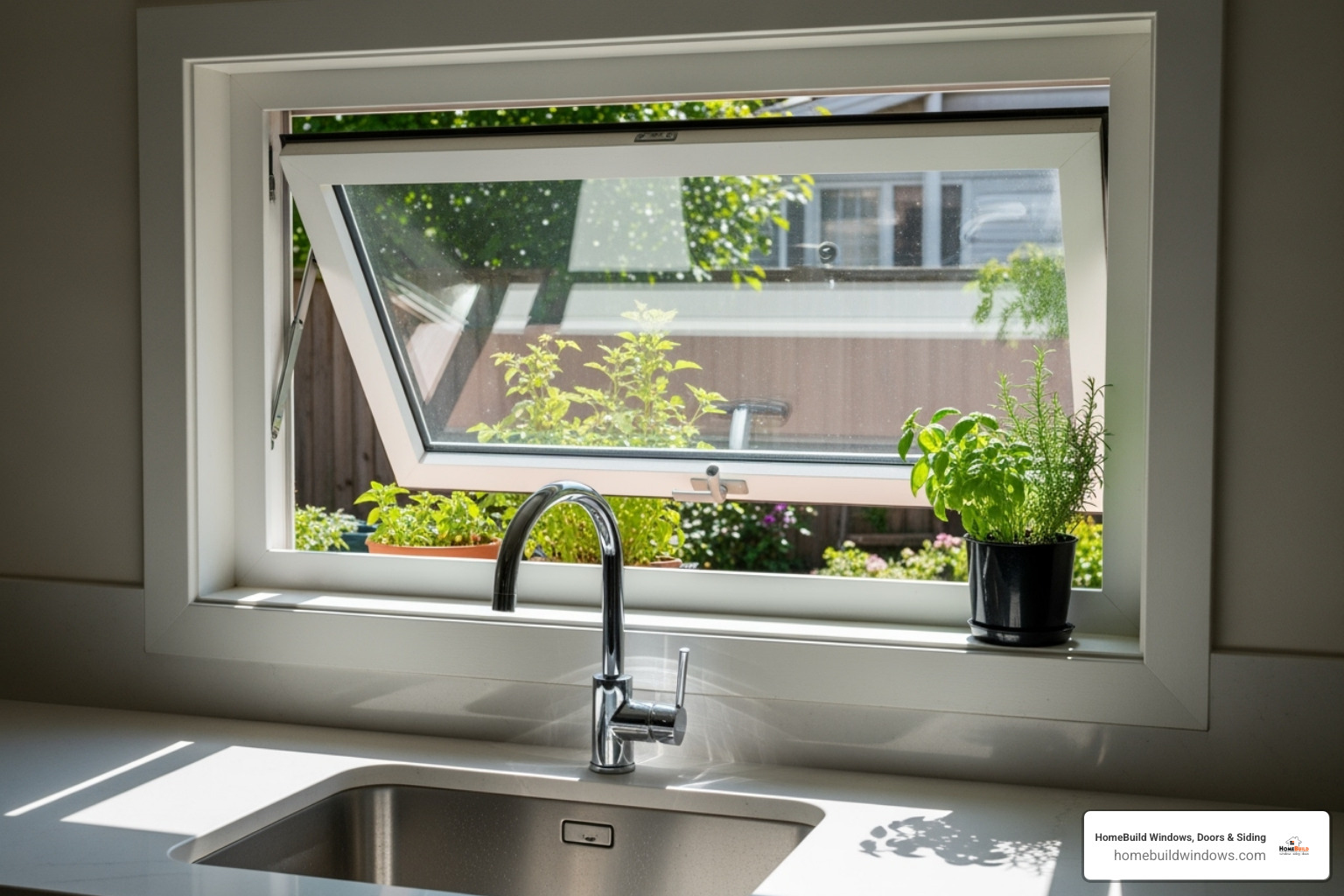
Above your kitchen sink is where awning windows become absolute heroes. Picture this: you’re washing dishes and want fresh air, but reaching over the counter to open a regular window is awkward at best. With an awning window’s convenient crank mechanism, you simply turn the handle – no stretching, no struggling. It’s such a popular upgrade that nearly 27% of kitchen renovations now include window improvements, with awning windows leading the pack.
Bathrooms present their own puzzle – you need ventilation and natural light, but privacy is non-negotiable. Installing awning windows higher on bathroom walls solves this beautifully. You get excellent airflow and light without sacrificing your privacy. According to proper bathroom ventilation studies, good air circulation reduces humidity, prevents mold, and keeps your bathroom healthier. Awning windows deliver all these benefits while maintaining your comfort.
Basements often feel forgotten, but they shouldn’t be stuffy or damp. Awning windows are perfect here because they provide secure ventilation while keeping rain out. You can freshen up your lower level without worrying about security or weather damage.
If you’re considering these strategic placements, you’ll find plenty of options when you explore Window Replacement Options Near Me.
Choosing the Right Material and Style
Selecting the perfect awning window side open 90 degree angle outward window is like choosing the right outfit – it needs to look great and work with your lifestyle.
Vinyl is your reliable friend – it looks good, performs well, and doesn’t demand constant attention. In our Chicago climate, where we see everything from blazing summer sun to harsh winter conditions, vinyl windows just keep doing their job year after year.
Fiberglass is the overachiever – stronger, more energy-efficient, and incredibly durable. If you’re planning to stay in your home for many years, fiberglass windows are an investment that pays dividends in comfort and energy savings.
Wood brings that warm, classic charm that never goes out of style. If you love the natural beauty and don’t mind the extra care, wood windows create an atmosphere that’s hard to match.
Beyond the basic material, you can customize everything to match your home’s personality. We offer numerous color and finish options, including interior woodgrain finishes that give you the wood look without the maintenance headaches. Hardware choices range from sleek chrome to warm brass, and you can add grilles or different screen options to complete your vision.
The result? Windows that don’t just function beautifully – they become part of what makes your house feel like home.
Practical Considerations: Egress, Cleaning, and Energy Efficiency
Before you fall in love with the idea of awning window side open 90 degree angle outward window designs, let’s talk about the practical stuff. While these windows are fantastic for ventilation and weather protection, there are some important considerations that every homeowner should understand.
Egress requirements are probably the most critical factor to consider. Simply put, most awning windows don’t meet the size and clearance requirements for emergency exits that building codes require for bedrooms. The opening mechanism and typically smaller size mean they’re not suitable as escape routes during emergencies. If you’re planning windows for a bedroom, you’ll want to consider other options like casement windows for egress compliance.
But here’s the thing – awning windows shine in all the places where egress isn’t a concern. Kitchens, bathrooms, basements, and living areas are perfect spots where you can enjoy all their benefits without worrying about emergency exit requirements.
Cleaning and Maintaining Your Awning Window Side Open 90 Degree Angle Outward Window
Let’s be honest – cleaning the outside of an awning window from inside your home used to be a bit of a puzzle. The good news? Modern window technology has come to the rescue! Today’s awning window side open 90 degree angle outward window models are designed with maintenance in mind.
Many contemporary awning windows feature removable sashes or special hardware that makes cleaning much easier. Some models include dual-arm rotary hardware that allows you to position the window for optimal cleaning access. It’s like the manufacturers finally listened to all those homeowners who were tired of playing window-cleaning gymnastics!
Your maintenance routine doesn’t have to be complicated. Regular cleaning with mild soap and a soft cloth keeps both glass and frames looking great. Just skip the harsh chemicals – they’re not friends with your window frames.
Lubricating the hinges and crank mechanism once a year with silicone-based lubricant keeps everything moving smoothly. Think of it as giving your windows a little spa treatment – they’ll thank you with years of effortless operation.
Don’t forget about the weatherstripping. A quick inspection every so often helps you catch any wear before it becomes a problem. Cracked or compressed weatherstripping can let air sneak through, which defeats the whole purpose of having energy-efficient windows.
Finally, keep those tracks clean. Dust and debris love to hide in the operating arm tracks, and nobody wants a cranky crank handle. A quick brush-out keeps everything operating like butter.
For more detailed information about choosing the right glass options for your windows, check out our Window Replacement Guide: Double Pane vs. Triple Pane Windows.
Energy Efficiency and Cost
Here’s where awning windows really show off. These windows are energy efficiency champions, and in Chicago’s climate, that translates to real money in your pocket.
The secret is in their airtight seals. When an awning window closes, it creates compression seals that get tighter as wind pressure increases. It’s like the window actually fights back against drafts – pretty clever engineering! This tight seal is what makes awning windows so effective at keeping your heated or cooled air where it belongs.
Double-pane glass is the standard starting point for good insulation. But if you really want to maximize efficiency, triple-pane glass is where the magic happens. Add in Low-E coatings that reflect heat, and argon gas filling between panes, and you’ve got windows that work overtime to keep your energy bills in check.
Here’s a sobering fact: up to 70 percent of energy loss in homes happens through windows and doors. With 90 percent of window heat loss occurring through the glass itself, investing in efficient windows isn’t just nice to have – it’s essential.
Cost-wise, you’re looking at a range depending on your choices. Standard awning windows typically run between $350 and $1,050, while premium triple-pane models can start around $1,425. The good news? Awning windows generally cost less than casement windows since they’re often smaller, though they’re typically more robust (and pricier) than sliding windows.
The upfront investment in energy-efficient windows pays dividends through lower heating and cooling costs year after year. If you’re ready to explore your options with professionals who understand Chicago’s unique climate challenges, you can Find a Window Replacement Company that fits your needs and budget.
Frequently Asked Questions about Awning Windows
After helping thousands of Chicago homeowners choose the perfect windows for their homes, I’ve noticed the same questions come up again and again. Let me share the answers to the most common concerns about awning window side open 90 degree angle outward window designs.
Can awning windows be left open when it’s raining?
This is honestly one of my favorite questions because the answer showcases exactly why awning windows are so brilliant! Yes, you absolutely can leave them open during rain – and that’s not just a nice bonus feature, it’s one of their main selling points.
Picture this: it’s a beautiful summer evening, there’s a gentle rain falling, and you want to enjoy that fresh, clean smell that comes with a good shower. With most windows, you’d have to choose between staying dry or getting fresh air. But with awning windows, you get both! The top-hinged design means the sash swings outward from the bottom, creating a natural umbrella effect that deflects water away from your home.
I’ve had customers tell me they love falling asleep to the sound of rain while their bedroom awning window stays safely open. It’s like having nature’s own white noise machine without any worry about water damage.
Are awning windows considered secure?
Security is always a top concern for homeowners, and I’m happy to report that awning windows are actually very secure – often more so than people realize.
The security comes from several smart design features. First, the crank mechanism is entirely internal, which means there’s no way for someone to open your window from the outside without breaking the glass first. Compare that to some sliding windows where the locks can sometimes be manipulated from outside.
Most modern awning windows also come with multi-point locking systems. Instead of just one lock point like older windows, these engage at several spots around the frame, creating what I like to call a “fortress seal.” When locked, these windows are incredibly difficult to force open.
There’s also a practical security advantage: awning windows are often installed higher up on walls (like above kitchen sinks or in bathrooms), making them naturally harder for intruders to reach. The combination of placement, internal operation, and multi-point locks gives you excellent peace of mind.
Do awning windows meet egress requirements for bedrooms?
This is where I have to give you the honest answer that might disappoint some folks: typically, no, awning windows don’t meet egress requirements for bedrooms or other spaces that need emergency exits.
Building codes require egress windows to have specific minimum dimensions for width, height, and total opening area. They also need to be easy to operate quickly in an emergency. While an awning window side open 90 degree angle outward window provides great ventilation, the outward-swinging sash can restrict the actual clear opening space that someone could climb through.
Think about it practically – in an emergency, you need a window opening that’s wide and tall enough for a person to get through quickly. The protruding sash of an awning window, even at 90 degrees, creates an obstacle that building codes consider problematic for emergency egress.
If you need an egress window for a bedroom, casement windows are usually your best bet. They open like doors and can provide the full, unobstructed opening that safety codes require. But for kitchens, bathrooms, and other areas where egress isn’t a concern, awning windows are absolutely perfect.
Always check with your local building department about specific requirements in your area – codes can vary, and it’s better to be sure before you invest in new windows.
Conclusion
Awning window side open 90 degree angle outward window designs deliver everyday practicality: wide-open ventilation, protection from light rain, and smart security in a streamlined package. They fit kitchens, bathrooms, basements, and more, and pair well with vinyl, fiberglass, or wood frames to match your home’s style and efficiency goals.
At HomeBuild Windows, our Chicago-based team installs these windows with the expert care your home deserves—so you get long-lasting performance and energy savings.
Ready to upgrade? Get a quote for your Awning Windows Replacement today.