How a Storm Door Is Fitted for a Chicago Home
To hang a storm door in Chicago, a professional checks the opening’s size and shape, chooses a swing that clears the main door’s hardware, and removes any old storm door. The installer then aligns the hinge and latch rails, seals the top drip cap, fits the bottom sweep, and adjusts the closer so the door shuts and latches smoothly.
Chicago’s wind, snow, and freeze-thaw cycles make a sound mounting surface and tight seals especially important. An uneven opening or poorly fitted sweep can leave the door sticking or letting in drafts.
I’m Steve Mlynek, founder of locally owned HomeBuild Windows, Doors & Siding, which has served Chicago-area homeowners since 2004. My more than 20 years in door installation and replacement inform this guide to what it takes to hang a storm door in Chicago.
Terms related to hang storm door Chicago:
- storm door replacement northwest suburbs
- professional storm door installers
- storm door experts Chicago
Why Precision Is Critical to Hang a Storm Door in Chicago
Hanging an exterior door in the Chicagoland area requires a level of precision that accounts for our distinct, punishing climate. From fierce Lake Michigan wind gusts to relentless winter freeze-thaw cycles and humid summers, entryways expand, contract, and absorb heavy pressure year-round. Understanding why professional storm door setup matters helps protect your primary entry door from premature rot, warped framing, and costly energy loss.
A properly fitted storm door acts as an insulating thermal buffer. It creates a dead-air pocket that stops drafts, reduces condensation on your interior glass, and protects your entryway from wind-driven rain and lake-effect snow. When an installation is misaligned by even an eighth of an inch, the protective seal fails.

| Installation Aspect | Precision Professional Fitting | Improper Door Hanging Outcomes |
|---|---|---|
| Frame Alignment | Plumb, level, and square within 1/8-inch tolerance across all diagonals. | Sagging frame, sticking latches, and binding against the brickmould. |
| Weather Sealing | Continuous elastomeric seal and customized bottom expander sweep contact. | Draft infiltration, ice damming at the threshold, and energy loss. |
| Wind Resistance | Heavy-duty dual closers and safety chain support against high wind shear. | Blown-open doors, bent hinge rails, and cracked exterior trim. |
| Hardware Fit | Clear separation between prime door locksets and storm handlesets. | Handle interference, scratched finishes, and failure to latch shut. |
Proper Door Handing and Swing Configuration
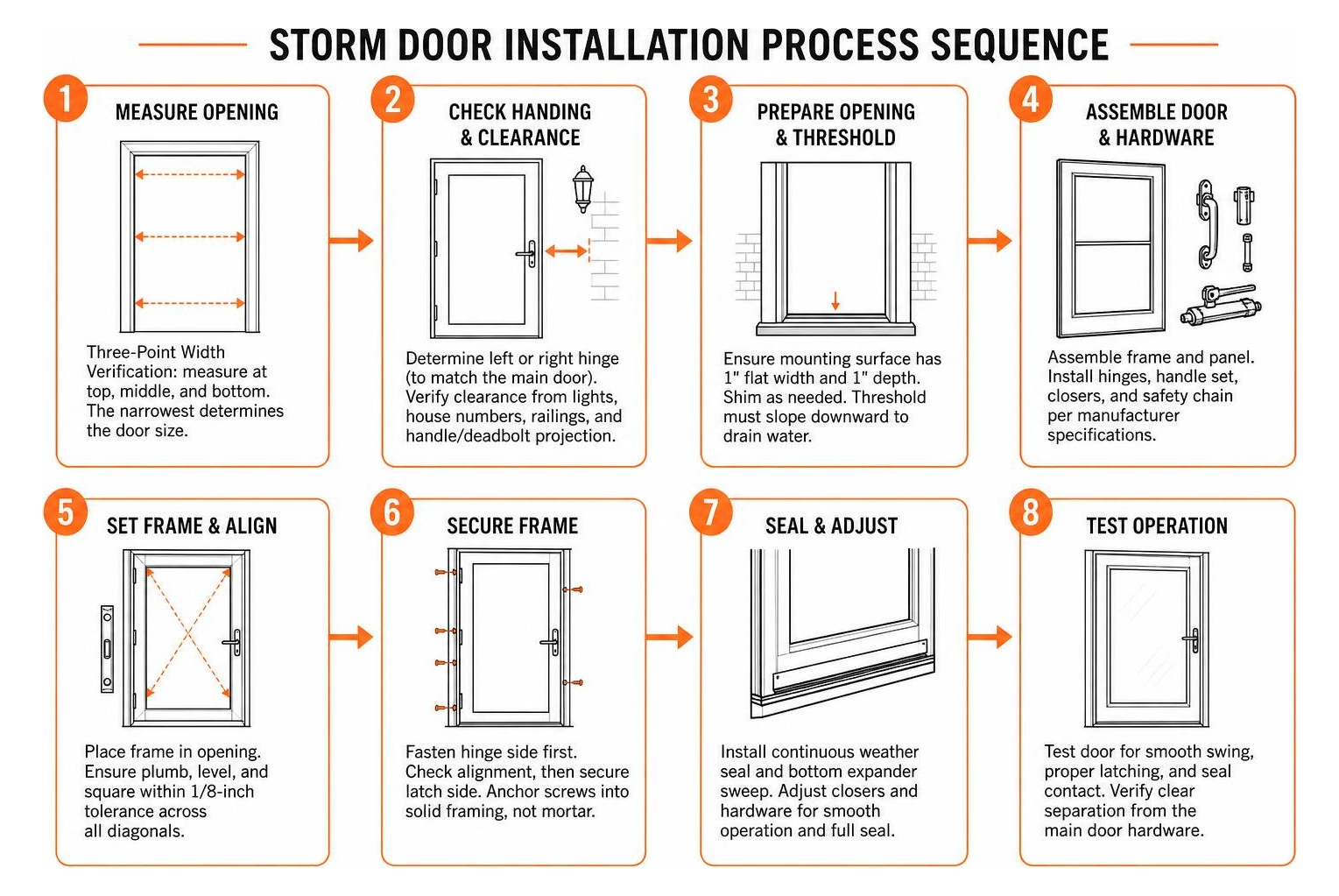
Before mounting begins, determining the correct handing (left-hinged or right-hinged) is critical. In the vast majority of residential installations, the storm door hinges should mount on the same side as the main entry door hinges. This orientation ensures that both doors swing open in the same direction, allowing seamless foot traffic and preventing you from being trapped between two opposing slabs.
However, existing exterior light fixtures, house numbers, electrical outlets, brick returns, or porch railings can interfere with an outward-swinging door. Installers must also inspect the depth and projection of your primary door’s handle and deadbolt. Without sufficient clearance between the primary lockset and the storm door glass or screen frame, the hardware can collide, preventing the storm door from latching securely.
Chicago Architectural Styles and Trim Profiles
Chicagoland architecture features a wide variety of historic framing profiles. Classic Chicago brick bungalows, stone two-flats, mid-century ranches, and traditional suburban colonials present unique exterior trim considerations:
- Masonry Casing and Brickmould: Chicago brick exteriors often feature original wood brickmould set directly against masonry. Installers verify that the mounting surface provides at least 1 inch of flat width and 1 inch of bracket depth to anchor heavy hinge screws securely into solid framing rather than crumbling mortar.
- Out-of-Square Openings: Decades of foundation settling mean older homes rarely have perfectly square door openings. Accommodating these structural variations requires custom shimming and rail adjustments to prevent the door slab from racking.
- Threshold Pitch: Exterior sills must maintain a proper downward slope to drain water away from the entryway without interfering with the bottom rubber sweep.
The Professional Process Required to Hang a Storm Door in Chicago
Hanging a heavy, storm-ready door system demands structured planning, specialized tools, and exact component sequencing. HomeBuild relies on industry-leading manufacturers like ProVia, Pella, and Andersen to deliver heavy-gauge aluminum and insulated storm doors engineered for the Midwest. Reviewing expert storm door installation in Chicago reveals how careful rail alignment prevents seasonal binding. Homeowners can also review How to Install a Universal-Hinged Storm Door: An Overview to understand universal-hinge engineering concepts.
Measuring and Prepping the Opening to Hang a Storm Door in Chicago
Precision begins with a detailed evaluation of the doorway dimensions:
- Three-Point Width Verification: Measure the interior width of the exterior trim at the top, middle, and bottom of the opening. The narrowest measurement determines the required door size.
- Height Inspection: Measure the vertical height from the top underside of the header trim down to the highest point of the sill threshold.
- Diagonal Squareness: Measure diagonally from corner to corner in an “X” pattern. The two diagonal measurements must match within an 1/8-inch tolerance. If the opening is racked, corrective shimming or Z-bar extenders must be integrated before mounting.
- Casing Remediation: Any failing wood, rotted brickmould, or degraded exterior caulk from old installations must be completely removed, scraped, and repaired to ensure a solid structural base.
Securing Rails, Drip Caps, and Weatherstripping
Once prep work is complete, the mounting frame is secured in a strict sequence:
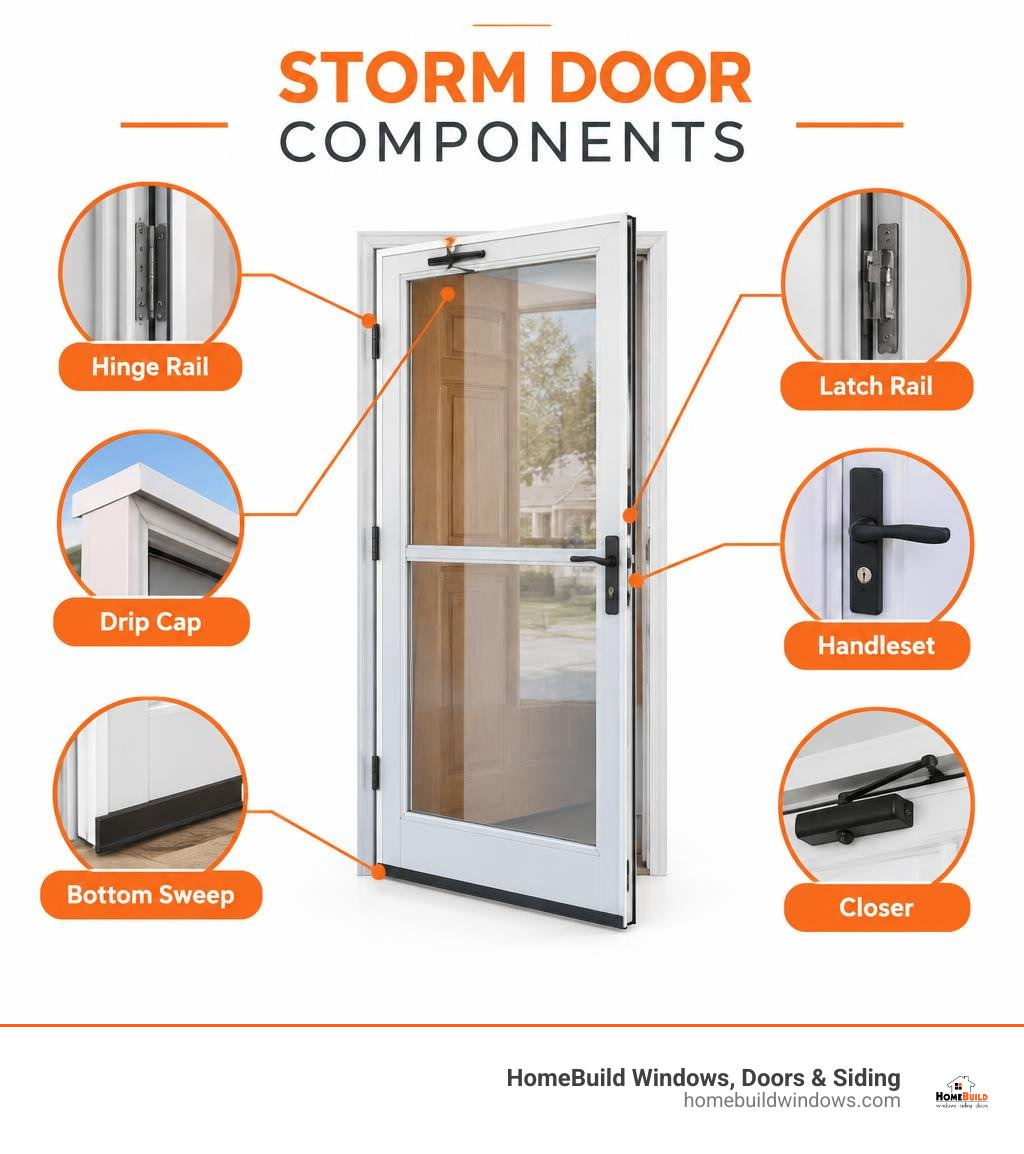
- Hinge Rail Attachment: The hinge rail is secured to the door slab. Professional crews often utilize a temporary placeholder screw driven into the upper casing—leaving roughly 1/8 inch of thread exposed—allowing the door to hang temporarily while verifying vertical plumb before driving permanent fasteners into the framing studs.
- Top Drip Cap Alignment: The aluminum drip cap is positioned across the top header trim, leaving a uniform 1/8-inch gap above the door slab.
- Weatherproof Caulking: A high-grade hybrid polymer, polyurethane, or elastomeric sealant is applied along the top edge of the drip cap to stop water penetration behind the exterior siding or brickmould.
- Latch Rail Installation: The latch-side Z-bar rail is aligned plumb, ensuring that integrated wool-pile or dual-fin vinyl weatherstripping seals evenly against the door slab along its entire height.
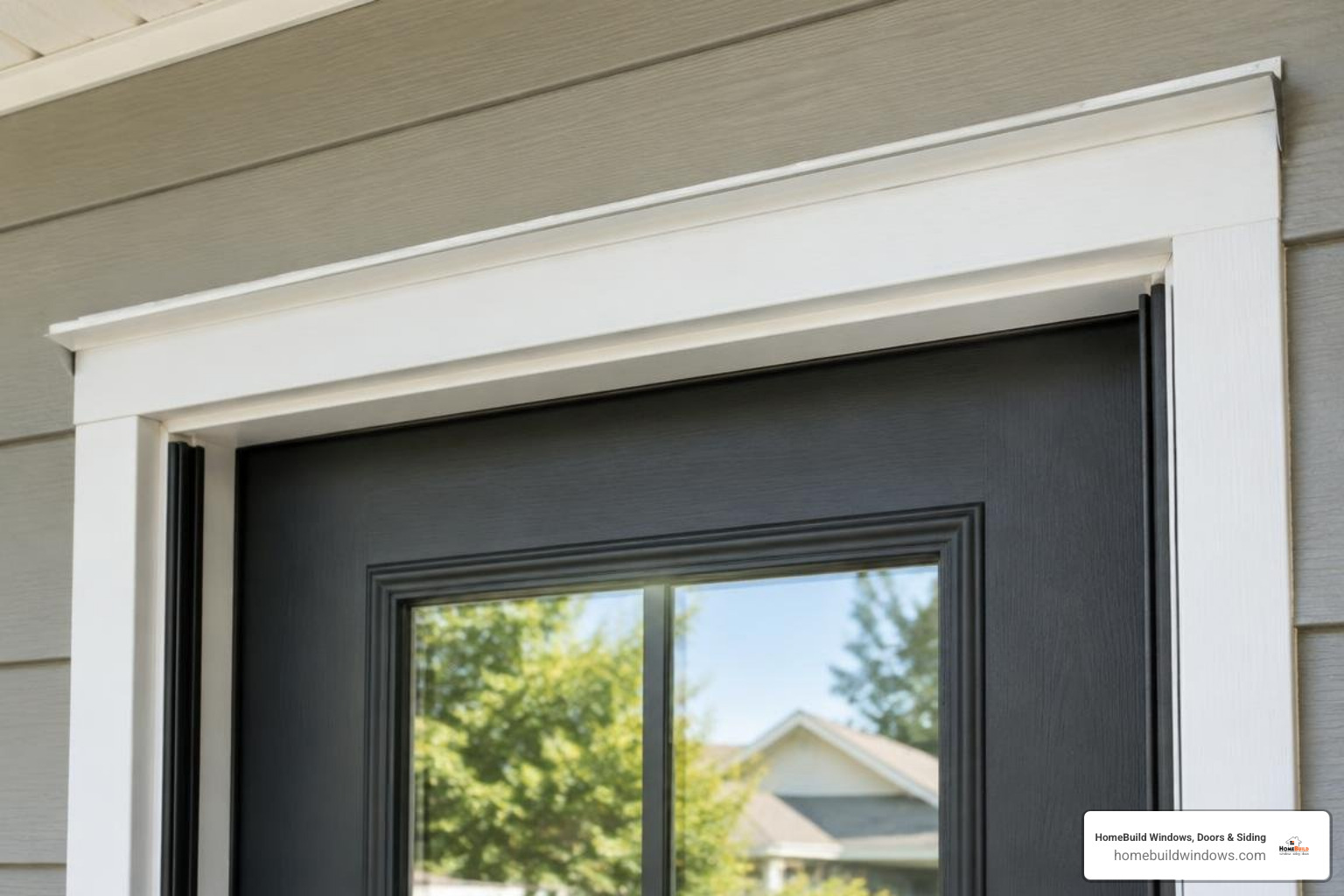
Aligning Hardware and Closers to Hang Storm Door Chicago Entryways Require
The final mechanical stage ensures long-term operational ease and wind security. Upgrading to a comprehensive Chicagoland storm door replacement provides robust hardware built to withstand heavy seasonal use:
- Mortise Handlesets and Latches: Lever latches and keyed deadbolts are fitted through factory pre-punched openings, ensuring strike plates align cleanly without requiring excessive closing force.
- Dual Pneumatic Closers: For heavy Midwest wind loads, dual closers (one mounted at the top jamb and one at the bottom sill) provide balanced closing force, preventing the frame from twisting under wind stress.
- Bottom Expander Sweep: The bottom expander channel is adjusted so the flexible rubber or vinyl fins lightly sweep the sloped threshold. Drilling depth is strictly controlled during fastening to prevent penetrating the outer decorative skin of the door.
Common Regional Weather Challenges and Custom Adaptations
Chicago weather puts immense strain on building entryways. When temperatures plunge below zero during winter freezes or soar into high humidity during summer, metal and vinyl components expand and contract continuously.
Protecting Against High Winds and Pressure Changes
Chicagoland’s infamous wind gusts can catch an unlatched storm door, hyper-extending the hinges, bending the aluminum rails, and cracking the exterior casing. To protect your home:
- Safety Shock Chains: Installing a heavy-duty safety chain or torsion spring restricts the door from opening past 90 degrees during sudden gusts.
- Closing Speed Calibration: Pneumatic and hydraulic closers feature adjustment screws at the cylinder base. Turning the screw clockwise restricts internal airflow or fluid movement to slow the door, while turning counterclockwise speeds it up. Proper tension calibration ensures the latch clicks shut against interior building air resistance without slamming.
Moisture Sealing for Midwest Freeze-Thaw Cycles
Water intrusion behind exterior casing causes hidden wood rot and structural decay when trapped moisture repeatedly freezes and expands:
- Advanced Sealants: High-performance polyurethane and elastomeric caulks maintain elasticity down to sub-zero temperatures, ensuring the seal between the drip cap and exterior casing remains intact.
- Weep Channel Function: Modern storm door sills and expanders incorporate small weep openings that channel melting snow and driven rain outward away from the subfloor.
Frequently Asked Questions About Storm Door Fitting
Which way should my storm door swing relative to my main entry door?
Your storm door should almost always swing in the same direction as your primary entry door, with hinges mounted on the same side. This creates a natural path of travel when entering or exiting. If an exterior obstruction such as a porch pillar, brick wall return, or light fixture blocks that swing path, professional installers can reverse the handing using a universal-hinge door or custom-fitted Z-bars.
Why does my storm door slam or fail to latch completely in cold weather?
In cold Chicago winters, the internal fluid or air in pneumatic and hydraulic door closers changes viscosity, altering the closing speed. Additionally, modern energy-efficient entry doors create an airtight seal, resulting in an air cushion between the two doors that resists closing. Adjusting the tension screw on the end of the closer cylinder will recalibrate the latching speed for winter conditions.
Can a storm door be installed on older Chicago homes with uneven brickmould?
Yes. Many historic Chicago homes, including classic brick bungalows and two-flats in neighborhoods like Lincoln Square, Logan Square, and Portage Park, have settled unevenly over time. Professional installers use custom-scribed shims, oversized Z-bar extenders, and adjustable expander sweeps to square the mounting surface, ensuring the new storm door operates smoothly without air leaks.
Conclusion
A well-fitted storm door provides an essential layer of security, insulation, and weather protection for your home’s entryway. Choosing top-tier products from Pella, Andersen, or ProVia ensures your investment stands up to severe Midwest seasons for decades to come.
HomeBuild Windows, Doors & Siding is a locally owned contractor serving homeowners across Chicago and the surrounding suburbs since 2004. With over 20 years of continuous service, we never use subcontractors—every single project is installed exclusively by our certified in-house crews and personally supervised on site by our owner, Steve Mlynek. Our commitment to craftsmanship has earned us an Elite Platinum Pella Certified Contractor status, Andersen Premier Certified Contractor status, the Angi Super Service Award 2025, the 2025 Nextdoor Neighborhood Faves Winner recognition, and a 4.9-star rating across 220+ Google reviews.
We back all of our work with a dedicated 10-year labor warranty on every installation, paired with our complimentary VIP Protection Plan (covering 1, 2, or 5 years depending on your project size; see full warranty details). Contact our team at (224) 580-1405 or (630) 501-0212, visit our office at 1830 N Winchester Ave, Chicago, IL 60622, or schedule your free estimate online today.