


What You Need to Know Before You Install Double Glazed Windows
Learning how to install double glazed windows is one of the most impactful home improvement projects a Chicago-area homeowner can take on — especially with cold Midwest winters driving up energy bills and drafts creeping through aging window frames.
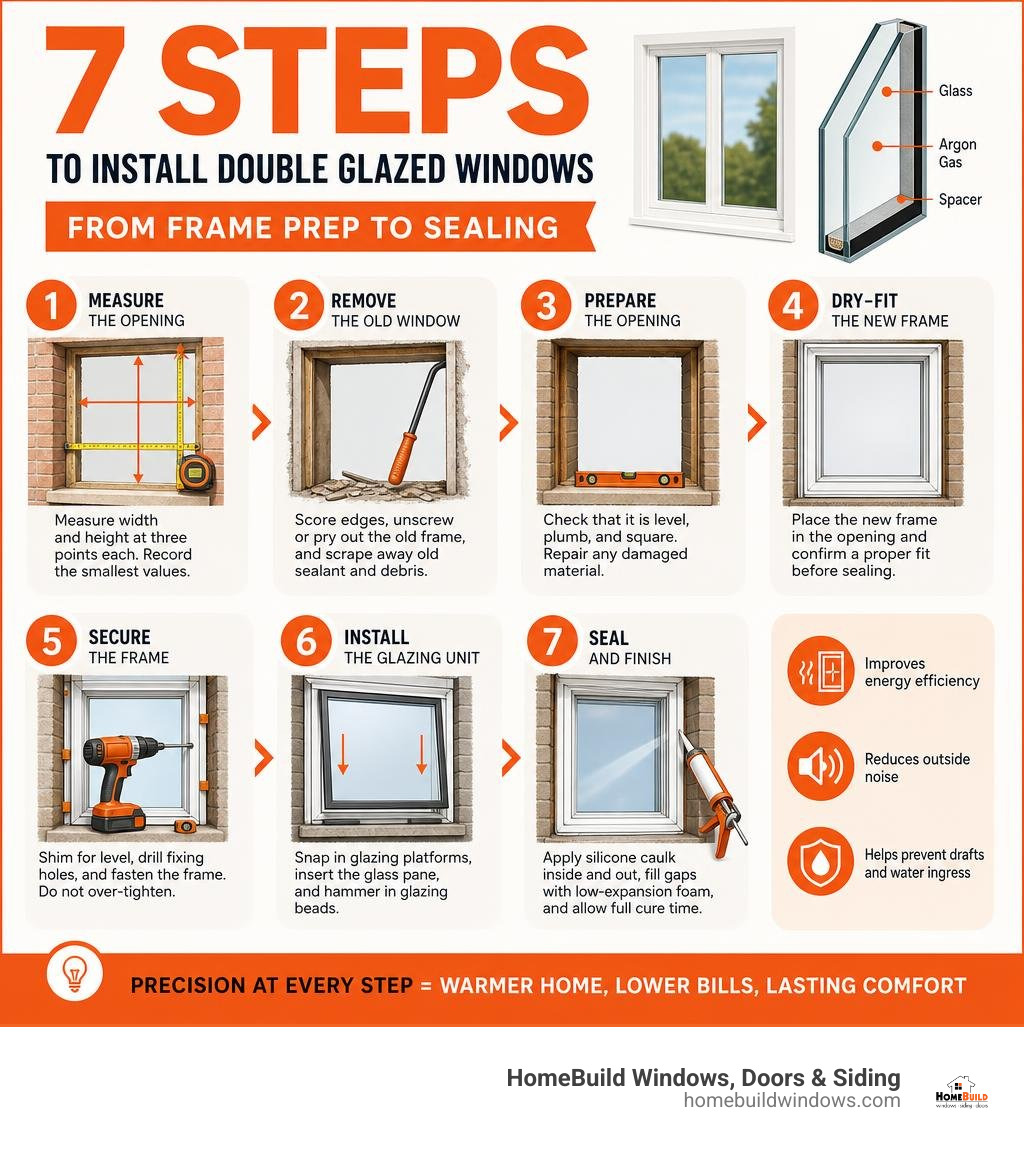
Here is a quick overview of the core steps:
- Measure the rough opening — width and height at three points each; record the smallest values
- Remove the old window — score edges, unscrew or pry out the old frame, and scrape away old sealant and debris
- Prepare the opening — check it is level, plumb, and square; repair any damaged material
- Dry-fit the new frame — confirm fit before committing to caulk or fasteners
- Secure the frame — shim for level, drill fixing holes, and fasten without over-tightening
- Install the glazing unit — snap in glazing platforms, insert the glass pane, and hammer in glazing beads
- Seal and finish — apply silicone caulk inside and out, fill gaps with low-expansion foam, and allow full cure time
The most common failure points are poor sealing and an unlevel frame — both of which lead to drafts, water ingress, and wasted energy.
Double glazed windows trap a layer of air or gas (usually argon) between two panes of glass, dramatically reducing heat loss compared to single-pane windows. A-rated double glazing in a gas-heated home can save up to £140 a year and cut carbon dioxide emissions by 380kg — and they can reduce outside noise by as much as 35 decibels, a real benefit for homeowners near busy Chicago streets or highways.
That said, installation requires precision. One wrong measurement, one over-tightened screw, or one gap in the sealant can compromise the entire unit’s performance — and in some cases, crack the glass.
I’m Steve Mlynek, CEO and founder of HomeBuild Windows, Doors & Siding, and with over 20 years of window installation experience in Chicago and the surrounding northwest suburbs, I’ve seen what separates a long-lasting, energy-efficient installation from one that fails in the first winter. In this guide, I’ll walk you through exactly how to install double glazed windows the right way — whether you’re planning a DIY project or just want to know what a professional installer should be doing on your behalf.
Important how to install double glazed windows terms:
Why Upgrade to Double Glazed Windows?
If you have ever sat near a drafty, single-pane window during a freezing January night in Chicago, you know how uncomfortable it can be. Aging, drafty windows allow precious indoor heat to escape, forcing your heating system to work overtime. Upgrading to modern double glazed units is one of the most effective ways to restore comfort to your home.
Whether you live in Arlington Heights, IL, Barrington, IL, or downtown Chicago, upgrading your home’s exterior envelope offers immediate, noticeable upgrades in daily living. By sealing out the harsh Midwestern elements, you protect your property from moisture damage, mold growth, and structural decay. To understand the broader impact of window upgrades on your home’s thermal performance, explore our Energy Efficient Windows Guide.
How Double Glazed Windows Improve Energy Efficiency
Double glazed windows consist of two glass panes separated by a spacer bar, creating a sealed gap that is typically filled with an insulating gas like argon. This gas has lower thermal conductivity than regular air, acting as a highly effective barrier against heat transfer.
Additionally, many modern double glazed windows feature Low-Emissivity (Low-E) glass. This glass has a microscopic, optically clear metallic coating that reflects infrared heat. In the summer, it bounces scorching solar heat away from your home; in the winter, it reflects your indoor heating back into your living spaces. By preventing heat from migrating through the glass, these units significantly lower your heating and cooling demands. For practical advice on maximizing these benefits, check out our guide on How to Make Windows Energy Efficient.
Comparing Frame Materials: uPVC, Aluminium, and Timber
Choosing the right frame material is just as important as selecting the glass. The frame must withstand Chicago’s seasonal temperature swings, from humid summers to sub-zero winter blasts. Here is how the three main frame materials compare:
| Feature | uPVC Frames | Timber Frames | Aluminium Frames |
|---|---|---|---|
| Durability | Extremely high; won’t rot, warp, or rust | High, but requires regular painting/staining | Excellent; highly resistant to weather |
| Maintenance | Low (occasional wipe down) | High (requires ongoing sealing and painting) | Low (occasional cleaning) |
| Insulation | Excellent thermal performance | Naturally insulating, but can warp if neglected | Moderate (requires thermal breaks to prevent cold transfer) |
| Aesthetic | Modern, clean look | Classic, warm, and highly customizable | Sleek, slim profiles, ideal for contemporary designs |
Essential Tools and Preparation for Window Installation
To learn how to install double glazed windows successfully, you must start with the right gear. Attempting this project with improper tools can lead to misaligned frames, compromised seals, or shattered glass.
Before you begin, gather the following tools and materials:
- Safety glasses and heavy-duty work gloves
- Tape measure and spirit level
- Chisel, utility knife, and crowbar (for removing the old frame)
- Hand saw or reciprocating saw
- Power drill with masonry and wood bits
- High-quality silicone sealant (Grade NS Class 25 per ASTM C920)
- Low-expansion polyurethane foam (compliant with ASTM E2112-07)
- Plastic shims/packers
- Masonry or wood fixing screws (such as Spax screws)
- Suction cups (for safely lifting the double glazed units)
For a deeper dive into the tools and safety measures required for a successful window swap, refer to our comprehensive Window Installation Guide.
Preparing the Window Opening Before Installation
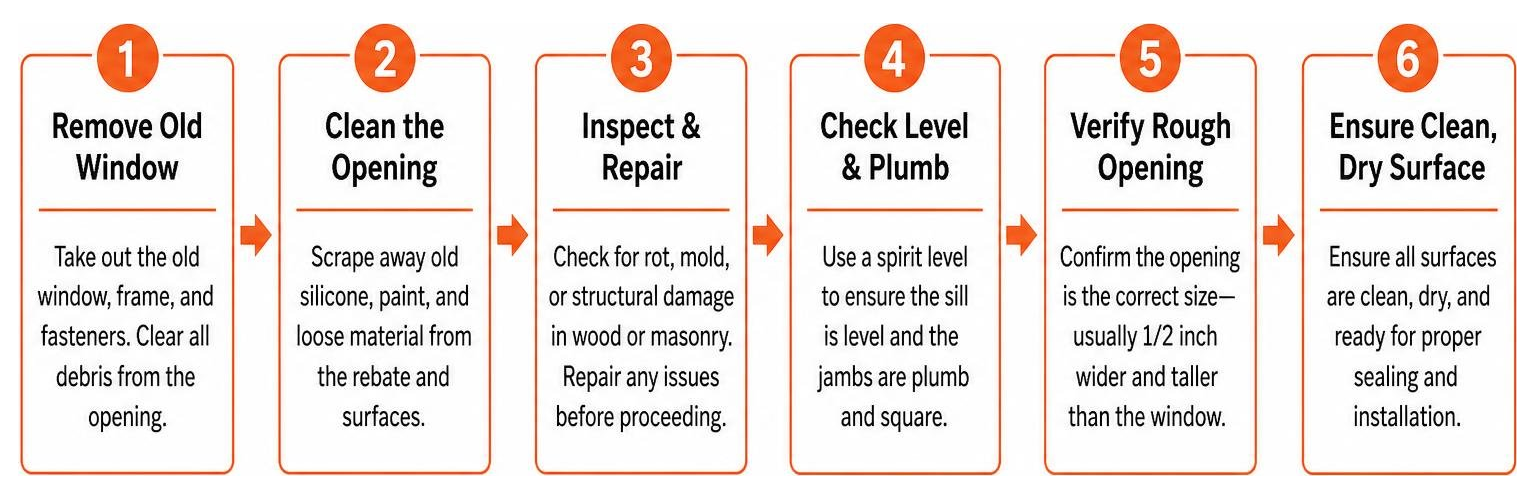
Once you have your tools ready, you must prepare the rough opening. A new window is only as good as the opening it sits in. If the opening is out of square, unlevel, or structurally compromised, your new window will not operate correctly, and the glass may crack under uneven pressure.
Start by scraping away all old silicone, paint, and debris from the rebate. Inspect the structural wood or masonry. If you find rot in wooden studs or crumbling mortar in masonry, these issues must be repaired before proceeding.
Next, use your spirit level to verify that the sill is perfectly level and the side jambs are plumb. If you are installing a high-quality brand like Marvin, you can reference the UltimateDoubleHungG2Installation19915771.fm instructions to ensure your rough opening meets the required tolerances (usually 1/2 inch wider and taller than the window frame).
How to Install Double Glazed Windows: A Step-by-Step Guide
With your opening clean, level, and dry, it is time to begin the actual installation process. If you want to review the general replacement process first, check out our guide on How to Replace Windows in 7 Easy Steps.
Step-by-Step Instructions on How to Install Double Glazed Windows
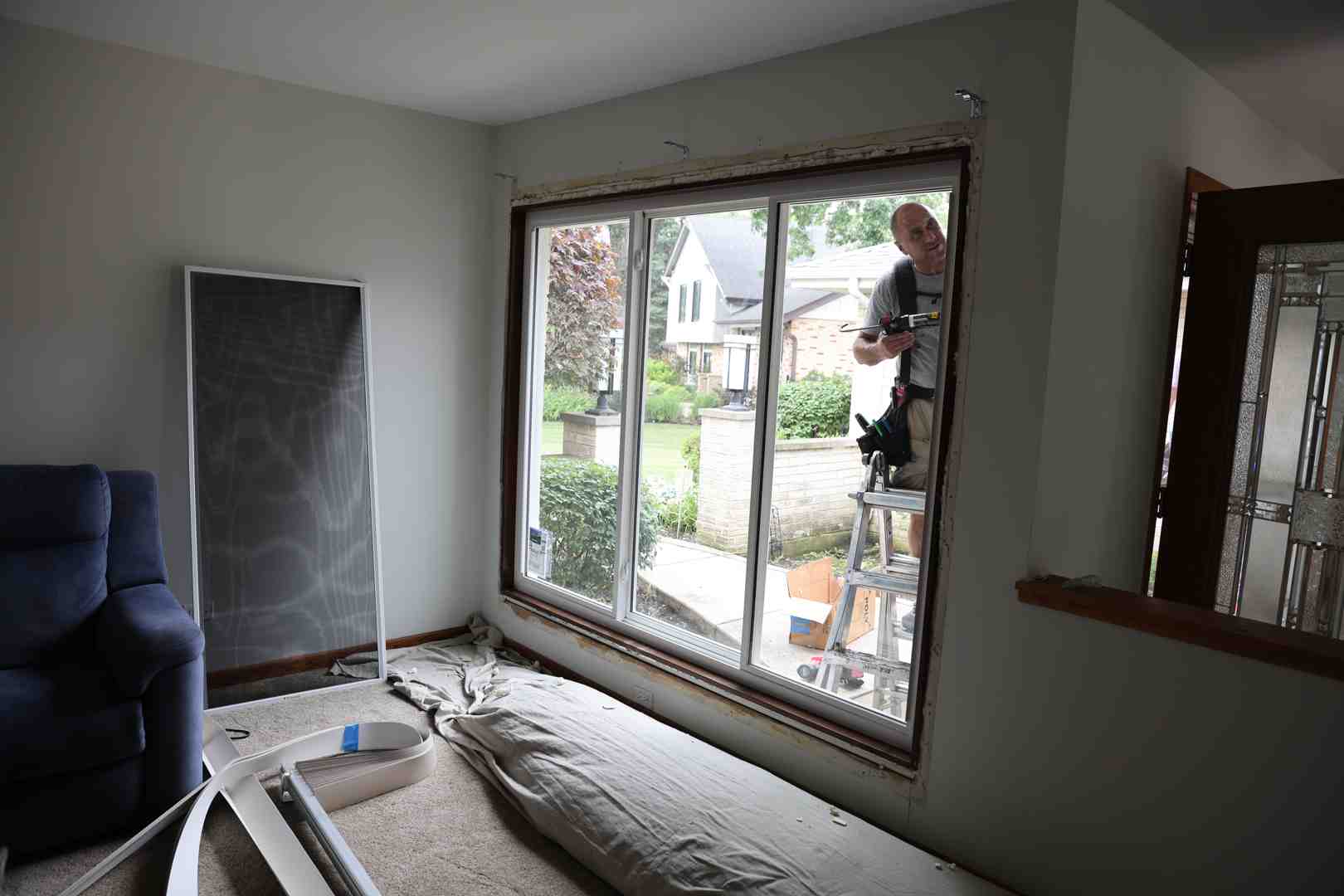
Follow these detailed steps to install your new window frame and glass safely:
1. Dry-Fit the Frame
Before applying any sealant, lift the empty window frame into the opening. Verify that there is a consistent gap of about 5mm to 10mm (1/4 to 3/8 inch) around the perimeter. This gap is crucial because it allows for the natural expansion and contraction of your home’s structural materials during seasonal temperature shifts.
2. Position the Sill and Apply Sealant
If your window uses a separate uPVC or timber sill, cut it to the exact width of the opening. Apply a generous bead of silicone sealant along the joint where the sill meets the frame, and secure it using the manufacturer-provided screws. Make sure you do not drill directly down through the bottom of the sill, as this can create a path for water leaks.
3. Secure the Frame in the Opening
Lift the frame back into the opening. Insert plastic shims (packers) at the corner points and near the screw holes to hold the frame level, square, and plumb.
Use your power drill to create fixing holes through the side jambs of the frame and into the wall structure. Drive your masonry or wood screws through the frame and shims. Tighten them snug, but do not over-tighten, as this can bow the frame and prevent the sashes from sliding or closing smoothly.
4. Place Setting Blocks and Glazing Platforms
To prevent the heavy double glazed glass unit (often called an Insulated Glass Unit, or IGU) from resting directly on the hard frame, you must install plastic setting blocks or glazing platforms. Position these blocks at the bottom corners of the frame rebate. They distribute the weight of the glass evenly and ensure that water can drain freely beneath the unit.
5. Install the Glass Panes Safely
Using suction cups and wearing heavy-duty gloves, carefully lift the double glazed glass unit and place it onto the setting blocks inside the frame. Gently press the unit back into the rebate until it sits flush. For detailed guidance on handling delicate glazing units without causing damage, you can consult the DIY Double Glazed Windows Self-Installation Guide.
6. Snap in the Glazing Beads
With the glass held firmly in position, snap the glazing beads back into their channels. Start with the shorter top and bottom beads, then install the longer side beads. Use a non-marking plastic mallet to tap the beads gently until they click securely into place.
Ensuring Proper Sealing and Insulation When You Install Double Glazed Windows
Once the frame and glass are secure, you must seal the perimeter to prevent air and water leaks.
Start by filling the gap between the window frame and the rough opening with low-expansion polyurethane foam. Be sure to use a low-expansion formula specifically rated for windows (complying with ASTM E2112-07). Standard expanding foam can exert immense pressure as it cures, which can easily bow your window frame and bind the sashes.
After the foam has cured, trim away any excess with a utility knife. Next, apply a continuous bead of high-quality exterior silicone caulk around the entire outside perimeter where the frame meets the siding, brick, or trim. Smooth the bead with a caulking tool or a gloved finger to create a clean, watertight seal. Repeat this sealing process on the interior side to prevent indoor drafts.
Common Mistakes to Avoid and DIY vs. Professional Installation
While installing a window might seem like a straightforward weekend project, it is highly sensitive to minor errors. Some of the most common mistakes we see when homeowners attempt a DIY installation include:
- Over-tightening frame screws: This bows the jambs, causing drafty gaps and making the window incredibly difficult to open or close.
- Skipping shims: Failing to use shims means the frame rests directly against the rough opening, leading to warping as the house settles.
- Inadequate sealing: Using cheap caulk or failing to apply a continuous bead will allow moisture to seep into your wall cavity, eventually causing hidden rot.
- Glass breakage: Dropping or placing uneven pressure on the double-glazed unit during installation can easily shatter the glass or break the hermetic seal, causing the window to fog up permanently.
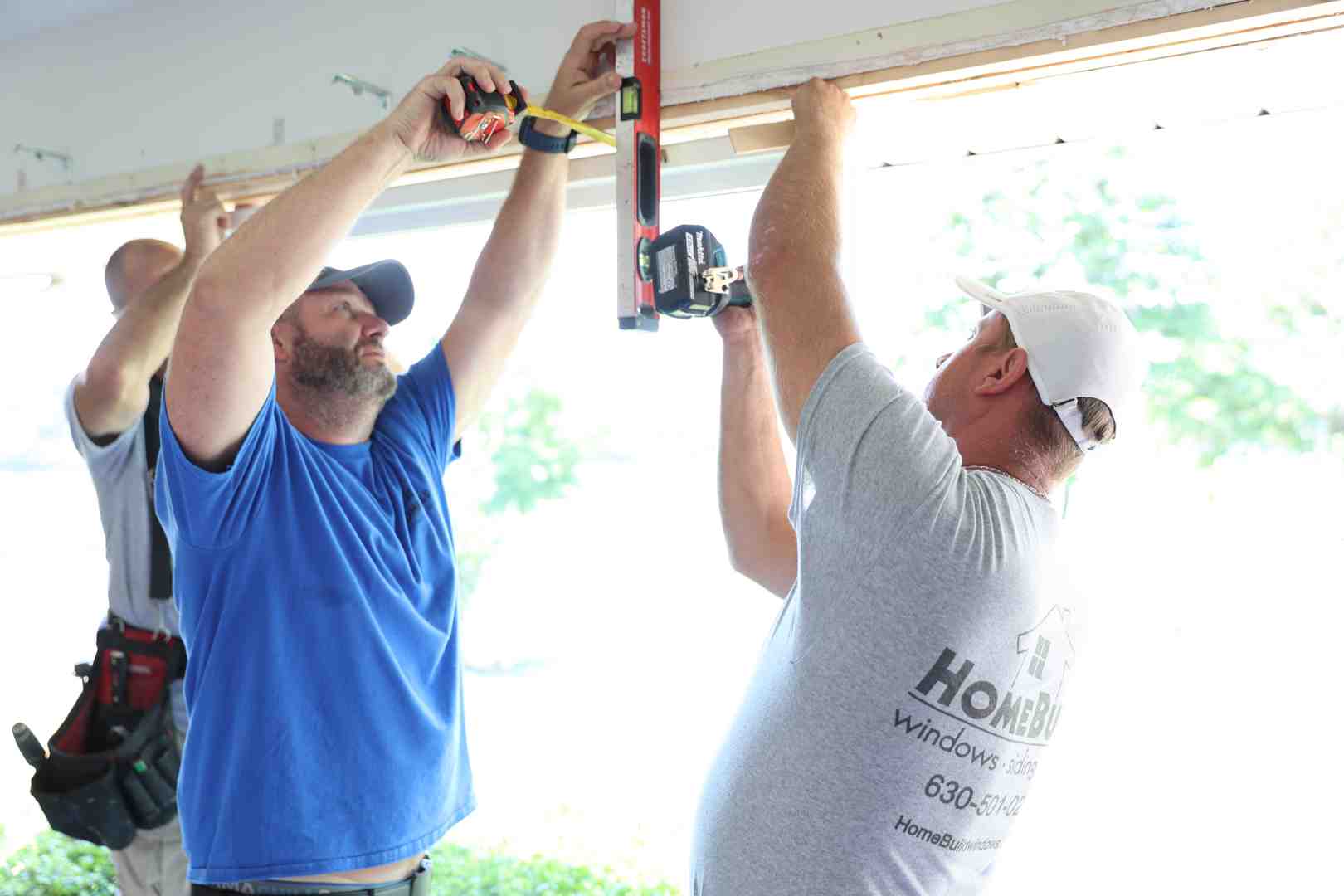
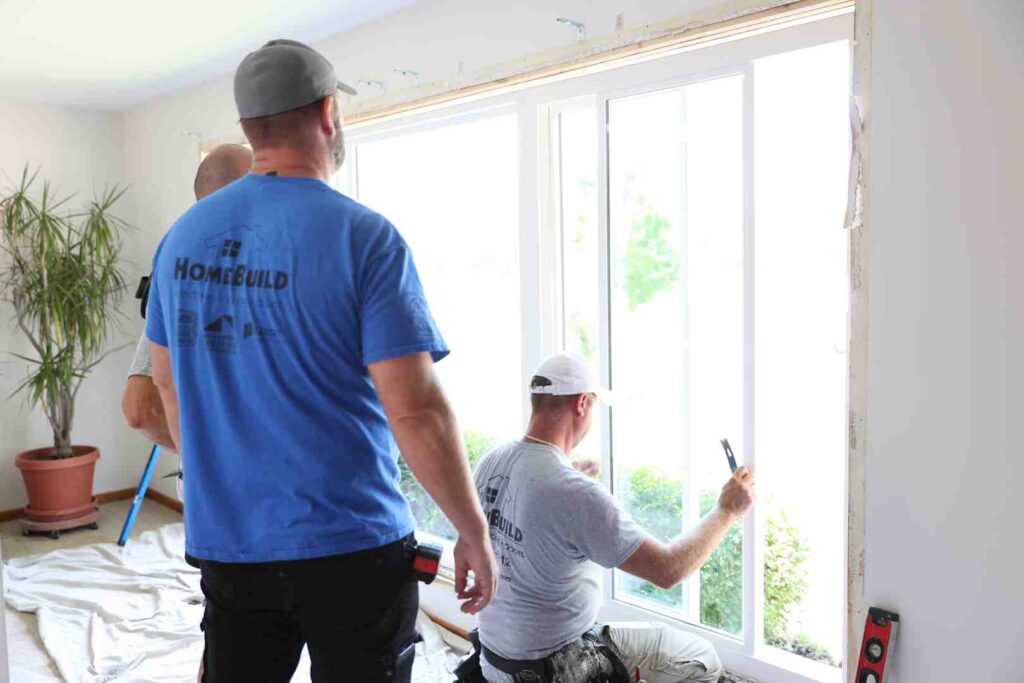
Because of these risks, many homeowners find that partnering with a professional contractor is the safest way to protect their investment. A professional installation ensures that your windows comply with local building codes, perform at their peak energy efficiency, and remain covered by manufacturer warranties. If you are trying to decide whether to tackle this project yourself or hire an expert, take a look at our Window Installation Near Me 2026 Guide for local insights.
Frequently Asked Questions About Double Glazing Installation
How long does it typically take to install double glazed windows?
For a single, ground-floor window, a professional team can typically complete the removal, installation, and sealing process in about 30 to 60 minutes. For a full-house replacement project (typically 10 to 15 windows), the entire process usually takes between 1 and 3 days, depending on the complexity of the frames and the exterior facade of your home.
Can I install double glazed windows myself or do I need professional help?
While a highly competent DIYer with the right tools and a helper can install standard-sized double glazed windows, it is a challenging task. Heavy glass units are difficult to handle, and mistakes in leveling or sealing can lead to drafty rooms, water leaks, and voided product warranties. Hiring a certified professional ensures the job is done safely, quickly, and with guaranteed performance.
What is the difference between double pane and triple pane windows?
Double pane windows feature two sheets of glass with a single insulating gas-filled space, which provides excellent thermal and sound insulation for most residential homes. Triple pane windows add a third layer of glass and a second gas-filled space, offering even higher energy efficiency and noise reduction.
Triple pane options are particularly beneficial for homes in incredibly cold climates or those located near major highways or train tracks. To compare these options in detail, read our Window Replacement Guide Double Pane vs Triple Pane Windows.
Conclusion
Installing double glazed windows is one of the smartest upgrades you can make to your Chicago home. By replacing old, drafty units with modern, energy-efficient glazing, you will enjoy a warmer home in the winter, a cooler indoor environment in the summer, and a much quieter living space year-round.
At HomeBuild Windows, Doors & Siding, we have spent over 20 years helping homeowners across Chicago and the northwest suburbs — including Crystal Lake, IL, Des Plaines, IL, and beyond — transform their homes with high-quality exterior solutions. As an Elite Platinum Pella® Certified Contractor and an Andersen Certified Contractor, we bring unmatched expertise, owner-supervised accountability, and meticulous attention to detail to every project. Our commitment to quality has earned us the Angi Super Service Award, Nextdoor Neighborhood Faves recognition, and more than 200 positive Google reviews.
Whether you are dealing with drafty windows, outdated entry doors, or worn-out siding, our fully licensed and insured team is here to help. If you are ready to upgrade your home’s comfort, durability, and curb appeal, explore our Double Hung Windows Replacement Guide or contact us today to schedule a professional consultation.