

How to Install Home Siding: A Quick Overview
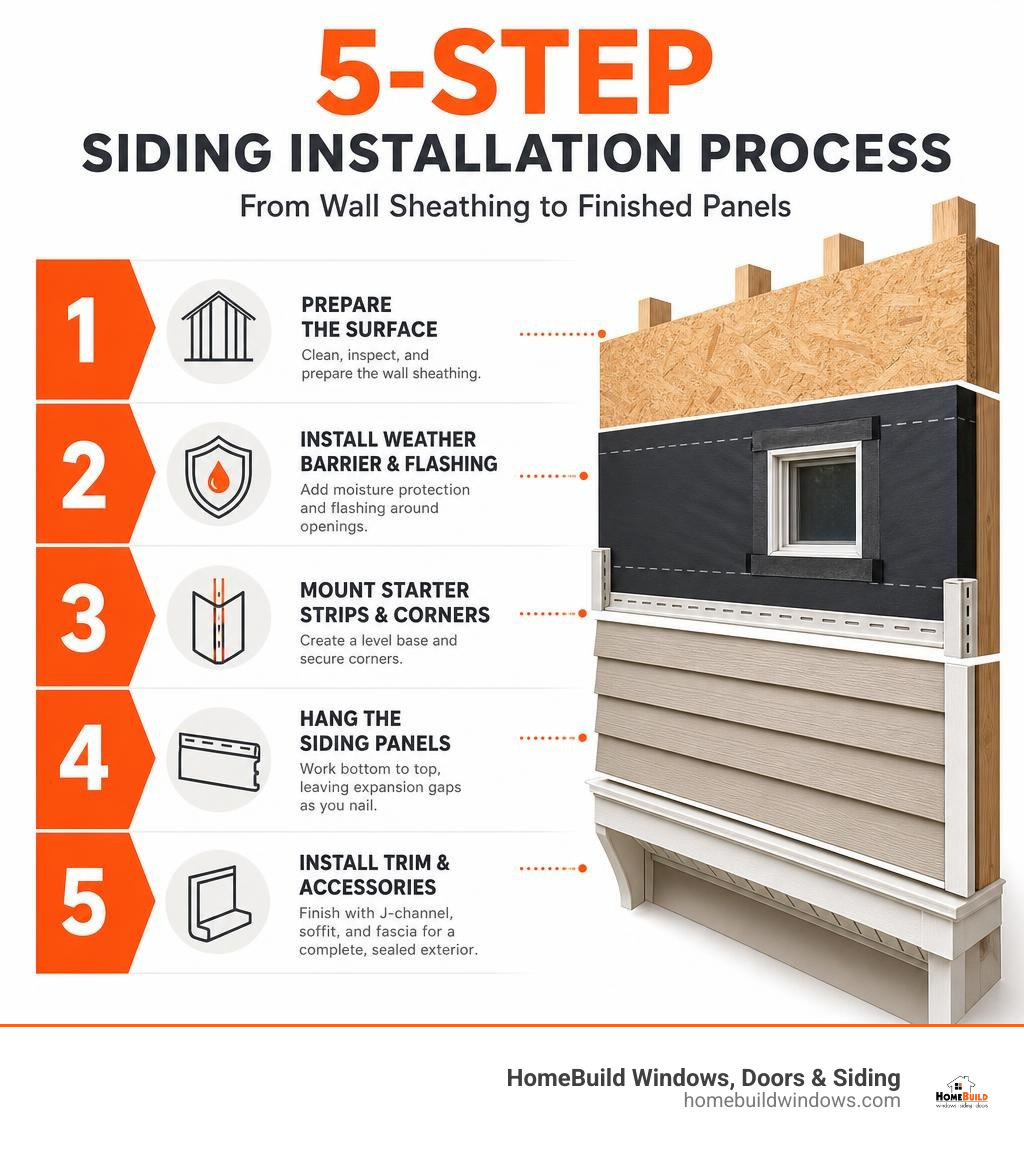
Looking to install home siding and want the short version? Here are the five core steps:
- Prepare the surface — remove old siding, inspect the wall, and clear the work area
- Install the weather-resistant barrier and flashing — protect against moisture before anything else goes up
- Mount starter strips and corner posts — establish a level foundation for every panel
- Hang the siding panels — work bottom to top, leaving expansion gaps as you nail
- Install trim and accessories — finish with J-channel, soffit, and fascia for a complete, sealed exterior
When it comes to protecting your Chicago home from the elements, few upgrades have more impact than new siding. Siding does more than improve how your home looks — it acts as the first line of defense against wind, rain, pests, and Midwest temperature swings that can push from well below freezing in January to sweltering heat in July.
Done right, a siding installation improves your home’s insulation, curb appeal, and long-term durability. Done wrong — even small gaps or improper nailing — it can lead to water infiltration, mold growth, and costly structural repairs down the line.
This guide walks you through every step of the process, from surface prep to final trim, so you know exactly what a quality installation looks like.
I’m Steve Mlynek, CEO and founder of HomeBuild Windows, Doors & Siding, and over my 20+ years leading exterior remodeling projects across Chicago and the northwest suburbs, I’ve helped hundreds of homeowners install home siding that holds up beautifully through decades of Midwest weather. Let’s get into what the process actually looks like — and what separates a lasting result from one that fails too soon.
Install home siding terms you need:
Why New Siding Matters for Chicago Homes
Living in the Chicago area means our homes face some of the most diverse and punishing weather conditions in the country. From freezing lake-effect snowstorms to humid summer heatwaves, your home’s exterior takes a beating. This is why a high-performance siding system is so critical.
When you choose to install home siding, you are not just changing the color of your house; you are adding a protective thermal envelope. Modern siding systems, especially when paired with rigid foam backerboard insulation, significantly reduce thermal bridging. This means your home retains heat better during our brutal winters and stays cooler during humid July afternoons, taking a massive load off your HVAC system. To understand how these materials work together to seal your home, you can read about How Can Vinyl Siding Make Your Home More Energy Efficient.
We work with industry-leading brands like Alside and James Hardie to provide advanced materials engineered specifically for seasonal temperature swings. For instance, Alside’s insulated vinyl siding options offer built-in continuous insulation, while James Hardie’s fiber cement is formulated specifically for the wet, freezing climates of the Midwest (HZ5® product line). These materials are designed to resist rotting, cracking, and warping, ensuring your home remains beautiful and protected for decades.

Key Considerations Before You Install Home Siding
Before picking up a hammer or ordering materials, you must understand how different siding materials behave. The two most popular choices in the northwest suburbs are vinyl and fiber cement, and each requires a completely different approach to installation.
Vinyl is a thermoplastic material, meaning it expands and contracts significantly with temperature changes. According to the industry standard Polymeric Exteriors Vinyl Siding Installation Manual, vinyl siding can expand and contract 1/2 inch (12.7mm) or more over a 12′ 6″ (3.81m) length during normal, year-round changes in temperature. If you nail vinyl siding tight to the wall, it will buckle, warp, and crack as the seasons change.
Fiber cement, on the other hand, is a heavy, rigid composite made of cement, sand, and wood fibers. It does not expand and contract like vinyl, but it requires specialized cutting tools and strict fastening schedules to prevent moisture absorption. To learn more about this incredibly durable option, take A Deep Dive Into Fiber Cement Siding Panels.
Here is a quick breakdown of how these two heavyweights compare:
| Feature | Vinyl Siding | Fiber Cement Siding |
|---|---|---|
| Material Composition | Polyvinyl Chloride (PVC) plastic | Portland cement, sand, cellulose fibers |
| Average Lifespan | 20 to 30 years | 30 to 50 years |
| Thermal Movement | High (requires loose fastening) | Minimal (fastened tight) |
| Maintenance | Annual wash with soap and water | Periodic caulking and painting (every 10-15 years) |
| Fire Resistance | Can melt when exposed to high heat/flames | Non-combustible (Class A fire rating) |
| Wind & Hail Resistance | Good (if installed correctly) | Excellent (highly impact-resistant) |
How to Install Siding in 5 Steps
Whether you are looking to tackle a small section yourself or want to understand what our professional crews are doing on your property, following a strict sequence is vital. Every manufacturer, including CertainTeed, emphasizes that even the highest-quality materials will fail if the installation rules are ignored. For detailed reference, you can consult the CertainTeed Mainstreet Vinyl Siding Installation Instructions.
Step 1: Prepare the Property to Install Home Siding
Preparation is the foundation of any successful home exterior project. If you install new siding over a damaged or uneven surface, the final result will look wavy, and underlying rot will continue to destroy your home’s framing.
- Clear the Exterior: Remove downspouts, shutters, lighting fixtures, and old caulking. Trim back tree branches and shrubs that touch the house. Cut your grass short; this makes it much easier to find dropped nails with a magnetic sweep later.
- Tear Off Old Siding: While some guidelines allow residing over old wood, we strongly recommend a complete tear-off. Removing the old material is the only way to inspect the sheathing underneath for rot, mold, or insect damage.
- Inspect and Repair the Substrate: Look closely at the wood sheathing. Replace any soft, water-damaged, or rotting boards. Ensure the entire wall surface is flat, dry, and structurally sound.
- Prepare the Interior: Siding removal involves a lot of hammering, which causes interior walls to shake. Take down hanging pictures, mirrors, and delicate items from your interior walls to prevent accidental falls.
Step 2: Install the Weather-Resistant Barrier and Flashing
Siding is designed to shed the majority of rainwater, but it is not completely watertight. Wind-driven rain can get behind the panels, which is why a high-performance moisture management system is critical.
- Apply House Wrap: Cover the entire wood sheathing with a high-quality weather-resistant barrier (WRB), such as house wrap. This material acts as a one-way valve: it keeps liquid water out while allowing internal moisture vapor to escape, preventing mold growth inside your walls. Lap the sheets horizontally, starting from the bottom and working up, overlapping seams by at least 6 inches.
- Install Window and Door Flashing: Apply self-adhering flashing tape around all windows and doors. This prevents rain leaks from finding their way into the vulnerable framing corners.
- Integrate Drip Caps: Install metal drip caps over the tops of all window and door casings to direct water away from the openings.
Step 3: Mount Starter Strips and Corner Posts
Before you can hang a single panel, you must establish a perfectly level baseline and secure the corners of the home.
- Establish a Level Line: Find the lowest corner of the house. Measure up from the bottom of the old siding to establish your starting point, and use a chalk line (or laser level) to snap a perfectly level line around the entire perimeter of the house.
- Install the Starter Strip: Align the top of your starter strip with the chalk line. Fasten it to the wall sheathing every 8 to 10 inches. Leave a 1/4-inch gap between the ends of the starter strips to allow for expansion.
- Hang Corner Posts: Install inside and outside corner posts. Hang them from the very top of the highest nail slots, placing the first nail at the top of the slot to let the post hang down. Place all subsequent fasteners in the center of the slots, spaced 8 to 12 inches apart. Leave a 1/4-inch gap at the top where the post meets the eave.
Step 4: Hang the Siding Panels
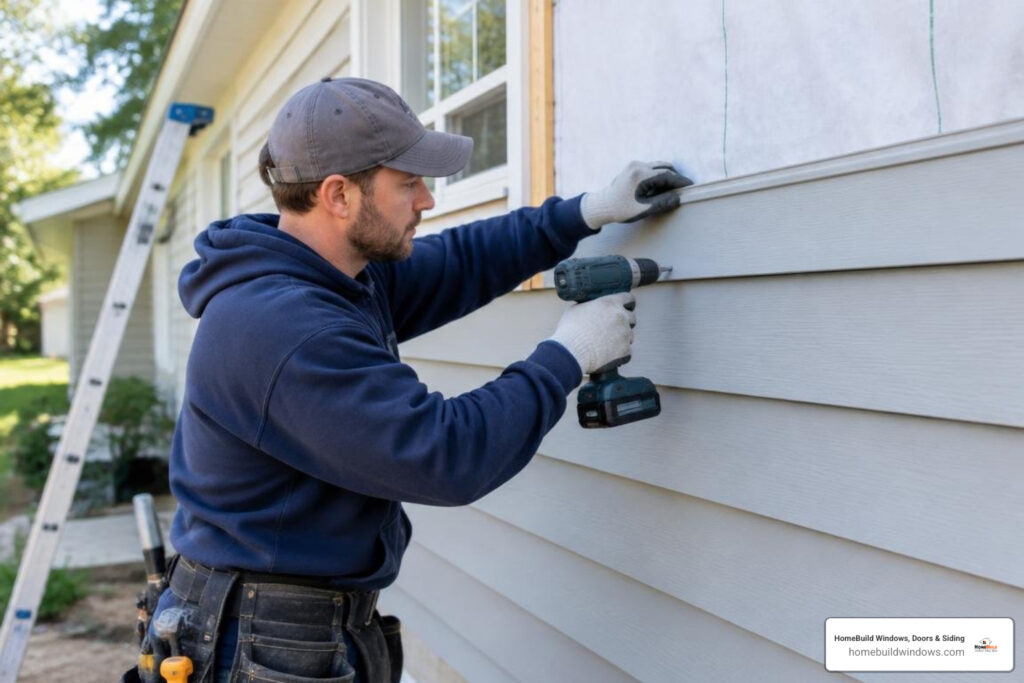
With the foundation set, you can begin installing the horizontal panels. This is where precision and proper nailing techniques are absolutely critical, especially for vinyl siding.
- Nail in the Center of Slots: Always drive nails directly into the center of the horizontal nail slots. Nailing at the end of a slot restricts the panel’s ability to slide left and right as it expands and contracts, leading to buckling.
- Do Not Nail Tight: Never drive the nail head flush against the siding. Always leave a 1/16-inch clearance (approximately the thickness of a dime or nickel) between the nail head and the siding hem. The panels must be able to move freely.
- Overlap the Joints: When joining two horizontal panels, overlap them by approximately 1 1/4 inches. Lap the panels away from high-traffic areas (for example, overlapping so the seams face away from your front door or patio) to make them less visible.
- Do Not Stretch the Panels: When locking a panel into the one below it, pull up gently until the lock fully engages, but do not force or stretch it upward. Tight stretching distorts the panel profile and can cause the locks to separate.
Step 5: Install Trim and Final Accessories
The final step involves sealing the edges, wrapping the roofline, and ensuring a clean, professional finish.
- Install J-Channel: Run J-channel around the sides and tops of all windows and doors, and along the gable ends. This channel hides the cut ends of the siding panels and channels rainwater away.
- Soffit and Fascia: Install matching vinyl or aluminum soffit panels under the roof eaves to provide proper attic ventilation. Cover the wood fascia boards with aluminum fascia trim to eliminate the need for painting.
- Install Utility Trim: Mount utility trim (also called undersill trim) at the very top of the wall, just under the eave. The top edge of your final siding course must be trimmed, punched with a snaplock tool, and snapped securely into this utility trim.
Professional vs. DIY Siding Installation
Many homeowners look at a stack of vinyl siding and think, “I can handle that over a weekend.” While a small, low-to-the-ground accent wall might be manageable for an experienced DIY enthusiast, siding an entire house is a massive undertaking.
Poorly installed siding can void manufacturer warranties, look wavy and unappealing, and fail to protect your home from moisture. If water gets behind the panels due to poor flashing or improper overlaps, you may face rot and structural damage that is incredibly difficult to repair.
Additionally, siding requires specialized tools that most homeowners do not own, such as a snaplock punch, a nail hole punch, a zip tool for panel replacement, and heavy-duty scaffolding to reach high peaks safely.
When to Hire Professionals to Install Home Siding
You should strongly consider hiring a professional, certified contractor if your project involves:
- Multiple Stories: Working on extension ladders or scaffolding high off the ground carries significant safety risks.
- Complex Architecture: Homes with multiple gables, dormers, bay windows, or unique rooflines require intricate flashing and custom trim work.
- Structural Repairs: If your old siding is soft or sagging, there is a high probability of underlying structural rot that requires professional carpentry work before new siding can be installed.
- Warranty Protection: Leading manufacturers like Alside and James Hardie only honor their long-term product warranties if the material is installed by certified professionals.
- Time Constraints: A professional crew can typically complete a full tear-off and installation in 7 to 14 days, whereas a DIY project can easily drag on for months, leaving your home sheathing exposed to the elements.
If you are looking for a reliable team to handle the job, we highly recommend checking out our comprehensive resources on choosing the best siding contractor near you and downloading our Ultimate Guide to Siding Replacement to help guide your decision.
Frequently Asked Questions About Siding Installation
How long does a typical siding installation take?
For an average-sized home in the Chicago suburbs, a professional tear-off and siding installation project typically takes between 7 to 14 days.
Several factors can extend this timeline, including weather delays (such as heavy rain or high winds), the complexity of your home’s architecture, and the discovery of unexpected rot or insect damage in the wood sheathing once the old siding is removed.
What is the difference between vinyl and fiber cement siding?
The primary differences lie in durability, maintenance, and material composition. Vinyl siding is incredibly low-maintenance, never needs painting, and is lightweight. It has a typical lifespan of 20 to 30 years.
Fiber cement siding (such as James Hardie) is much thicker, highly impact-resistant, and completely non-combustible. It can last 30 to 50 years but does require repainting and recaulking every 10 to 15 years. For a deeper look into the differences, you can read our comparison on breaking down fiber cement.
How do I know if my home needs new siding?
Look for clear signs of wear and tear on your current exterior. These include wrapping, cracking, or severe fading of your existing panels. If you have wood siding, look for soft spots, peeling paint, or rot.
Inside your home, look for peeling wallpaper, damp drywall, or mold growth, which often indicates that water is bypassing your exterior siding. For a complete checklist of signs, check out our guide on When to Consider Siding Installation Replacement.
Conclusion
Installing new siding is one of the most rewarding home improvement projects you can invest in. It instantly transforms your home’s curb appeal, boosts energy efficiency, and provides long-lasting protection against our unpredictable Midwest weather. However, the performance of even the best materials relies entirely on the quality of the installation.
At HomeBuild Windows, Doors & Siding, we bring over 20 years of local experience to every project we touch. As a trusted, locally owned contractor serving Chicago and the surrounding northwest suburbs, we pride ourselves on delivering reliable exterior remodeling solutions. Every single project we undertake is owner-supervised, ensuring our high standards of craftsmanship and accountability are maintained from the first tear-off to the final inspection.
We are proud of our industry credibility and certifications, including being an Elite Platinum Pella® Certified Contractor, an Andersen Certified Contractor, and receiving the Angi Super Service Award and Nextdoor Neighborhood Faves recognition. Backed by over 200 positive Google reviews, our fully licensed and insured team works with top-tier brands like Alside, Marvin, and James Hardie to make your dream home a reality.
Ready to upgrade your home’s exterior with beautiful, durable siding? Contact us today to schedule your consultation. Explore our specialized Siding Installation Chicago services to get started!