




Why a New Front Door Is a Smart Home Upgrade
New exterior door installation can transform your home in powerful ways. Here’s what you need to know:
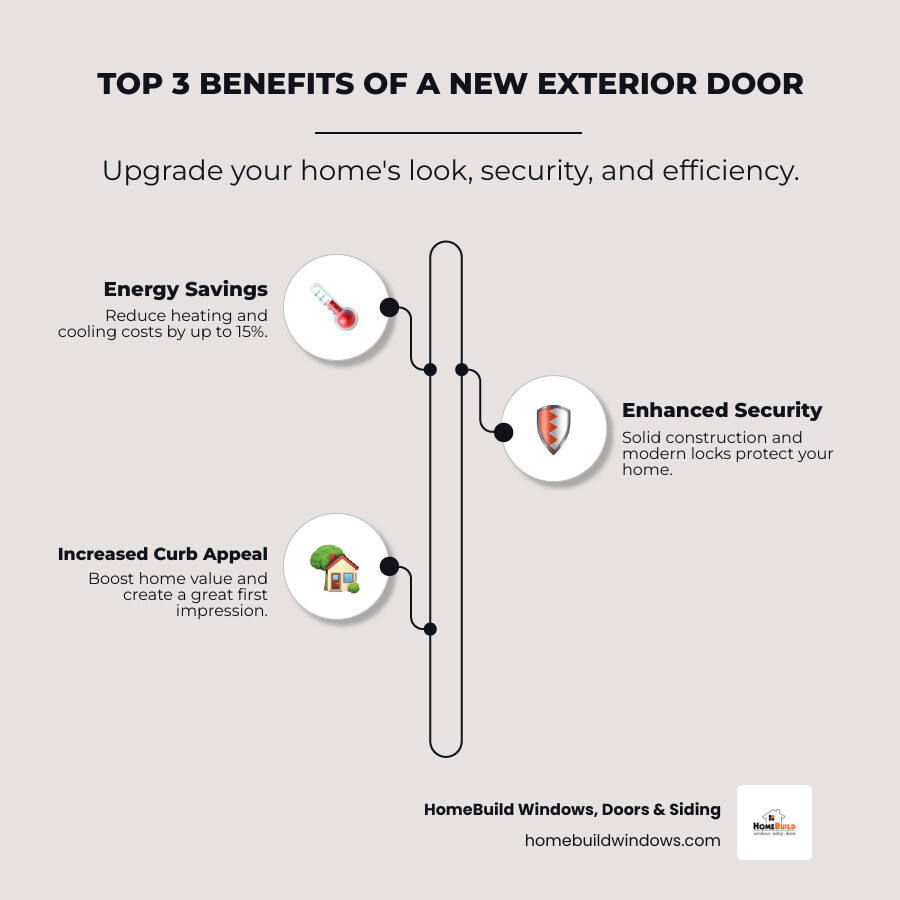
Key Benefits of Installing a New Exterior Door:
- Energy Efficiency – Reduces drafts and lowers heating and cooling costs
- Improved Security – Modern locks and solid construction protect your family
- Increased Curb Appeal – A new door can boost your home’s value and appearance
- Better Insulation – Properly sealed doors keep Chicago’s harsh weather outside
What the Installation Involves:
- Removing the old door and frame
- Preparing and measuring the rough opening
- Installing a weatherproof sill pan
- Positioning and securing the new door unit
- Shimming to ensure it’s perfectly plumb and square
- Weatherproofing with caulk and insulation
- Installing hardware and trim
Typical Timeline: Most installations take 4-8 hours for a DIY project, or one day for professional installation.
If you’ve noticed cold drafts around your current door, difficulty opening or closing it, or simply want to update your home’s look, replacing your exterior door is one of the most impactful improvements you can make. According to industry research, a poorly installed door will be less energy-efficient and its mechanisms will eventually break down, which is why proper installation technique matters just as much as choosing a quality door.
The reality is straightforward: Installing a new exterior door is an intermediate-level DIY project that requires precision, patience, and the right tools. While handy homeowners can tackle this project themselves with careful planning, it’s also a job where professional installation ensures long-term performance, especially in climates with extreme weather like Chicago’s.
I’m Steve Mlynek, founder of HomeBuild Windows, Doors & Siding, and I’ve overseen thousands of new exterior door installations across the Chicago area over the past 20 years. Through my work with leading manufacturers like Pella and Andersen, I’ve learned that the difference between a door that performs flawlessly for decades and one that leaks air and water often comes down to installation details that take experience to master.
Preparation: Gathering Your Tools and Choosing the Right Door
Before you start, proper preparation is key to a successful new exterior door installation. This means choosing the right door and gathering all your supplies first to save headaches later.
Your first decision is between a pre-hung door and a slab door. For most DIY projects, a pre-hung door—a complete unit with the door already mounted in its frame—is the smarter investment. It saves time and frustration by ensuring everything is pre-aligned, making it ideal if your existing frame is damaged. A slab door is just the door panel. It’s cheaper initially but requires significant carpentry skills to mortise hinges and drill for hardware. It’s only a viable option if your existing frame is in perfect condition: plumb, square, and free of rot.
Next, choose your door material, which affects durability and maintenance—a key factor in Chicago’s climate. For comprehensive information, check out our guide on entry doors.
- Fiberglass doors are the best all-around choice for Chicago weather. They resist dents, warping, and cracking with minimal maintenance and offer excellent insulation.
- Wood doors provide timeless beauty but require regular painting or staining to prevent warping and rot, especially if they lack a protective overhang.
- Steel doors are a budget-friendly option offering top-tier security and energy efficiency. While durable, they can dent and will rust if the finish is scratched. Read more about the advantages and disadvantages of steel replacement doors.
Once you’ve chosen your door, you must measure the rough opening accurately. For new construction, measure the width, height, and depth of the opening between the studs at three points, using the smallest measurement. For a replacement, remove the interior and exterior moldings first. Then measure the interior width, height, and depth, again using the smallest measurements. Your rough opening should be about 1/2 inch wider and 3/4 inch taller than the new door’s jamb to allow room for shimming and insulation.
Key Considerations for Your New Exterior Door Installation
When comparing pre-hung versus slab doors, pre-hung doors have a higher upfront price but lower labor costs. Slab doors cost less initially but require more labor and specialized tools for mortising hinges and boring hardware holes.
Understanding door handing and swing is also critical. Stand outside facing the door. If the hinges are on the left and it swings in, it’s a “left-hand in-swing.” Get this wrong, and your door may swing into a wall. Measure twice, order once!
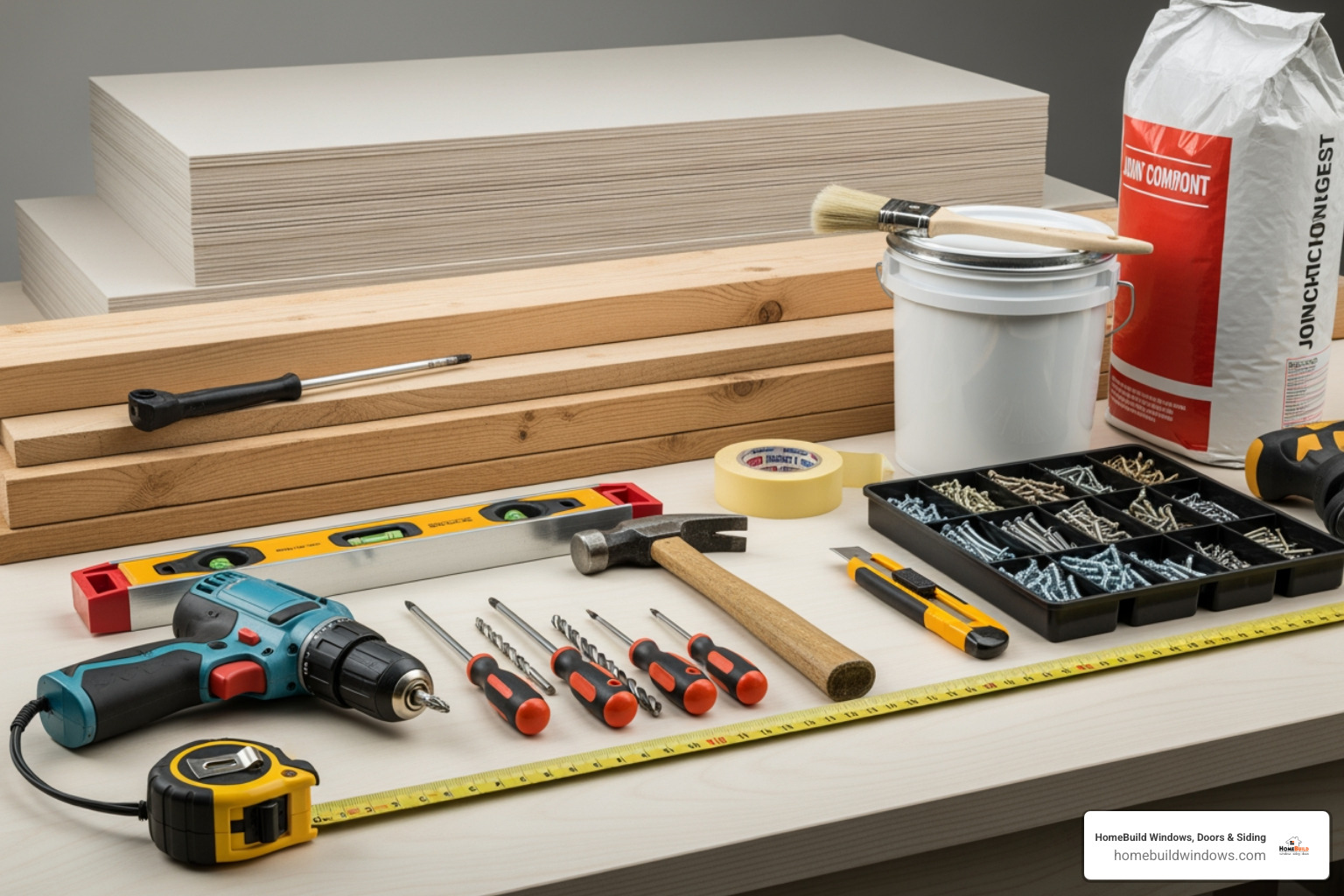
Here’s what you’ll need for your new exterior door installation:
- Essential Tools: 6-foot level, claw hammer, power drill with bits, screwdrivers, caulk gun, framing square, tape measure, pry bar, utility knife, safety glasses, reciprocating saw, chisel, and a paintbrush.
- Necessary Materials: New door unit, wood shims, high-quality caulk, #8 x 3″ and #10 x 2.5″ exterior grade screws, fiberglass insulation or low-expansion spray foam, flashing tape or sill pan kit, exterior putty, finish nails, construction adhesive, new door hardware, trim/casing, and paint or stain.
Step 1: Removing the Old Door and Prepping the Rough Opening
This first step is where your new exterior door installation begins—clearing out the old to create a solid foundation for the new.
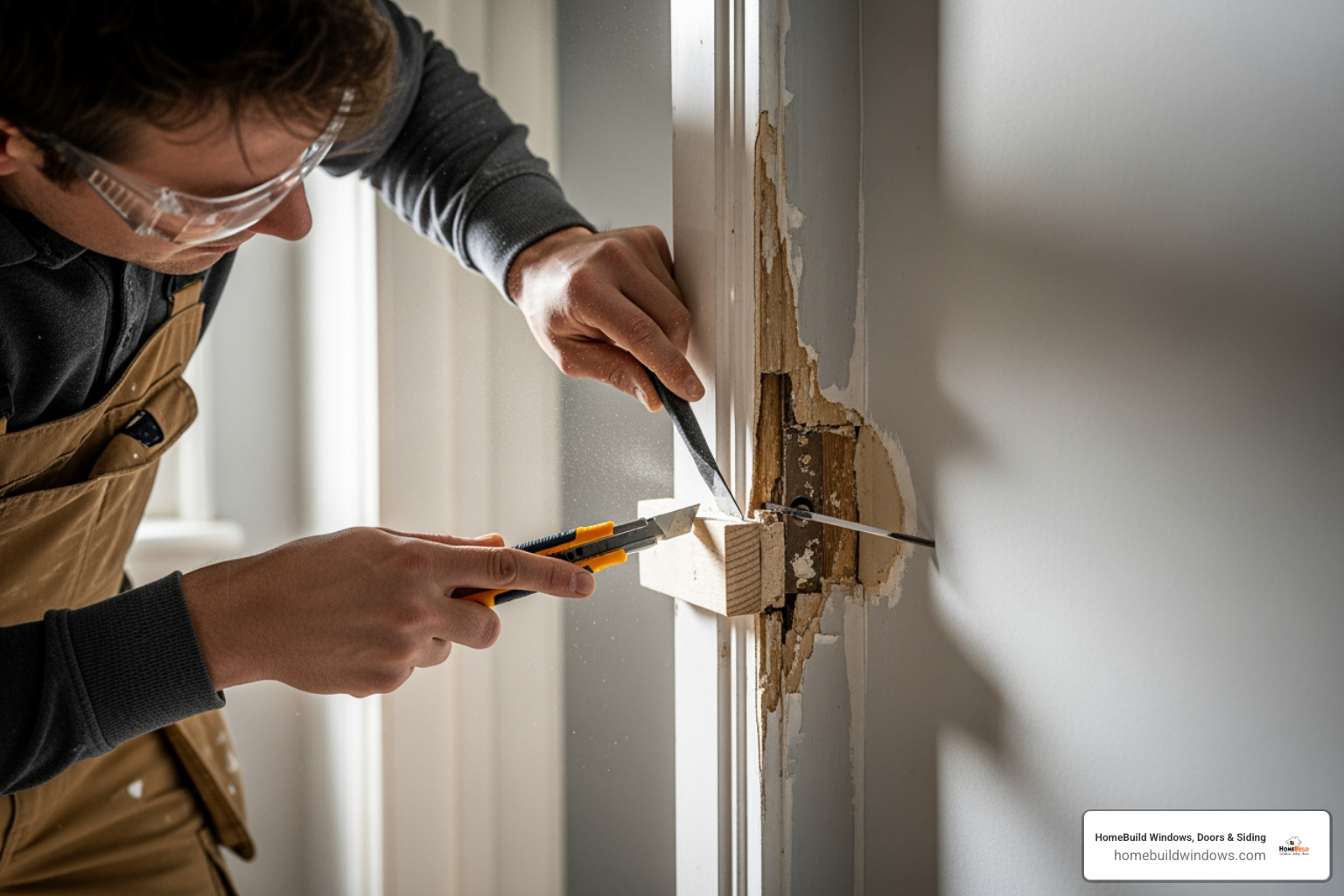
First, remove the trim. Score any paint or caulk lines with a utility knife to prevent wall damage, then gently pry the trim loose. Next, detach the old door. Have a helper assist you, as doors are heavy. For a slab door, unscrew the hinges from the jamb; for a pre-hung unit, you’ll remove the entire frame. Finally, remove the old frame and sill, using a reciprocating saw to cut through stubborn nails if needed. Be especially cautious under the threshold, a common area for moisture damage in Chicago homes.
Once cleared, inspecting the rough opening is critical. Look carefully for any signs of rot, water damage, or structural issues in the framing. If you find any damage, it must be repaired before you proceed. Installing a new door over rotted framing will lead to failure.
Next, verify the opening is straight and square. Use a 6-foot level to check that both sides are plumb (vertical) and the sill is level (horizontal). Use a framing square to check the corners. An out-of-plumb or out-of-level opening is a primary cause of air and water leaks.
Now for a non-negotiable step: the sill pan. This component acts as an insurance policy, catching any water that gets past the weatherstripping and directing it safely outside, away from your subfloor. It’s essential for protecting your home from wind-driven rain and ice dams.
To install the sill pan, apply generous beads of high-quality caulk across the subfloor where the pan will sit. Press the sill pan firmly into the caulk, ensuring the dam faces inward and the slope faces out. Finally, integrate the pan with the wall’s weather barrier by applying flexible flashing tape along the edges where the pan meets the wall framing. This creates a continuous, watertight seal that separates a professional-quality installation from one that will cause problems later.
The New Exterior Door Installation Process: A Step-by-Step Guide
With the opening prepped, it’s time to install your new exterior door. This is where precision is paramount.
First, dry-fit the new door unit by placing it in the opening without caulk or fasteners to check the fit. Once confirmed, remove the unit and apply three 3/8-inch beads of high-quality caulk to the sill pan where the threshold will sit. Also, run a 1/2-inch bead along the back of the exterior brickmould to seal it against the sheathing.
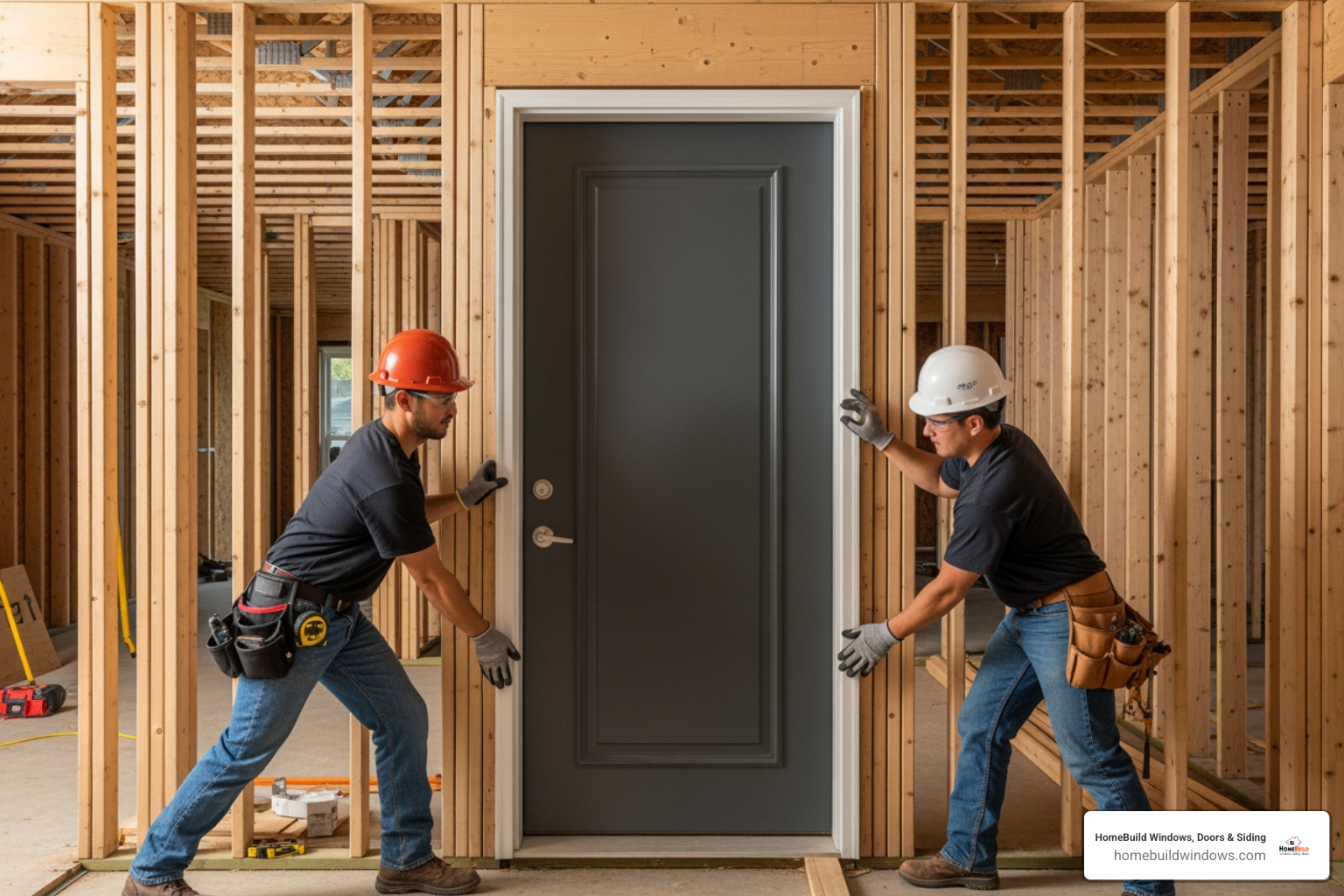
With a helper, position the new door by inserting the unit bottom-first into the opening and tipping it upright. This prevents the caulk from squishing out. Center the door, leaving a consistent gap for shimming.
Next, shim the hinge-side jamb. From inside, place pairs of wood shims behind each hinge location. Use a 6-foot level to adjust the shims until the jamb is perfectly plumb. Secure the hinge side by driving 3-inch exterior grade screws through the jamb and shims into the wall studs. For extra security, replace one short screw on each hinge with a longer 2.5-inch screw that reaches the framing stud to prevent sagging. Our guide on exterior door installation 101 covers these techniques in more detail.
Ensuring a Plumb, Square, and Perfect Fit
Getting your door plumb and square is essential for it to function correctly for decades.
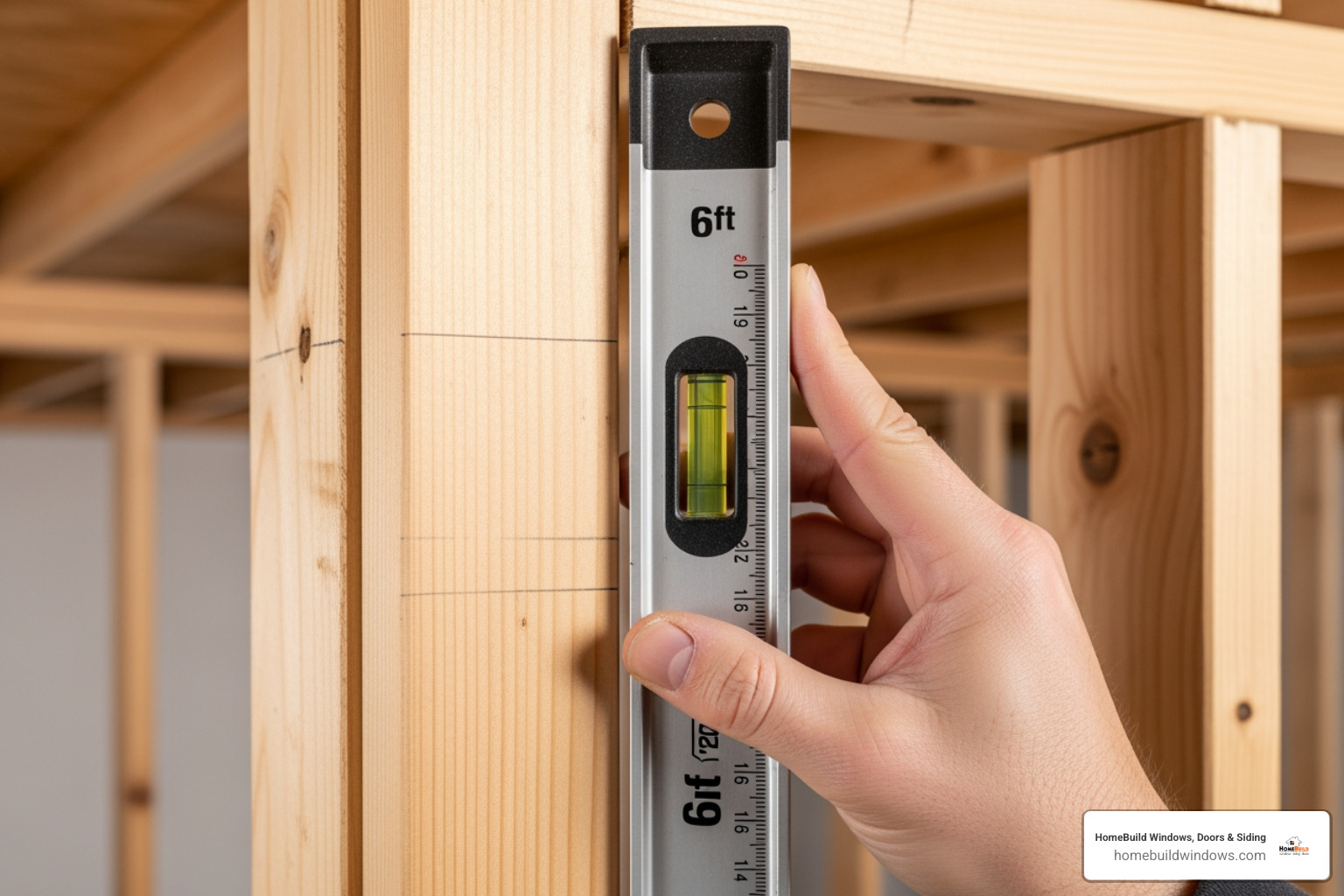
With the hinge side secured, shim the lock-side jamb. Place shim pairs behind the strike plate location and at several other points. As you adjust, aim for a consistent 1/8-inch gap between the door and the frame on all sides. This ensures a proper seal. You can check the seal with the “dollar bill test”: you should feel a slight drag when pulling a dollar bill from between the closed door and the weatherstripping.
Once the margins are even and the lock side is plumb, secure it with 3-inch screws driven through the jamb and shims into the studs. Now, test the door’s operation. It should open and close smoothly without rubbing or binding. If you feel resistance, adjust the shims until it moves perfectly.
Finally, adjust the threshold. Most modern doors have an adjustable sill cap. Turn the screws to raise or lower it until the rubber sweep at the bottom of the door makes firm, consistent contact. This creates your final seal against drafts and water.
For a visual demonstration of these steps, we recommend you watch a video guide on door installation to see these techniques in action.
Step 2: Weatherproofing, Finishing, and Professional Considerations
With the structural installation complete, the final phase is all about sealing, protecting, and beautifying your new entryway.
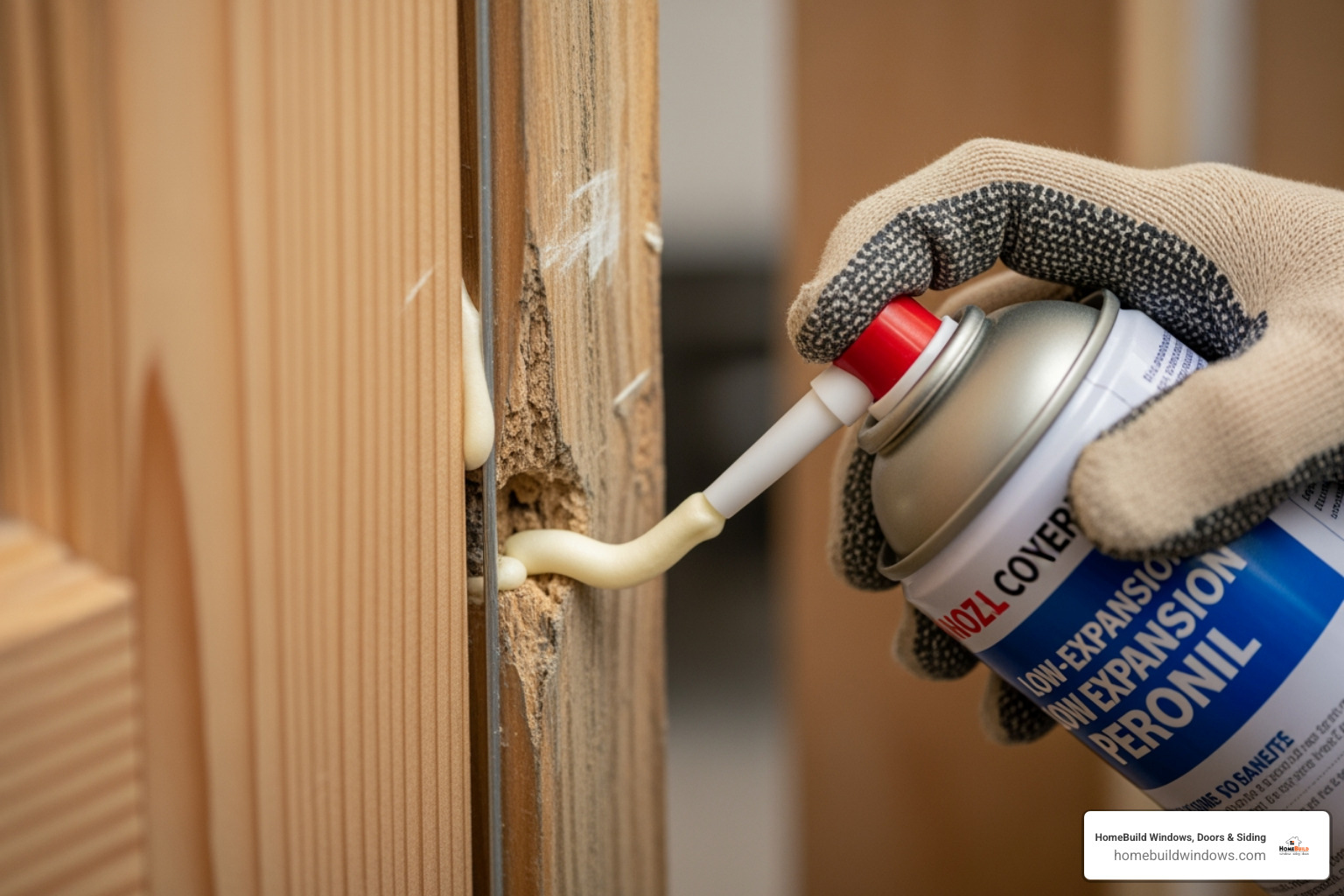
Insulate the gaps between the door frame and the rough opening using either gently packed fiberglass insulation or a low-expansion spray foam specifically designed for windows and doors. Warning: Regular expanding foam can exert enough pressure to bow the door frame, ruining your work. Next, caulk the exterior by applying a continuous bead of high-quality, paintable caulk where the exterior trim meets the siding to create a weatherproof seal against Chicago’s weather.
Common installation mistakes include failing to check for plumb and square, improper sealing (like skipping the sill pan), using high-expansion foam, and incorrect shimming. These errors lead to poor operation, air drafts, and water damage. This raises the question of DIY vs. professional installation. A DIY install is feasible if you are handy, have the right tools, and the opening is in good shape. However, hiring a professional is the smarter choice if you find rotted framing, the opening is out of square, or the installation is complex (e.g., double doors). Professional installation ensures the job is done right and is often required to maintain the door’s warranty.
Regarding typical costs, a DIY project can range from $300 to $1,000 for materials. In the Chicago area, professional new exterior door installation typically costs $2,900 to $4,100, including the door, labor, and permits. For more pricing details, see our guide on entry door replacement cost.
Finalizing Your New Exterior Door Installation
With the door secured and weatherproofed, a few finishing touches remain.
Install the hardware by following the manufacturer’s instructions for the lockset and deadbolt. Ensure the strike plates are perfectly aligned and chiseled to sit flush with the jamb. Next, re-install the trim using finish nails. Set the nail heads slightly below the surface and fill the holes with wood putty for a seamless look.
The final step is painting or staining. This is not just for aesthetics; most manufacturers require the door to be finished within a set time (often 60 days) to maintain the warranty. Use a high-quality exterior-grade product appropriate for your door’s material.
Finally, perform a final cleanup and admire your work. The smooth operation of your new door is the result of a careful, methodical installation. For more ideas, explore our article on changing an exterior door.
Frequently Asked Questions about Exterior Door Installation
Here are answers to the most common inquiries we receive about new exterior door installation.
How long does a new exterior door installation take?
While the entire process from measurement to scheduling can take several weeks, the actual installation is fast. A DIY project typically takes 4 to 8 hours, assuming no major complications. Our professional installers at HomeBuild usually complete the entire job in a single day, minimizing disruption to your home.
Can I replace just the door without the frame?
Yes, you can replace just the door slab, but only if the existing frame is perfectly plumb, square, and completely free of rot or damage. This process requires carpentry skills to mortise for hinges and hardware to ensure proper alignment. If the frame has any issues, a pre-hung unit (which includes the frame) is the correct solution to prevent future problems like leaks, drafts, and poor operation. For more guidance, check out our article on installing a prehung exterior door.
When should I hire a professional to install my exterior door?
While DIY can be rewarding, hiring a professional is the best choice in several situations:
- Structural Damage: If you find rot or other structural issues in the rough opening, an expert is needed for safe repairs.
- Out-of-Square Opening: Correcting a severely misaligned opening requires experience and specialized tools.
- Lack of Tools or Time: A proper installation requires specific tools and a dedicated 4-8 hours.
- Complex Installations: Double doors, or doors with sidelights or transoms, require precision that professionals can provide.
- Warranty Concerns: Many door manufacturers require professional installation to keep their warranties valid.
For peace of mind in the Chicago area, our team at HomeBuild Windows, Doors & Siding provides expert, warrantied installation. If you’re searching for who installs exterior doors near me in the Chicago suburbs, we’re here to help.
Conclusion: Enjoy Your New, Secure, and Beautiful Entryway
Congratulations on completing or learning about a new exterior door installation—a transformative upgrade for your home. You’ve invested in improved energy efficiency, improved security, and a significant boost in curb appeal. The key to realizing these benefits for years to come is proper installation. Every step, from prepping the opening and installing a sill pan to shimming for a perfect fit, is crucial for a door that operates smoothly and protects your home from the elements.
While a DIY installation can be a rewarding project, professional help is often the smartest choice, especially in the face of structural issues, out-of-square openings, or for the peace of mind that comes with a warranty. For homeowners in the Chicago area, HomeBuild Windows, Doors & Siding provides professional, warrantied services backed by decades of experience. We ensure your new door not only looks beautiful but performs flawlessly through Chicago’s harsh weather.
Ready to transform your home’s entryway with confidence? Schedule your professional door installation in Chicago with us today, and let’s create an entrance you’ll be proud of.


