
Why Understanding Impact Windows Financing Matters for Your Home
Impact windows financing offers multiple paths to protect your Chicago-area home without draining your savings account. Whether you’re facing high energy bills, worried about property security, or simply want a more comfortable home, financing can make this essential upgrade achievable right now.
Quick Answer: Your Main Financing Options
- Home Equity Loans/HELOCs – Lower interest rates using your home’s equity as collateral
- Personal Loans – Unsecured loans from banks or credit unions, typically 5-15 year terms
- Contractor Financing – Direct payment plans, often with promotional 0% APR periods
- Government Programs – Federal tax credits (up to 30% back), state grants, local rebates
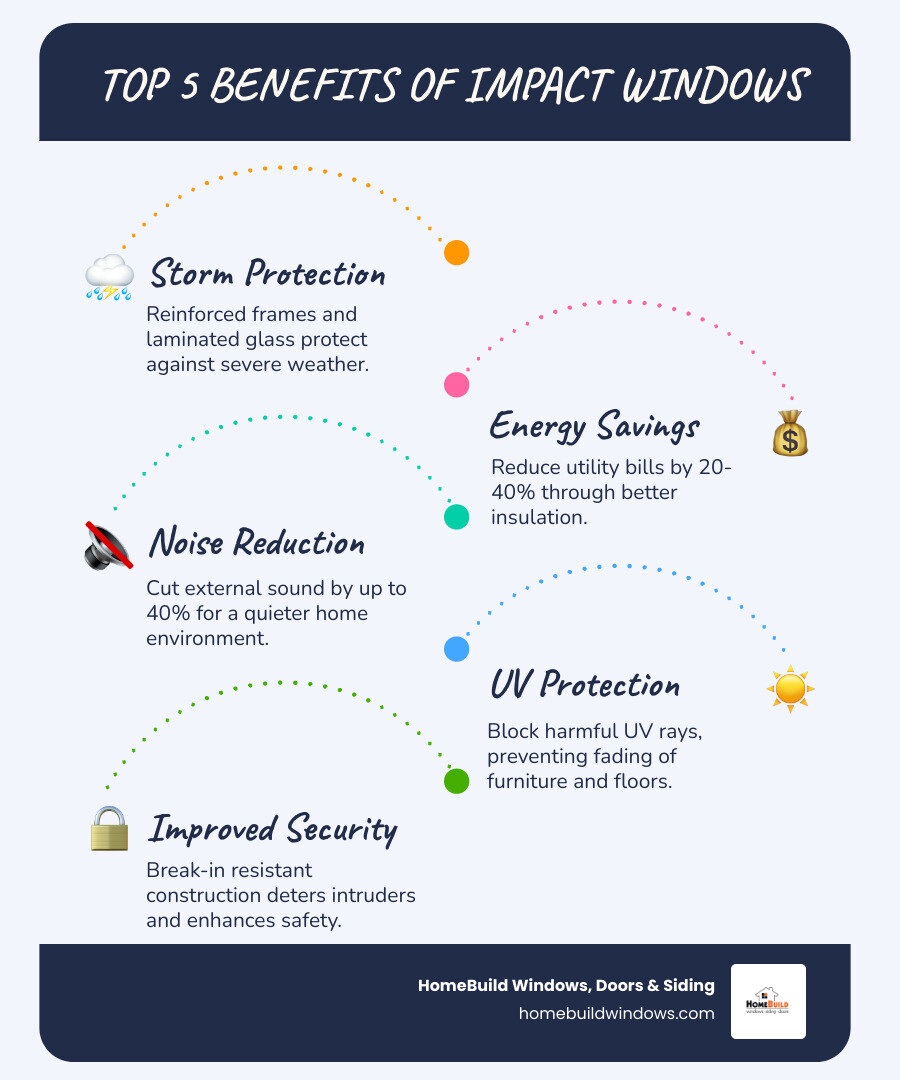
Impact windows aren’t just about storm protection—they’re about protecting your wallet too. Research shows these specialized windows can reduce your energy bills by 20-40%, cut external noise by 40%, and potentially save you 25% on homeowners insurance premiums. For Chicago homeowners dealing with harsh winters and scorching summers, that’s real money back in your pocket every single month.
The catch? Quality impact windows typically cost $100 to $2,000+ per window, making a whole-home upgrade a significant investment. That’s where smart financing comes in—it transforms a $10,000-$30,000 project into manageable monthly payments while you start enjoying the benefits immediately.
I’m Steve Mlynek of HomeBuild Windows. With over 20 years of experience helping Chicago-area homeowners with window replacements, I’ve seen how the right impact windows financing strategy turns an “impossible” upgrade into an affordable reality that pays dividends for years.
Why Impact Windows Are a Smart Home Investment
When you hear “impact windows,” you probably think of hurricane protection. While that’s part of the story, it’s just the beginning. Here in Chicago, where we face harsh winters and powerful summer storms, impact windows offer year-round protection that saves you money.
The Value of Impact Windows Beyond Storm Protection
Impact windows weren’t originally designed with Chicago in mind—they were created for hurricane-prone regions. But that same engineering that stops flying debris during a Category 4 hurricane also stops Chicago’s brutal weather from wreaking havoc on your energy bills and comfort.
These windows feature heavy-duty frames and laminated glass—imagine a layer of tough polyvinyl butyral sandwiched between two panes of tempered glass. The result? Windows that are up to four times stronger than regular glass. When something hits them, they don’t shatter into dangerous shards. Instead, they spiderweb and hold together, maintaining your home’s protective envelope even under serious stress.
Energy Efficiency Benefits
Here’s where impact windows really earn their keep in our climate. The multiple layers of glass and robust construction create an exceptional thermal barrier. In January when the wind chill hits -20°F, that barrier keeps your expensive heated air inside. Come July, it works just as hard keeping cool air in and hot air out.
The numbers tell the story: homeowners typically see a 20-40% reduction in their monthly energy bills after installing impact windows. Over a Chicago winter and summer, that’s real money back in your pocket—money that helps offset your impact windows financing payments. For more strategies to cut your utility costs, take a look at our guide on Energy Efficient Windows Chicago.
Noise Reduction Statistics
If you live near a busy street or construction, you know the value of peace and quiet. The dense, laminated glass in impact windows is an incredible sound dampener, in addition to blocking wind and weather.
We’re talking about reducing external noise by up to 40%. Imagine concentrating during a work-from-home call without hearing every passing truck. Or enjoying a quiet dinner without raising your voice over traffic. Or—my favorite—sleeping through the night when a car alarm goes off at 2 AM.
Improved Home Security
Here’s a benefit that often surprises people: the same strength that protects your home from severe weather makes it significantly more secure against break-ins. Impact windows are incredibly difficult to breach. Would-be intruders typically look for easy targets, and a home with impact windows isn’t one.
For families, this translates to genuine peace of mind. You’re not just protecting your possessions—you’re protecting the people you love most.
Insurance Premium Savings
While this benefit is more common in coastal areas, many Chicago-area homeowners don’t realize their insurance company might reward them for installing impact windows. The logic is straightforward: these windows reduce the risk of storm damage, breakage, and theft, which means fewer potential claims.
Every insurance company handles this differently, so I always recommend calling your provider to ask about discounts. But our research shows that homeowners can save an average of 25% on their insurance premiums after installing impact windows and doors. That’s another chunk of savings that makes your financing more affordable.
Increased Property Value and Long-Term Financial Returns
When you invest in impact windows, you’re making a strategic improvement to your home’s value. These windows boost curb appeal, dramatically improve energy efficiency, and add legitimate safety features. When it’s time to sell, these are major selling points, not minor upgrades.
Real estate agents will tell you that homes with quality, energy-efficient windows command higher prices and sell faster. Combine that with your ongoing energy savings, potential insurance discounts, and the comfort of a quieter, more secure home, and you see how impact windows financing isn’t an expense—it’s an investment that pays dividends for years.
Decoding Your Impact Windows Financing Options
Let’s be honest—the cost of replacing all your home’s windows with impact-resistant ones can be intimidating. The good news is you don’t need tens of thousands in the bank to make it happen. Impact windows financing transforms that large price tag into manageable payments, letting you upgrade your home without wiping out your savings.

The big question is whether to pay upfront or finance. Paying cash avoids interest but can deplete savings or postpone the project. Financing flips this equation. You can start your project now, enjoy lower energy bills and better security immediately, and spread payments over time. For most Chicago-area families we work with, this makes the difference between “someday” and “next month.”
Before you apply for financing, you’ll want to gather a few key documents. Most lenders will ask for proof of income (like recent pay stubs or tax returns), a look at your credit history, home equity details if you’re using your home as collateral, and a detailed project quote from your contractor—which we’re always happy to provide at HomeBuild Windows.
Home Equity Loans and HELOCs
If you’ve built up equity in your home, that equity can work for you. Using your home’s value to finance your impact windows often gives you access to the lowest interest rates available.
You have two main paths. A Home Equity Loan works like a traditional second mortgage. You borrow a lump sum, get a fixed interest rate, and make the same payment every month. It’s predictable and straightforward.
A Home Equity Line of Credit (HELOC) is a revolving line of credit backed by your home. You’re approved for a maximum amount and can draw funds as needed during a “draw period” (typically 10 years), often making interest-only payments. Afterward, you enter a repayment period for principal and interest. The catch is that HELOCs usually have variable interest rates, so payments can change.
The real advantage of both options is the lower interest rates compared to unsecured loans. Plus, the interest you pay might be tax-deductible, though you’ll want to check with your tax advisor. The downside? These loans take longer to process, and your home serves as collateral. For more insights on using your home’s value for improvements, take a look at our guide on energy-efficient home upgrades.
Personal Loans and Contractor Financing
If you’d rather not use your home as collateral or need funding faster, unsecured personal loans and contractor financing are excellent alternatives for impact windows financing.
Unsecured personal loans from banks, credit unions, or online lenders are approved based on your credit score and income. This means your home isn’t at risk. The trade-off is higher interest rates. You’ll generally need good to excellent credit for competitive rates, with terms usually between 5 and 15 years. Some specialized lenders work with homeowners who have credit scores as low as 550, offering loans up to $200,000 with rates starting around 7.99%. Many use a “soft pull” for initial credit checks, which won’t affect your credit score.
Contractor financing is where things get really convenient. At HomeBuild Windows, we partner with financial institutions to make your project easier. These programs typically feature quick online or phone applications with credit decisions in minutes.
What makes contractor financing particularly attractive? Many programs offer promotional periods where you pay no interest if you pay off the balance within a set timeframe (often 6 to 12 months). If you’re expecting a bonus or tax refund, this can be a smart way to avoid interest. Just be careful to pay it off before the promotional period ends, or you might face deferred interest charges.
Beyond promotional offers, you’ll find fixed-rate plans with flexible terms that let you spread costs over several years. Most contractor financing programs skip application fees, prepayment penalties, and closing costs, making them refreshingly straightforward. When comparing options, explore different financing programs to find what works best for your situation.
Government Programs and Tax Credits
Many homeowners don’t realize the government wants to help you make energy-efficient upgrades. The Inflation Reduction Act of 2022 created a federal tax credit for 30% of your project cost, up to certain limits. This is a direct reduction of what you owe in taxes, effectively lowering your window replacement cost.
The Weatherization Assistance Program is a federal initiative that helps low-income homeowners with energy efficiency improvements, including new windows and doors. This program operates nationwide, including here in Illinois.
Don’t forget to check with your local Chicago or Cook County energy offices. While window-specific rebates are less common, local utilities and agencies occasionally offer incentives for energy-efficient upgrades. A quick search could uncover additional savings.
Understanding these programs can dramatically reduce your out-of-pocket cost. For more details on how energy-efficient windows qualify, check out our guide on Energy Efficient Replacement Windows: Everything You Need to Know.
The Financial Nitty-Gritty of Your Window Project
Let’s talk numbers. Understanding what you’ll pay—and what you’ll get back—makes all the difference when choosing the right impact windows financing option for your Chicago home.

Estimating Your Project Cost
No two window projects cost the same, so your quote might differ from your neighbor’s. This is normal.
Individual impact windows typically run anywhere from $100 to over $2,000 per window. Several factors drive that price difference. Window size is the obvious one—a small bathroom window costs far less than a large picture window. The style matters too. Standard double-hung windows are more affordable, while custom bay or casement styles cost more.
The frame material you choose also affects your bottom line. Vinyl tends to be the most budget-friendly, while fiberglass and aluminum options might cost more upfront. And of course, how many windows you’re replacing makes the biggest difference in your total project cost.
Installation costs include labor, removing old windows, prepping openings, and any necessary repairs. Professional installation is crucial, so this isn’t an area to cut corners. At HomeBuild Windows, our quotes are all-inclusive to prevent surprises.
For a complete breakdown of what you can expect to pay, take a look at our Home Window Replacement Cost Guide. It’ll give you realistic numbers based on different scenarios.
How Monthly Payments Are Calculated
Once you know your project cost, figuring out your monthly payment is straightforward. Three things determine your payment: how much you’re borrowing (the principal), your interest rate, and your loan term.
The interest rate is the cost of borrowing. A small difference can save you thousands over the loan’s life. We work with partners who offer competitive rates, sometimes as low as 7.99% for qualified borrowers.
The loan term is your balancing act. A 20-year term lowers your monthly payment but increases the total interest paid. A 5-year term raises your monthly payment but saves a bundle on interest. The right choice depends on your budget and financial goals.
Most impact windows financing options offer fixed interest rates, meaning your payment stays the same every month. HELOCs are the exception, as they usually have variable rates.
Here’s what this looks like for a $15,000 project at 7.99% interest:
| Repayment Term | Monthly Payment (Approx.) | Total Interest Paid (Approx.) |
|---|---|---|
| 5 Years | $304.05 | $3,243.00 |
| 10 Years | $181.87 | $6,824.40 |
| 20 Years | $125.46 | $15,010.40 |
With the 5-year option, you pay about $304 monthly but only $3,243 in total interest. Stretch it to 20 years, and your payment drops to around $125, but you’ll pay over $15,000 in interest. We’ll help you find the sweet spot that fits your situation.
Key Considerations for Your Impact Windows Financing Application
Getting approved for impact windows financing is usually simpler than you might think.
Your credit score matters, but our financing partners look at the whole picture, not just that three-digit number. They consider your income, debt-to-income ratio, and overall financial stability. Some partners work with homeowners whose credit scores are as low as 550. Many start with a “soft pull” credit check that won’t ding your score.
If you have equity in your home, that opens up additional options with typically lower interest rates, even if your credit isn’t perfect. Your home serves as collateral, which gives lenders more confidence.
The application process is straightforward. Start by getting a detailed quote from us at HomeBuild Windows. Then research your options and compare terms. Many lenders offer pre-qualification, which gives you an idea of what you’ll qualify for without affecting your credit score. Once you’ve chosen a lender, complete the full application and carefully review everything before signing.
For documentation, you’ll typically need proof of income (pay stubs or tax returns), information about your debts and assets, and details about your home’s value if you’re using home equity. Having these ready speeds up the process.
My most important advice: choose your installer and lender carefully. At HomeBuild Windows, we’ve built relationships with reputable financing partners to ensure our clients get fair, transparent options. We guide you through every step. Look for certified window installers who prioritize quality installation and honest customer service.
Frequently Asked Questions about Impact Windows Financing
We talk with Chicago homeowners every day about upgrading their windows, and the same questions keep coming up. Here are the answers we give most often about impact windows financing.
Can I get financing for impact windows with a lower credit score?
Yes, you absolutely can. It’s a common misconception that you need perfect credit to finance home improvements, but that’s no longer true.
While traditional bank loans favor higher credit scores, many lenders now look at your overall financial health—your income, employment history, and debt-to-income ratio. Your credit score is just one piece of the puzzle.
Our financing partners have helped homeowners with credit scores as low as 550 secure funding. If you have equity in your Chicago home, that opens more doors. A secured loan, like a home equity loan, uses your home’s value as collateral, making lenders more comfortable with less-than-perfect credit.
The bottom line? Don’t count yourself out. We’re here to help you find a path forward, whatever your credit situation.
What happens if I sell my house before the financing is paid off?
This is an important question, and the answer depends on your financing type.
For personal loans, home equity loans, and HELOCs, the loan stays with you, not the house. If you sell before it’s paid off, you’ll need to settle the remaining balance at closing. This usually happens seamlessly, with the outstanding loan amount deducted from your home sale proceeds. Since your new impact windows increase property value, you’ll likely have plenty of equity to cover it.
Understanding your specific loan agreement is crucial. Read the fine print and ask about early payoff terms or what happens if you sell. There shouldn’t be any surprises.
We always encourage clients to consider their long-term plans when choosing a financing option. If you might move in a few years, that should factor into which loan type and term makes the most sense.
Are there federal tax credits for installing impact windows?
Yes—and this can save you serious money!
The federal government encourages energy-efficient upgrades. Thanks to the Energy Efficient Home Improvement Credit under the Inflation Reduction Act of 2022, you could get back 30% of your project cost as a tax credit, up to certain annual limits.
To qualify, your impact windows must meet specific energy efficiency standards. The IRS looks for windows with low U-factors and Solar Heat Gain Coefficients (SHGC)—windows that keep your home comfortable while using less energy. ENERGY STAR® certification is a good indicator.
This is the kind of high-performance window we specialize in at HomeBuild. Our Ultra High Efficiency Windows are designed to meet and exceed these standards, so you can feel confident you’re making an investment that qualifies for these valuable credits.
I always recommend consulting a tax professional to confirm your project qualifies and to understand how to claim the credit. A tax advisor can help you maximize your benefits while ensuring IRS compliance.
Conclusion: Secure Your Home and Your Finances

Now that you understand the financing options, you can feel more confident about making impact windows a reality for your Chicago home. This upgrade isn’t just about storm preparation; it’s about creating a home that’s quieter, more comfortable, more secure, and cheaper to heat and cool every month.
The beauty of impact windows financing is that it transforms a large expense into something manageable. Whether you tap into your home’s equity, opt for contractor financing, or use a personal loan, there’s a path that fits your situation. And don’t forget federal tax credits can put up to 30% of your costs back in your pocket!
Choosing the right financing option means looking honestly at your financial picture. Consider what monthly payment you’re comfortable with, how long you want to be making payments, and what interest rate makes sense. If your credit score isn’t perfect, don’t let that stop you—options exist to help homeowners like you move forward.
At HomeBuild Windows, we’ve spent over two decades helping Chicago-area families make smart home improvement decisions. We know financing can feel overwhelming, so we guide you through the entire process, from understanding your options to finding reputable lending partners. Our commitment is to your satisfaction, comfort, and peace of mind—both in the products we install and the service we provide.
Your home is your biggest investment, and it deserves protection that works for your family and your finances. With the right financing strategy and a reputable contractor, you can enjoy the energy savings, quiet, security, and increased home value right away, while spreading the cost over time.
Ready to transform your home and take control of your comfort and security? We’d love to help you explore your project cost and what financing options make the most sense for you. Get a detailed estimate for your window replacement project with HomeBuild Windows today. Let’s work together to make your home everything it should be—safe, comfortable, and financially smart.