
Why Siding Installation Replacement Matters for Your Home
Siding installation replacement is a crucial upgrade when your home’s exterior shows significant damage, age, or energy inefficiency that simple repairs can’t solve. Your siding is the first line of defense against Chicago’s weather, and when it fails, you risk structural damage, high energy bills, and lower home value.
Consider replacement if you notice these key indicators:
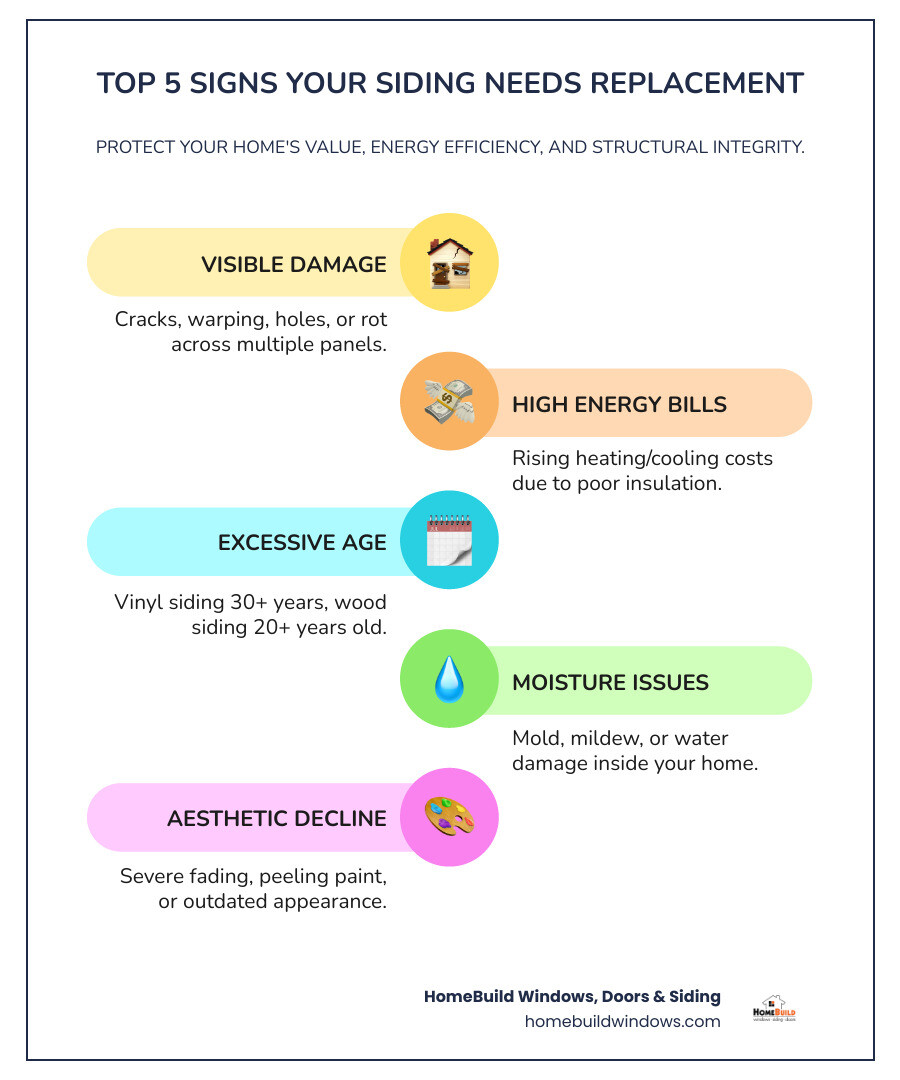
- Visible damage: Widespread cracks, warping, holes, or rot.
- Energy issues: Rising heating and cooling costs from poor insulation.
- Age: Siding is over 20-30 years old.
- Moisture problems: Mold, mildew, or water damage inside your home.
- Aesthetic decline: Severe fading, peeling paint, or an outdated look.
New siding isn’t just a repair; it’s an investment. It provides a 77% return on investment, according to Remodeling Magazine, while boosting curb appeal and energy efficiency. Modern materials like fiber cement and insulated vinyl can last 30-50 years with minimal upkeep.
I’m Steve Mlynek, leader of HomeBuild Windows, Doors & Siding. With over 20 years of experience, my team has helped thousands of Chicago-area homeowners make the right siding choice, changing their homes’ protection and value.
Is It Time for a Change? Key Signs Your Siding Needs Replacement
Your home’s siding leaves clues when it’s failing. Catching these warning signs early can prevent a simple siding installation replacement from becoming a major structural repair.
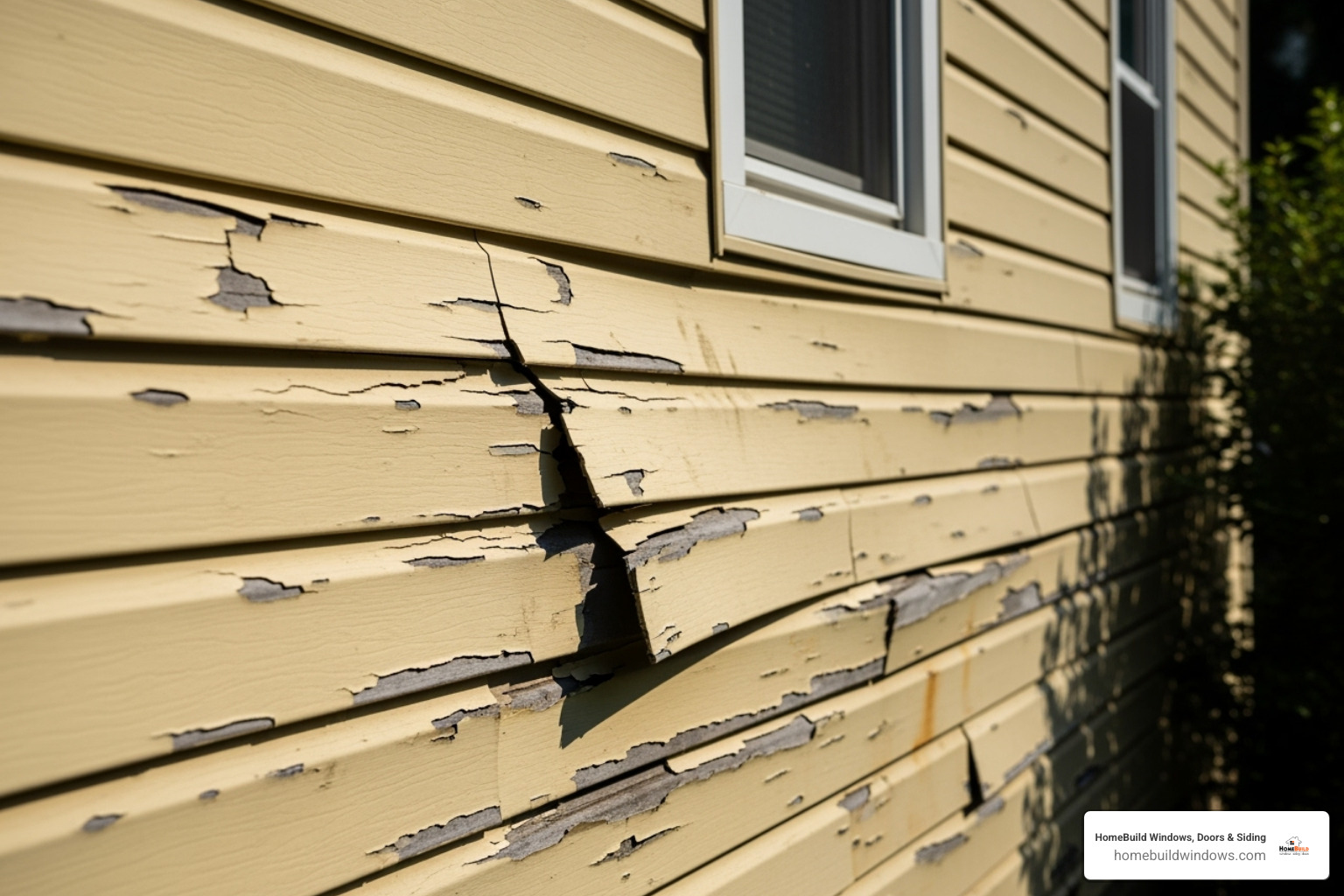
Visible damage is the most obvious red flag. Look for warping, bubbling from trapped moisture, or cracking that splits panels. These are not just cosmetic flaws; they are entry points for water, pests, and drafts.
Fading color and peeling paint indicate that the siding’s protective finish is breaking down, exposing the material underneath to Chicago’s weather. Quality vinyl siding should hold its color for 10-15 years; premature fading is a bad sign.
Other critical indicators include:
- High energy bills: If your HVAC system is working overtime, your siding may have lost its insulating properties.
- Mold or mildew: Persistent growth often means moisture is trapped behind the siding, which can lead to health risks and structural damage.
- Dry rot: Press on wood siding; if it feels soft or spongy, rot has set in from the inside out. This can be linked to water damage inside your home, like peeling paint or wallpaper.
- Insect damage: Termites and carpenter ants are drawn to compromised siding, giving them easy access to your home’s structure.
For older homes, it’s worth knowing how to spot signs of asbestos siding, which requires professional assessment and handling.
If these issues seem familiar, it’s time for a professional evaluation from our Chicago siding services.
Deciding on Siding Installation Replacement vs. Minor Repairs
Should you repair or replace? The answer depends on the extent of the problem.
Choose repairs for small-scale damage, like a few cracked vinyl panels. A handy homeowner can sometimes fix a single panel in minutes with a zip tool.
Opt for a full siding installation replacement for large-scale issues. When damage is widespread or you see signs of rot or mold, replacement is the smarter long-term choice. Patching extensive problems won’t solve the underlying issue.
The age of siding is also a key factor. If your vinyl is over 20 years old or your fiber cement is approaching 30-50 years, replacement is a proactive investment. A full replacement allows us to inspect and repair underlying damage, giving you a fresh start with a new warranty.
The Major Benefits of New Siding
Investing in new siding transforms your home’s future with benefits that go far beyond aesthetics.
- Improved Curb Appeal: New siding provides a dramatic, instant makeover for your home.
- Increased Home Value: A siding installation replacement offers an impressive 77% return on investment, according to Remodeling Magazine.
- Improved Energy Efficiency: Modern insulated siding can significantly cut utility bills by keeping your home comfortable year-round. Learn how vinyl siding improves energy efficiency and see the potential savings.
- Better Home Protection: New siding creates a robust barrier against Chicago’s weather, preventing moisture, pests, and costly structural damage.
- Lower Maintenance: Modern materials like vinyl and fiber cement require minimal upkeep, freeing you from scraping and painting.
Choosing Your Armor: A Guide to Siding Materials
Choosing siding is like picking armor for your home to battle Chicago’s weather. You need to balance durability, aesthetics, climate suitability, and budget. Today’s siding installation replacement options offer incredible variety in performance and style.
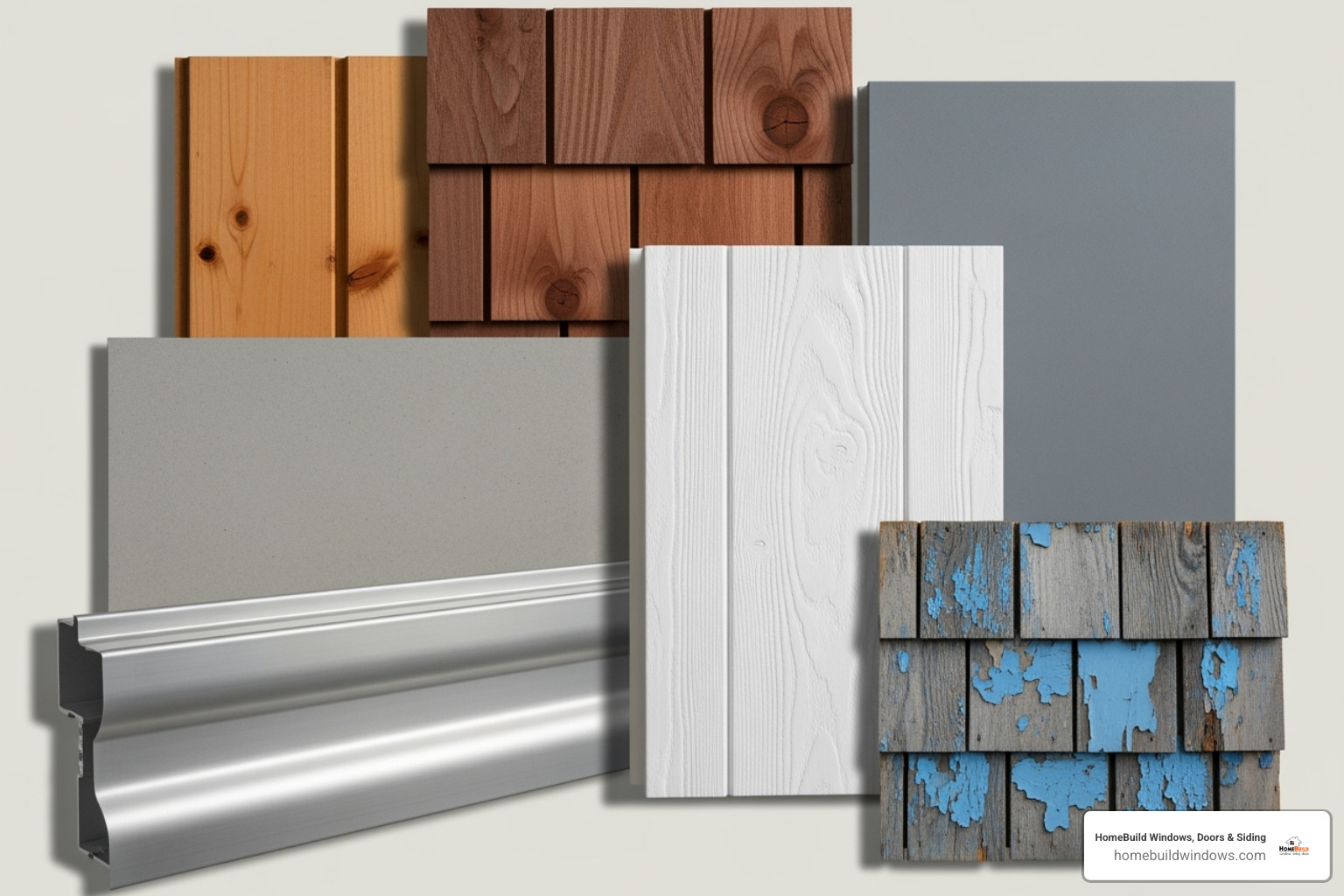
Some materials, like natural wood, look beautiful but require high maintenance. Others, like vinyl, offer great value but may not have the same authentic look. The key is finding the right fit for your home and lifestyle.
Comparing Popular Siding Options
Here’s how the most popular materials stack up for Chicago-area homes:
| Material | Average Cost/Sq. Ft. | Lifespan | Pros | Cons | Maintenance Level |
|---|---|---|---|---|---|
| Vinyl Siding | $4.80 – $7.20/sq. ft. | 20–40 years | Most affordable, low maintenance, wide range of colors/textures, easy to install, good ROI | Can crack in extreme cold, melt from heat sources, susceptible to hail damage, can fade over time, less rigid | Low (regular cleaning) |
| Fiber Cement Siding | $8.40 – $13.20/sq. ft. | 30–50 years | Extremely durable, fire-resistant, resists rot/pests, mimics wood/other textures, holds paint well, up to 5x thicker than vinyl | More expensive than vinyl, requires professional installation due to weight/cutting, can be brittle before installation | Low (repainting every 10-15 years) |
| Wood Siding | Varies, generally higher than vinyl | 20+ years (with proper maintenance) | Natural, classic aesthetic, eco-friendly, good insulator, lightweight, easy to work with | Requires significant maintenance, susceptible to rot, insects, fire, can warp/crack | High (frequent repainting/resealing) |
| Aluminum Siding | $7.20 – $9.60/sq. ft. | 20–40 years | Lightweight, rust/insect resistant, non-combustible, recyclable, paintable | Can dent easily, noise from expansion/contraction, can fade or chalk over time, less popular | Low (occasional cleaning, repainting every 10-15 years) |
A Closer Look at Top Materials
Based on 20 years of installations in Chicago, here’s a look at the materials that perform best in our climate.
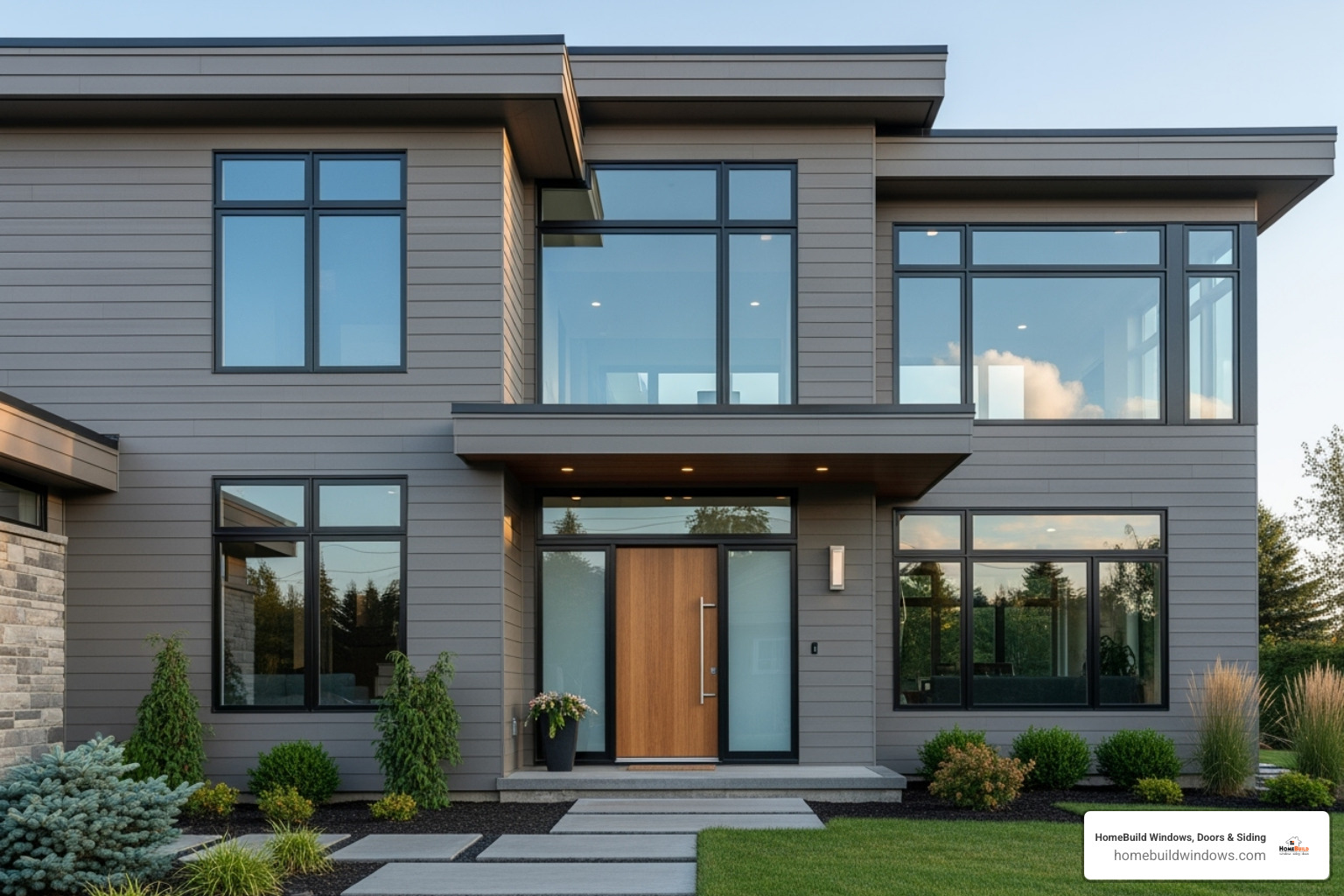
Vinyl siding is the top choice for budget-conscious homeowners. Modern vinyl resists fading, comes in many styles, and handles temperature swings well. Just keep heat sources away from it and be aware that extreme cold can make older vinyl brittle.
Fiber cement siding offers the look of wood with minimal maintenance. Brands like James Hardie Siding offer products up to five times thicker than vinyl, creating deep, authentic-looking shadow lines. It’s extremely durable, fire-resistant, and impervious to pests. While it costs more upfront, it’s a fantastic long-term investment.
Wood siding provides best natural beauty and character. However, it requires significant upkeep, including repainting or re-staining every 3-5 years to prevent rot and insect damage. For less maintenance, consider engineered wood options.
Aluminum siding is lightweight, fireproof, and won’t rust. Its main drawbacks are that it dents easily and can be noisy as it expands and contracts with temperature changes.
Stone and brick veneer are the ultimate in durability, lasting over 100 years. The upfront cost is substantial, but the return on investment can be as high as 91% for manufactured stone veneer.
The Complete Siding Installation Replacement Process: From Tear-Down to Final Touches
A siding installation replacement project is exciting, and knowing the process helps. Most projects take 7 to 14 days, depending on your home’s size, the chosen material, and weather conditions. Our process is streamlined to minimize disruption to your life.
Step 1: Preparation and Material Delivery
Before our crew arrives, some simple preparation is needed. We’ll provide a full checklist, but here are the basics:
- Clear the perimeter: Move outdoor furniture, planters, and decorations away from exterior walls.
- Trim landscaping: Cut back bushes and tree branches at least one foot from the house.
- Secure interior walls: Remove pictures and shelves from exterior-facing walls, as the work creates vibrations.
- Plan for pets and children: A construction site can be noisy, so consider arrangements for them during work hours.
- Dumpster placement: We’ll work with you to find a convenient spot for the debris dumpster.
Your new siding materials will typically arrive a day or two before work begins.
Step 2: Removal of Old Siding and Inspection
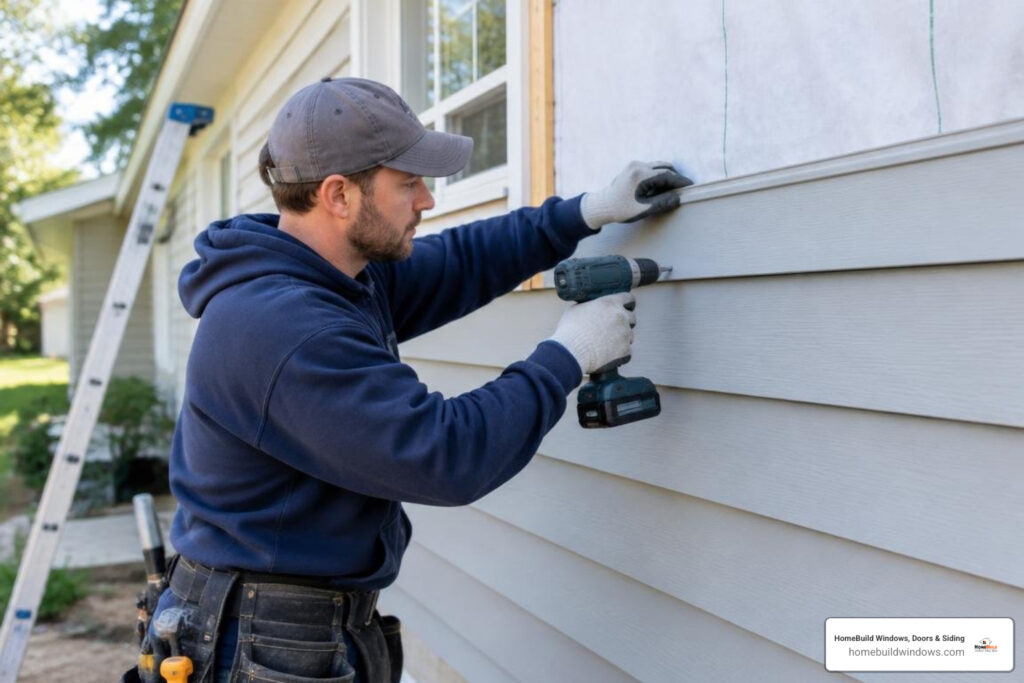
This is where the change starts. Our crew strategically removes your old siding, minimizing your home’s exposure to the elements. Once it’s off, we perform a critical wall sheathing inspection. We look for hidden wood rot, water damage, or pest intrusion.
Finding and fixing these issues now is crucial for the longevity of your new siding and prevents more expensive repairs later. We will also inspect and, if necessary, install a new weather-resistant barrier (house wrap) to provide a secondary defense against moisture. Our crew manages debris throughout the day to maintain a safe and tidy work site.
Step 3: Installation of New Siding
Now your home’s new look takes shape. Our experienced installers focus on precision and detail.
- Foundation: We begin with starter strips at the bottom to ensure the first row is perfectly level and secure.
- Finishing: Corner posts are installed to create clean, professional edges.
- Technique: We use proper nailing techniques, leaving a small gap to allow for thermal expansion and prevent warping. This is a key mark of professional work.
- Craftsmanship: Each panel is carefully measured, cut, and fitted with attention to alignment and overlap.
- Details: Window and door trim is installed to be both beautiful and watertight, protecting vulnerable areas.
After installation, we conduct a thorough final cleanup, using magnets to find stray nails and leaving your property pristine. We keep you informed throughout the process and welcome any questions you have.
Budgeting for Your Project: Costs and Contractor Choice
Understanding the investment for your siding installation replacement helps you make smart decisions. We believe in transparent pricing with no hidden fees or sales pressure. A complete project for a typical Chicago-area home in 2025 ranges from $10,000 to $26,000.
Key Factors Influencing Your Siding Installation Replacement Cost
Several factors determine the final cost of your project.
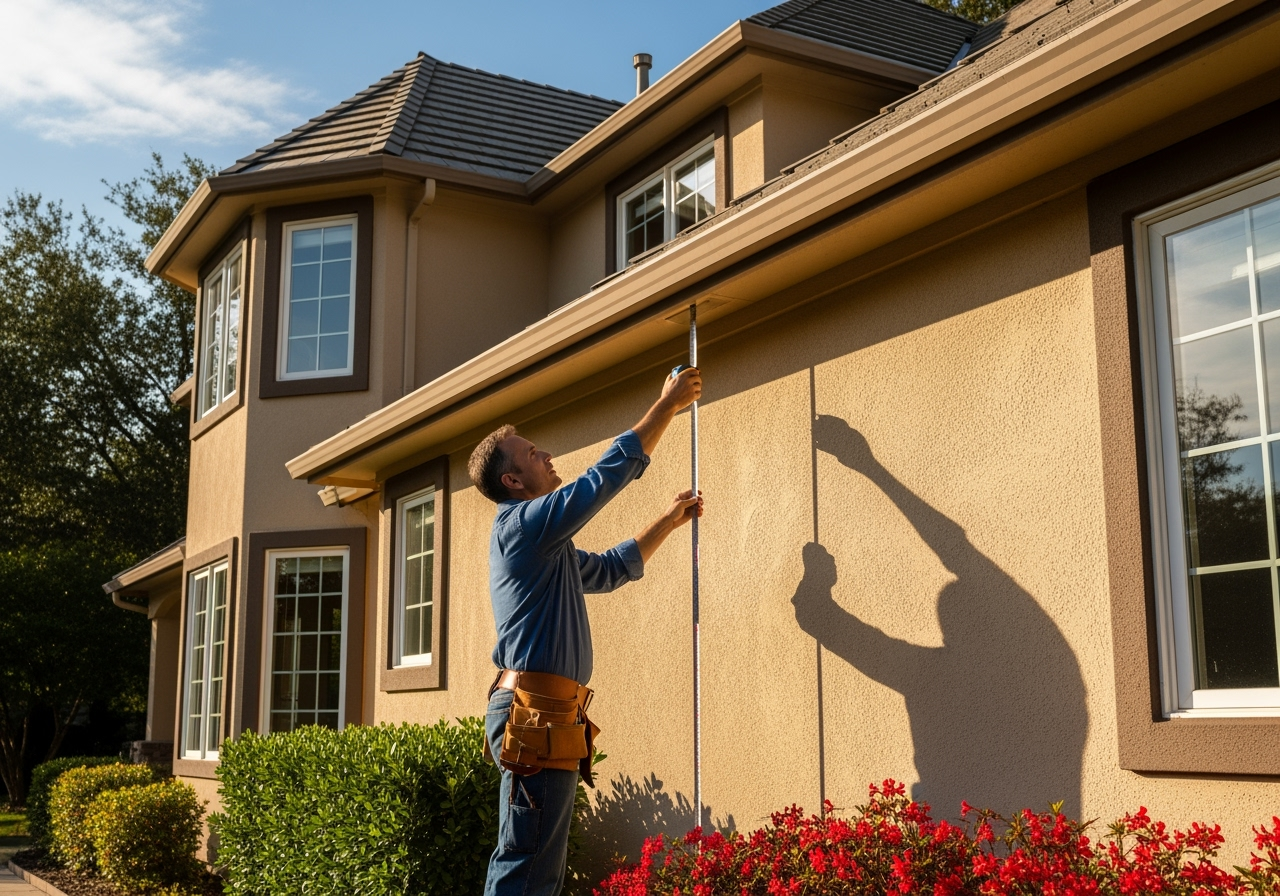
- Home size and complexity: A larger, multi-story home with complex architectural details will cost more than a simple ranch.
- Material choice: Costs vary significantly by material. Vinyl is the most budget-friendly, while fiber cement and stone veneer are higher-end investments.
- Labor costs: In 2025, labor costs reflect the skilled craftsmanship required for a durable, long-lasting installation.
- Old siding removal: Removing existing siding adds to the cost but is essential for inspecting and repairing the structure underneath.
- Underlying repairs: If we find rot or water damage, these necessary repairs will add to the project cost. We always discuss these findings with you first.
- Permits: We handle all necessary Chicago-area permits, and the fees are included in your project cost.
Quality siding replacement typically returns 75-85% of your investment at resale, not including energy savings.
How to Choose the Right Siding Contractor
Picking the right contractor is as important as choosing the right material. A great contractor ensures a smooth process and a beautiful, lasting result.
- Licensed and Insured: This is non-negotiable. Ensure your contractor is licensed in Illinois and carries both liability and worker’s compensation insurance to protect you.
- Local Experience: A contractor familiar with the Chicago climate knows which materials and installation techniques work best here.
- Portfolio and References: Ask to see photos of recent work and speak with past customers.
- Clear Communication: Your contractor should explain the process clearly and keep you updated.
- Detailed Contracts: The contract should specify all materials, timelines, costs, and warranty information. Avoid vague agreements.
- Warranty Coverage: Look for strong product warranties (like James Hardie’s 30-year warranty) and a comprehensive labor warranty from the installer.
For more tips, see our guide on what to look for in a window and siding contractor.
Frequently Asked Questions about Siding Replacement
After 20 years of siding installation replacement in the Chicago area, we’ve heard every question. Here are answers to the most common ones.
How long does new siding last?
Lifespan depends on the material and proper installation. Here are typical ranges:
- Vinyl siding: 20-40 years. High-quality, well-maintained vinyl can last even longer.
- Fiber cement siding: 30-50 years or more. It’s built to withstand Chicago’s harsh weather, which is why it comes with long warranties like James Hardie’s 30-year guarantee.
- Wood siding: 20-40 years, but only with consistent maintenance (repainting/resealing every 3-5 years).
- Aluminum, brick, or stone: Aluminum lasts 20-40 years, while brick and stone can easily last over 100 years.
Proper installation is key to reaching any material’s maximum lifespan.
Can I install new siding over my old siding?
While technically possible in some cases, we almost never recommend it. Installing new siding over old siding hides potential problems like rot, mold, or pest damage. Covering them up allows the damage to worsen, leading to more expensive repairs later.
Furthermore, old siding provides an uneven surface, which can make your new siding look wavy or warped. A full tear-off also allows for the proper installation of a modern weather-resistant barrier (house wrap), which is critical for energy efficiency and moisture protection.
For the best results and long-term protection, a full tear-off is the professional standard.
How long does a typical siding replacement project take?
Most siding installation replacement projects take 7 to 14 days. The exact timeline depends on several factors:
- House size and complexity: A large, ornate home will take longer than a small, simple one.
- Siding material: Vinyl installs relatively quickly, while fiber cement or stone require more time.
- Weather: Rain, high winds, or extreme cold can cause safe work delays.
- Underlying damage: If we find structural issues that need repair, this will extend the timeline. We always communicate these findings and adjust the schedule accordingly.
We provide a detailed, project-specific timeline during our consultation.
Give Your Home the Protection and Beauty It Deserves
We’ve covered the signs of failing siding, explored material options, and walked through the installation process. The takeaway is clear: siding installation replacement is one of the most impactful investments you can make in your home. It’s a suit of armor that protects your family and looks stunning.
The benefits are transformative. You’ll enjoy a dramatic boost in curb appeal, a significant increase in property value (with up to a 77% ROI), and lower monthly energy bills. Best of all, modern siding frees you from the constant maintenance of scraping and painting, giving you back your weekends.
Here in the Chicago area, your siding faces everything from brutal winters to humid summers. At HomeBuild Windows, Doors & Siding, we have over 20 years of experience protecting homes just like yours across Chicagoland and the North-West Suburbs. We combine top-quality materials with expert installation to ensure your home is protected for decades.
Don’t let old, failing siding put your biggest investment at risk. It’s time to give your home the upgrade it deserves.
Ready to start the change? Get a professional quote for your siding installation replacement project today, and let’s build a safer, more beautiful home together.