

Why Installing a Prehung Exterior Door Is Easier Than You Think
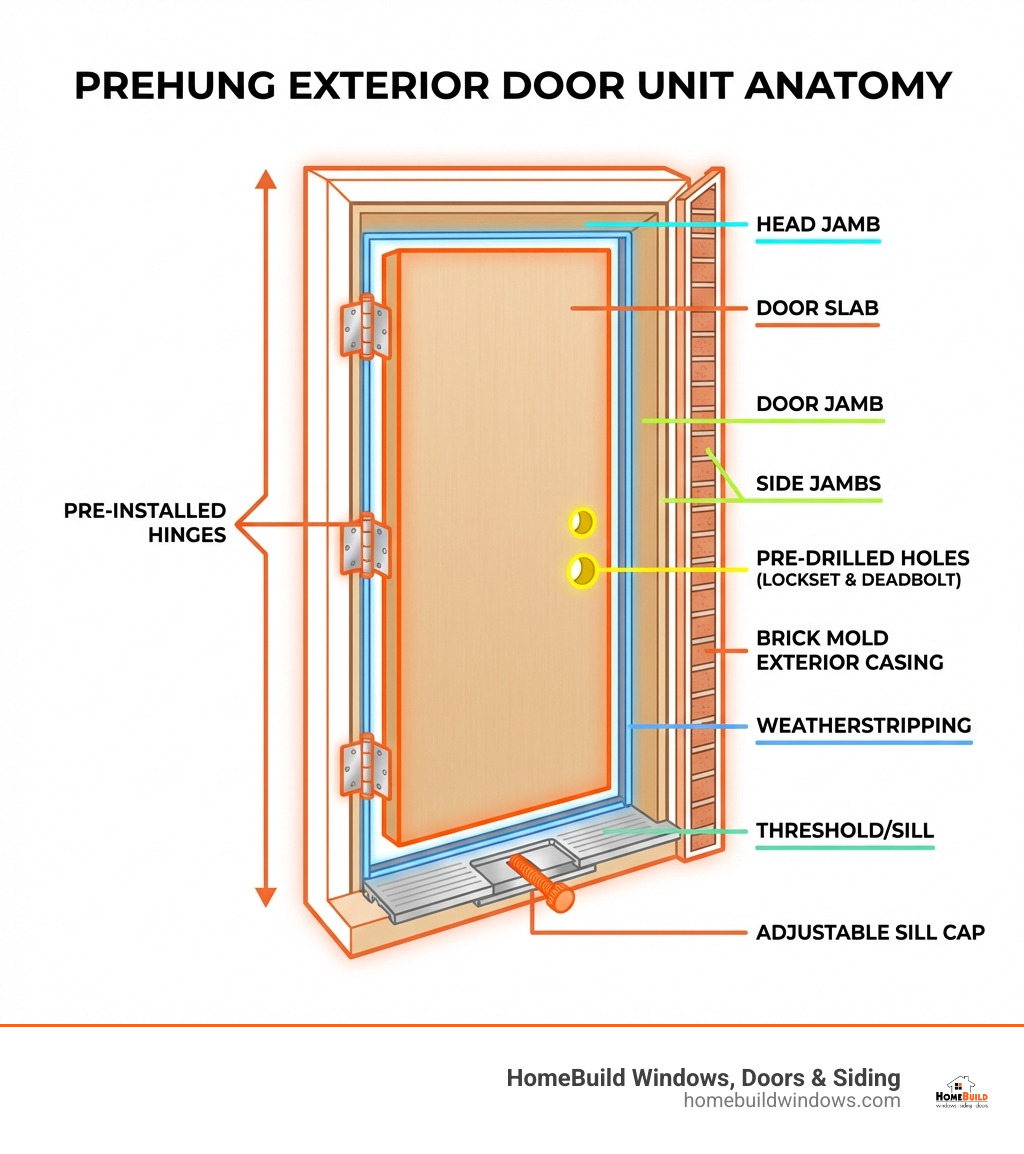
Installing a prehung exterior door improves curb appeal, energy efficiency, and security. Unlike hanging a door slab, a prehung door arrives as a complete unit with the frame, hinges, and hardware holes ready.
Quick Overview: Key Steps
- Prepare the rough opening – Remove the old door, check for level/plumb, and install flashing.
- Set the unit – Center the door, apply caulk, and bed the threshold.
- Shim and fasten – Plumb the frame and drive screws through the jambs.
- Check operation – Test the swing and adjust weatherstripping.
- Seal and insulate – Apply foam, caulk gaps, and install trim.
Proper installation prevents drafts and water damage. In Chicago’s climate, a tight seal is essential for year-round performance. I’m Steve Mlynek, and with 20+ years at HomeBuild Windows, Doors & Siding, I’ve overseen thousands of installations. Success comes down to water management and proper shimming.
Essential Tools and Materials for Your Project
Gathering tools beforehand prevents delays. Most of this job requires basic tools accessible to DIYers.

- Hammer & Level: A 6-foot level is crucial for plumb and level checks.
- Tape Measure & Utility Knife: For precise measurements and scoring trim.
- Caulk Gun & Drill/Driver: For sealing and driving fasteners.
- Pry Bar & Reciprocating Saw: For removing old trim and cutting through nails.
- Shims: Wood or composite wedges to ensure a plumb installation.
- Low-Expansion Spray Foam: For insulating the frame gap.
- Exterior Caulk: High-quality sealant compatible with your house wrap.
For more on door components, visit our More info about entry doors.
Required Hardware and Fasteners
- Casing Nails & Masonry Screws: For securing frames and trim.
- Hinge Reinforcement Screws: Long screws (#10 2-1/2-inch) to anchor the door to the house framing.
- Z-Flashing & Sill Pan Kit: Essential for water management above and below the door. Some manufacturers, like Therma-Tru, offer proprietary rigid flashing required for warranties.
Preparing the Rough Opening for Success
Preparation creates the foundation for a door that operates flawlessly for decades.
Removal of the Old Door and Frame
- Remove the storm door and doorbell.
- Score and pry off trim: Use a utility knife to prevent wall damage, then pry off interior and exterior trim.
- Remove the slab and frame: Take out hinge pins to remove the door. Cut through nails with a reciprocating saw and pry out the old frame.
- Clean the opening: Remove debris, old caulk, and insulation.
Note on lead paint: If your home was built before 1978, consult a professional regarding potential lead paint.
Ensuring a Square and Level Foundation
Check for plumb, level, and square. Learn more here: What Do Level and Plumb Mean?
- Level the subfloor: Use a level across the bottom. Build up low spots with self-adhering membrane.
- Verify plumb jack studs: Ensure the vertical sides are perfectly vertical.
- Confirm squareness: Measure width, height, and diagonals. The rough opening should be 2 inches wider and 1-1.5 inches taller than the new frame.
Best Practices for Flashing and Water Management
- Sill Pan Installation: Protects the subfloor from water. Use a kit or flashing tape. Apply sealant beads as recommended by manufacturers like Therma-Tru. Learn more: How Do I Use Caulk?
- WRB Management: Cut house wrap flush at the bottom and tape flaps out of the way at the top.
- Drip Cap: Install Z-flashing above the opening to divert water away from the frame.
For a deeper dive, see our Exterior Door Installation 101.
Step-by-Step Guide to Installing a Prehung Exterior Door
- Prepare the Door: Unpack and inspect the unit. Remove shipping braces.
- Apply Caulk: Apply a thick bead of exterior caulk to the back of the brickmold and the bottom of the rough opening.
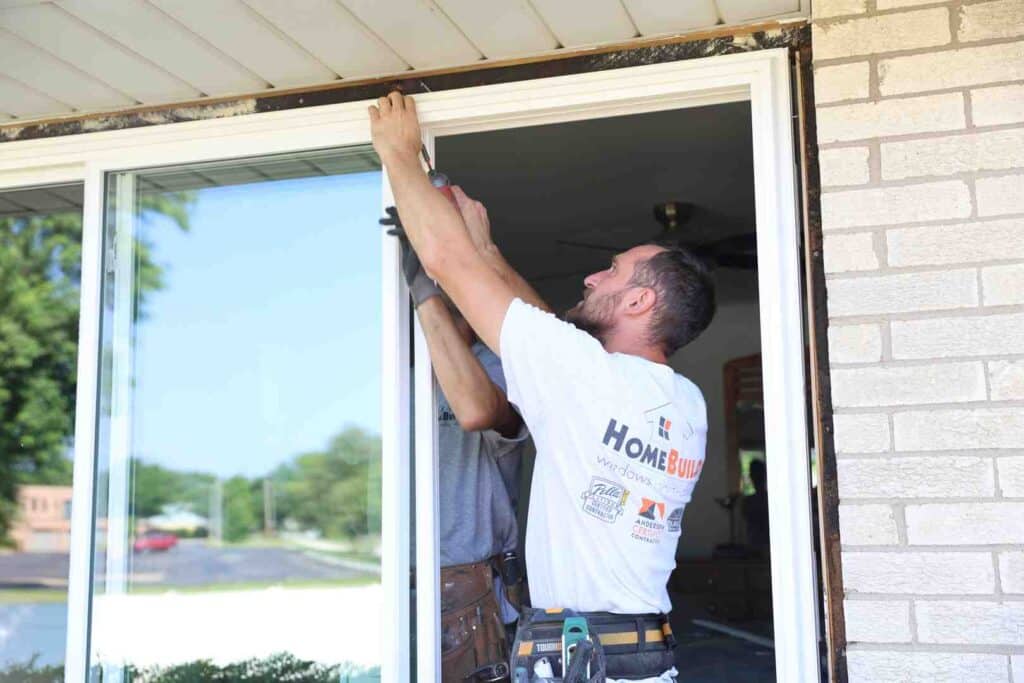
- Set the Door: With a helper, lift the unit into the opening, bottom first. Ensure the threshold beds into the caulk. Feed doorbell wires through.
For more guidance, see Installing a Prehung Exterior Door.
Positioning and Shimming
- Initial Plumb: Center the door and use a 6-foot level to plumb the hinge side. Secure temporarily with a screw at the top.
- Hinge-Side Shimming: Place shims behind each hinge. Drive screws partially through the jamb and shims.
- Latch-Side Alignment: Close the door and adjust the latch-side frame with shims until the reveal is even and weatherstripping makes contact.
- Plumb in Two Directions: Ensure both jambs are plumb in-to-out and side-to-side.
| Shim Type | Characteristics | Best Use Case |
|---|---|---|
| Wedge Shims | Tapered wood or composite. | Precise, gradual adjustments; useful for twisted studs. |
| Horseshoe Shims | U-shaped plastic; consistent thickness. | Consistent spacing; prevents bowing during fastening. |
Fastening the Frame
- Predrill Jambs: Use a countersink bit at each shim location to prevent splitting.
- Fasteners: Drive 2-1/2-inch screws through jambs and shims into the framing. For masonry, use a hammer drill and masonry screws.
- Hinge Reinforcement: Replace one short screw in each hinge with a 3-inch screw that reaches the house framing.
- Avoid Distortion: Do not fasten the head jamb; this allows for house settling without jamming the door.
Fine-Tuning Operation and Sealing the Gaps
Installing a prehung exterior door requires attention to detail during the final stages.
- Test Door Swing: The door should swing smoothly without rubbing.
- Check Latch Engagement: Ensure the deadbolt and latch engage the strike plate easily.
- Sill Cap Adjustment: Use the “Dollar Bill Test.” Slide a bill under the sweep; you should feel resistance when pulling it out. Adjust sill screws to raise or lower the cap.
Insulating and Weatherproofing the Perimeter
- Insulate Gaps: Use low-expansion spray foam to fill the space between the frame and studs. See: How Do I Use Spray Foam?
- Corner Pads: Install these at the bottom corners to prevent water wicking.
- Exterior Caulking: Apply a bead around the brickmold where it meets the siding.
Finishing Touches and Interior Trim
- Interior Casing: Install and nail new trim.
- Hardware Installation: Install locksets and deadbolts per instructions.
- Paint or Finish: Seal all surfaces, including top and bottom edges, to prevent moisture damage.
Explore our services at More info about door and window replacement.
Troubleshooting and Long-Term Maintenance
- Sticking Doors: Check shims or adjust hinges. Minor rubbing may require light planing.
- Draft Detection: Inspect weatherstripping for gaps. Re-caulk exterior beads if cracked.
- Squeaky Hinges: Use a silicone-based lubricant.
Maintenance for Longevity
Perform annual inspections of the frame, caulk, and finish. Re-caulk every few years and clean hardware regularly to prevent degradation.
When to Hire a Professional for Installation
- Complex Masonry: Masonry requires specialized tools and expertise.
- Structural Rot: Rot or pest damage in the framing must be repaired before installation.
- Lead Paint Risks: Homes built before 1978 require certified abatement.
- Warranty Requirements: Some manufacturers require professional installation to validate warranties.
- Confidence: If you lack the tools or time, a professional ensures energy efficiency and security. HomeBuild serves Chicago and suburbs like Arlington Heights and Crystal Lake.
For more, see our Exterior Door Installation Near Me 2024 FAQs.
Frequently Asked Questions about Prehung Doors
How long does it take to install a prehung exterior door?
Installation of a prehung exterior door usually takes less than a day if the opening is prepared. Including removal and finishing, it’s a solid weekend project. Plan to have the new door in place quickly to avoid leaving a hole in your home.
Can I install a prehung door by myself?
While installing a prehung exterior door is possible for DIYers, a helper is highly recommended. Prehung units are heavy and awkward to position while shimming and fastening.
What is the difference between a prehung door and a slab door?
A prehung door is a complete unit with the frame and hinges already attached. A slab door is just the door panel, requiring you to fit it into an existing frame and mortise the hinges yourself. For installing a prehung exterior door, the prehung option is much easier for most homeowners.
Conclusion
Installing a prehung exterior door is a rewarding project that boosts comfort and security. By following these steps for preparation, shimming, and sealing, you can achieve professional results.
HomeBuild Windows, Doors & Siding provides expert installation across Chicago and the Chicagoland area. We ensure every door meets high standards for energy efficiency. If you prefer professional expertise, Contact us for expert door installations near me today!