


Why a Broken Patio Door Handle Is More Than Just an Inconvenience
Replacing a patio door handle is a straightforward DIY repair that most homeowners can complete in under an hour with basic tools.
Here’s a quick overview of the process:
- Gather tools: Phillips screwdriver, measuring tape, safety glasses, and your replacement handle
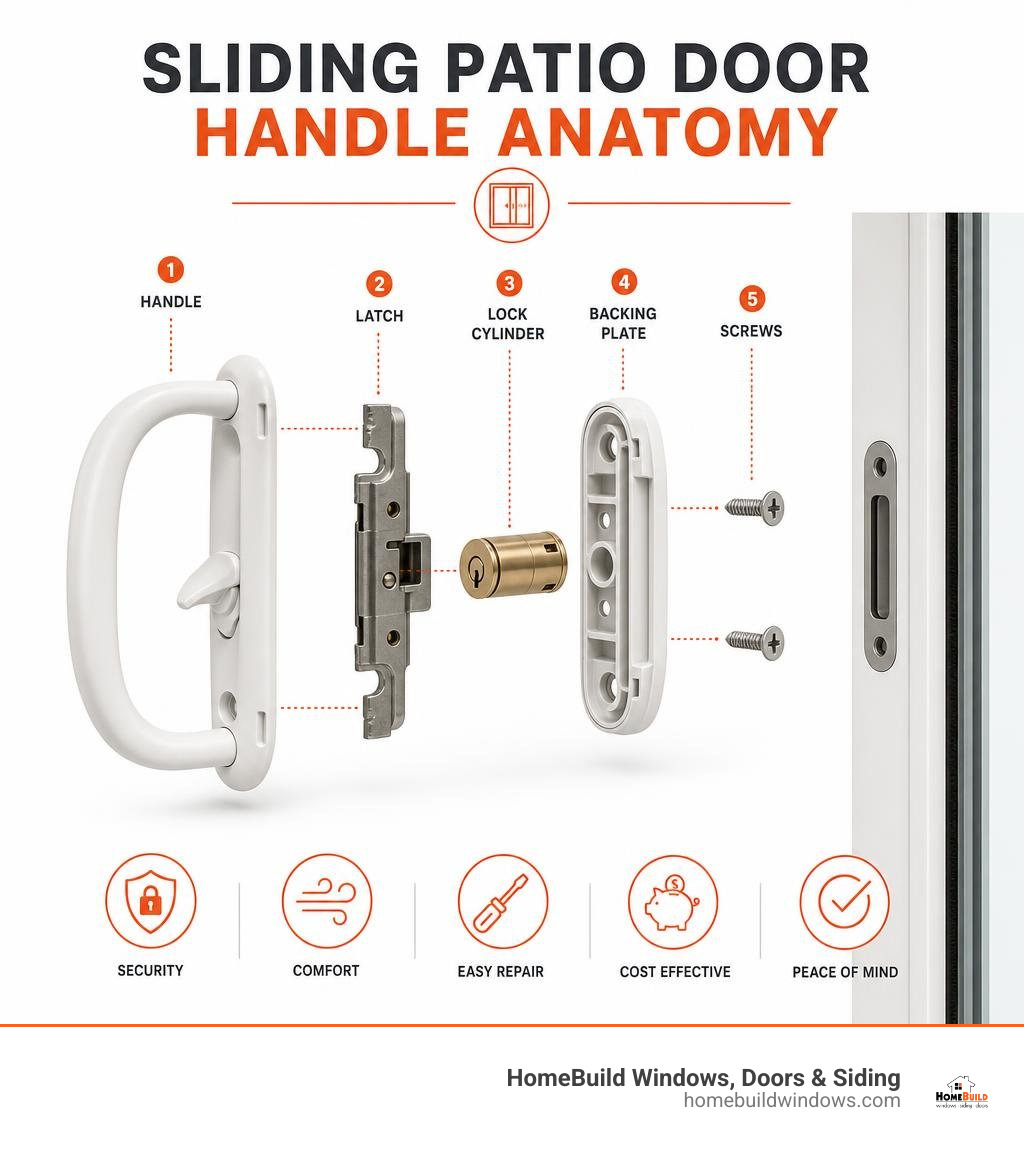
- Remove the two interior screws securing the old handle (do not remove the thumbturn screw)
- Pull the old handle straight out and remove the backing plate
- Slide the new handle into position and secure with the two screws
- Test the latch and lock several times to confirm proper operation
A broken or loose handle might seem like a minor nuisance at first. But in Chicago, where winters are brutal and security matters, a faulty patio door handle can mean cold drafts cutting through your living room, a latch that won’t lock properly, and a door that’s become a weak point in your home’s security.
The good news? In most cases, you don’t need to replace the entire door. A handle replacement is one of the most common and manageable home repairs — and getting it right means understanding your door type, finding the correct replacement part, and following the right steps.
I’m Steve Mlynek, CEO and founder of HomeBuild Windows, Doors & Siding, and with over 20 years of experience helping Chicago-area homeowners with door and window replacement, I’ve seen how often a simple handle fix — or a proper replacing patio door handle assessment — can save a homeowner from an unnecessary full door replacement. In this guide, I’ll walk you through everything you need to know to get the job done right.
Terms related to replacing patio door handle:
Essential Tools and Materials for Replacing Patio Door Handle
Before diving into the replacement process, gathering the right tools is essential for a smooth, frustration-free experience. Trying to complete this project without the correct tools is a recipe for stripped screws and damaged door frames.
To tackle this task successfully in June 2026, you will need:
- Screwdriver set: A high-quality Phillips head screwdriver (usually #2) is the primary tool needed. You may also need a flathead screwdriver to gently pry off decorative screw covers or faceplates.
- Measuring tape: Crucial for measuring the screw hole spacing on your existing handle to ensure a perfect fit for the replacement.
- Safety glasses: Essential for protecting your eyes from any flying debris or metal shards, especially if you need to drill or clean out old hardware channels.
- Silicone-based lubricant: Perfect for lubricating the internal lock mechanism, latch, and rollers. Avoid oil-based lubricants like WD-40, which attract dirt and grime over time.
- Replacement hardware: Your new handle set, matching the specifications of your door.
Keyed vs. Non-Keyed Options for Replacing Patio Door Handle
One of the first decisions you need to make when selecting a new handle is whether you want a keyed or non-keyed option. The right choice depends heavily on how you use your sliding patio door and your home security priorities.
- Non-Keyed Handles: These are the most common style for sliding doors. They feature an interior thumbturn latch that allows you to lock and unlock the door from the inside, but they have no key cylinder on the outside. This option is highly secure against exterior entry, but it means you cannot unlock the door from your backyard.
- Keyed Handles: These feature an exterior key cylinder in addition to the interior thumbturn latch. If you frequently use your sliding door as a primary entry point from a detached garage, pool area, or backyard patio, a keyed handle is incredibly convenient. It allows you to lock the door behind you when you leave and unlock it when you return.
For homeowners with hinged patio doors, the hardware components can be slightly different, often involving multi-point locking mechanisms. You can read more about these specific systems in this guide on Replacement Handle Set Components for Hinged Patio Doors .
How to Identify the Correct Replacement Handle
Patio door handles are not universal. They come in a wide variety of styles, sizes, and mounting configurations. Buying a random handle from a big-box store often leads to a return trip when you realize the screw holes don’t align. To avoid this, you need to identify the exact specifications of your existing hardware:
- Measure the Screw Hole Spacing: This is the most critical measurement. Measure the distance from the center of the top screw hole to the center of the bottom screw hole. The most common industry standard is 3-15/16 inches, but other sizes exist.
- Identify the Lock Style: Determine if your door uses a mortise lock (where the locking mechanism is hidden inside a pocket in the door panel) or a surface-mounted hook/clamp lock.
- Measure Door Thickness: Standard sliding doors are typically 1-1/2 to 1-3/4 inches thick. Ensure your new handle kit includes screws and a spindle designed for your door’s thickness.
- Look for Manufacturer Marks: Check the edges of the door panel, the existing handle, or the glass etching in the corner of the window pane for a brand logo (such as Pella or Andersen). Knowing the manufacturer makes finding a matching proprietary handle much easier.
If you find that your replacement handle is oriented the wrong way for your door’s opening direction, don’t worry. You can easily adjust the configuration by following the steps to Change the Gliding Patio Door Handle Handing .
Step-by-Step Guide to Removing the Old Handle
Now that you have your tools and the correct replacement handle, it is time to remove the old, worn-out hardware.

Follow these steps for a safe and clean removal:
- Open and Unlock the Door: Never attempt to replace the handle while the door is locked or tightly shut. Slide the door open slightly so you can access both the interior and exterior sides of the handle frame comfortably.
- Locate the Mounting Screws: On almost all sliding patio doors, the mounting screws are located on the interior handle faceplate. There are typically two main screws securing the interior and exterior handles together through the door panel.
- Unscrew the Handle: While holding the exterior handle firmly with one hand to prevent it from falling and damaging your patio or deck, use your Phillips screwdriver to remove the two interior screws.
- Pro Tip: Do not remove the small screw on the thumbturn lever itself. Removing this screw can cause the internal lock reach-out mechanism to fall inside the door frame, making it incredibly difficult to retrieve.
- Pull the Handles Straight Out: Once the screws are removed, gently pull the interior and exterior handles straight away from the door panel. Avoid twisting or prying them, as this can scratch the vinyl, wood, or aluminum finish of your door.
- Remove the Backing Plate and Lock Latch: If your handle set has a separate backing plate or escutcheon, remove it now. If you are also replacing the internal mortise lock, unscrew its faceplate from the edge of the door and slide the mechanism out.
- Deal with Stuck Screws: If your door is older and exposed to the humid Chicagoland summers, the screws might be rusted or stuck. Do not force them, or you will strip the screw heads. Apply a small amount of penetrating oil, let it sit for ten minutes, and then try again using steady, firm pressure.
Installing the New Handle and Lock Assembly
With the old hardware out of the way, you have a clean slate to install your beautiful new handle set.
- Clean the Area: Take a moment to wipe down the door panel where the old handle sat. Remove any dirt, dust, or old grease that has accumulated over the years.
- Insert the New Mortise Lock (If Replacing): If your kit included a new internal lock mechanism, slide it into the routed pocket on the edge of the door panel. Secure it with the provided faceplate screws, but do not tighten them completely yet.
- Align the Tailpiece and Spindle: If you are installing a keyed lock, insert the key cylinder into the exterior handle. You may need to cut the flat metal tailpiece to the correct length (typically 5/8 inch from the cylinder rim) depending on your door’s thickness. Insert the square spindle into the actuator hole of the lock mechanism.
- Position the Handles: Hold the exterior handle against the outside of the door, ensuring the alignment studs fit into the pre-drilled holes. Position the interior handle on the inside, aligning it with the spindle and the exterior handle’s screw receivers.
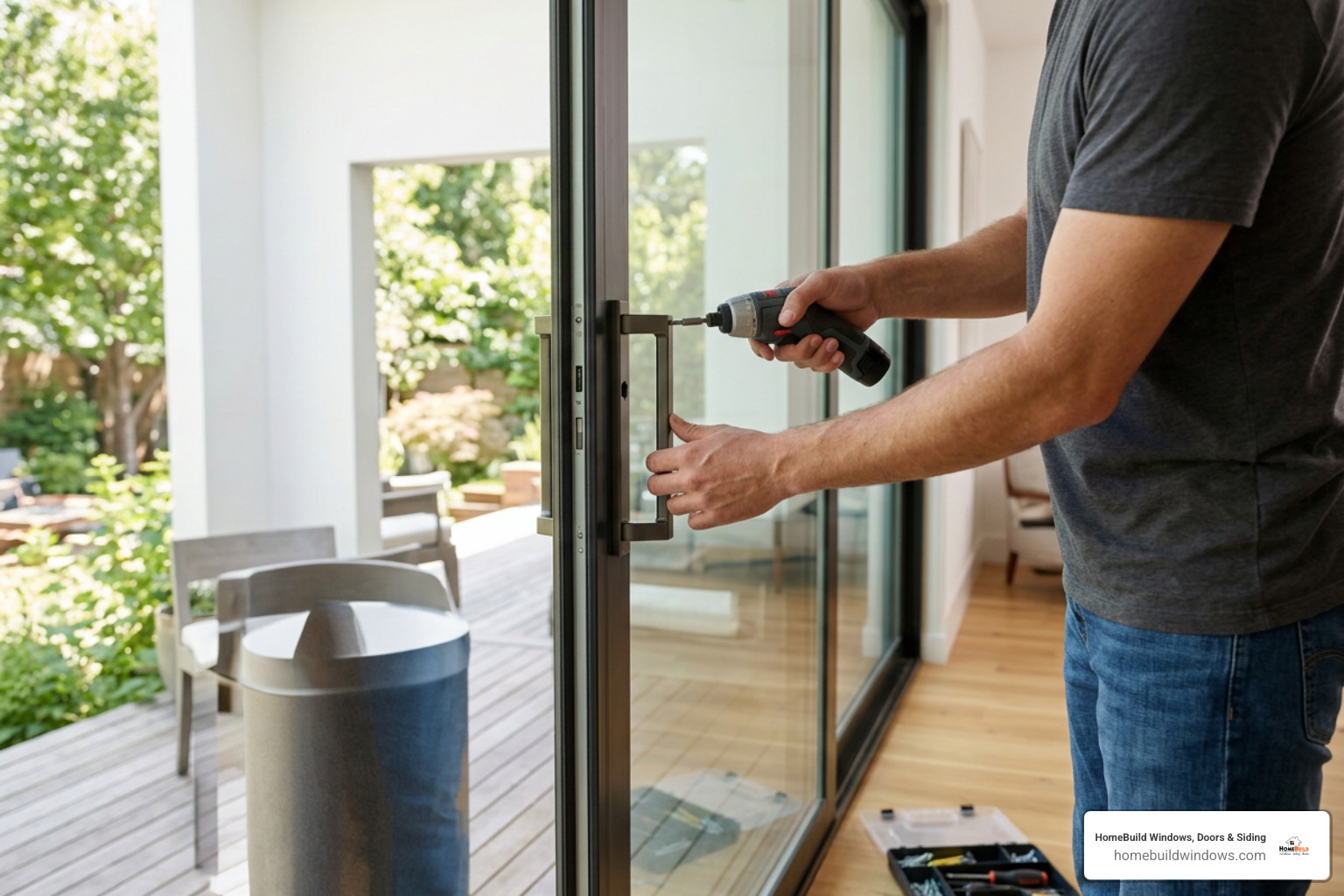
- Insert and Start the Screws by Hand: To prevent cross-threading, always start the mounting screws by hand. Thread them a few turns into the receiving posts of the exterior handle.
- Tighten the Screws: Using your Phillips screwdriver, tighten the screws firmly. They should be snug enough to eliminate any wobble, but do not overtighten them, as this can bind the internal lock or crack a vinyl door panel.
For a visual walkthrough of this installation process, you can watch this helpful video on How to Replace a Patio Door Handle – YouTube .
Testing and Adjusting the Lock Mechanism
An installed handle is only useful if it actually locks and secures your home. Before you close the door and call it a day, you must test the alignment and latch engagement.
- Test with the Door Open: Flip the interior thumbturn back and forth several times. The hook latch should extend and retract smoothly without sticking. If you installed a keyed lock, test the key from the outside to ensure it turns easily and can be removed without resistance.
- Test with the Door Closed: Gently slide the door shut and attempt to engage the lock. The latch hook should align perfectly with the slot in the strike plate on the door jamb.
- Adjust the Strike Plate: If the latch hits the metal strike plate instead of entering the slot, loosen the strike plate screws slightly. Slide the plate up or down to align it with the latch, then retighten the screws.
- Adjust the Door Rollers: Sometimes, lock misalignment isn’t a hardware problem at all — it’s a door alignment problem. If your door is sagging, use a flathead screwdriver to turn the roller adjustment screws at the bottom corners of the door panel. Raising or lowering the rollers can square the door in the frame and perfectly align the lock.
If you are working with an Andersen gliding door, you may need to follow specific steps to align the reachout lock mechanism. Refer to the manufacturer’s technical guide on Reachout Lock Replacement for Andersen 2-Panel and 4-Panel 400 Series Frenchwood Gliding, 200 Series Narroline, and Perma-Shield Gliding Patio Doors for precise alignment instructions.
Common Mistakes to Avoid When Replacing Patio Door Handle
Even a simple DIY project can go awry if you rush through it. Keep these common pitfalls in mind to ensure a flawless installation:
- Over-tightening the Screws: This is the number one mistake homeowners make. Over-tightening can warp the handle plates, strip the threads inside the mounting posts, or pinch the internal lock mechanism so tightly that the thumbturn becomes impossible to turn. Tighten until snug, then stop.
- Cross-Threading: Forcing a screw in at an angle will ruin the threads on both the screw and the handle. If you feel resistance when starting the screws, back them out and try again.
- Incorrect Handing: Installing the handle upside down or backward will prevent the latch from operating correctly. Ensure the thumbturn points in the correct direction (usually upward when unlocked).
- Ignoring Roller Alignment: Trying to force a misaligned lock to latch by pulling hard on the handle will eventually snap the new hardware. Always adjust the door rollers first if the door is sitting crooked in the frame.
When to Replace the Entire Patio Door vs. Just the Handle
While replacing patio door handle hardware is an easy and cost-effective fix, there are times when a new handle won’t solve the underlying issues. If your door is structurally compromised, replacing individual parts is just a temporary band-aid.
Here is a quick comparison to help you decide whether to repair your hardware or invest in a full door replacement:
| Symptom | Repair the Handle | Replace the Entire Door |
|---|---|---|
| Loose, wobbly, or broken handle | Yes, a simple handle replacement fixes this. | No need for a full replacement. |
| Lock won’t latch due to minor misalignment | Yes, adjust the strike plate or rollers. | No, unless the frame is severely warped. |
| Warped, bowed, or sagging frame | No, new hardware won’t align. | Yes, the structural integrity is compromised. |
| Foggy glass or condensation between panes | No, this is a seal failure. | Yes, requires new insulated glass or a full door. |
| Severe drafts, air leaks, or rising energy bills | No, hardware won’t fix worn frame seals. | Yes, modern doors offer superior energy efficiency. |
| Rotted wood or rusted metal panels | No, the door material is decaying. | Yes, for safety, security, and curb appeal. |
If you are experiencing structural issues like a warped frame or drafty panels that let the freezing Chicago wind right into your home, a professional sliding patio door installation is the smartest long-term investment. Modern patio doors feature advanced weatherstripping, multi-pane low-E glass, and highly secure multi-point locking systems that keep your home comfortable and secure year-round.
Maintenance Tips for Your New Patio Door Hardware
Once you’ve successfully installed your new handle, a little routine maintenance will keep it operating smoothly for years to come. Chicago’s seasonal weather changes — from humid, hot summers to freezing, snowy winters — can take a toll on exterior hardware if it is neglected.
- Clean the Tracks Monthly: Dirt, pet hair, and outdoor debris love to collect in sliding door tracks. Vacuum the tracks regularly and wipe them down with a damp cloth. A clean track prevents the door from dragging, which reduces stress on the handle when you pull it open.
- Lubricate the Moving Parts: Every six months, apply a high-quality silicone-based lubricant to the lock latch, key cylinder, and bottom rollers. Avoid WD-40, as it dries out quickly and attracts dust, which can gum up the gears.
- Check the Screws Seasonally: Over time, the vibration of the door opening and closing can cause the mounting screws to back out slightly. Give them a quick check with a screwdriver once a year to ensure they remain snug.
- Clean the Hardware Gently: To preserve the finish of your new handle, clean it using only mild dish soap and a soft cloth. Avoid abrasive cleaners, bleach, or harsh chemicals that can strip away the protective clear coat.
By taking care of your hardware and addressing minor issues early, you can avoid premature wear and protect your investment. For more advice on keeping your home’s exterior features in top shape, check out our comprehensive guide on Door and Window Replacement.
Frequently Asked Questions about Patio Door Hardware
Are sliding patio door handles universal?
No, sliding patio door handles are not universal. While many modern manufacturers use standard mounting patterns (such as 3-15/16 inch screw-hole spacing), there are dozens of different configurations, handle heights, door thicknesses, and lock styles (like mortise locks vs. surface-mounted clamps). Always measure your existing handle and lock style before purchasing a replacement.
Why is my sliding door handle wobbly or loose?
A wobbly handle is usually caused by the mounting screws loosening over time due to daily use and the vibration of the door sliding on its tracks. In most cases, you can easily fix this by removing the decorative screw covers and tightening the two interior mounting screws with a Phillips screwdriver. If the screws are already tight but the handle is still loose, the internal screw posts inside the handle may be stripped or broken, meaning it is time for a replacement.
How do I fix a latch that won’t engage?
If your latch won’t lock when the door is closed, the issue is typically misalignment between the latch hook and the strike plate on the door frame. First, check if the door is sitting square in the frame. If it is sagging, adjust the rollers at the bottom of the door to raise or lower the panel. If the door is square, loosen the strike plate screws, adjust its position up or down to align with the latch, and tighten the screws back down.
Conclusion
Replacing a worn-out, broken, or drafty patio door handle is a highly rewarding DIY project that instantly improves your home’s security, comfort, and daily convenience. With the right measurements, a few basic tools, and a little patience, you can restore your door’s locking mechanism to perfect working order.
However, if you find that your sliding door is difficult to slide, drafty, warped, or structurally damaged, a simple handle replacement may not be enough. When it is time to upgrade to a high-performance, energy-efficient patio door that can stand up to the harshest Chicago winters, we are here to help.
At HomeBuild Windows, Doors & Siding, we are a trusted, locally owned contractor with over 20 years of experience serving homeowners in Chicago and the surrounding Northwest Suburbs, including Arlington Heights, Barrington, Crystal Lake, and Palatine. As an Elite Platinum Pella® Certified Contractor and an Andersen Premier Certified Contractor, we work with the industry’s most trusted brands — including Pella, Andersen and ProVia — to deliver reliable, beautiful, and energy-efficient remodeling solutions.
Every project we take on is owner-supervised to guarantee the highest standards of workmanship and accountability. Our dedication to exceptional customer service has earned us the Angi Super Service Award, recognition as a Nextdoor Neighborhood Fave, and over 200 positive Google reviews. We are fully licensed, insured, and ready to help you transform your home.
If you are ready to experience the difference that professional, high-quality installation can make, explore The Best Patio Door Replacement Northwest Suburbs Has to Offer or visit our main page for Window and Door Replacement Chicago to schedule your free consultation today!