

Replacing Patio Door Glass Without Replacing the Door
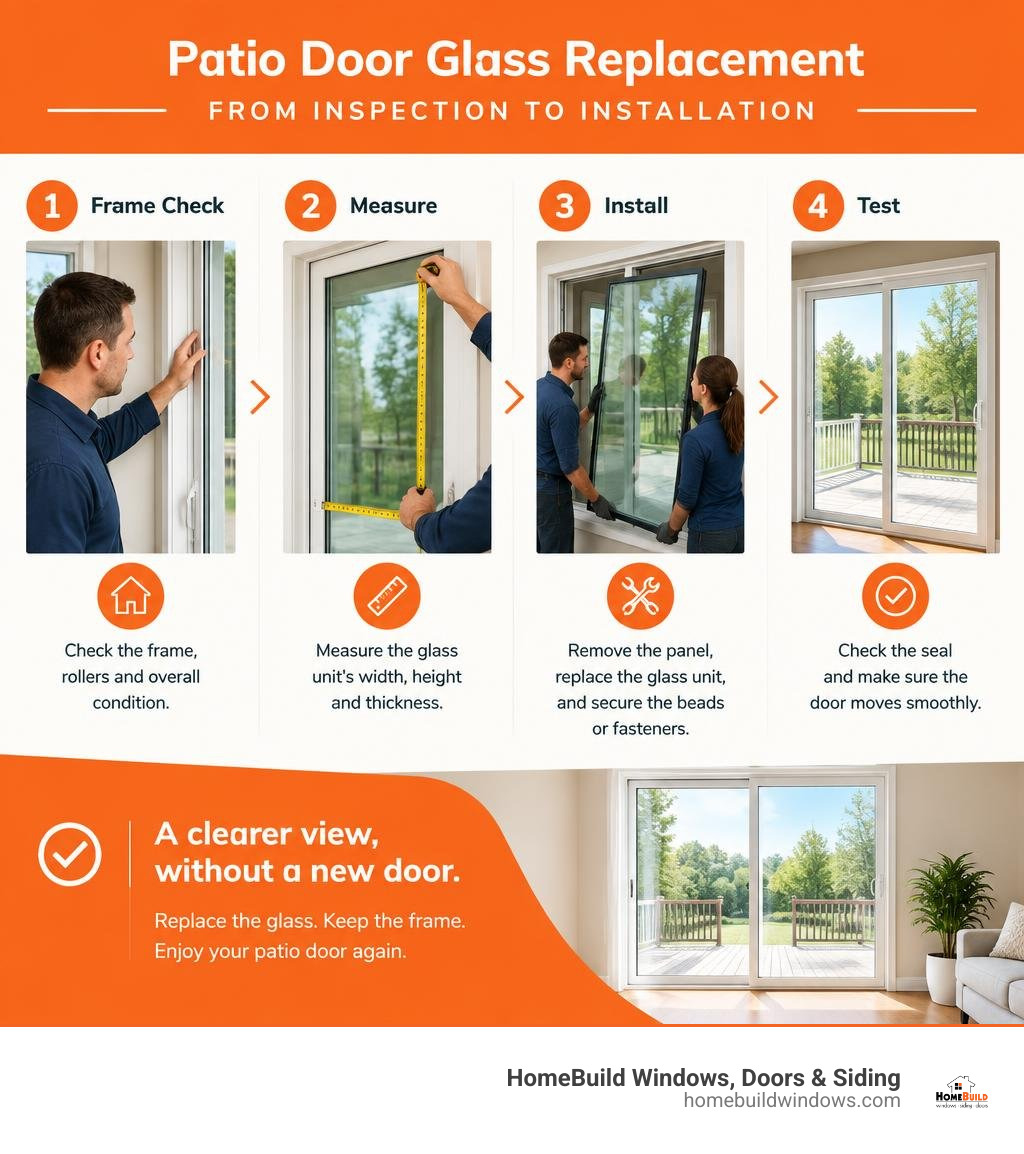
Yes, you can usually replace just the glass if the patio door frame is sound and the door works properly. A professional glass replacement involves checking the frame and rollers, identifying the door model, measuring the existing glass unit’s width, height, and thickness, and ordering a matching safety-glass unit. The technician then removes the sliding panel, releases the glazing beads or frame fasteners, installs the new unit, and tests the seal and door movement.
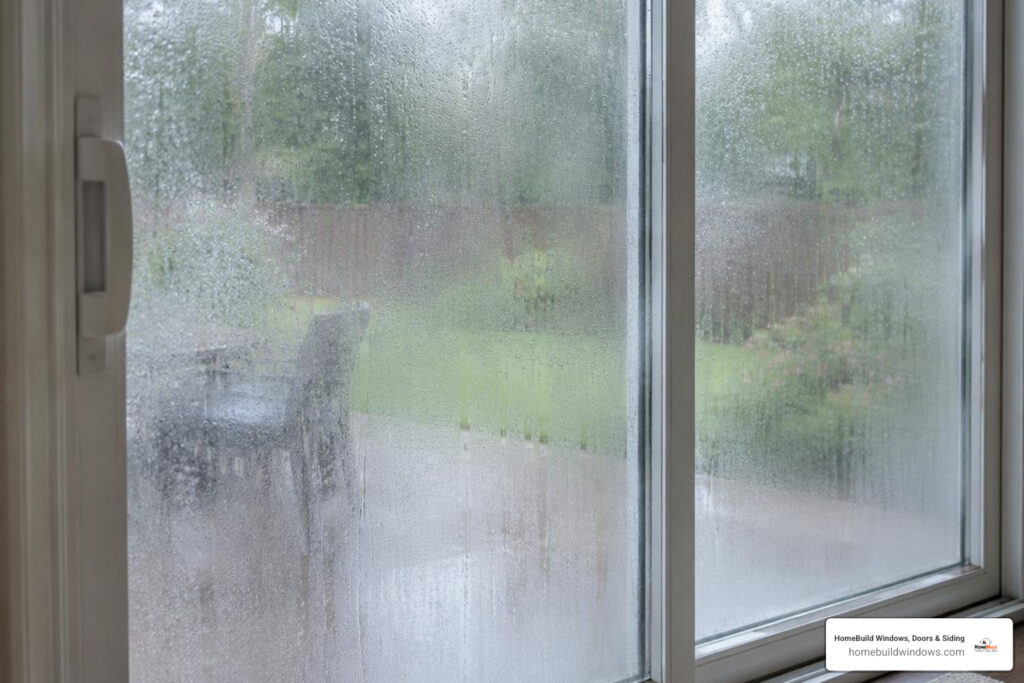
If the cloudiness is between two panes, the sealed glass unit has likely failed. Cleaning the surface will not clear it; replacing the unit can, without changing the whole door.
I’m Steve Mlynek, founder of HomeBuild Windows, Doors & Siding, a locally owned, licensed, and insured contractor serving the Chicago area since 2004. I supervise every project and draw on more than 20 years in window and door replacement to help homeowners decide when replacing patio door glass is the right fix.
Can You Replace Just the Glass in a Patio Door?
Homeowners often assume a shattered panel or foggy view means tearing out the entire door system. In reality, modern sliding doors are built with modular components. The insulated glass unit (IGU)—the sealed sandwich of two glass panes separated by an air spacer—sits inside an outer sash frame. When the frame, tracks, and roller hardware remain structurally sound, replacing only the glass is entirely possible.
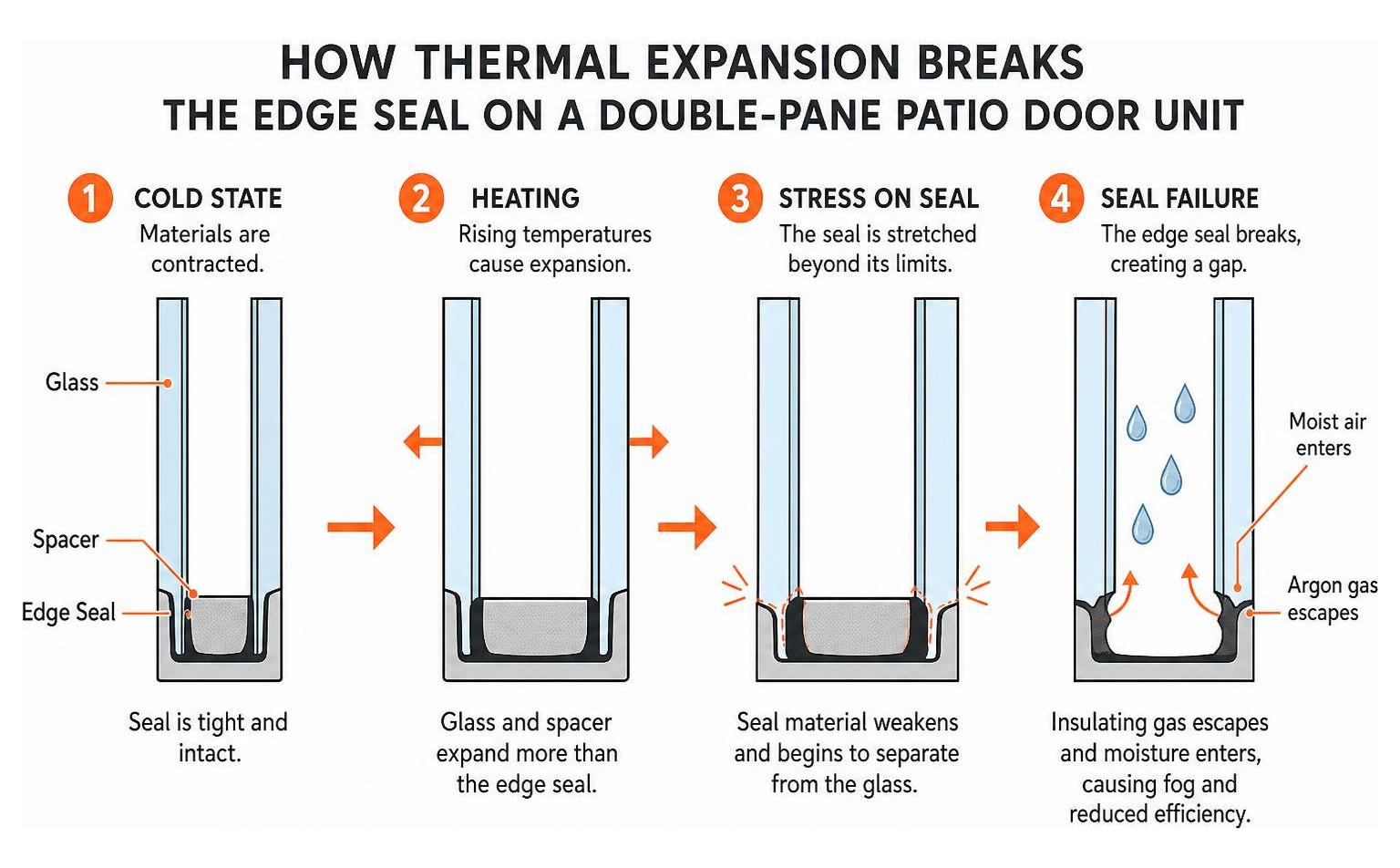
Our harsh Chicagoland climate puts immense stress on patio doors. The relentless cycle of subzero winter blasts, whipping lake winds off Lake Michigan, seasonal freeze-thaw cycles, and muggy summer humidity causes materials to expand and contract repeatedly. Over time, this natural movement degrades the perimeter seal of the glass unit, allowing insulating argon gas to escape and moist air to seep inside. Reviewing your patio door renovation options helps determine whether a quick glass refresh or a full system upgrade fits your home’s needs.
| Consideration Factor | Glass-Only Replacement | Full Patio Door Replacement |
|---|---|---|
| Frame Condition | Must be plumb, square, and structurally sound | Warped, rotted, or structurally compromised |
| Track & Rollers | Glides smoothly with minimal wear | Bent, corroded, or jumping tracks |
| Energy Efficiency | Restores pane insulation and clarity | Upgrades entire system including frame thermal breaks |
| Typical Lead Time | Fast turnaround (7–10 business days) | Longer manufacturing lead times (4–6+ weeks) |
| Exterior Impact | Leaves interior trim and exterior siding untouched | Involves removing perimeter trim, siding integration, and flashing |
When Replacing Patio Door Glass Is the Right Choice
Choosing to replace only the glass unit is the best path forward when the surrounding framework is in pristine condition. If your sliding door still glides effortlessly across its track, the perimeter weatherstripping forms an airtight seal, and the locking hardware latches securely, there is no structural reason to remove the frame.
This approach works exceptionally well for classic brick bungalows in Chicago or mid-century ranches in Schaumburg that feature high-end wood or heavy-duty vinyl door frames. If a stray lawnmower pebble cracks an exterior pane, or winter condensation permanently clouds your double-pane unit, our broken glass door replacement service restores clear views and thermal efficiency without disturbing your home’s interior trim or exterior cladding.
When Full Patio Door Replacement Is Necessary
While a glass swap is efficient, it cannot fix structural failure. If the door frame has racked out of square due to foundation settling, or moisture has rotted the structural subfloor beneath the threshold, simply inserting new glass will not stop persistent drafts or water leaks.
You should opt for a full patio door replacement in Chicago under the following conditions:
- Warped or cracked door frames: Distorted frames pinch new glass units, causing stress fractures during sudden winter temperature swings.
- Corroded or broken tracks: If the door drags, sticks, or requires brute force to open despite roller adjustments, the track system is worn out.
- Obsolete, discontinued systems: Older single-pane doors from the 1970s and 1980s lack modern thermal breaks, multi-point locking mechanisms, and modern safety glazing.
- Extensive moisture rot: Soft spots in surrounding timber framing or drywall demand complete removal to restore your building envelope’s weather-tight barrier.
Step-by-Step Guide to Replacing Patio Door Glass
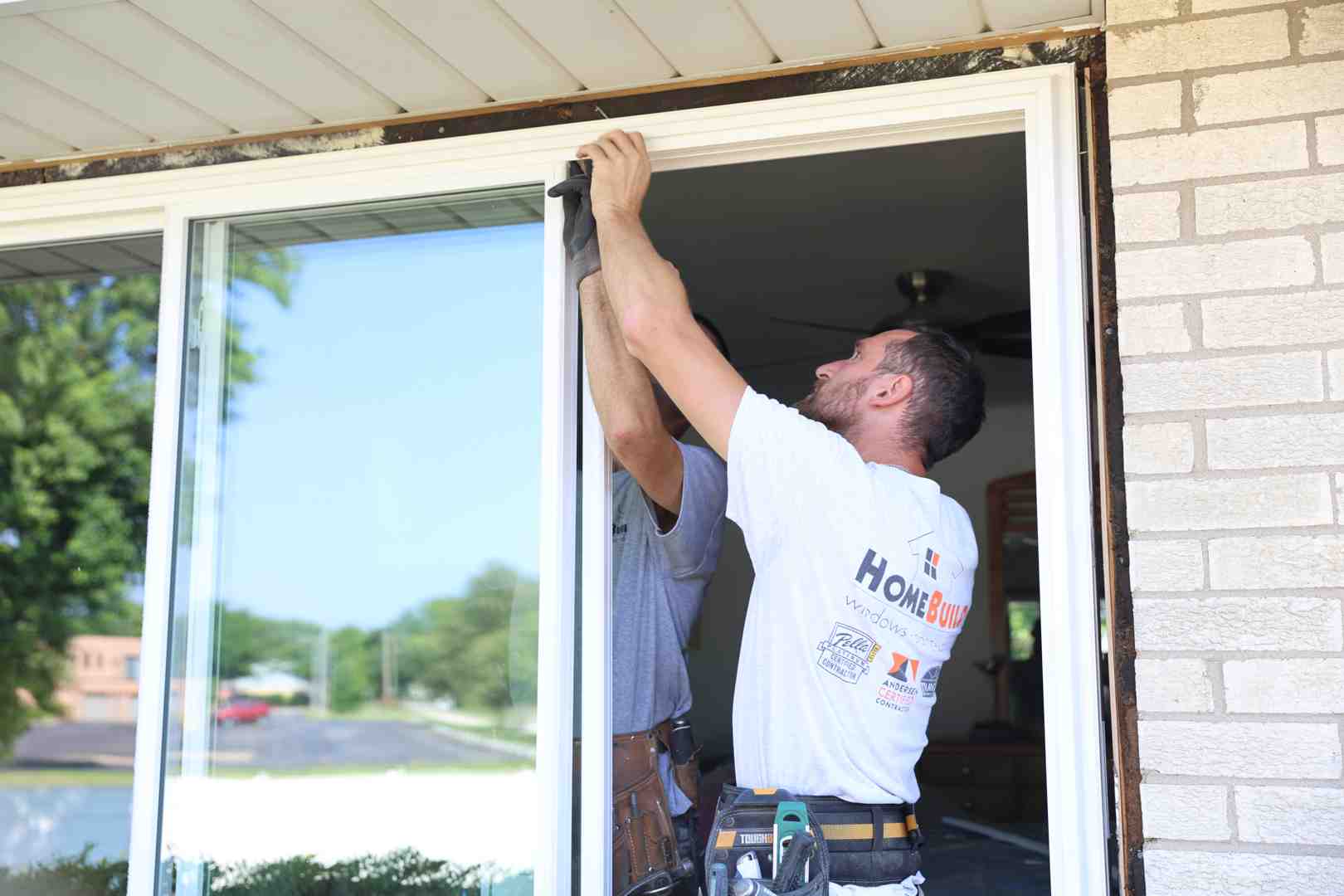
Understanding what happens during a professional glass replacement helps homeowners appreciate the precision, heavy lifting, and safety protocols involved. Professional glaziers follow proven step-by-step patio door glass replacement methods to ensure your door operates seamlessly and withstands severe weather.
Essential Tools and Safety Equipment
Handling large panels of architectural safety glass requires dedicated protective gear and specialized glazing tools:
- Personal Safety Gear: Heavy-duty, cut-resistant gloves, ANSI-rated safety goggles, and sturdy steel-toe work boots.
- Lifting Equipment: Industrial dual-locking suction cup lifters designed for heavy glass panels.
- Disassembly Tools: Precision screwdrivers, rigid putty knives, a non-marring rubber mallet, and a utility knife.
- Glazing Supplies: High-grade neutral-cure silicone sealant, neoprene or rubber setting blocks, and protective moving blankets to pad work surfaces.
Step 1: Remove the Sliding Door Panel
Before the glass can be accessed, the active sliding sash must be safely disengaged from the outer frame. Technicians locate the lower roller adjustment screws—often hidden behind plastic trim caps at the bottom corners of the door—and turn them counterclockwise to retract the wheels fully into the sash.
Once the door drops down into the bottom track, the interior head stop at the top jamb is unscrewed. With a technician on each side using suction cups, the heavy panel is lifted straight up into the top channel, swung inward at the bottom, and transferred carefully onto padded sawhorses.
Step 2: Disassemble the Frame and Extract the Glass
Sliding patio door glass is typically secured using one of two primary assembly styles:
- Snap-In Glazing Beads: Common on modern vinyl and fiberglass doors. Technicians use a rigid putty knife to unclip the interior vinyl retention strips without snapping the delicate mitered corners.
- Wrap-Around Sash Frames: Found on many aluminum and wood doors. Corner assembly screws are backed out, allowing the top, bottom, and side rails to be carefully tapped away from the glass using a rubber mallet.
After breaking the factory perimeter seal with a utility knife, the damaged insulated unit is lifted out and staged for proper recycling. The inner frame channels are then thoroughly scraped, vacuumed, and degreased to remove old butyl tape and dried silicone.
Step 3: Install and Seal the Replacement Glass Unit
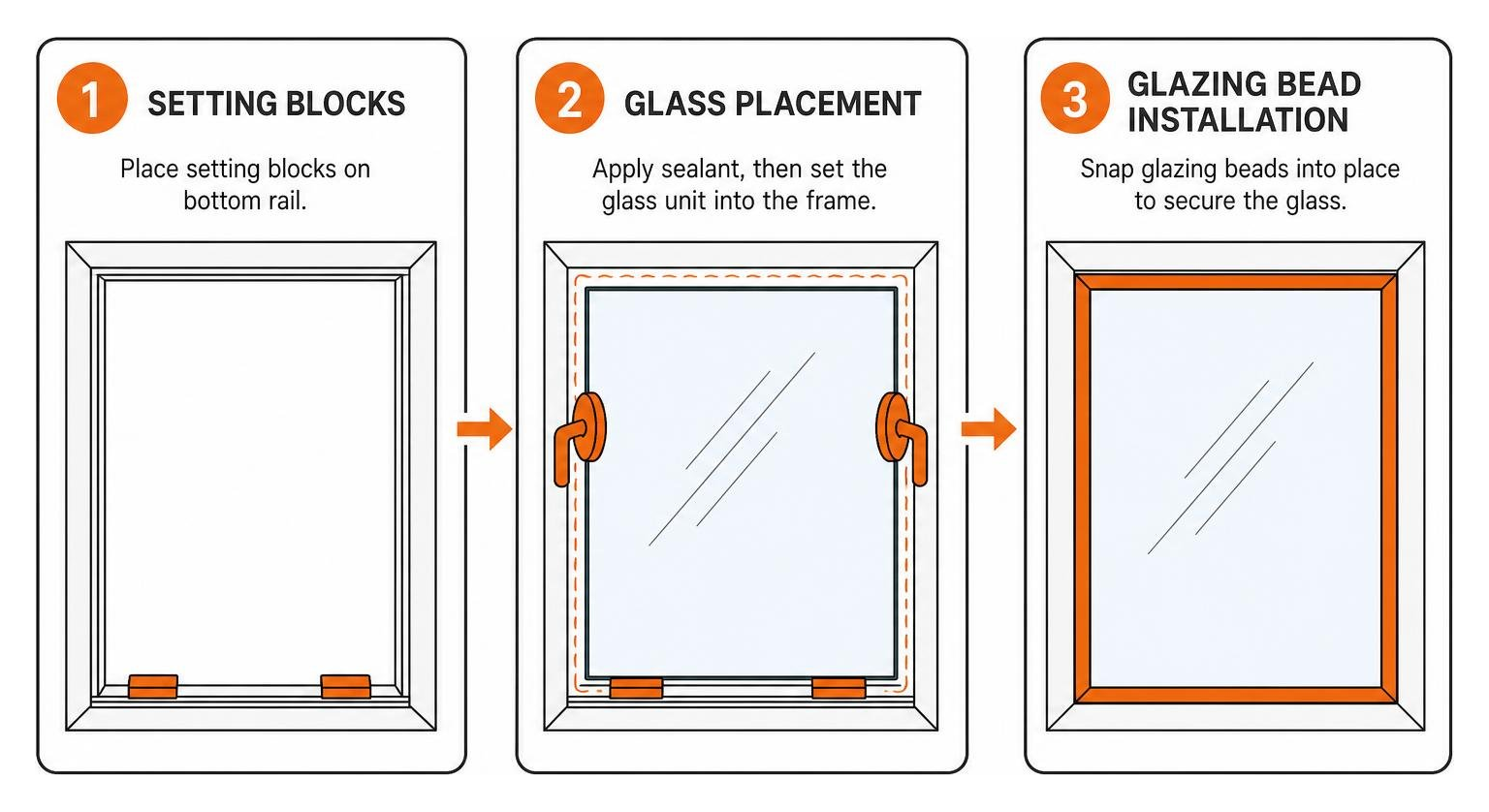
The new insulated glass unit must meet strict sliding door safety glass requirements to withstand heavy winds and daily operation. Setting blocks are placed at strategic load points along the bottom rail to cushion the glass and keep it centered in the frame pocket.
A continuous bead of commercial-grade silicone glazing sealant is applied along the interior frame lip. The new glass unit is lowered into position using suction cups, firmly pressed against the sealant bed, and secured by snapping the glazing beads back into place or reassembling the sash frame screws.
Step 4: Reinstall and Adjust the Door Panel
With the sash reassembled, the heavy panel is carried back to the opening, inserted top-first into the upper header channel, and swung down onto the stainless steel bottom track. Technicians turn the lower adjustment screws clockwise to raise the door to the exact operating height.
The door is adjusted until it sits completely plumb against the side jamb, engaging the weatherstripping evenly. Finally, the technicians verify that the mortise lock latches smoothly without sticking.
Choosing the Right Glass for Patio Door Performance
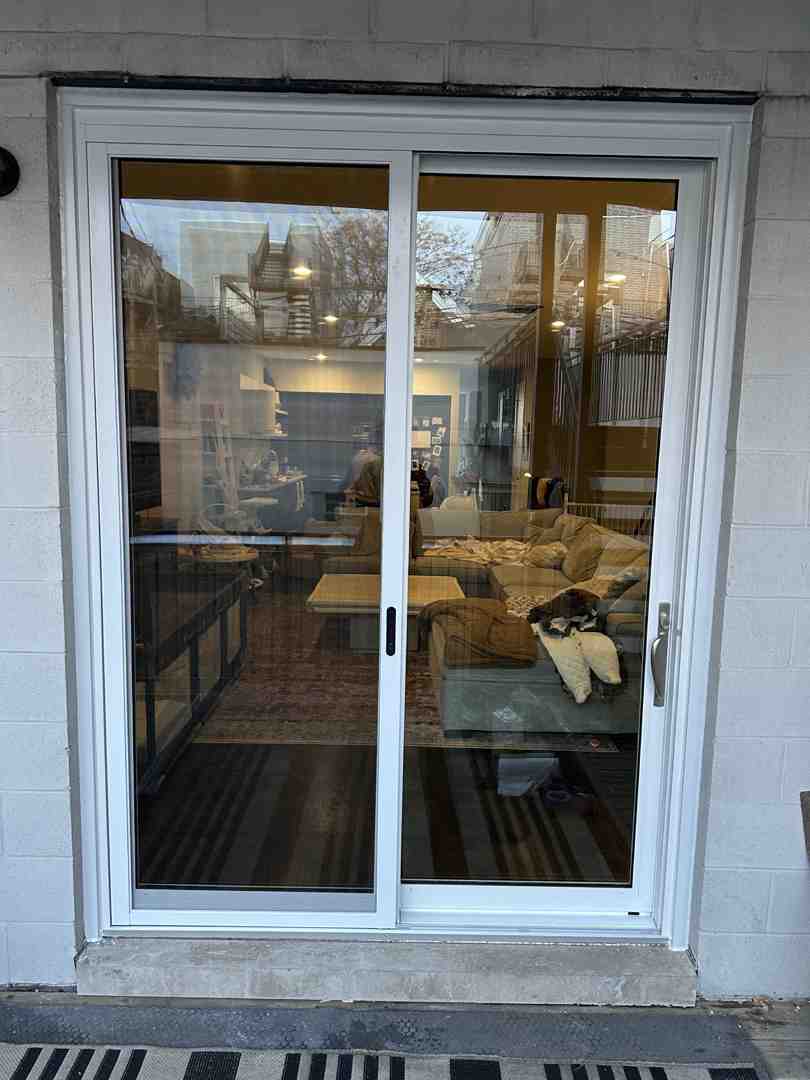
Upgrading your patio glass provides a major boost to your home’s comfort and energy conservation. Exploring comprehensive home glass services allows you to choose modern glazing technologies designed specifically to keep Chicago homes warm through biting January freezes and cool during humid July heatwaves.
Tempered Safety Glass and Building Codes
Residential building codes mandate that all glass within patio doors—both sliding and swinging French models—must be certified safety glazing. Tempered glass undergoes a specialized thermal heating and rapid cooling process that makes it roughly four times stronger than standard annealed glass.
If tempered glass ever encounters an extreme impact, it disintegrates into small, dull-edged pebbles rather than dangerous, jagged shards. When we install glass from industry-leading manufacturers like Pella, Andersen, and ProVia, every panel features a permanent laser-etched safety bug confirming compliance with national impact standards.
Low-E Coatings and Argon Gas Insulation
Modern replacement glass units feature microscopically thin Low-Emissivity (Low-E) metal oxide coatings applied to the internal glass surfaces. In the winter, Low-E glass reflects indoor radiant heat back into your living room, keeping rooms comfortable in historic Evanston two-flats and Naperville colonials alike. During summer, it blocks unwanted solar heat gain and harmful ultraviolet rays that fade hardwood floors and furniture.
To maximize insulation, the space between the panes is filled with non-toxic, dense argon gas. Combined with warm-edge composite spacers that reduce thermal bridging along the perimeter, these modern glass units virtually eliminate winter drafts and condensation buildup.
Measuring for Precision and Proper Fit
Precision is vital when ordering replacement glass. Because tempered glass cannot be cut, trimmed, or shaved after manufacturing, every measurement must be accurate to within a sixteenth of an inch. Technicians measure the daylight opening (the visible glass area) along with the internal sash pocket depth to calculate the exact height, width, and overall unit thickness (typically 3/4-inch to 1-inch for double-pane doors).
Common Mistakes to Avoid When Replacing Patio Door Glass
Replacing patio door glass involves tight tolerances and heavy components. Working with experienced technicians for professional sliding patio door installation prevents the frequent pitfalls of improper handling:
- Incorrect Thickness Measurements: Overlooking the exact spacer width results in an insulated unit that is too thick for the glazing pocket or too loose for the weatherseal.
- Skipping Heavy Safety Gear: Large glass lites can weigh over 100 pounds. Handling them without cut-resistant gloves or industrial suction lifters creates significant injury risks.
- Damaging Glazing Beads: Forcing or prying vinyl beads with metal screwdrivers cracks brittle components that are difficult or impossible to source for older doors.
- Inadequate Weather Sealing: Skipping perimeter silicone bedding allows wind-driven rain from Lake Michigan to enter the sash frame, leading to hidden mold and water damage.
- Neglecting Roller Maintenance: Reinstalling a sash without cleaning debris from the bottom track or lubricating roller bearings accelerates hardware failure.
Maintaining Patio Door Hardware and Glass Longevity
Regular care protects your investment and ensures your newly glazed patio door continues to operate smoothly through seasonal weather swings:
- Clean the Tracks Frequently: Vacuum dirt, leaves, and pet hair out of the lower track channels to prevent roller binding and track scarring.
- Lubricate Moving Components: Apply a silicone-based spray to the rollers and latch mechanisms every spring and autumn. Avoid oil-based lubricants, which attract grit.
- Inspect Weatherstripping: Check perimeter seals for flattening or tears before winter arrives to keep drafts and moisture out of your living space.
- Wipe Glass with Mild Cleaners: Use non-abrasive glass cleaners and microfiber cloths to preserve optical clarity and protect glass coatings.
Frequently Asked Questions About Patio Door Glass
Can I replace fogged double-pane glass without changing the door frame?
Yes. If your door frame is square, structurally sound, and operates smoothly, you can replace just the failed insulated glass unit. A technician removes the sash, extracts the cloudy double-pane unit, and installs a brand-new, factory-sealed Low-E glass panel while keeping your existing frame and trim intact.
Is tempered glass legally required for residential patio doors?
Yes. Building codes require safety glazing for all doors, sidelights, and windows located within close proximity to walking surfaces or floor level. Patio door glass must be tempered or laminated to prevent severe injury in the event of an accidental impact.
Should I replace patio door glass myself or hire a professional?
Because patio door glass panels are extremely heavy, require exact sizing tolerances, and demand airtight perimeter seals to endure freeze-thaw cycles, hiring a licensed professional is strongly advised. Certified installers have the specialized lifting equipment, glazing knowledge, and manufacturer access needed to ensure safe, code-compliant, and weather-tight results.
If you are dealing with foggy panes, seal failure, or drafty sliding doors, trust the experienced local team at HomeBuild Windows, Doors & Siding. Schedule a free estimate today to restore clarity, comfort, and energy efficiency to your home.