

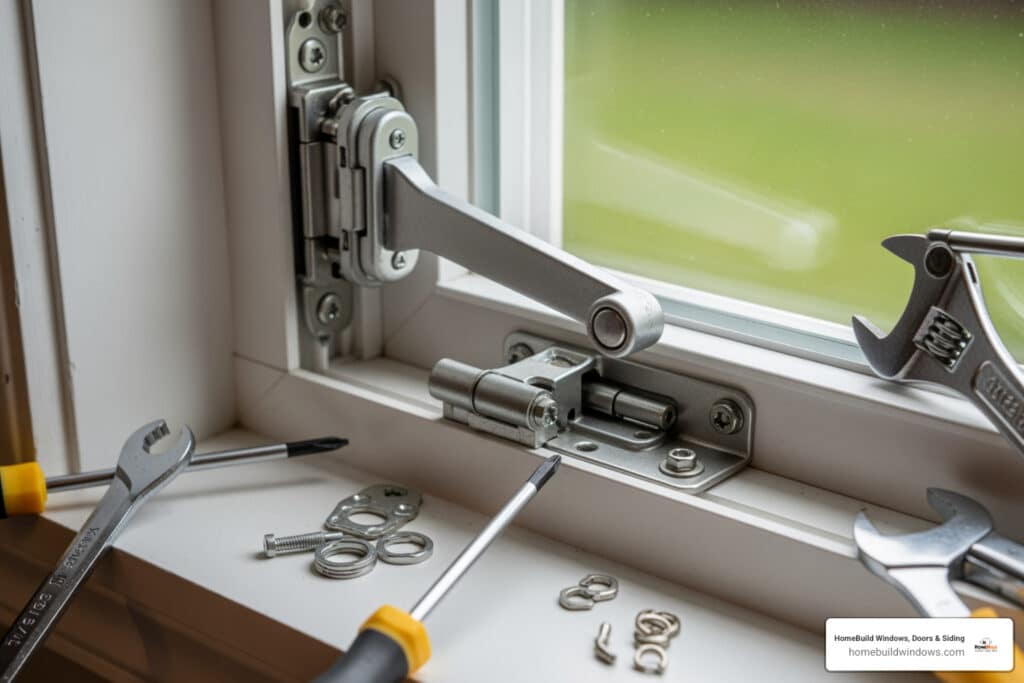
When Your Awning Window Won’t Open Right — It’s Probably the Hardware
Awning window hardware replacement is the process of swapping out worn or broken mechanical parts — like operators, hinges, and locks — that control how your awning window opens, closes, and seals.
Here’s a quick overview of what the process involves:
- Identify the problem part — operator, hinge, sash lock, or crank handle
- Match your window brand — Truth, Andersen, Pella, Roto, and others use brand-specific parts
- Measure and determine handing — get the right size and left- or right-hand orientation
- Source the replacement part — from a specialty hardware supplier or your window manufacturer
- Remove the old part and install the new one — usually with basic hand tools
Most awning window hardware issues are fixable without replacing the entire window.
Awning windows are top-hinged and swing outward — a smart design that lets in fresh air even during light rain. That makes them popular in Chicago-area homes, especially in kitchens, bathrooms, and basements. But the hardware that makes them work — the crank operators, scissor arms, hinges, and locks — takes a beating over time. Cold Midwest winters, humidity, and daily use all wear these parts down. When the crank gets stiff, the sash won’t seal, or the hinges start to drag, the window stops doing its job.
The good news? In many cases, replacing just the hardware is enough to restore full function — no full window replacement needed.
I’m Steve Mlynek, CEO and founder of HomeBuild Windows, Doors & Siding, and with over 20 years of hands-on experience in window installation and replacement across the Chicago area, I’ve seen nearly every type of awning window hardware replacement challenge there is. Whether it’s a stripped operator on a 20-year-old Andersen window or a corroded hinge on a Pella unit, this guide will walk you through exactly what to do.
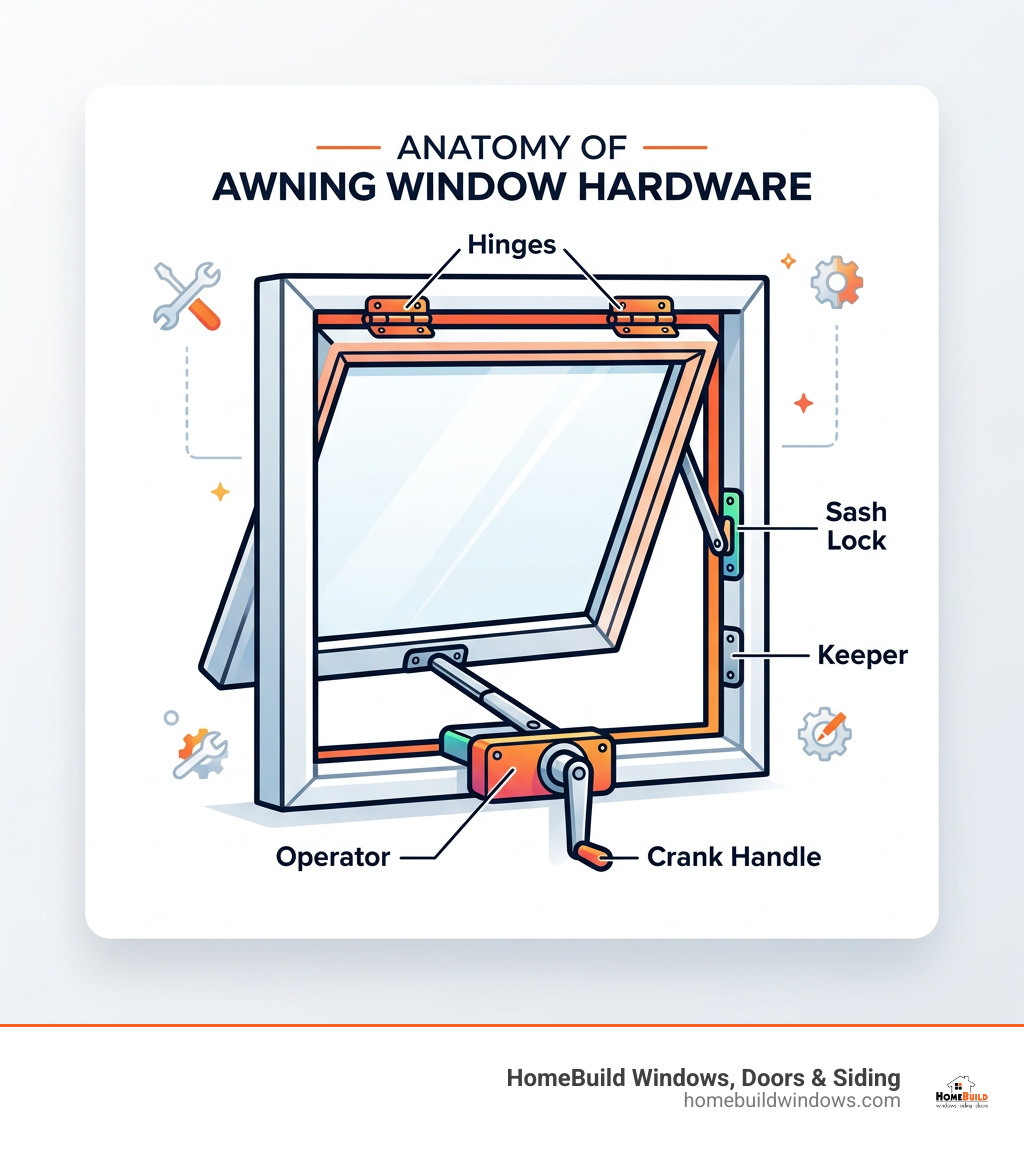
Key awning window hardware replacement vocabulary:
Understanding Your Awning Window Hardware Components
Before we dive into the “how-to,” let’s look at the “what.” Awning windows rely on a specific ecosystem of parts to function. If one piece fails, the whole system can feel “off.” According to Awning Windows Parts & Hardware | Window Hardware Company, these windows are typically wider than they are tall, which places unique stress on the mechanical components.
- Operators (The “Crank”): This is the gearbox that moves the window. You’ll find different styles, including Roto-Gear (the most common), lever style, or push-bar operators. Most modern operators use die-cast zinc housing and hardened steel gear arms for durability.
- Crank Handles: These attach to the operator’s spline. We often see homeowners upgrading to folding handles or low-profile “T-handles” to keep them from bumping into blinds or curtains.
- Scissor Arms & Dual Arms: These are the metal “limbs” that extend from the operator to the window sash. They push the window open and pull it shut.
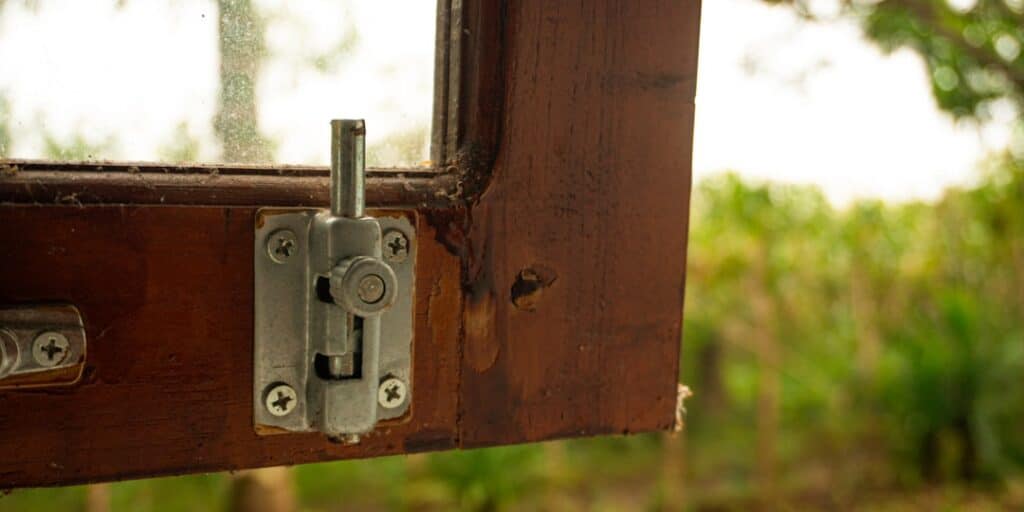
- Sash Locks and Keepers: Usually located on the sides of the window, these pull the sash tight against the weatherstripping. A good lock, like the AmesburyTruth Maxim series, can withstand significant force to keep your home secure and draft-free.
- Friction Hinges: Unlike a door hinge, awning hinges often include a sliding track. These are critical for balancing the weight of the sash as it tilts outward. If you’re noticing your window sagging, check out our Awning window hinges replacement guide for specific troubleshooting.
In our humid Chicago summers and snowy winters, we always recommend looking for stainless steel or corrosion-resistant options. Parts coated in “E-Gard” or other electrostatic finishes will last much longer against the elements.
Identifying the Right Parts for Your Window
The biggest hurdle in awning window hardware replacement isn’t the installation—it’s finding the exact match. Window hardware is rarely “universal.” A part for a Pella window likely won’t fit an Andersen or a Marvin unit.
- Brand Identification: Look for logos stamped into the metal of the operator arm, the handle, or the lock. Common names include Truth (often branded as AmesburyTruth), Roto, Andersen, and Pella.
- Series and Year: Manufacturers change designs every few years. For example, Andersen Awning Window Parts include specific series like the 100 Series, 400 Series, and the A-Series, with hardware dating back to 1959.
- OEM vs. Aftermarket: Whenever possible, we use Original Equipment Manufacturer (OEM) parts to ensure the screw holes line up perfectly.
Measuring for Awning Window Hardware Replacement
If you can’t find a brand name, you’ll need to rely on measurements. Precision is your best friend here.
- Track Length: Measure the metal track attached to the window frame or sash. Common sizes are 10, 14, or 18 inches.
- Arm Extension: Measure the length of the operator arm when it is fully extended.
- Spline Size: The spline is the “toothed” nub where the handle attaches. The industry standard is 11/32 inch, but older or specialty windows may differ.
If you are replacing the guide that the arm slides into, follow our guide on How to replace awning sash guide to ensure the new one aligns with your existing operator.
Determining Handing for Awning Window Hardware Replacement
One of the most common mistakes we see in DIY repairs is ordering a “left-hand” part for a “right-hand” window. For awning windows, “handing” is usually determined by looking at the window from the inside of your home.
- Locks: If the lock is on the left side of the frame (viewed from inside), you need a left-hand lock.
- Operators: Some dual-arm operators are non-handed, but many single-arm models are specific. Check the manufacturer’s markings; they often stamp “LH” or “RH” directly onto the metal.
For a comprehensive look at various brand configurations, All Awning Window Parts provides a great breakdown of legacy brands like Peachtree and Crestline, which often have unique handing requirements.
Signs Your Hardware Needs Immediate Attention
Living in the Chicago area means our windows face extreme temperature swings. These conditions can accelerate hardware failure. You should consider awning window hardware replacement if you notice:
- Stripped Gears: You turn the crank, but the window doesn’t move, or you hear a “grinding” noise. This usually means the internal gears of the operator are worn down.
- Corroded Hinges: Rust on the hinges can cause the window to “stick” or drag, which puts extra strain on the operator.
- Difficult Cranking: If you have to use excessive force to close the window, you’re likely dealing with misaligned hinges or a failing gear box.
- Drafty Seals: If the window is closed but you feel a breeze, the sash locks might not be “drawing in” the window tightly enough. This is a major cause of heat loss during our frigid winters.
If you find that the hardware is fine but the glass itself is foggy or cracked, you might need a different approach. Check our Awning Window Pane Replacement Guide for help with glass-specific issues.
Step-by-Step Guide to Replacing Operators and Hinges
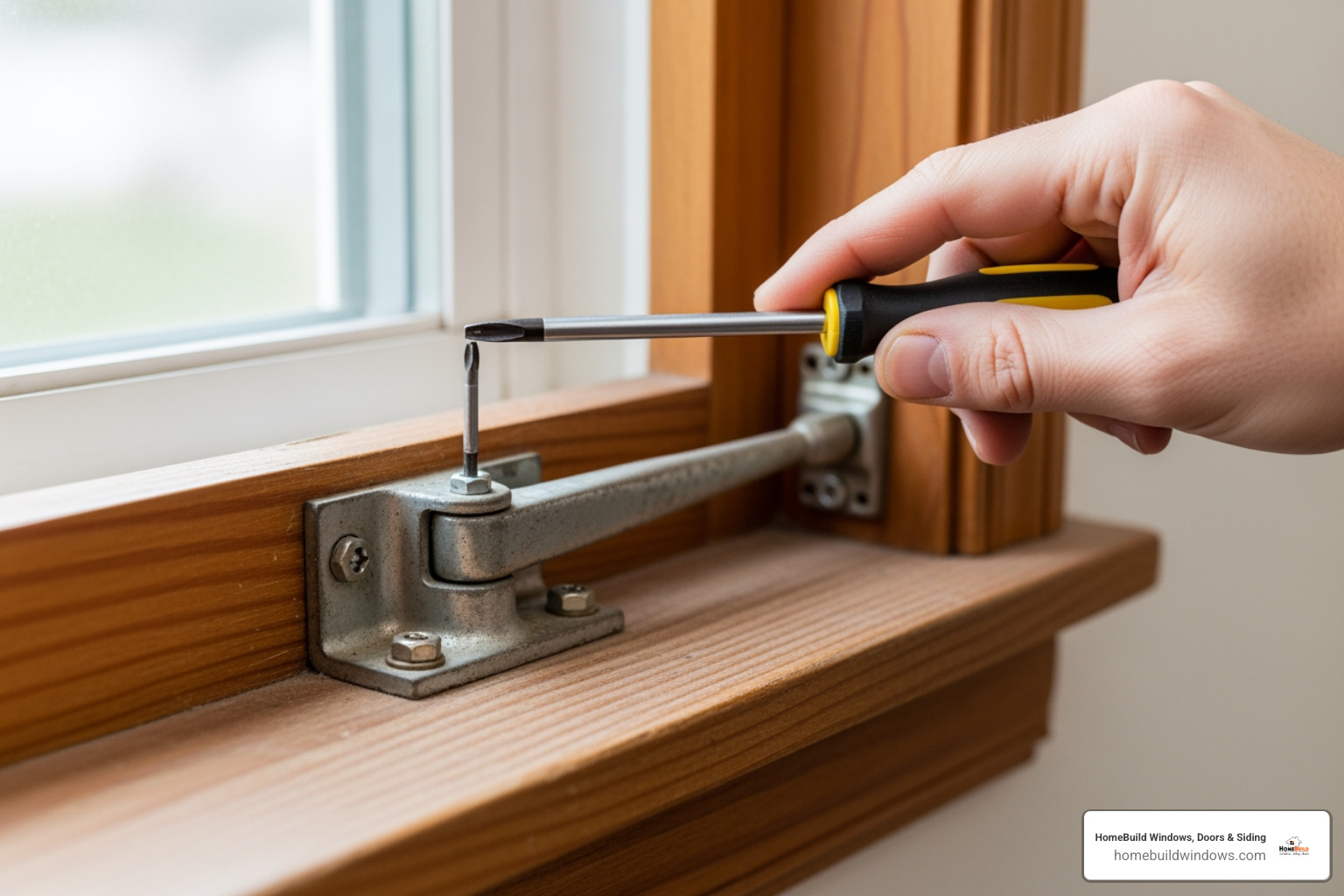
Ready to get to work? Most awning window hardware replacement projects can be completed in about 30 to 60 minutes.
Tools Required:
- Screwdriver (usually Phillips, sometimes Square/Robertson)
- Putty knife (to gently pry off covers)
- Small pliers
- Safety glasses
- Silicone-based lubricant
The Process:
- Open the window: Crank the window open as far as it will go. If the operator is totally broken, you may need to have a helper gently push the sash from the outside while you turn the handle.
- Detach the arms: Locate where the operator arms connect to the sash. There is usually a sliding shoe in a track or a clip holding the arm to a stud. Use your pliers or a screwdriver to release the clip.
- Remove the handle and cover: Pull off the crank handle and the plastic cover (nest) that sits over the operator.
- Unscrew the operator: Remove the mounting screws holding the operator to the window sill. Keep these screws! Sometimes the new part doesn’t come with them, and you’ll need the originals.
- Install the new operator: Place the new unit in the same position. If the screw holes are slightly different, you may need to pre-drill small pilot holes.
- Reconnect and test: Attach the arms back to the sash, replace the cover and handle, and test the operation. If it feels stiff, apply a little silicone spray to the tracks.
For a more detailed walkthrough, visit our specific tutorial on How to replace an awning window operator.
Safety Precautions During Awning Window Hardware Replacement
We can’t stress this enough: safety first. Awning windows open outward, which means when you disconnect the hardware, the sash is essentially “floating.”
- Sash Support: Always have a helper hold the window sash from the outside, or use a sturdy block to prop it up. You don’t want the window to fall out of the frame while the hinges are disconnected.
- Falling Hazards: If you’re working on a second-story window, never lean out to reach the hardware. Work from a secured ladder or from the interior whenever possible.
- Eye Protection: Old hardware can snap or splinter. Wear safety glasses to protect against flying metal bits or old, brittle plastic.
- Glass Safety: If the sash is heavy or the frame is old, be careful not to put pressure on the glass itself. If the glass is already compromised, see our guide on How to replace glass in awning window.
Professional vs. DIY Awning Window Hardware Replacement
Can you do this yourself? Absolutely. If you’re handy with a screwdriver and have the patience to track down the right part number, DIY is a great way to save.
However, there are times when calling a professional like us at HomeBuild Windows, Doors & Siding is the smarter move:
- Warranty Protection: If your windows are still under warranty, a DIY repair might void it. As an Elite Platinum Pella Certified Contractor and an Andersen Certified Contractor, we ensure all repairs meet manufacturer standards.
- Structural Issues: Sometimes the problem isn’t the hardware—it’s a warped frame or wood rot. We can diagnose if you need a simple fix or a full Awning windows replacement.
- Energy Efficiency: If your windows are drafty despite new hardware, there may be an underlying seal issue. We focus on maximizing your home’s insulation and Midwest weather protection.
- Expertise: With over 200 positive Google reviews and a history of serving suburbs from Barrington to Des Plaines, we bring 20+ years of experience to every job. Our projects are owner-supervised, ensuring the highest standards of quality workmanship.
Frequently Asked Questions about Awning Hardware
How do I maintain my new awning window hardware?
Maintenance is the best way to avoid future awning window hardware replacement. Once a year, clean the tracks with a damp cloth to remove grit and salt. Apply a dry silicone spray to the moving parts and the hinge tracks. Avoid “wet” lubricants like WD-40, as they can attract dust and turn into a sticky mess over time.
Can I upgrade to stainless steel hardware?
Yes! Many manufacturers, including Truth and Andersen, offer stainless steel versions of their operators and hinges. This is a fantastic upgrade for Chicago homes, as it provides superior corrosion resistance against snow, rain, and humidity. It’s a “install it and forget it” solution for long-term durability.
Why is my awning window crank spinning without opening?
This is almost always a sign of stripped internal gears. The “worm drive” inside the operator has likely worn down. In some cases, the splines on the handle itself are stripped. Try a different handle first; if it still spins, you’ll need to replace the entire operator unit.
Conclusion
Your windows are one of the most important parts of your home’s exterior. They provide security, curb appeal, and—perhaps most importantly in the Midwest—protection against the elements. Keeping your hardware in top shape ensures your home stays comfortable and energy-efficient year-round.
Whether you’re looking for a quick DIY fix or considering a full Awning windows replacement to upgrade your home’s value, HomeBuild Windows, Doors & Siding is here to help. We’ve spent two decades helping homeowners in Arlington Heights, Schaumburg, and throughout the Chicagoland area find the perfect solutions for their homes.
If you’re tired of fighting with a stubborn window, contact us today for a free estimate. Let’s make sure your windows work exactly as they should!