


Why House Window Installation Matters for Your Chicago Home
House window installation is a high-impact home improvement project that directly affects your energy bills, comfort, and home value. Correct installation prevents drafts, lowers heating and cooling costs, and stops water damage. Conversely, poor installation leads to air leaks, moisture problems, and costly repairs, even with high-quality windows.
Key Considerations:
- Installation Method: Choose between a full-frame installation (complete replacement, best for rot or changing window size) or a pocket/insert installation (new window in the existing frame, faster and more affordable).
- Success Factors: Proper water management, level positioning, quality insulation, and professional expertise are crucial.
- Cost & ROI: Full-frame costs 50-100% more than pocket installation. While DIY saves on labor, it risks voiding warranties. Vinyl replacement windows offer a strong ROI of roughly 67%.
The choice between DIY and professional installation depends on your skill, project scope, and risk tolerance. For complex jobs involving multiple windows, upper floors, or brick exteriors, professional help is key. As the Fenestration and Glazing Industry Alliance emphasizes, professional installation is recommended to avoid common performance issues.
I’m Steve Mlynek, CEO and founder of HomeBuild Windows. With over 20 years of experience in house window installation across Chicago, I’ve overseen thousands of projects. This guide will help you make the best choice for your home.
DIY vs. Professional Window Installation: A Head-to-Head Comparison
Deciding between a DIY house window installation and hiring professionals is a major choice for any Chicago homeowner. It’s a balance of cost, quality, and time. Let’s break down the key differences.
| Feature | DIY Installation | Professional Installation |
|---|---|---|
| Cost | Saves on labor costs, but potential for material waste and future repair costs | Higher upfront labor costs, but typically includes materials and warranty |
| Time | Flexible schedule, but often takes significantly longer (4-6+ hours per window) | Efficient completion (1-2 days for multiple windows), less disruption to your schedule |
| Skill Level | Requires significant carpentry skills, precision, and attention to detail | Handled by experienced, certified installers with specialized training |
| Tools | Requires purchasing or renting specialized tools, plus safety gear | Installers arrive with all necessary professional-grade tools and equipment |
| Warranty | Manufacturer warranties may be voided if not installed by certified professionals | Often includes labor and product warranties, ensuring peace of mind |
| Final Quality | Varies widely based on skill; risk of leaks, drafts, and operational issues | Consistent, high-quality, weathertight, and code-compliant installation |
The scope of your project is a huge factor. Replacing a single, accessible window might be a manageable DIY task. However, replacing multiple windows, especially on upper floors or in homes with stucco or brick, dramatically increases the complexity. According to Fine Homebuilding, full-frame replacement is even more complicated on brick or stucco homes. If you’re not confident in your ability to measure precisely, use power tools, and apply waterproofing, the risks of DIY may outweigh the savings.
The Case for Professional Installation
For most homeowners, the benefits of professional house window installation are clear:
- Expertise and Efficiency: Our certified installers average 12 years of experience, ensuring the job is done right the first time, usually in just 1-2 days.
- Guaranteed Compliance and Quality: Professionals ensure your installation meets all local Chicago building codes and is free from errors that cause drafts or leaks.
- Water Damage Prevention: Experts use proper flashing techniques to prevent water intrusion, rot, and mold, protecting your home’s structure.
- Warranty Protection: Professional installation is often required to keep manufacturer warranties valid. We provide comprehensive warranties on both the product and our labor for total peace of mind. Find Certified Window Installers.
The Reality of DIY House Window Installation
While saving on labor is appealing, DIY house window installation has significant drawbacks:
- Pros: The main benefits are potential cost savings on labor, a flexible schedule, and the satisfaction of completing the project yourself.
- Cons: The risks are substantial. They include safety hazards from handling heavy materials or working at heights, the potential for costly mistakes like water damage, and voiding manufacturer warranties. Homes with brick or stucco exteriors present even greater challenges for DIYers.
Before starting, honestly assess your skills and the project’s complexity. A seemingly simple task can quickly become overwhelming and compromise your home’s integrity.
Understanding Window Installation Types and Options
The type of window and its features significantly impact the installation. In Chicago’s climate, energy efficiency is paramount. Modern windows with Low-E glass, multiple panes, and gas fills offer superior insulation, measured by U-factor and R-value. Proper house window installation is essential to ensure these features aren’t compromised by air leaks. Learn about Energy Efficient Windows in Chicago.
Full-Frame vs. Pocket (Insert) Installation
Understanding the two main installation types is crucial for your Chicago home.
-
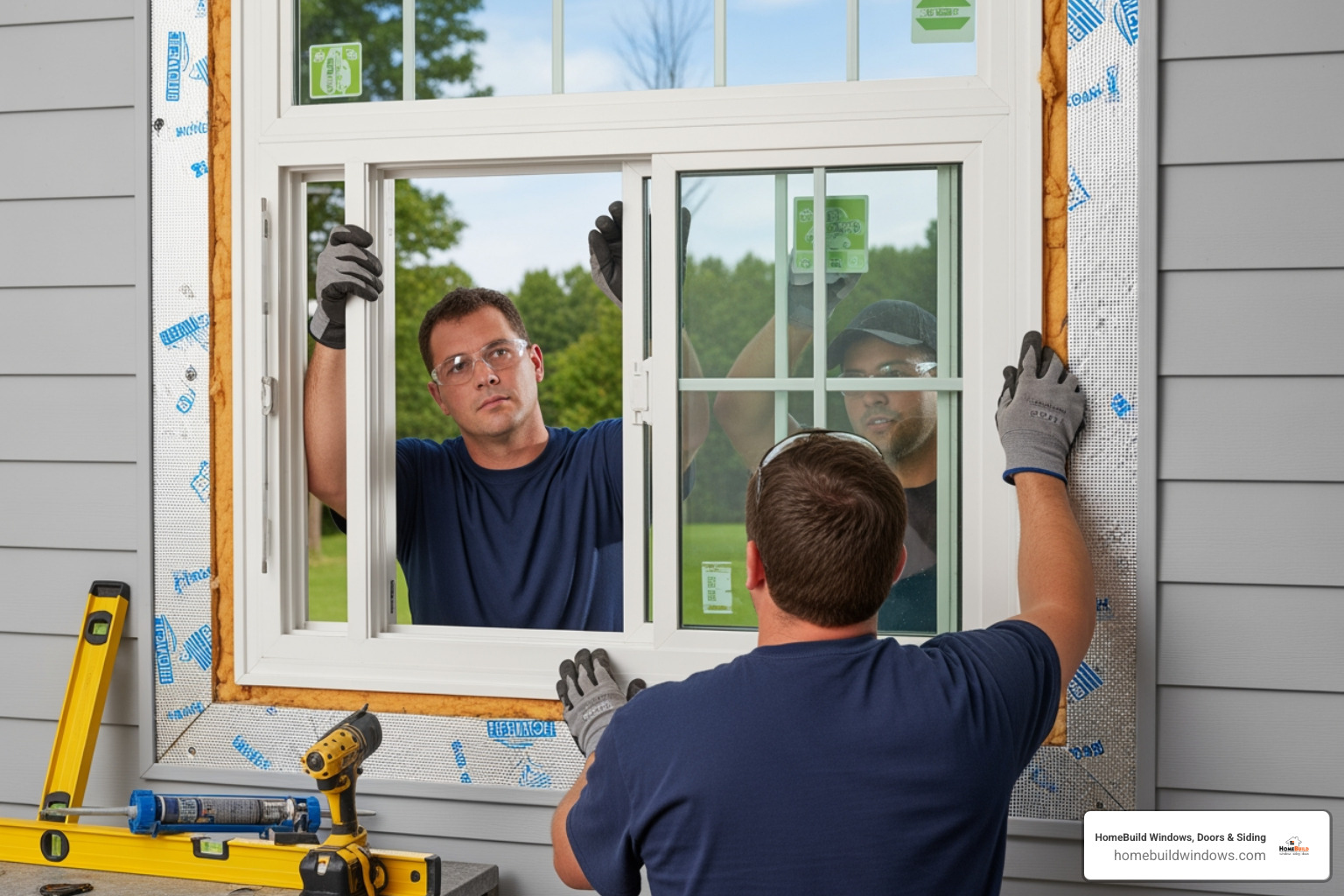
Full-Frame Installation: This method is a complete tear-out of the entire window unit—sash, frame, and trim—down to the rough opening. This allows for inspection and repair of any structural damage.
- When to Choose: Full-frame is best if existing frames are rotted or damaged, or if you want to change the window’s size or shape. It’s more involved and costs 50-100% more than an insert, but it addresses underlying issues and can maximize glass area.
-
Pocket (Insert) Installation: This less invasive method involves removing the old sashes but leaving the existing frame and trim intact. The new window unit slides into the “pocket.”
- When to Choose: Pocket installation is ideal if your frames are structurally sound and you’re happy with the current window size. It’s faster, more affordable, and well-suited for homes with brick or stucco exteriors. This method can result in a slightly smaller glass area. Vinyl replacement windows, which often use this method, offer a return on investment of roughly 67%.
Common Window Styles and Their Installation Nuances
The style of window you choose for your Chicago home can also influence the installation process.
- Double-Hung & Sliding Windows: Proper leveling is key to ensure sashes slide smoothly.
- Casement Windows: The frame must be perfectly square and plumb for the crank mechanism to operate effortlessly and seal properly.
- Picture Windows: As these are fixed, installation focuses on creating a robust, airtight, and watertight seal.
- Bay and Bow Windows: These projecting windows are more complex, often requiring structural support, roofing, and meticulous sealing, making professional installation highly recommended.
No matter the style, our goal at HomeBuild is to ensure your new windows are installed with precision and care. See options for New Windows in Chicago.
Preparing for Your Window Installation Project
Proper preparation is the key to a successful house window installation. A meticulous approach saves time, prevents errors, and ensures a smooth process from start to finish.
Essential Tools and Materials
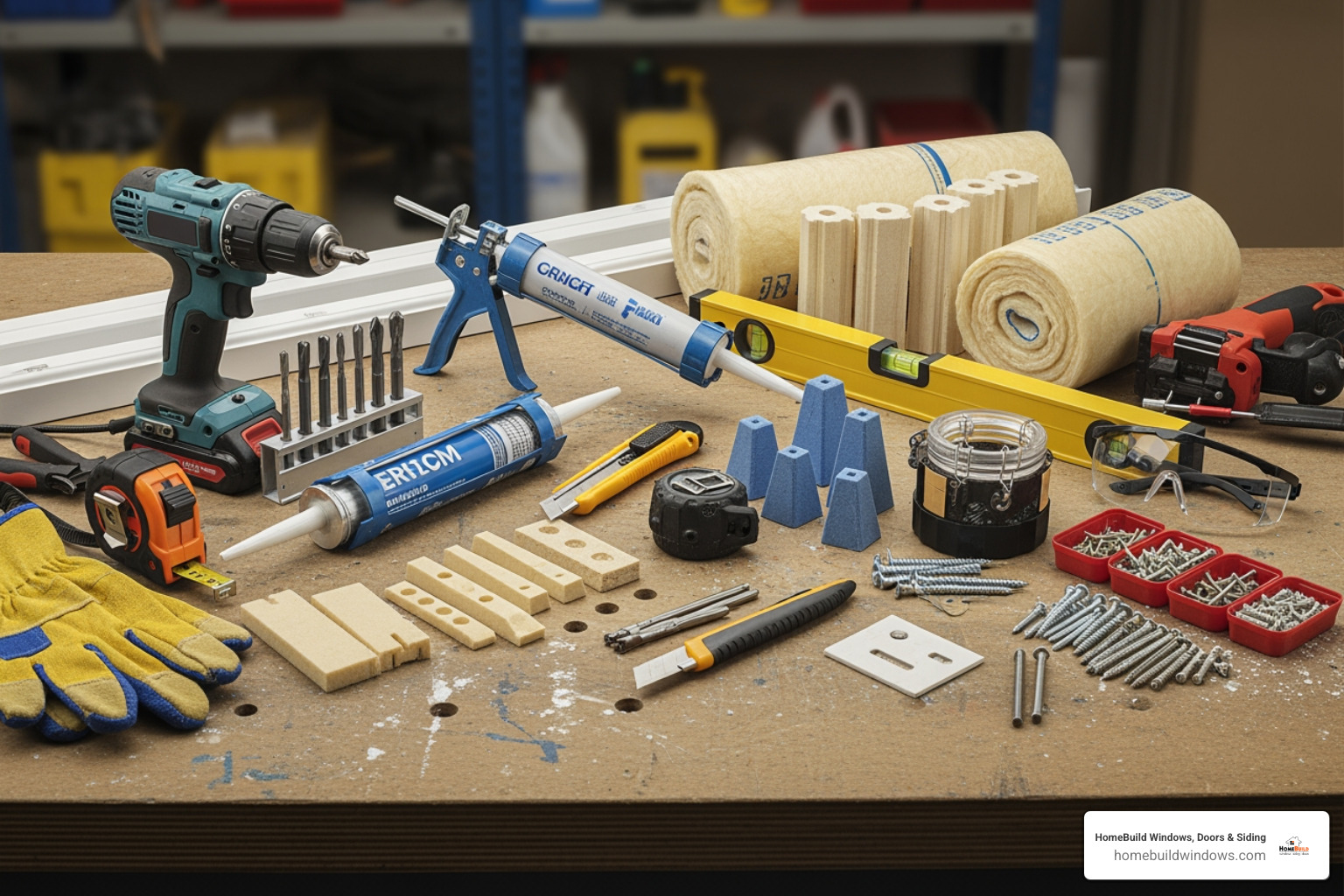
Our professional installers arrive with everything needed. For those curious about the process, here is a typical list:
Tools:
- Tape Measure & Levels
- Caulk Gun & Power Drill
- Pry Bar, Hammer, & Utility Knife
- Putty Knife & Screwdriver Set
- Reciprocating Saw (for removal)
- Safety Glasses & Gloves
Materials:
- New Window Unit
- Shims (wood or composite)
- Self-Adhering Flashing Tape & Waterproof Membrane
- Exterior-Grade Sealant/Caulk
- Low-Expansion Foam Insulation
- Backer Rod & Window Sill Pan
- Fasteners (Nails or Screws)
- Interior/Exterior Trim & Drip Cap (if needed)
Measuring and Preparing the Rough Opening
Accurate measurements and a well-prepared opening are the foundation of a flawless installation.
- Measuring: For both width and height, measure at three points (top/middle/bottom and left/center/right) and use the smallest measurement. This ensures the new window will fit.
- Checking for Square: Measure the opening diagonally from corner to corner. If the two measurements differ by more than 1/4 inch, the opening is out of square and may need adjustment.
- Removing the Old Window: After carefully removing the old trim and window unit, we thoroughly inspect the rough opening for rot or damage. Any compromised wood must be repaired or replaced before proceeding. For homes built before 1978, we follow EPA guidelines for potential lead paint.
Preparing your home for this process is key to a smooth installation day. Read our guide on How to Prepare for a Window Installation.
The Step-by-Step House Window Installation Process
Once preparation is complete, the actual house window installation begins. This is where precision and an understanding of building science are paramount.
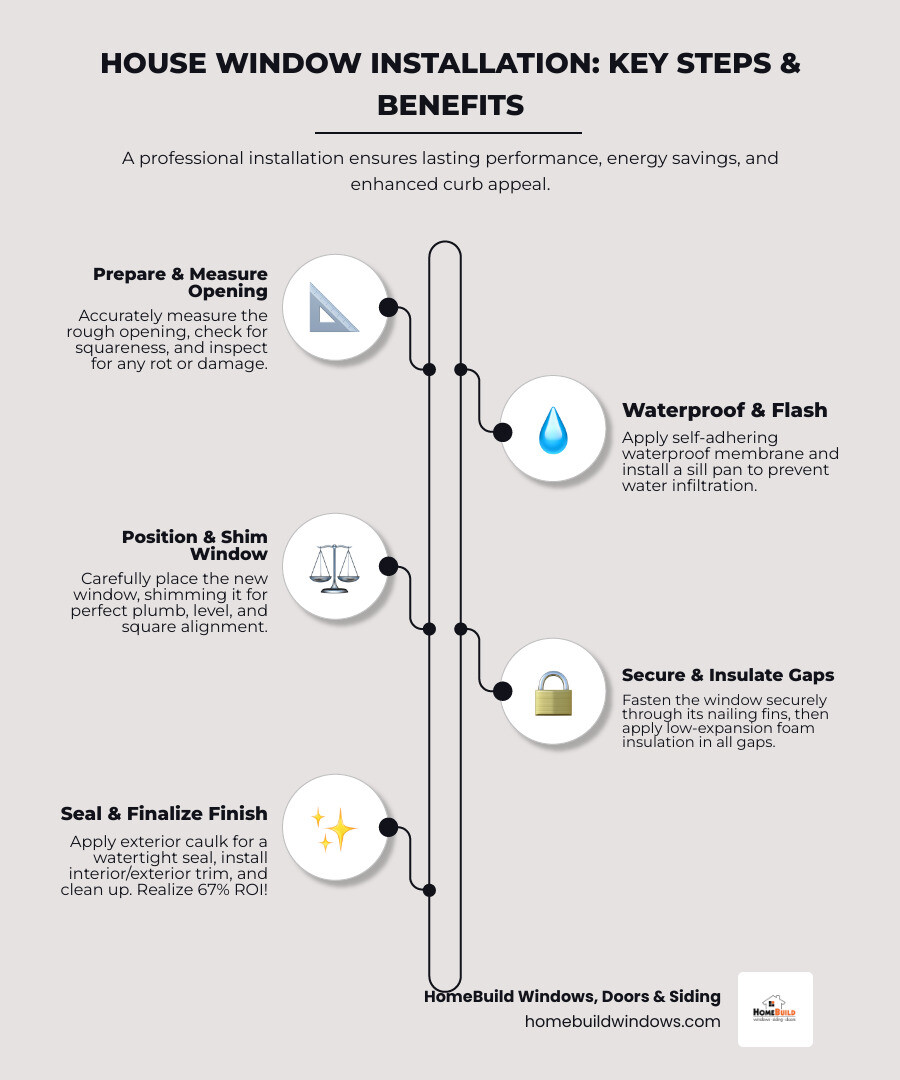
Step 1: Waterproofing and Flashing the Opening
This is the most critical step for preventing water damage. A proper water management system is essential for your home’s long-term integrity.
- Apply Waterproof Membrane: We apply a self-adhering waterproof membrane to the rough opening, overlapping the strips shingle-fashion to direct moisture down and out.
- Install a Sill Pan: A sill pan is installed at the bottom of the opening to create a waterproof channel that directs any water that gets past the window’s seals to the exterior. As noted by sources like HGTV, proper water management relies on flashing, not just caulk.
- Integrate Flashing: Flashing tape is applied around the window in an overlapping sequence to integrate the window with the home’s water-resistive barrier (house wrap), ensuring water flows away from the wall system.
Step 2: Positioning and Securing the New Window
With the opening waterproofed, we carefully place the new window.
- Apply Sealant: A continuous bead of high-quality exterior sealant is applied to the opening’s side and top jambs.
- Place and Shim the Window: The new unit is placed in the opening. We then use shims to carefully adjust the window until it is perfectly plumb (vertical), level (horizontal), and square. This precision ensures the window operates correctly and seals tightly.
- Fasten the Window: Once positioned, the window is secured to the rough opening. For full-frame installations, this involves fastening the nailing fins to the exterior sheathing, constantly re-checking for plumb and level.
Step 3: Insulating and Sealing for a Weathertight Finish
The final installation steps create an airtight and watertight seal for maximum energy efficiency.
- Insulate Gaps: We fill the gap between the window frame and the rough opening with low-expansion foam insulation. This creates an air barrier without bowing the window frame.
- Apply Exterior Caulk: For larger gaps, a backer rod is inserted before applying a continuous bead of high-quality exterior caulk around the entire perimeter. This creates the primary watertight barrier, designed to flex with your home and prevent cracks for years to come.
Finishing Touches and Post-Installation Care
The house window installation isn’t complete until the interior and exterior are finished, and you know how to care for your new investment.
Interior and Exterior Finishing
These steps bring the project to a polished conclusion.
- Installing Interior Trim and Casing: On the inside, we install new trim and casing around the window to cover the gaps and provide a finished, aesthetic look that complements your home’s interior.
- Installing Exterior Trim and Drip Cap: On the exterior, new trim (if not preserved from a pocket installation) and a drip cap are installed. A drip cap is a crucial piece of flashing installed above the window to direct water away from the top of the frame.
- Final Caulking and Painting: All new interior and exterior trim is then caulked where it meets the wall or window frame, and often prepped for painting. This ensures an airtight seal and a seamless appearance.
- Cleaning the New Window: Finally, we clean the new window glass and frames thoroughly, removing any installation debris, stickers, or smudges, so you can immediately enjoy the clarity and beauty of your new windows.
Long-Term Maintenance for Your New Windows
To ensure your newly installed windows provide years of performance and beauty, a little care goes a long way.
- Regular Cleaning Schedule: Clean the glass and frames regularly with a mild soap and water solution. Avoid abrasive cleaners that can damage the glass or frame finish.
- Inspecting Seals and Caulking Annually: Take a walk around your home once a year and visually inspect the caulk and weatherstripping around your windows. Look for any cracks, shrinking, or deterioration. Re-caulk as needed to maintain a watertight and airtight seal.
- Lubricating Moving Parts: For operational windows (like double-hung or casement), lubricate moving parts and hardware annually with a silicone-based spray or a manufacturer-recommended lubricant to ensure smooth operation.
- Ensuring Proper Operation: Periodically open and close your windows through their full range of motion. This helps identify any potential issues early and ensures they remain easy to operate.
Frequently Asked Questions about House Window Installation
Here are answers to common questions homeowners in Chicago have about house window installation.
How long does it take to install a window?
- Professional Time: A team of professionals can typically replace multiple windows in just one to two days. A single full-frame replacement takes at least 4-6 hours.
- DIY Time: A DIY installation will take significantly longer, often 4-6+ hours per window, potentially spanning a full weekend for just one.
- Factors Affecting Duration: The total time depends on the number of windows, installation type (pocket vs. full-frame), window size, accessibility, and your home’s exterior material.
Can windows be installed in the winter?
Yes. We install windows year-round, even during Chicago’s cold winters. Our professional teams work on one window at a time, sealing off the work area to minimize heat loss and keep your home comfortable. There’s no need to wait for warmer weather if your windows need replacing.
What is the most common mistake in DIY window installation?
The most common and costly DIY mistake is improper flashing and sealing. Many DIYers underestimate the importance of water management, skipping steps like installing a sill pan or applying flashing tape correctly. This can lead to hidden water leaks, causing rot, mold, and structural damage over time. Another frequent error is failing to get a perfectly level and square fit, which causes drafts and operational problems. These mistakes highlight why professional installation is the most reliable choice.
Conclusion: Ensuring a Perfect Window Installation
As we’ve explored, house window installation is a complex process with many critical steps, from choosing the right window type to meticulous waterproofing and sealing. The quality of the installation is just as important as the quality of the window itself, directly impacting your home’s energy efficiency, comfort, and longevity.
Whether you’re considering a pocket replacement for a quick upgrade or a full-frame installation to address deeper issues, understanding the nuances of each method is key. While DIY might offer initial cost savings, the potential for costly mistakes, safety risks, and voided warranties often makes professional installation the smarter, more secure choice for most homeowners.
For a flawless and warrantied installation in the Chicago area, trust the experts at HomeBuild Windows. Our experienced and certified teams are dedicated to providing top-quality products, expert installation, and exceptional customer service. We’re here to ensure your new windows perform beautifully for years to come.