




What You Need to Know About Home Window Replacement Costs
Home window replacement cost typically ranges from $300 to $2,500 per window, including installation. Most Chicago homeowners spend between $6,000 and $15,000 for a whole-house project, depending on the number of windows, materials chosen, and installation complexity.
Quick Cost Breakdown:
- Standard vinyl windows: $400-$800 per window installed
- Mid-range wood windows: $800-$1,600 per window installed
- Premium fiberglass windows: $700-$1,500 per window installed
- Whole house (10-15 windows): $8,000-$30,500+
The investment pays off significantly – homeowners typically recoup 71% to 78% of their window replacement costs when they sell their home. Plus, energy-efficient windows can cut your heating and cooling bills by up to 15% annually.
Several key factors determine your final price: window type and size, frame material, glass options (double vs. triple-pane), installation method, and whether you’re replacing standard or custom-sized windows. Labor typically accounts for 10-20% of the total project cost.
I’m Steve Mlynek, CEO and founder of HomeBuild Windows with over 20 years of experience helping Chicago-area homeowners steer home window replacement cost decisions. My team has completed thousands of window installations, giving me deep insight into what drives pricing and how to maximize your investment value.
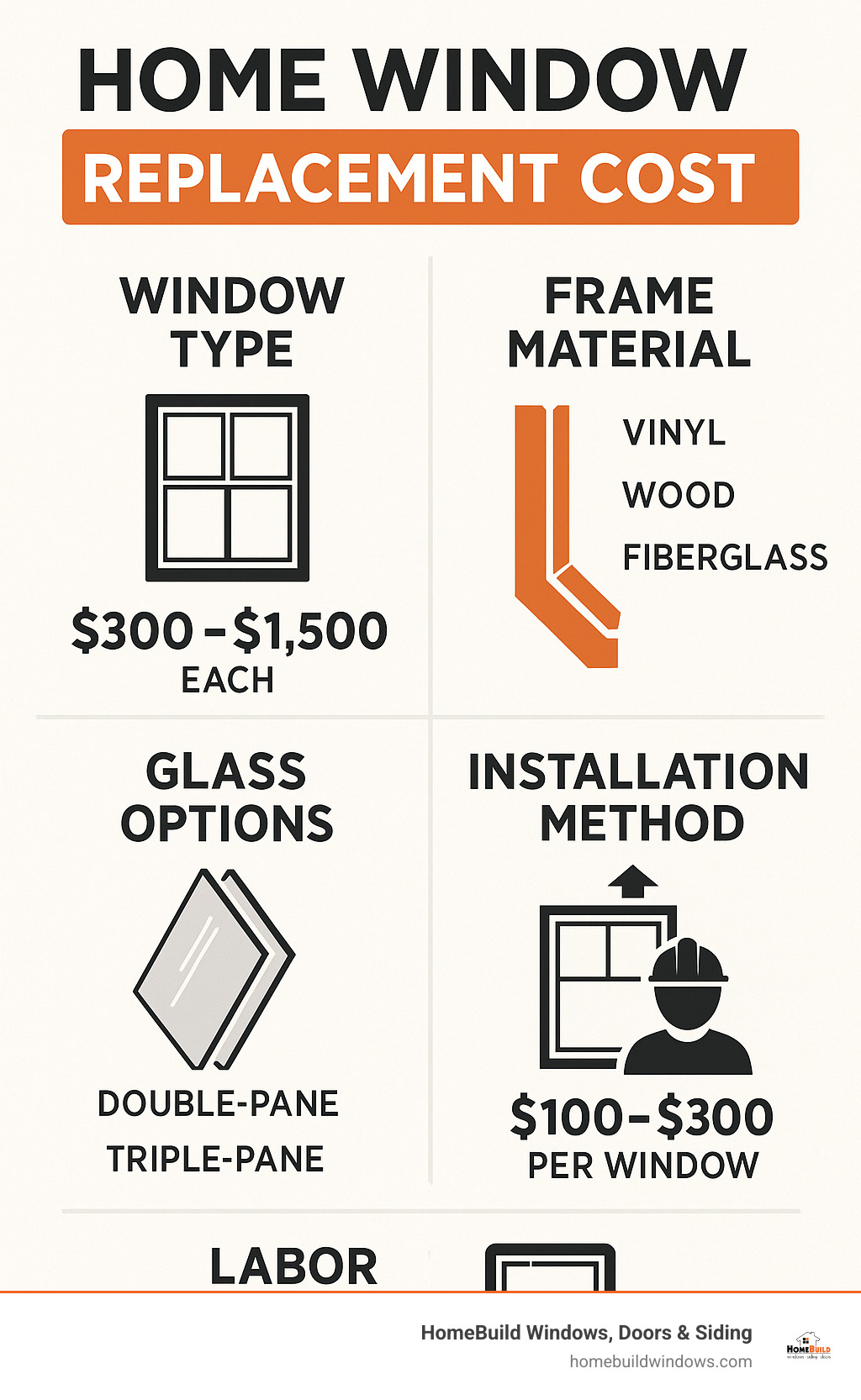
Breaking Down the Average Home Window Replacement Cost
Planning a window replacement can feel overwhelming, especially when budgeting. The good news is that home window replacement cost varies based on your choices, giving you options for different budgets and needs.
Let’s walk through the main cost factors so you can plan with confidence. This is your roadmap to understanding pricing and where you might want to invest or save.
Cost by Window Type
The window style you choose significantly impacts the price. Some styles are more complex to build and install, while others are more straightforward. Here’s what you can expect to pay for different window types, including professional installation:
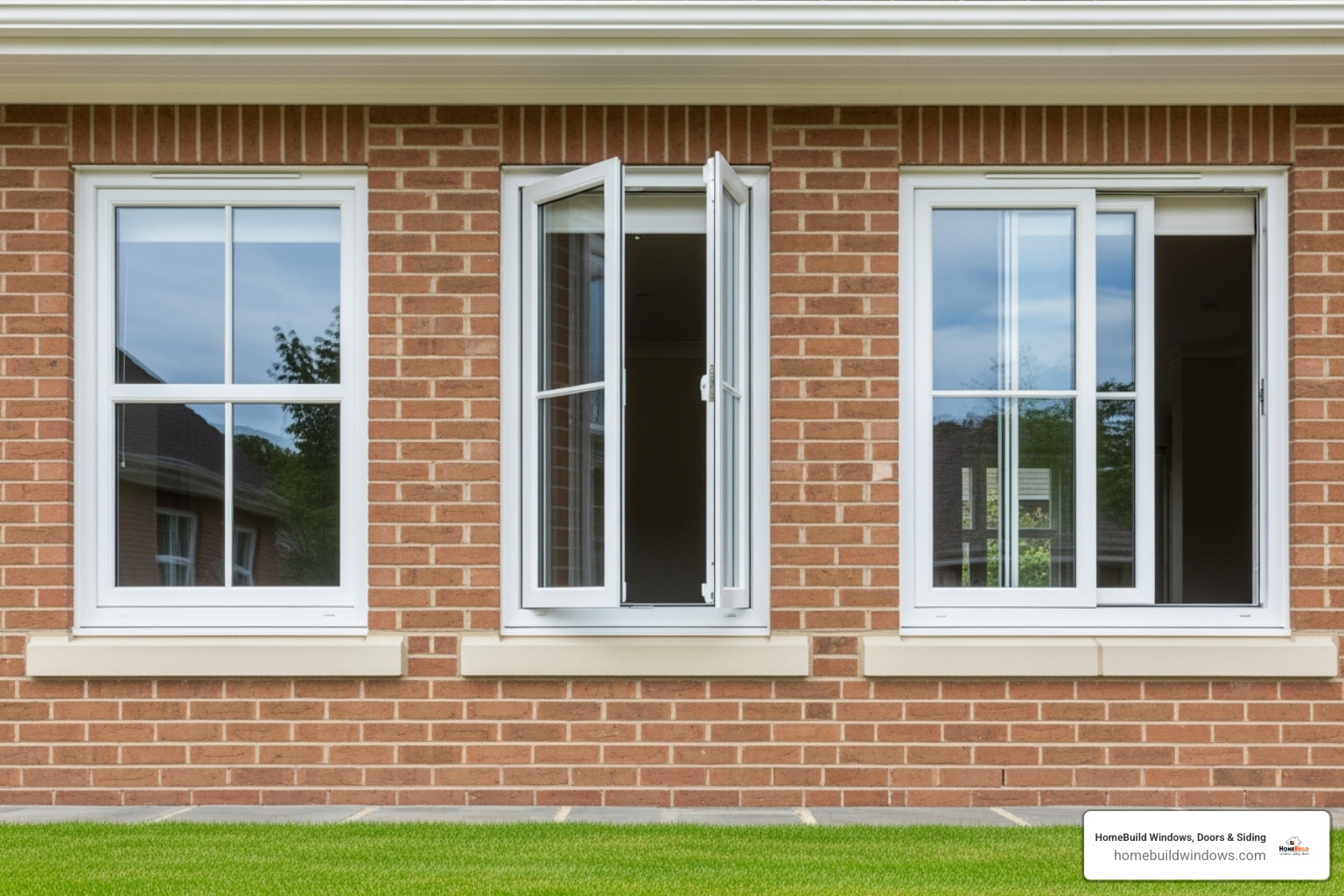
Double-hung windows are a popular, versatile choice. Both sashes slide, offering great airflow control and easy cleaning, which is ideal for second-story windows. Expect to pay $300 to $2,500 per window, with quality vinyl versions typically in the $800 to $1,500 range.
Casement windows swing outward via a hand crank, creating an excellent, energy-efficient seal when closed. This superior mechanism increases the price to around $500 to $1,250 per window, though premium versions can reach $2,600.
Sliding windows are a budget-friendly, functional choice. They glide horizontally, working well in wide openings with limited vertical space. Most cost between $300 and $2,500.
Picture windows don’t open, focusing purely on views and natural light. With fewer moving parts, they are an economical option at $150 to $1,200 per window, perfect for showcasing a great view.
Bay and bow windows project outward, creating interior space and dramatic curb appeal. Their complex installation means you’ll invest $2,750 to $5,500 or more. Large custom configurations can easily reach $10,000.
Awning windows hinge at the top and open outward, allowing ventilation even in light rain. They offer good security and typically range from $350 to $900, with larger versions costing up to $2,600.
Custom and specialty windows, like arched or circular shapes, add architectural character but come with premium pricing. Expect to pay $500 to $3,500 or more depending on complexity and size.
For a deeper dive into which styles might work best for your home’s architecture and your lifestyle, check out our comprehensive guide on window replacement options.
How Frame Materials Affect Your Home Window Replacement Cost
Your frame material choice significantly impacts both your upfront home window replacement cost and your long-term satisfaction. Each material offers a different balance of maintenance, durability, and aesthetics.
| Frame Material | Average Cost Per Window (Installed) | Maintenance Requirements | Durability & Lifespan | Aesthetic Appeal |
|---|---|---|---|---|
| Vinyl (uPVC) | $300 – $800 | Low | 20-40 years | Versatile, can mimic wood |
| Wood | $900 – $2,000+ | High (painting/staining) | 20-50 years (with care) | Classic, luxurious, customizable |
| Fiberglass | $700 – $1,500 | Low | 30-50 years | Strong, stable, paintable |
| Aluminum | $300 – $800 | Low | 20-40 years | Modern, slim profiles |
Vinyl frames are the most popular choice for good reason. They typically cost $300 to $800 per window installed and are virtually maintenance-free, requiring no painting or staining. Modern vinyl can even mimic wood grain, offering style without the upkeep. At HomeBuild Windows, we’ve seen vinyl consistently deliver excellent value for Chicago homeowners.
Wood frames bring timeless elegance and natural insulation but require regular painting or staining to protect them from Chicago’s weather. At around $1,600 per window installed, they are a significant investment in both cost and maintenance.
Fiberglass frames offer the best of both worlds: incredible durability and stability. They handle temperature swings without expanding or contracting, cost $700 to $1,500 per window, and can be painted. They are a premium option that provides decades of reliable performance.
Aluminum frames appeal to those who love clean, modern lines. At $300 to $800 per window, they’re budget-friendly and maintenance-free. However, aluminum conducts heat and cold more readily, which can mean higher energy bills in Chicago’s climate.
The frame material you choose will live with you for decades, so consider both your budget today and your lifestyle preferences for years to come.
Key Factors That Influence Your Final Price
When planning your window replacement, the window’s sticker price is just the beginning. Several other factors significantly impact your total home window replacement cost, and understanding them helps you budget accurately and avoid surprises.
Installation: Full-Frame vs. Retrofit
Your installation method is a key decision affecting both cost and long-term satisfaction. We use two main approaches, each suited to different home conditions and goals.
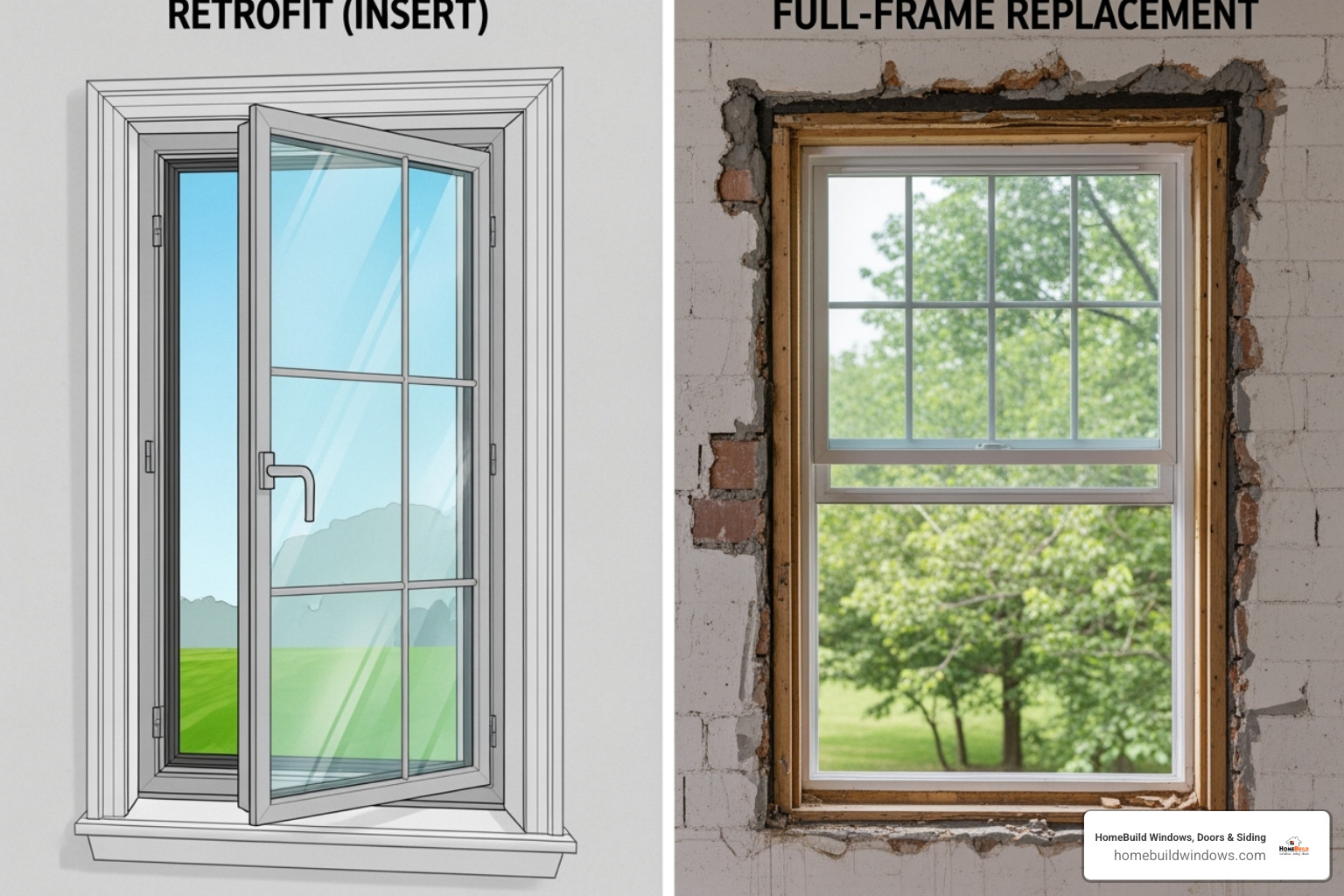
Retrofit installation involves sliding the new window unit directly into your existing frame after removing the old sashes. This approach costs $300-$800 per window and is ideal when your current frames are in excellent, square, and well-insulated condition.
Retrofits are fast and simple, with less mess and no disturbance to existing trim. However, the window opening becomes slightly smaller, and we can’t address hidden issues like rot within the old frame.
Full-frame replacement involves removing everything down to the house’s framing, providing a clean slate. While it costs more—typically $600-$1,500 per window—it’s often a smarter long-term investment.
This method allows for a thorough inspection of the rough opening, addressing issues like rot or poor insulation. We can upgrade insulation, ensure a perfect seal, and even change the window size or style. For older Chicago homes, this comprehensive approach often pays dividends in comfort and energy savings.
The structural benefits are significant. Full-frame replacement allows proper flashing and sealing of the entire opening, creating a weatherproof barrier crucial for our harsh winters. For detailed guidance, check out our Window Installation Guide.
Glass, Upgrades, and Energy Efficiency
Glass options and energy features significantly affect your home window replacement cost, daily comfort, and energy bills for decades to come.
Double-pane glass is the standard, offering two panes with a sealed air space for much better insulation than single-pane windows. This results in less condensation, fewer drafts, and quieter rooms.
Triple-pane glass offers next-level performance with three panes and two air spaces. It costs about 15-20% more (around $200 extra per window), but this investment often pays for itself in Chicago’s climate through energy savings and superior noise reduction.
Low-E coatings are a practical upgrade. These thin metallic layers reflect heat while letting light through, keeping your home cooler in summer and warmer in winter for about $50 per window.
Argon gas fills are another smart upgrade. This dense, inert gas is injected between panes to improve insulation. Combined with Low-E coatings, it significantly boosts thermal performance.
Beyond energy savings, these upgrades offer excellent noise reduction benefits. Multi-pane windows with proper sealing can transform a noisy environment into a peaceful retreat.
Quality energy-efficient windows can reduce your heating and cooling costs by 8% to 15% monthly. We specialize in Energy Efficient Window Replacement solutions designed for Chicago’s climate.
Look for ENERGY STAR certification when choosing your windows. These products meet strict efficiency guidelines and often qualify for rebates. You can learn more about the Energy Star benefits for homeowners directly from their website.
Calculating Your Total Home Window Replacement Cost
When preparing your quote, we consider several factors beyond the window units to determine your final investment.
Labor costs typically account for 10-20% of your total project expense. Our installers charge an average of $70 to $150 per window, with complex jobs reaching $200 or more. A simple ground-floor installation takes about an hour, while a third-floor window in an older home requires more time and care.
Window size affects cost. A small bathroom window might cost $300, while a large picture window can exceed $1,000, as larger windows need more materials and installation time.
The number of windows you replace can work in your favor. With multiple windows, we can offer bulk discounts and reduce per-window labor costs. A small house with 5-10 windows might total $4,000-$15,000, while a medium home with 10-15 windows could range from $8,000-$30,500+.
Custom shapes and sizes like arched or circular windows add character but also cost, typically ranging from $500-$3,500+. They require special manufacturing and careful installation.
Installation difficulty is where experience matters. Factors increasing complexity and cost include: Higher floors, which require special equipment and increase labor costs by 25-50% per story. Structural issues like rot or uneven walls, common in older Chicago homes, must be addressed, typically adding $300-$1,100 to the project.
Lead paint in pre-1978 homes requires special handling, potentially increasing labor costs by up to 25% per window. Difficult access may require scaffolding, increasing labor costs. Existing trim or siding may need removal and replacement, expanding the project scope.
We handle these challenges regularly, so our detailed estimates account for these factors upfront, giving you confidence in your budget.
The Long-Term Value: ROI and Savings
While the initial home window replacement cost may seem high, it’s one of the smartest investments for your home’s future. It’s an investment that also keeps you warmer in winter and cooler in summer.
Energy Savings and Increased Home Value
Your old windows could be costing you hundreds of dollars annually without you realizing it.
Old windows are energy vampires, accounting for 25% to 30% of your home’s heat loss in winter and unwanted heat gain in summer. New, energy-efficient windows typically reduce heating and cooling costs by 8% to 15% annually, saving you $100 to $400 per year.
The financial benefits extend beyond utility bills. New windows are a major draw for home buyers, boosting curb appeal and offering the peace of mind that a major replacement is already done.
The numbers are compelling: homeowners typically recoup 71% to 78% of their window replacement investment when they sell. According to the 2024 Cost vs. Value report data, replacing 10 vinyl windows can add an average of $14,270 to a home’s resale value. Many Chicago-area homes see their value increase by $5,000 to $10,000 or more—a 2% to 6% boost.
Window Lifespan and When to Replace
Knowing when to replace your windows saves money and frustration. Quality replacement windows last 15 to 25 years, while premium materials like fiberglass can last 40 to 50 years with proper care.
Your windows will tell you when they need attention. Drafts are a key sign; if a lit candle flame flickers near a closed window, you’re losing energy and money.
Condensation between the glass panes is a clear sign of a failed seal, which compromises your window’s insulating power. This is different from normal condensation on the interior surface during humid weather.
Windows that are difficult to operate—sticking, not staying open, or hard to close—are not just an annoyance but a safety hazard, as they should open easily in an emergency.
Other warning signs include visible damage like cracked frames or glass, water stains, increased outside noise, or unexplained high energy bills.
As a rule of thumb, if repairs would cost more than 50% of a new window’s price, replacement makes more financial sense. A small crack or a failed thermal seal might cost $100 to $150 to fix, but when multiple issues pile up, it’s time to invest in new windows.
For a deeper look at the signs your home is ready for an upgrade, check out our guide on 4 Reasons Your Home Needs Window Replacement. Our team at HomeBuild Windows can help you evaluate whether a repair or full replacement is your best bet.
Frequently Asked Questions about Window Replacement Costs
After years of working with Chicago homeowners, the same questions about home window replacement cost come up repeatedly. Here are answers to the most common concerns.
Is it cheaper to replace all windows at once?
Yes, replacing all your windows at once almost always saves you money compared to a piecemeal approach. Here’s why:
When we order for a whole-house project, we can secure bulk discounts on materials that aren’t available for smaller orders. Manufacturers offer better pricing for 10-15 windows versus just 2-3.
The labor savings are even more significant. A single setup for a whole-house project is more efficient than multiple visits for smaller jobs. This streamlined process typically reduces the per-window labor cost by 15-25%.
Beyond finances, you get a consistent look and performance throughout your home, with matching energy ratings, warranties, and aesthetics. Plus, you only endure the disruption of construction once.
If a full replacement isn’t financially feasible, we can help you prioritize which windows need immediate attention, like those with the most wear. Just be aware the per-window cost will be higher for smaller projects.
Are there government rebates for replacing windows?
Yes, you can offset your home window replacement cost with several incentive programs.
The federal tax credit through the Inflation Reduction Act is a great option. You can claim up to 30% of the cost of ENERGY STAR® certified windows, with a maximum credit of $600. This applies to windows installed through December 31, 2032.
Local utility programs in the Chicago area, like those from ComEd and Peoples Gas, often provide additional rebates. These programs change, so check with your utility provider for current offers.
You can also explore the Database of State Incentives for Renewables & Efficiency (DSIRE) for state-specific programs, which can vary based on budget priorities.
Crucially, your windows must be ENERGY STAR® certified to qualify for most incentives. This certification ensures they meet strict efficiency guidelines that make you eligible. All our windows meet or exceed these standards.
How do I choose a reliable window replacement company?
This is a critical question. Quality installation is essential; even the best windows will underperform if installed poorly.
License and insurance are essential. A legitimate company will readily provide proof of both, which protects you during installation. We are fully licensed and insured and will happily provide documentation.
Customer reviews reveal a company’s true quality. Read comments to see how they handle problems and communicate. Ask for and call recent references.
Understand the warranty. As a long-term investment, you need comprehensive coverage for both the product and installation labor. Ask what’s covered, for how long, and what might void it. Our warranties are comprehensive.
Get multiple detailed quotes to understand the market and spot red flags. Aim for at least three, and compare specifications, efficiency ratings, installation methods, and warranties—not just the price. Be wary of quotes that seem too good to be true.
Local climate expertise is crucial in Chicago. Our extreme weather creates unique challenges. Choose a company that understands how to install windows for optimal performance in our climate.
Pay attention to professionalism during the quoting process as a preview of the project. Are they responsive, punctual, and do they provide detailed, written estimates? These details matter.
For more comprehensive guidance on this important decision, check out our detailed article on How to Find the Perfect Window Repair and Installation Company.
Get an Accurate Quote for Your Chicago Home
After diving deep into all the factors that influence home window replacement cost, you might be feeling a bit overwhelmed by the variables. That’s completely normal! Between window types, frame materials, installation methods, glass upgrades, and the unique quirks of Chicago homes, there’s a lot to consider.
Here’s the thing – while those price ranges and averages we’ve shared give you a solid foundation for budgeting, every home tells its own story. Your 1920s bungalow in Lincoln Park has different needs than a 1980s ranch in Schaumburg. The south-facing windows that get hammered by summer sun require different considerations than those cozy north-facing bedroom windows.
The key factors we’ve covered – window style, frame material, installation complexity, energy efficiency upgrades, and your home’s specific challenges – all work together to create your unique project cost. That’s why a professional, on-site consultation is so valuable. We can spot things like structural issues, measure those tricky custom openings, and understand exactly what your home needs.
At HomeBuild Windows, we’ve been helping Chicago-area homeowners steer these decisions for over 20 years. We know that a Victorian in Oak Park needs a different approach than a mid-century modern in Evanston. Our competitive pricing reflects both quality materials and honest labor costs, without any surprise fees lurking in the fine print.
When we visit your home, we’ll take the time to understand your goals. Are you focused on cutting those brutal winter heating bills? Looking to boost curb appeal before selling? Want to finally stop hearing every garbage truck at 6 AM? We’ll recommend solutions that match both your needs and your budget.
For a detailed estimate custom to your Chicago-area home, trust the experts at HomeBuild Windows. We’ll provide a transparent, no-obligation quote that breaks down exactly what you’re getting – from the windows themselves to the installation process. No pressure, just honest advice from neighbors who understand both great windows and Chicago weather.


