


Why Choosing the Right Window Replacement Company Matters
Window replacement companies vary dramatically in quality, pricing, and service. Choosing the wrong one can turn your home improvement dream into an expensive nightmare.
Top window replacement companies offer:
- Licensed and insured installers with proper certifications
- Comprehensive warranties on both products and installation
- Energy-efficient windows that qualify for federal tax credits
- Transparent pricing with detailed written estimates
- Professional installation that meets local building codes
With a typical 10-window project costing between $5,600 and $10,300, selecting the right company is crucial for your wallet and your home’s performance. Poor installation can void warranties, reduce energy efficiency, and cost thousands in repairs. Even the best windows won’t deliver expected comfort or savings if installed incorrectly.
Energy Star certified windows can save homeowners significantly on energy bills. For example, replacing old single-pane windows in northern climates saves an average of $568 per year.
I’m Steve Mlynek, CEO and founder of HomeBuild Windows, with over 20 years of experience helping Chicago homeowners steer window replacement companies and choose the best solutions. My team has completed thousands of installations, earning elite certifications from leading manufacturers while maintaining a focus on quality craftsmanship and transparent pricing.
Why New Windows are a Smart Home Investment
Picture this: you’re sitting in your living room on a cold winter day, and instead of feeling that familiar draft, you’re perfectly comfortable. That’s the power of quality window replacement, and it’s why window replacement companies consistently rank this upgrade among the smartest investments homeowners can make.
Energy savings top the list. Installing Energy Star certified windows can cut your energy bills by 12-13% annually. For homeowners in northern climates replacing old single-pane windows, that’s an average savings of $568 per year. You can learn more about the benefits of energy efficient windows and how they reduce your energy costs.
Your home’s value also gets a significant boost. According to 2024 data from the Journal of Light Construction, vinyl window replacement recoups about 67% of its cost at resale, while wood windows recoup around 63%.
New windows also provide an instant curb appeal boost, dramatic comfort improvement by eliminating drafts, and surprising noise reduction. Plus, modern windows are designed for low maintenance, freeing you from scraping and painting.
Don’t overlook the 30% federal tax credit on energy-efficient window purchases, up to $600 per year through 2032. This incentive, detailed on the IRS website, makes the investment even more attractive. Many homeowners also explore financing options to make the upfront cost more manageable.
Understanding Window Types and Materials
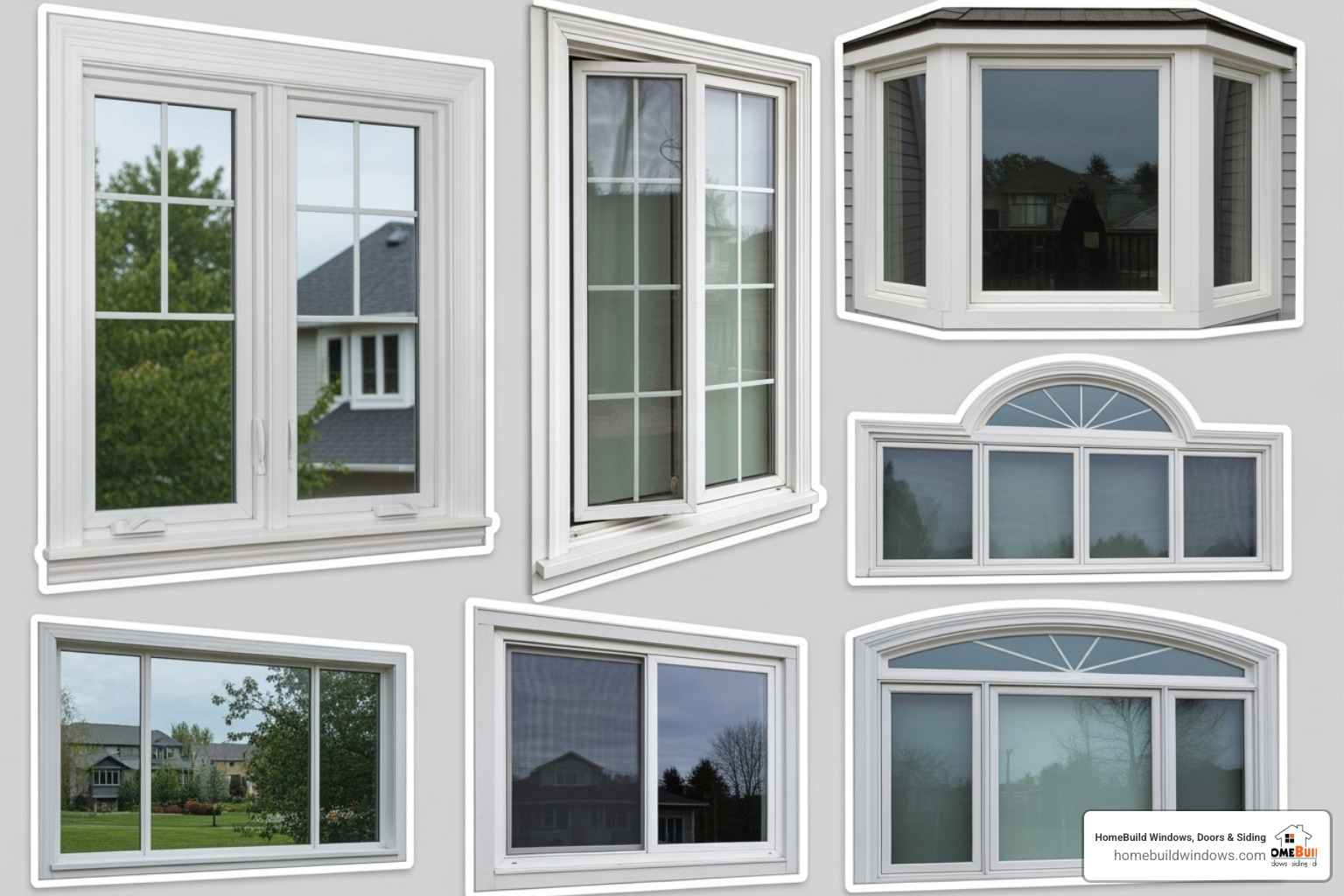
Choosing the right window style is key to matching your home’s function and aesthetic.
- Double-hung windows: A classic choice where both sashes slide vertically for flexible ventilation.
- Casement windows: Hinged on the side, they crank open for full ventilation and are great for hard-to-reach spots.
- Awning windows: Hinged at the top, they open outward, allowing for ventilation even in light rain.
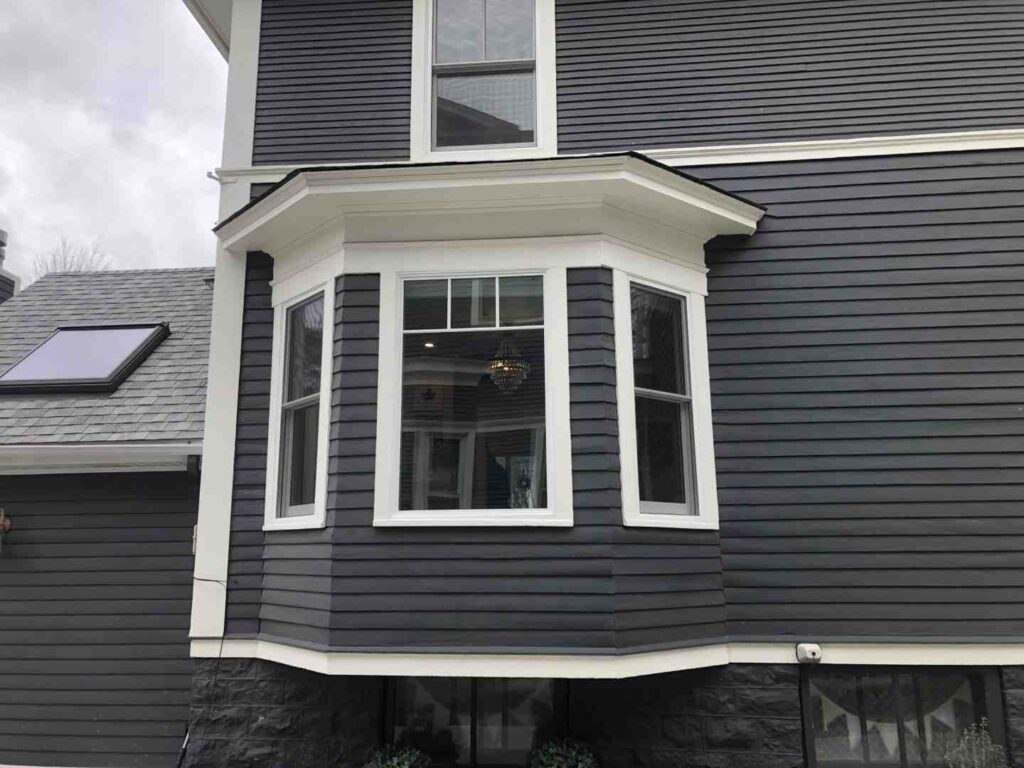
- Bay and bow windows: Extend outward from the house, creating more interior space and a focal point.
- Gliding or sliding windows: Slide horizontally, perfect for spaces where an outward-swinging window isn’t practical.
- Picture windows: Fixed panes that don’t open, designed to maximize views and natural light.
- Specialty shapes: Custom shapes like arches or circles add unique architectural character.
For a comprehensive look, check out our guide to different window types.
When it comes to frame materials, your choice affects maintenance, efficiency, and durability.
| Material | Pros | Cons | Cost (Avg. per window, 2025) | Lifespan (Years) |
|---|---|---|---|---|
| Vinyl | Affordable, low-maintenance, energy-efficient, durable | Limited color options, can warp in extreme heat (older models) | $558 | 20-40 |
| Wood | Classic aesthetic, natural insulation, paintable/stainable | Requires regular maintenance (painting/sealing), susceptible to rot | $646 | 30-45 |
| Fiberglass | Extremely durable, stable in temperature changes, energy-efficient, paintable | Higher initial cost, fewer color options than vinyl initially | $651 | 30-50+ |
| Composite | Combines benefits of multiple materials, strong, low-maintenance, energy-efficient | Can be more expensive than vinyl | $655 | 30-50+ |
You’ll also need to decide between pocket replacement and new construction windows, which involve different installation methods depending on the condition of your existing frames.
Decoding the Cost of Window Replacement
Understanding window replacement costs helps you plan effectively. A typical 10-window project using quality vinyl windows costs between $5,600 and $10,300.
Installation costs typically run $100 to $300 per window and are crucial for performance.
Several factors influence your final investment:
- Window size: Larger windows cost more. A small basement window might be around $252, while a large bow window could be $1,299 before installation.
- Frame material: Vinyl averages $558 per window, while wood and fiberglass are around $650.
- Glass type: Upgrading to low-E coatings, argon gas fills, or triple-pane glass boosts efficiency and comfort but increases cost.
- Project complexity: Upper-floor windows or full-frame replacements increase labor costs.
For detailed estimates, visit our window replacement cost guide. Remember to factor in the 30% federal tax credit (up to $600 annually) and explore our financing options to make your project affordable.
How to Choose Reliable Window Replacement Companies
Finding the right window replacement companies is about thorough vetting. With a structured approach, you can confidently select a contractor that will treat your home with respect.
Start by creating a list of potential companies, then dig deeper.
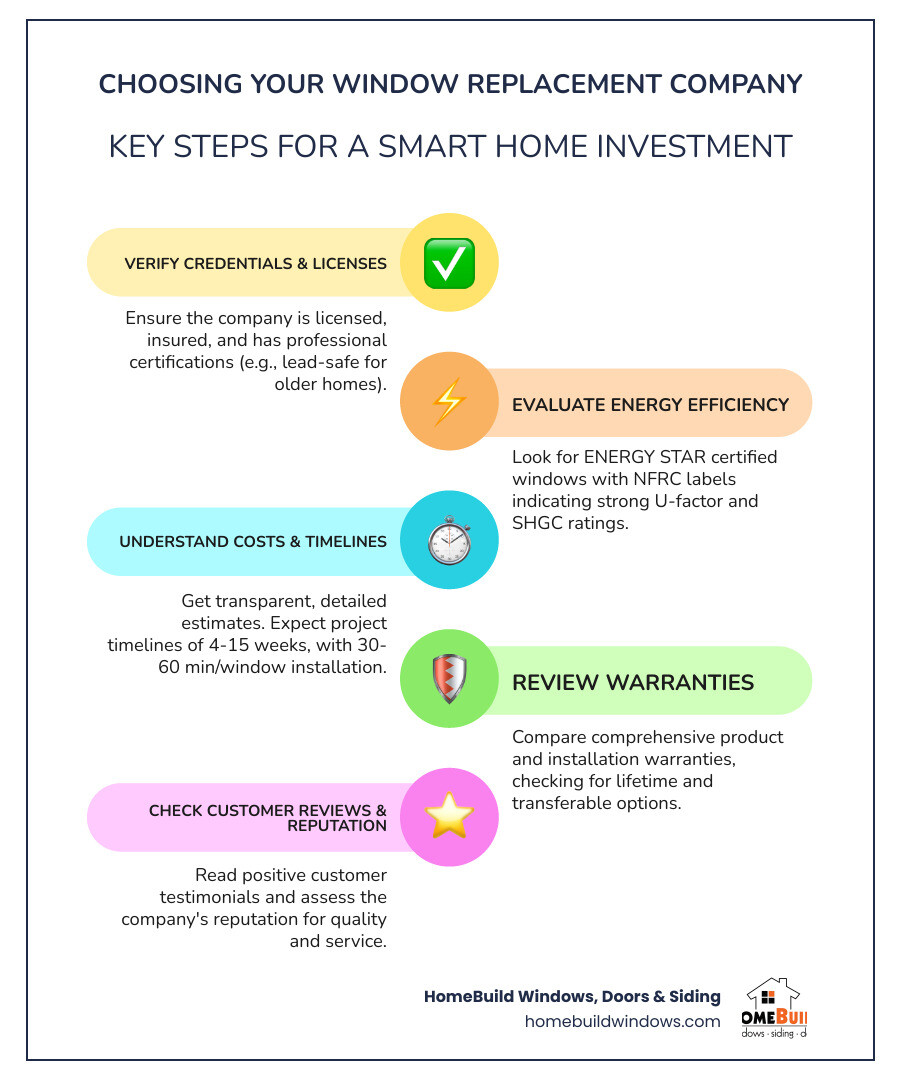
- Read reviews: Look beyond star ratings to understand customer experiences with communication, timeliness, and cleanup. Note how companies handle negative feedback.
- Check credentials: A reputable company will readily provide proof of licensing and insurance. This is your safety net.
- Compare quotes: Get at least three detailed, itemized estimates. A quote that seems too good to be true usually is. Compare materials, labor, and other costs to ensure you’re evaluating apples to apples.
- Understand the process: The best companies explain their timeline and process clearly, from consultation to installation day.
Find more guidance on how to find the perfect installation company on our website.
Key Qualities of the Best Window Replacement Companies
The best window replacement companies share these core qualities:
- Licensing and Insurance: These are non-negotiable. They protect you from liability and prove the company meets industry standards. Always verify current certificates.
- Certifications: Look for credentials like Installation Masters certification, which show a commitment to advanced training and proper installation techniques.
- Positive Customer Testimonials: Check recent reviews and ask for references you can call. Real customers provide insight into a company’s punctuality, cleanliness, and professionalism. You can read our customer testimonials to see what we mean.
- Transparent Pricing: Professionals provide detailed, written estimates without pressure or gimmicks. Avoid “today only” deals.
- In-House Installers: Companies using in-house teams generally offer better quality control, consistent training, and clearer accountability than those using subcontractors.
- Lead-Safe Certification: For homes built before 1978, this EPA certification is required by law to protect your family from lead dust.
Understanding Warranties and the Installation Process
A good warranty protects your investment. You’ll typically find two types: a window warranty from the manufacturer (often 10-20 years or lifetime) and an installation warranty from the contractor (usually 1-5 years). Ask if warranties are transferable, as this can add value to your home.
The installation process should be professional and organized:
- Consultation: A design expert helps you choose the right products.
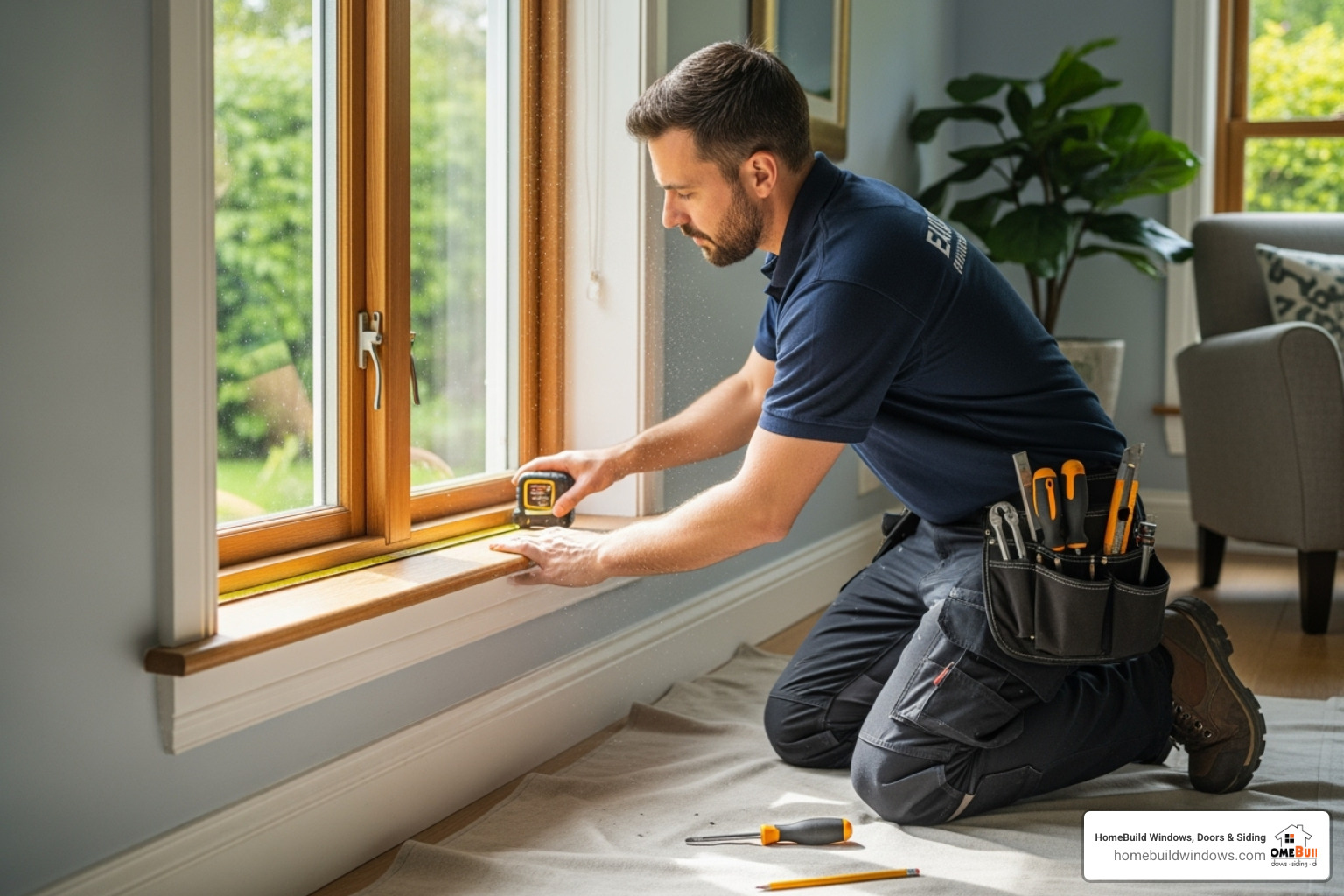
- Measurement: Precise measurements are taken for a perfect fit.
- Ordering: Your custom windows are manufactured and a schedule is set.
- Installation: A professional crew installs your windows, typically taking 30-60 minutes per window.
- Cleanup: The crew removes all old windows and debris.
- Final Inspection: A final walkthrough ensures you are completely satisfied.
Making Sense of Energy Efficiency Ratings
Understanding energy efficiency ratings is like reading your window’s report card—it tells you exactly how it will perform.
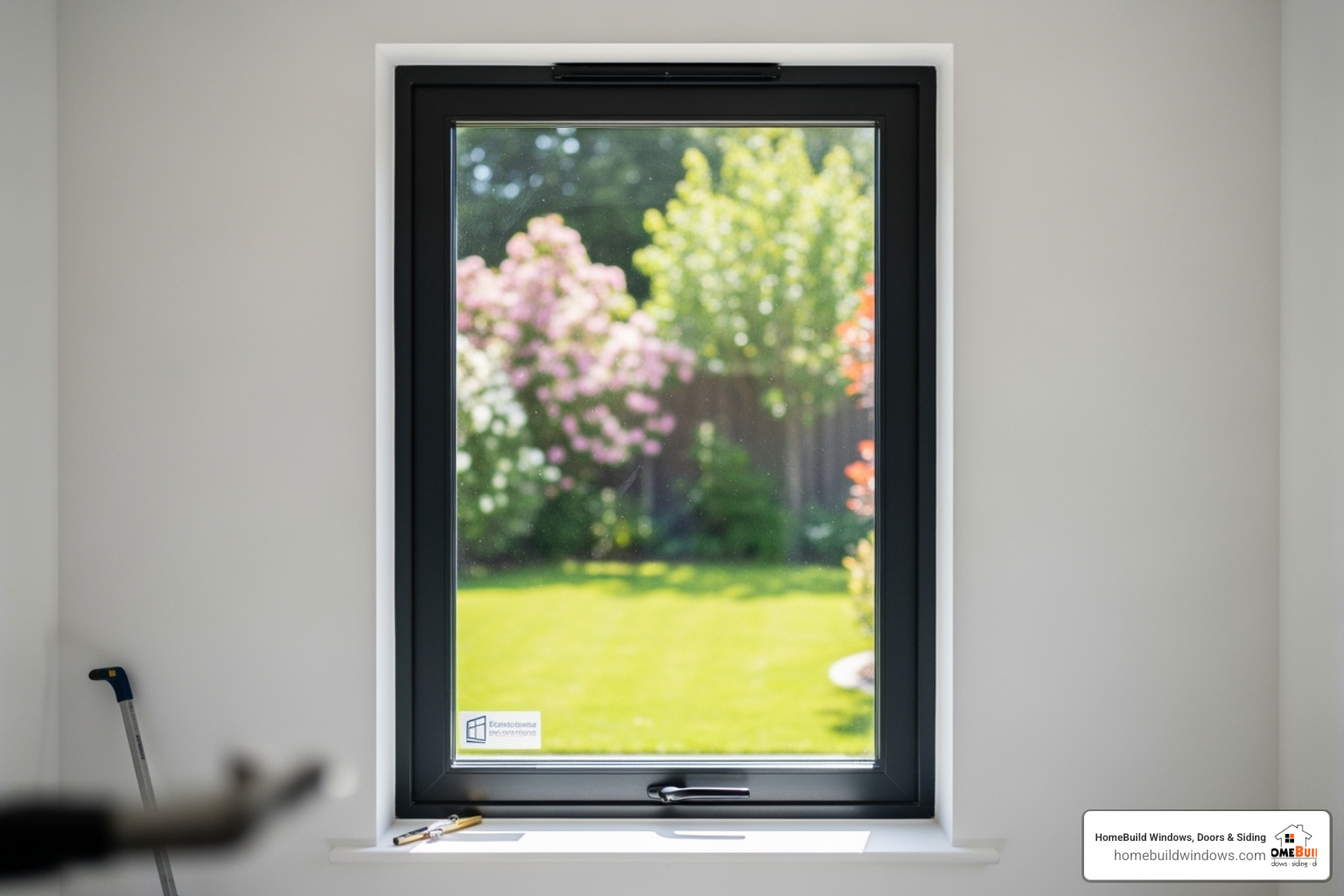
The ENERGY STAR label is your first sign of an efficient window, guaranteeing it meets strict EPA guidelines. You can learn more about understanding ENERGY STAR standards on their official website.
The NFRC label provides the detailed performance data behind that rating, based on independent testing. Here’s what to look for:
- U-factor: Measures how well a window prevents heat from escaping. The lower the number, the better the insulation—crucial for cold climates like Chicago.
- Solar Heat Gain Coefficient (SHGC): Measures how much heat from the sun passes through the window. A lower SHGC keeps your home cooler in the summer and reduces air conditioning costs.
Modern windows use advanced technology for better performance:
- Low-E coatings: These microscopic, transparent metallic layers reflect heat, keeping it inside in winter and outside in summer. They also block UV rays that can fade your furniture and flooring.
- Argon or krypton gas fills: These dense, inert gases are used between glass panes to provide better insulation than regular air, improving the U-factor.
While triple-pane windows offer superior insulation, modern double-pane windows with Low-E coatings and gas fills provide excellent efficiency for most climates at a more budget-friendly price. Our guide to double vs. triple pane windows can help you decide.
The best window replacement companies will explain these ratings and help you choose windows that fit your home, climate, and budget.
Frequently Asked Questions about Window Replacement
We’ve helped Chicago homeowners for over two decades, and these are the questions that come up most often. Let’s clear up the confusion.
How long does window replacement take?
The total project timeline from consultation to completion is typically 4 to 15 weeks, but the on-site work is fast.
- Consultation & Measurement: This takes a few hours, followed by precise measurements.
- Manufacturing Time: Custom windows typically take 5 to 12 weeks to be built to your home’s exact specifications.
- Installation: Once your windows arrive, our professional installers work efficiently, completing each window in just 30 to 60 minutes. A typical project is finished in one or two days.
Should I replace all my windows at once?
This depends on your budget and goals.
Replacing all windows at once often leads to:
- Cost savings from bulk ordering and labor efficiency.
- Consistent aesthetics for a cohesive, updated look throughout your home.
A phased approach is also a great strategy to:
- Meet budget constraints by spreading out the investment.
- Maximize federal tax credits, as you can claim up to $600 per year through 2032.
What is the difference between a pocket replacement and a new construction window?
These terms describe two different installation methods.
A pocket replacement (or insert window) fits a new window into your existing window frame. This method is less invasive, faster, and lower in cost. It’s ideal when your current frames are structurally sound.
A new construction window involves removing the entire old window and frame. A complete new window unit is then installed into the wall’s rough opening. This approach is necessary when existing frames are rotted or damaged, or if you are changing the size of the window opening.
During our consultation, we’ll assess your existing windows and recommend the most effective solution for your home and budget.
Your Clear Path to Better Windows
You now have the tools to make a smart, confident decision about your window replacement project. The key takeaways are clear.
The importance of quality materials—whether vinyl, wood, or fiberglass—sets the foundation for decades of performance. However, even the best materials won’t deliver the comfort and energy savings you expect if not installed properly.
This is where the value of professional installation becomes critical. Poor installation can void warranties and create air leaks. That’s why licensing, insurance, and certified installers are non-negotiable. Look for companies that offer transparent pricing and stand behind their work with comprehensive warranties.
The benefits we’ve discussed—from a 12-13% reduction in energy bills to federal tax credits of up to $600 annually—are only realized when quality products and expert installation come together.
Making a confident choice means trusting a company that embodies these principles. At HomeBuild Windows, Doors & Siding, we’ve built our reputation on this foundation for over 20 years in the Chicago area. We empower customers with knowledge, provide transparent pricing, and deliver installations that exceed expectations.
For homeowners seeking expert service in the Chicago area, HomeBuild Windows provides top-tier products and installation. We’re not just replacing your windows—we’re enhancing your home’s comfort, efficiency, and value.
Ready to transform your home? The path forward is clear. You can find the best window replacement companies for your project, and we’re confident our commitment to excellence will make your decision an easy one.