
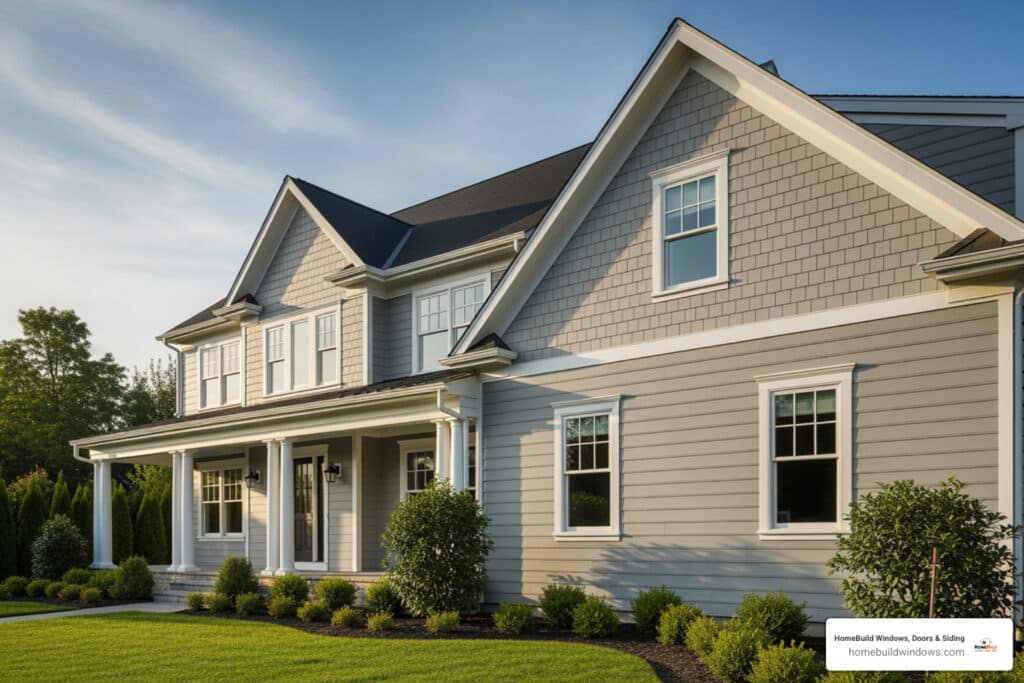
What Exactly is Fiber Cement Siding?
Fiber cement siding panels are composite building materials made from Portland cement, sand, cellulose fibers, and water. They offer exceptional durability, weather resistance, and design versatility for both residential and commercial applications.
Key Product Types:
- Lap Siding (Planks) – Traditional horizontal boards that overlap, typically 4-12 inches wide
- Vertical Panels – Large-format sheets (often 4×8 feet) for modern, seamless looks
- Shingles and Shakes – Textured pieces that mimic cedar or wood shake patterns
- Board-and-Batten – Vertical planks with narrow strips covering joints
Common Finishes:
- Smooth – Clean, contemporary surface ready for painting
- Wood-grain – Realistic texture that mimics natural cedar or wood
- Sanded – Authentic concrete appearance
Available Options:
- Primed – Ready for custom paint colors
- Factory-painted – Pre-finished with durable, baked-on color
Fiber cement siding was first introduced in the mid-1980s as a safer alternative to asbestos-containing products. Today, it’s become what many in the industry call the “superhero of siding materials” because it combines the aesthetic appeal of wood with superior strength and weather resistance.
I’m Steve Mlynek, CEO and founder of HomeBuild Windows, Doors & Siding, and over the past 20+ years serving Chicagoland homeowners, I’ve seen fiber cement siding panels consistently deliver best durability in our harsh freeze-thaw climate. This guide will walk you through everything you need to know about this versatile material—from its composition and performance to costs and installation considerations.
What is Fiber Cement Siding Made Of?
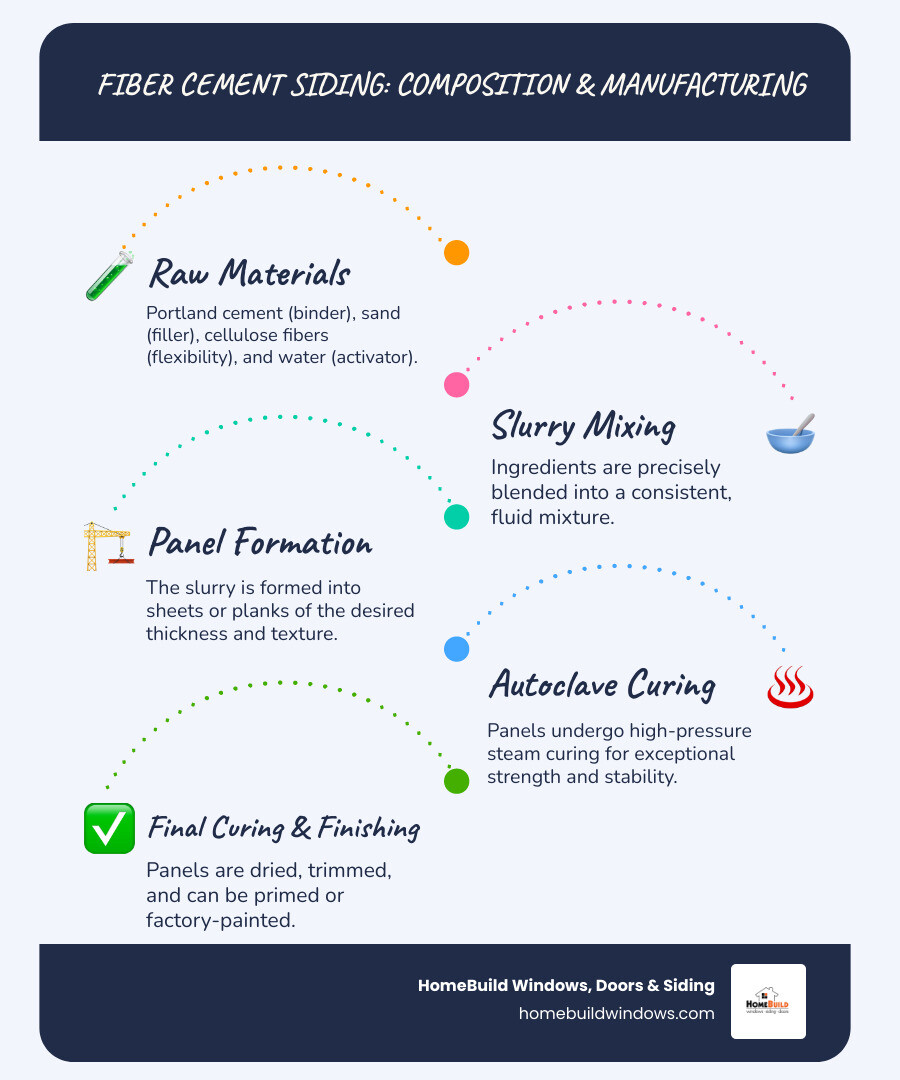
At its core, fiber cement siding is a carefully engineered blend of common, natural materials. Think of it as a sophisticated concrete mixture. The primary ingredients are:
- Portland cement: This acts as the main binder, giving the material its strength and rigidity.
- Sand (or silica): Fine-ground sand or silica is added as a filler, providing bulk and further enhancing the material’s structural integrity. Some manufacturers even use fly ash, a byproduct of coal-burning, to replace sand and silica, making the siding lighter and incorporating post-industrial recycling.
- Cellulose fibers: These are typically wood pulp fibers. They’re the secret sauce that provides flexibility, preventing the material from becoming brittle and prone to cracking, much like rebar reinforces concrete. They act as a natural reinforcement system, giving the siding its resilience and durability.
- Water: Essential for activating the Portland cement and creating a workable slurry mixture.
This combination results in a material that is incredibly dense and stable, offering a robust exterior solution for your home.
How is Fiber Cement Siding Manufactured?
The creation of fiber cement siding panels is a precise process that transforms these raw ingredients into the durable product we know. It typically involves a method similar to the Hatschek process, often used for manufacturing cement sheets:
- Mixing: The raw materials (Portland cement, sand, cellulose fibers, and water) are carefully measured and mixed together to form a uniform slurry. This ensures consistent quality throughout the product.
- Forming: This slurry is then pressed into thin sheets or molds to create the desired shapes and textures – be it planks, panels, or shingles.
- Curing: This is a critical step. The formed products undergo a unique curing process, often involving high-pressure steam or heat, known as autoclaving. This accelerated chemical reaction significantly increases the material’s strength, density, and stability, resulting in minimal moisture content. This thorough curing is key to the material’s longevity and resistance to warping, cracking, and rotting.
- Finishing: After curing, the panels are cut to size, and may be primed for paint or pre-finished with a factory-applied color.
Throughout this process, manufacturers adhere to rigorous quality control standards to ensure the final product meets or exceeds performance expectations, often aligning with standards set forth by organizations like the American Society for Testing and Materials. This meticulous manufacturing ensures that the fiber cement siding panels we install on homes across Chicagoland are of the highest quality.
The “Good”: Unpacking the Superior Performance of Fiber Cement
One of the main reasons homeowners in Chicago and our surrounding suburbs choose fiber cement siding panels is their incredible performance. It’s a material that truly stands up to the elements and provides lasting peace of mind. For more insights on upgrading your home’s exterior, explore our siding installation and replacement services.
Best Durability and Longevity
Fiber cement siding is renowned for its exceptional durability, making it a wise, long-term investment for any home. With professional installation and basic care, these panels can easily last 50 years or more. Many manufacturers back this claim with impressive warranties, typically ranging from 30 to 50 years, which gives you a good idea of their confidence in the product’s lifespan. We’re talking about a siding that often outlives the homeowners!
This remarkable longevity isn’t just about time; it’s about resilience. Fiber cement siding panels are incredibly impact resistant. They can withstand significant impacts such as large hail, which is a common concern in our Midwest climate, without denting like metal or cracking like vinyl. This tough material is also inherently resistant to warping, rotting, and pests, problems that often plague traditional wood siding. We’ve seen how fiber cement handles everything from flying debris to playful kids, maintaining its pristine appearance for decades.
Performance in Harsh Climates and Weather
Living in Chicagoland, we know a thing or two about harsh weather. From blistering summers to brutal winters, our homes face a constant barrage from Mother Nature. This is where fiber cement siding panels truly shine. They are engineered to perform exceptionally well in diverse and extreme conditions:
- Wind Resistance: Fiber cement siding can withstand winds up to an impressive 130 mph, offering superior protection during severe storms.
- Freeze-Thaw Cycles: Our infamous Chicago winters bring repeated freezing and thawing. Fiber cement is impermeable to the freeze-thaw cycle, meaning it won’t crack or deteriorate under these conditions, unlike some other materials.
- Moisture Resistance: Thanks to its dense composition and unique curing process, fiber cement is highly resistant to moisture absorption. This makes it an excellent choice for humid climates and helps prevent issues like mold, mildew, and rot.
- UV Degradation: Unlike vinyl, which can become brittle and fade over time due to ultraviolet (UV) radiation, fiber cement maintains its integrity and color stability, especially with factory-applied finishes.
- Coastal Salt Spray: While not a direct concern for Chicagoland, it’s worth noting its resistance to salt spray, showcasing its robust nature against environmental corrosives.
Manufacturers like James Hardie, for example, even offer specialized siding systems like HardieZone, which are specifically formulated to perform optimally in different climates, including those with extreme temperature fluctuations like ours. This custom approach ensures that your fiber cement siding is built to last, no matter what the Midwest weather throws at it.
Fire Resistance and Pest Protection
Safety and peace of mind are paramount for any homeowner. Fiber cement siding panels offer outstanding protection against two significant threats: fire and pests.
- Fire Resistance: Fiber cement siding is non-combustible and boasts a Class A fire rating, the highest possible rating for building materials. This means it significantly resists the spread of flames, providing an invaluable layer of protection for your home and family. In fact, some insurance companies may even offer discounts for homes equipped with Class A fire-rated siding! When we install fiber cement, we’re not just improving your home’s curb appeal; we’re enhancing its safety.
- Pest Protection: Unlike wood siding, which can be a buffet for termites, carpenter ants, and even woodpeckers, fiber cement is completely impervious to these pests. Its inorganic composition means bugs simply aren’t interested in making a meal out of your home’s exterior. This eliminates the need for costly pest treatments and repairs, adding to the long-term, low-maintenance appeal of fiber cement siding.
The “Beautiful”: Design Versatility and Aesthetic Appeal
Beyond its brawn, fiber cement siding panels also possess an undeniable beauty. It’s a material that allows for incredible design flexibility, helping us achieve the aesthetic you envision for your home, whether it’s a historic bungalow in Oak Park or a contemporary residence in Naperville.
Styles, Finishes, and Textures
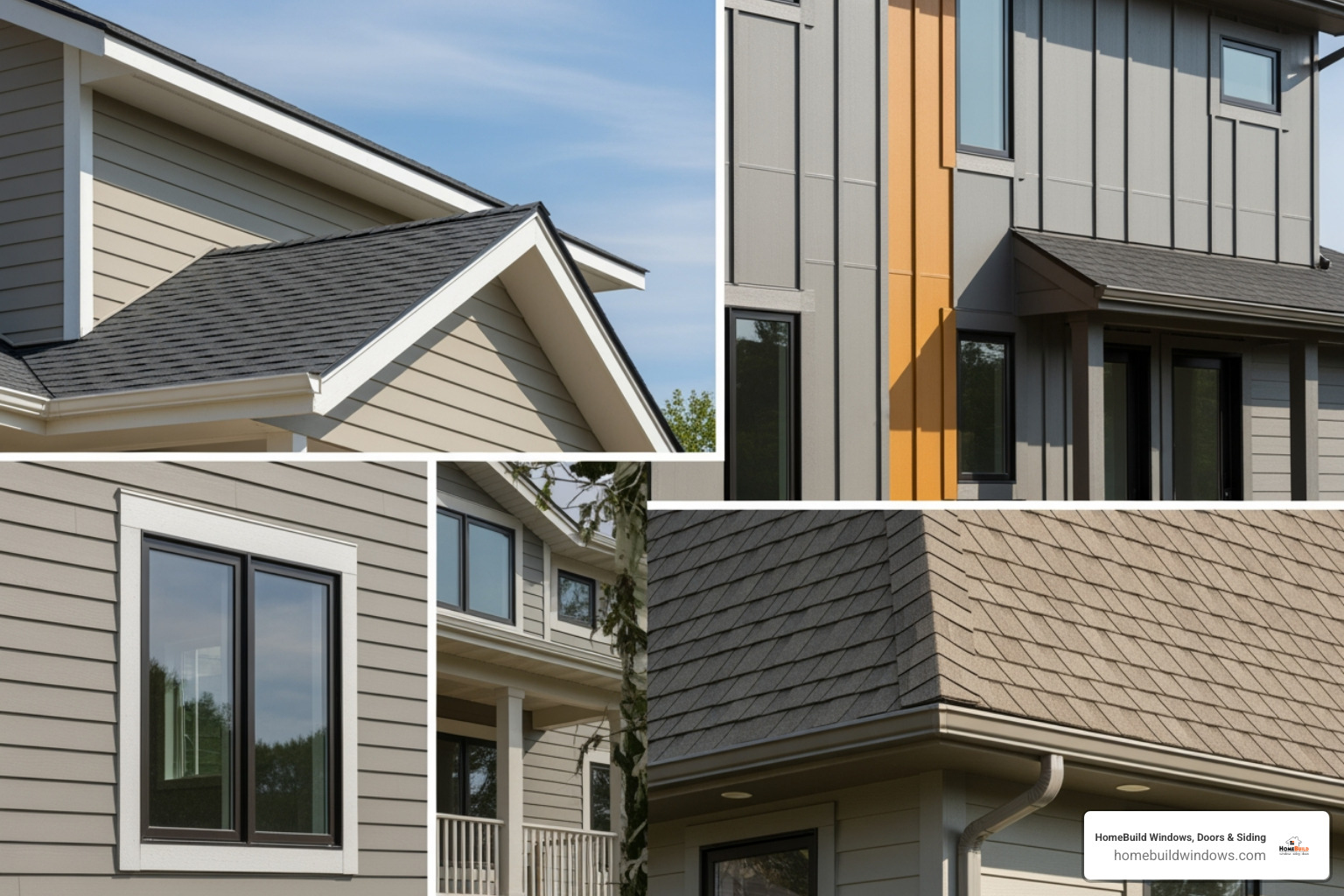
One of the most appealing aspects of fiber cement siding panels is their remarkable ability to mimic the look of other materials, often with superior durability and less maintenance. The design possibilities are virtually endless:
- Lap Siding: This classic horizontal plank style is incredibly popular, offering a timeless look that can range from traditional to modern. We can find planks in various widths, allowing for different shadow lines and architectural effects.
- Vertical Panels: For a clean, contemporary, or even industrial aesthetic, vertical panels provide a sleek, uninterrupted surface. These large sheets (often 4×8 feet) are perfect for modern designs or creating striking accent walls.
- Shingles and Shakes: If you love the rustic charm of cedar shingles or shakes but want the durability of fiber cement, you’re in luck! Fiber cement can be molded to replicate the texture and appearance of natural wood shakes, including staggered or straight-edge options, ideal for Craftsman-style homes or gables.
- Board-and-Batten Look: This popular style, featuring wide vertical boards separated by narrower strips (battens), is easily achievable with fiber cement, perfect for modern farmhouse or traditional designs.
Beyond style, the finishes and textures available add another layer of customization:
- Smooth Finish: For a crisp, minimalist look, smooth panels offer a clean slate, ready for any paint color.
- Wood-Grain Texture: Many homeowners are amazed at how realistic fiber cement’s wood-grain textures can be. From the subtle grain of cedar to more pronounced patterns, these options provide the warmth and character of wood without the associated maintenance. We’ve had neighbors ask if we installed real cedar siding due to the realism!
- Sanded Finish: Some manufacturers offer a sanded finish that mimics the true feel and appearance of concrete, adding an urban or industrial touch.
Color Options and Painting
The aesthetic journey doesn’t stop at style and texture. Fiber cement siding panels offer fantastic versatility when it comes to color:
- Primed for Paint: Many fiber cement products come primed and ready for painting on-site. This gives you the ultimate freedom to choose any exterior paint color to perfectly match your home’s aesthetic or neighborhood palette.
- Factory-Painted Finishes: For those who prefer a “set it and forget it” approach, manufacturers offer a stunning array of factory-painted options. These finishes are typically baked-on, providing exceptional durability, UV resistance, and often come with lengthy warranties (e.g., 15 years against fading). Brands like James Hardie and Allura are known for their extensive color palettes.
- ColorPlus Technology: Some manufacturers use advanced pre-finishing technologies, like James Hardie’s ColorPlus, which applies multiple coats of paint and bakes them onto the board, creating a vibrant, long-lasting finish that resists chipping, peeling, and cracking.
If you opt for a primed product and paint it yourself, repainting will typically be necessary every 10 to 15 years, depending on the quality of the paint and exposure to elements. However, this is still less frequent than many other siding materials. This flexibility in color and finish means your home can achieve the exact look you desire, and we’re here to help you steer those choices. If you’re considering a refresh, check out our guide on when to consider siding installation/replacement.
The “Bad”: Key Considerations for Fiber Cement Siding Panels
While fiber cement siding panels offer a plethora of benefits, it’s important to approach any home improvement project with a clear understanding of all factors. There are a few considerations that make fiber cement a material best handled by professionals.
DIY vs. Professional Installation
Installing fiber cement siding is not your typical weekend DIY project. While the idea of saving money on labor costs is appealing, we strongly advise against attempting a DIY installation for several critical reasons:
- Heavy Material: Fiber cement is dense and heavy, weighing approximately 2.5 pounds per square foot. A single 12-foot plank can be cumbersome and difficult for one person to handle safely and accurately. This weight requires careful planning and often a two-person team for efficient installation.
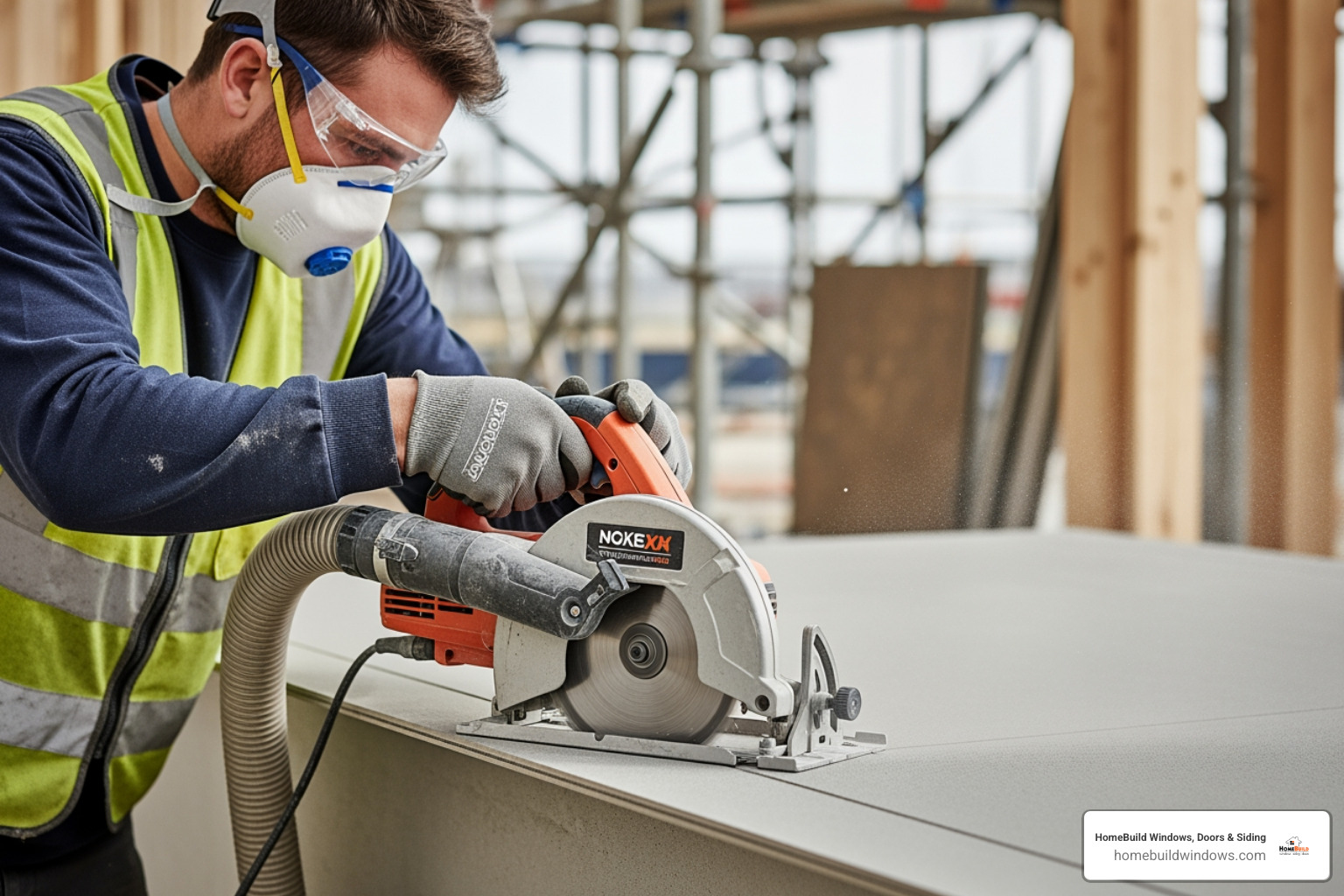
- Specialized Tools: Cutting fiber cement creates a fine silica dust. Inhaling this dust can be a health hazard. Therefore, specialized tools are required, such as pneumatic or handheld shears, a dust-reducing circular saw with a diamond-tip blade, or a diamond-tip miter saw. Proper personal protective equipment (PPE), including respirators, is essential.
- Silica Dust Safety: When cutting, fiber cement produces silica dust, which can be harmful if inhaled. Professional installers are trained in proper dust management techniques, including using dust-reducing saws and ensuring adequate ventilation, to protect themselves and your home’s environment.
- Proper Flashing and Gaps: Correct installation is paramount for fiber cement’s performance and warranty adherence. This includes precise flashing around windows and doors to prevent moisture intrusion, and maintaining specific gaps between panels to allow for slight expansion and contraction. Incorrect installation can lead to moisture issues, cracking, and premature failure, voiding your warranty.
The complexity, weight, and safety precautions associated with fiber cement siding panels make professional installation the clear winner. Our team at HomeBuild Windows, Doors & Siding has the expertise, specialized tools, and safety protocols to ensure your fiber cement siding is installed correctly, efficiently, and to the highest standards. When considering such a significant investment, it’s worth it to find a professional window and siding contractor you can trust.
Reasons to Hire a Pro:
- Safety: Professionals have the right safety gear and knowledge to handle silica dust.
- Expertise: Ensures proper flashing, gaps, and adherence to manufacturer guidelines.
- Efficiency: Specialized tools and experience lead to faster, more accurate installation.
- Warranty: Professional installation is often required to maintain manufacturer warranties.
- Peace of Mind: You get a durable, beautiful finish that lasts for decades.
Maintenance and Upkeep Requirements
While fiber cement siding panels are celebrated for their low maintenance compared to wood, “low” doesn’t mean “no.” A bit of routine care will ensure your siding looks fantastic and performs optimally for its entire lifespan:
- Periodic Cleaning: Just like any exterior surface, fiber cement can accumulate dirt, dust, and environmental grime. We recommend a gentle cleaning every 6-12 months with a garden hose and a soft brush. For stubborn spots, a mild detergent can be used. Avoid high-pressure washing, which can damage the finish.
- Re-caulking Joints: Over time, the caulk around windows, doors, and trim can degrade. We advise inspecting these caulked joints every few years and re-caulking as needed to maintain a watertight seal. This is crucial for preventing moisture intrusion.
- Repainting: If you have field-painted fiber cement, you’ll need to consider repainting every 10 to 15 years. This interval can vary based on climate, paint quality, and exposure. Factory-finished products typically have longer warranties on their finishes, often 15 years or more, extending the time between repaints.
- Inspecting for Cracks: While fiber cement is incredibly durable, structural settling of your home can, in rare cases, lead to cracks. Routine inspections during cleaning will help you spot any issues early. Small cracks can often be repaired and painted over.
- Foundation Plant Trimming: Keep foundation plants and shrubs trimmed back from the siding. This ensures proper airflow, allows the siding to dry thoroughly after rain, and prevents moisture from being trapped against the material.
By following these simple maintenance steps, your fiber cement siding panels will continue to improve your home’s beauty and protection for many, many years.
The Bottom Line: Cost, ROI, and Material Comparisons
When considering fiber cement siding panels, it’s natural to weigh the investment against its long-term value. While the upfront cost might be higher than some alternatives, its durability and longevity translate into significant savings and a strong return on investment.
Understanding the Costs of Fiber Cement Siding Panels
The cost of fiber cement siding panels is a key factor for many homeowners. Pricing varies based on material, finish, region, and installation complexity.
- Material Costs: The material cost alone for fiber cement siding typically ranges from about $0.70 to $15 per square foot. For planks, you might see prices from $0.70 up to $5.25 per square foot, while shingles can range from $2 to $8 per square foot. A single HardiePlank might be around $12.48, and a larger Hardie Panel could be about $56.96.
- Installation Costs: Due to its weight, the need for specialized tools, and the precision required, professional installation is crucial and accounts for a significant portion of the total cost. Professionally installed fiber cement siding generally ranges from $5 to $25 per square foot. In Chicagoland, you can expect to spend anywhere from $6 to $11 per square foot, or even $9 to $12 per square foot installed, depending on the specifics of your project.
- Project Total Estimates: For a typical 1,500 square-foot house, homeowners can expect to pay between $27,000 and $30,000 to have fiber cement siding professionally installed.
While this might seem like a higher upfront investment compared to some materials, consider the long-term value. Industry studies consistently show that fiber cement siding provides around an 80% return on investment (ROI) when you sell your home. This makes it a smart financial decision, adding curb appeal and lasting value that buyers appreciate.
How Fiber Cement Siding Panels Compare to Other Siding Materials
To truly appreciate the value of fiber cement siding panels, it’s helpful to see how they stack up against other popular choices. Here’s a quick comparison:
| Feature | Fiber Cement Siding Panels | Vinyl Siding | Wood Siding |
|---|---|---|---|
| Installed Cost | $5 – $25 per sq ft (Chicago: $6 – $12 per sq ft) | $2 – $7 per sq ft (Chicago: often on lower end) | $10 – $18 per sq ft (for a 1,500 sq ft house: $10,000 – $13,000) |
| Lifespan | 50+ years with proper maintenance; 30-50 year warranties | 20-40 years | 20-40 years (can be less without rigorous maintenance) |
| Maintenance | Low; Repaint every 10-15 years; Occasional cleaning/re-caulk | Very Low; Occasional cleaning; No painting | High; Repaint/restain every 3-7 years; Pest control; Sealing |
| Fire Resistance | Class A; Non-combustible | Poor; Melts and deforms | Poor; Highly combustible |
| Durability | Excellent; Impact, wind (130 mph), moisture, pest resistant | Good; Can crack/warp in extreme temps; Dents easily | Moderate; Prone to rot, pests, warping, cracking |
| Aesthetics | Highly versatile; Mimics wood, stone, smooth; Paintable | Good; Wide range of colors/styles; Can look less authentic | Excellent; Natural, classic look; Can be stained or painted |
| ROI | ~80% | Moderate | Moderate |
- Brick and Stone: While incredibly durable and adding significant structural integrity, brick and stone are significantly more expensive ($45,000 – $52,000 for a 1,500 sq ft house) and offer less design flexibility than fiber cement.
- Aluminum Siding: Lighter and DIY-friendly, aluminum is prone to denting and can be noisy during hail storms. Professionally installed, it ranges from $7,700 to over $11,000 for a 1,500 sq ft house.
- Stucco: Often seen on Southwestern or Tuscan-style homes, stucco can be beautiful but is also expensive ($42,000 – $45,000 for a 1,500 sq ft house) and requires specialized installation to prevent cracking and moisture issues.
As you can see, fiber cement strikes an excellent balance between durability, aesthetics, and long-term value, often outperforming or offering significant advantages over its competitors, particularly in a climate like Chicago’s. You can find more comprehensive comparisons in resources like This Old House has excellent coverage on siding durability.
Frequently Asked Questions about Fiber Cement Siding
How long does fiber cement siding last?
With professional installation and basic care, fiber cement siding panels can easily last 50 years or more, often outliving its 30- to 50-year manufacturer warranty. Its resistance to rot, pests, and weather contributes to its exceptional longevity. This makes it one of the longest-lasting siding products on the market, providing outstanding long-term value for homeowners in Chicagoland.
Is fiber cement siding expensive?
Fiber cement siding panels have a higher upfront cost than vinyl but are often less expensive than brick, stone, or even high-end wood siding. Professionally installed, it typically ranges from $5 to $25 per square foot, with Chicago-area installations often falling between $6 to $12 per square foot. While the initial investment is higher, its long lifespan, low maintenance needs, and strong return on investment (around 80% ROI when selling your home) make it a cost-effective choice over time.
How often does fiber cement siding need to be painted?
The repainting frequency for fiber cement siding panels depends on whether you choose a primed option that’s painted on-site or a factory-finished product. If you choose a primed option and paint it on-site, the siding will typically need repainting every 10 to 15 years, depending on the climate and paint quality. Factory-finished products, with their durable baked-on colors, often come with a 15-year warranty on the finish itself, significantly extending the time between repaints. This less frequent repainting schedule is a major advantage over wood siding, which typically requires painting every 3-7 years.
Conclusion: Is Fiber Cement the Right Choice for Your Home?
After diving deep into fiber cement siding panels, it’s clear why this material has become such a popular choice for homeowners, especially here in Chicago and the surrounding suburbs. Its blend of exceptional durability, resistance to our harsh weather, fire safety, and pest protection makes it a true “superhero” of siding materials. When combined with its incredible design versatility – from mimicking natural wood to sleek, modern aesthetics – fiber cement offers an best combination of beauty and brawn.
While the installation requires professional expertise due to its weight and specialized cutting needs, and it does have minimal maintenance requirements like occasional cleaning and repainting every 10-15 years, the long-term value proposition is undeniable. With a lifespan of 50 years or more and a high return on investment, fiber cement siding is not just an expense; it’s a smart, lasting investment in your home’s protection and curb appeal.
For homeowners in the Chicago area seeking expert installation, HomeBuild Windows, Doors & Siding provides top-quality products and craftsmanship. We’re dedicated to helping you choose the right siding solution that meets your needs, style, and budget, ensuring your home is beautiful, safe, and protected for decades to come.
Ready to upgrade your home’s exterior? Explore our siding installation and replacement services