

Why Casement Window Replacement Matters for Your Home
Casement window replacement involves removing old, inefficient side-hinged windows and installing new, energy-efficient units that crank open outward. Here’s what to consider:
- Energy Efficiency: Triple-pane windows with Low-E coatings can reduce heat loss by 30-40%.
- Frame Materials: Vinyl offers durability, wood provides classic aesthetics, and fiberglass combines strength with performance.
- Installation Methods: Choose between insert replacement or full-frame replacement depending on your existing frame’s condition.
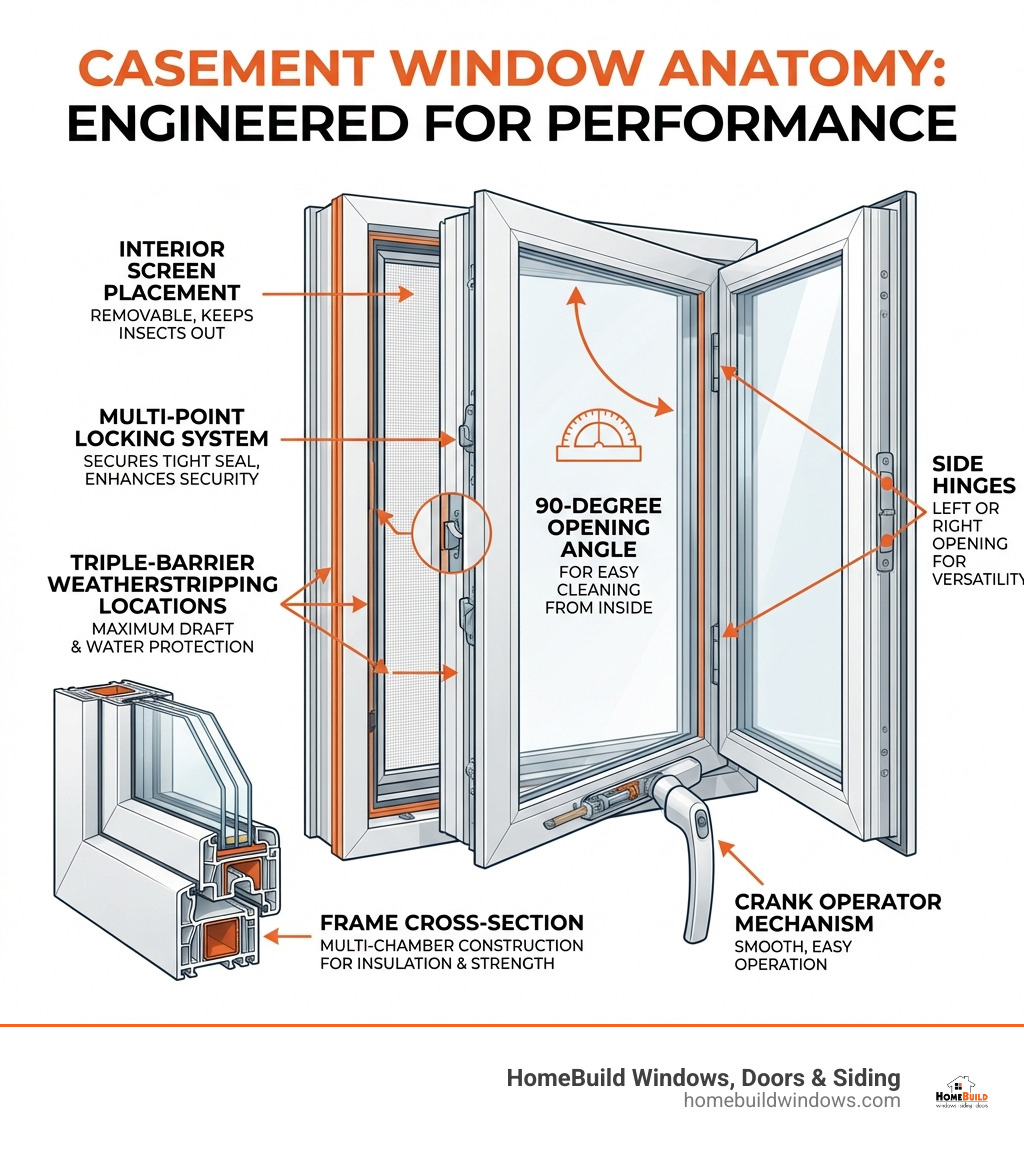
- Key Features: Look for multi-point locks, 90-degree hinges, and triple-barrier weatherstripping.
- Configuration Options: Available as single units, French pairs, or combinations with fixed windows.
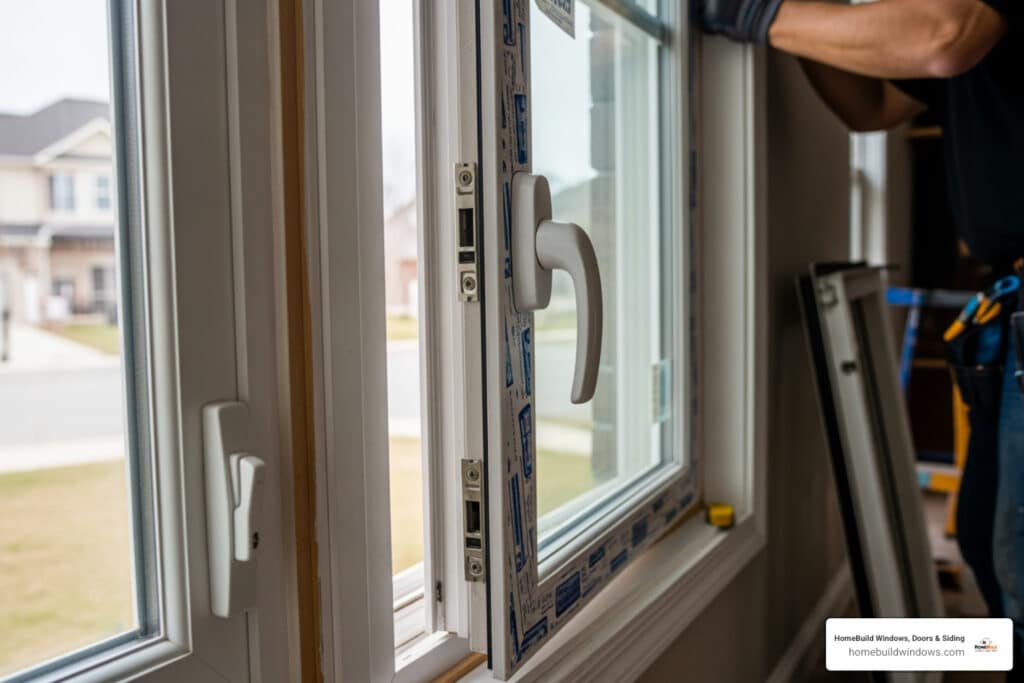
If you’re experiencing cold drafts, condensation, or windows that won’t stay open, replacement can solve these issues while cutting energy bills. Modern casement windows operate with a simple crank handle, providing maximum ventilation and unobstructed views. Their design creates a tight seal when closed, making them one of the most energy-efficient window types available.
Casement windows are also a practical choice in homes where you want ventilation without sacrificing security. Because the lock hardware is built into the frame and the sash closes by compressing weatherstripping, a properly installed unit can help reduce whistling on windy days and limit dust infiltration along the edges. In kitchens, they are popular above sinks because the crank makes them easy to open even when the window is out of reach.
Replacement is also an opportunity to correct underlying problems you may not see at first glance, such as deteriorated sills, old or missing flashing, and gaps around the rough opening. Addressing those details during a project can improve comfort, protect surrounding drywall and trim, and help prevent moisture-related issues over time.
Professional installation is vital. Poor flashing or improper shimming can lead to air leaks and water damage. I’m Steve Mlynek, founder of HomeBuild Windows, Doors & Siding. With 20 years of experience and as a Pella Platinum Elite and Andersen Certified Contractor, I’ve helped thousands of homeowners in Chicago transform drafty windows into energy-efficient assets.
Understanding Casement Window Replacement
When it’s time for casement window replacement in Chicago, you’re investing in comfort and curb appeal. Casement windows are hinged on one side and open outward like a door, allowing for maximum ventilation and unobstructed views. They are ideal for kitchens or living rooms where you want to frame the outdoors.
Our team at HomeBuild Windows, Doors & Siding specializes in expert installation. For more details, explore our window replacement service or our window replacement cost guide.
How Casement Windows Operate
Casement windows use a crank handle, making them easy to open in hard-to-reach spots. A multi-point locking system secures the window tightly, enhancing security and weather protection. Modern units feature 90-degree hinges, allowing you to clean both sides of the glass from inside your home. If you have issues with the crank, understanding how to replace an awning window operator can provide similar insights.
Benefits of Casement Window Replacement
- Maximum Airflow: The entire sash opens outward to catch breezes from any direction.
- Superior Energy Efficiency: The sash presses firmly into the frame when closed, creating an airtight seal. Many are ENERGY STAR certified. Learn more about Energy Star performance ratings.
- Improved Security: The internal crank and multi-point locks make them very difficult to force open.
- Unobstructed Views: Fewer bars divide the panes, offering clear views of your neighborhood.
- Versatility: They complement any architectural style and can be combined with fixed windows.
Configurations and Material Options
Casement window replacement offers various configurations to suit your home’s needs:
- Single-Unit: A classic choice for ventilation.
- French Casement: Opens from the center without a vertical post for an expansive view.
- Fixed-Casement Combinations: Pairs operable windows with stationary glass for light and efficiency.
- Stacked Casement: Creates a dramatic vertical statement for tall openings.
We help clients achieve a modern home windows aesthetic with these versatile options.
| Frame Material | Pros | Cons | Ideal For |
|---|---|---|---|
| Vinyl (uPVC) | High efficiency, low maintenance, cost-effective. | Less rigid than fiberglass. | Budget-conscious, low-maintenance needs. |
| Wood | Natural beauty, classic look, great insulator. | High maintenance, susceptible to rot. | Historic homes, classic styles. |
| Fiberglass | Extremely strong, durable, high thermal performance. | Higher upfront cost. | Maximum durability and strength. |
Frame Materials: Vinyl, Wood, and Fiberglass
- Vinyl (uPVC): Popular in Chicago for its balance of performance and value. Our vinyl won’t rot or corrode. Many feature fusion welding for a durable frame built for Illinois weather.
- Wood: Offers timeless beauty and can be stained to match interiors. However, it requires regular painting to prevent rot.
- Fiberglass: Strong and stable, it resists warping and mimics the look of wood without the maintenance.
Customizing Your Casement Window Replacement
- Colors: Choose from classic white to modern black or custom hues to match your siding.
- Hardware: Finishes like brushed nickel or oil-rubbed bronze tie into your interior decor.
- Grille Patterns: Add Colonial or Prairie patterns for architectural character.
- Brickmould: This exterior trim provides a stylish finish.
We offer custom window designs for homeowners in Chicago and Arlington Heights.
Energy Efficiency and Performance Standards
In Chicagoland, energy efficiency is vital. Key indicators include:
- U-Factor: Measures heat escape; lower is better for winter insulation.
- Solar Heat Gain Coefficient (SHGC): Measures solar heat gain. Learn more about SHGC explained.
- Energy Rating (ER): Simplifies performance comparison across manufacturers.
Our windows feature Low-E coatings and Argon gas to reflect heat and improve insulation.
Triple-Pane vs. Double-Pane Units
- Double-Pane: The standard for efficiency, with R-values around 3 to 3.8.
- Triple-Pane: Uses three panes for superior insulation, reaching R-values of 7-8. This can reduce heat loss by 30-40% compared to double-pane units.
Benefits of triple pane windows include reduced condensation and better noise dampening. We ensure our energy efficient glazing meets the highest standards.
Weather Protection and Sealing
Our windows are built for harsh weather with:
- Multi-Layered Frames: Prevents air infiltration.
- Brush and Bull Seals: Create suction and barriers against dust and water.
- DraftLOCK™ Technology: Maintains interior warmth to prevent condensation.
- Automotive-Quality Weatherstripping: Ensures no gaps for moisture.
We provide ultra high efficiency windows for year-round comfort.
The Installation and Maintenance Process
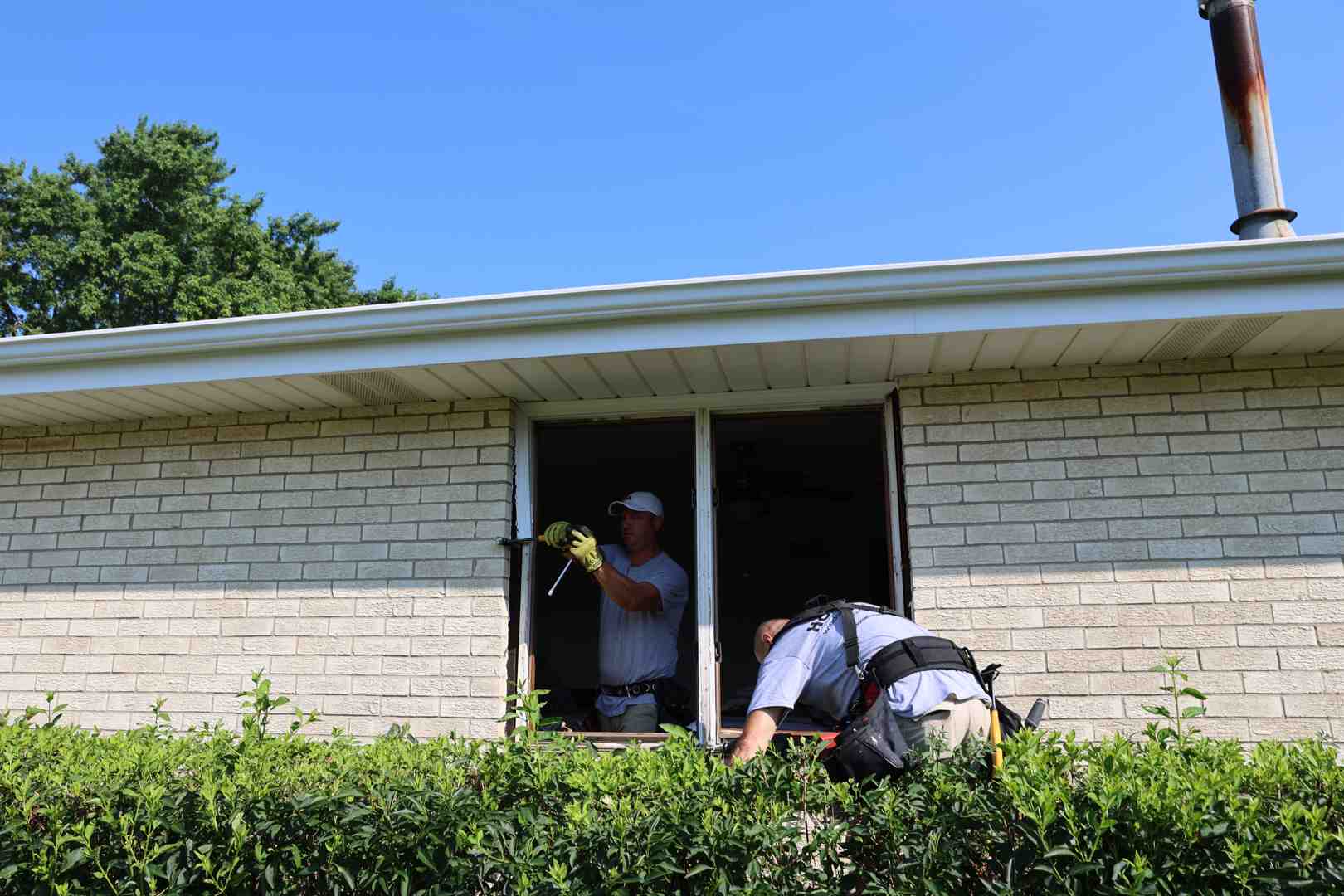
Success depends on meticulous installation. We follow CSA window installation standards and manufacturer specs.
- Insert Replacement: Used if the existing frame is sound. We replace only the sash and glass.
- Full-Frame Replacement: Necessary if the frame is damaged. We remove everything to the rough opening.
In the Chicago area, the right method often comes down to what we find behind the interior trim and exterior cladding. If the existing frame is square, structurally solid, and properly integrated with the wall’s water-management layers, an insert replacement can be an efficient way to upgrade performance with less disruption. If we see signs of water intrusion, soft wood, or out-of-square framing, a full-frame approach is usually the best way to rebuild the opening correctly and protect the surrounding wall.
Our 8-step process includes:
- Site Prep: Protecting your home.
- Removal: Carefully removing the old unit.
- Weatherproofing: Installing flashing tape and sill pans.
- Dry-Fit: Checking for level and squareness.
- Fastening: Securing the window per guidelines.
- Insulating: Applying low-expansion foam to seal gaps.
- Trim & Cleanup: Reinstalling trim and cleaning the area.
- Final Check: Testing operation and watertightness.
After installation, we verify that the sash opens smoothly, the crank operator engages without binding, and the multi-point lock pulls the sash tight to the frame evenly. We also confirm the weep system is unobstructed so any incidental moisture can drain to the exterior as designed.
See our window installation guide for more details.
Best Practices for Longevity
- Lubrication: Use dry silicone spray on hinges and cranks annually.
- Track Cleaning: Vacuum debris to ensure smooth movement.
- Seal Inspection: Check weatherstripping for wear.
- Weep Holes: Keep exterior drainage holes clear.
If you notice the window getting harder to crank over time, address it early. Dirt buildup, dried lubricant, or a loose fastener can often be corrected quickly before it stresses the operator. And after severe Chicagoland temperature swings, it’s smart to do a quick visual check for any gaps in caulk lines or trim joints around the opening.
Our certified window installers can provide specific tips for your new units.
Frequently Asked Questions about Casement Windows
Can casement windows meet egress requirements?
Yes. Because they open fully, they often meet egress codes with smaller openings than other styles. This makes them great for basements. If you need window replacement near me for safety compliance, we can help.
How do I clean casement windows from the inside?
Thanks to 90-degree hinges, you can crank the window open until the sash is perpendicular, allowing easy access to both sides of the glass. This is a major convenience of casement window replacement. We provide tips during window replacement and installation.
What is the difference between left-hand and right-hand handing?
Handing is determined by looking from the inside:
- Left-Hand: Hinges on the left, opens from the right.
- Right-Hand: Hinges on the right, opens from the left.
We’ll help you choose the best handing for your furniture layout. For more tips, see our replacement window buying guide.
Conclusion
Casement window replacement is a smart investment for Chicago homeowners, offering ventilation, security, and energy savings. At HomeBuild Windows, Doors & Siding, we provide expert installation across Chicagoland, including Palatine and Glenview. Our status as a Pella Platinum Elite and Andersen Certified Contractor ensures your project is handled with professional care. Ready to improve your home? Start your project with our replacement window buying guide today.