


What You Need to Know Before Scheduling a Roof Inspection in Schaumburg
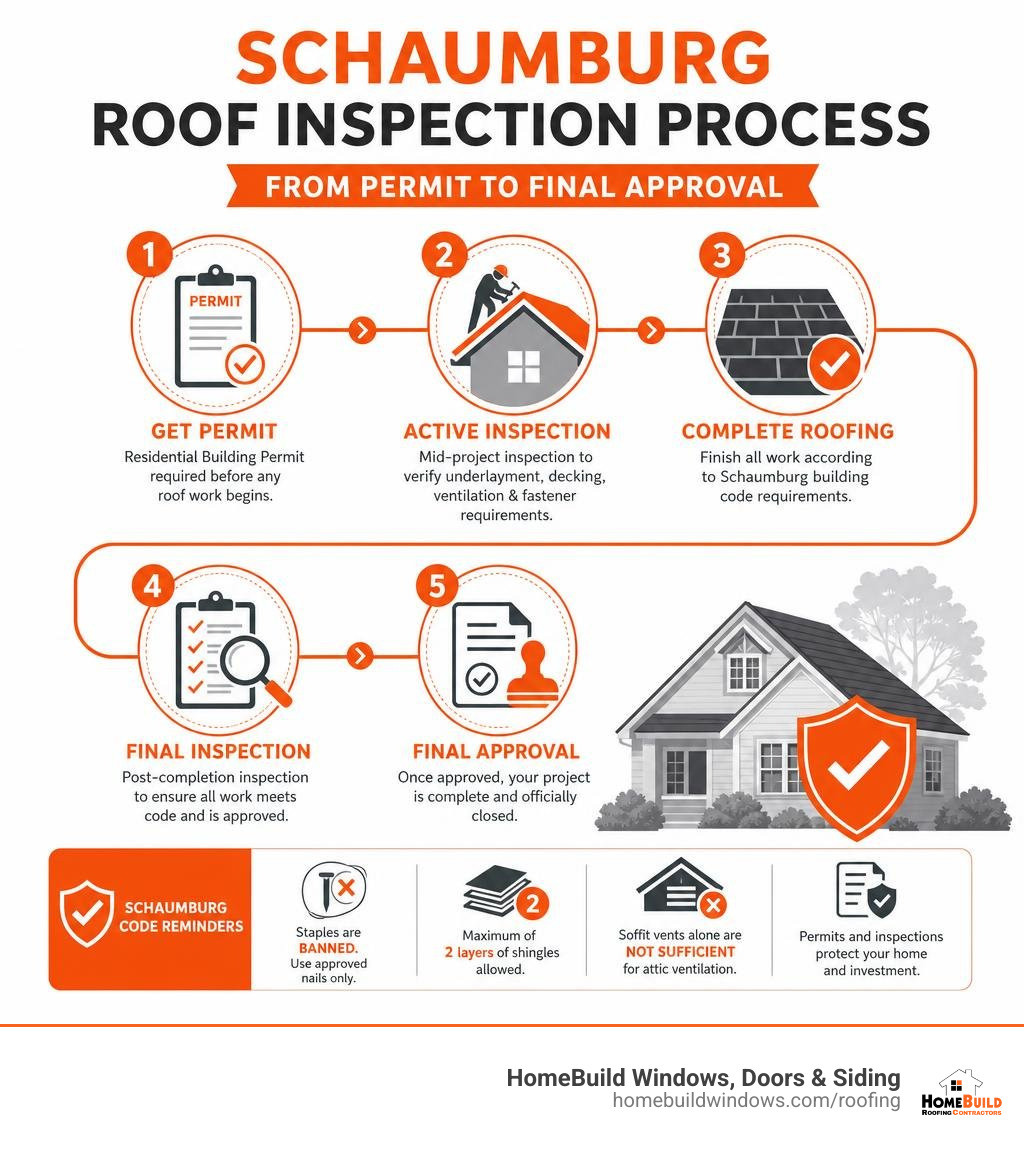
Getting a roof inspection in Schaumburg means more than just having someone climb up and take a look. The Village of Schaumburg has specific code requirements — and two separate required inspections — that every homeowner and contractor must follow before a roofing project is considered complete.
Here’s what to know right away:
- A Residential Building Permit is required before any roof replacement or shingle-over project begins.
- Two inspections are required: an Active Inspection (mid-project) and a Final Inspection (after completion).
- Staples are banned as fasteners — only approved nails are accepted.
- A maximum of 2 layers of shingles are allowed on any roof.
- Soffit vents alone are not sufficient for attic ventilation under Schaumburg code.
Schaumburg winters are no joke. Freeze-thaw cycles, ice dams, and heavy snow loads put real stress on roofs in the northwest suburbs. Skipping permits or failing an inspection doesn’t just cause delays. It can leave your home exposed to the next big storm. A failed inspection can also delay your project for weeks.
I’m Steve Mlynek, CEO and founder of HomeBuild. With over 20 years of experience completing roofing projects across Chicagoland — including dozens of compliant roof replacements right here in Schaumburg — I know exactly what local inspectors look for during a roof inspection in Schaumburg. Let me walk you through everything you need to pass.
Preparing for Your Roof Inspection in Schaumburg
Before starting any work, you must obtain a Residential Building Permit. This rule applies to all roof replacement or shingle-over projects. The Village of Schaumburg enforces strict rules to protect your home. You must display this permit in a front window where inspectors can see it. You can read the full Village of Schaumburg Building Codes online.
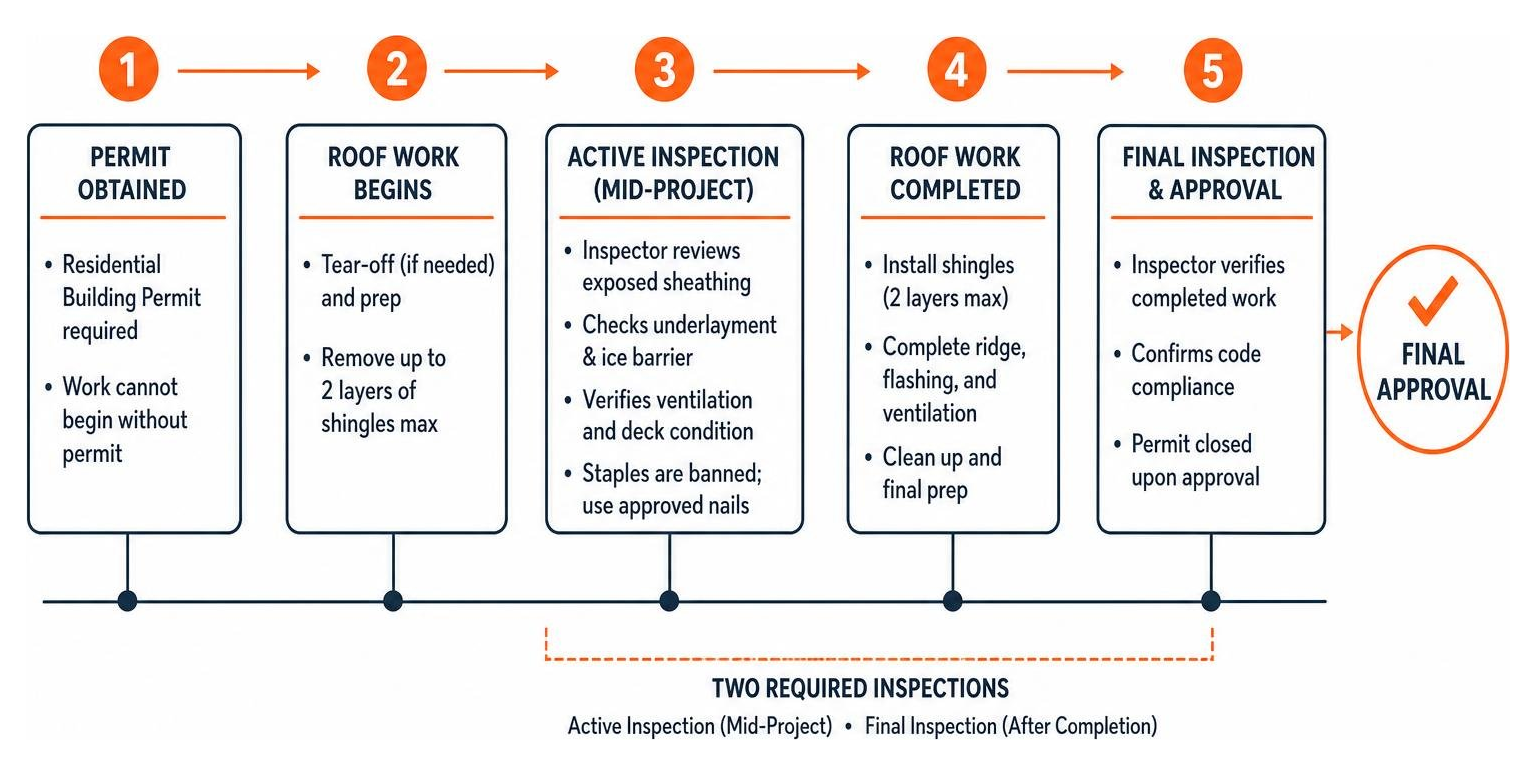
Our team handles this permit process for you during our schaumburg roofing projects. We submit the drawings, license info, and insurance papers to the village hall. A proper Roof Inspections schedule involves two key stages. These stages are the active inspection and the final inspection. Failing to schedule these can result in heavy fines.
What to Expect During an Active Roof Inspection in Schaumburg
The active inspection happens mid-project. An inspector visits your home while the crew works. They check the exposed wood roof sheathing first. The sheathing must be completely clean and dry before installing shingles. The inspector wants to see the bare wood deck before any underlayment covers it.
Inspectors also verify the underlayment and ice barrier placement. This step prevents water damage from severe Storm Damage Roofing In Chicagoland. The inspector checks the wood deck for rot, mold, or sagging. We replace any damaged wood immediately with fresh plywood. This ensures your roof stands up to heavy snow loads and high winds.
How to Pass Your Final Roof Inspection in Schaumburg
The final inspection occurs after the crew completes the roof. The inspector reviews the finished shingle installation. They check the attic ventilation and flashing details. They also look at the ground to ensure we cleaned up all nails and debris.
Your roof must meet all safety standards to pass. A passed final inspection ensures your Roof Replacement is fully compliant. We walk through this process with you to ensure a passing grade. Our team stays on-site to answer any questions the village inspector might have.
Key Code Requirements for Slope, Underlayment, and Ice Protection
Schaumburg building codes dictate specific requirements for your roof slope. Slope measures how steep your roof is. Standard shingle and tile roofs require a minimum slope of 4 in 12. This means the roof rises 4 inches for every 12 inches of width. For slopes between 2 in 12 and 4 in 12, rules are much stricter.
These low-slope roofs must follow strict International Residential Code guidelines. You cannot use standard shingle methods on low slopes. Underlayment must be a minimum of 15-pound felt. This felt must completely cover the wood sheathing. For low slopes, you must apply two layers of underlayment felt. This double layer prevents water from backing up under the shingles.
Ice and water protectors are critical in our cold winters. The ice barrier must extend at least 2 feet past the interior wall line. This protection helps prevent ice dams during heavy winter snows. Ice dams form when snow melts and refreezes at the roof edge. If your roof leaks during a winter freeze, you might need Emergency Roof Repair In Chicagoland. We install self-adhering membranes to keep your home dry.
Shingle Installation, Fastener Rules, and Re-Roofing Limits
Proper fastening is key to surviving high winds in Northern Illinois. Schaumburg code requires at least 4 fasteners per shingle. High-wind areas and mansard roofs require 6 fasteners per shingle.
Staples are strictly banned as roofing fasteners here. Inspectors will fail any project that uses staples. Staples lack holding power and rust quickly. They also tear through shingles during strong storms. Inspectors only accept hot-dipped galvanized steel or copper roofing nails. Nails must sit on the specified shingle nail line. Keep fasteners within 1 inch of each shingle end. Nails must penetrate through the sheathing.
We use high-quality Architectural Shingle Roofing In Chicagoland for maximum durability. We highly recommend Owens Corning Duration Shingles for local homes. These shingles feature a patented fabric strip for superior nail grip.

Schaumburg limits roofs to a maximum of 2 shingle layers. If your roof already has two layers, we must tear it down to the wood. Tearing off old layers is always the safest option. A second layer traps heat and shortens shingle life. It also adds heavy weight to your home’s structure. Tearing off old layers allows us to inspect the decking for hidden damage. We can then install the ice barrier directly on the clean wood.
Attic Ventilation and Flashing Standards for Schaumburg Homes
Proper attic airflow prevents ice dams and lowers summer energy bills. Soffit vents alone are not enough under Schaumburg building codes. You must install additional roof vents to ensure balanced airflow. A balanced system needs both intake and exhaust vents. Without proper exhaust, hot air gets trapped in your attic. This heat melts snow on your roof, which causes ice dams. Our team designs complete Roof Ventilation Attic Airflow In Chicagoland systems.
| Feature | Proper Ventilation | Improper Ventilation |
|---|---|---|
| Intake Vents | Balanced soffit or baffle vents | Blocked or missing soffit vents |
| Exhaust Vents | Ridge vents or box vents near peak | No high exhaust vents |
| Airflow Balance | 50% intake and 50% exhaust | Soffit vents only (violates code) |
| Winter Protection | Prevents attic heat and ice dams | Traps heat, melts snow, creates ice dams |
Flashing keeps water out of weak spots on your roof. Open valleys require No. 28 gauge galvanized corrosion-resistant sheet metal. This valley flashing must extend 8 inches from the center. Chimneys and other roof openings also require proper flashing. We install step flashing along walls to direct water away. We also add kick-out flashing where the roof edge meets siding. This prevents water from rotting your home’s walls.
Frequently Asked Questions About Schaumburg Roof Inspections
Is a permit required for a roof replacement in Schaumburg?
Yes, you need a Residential Building Permit for all roofing projects. This includes both full replacements and shingle-over projects. Getting a permit is also necessary if you file a Roof Insurance Claim. The village requires this permit to ensure all work meets local safety codes. Our team handles all the paperwork and schedules the inspections for you.
Are staples allowed for fastening shingles in Schaumburg?
No, staples are completely illegal for roofing in Schaumburg. The village banned staples because they pull out easily during high winds. Only approved galvanized or copper nails ensure long-term roof durability. These nails must have a minimum 12-gauge shank and a 3/8-inch head. They must penetrate through the roof deck.
How many layers of shingles are allowed on a roof in Schaumburg?
You can have a maximum of two layers of shingles. Adding a third layer exceeds safe structural weight loads. A second layer also traps heat, which ruins the shingles faster. Tearing off old layers is always the safest option. It allows us to inspect the wood deck and install a proper ice barrier.
Conclusion
Passing a roof inspection in Schaumburg requires strict attention to detail. At HomeBuild, Steve Mlynek personally supervises every single roofing project. We never use random subcontractors to manage our jobs. Our owner-supervised approach ensures your roof meets every local building code.
Our 4.9-star Google rating across 180+ reviews shows our commitment to quality. We won the Angi Super Service Award 2025. We also won Nextdoor Neighborhood Faves 2025. We are fully licensed and insured to protect your home. We serve homeowners in Schaumburg, Hoffman Estates, Arlington Heights, and across Chicagoland.
Whether you need a simple Roof Repair or a full replacement, we can help. Read our customer reviews to see our work in action. Ready to schedule your stress-free project? Please contact us today to book your free inspection.