


Services

Roof Ventilation & Attic Airflow in Chicagoland
The Component Most Homeowners Overlook Until It Fails


4.9/5
(180+ Reviews)
Angi Super Service Award
2025
Nextdoor Faves
2025
Owens Corning
Certified Installer
Most homeowners think about a roof replacement in terms of shingles - what they look like, how long they last, what they cost.
Very few think about the attic underneath the shingles until something goes wrong.
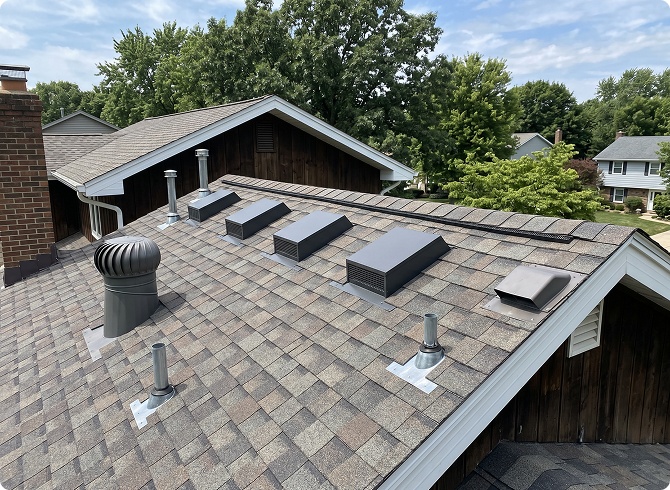
Attic ventilation is the system that controls heat and moisture in the space between the insulation and the roof deck. When it works correctly, it is invisible. When it is inadequate, it produces some of the most expensive and least expected problems in residential roofing - ice dams that back water under shingles in January, shingles that curl and blister at year 10 on a 30-year roof, and decking rot that only becomes visible when a contractor tears off the roof during replacement.
In Chicagoland, where summers reach 95°F and attic temperatures in unventilated spaces can exceed 150°F, and where winters cycle through freeze-thaw dozens of times between December and March, the ventilation system is not a secondary consideration. It is the difference between a roof that performs to spec and one that fails quietly ahead of schedule.
HomeBuild Roofing includes a ventilation assessment on every project – inspection, replacement, or repair. This page explains why that matters and what balanced ventilation actually involves.
What Are the Signs of Poor Attic Ventilation?
Poor attic ventilation produces recognizable symptoms – often appearing months or years before the roof itself fails. Watch for:

Ice dams at the eaves each winter
the most visible sign of uneven roof deck temperature caused by escaping attic heat
Shingles curling, blistering, or granule loss ahead of expected service life
heat degrading asphalt from below
Frost or condensation on the roof deck
visible during a winter attic inspection
Musty odors or visible mold in the attic
moisture accumulating without an exhaust path
Increasing energy bills
HVAC compensating for heat that ventilation should be removing
Ceiling stains near exterior walls in winter
moisture condensing and migrating inward from a saturated attic
Any one of these signals a problem worth inspecting before it progresses
Balanced Attic Ventilation Works on One Physical Principle - and Fails When That Principle Is Ignored
Owens Corning TruDefinition Duration shingles carry three distinct warranty components. Understanding each one – what it covers and what it requires – helps homeowners evaluate the actual value of the warranty rather than treating it as a marketing claim. The components underneath the shingles – the moisture barrier, the underlayment, the ventilation system, the starter strip – determine how the whole roof performs over time. A premium shingle installed over a compromised underlayment, inadequate ventilation, or missing ice and water shield will fail well ahead of schedule.
The principle is simple: warm air rises. In an attic, the air at the top of the space is always warmer than the air near the eaves. A properly designed ventilation system uses this physics to create a continuous airflow loop – cool outside air enters at the lowest point through soffit or eave vents, rises through the attic as it warms, and exits at the highest point through ridge or exhaust vents. The constant movement flushes heat and moisture out of the space before either can build up to damaging levels.
For this loop to function, two conditions must be met simultaneously:
1
Adequate intake.
Soffit vents along the eave line must be open, unblocked, and sized to bring in enough air volume to feed the exhaust. In older Chicagoland homes, this is the most common failure point. Past insulation work frequently buries soffit vents under blown-in or batt insulation, eliminating the intake source entirely. The ridge vent still tries to exhaust – but without intake, it draws air from ceiling gaps, light fixtures, and wall cavities instead of from the soffits. The result is negative pressure in the living space, moisture migration, and no actual heat reduction in the attic.
2
Matched exhaust
The exhaust capacity at the ridge must be proportional to the intake capacity at the soffits. More exhaust than intake creates the same negative pressure problem. More intake than exhaust traps warm air at the peak. The standard calculation uses one square foot of net free area for every 150 square feet of attic floor space, split evenly between intake and exhaust.
One additional rule worth stating plainly: do not mix exhaust vent types. A ridge vent and a gable vent on the same attic do not double the exhaust capacity – they short-circuit the airflow path. Air takes the shortest route between the two exhaust points rather than washing the entire attic deck from soffit to ridge. The Asphalt Roofing Manufacturers Association states explicitly: do not mix attic exhaust vent types. Shingle manufacturers, including Owens Corning, say the same.
Poor Attic Ventilation Causes Ice Dams - Chicagoland's Most Damaging Winter Roof Failure
Ice dams are the most expensive ventilation consequence in the Chicagoland market – and one of the most misunderstood. Most homeowners see the ice buildup at the eave and reach for a roof rake or calcium chloride. The ice is not the problem. It is the symptom of a ventilation failure happening in the attic above it.
Here is the sequence:

Warm air from the living space rises and escapes into the attic through gaps in the ceiling plane — light fixtures, recessed cans, attic hatches, and bypasses around plumbing and electrical chases. That warm air heats the roof deck unevenly. The upper sections of the roof deck — closest to the escaping heat — warm enough to melt snow sitting on the shingles. Meltwater flows down the slope toward the eave. The eave extends past the building’s thermal envelope and sits over cold outside air. The meltwater reaches the cold eave, refreezes, and begins building an ice dam.
As the dam grows, subsequent meltwater has nowhere to drain. It backs up behind the ice, works under the shingles, penetrates the underlayment, and enters the home through the roof deck. This is why attic water stains in Chicagoland homes so frequently appear near exterior walls in late January or February — the path from ice dam to interior water stain runs under the shingles along the eave.
Proper attic ventilation reduces the temperature differential between the upper and lower roof deck by continuously flushing warm air out before it can heat the sheathing. Combined with adequate ceiling insulation and air sealing, balanced ventilation is the structural solution to ice dam formation — not a seasonal maintenance activity.
Ice dams cause interior water damage, insulation saturation, ceiling stain repair, and in recurring cases, structural framing rot. In Chicagoland, a single winter with an active ice dam can produce more interior damage than several years of normal roof wear.
Six Signs of Inadequate Attic Ventilation That Appear Before the Roof Fails
In Palatine, Arlington Heights, and across the Northwest suburbs, ventilation problems in older homes are extremely common. Many were built in the 1980s and 1990s with ventilation systems that met code at the time but have since been compromised by insulation upgrades, HVAC modifications, or simply blocked soffits. These six signs appear before a roof replacement is needed — and catching them early changes the cost picture substantially.
1
Ice dams forming at the eaves each winter.
The clearest sign of a temperature differential problem driven by inadequate ventilation and ceiling air sealing. If ice dams appear reliably every January, the attic is retaining heat it should be exhausting.
2
Shingles curling, cupping, or blistering ahead of schedule.
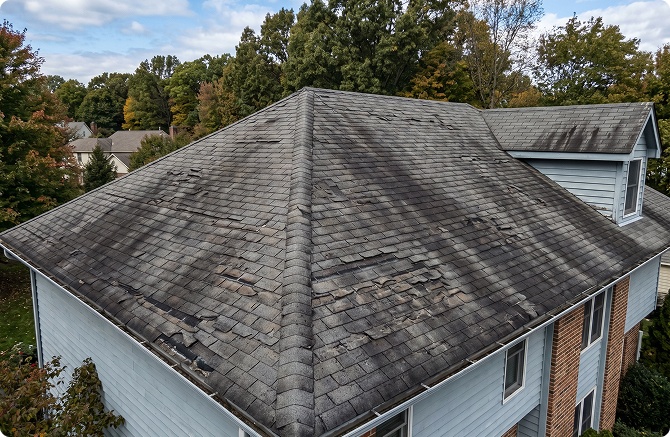
A 10-year-old architectural shingle roof should not be showing curl or blister. When it does, heat degradation from below is usually the cause — the attic is running at temperatures that accelerate asphalt breakdown. This is how a 30-year shingle produces a 15-year roof.
3
Granule loss across the full roof surface, not just storm-affected areas.
Widespread granule loss without an associated storm event points to thermal stress — heat cycling that causes granules to release from the asphalt surface prematurely.
4
Frost or condensation on the underside of the roof deck.
Visible during a winter attic inspection. Moisture-laden warm air from below contacts the cold sheathing and condenses. Recurring condensation leads to mold, rot, and eventually structural compromise in the rafters and decking.
5
Musty odors or visible mold in the attic space.
6
Unusually high energy bills in summer.
An attic running at 150°F in a Chicagoland August transfers heat into the living space below, increasing the load on the air conditioning system. Homeowners often notice this as an unexplained increase in cooling costs before they connect it to the roof. Proper ventilation reduces attic temperatures by 40 to 50°F in peak summer conditions — a measurable HVAC load reduction.
Inadequate Ventilation Voids Most Shingle Manufacturer Warranties
This is the most significant and least-known consequence of improper attic ventilation for homeowners investing in a new roof – and it applies on day one, not years later.
Major shingle manufacturers, including Owens Corning, require adequate attic ventilation as a condition of the shingle warranty. The reasoning is straightforward: shingles that fail prematurely because the attic is running at 150°F are not manufacturing defects. They are installation condition failures – the contractor’s responsibility to identify and correct before the shingles go on.
If a new roof is installed without assessing and correcting the ventilation system, the Limited Lifetime Warranty on the shingles may be void from the date of installation. The homeowner has a new roof. The homeowner has a warranty document. But if the attic does not meet minimum ventilation requirements, the warranty that document represents does not apply to the conditions that are actually causing the shingles to fail.
A 1-inch hailstone striking a 3-tab shingle creates granule loss, soft impact spots, and accelerated UV degradation – often across an entire roof in a single storm event. Premium architectural shingles carry Class 3 impact ratings – designed specifically for the hail size range common in Illinois severe weather. The difference between a Class 3 shingle and an unrated 3-tab is the difference between a roof that handles a hail event and one that generates an insurance claim.
This calculation is part of what HomeBuild assesses on every roof replacement project before the new roofing system is installed.
Every HomeBuild Roof Installation Includes a Ventilation Assessment and Balanced System
For homeowners in Wheaton, Elmhurst, and across the West suburbs replacing a roof, the ventilation question is not an afterthought or an upsell – it is part of the standard project scope.
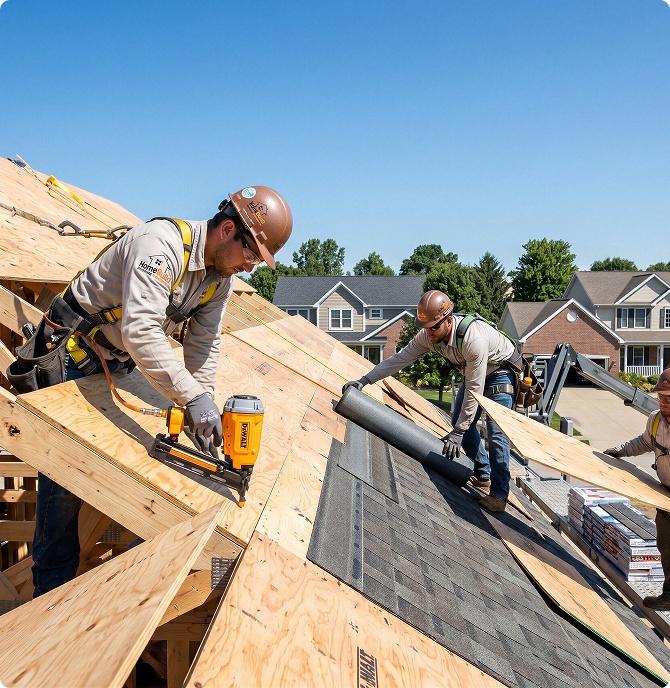
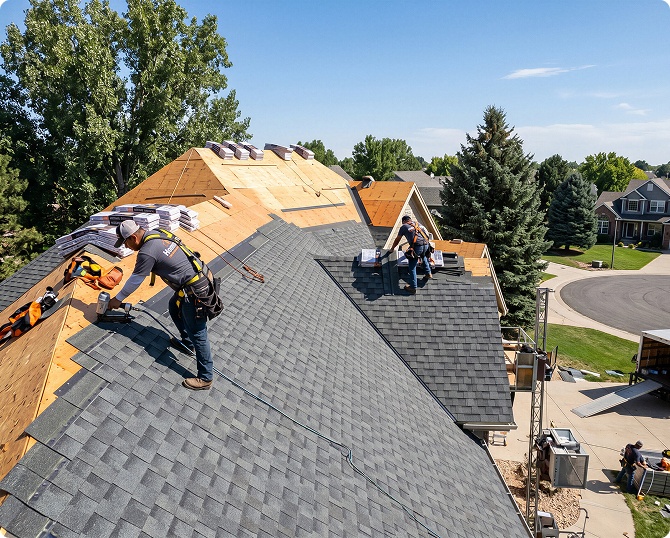
Before any new materials go on a HomeBuild roof project, we assess the existing ventilation system.
What the assessment covers:
Measurement of existing soffit intake capacity - net free area compared to attic square footage
Inspection of soffit vents for insulation blockage, debris, animal screening, or paint coverage that reduces airflow
Ridge or exhaust vent inspection - type, condition, and capacity
Identification of mixed exhaust vent types that short-circuit the airflow path
Attic access inspection where available - checking for frost, condensation, mold, or signs of prior moisture events
Comparison of existing system capacity against the minimum requirements for the specific attic configuration
What happens if the system is inadequate:
We document the finding in writing as part of the written estimate. If intake vents are blocked, clearing them is addressed before installation. If the exhaust capacity is insufficient for the attic size, additional ridge vent or exhaust is included in the scope. If gable vents are present alongside ridge vents, the interaction is assessed and the approach documented.
This is not unusual. In the Northwest and West suburbs, a significant percentage of homes from the 1980s and 1990s have ventilation systems that no longer function as designed — most commonly because soffit vents have been buried in insulation at some point in the past 30 years. Identifying and correcting this during a roof replacement takes a fraction of the time and cost it would require as a separate project later.
Ventilation Assessments Across Chicago's Northwest and West Suburbs
HomeBuild Roofing performs ventilation assessments as part of every roof inspection, replacement, and repair project across Chicago’s Northwest and West suburban communities.
Northwest Suburbs
West Suburbs
If your town is not listed, call us – we may still serve your neighborhood. Every roof ventilation Chicago project starts with a free on-site assessment.
Frequently Asked Questions About Roof Ventilation and Attic Airflow in Chicagoland
Why is attic ventilation important for a Chicagoland roof?
Chicagoland’s climate creates two distinct ventilation demands. In summer, unventilated attics reach 150°F – temperatures that degrade asphalt shingles from below and force HVAC systems to work harder. In winter, warm air escaping from the living space heats the roof deck unevenly, melting snow that refreezes at the eave as ice dams. Balanced ventilation controls both conditions by maintaining continuous airflow through the attic space year-round.
What are the signs of poor attic ventilation?
The most common signs are ice dams forming at the eaves each winter, shingles curling or blistering before expected end of service life, widespread granule loss without a storm event, frost or condensation on the underside of the roof deck, musty odors or visible mold in the attic, and unexplained increases in summer cooling costs. Any one of these signs warrants a ventilation inspection before the next roofing project.
How does ventilation prevent ice dams in Chicago winters?
Ice dams form when warm air escaping from the living space heats the upper roof deck, melting snow that then refreezes at the cold eave. Balanced ventilation continuously flushes warm air out of the attic before it can heat the sheathing unevenly. Combined with adequate ceiling insulation and air sealing, proper ventilation eliminates the temperature differential that drives ice dam formation – it is the structural solution, not a seasonal maintenance activity.
What is the difference between intake and exhaust vents?
Intake vents – typically soffit or eave vents – bring cool outside air into the attic at the lowest point. Exhaust vents – typically ridge vents – allow warm air to exit at the highest point. The system works because warm air rises naturally. For the loop to function, intake and exhaust capacity must be matched: one square foot of net free area per 150 square feet of attic floor, split evenly between intake and exhaust. The most common failure point in older Chicagoland homes is buried soffit vents that eliminate intake entirely.
Does poor ventilation void a shingle manufacturer warranty?
Yes. Owens Corning and most major shingle manufacturers require adequate attic ventilation as a condition of the product warranty. A roof installed without correcting inadequate ventilation may have its Limited Lifetime Warranty voided from the date of installation – not years later when the problem becomes visible. HomeBuild assesses ventilation on every project before new materials are installed, documents findings in writing, and includes any required corrections in the project scope.
Should ventilation be checked when replacing a roof in Chicagoland?
Yes – and it should be checked before the new roof goes on, not after. Ventilation corrections are far simpler and less expensive during a tear-off than as a separate project. HomeBuild includes a ventilation assessment as standard on every roof replacement project across Chicago’s Northwest and West suburbs – soffit intake measurement, ridge vent inspection, identification of mixed exhaust vent types, and attic access inspection where available. All findings are documented in writing.
Is Your Attic Working Against Your Roof? Find Out With a Free Assessment.
A free inspection that includes the ventilation system — not just the shingle surface. Written findings, honest assessment, no obligation. The same standard HomeBuild has applied to every Chicagoland project for more than 20 years.