


Storm Damage Roofing: What to Check After a Chicagoland Storm
Storm Damage Roofing requires a fast, safety-first assessment after high winds, hail, heavy snow, or freezing rain. From the ground, look for missing or lifted shingles, dented gutters or flashing, fallen branches, granules near downspouts, and new ceiling stains or attic moisture.
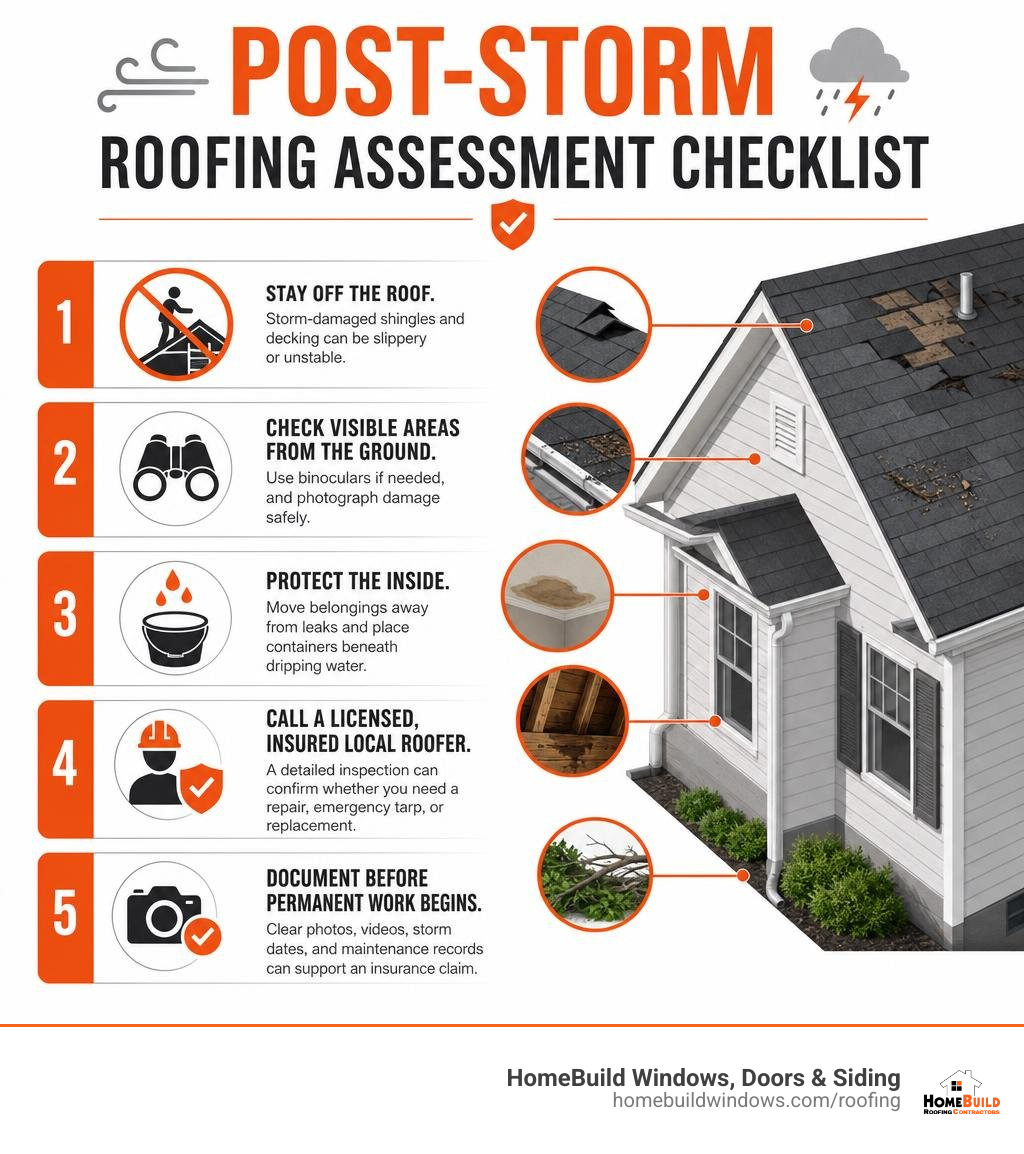
- Stay off the roof. Storm-damaged shingles and decking can be slippery or unstable.
- Check visible areas from the ground. Use binoculars if needed, and photograph damage safely.
- Protect the inside. Move belongings away from leaks and place containers beneath dripping water.
- Call a licensed, insured local roofer. A detailed inspection can confirm whether you need a repair, emergency tarp, or replacement.
- Document before permanent work begins. Clear photos, videos, storm dates, and maintenance records can support an insurance claim.
Chicago-area roofs face more than summer wind and hail. Ice dams, snow load, and repeated freeze-thaw cycles can turn small openings into leaks, wet insulation, and hidden wood damage. A prompt professional inspection gives you a clear answer without pressure to replace a roof that can still be repaired.
I am Steve Mlynek, founder of HomeBuild Windows, Doors & Siding and an Owens Corning Certified contractor with more than 20 years in Chicagoland exterior improvement. Our Storm Damage Roofing work focuses on clear assessments, owner-supervised projects, and practical repair or replacement recommendations for local homeowners.
Common Types of Storm Damage Roofing Issues
Severe storms in Chicagoland bring harsh conditions that quickly compromise your home’s roof. High winds, hail, heavy snow, and rain create distinct types of exterior damage.
Knowing what to look for helps you address minor defects before water reaches your living spaces. Early detection keeps your home safe and protects your financial investment.
High Winds and Flying Debris
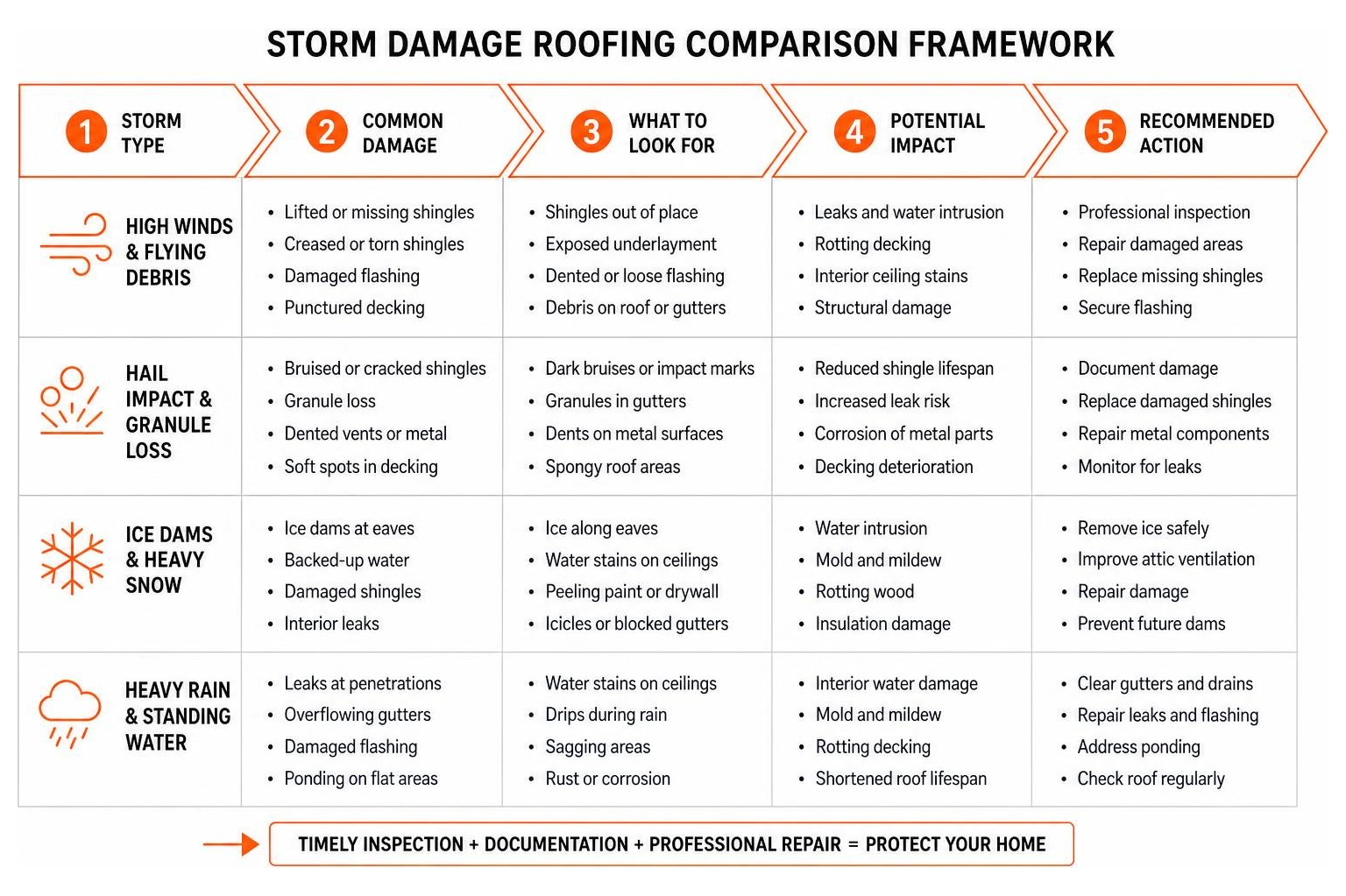
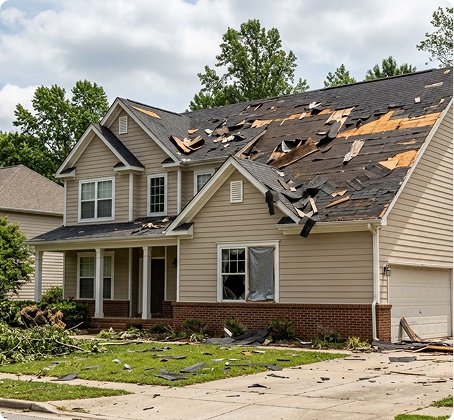
Severe summer storms and spring fronts routinely sweep through Schaumburg with gale-force winds. High winds break shingle seal strips, lifting shingle edges and causing severe creasing across asphalt courses. Extreme wind uplift exposes raw roof decking underneath, creating fast entry points for driving rain.
Fallen tree limbs puncture decking and destroy perimeter flashing systems. Prompt Roof Repair stabilizes these compromised zones before secondary interior damage spreads throughout your home.
Hail Impact and Granule Loss
Hailstorms leave distinct round impact marks across asphalt shingle slopes. Hail strikes dislodge protective mineral granules, leaving exposed asphalt surfaces vulnerable to solar ultraviolet rays.
Hail also dents metal roof vents, valley liners, and soft aluminium flashing components. Over time, granule shedding accelerates shingle decay and creates soft spots across the roof deck.
Ice Dams, Heavy Snow, and Freeze-Thaw Stress
Chicagoland winters create unique thermal risks for residential roofing systems. Inadequate attic ventilation lets interior heat melt snow on upper roof slopes.
Water runs down and refreezes at cold roof eaves, forming thick ice dams. Ice forces water upward beneath shingle courses, rotting roof decking and triggering interior sheetrock leaks. Homeowners experiencing sudden winter leaks often require Emergency Roof Repair in Chicagoland to stop structural rot.
Assessing Your Roof Safely from the Ground
Never climb onto your roof after a severe weather event. Wet shingles, loose granules, and structural rot make walking on damaged roofs extremely dangerous.
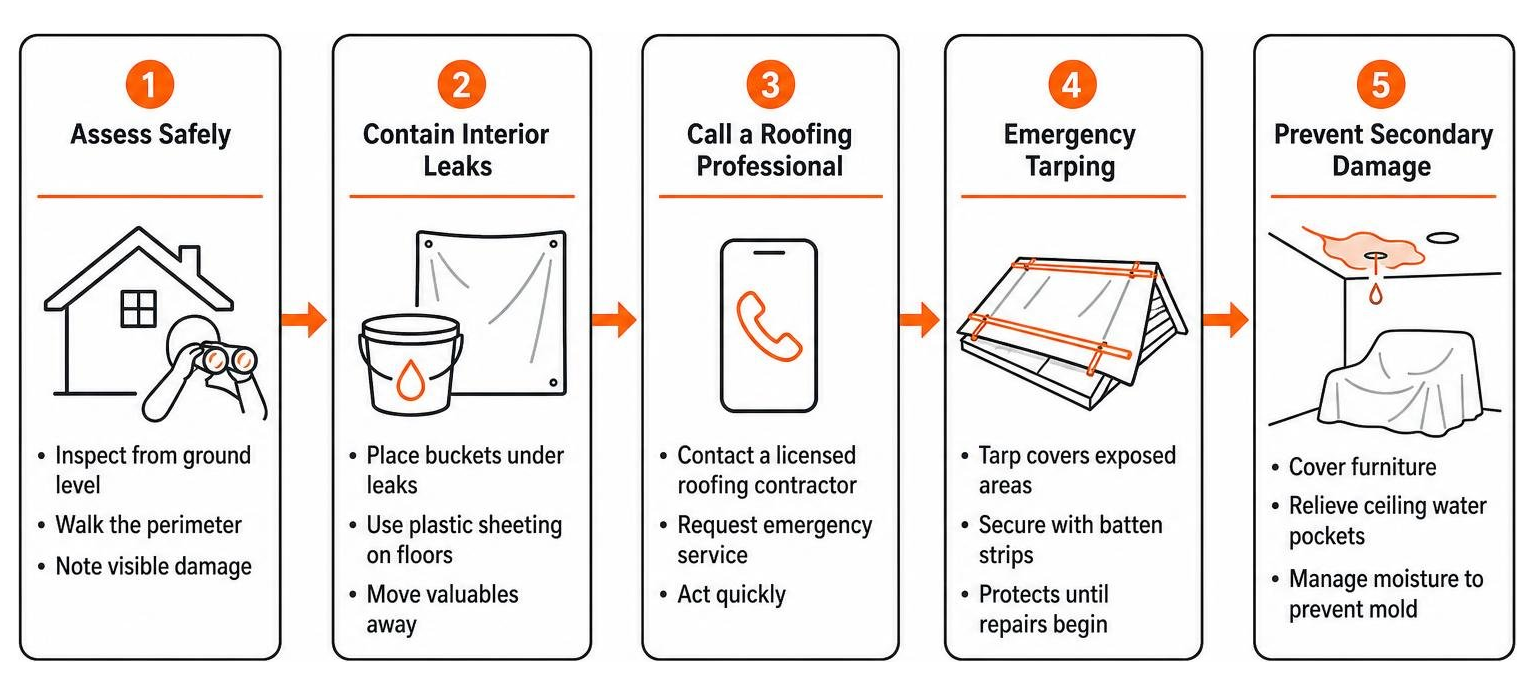
Perform your initial exterior evaluation safely from ground level using binoculars. Walk around your home’s perimeter to spot lifted materials, dented downspouts, and heavy gutter debris accumulation.
| Inspection Location | Visible Damage Indicators | Potential Hidden Impact |
|---|---|---|
| Ground Perimeter | Fallen shingles, broken tiles, dented fascia | Vulnerable roof deck, exposedunderlayment |
| Gutters & Downspouts | Heavy granule buildup, crushed metal sections | Accelerated shingle aging, water overflow |
| Attic Space | Wet insulation, dark roof board stains | Mold growth, structural rafter decay |
| Interior Ceilings | Water rings, peeling drywall paint | Trapped ceiling water, electrical hazard |
Reviewing our guide on After the Storm: Your Complete Guide to DIY Roof Inspection provides safe evaluation steps.
Dangers of DIY Roof Repairs
Attempting DIY roof repairs creates extreme personal safety risks for homeowners. Unstable ladders and steep pitch slopes cause severe falling hazards on storm-damaged properties.
Improper DIY repairs also void manufacturer material warranties and disrupt proper sealant adhesion. Inexperienced home repairs often trap water inside decking, leading to costly structural repair bills later.
Immediate Post-Storm Response and Emergency Tarping
Active roof leaks require rapid intervention to limit interior water intrusion. Contain leaking water using heavy-duty buckets and plastic sheeting across interior floor spaces.
Contact a licensed local roofing contractor immediately to secure emergency exterior protection services. Fast professional intervention safeguards your furniture, flooring, and electrical infrastructure.
Understanding Storm Damage Roofing Tarping
Emergency tarping creates a secure temporary seal over exposed roof sections. Roofers stretch durable waterproof tarps over damaged valleys, missing shingles, or puncture points.
Proper tarping diverts rainwater away from exposed roof decking until permanent restoration work begins. Contractors secure tarps with wooden batten strips to withstand heavy Midwest wind gusts.
Preventing Secondary Interior Damage
Protect your personal property by moving valuables away from ceiling leak locations immediately. Cover large furniture pieces with durable plastic drop cloths to stop water damage.
Relieve sagging ceiling drywall by carefully drilling a small drainage hole into water pockets. Managing indoor moisture stops harmful mold growth inside wall cavities and roof insulation.
Navigating the Insurance Claims Process for Storm Damage
Filing a storm damage claim requires prompt action and thorough documentation. Contact your insurance company quickly to report the storm date and damage scope.
Understanding your policy coverage helps you navigate adjuster visits without unnecessary stress. Learn more about navigating a Roof Insurance Claim to streamline your coverage approval process for your Chicago-area home.
Documenting Damage for Insurance Adjusters
Thorough documentation strengthens your position with insurance adjusters. Take clear wide-angle photos of your entire roofline from ground level.
Capture close-up photos of dented flashing, dislodged shingles, and fallen tree debris. Maintain complete home maintenance logs to prove pre-storm roof care to your claims adjuster.
Homeowners can review industry standards across educational guides from the Insurance Information Institute to understand claim documentation expectations.
Repair vs. Full Roof Replacement
Minor isolated damage often requires targeted shingle replacement and flashing repairs. However, widespread granule loss, multiple leaks, or obsolete shingles demand complete replacement.
Matching aged asphalt shingles is difficult and creates uneven aesthetic finishes. When storm damage covers significant roof areas, complete Roof Replacement restores full structural protection.
How to Select a Reputable Local Roofing Contractor
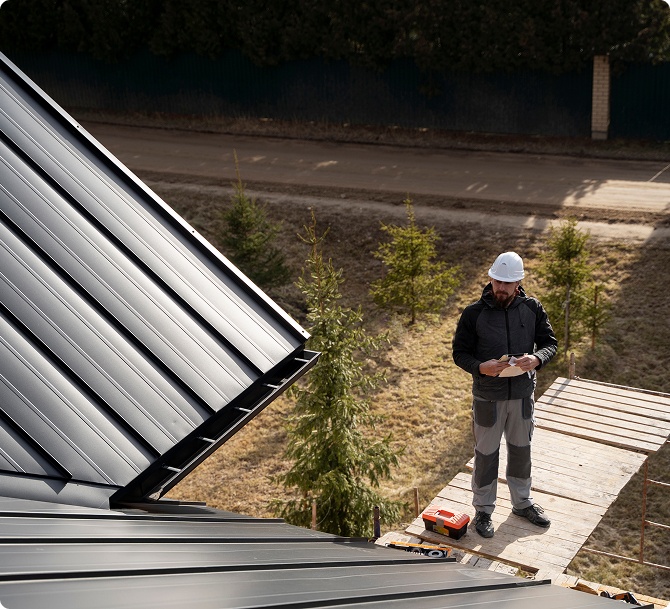
Hiring a trustworthy local contractor protects you from out-of-state storm chasers after severe weather events. Out-of-state operators often perform sub-standard repairs before leaving the area entirely.
Select fully licensed, insured contractors who maintain established roots in your local community. Every HomeBuild project is owner-sold, owner-supervised, and owner-approved, ensuring complete accountability without middlemen.
Homeowners in Hoffman Estates and surrounding towns rely on trusted local specialists. Review our guides on Top Rated Roofing Contractors Hoffman Estates Homeowners Trust and No More Leaks: Finding the Best Roofing Contractor in Lombard and Beyond to select qualified local roofers.
What to Look for During a Storm Damage Roofing Inspection
A comprehensive storm damage inspection goes beyond basic ground observations. Professional roofers evaluate ridge vents, valley flashing, plumbing boots, and perimeter drip edges thoroughly.
They also inspect attic spaces to check underlayment health and rafter integrity. Detailed professional Roof Inspections catch hidden structural issues before they cause indoor damage.
Homeowners can review technical guidelines through the National Roofing Contractors Association for additional industry perspective.
Selecting Impact-Resistant Shingles and Cold-Weather Materials
Upgrading roofing materials during restoration improves long-term storm resistance. Class 4 impact-resistant asphalt shingles resist heavy hail impacts without cracking mineral coatings.
Heavy architectural shingles withstand strong wind uplift forces up to 130 miles per hour. Quality ice and water shield underlayments protect vulnerable eaves against harsh Midwest freeze-thaw cycles.
Frequently Asked Questions About Storm Roof Repairs
Does homeowners insurance typically cover all storm damage repairs?
Most standard homeowners policies cover sudden storm damage caused by wind, hail, or fallen trees. However, coverage depends on your specific policy terms, deductibles, and pre-existing maintenance conditions. Neglected roof decks or age-related wear may lead to partial claim denials by insurance adjusters.
How long does a storm damage restoration project typically take?
Emergency tarping happens within hours to prevent immediate indoor water intrusion. Targeted shingle and flashing repairs typically wrap up in a single day. Full roof replacements generally take one to two days once insurance approvals and material deliveries finish.
What are the biggest dangers of ignoring minor storm roof damage?
Ignoring minor shingle lift or small hail dents allows moisture inside underlying wood decking. Hidden leaks rot roof rafters, compromise ceiling drywall, and ruin attic insulation over time. Unaddressed moisture creates dangerous mold growth and leads to expensive structural repair bills later.
Conclusion: Restoring Your Home’s Roof After Severe Weather
Prompt action after severe weather stops hidden leaks and preserves your property value. Choosing owner-supervised quality ensures your roof receives precise repairs tailored to local weather challenges.
HomeBuild Roofing holds a 4.9-star Google rating across 180+ reviews, won the Angi Super Service Award 2025, and earned Nextdoor Neighborhood Faves 2025 recognition. We serve homeowners across Chicago, Arlington Heights, Schaumburg, Hoffman Estates, Villa Park, and surrounding Chicagoland suburbs with licensed, insured expertise.
Explore our specialized services for Storm Damage Roofing in Chicagoland to secure your home. Contact HomeBuild today to schedule your free, no-obligation roof inspection and estimate with our local team.