

Why Replace Awning Window with Double Hung Makes Sense for Chicago Homes
Replace awning window with double hung is a popular home improvement choice that can transform both the look and function of your home. Here’s what you need to know:
Key Benefits of Making the Switch:
- Better ventilation – Double-hung windows let you open both top and bottom sashes
- Easier cleaning – Tilt-in sashes mean no more ladder work
- Child safety – Open only the top sash to keep kids safe
- Classic appeal – Timeless look that fits most home styles
- Better airflow – Hot air escapes through the top while cool air enters below
The Process Overview:
- Remove old awning window and crank hardware
- Modify frame opening (may need to add exterior stops)
- Install new double-hung window with proper shimming
- Seal, insulate, and finish with trim
While awning windows excel in hard-to-reach spots and weather protection, double-hung windows offer superior ventilation control and are much easier to maintain – especially important for Chicago’s harsh winters and humid summers.
As Steve Mlynek, founder of HomeBuild Windows with over 20 years of experience, I’ve helped countless Chicago-area homeowners replace awning window with double hung to improve their home’s comfort and energy efficiency. The change in both function and curb appeal consistently surprises homeowners with how much difference the right window style can make.
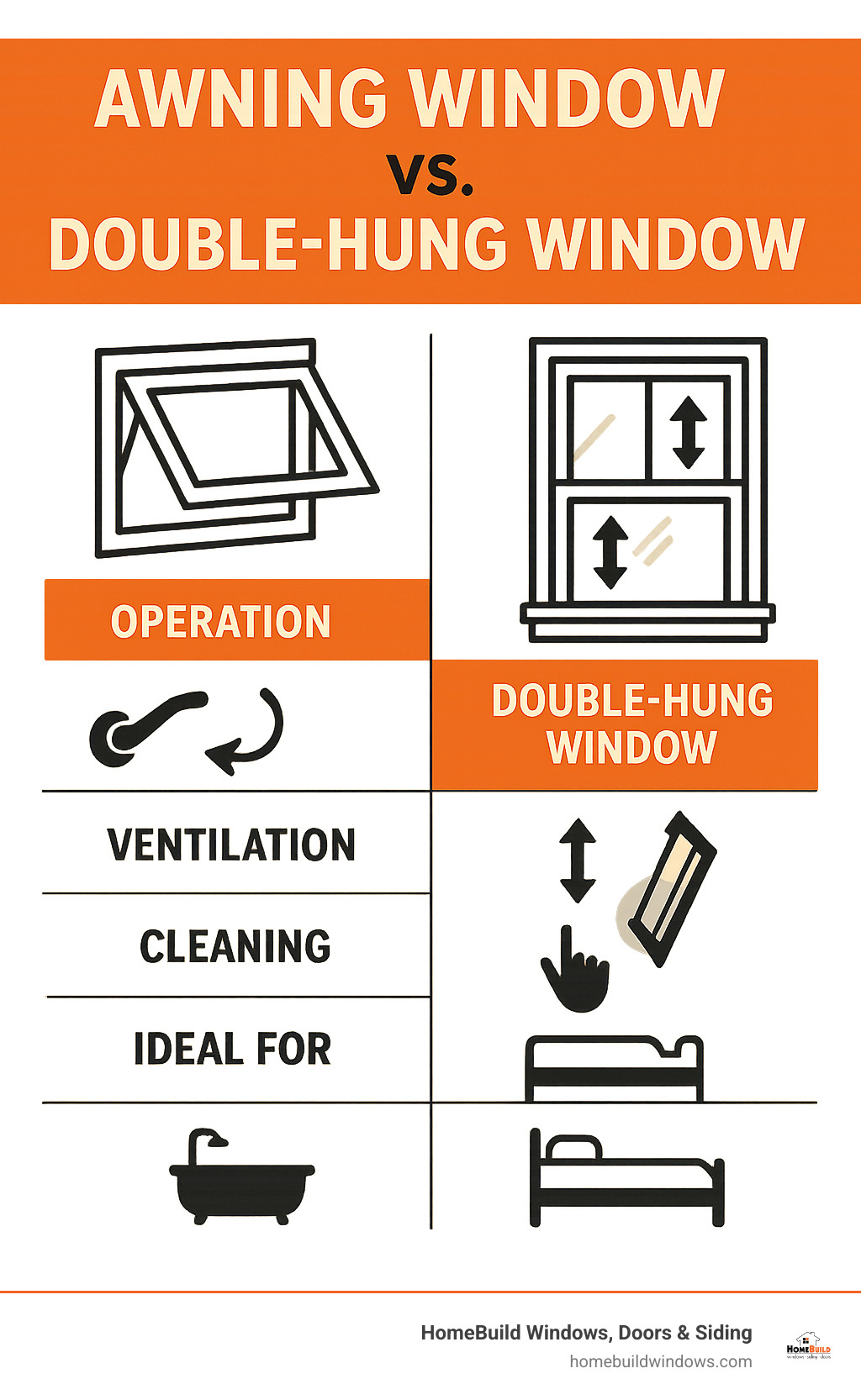
Awning vs. Double-Hung: A Head-to-Head Comparison
If you’re thinking about window replacement, you’ve probably wondered which style makes the most sense for your home. Let me break down the key differences between awning and double-hung windows in a way that’ll help you make the best choice for your Chicago-area home.
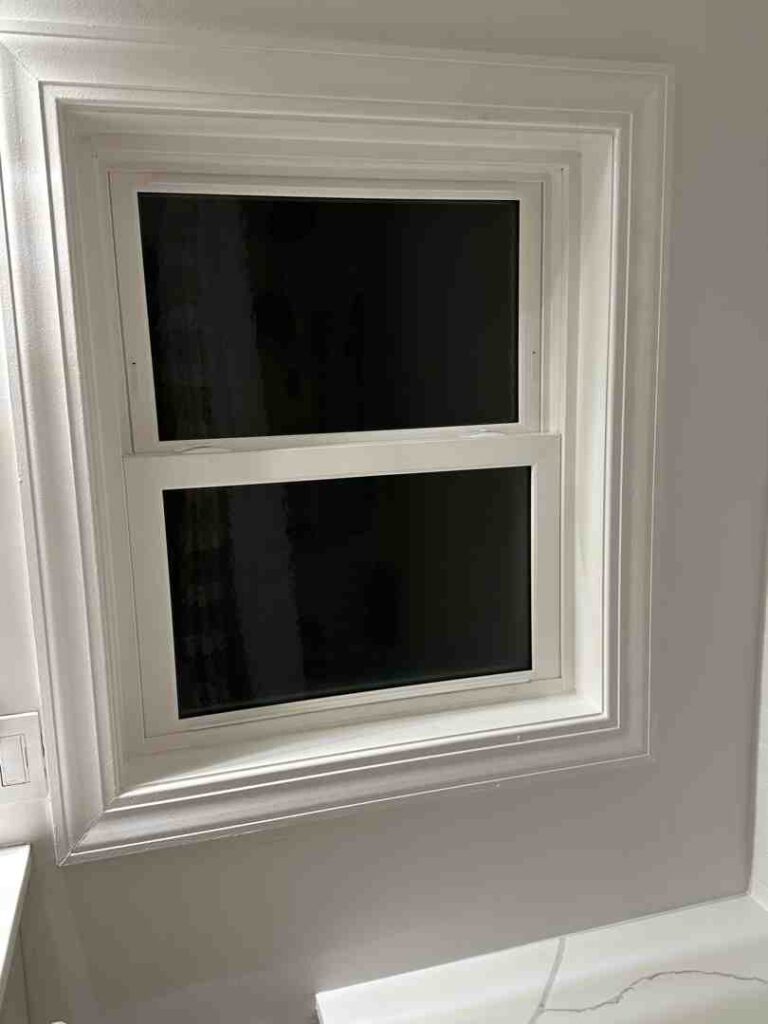
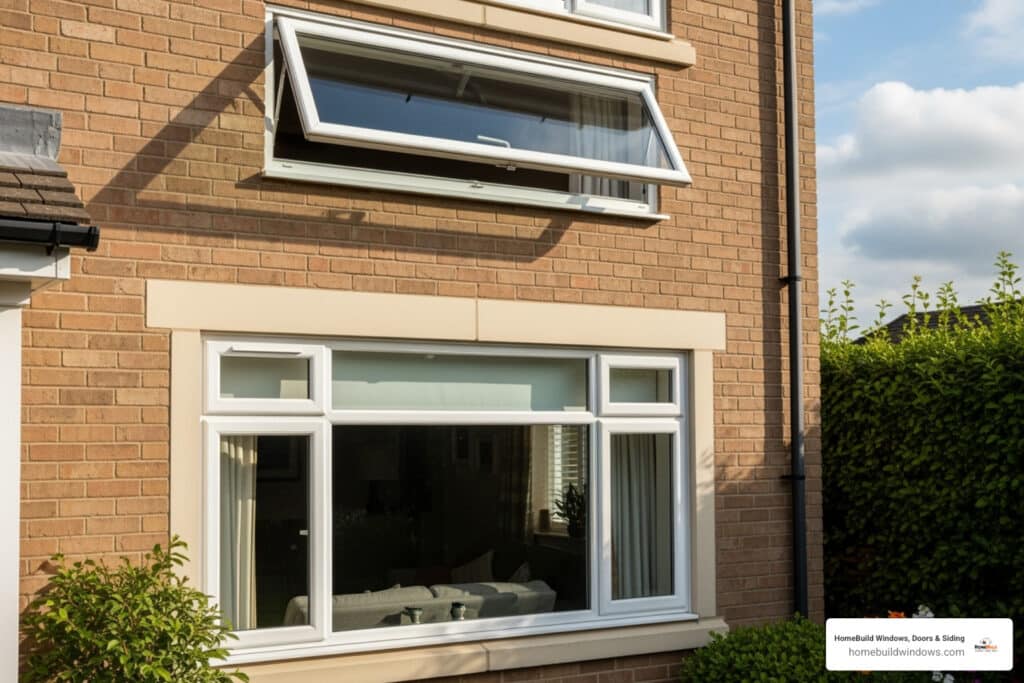
Awning windows are the ones that hinge at the top and crank open from the bottom – kind of like a little umbrella over your window opening. They’re pretty clever actually, because you can keep them open even when it’s drizzling outside. The window naturally sheds water away from your home.
Double-hung windows are the classic choice you see everywhere – two window panels (called sashes) that slide up and down past each other. You can open just the top, just the bottom, or both at once. Most modern versions tilt inward too, which makes cleaning them from inside your house a breeze.
Here’s how they stack up against each other:
| Feature | Awning Windows | Double-Hung Windows |
|---|---|---|
| Operation | Hinged at top, opens outward with crank handle | Two sashes slide vertically up and down |
| Ventilation | Good airflow, can stay open during light rain | Excellent air circulation when both sashes open |
| Weather Resistance | Outstanding – naturally sheds water when open | Good, but should be closed during heavy rain |
| Cleaning | Tricky to clean outside surface without ladder | Easy – modern versions tilt in for cleaning from inside |
| Best Locations | Basements, kitchens over sinks, bathrooms | Bedrooms, living rooms, anywhere you want classic style |
Want to dive deeper? Check out our detailed pages on Awning Windows Replacement and Double Hung Windows Replacement.
Why Homeowners Make the Switch
When homeowners replace awning window with double hung, they have good reasons. Here are the most common ones I hear from our Chicago-area customers.
Improved ventilation is a huge draw. Double-hung windows create a “natural air conditioning effect.” Open the bottom sash for cool air and the top for hot air to escape. This natural circulation makes your home much more comfortable during sticky summer months.
Easier cleaning is another huge factor. Many customers struggle to clean awning windows from the outside. With modern double-hung windows, the sashes tilt into your room, so you can clean both sides without leaving your house. No more balancing on ladders.
Classic aesthetics matter. The timeless look of double-hung windows works with almost any home style, from a traditional Colonial to a cozy bungalow, improving your home’s character.
For families, child safety is a big consideration. You can open just the top sash for fresh air while keeping the bottom one securely closed, giving parents peace of mind.
Better fit for high-traffic areas is practical. Since double-hung windows don’t protrude from your house, they’re perfect near walkways or patios.
Where Each Window Style Shines
Every window style has a sweet spot. Understanding where each works best helps you choose the right one for each room.
Awning windows excel in specific situations. Their weather protection is excellent; you can keep them open during a light rain. This makes them perfect for hard-to-reach areas where you want ventilation without worrying about changing weather.
In bathrooms, awning windows are great. Installed high on a wall, they offer privacy and ventilation. The crank operation is convenient over a toilet or tub.
Kitchens are another natural fit, especially over sinks. You get fresh air without a window swinging into your workspace.
Double-hung windows are ideal for two-story homes because they are easy to clean from the inside. No more ladders or hiring help to reach second-story windows.
They’re also perfect for traditional architecture. To maintain or restore classic character, double-hung windows are a natural fit that complements your home’s style.
Double-hung windows provide maximum airflow. Opening both sashes creates natural circulation that quickly cools a room. This is especially nice in bedrooms and living rooms where comfort is key.
The bottom line: when you replace awning window with double hung, you’re trading some weather resistance for better ventilation, easier maintenance, and classic appeal. For most Chicago homeowners, it’s a worthy trade.
The Step-by-Step Process to Replace Awning Window with Double Hung
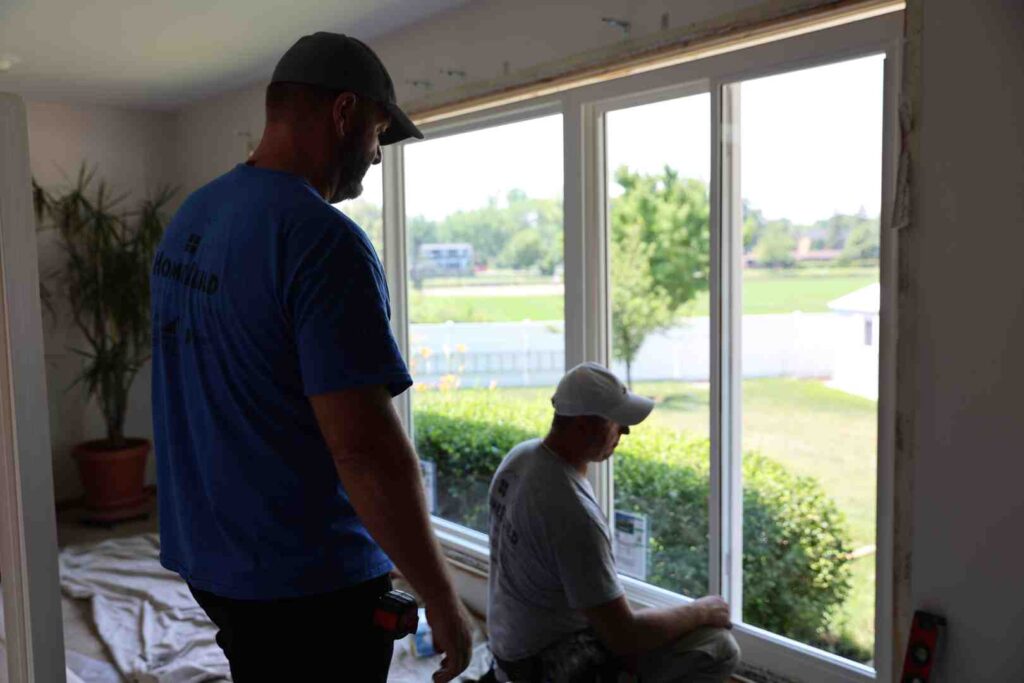
Ready to replace awning window with double hung? While we at HomeBuild Windows handle professional installations throughout Chicagoland, understanding the process helps you see what’s involved in this change. Think of this as your behind-the-scenes look at window replacement magic!
Important note: This section provides a general overview and is not a substitute for professional guidance or manufacturer instructions. For comprehensive installation details, check out our Window Installation Guide.
Essential Tools and Materials
Preparing your tools and materials beforehand is crucial. There’s nothing worse than stopping mid-project for a missing tool.
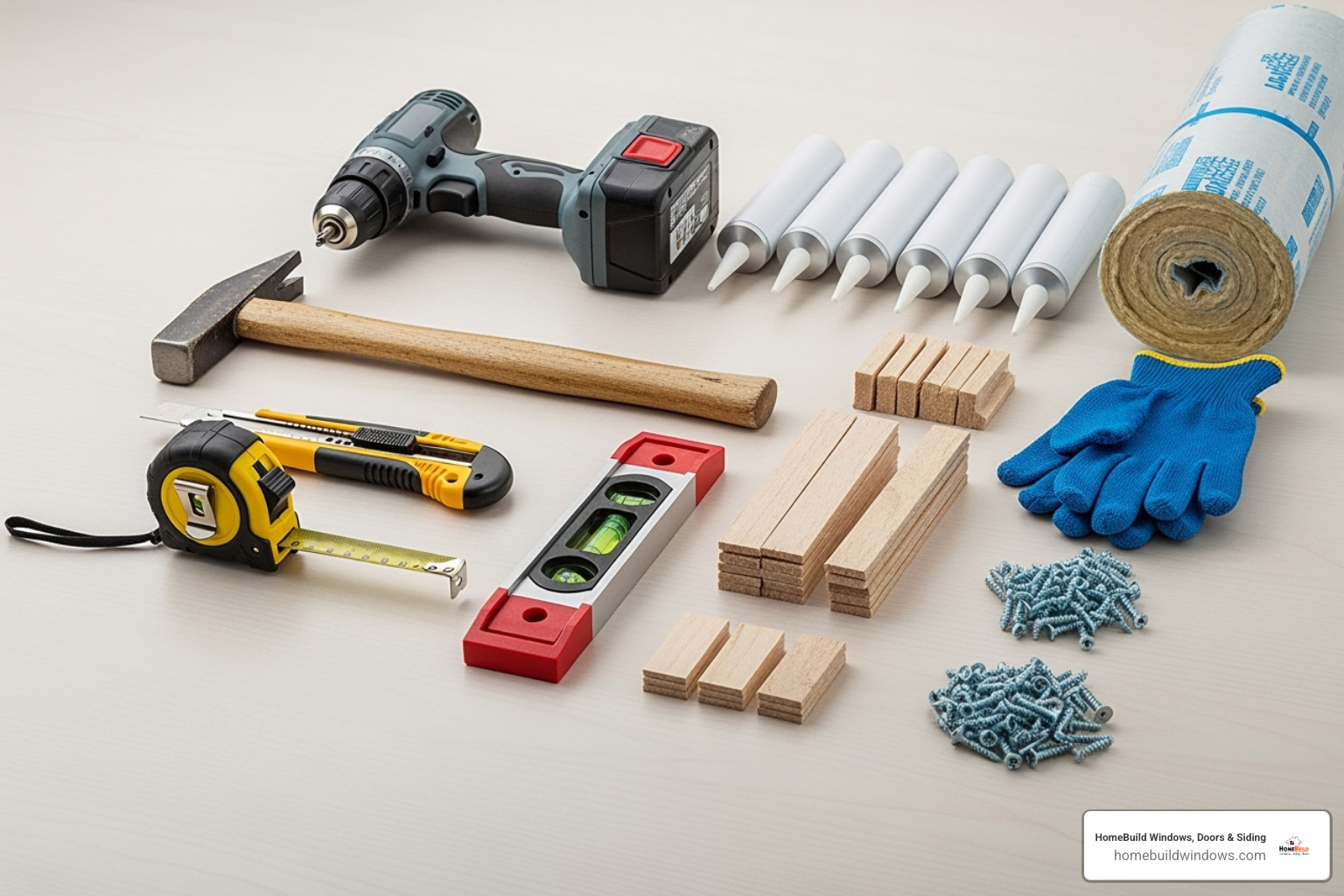
You’ll need a pry bar for removing trim, a hammer, and a level to ensure the new window is straight. A tape measure is essential for accurate measurements. A caulking gun and power drill are also necessary.
Safety glasses and gloves are a priority. Window replacement involves sharp edges and debris. A reciprocating saw may be needed for frame modifications.
Materials include your new double-hung replacement window, shims for leveling, low-expansion foam insulation to seal gaps, and exterior-grade caulk for a weatherproof barrier. You might also need new trim.
Finally, use drop cloths to protect your floors from construction dust.
Removing the Old Awning Window
Removing an awning window has unique steps compared to other styles.
Start with interior trim removal. Use a pry bar gently. Taking your time can salvage the trim, saving money and preserving your home’s character.
Next, perform crank hardware removal. Remove the crank handle, operating arms, tracks, and locking hardware. A power drill will speed up this process.
Cutting old seals requires a sharp utility knife. Old paint and caulk create a strong bond. Cut through these connections carefully to avoid damaging the wall or frame.
For lifting the frame out, get a helper. Awning windows can be heavy, and dropping one could cause damage.
Preparing the rough opening is next. Clean out debris and inspect for damage or rot. For this conversion, you may need to create exterior stops, which are necessary for a double-hung window to seat and operate properly.
Installing Your New Double-Hung Window
Now for the moment you’ve been waiting for – installing your beautiful new double-hung window!
Placing the new unit requires careful handling. Lift your new window into the prepared opening, making sure it sits properly on the sill. This is where having a helper really pays off – windows are awkward to maneuver solo.
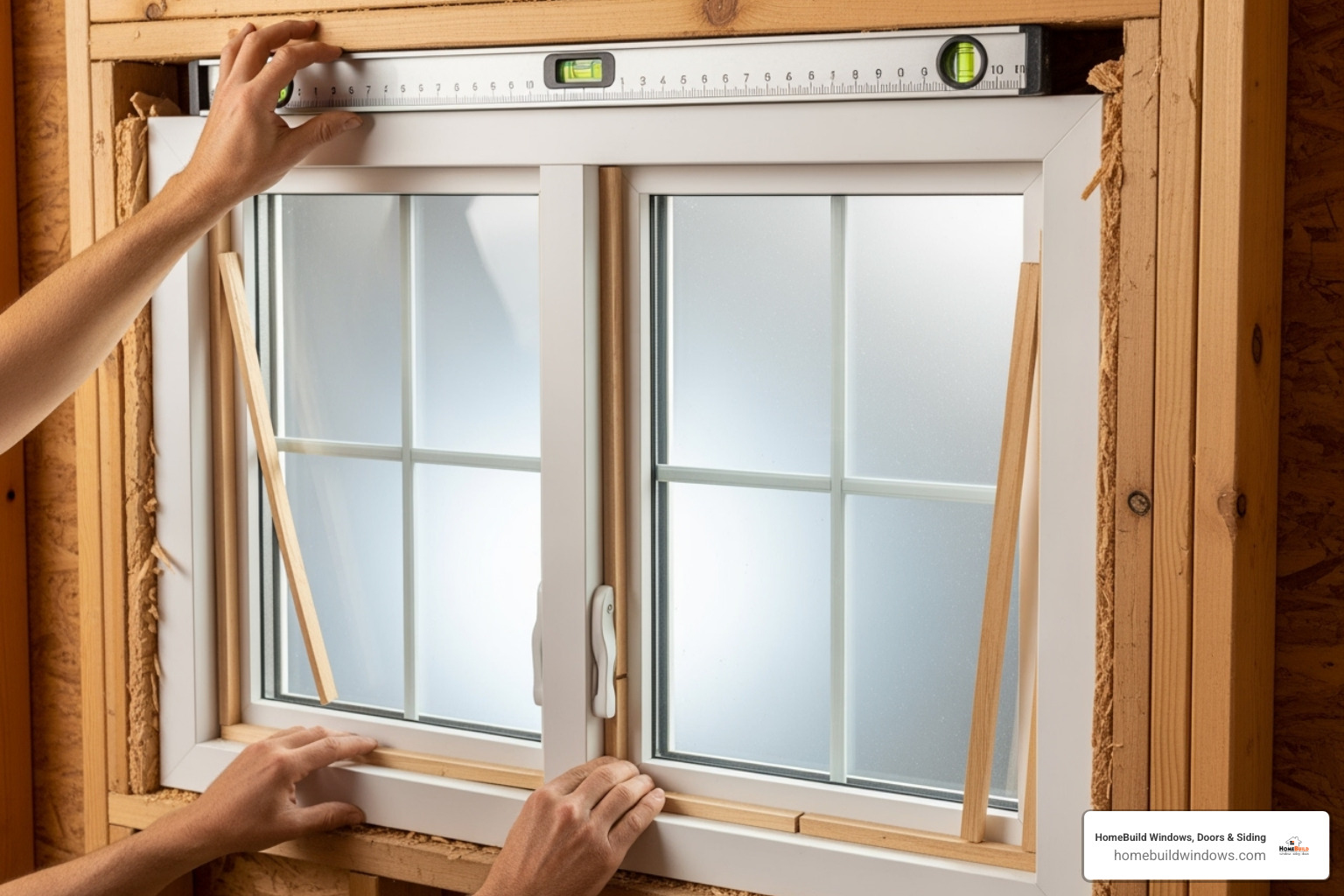
Leveling and shimming is where the magic happens. This step separates amateur work from professional results. Use your level religiously, checking that the window is plumb, level, and square in all directions. Insert shims at the bottom, sides, and top until everything is perfectly aligned.
Don’t just fill gaps with shims – use them strategically to achieve true level and square measurements. A window that’s even slightly off will bind, leak air, and wear out prematurely.
Securing the window frame locks in all your careful positioning work. Most modern double-hung windows come with pre-drilled mounting holes that make this step straightforward. Drive screws through these holes into the rough opening framing, being careful not to over-tighten and bow the frame.
Sealing, Insulating, and Finishing
The final phase transforms your rough installation into a finished, energy-efficient window that’ll serve your home for decades.
Applying foam insulation fills those crucial gaps around your window perimeter. Use low-expansion foam specifically – regular foam can bow your window frame as it cures. This insulation step is vital for energy efficiency, even with Energy Star Certified windows. Learn more on energy efficiency from the Department of Energy.
Sealing with caulk creates your weatherproof barrier. Apply a continuous bead of exterior-grade caulk where the window frame meets your home’s siding or trim. Take your time here – a sloppy caulk job shows from the street and can let water sneak into your walls.
Re-installing interior trim brings back that finished look. Whether you’re reusing the original trim or upgrading to something new, precise cuts and tight joints make all the difference. Nail the trim securely to both the window frame and wall studs for a rock-solid installation.
Final cleanup might seem anticlimactic after all that work, but it’s your victory lap! Clean your new windows inside and out, dispose of the old window responsibly, and step back to admire your handiwork. You’ve just completed a project that’ll improve your home’s comfort, efficiency, and value for years to come.
Key Considerations Before You Begin
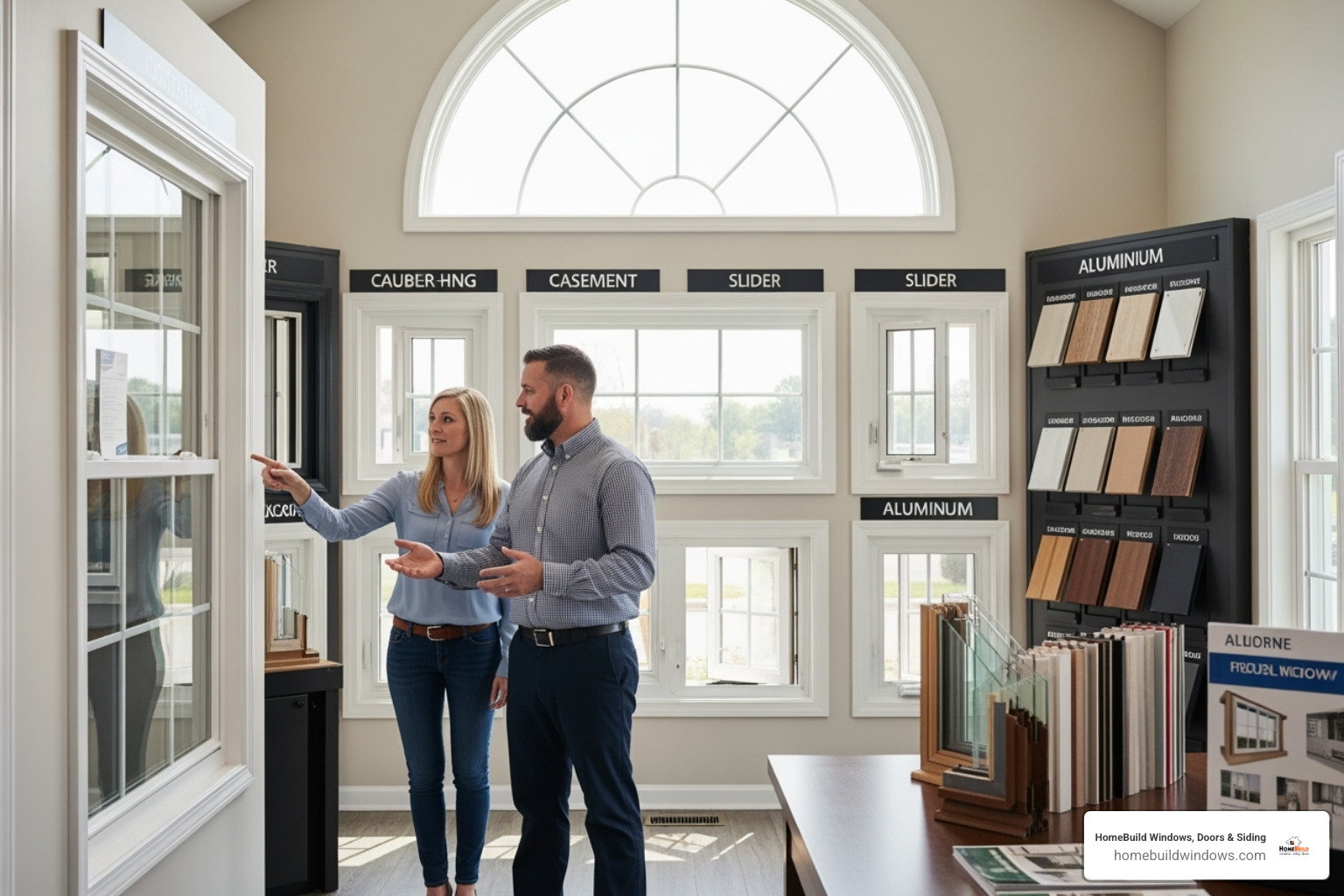
Making the decision to replace awning window with double hung is exciting, but taking time to plan ahead will save you headaches down the road. At HomeBuild Windows, we’ve walked hundreds of homeowners in Chicago and surrounding communities like Crystal Lake, Des Plaines, and Schaumburg through these decisions. Trust me, a little preparation goes a long way toward ensuring your project is a complete success. For more local options, check out our Window Replacement Options Near Me page.
Choosing the Right Double-Hung Windows
Not all double-hung windows are created equal, and selecting the right one for your home involves more than just picking a style you like. The material you choose will affect everything from maintenance requirements to energy efficiency.
Vinyl windows are the most popular choice we install, and for good reason. They’re durable, require virtually no maintenance, and offer excellent insulation properties. Plus, they won’t break the bank. Wood windows bring that classic, traditional beauty that many homeowners love, especially in historic neighborhoods. However, they do require regular maintenance to keep them looking their best. Fiberglass windows are the tough guys of the window world – they’re incredibly strong (about 8 times stronger than vinyl) and resist warping, swelling, and shrinking better than any other material. Composite windows blend the best of different materials, often combining wood fibers with polymers for a nice balance of performance and looks.
Energy efficiency should be high on your priority list, especially with Chicago’s unpredictable weather. Look for windows with strong Energy Star Certified ratings – they’ll help keep your energy bills manageable year-round.
When it comes to glazing, double-pane windows with argon gas between the panes offer a significant upgrade over single-pane windows. Triple-pane windows take insulation and noise reduction even further with three panes of glass and two gas-filled spaces. Both options can dramatically reduce outside noise and help insulate your home. Don’t forget about Low-E coatings – these microscopic coatings work like sunglasses for your windows, reflecting heat to keep your home warmer in winter and cooler in summer. For more energy-saving tips, visit our Energy Efficient Window Replacement page.
Project Costs and Budgeting
Let’s talk money – because nobody likes surprise expenses halfway through a project. The cost to replace awning window with double hung varies quite a bit depending on your choices and circumstances.
Material costs depend heavily on what you choose. A basic vinyl double-pane window will cost less than a premium fiberglass triple-pane unit with all the bells and whistles. The size of your windows and any special features like Low-E coatings will also affect the price.
Labor costs vary based on how complex your installation is and how many windows you’re replacing. At HomeBuild Windows, we believe in transparent pricing – no surprises, no hidden fees.
You’ll also need to decide between full-frame replacement and insert replacement. Full-frame replacement means we remove everything – the entire existing window frame – and install a completely new unit. This is often necessary if your old frame is damaged or rotted, and it gives you maximum energy efficiency improvements. It’s more work, so it costs more, but the results are worth it. Insert replacement (sometimes called “pocket replacement”) involves fitting a new window unit into your existing frame, assuming it’s in good shape. This option is quicker and less expensive, though you’ll lose a small amount of glass area.
For a detailed cost breakdown, our Window Replacement Cost guide has all the numbers you need.
Potential Challenges When You Replace Awning Window with Double Hung
I won’t sugarcoat it – switching window styles can present some challenges. But knowing what to expect helps us plan for them.
Frame modifications are often needed because awning windows have a simpler frame structure than double-hung windows. Double-hung windows need robust side jambs and a proper sill for the sashes to slide smoothly. Sometimes we need to add or reinforce parts of the rough opening to properly support your new window.
Creating outside stops is another common issue. Many awning windows lack the “outside stops” that double-hung windows need to seat properly and seal correctly. Creating these stops is a standard part of our installation process, but it’s something DIYers often overlook.
Sizing discrepancies happen even with careful measurements. Every house settles differently over time, and sometimes the opening needs minor adjustments to ensure your new window fits perfectly level and plumb.
Ensuring a weathertight seal is absolutely critical. Any gaps or improper caulking will lead to drafts, moisture problems, and higher energy bills. This step requires experience and attention to detail.
Structural integrity is especially important in older homes. We always check that the surrounding wall can properly support the new window, and sometimes minor structural repairs are needed before installation.
DIY vs. Hiring a Professional
This is the million-dollar question, isn’t it? While some homeowners are handy enough to tackle window replacement, switching from awning to double-hung windows adds complexity that even experienced DIYers find challenging.
Project complexity is higher than many people expect. It’s not just about measurements and installation – you’re dealing with structural modifications, precise sealing, and ensuring everything is perfectly level and plumb. One small mistake can lead to big problems down the road.
The required tools list is pretty extensive, and some of them are specialized tools you might not already own. By the time you buy or rent everything you need, professional installation starts looking pretty reasonable.
Time commitment is another factor. Even for our experienced crews, a single window replacement takes several hours. If you’re learning as you go, expect it to take much longer – possibly stretching into multiple days for just one window.
Safety concerns are real. You’re working with heavy glass, sharp tools, and possibly at dangerous heights. Our crews are trained in safe techniques, including proper handling of older windows that might contain lead – a hazard the EPA closely monitors.
Warranty protection is where professional installation really shines. When you choose HomeBuild Windows, your installation comes with our lifetime labor warranty. Our teams are licensed, bonded, and insured, giving you complete peace of mind.
Expertise and efficiency make the biggest difference. Our crews use professional-grade equipment and have decades of combined experience. We ensure your new windows are installed correctly, efficiently, and with perfect seals that maximize energy efficiency and longevity. Want to know why we’re one of the top choices in Chicago? Check out Window Companies in Chicago Why Us.
Frequently Asked Questions about Replacing Windows
We get a lot of questions from homeowners in Chicago and the surrounding suburbs like Elk Grove Village, Glenview, and Palatine about window replacement. After helping countless families replace awning window with double hung, we’ve heard just about every concern and curiosity. Here are the answers to the questions we hear most often:
Can any awning window be replaced with a double-hung window?
Yes, in most cases, an awning window can be replaced with a double-hung window. The beauty of window replacement is that it’s usually more flexible than homeowners expect!
The key is ensuring the rough opening can be properly prepared to accept the new window style. This often involves minor modifications to the frame, such as adding exterior stops, which are crucial for the double-hung unit to seat correctly and create a proper seal. Think of it like adapting a doorframe – the basic structure is there, but you might need to adjust some details to make everything fit perfectly.
While the frame’s structure remains generally the same, the specific details of how the new window integrates will need careful attention during installation. Our experienced team at HomeBuild Windows handles these modifications with precision to ensure a perfect fit and long-lasting performance. We’ve done this conversion so many times that we can spot potential challenges before they become problems.
Will replacing my windows increase my home’s value?
Absolutely! This is one of those home improvements that really pays off in multiple ways.
Upgrading to new, energy-efficient windows like double-hung models is a highly desirable feature for potential buyers. It significantly improves curb appeal – there’s something about fresh, clean windows that makes a whole house look better. But the benefits go much deeper than just looks.
New windows improve comfort by eliminating those annoying drafts and maintaining consistent indoor temperatures throughout your home. No more cold spots near windows in winter or hot zones in summer. They can also lower utility bills, which is music to any homeowner’s ears. These benefits collectively contribute to a higher home value and make your property more attractive on the market.
In fact, double-hung windows are the most popular window style for homes, and their improved energy efficiency is a major selling point. When potential buyers see quality windows, they know they won’t have to worry about that expense for years to come.
How long does it take to replace one window?
For a professional installer, replacing a single window typically takes a few hours. This includes carefully removing the old window, preparing the opening, installing the new one, and completing all the sealing and finishing work.
The timeline can vary slightly based on the complexity of the installation. Sometimes we encounter the need for frame modifications or unexpected structural issues – older homes can surprise you! But that’s exactly why having experienced professionals matters.
Our skilled crews at HomeBuild Windows work efficiently to minimize disruption to your daily routine. We understand that having your windows replaced shouldn’t turn your life upside down. Whether you’re in Wood Dale, Melrose Park, or any of our service areas, we ensure your project is completed in a timely manner while maintaining the high quality standards we’re known for.
The best part? While we’re working on your windows, you can go about your day knowing the job will be done right the first time.
Conclusion
When you replace awning window with double hung, you’re doing more than just swapping one window for another – you’re changing how your home feels and functions every single day.
The aesthetic impact alone can be remarkable. Double-hung windows bring that classic, timeless charm that never goes out of style. Whether your home is a cozy bungalow in Arlington Heights or a stately colonial in Schaumburg, these windows improve your curb appeal and complement virtually any architectural style. There’s something deeply satisfying about seeing those clean, traditional lines that just make a house look more like a home.
But the real magic happens in the functional benefits you’ll experience daily. Imagine opening both the top and bottom sashes on a warm summer evening, feeling that natural convection pull hot air out the top while drawing cool, fresh air in through the bottom. No more struggling with crank mechanisms or trying to clean those hard-to-reach exterior surfaces – your new double-hung windows tilt right in for easy maintenance.
For families, the increased comfort and safety features make a world of difference. You can ventilate your child’s bedroom by opening just the top sash, getting fresh air without safety concerns. And those energy efficiency improvements? They add up to real savings on your utility bills, month after month.
At HomeBuild Windows, we’ve seen how this change affects our clients throughout Chicago and Chicagoland. The smile on a homeowner’s face when they operate their new double-hung windows for the first time – that smooth, effortless motion – never gets old. Our expertise in handling the technical challenges, from creating proper exterior stops to ensuring perfect weatherproofing, means you get all the benefits without the headaches.
Making the switch from an awning to a double-hung window truly can transform a room’s look and feel, bringing together the best of classic design and modern functionality. Whether you’re planning a single window replacement or considering updates throughout your home, we’re here to guide you through every step.
Ready to experience the difference for yourself? New Windows Chicago can help you explore all your options, or learn more about our Awning Window Replacement services to get started on your journey toward better windows and a more comfortable home.