
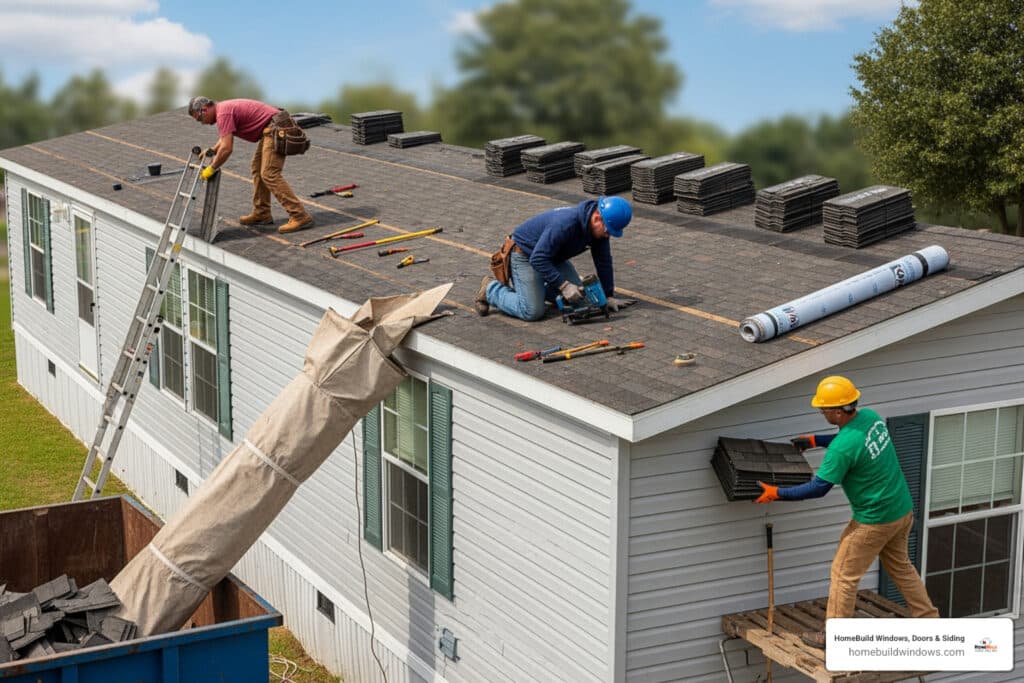
Why Your Manufactured Home Roof Matters More Than You Think
A manufactured home roof replacement is a critical investment protecting your home’s structure, energy efficiency, and property value. Understanding your options helps you choose the right solution and avoid costly mistakes.
Key Replacement Options at a Glance:
| Option | Best For | Cost Range | Lifespan |
|---|---|---|---|
| Full Replacement | Severe damage, aged roofs | $1,500-$16,000 | 15-80 years (material-dependent) |
| Roof Over | Minor damage, budget-conscious | $1,000-$4,500 | 10-20 years |
| Repair & Seal | Small leaks, recent damage | $150-$1,000 | 2-5 years |
Your roof is your home’s first line of defense against water damage. A failing roof leads to more than just leaks; it causes compromised insulation, high energy bills, mold growth, and a decline in home value.
Most manufactured home roofs last 10 to 50 years, depending on the material. Pre-1976 homes often have flat or bowed roofs prone to water pooling, while newer models feature pitched roofs with better drainage. Knowing when to repair versus replace can save you thousands.
The cost varies by home size and material. A single-wide replacement might cost $1,500 to $9,600, while a double-wide can run $3,000 to $16,000. Metal roofs offer 30-80 years of durability but cost more upfront. Asphalt shingles are budget-friendly but last only 15-30 years. TPO and rubber membranes are ideal for flat roofs, reflecting heat and cutting cooling costs.
I’m Steve Mlynek, founder and CEO of HomeBuild Windows, Doors & Siding. With over 20 years of experience helping Chicago-area homeowners, I’ve seen how crucial a sound roof is. While we specialize in windows and doors, we often guide clients through manufactured home roof replacement decisions, connecting them with trusted specialists. This guide uses our industry insights to help you manage your roof replacement with confidence.
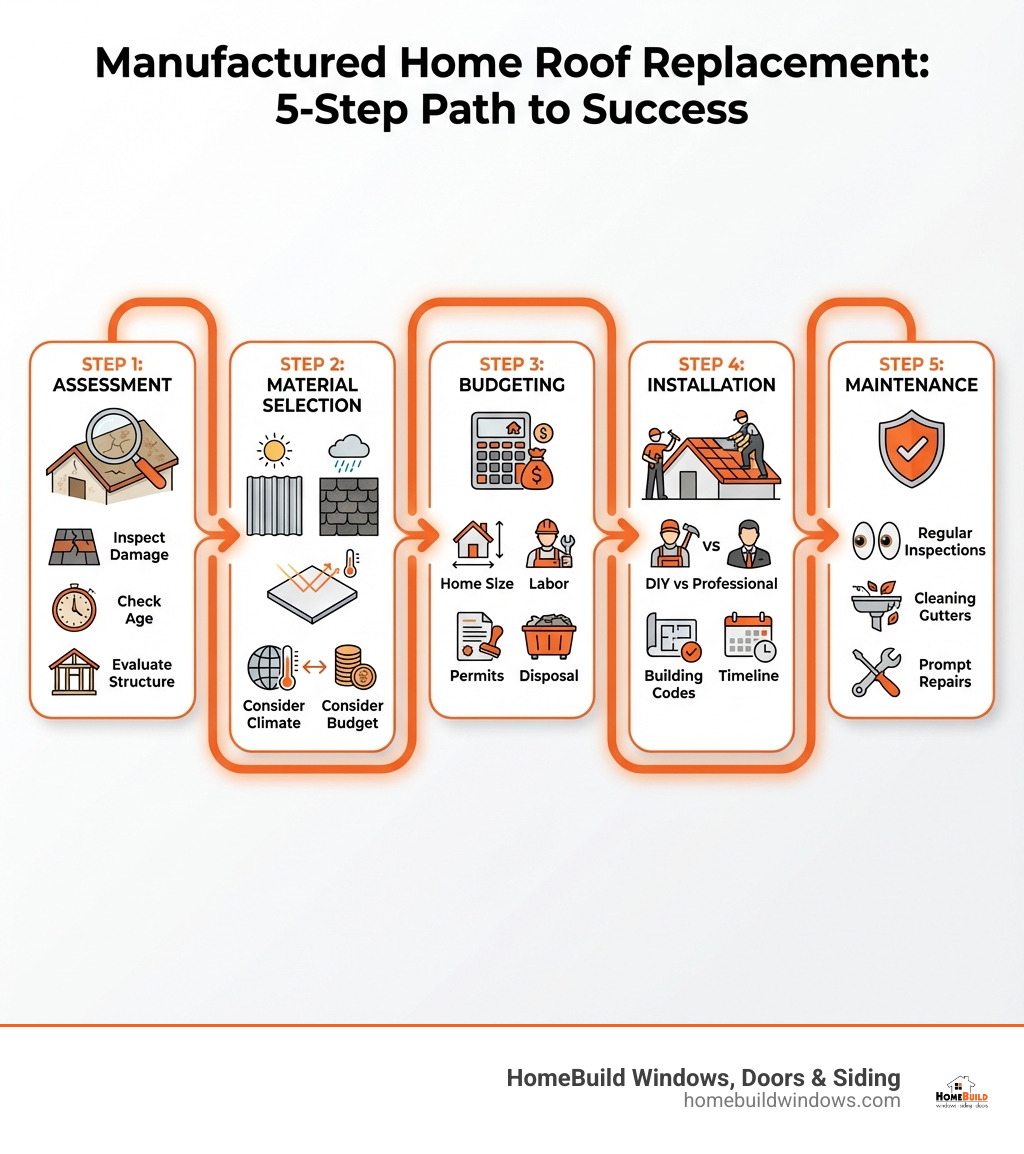
Simple guide to manufactured home roof replacement:
Assessing Your Roof: When to Repair or Replace
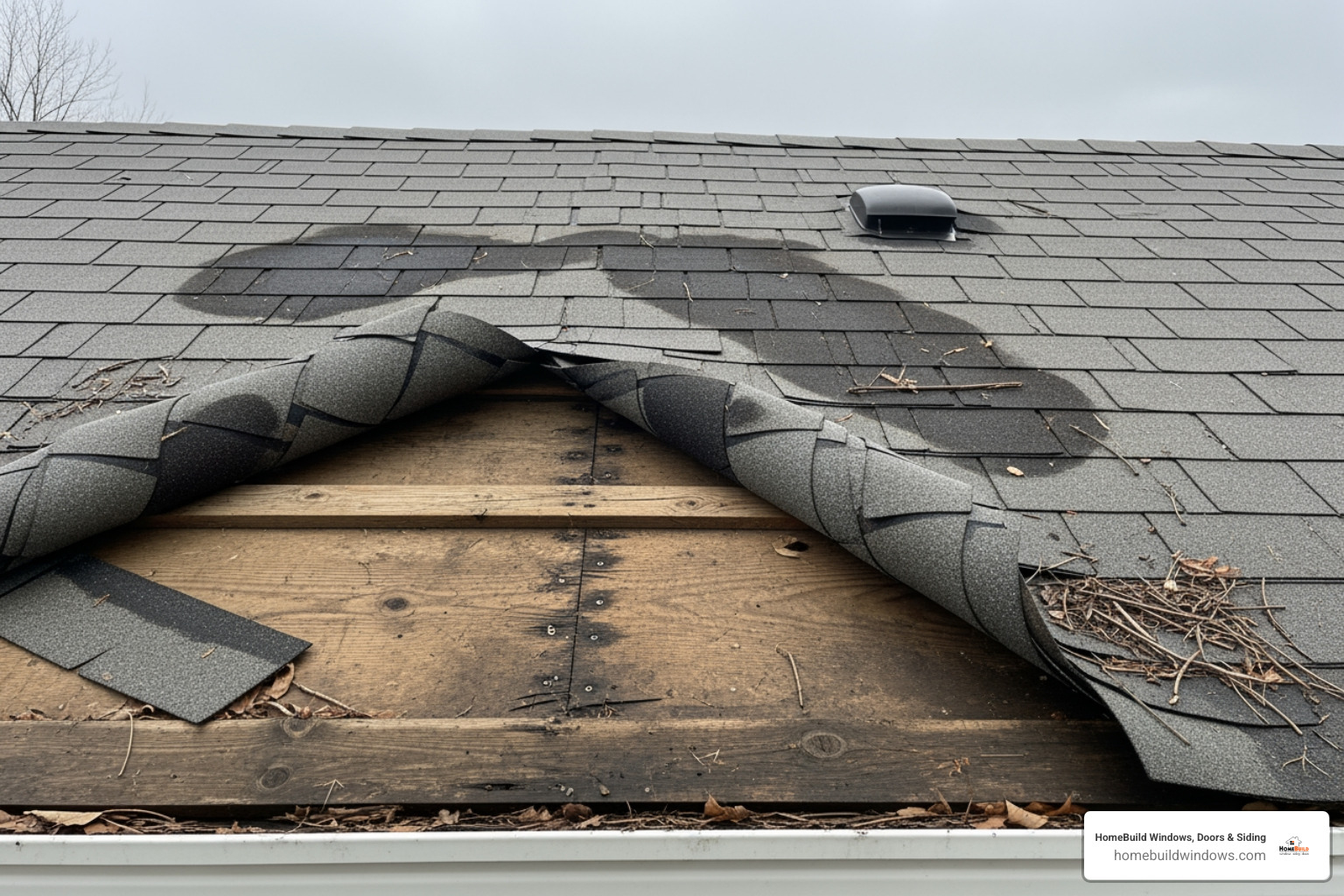
A thorough roof assessment is the first step in any manufactured home roof replacement. You need to understand your roof’s type, identify wear, and decide between repair, a roof over, or a full replacement. In the Chicagoland area, harsh weather makes regular inspections vital.
Common Types of Manufactured Home Roofs
Manufactured home roof styles vary by age, which is key to choosing a replacement strategy.
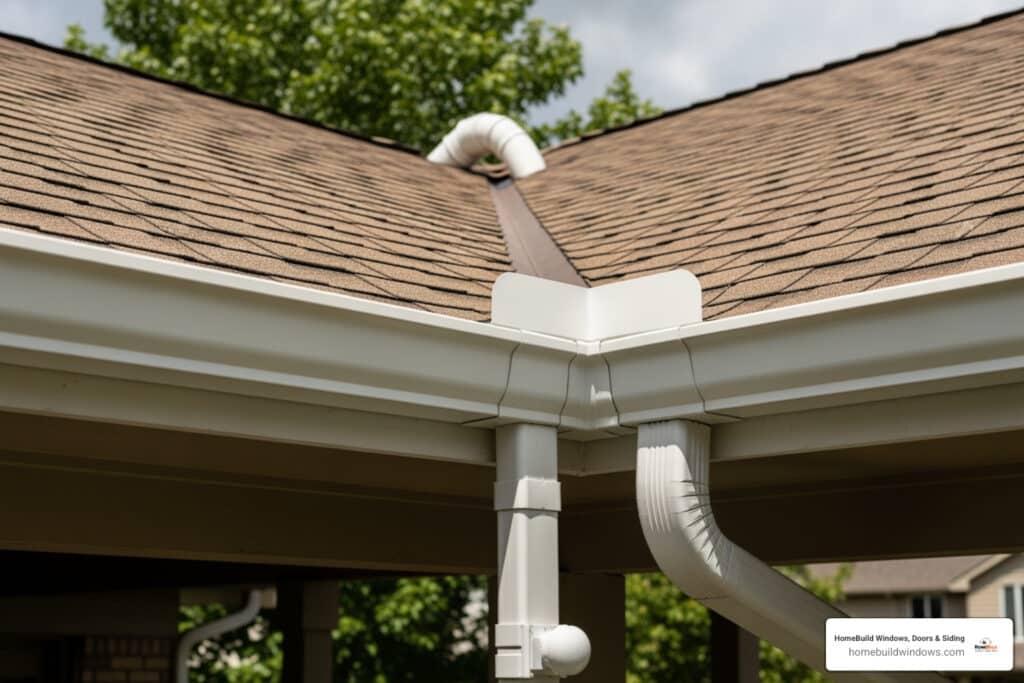
- Flat or Bowed Roofs: Common on homes built before June 1976, these are typically metal or asphalt-coated. They are prone to water pooling and sun damage, requiring careful maintenance to prevent leaks.
- Peaked Roofs: Homes built after 1976 usually have pitched roofs similar to site-built homes. They offer better water runoff and often use asphalt shingles or metal panels.
The roof’s pitch affects which materials you can use and how well it sheds water. Low-sloped roofs have different needs than steeper ones.
Telltale Signs Your Roof Needs Attention
Ignoring signs of roof damage can lead to costly problems. Here’s what to look for:
- Leaks and Water Stains: Stains on interior ceilings or walls are a clear sign of a leak, which can cause mold and structural damage.
- Sagging or Bowing: A dipping roofline is a red flag for structural issues or moisture buildup, often requiring immediate manufactured home roof replacement.
- Missing or Damaged Shingles/Panels: Look for cracked or missing shingles, or loose, rusted, or dented metal panels. These spots leave your home vulnerable.
- Granule Loss: Finding shingle granules in your gutters means your asphalt shingles are deteriorating.
- Moss or Algae Growth: Significant growth can trap moisture and accelerate material decay.
- Age of Roof: If your roof is near or past its expected lifespan (10 to 50 years, depending on material), consider a replacement even without obvious damage.
- Increased Energy Bills: A failing roof can compromise insulation, forcing your HVAC system to work harder and raising your bills.
Repair vs. Roof Over vs. Full Replacement
Once you’ve identified the issues, decide on the best course of action:
- Repair and Seal: This is a cost-effective option for minor, localized issues like small cracks or seam leaks. It can extend the roof’s life by a few years, but a new roof is recommended if over 10% of the old one needs repair.
- Roof Over: A “roof over” involves installing a new roof over the existing one. It’s a quicker, more affordable alternative to a full replacement but requires a structurally sound original roof. It’s not a permanent solution and may not last as long as a full replacement.
- Full Replacement: This involves a complete tear-off and installation of a new roofing system. Though most expensive upfront, a full manufactured home roof replacement is the best long-term solution. It fixes all leaks, addresses structural damage, and maximizes your roof’s lifespan, energy efficiency, and ROI, especially for older or heavily damaged roofs.
The decision depends on the extent of damage, your budget, and how long you plan to live in the home.
Exploring Your Roofing Options: Materials and Lifespan
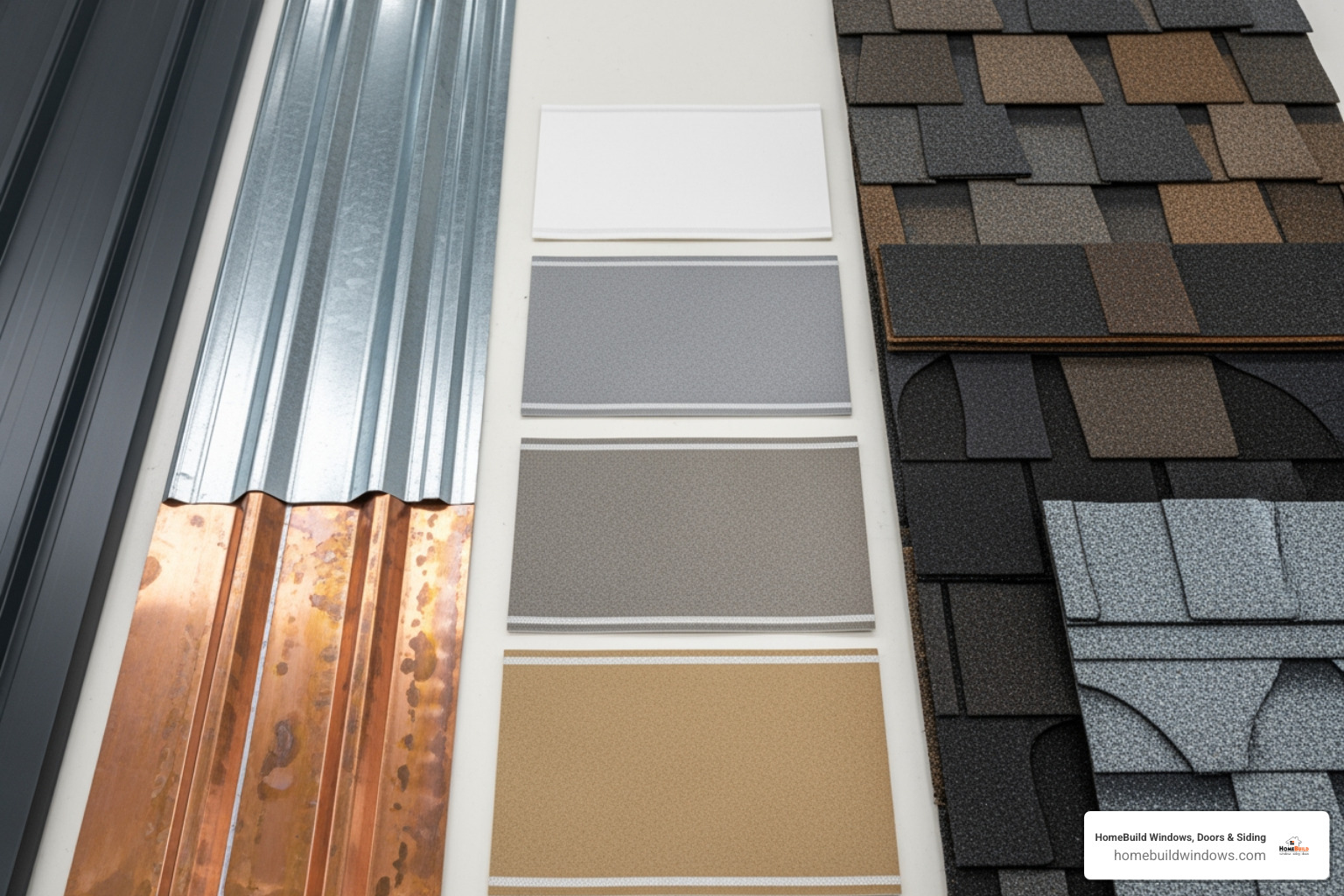
Choosing the right material for your manufactured home roof replacement is critical. Each option balances durability, cost, and energy efficiency differently. The Chicagoland climate, with its heavy snow and temperature extremes, makes this choice vital for longevity.
Metal Roofing (Aluminum & Steel)
Often considered the gold standard, metal roofing is an excellent investment.
- Lifespan: 30 to 80 years.
- Durability: Highly resistant to wind, hail, fire, and rot.
- Energy Efficiency: Reflective coatings can lower utility bills by keeping your home cooler. TPO membranes can reflect up to 87% of UV rays.
- Weather Resistance: Performs exceptionally well in heavy snow and high winds, a major plus for Chicago-area homes.
- Weight: At 40 to 120 pounds per square, it’s much lighter than asphalt (200-350 pounds), which is safer for manufactured home structures.
- Cost: The upfront cost is higher at $5 to $16 per square foot, but its long life makes it cost-effective over time.
- Options: Aluminum is corrosion-resistant, while coated steel offers superior strength.
For more information on improving your home’s exterior, you can learn about our other services: More info about siding installation.
Asphalt Shingles
Asphalt shingles are a popular, affordable choice.
- Lifespan: 15 to 30 years, depending on quality and climate.
- Affordability: The most budget-friendly option at $3 to $5 per square foot. Architectural shingles ($5 to $9 per square foot) offer better durability.
- Variety: Available in a wide range of colors and styles.
- Considerations: Shingles are not ideal for low-sloped roofs due to water-tightness issues and are prone to wind damage over time.
TPO & Rubber Membranes (EPDM)
For flat or low-sloped roofs, TPO (Thermoplastic Olefin) and EPDM (Ethylene Propylene Diene Monomer) rubber membranes are excellent choices.
- Lifespan: TPO lasts 10 to 25 years, while rubber can last 15 to 25 years or more.
- Ideal for Flat Roofs: These materials create a seamless, watertight barrier perfect for low-pitch applications.
- Energy Savings: Highly reflective TPO membranes bounce sunlight away, reducing A/C costs in Chicago summers.
- Cost: TPO and rubber roofing cost between $4 to $10 per square foot. Liquid roof coatings are a budget-friendly alternative at $0.50 to $4.50 per square foot.
Comparing Roofing Materials
Here’s a quick comparison of common roofing materials for manufactured homes:
| Material Type | Average Lifespan | Cost per Sq. Ft. (Installed) | Pros | Cons |
|---|---|---|---|---|
| Metal Roofing | 30 – 80 years | $5 – $16 | Highly durable, energy-efficient, weather-resistant, lightweight | Higher upfront cost |
| Asphalt Shingles | 15 – 30 years | $3 – $9 | Affordable, wide variety of styles, easy to install | Shorter lifespan, not ideal for low-slope, less watertight |
| TPO & Rubber Membranes | 10 – 25 years (TPO), 15 – 25 years (Rubber) | $4 – $10 | Excellent for flat/low-slope, seamless, reflective (TPO), flexible | Shorter lifespan than metal, specific aesthetic |
The Financials: Budgeting for Your Manufactured Home Roof Replacement
Budgeting for a manufactured home roof replacement is crucial. Costs typically range from $1,500 to $16,000, depending on several factors. At HomeBuild, we help Chicagoland homeowners steer these costs transparently to ensure the best value.
Key Factors Influencing the Final Cost
Several variables affect the final price of your new roof:
- Material Choice: Metal, asphalt, TPO, and rubber have different price points.
- Roof Size and Pitch: Larger or steeper roofs require more materials and labor.
- Labor Rates: Costs range from $1.00 to $3.50 per square foot, depending on job complexity and crew experience.
- Old Roof Removal: Tearing off and disposing of the old roof costs $1.00 to $2.00 per square foot.
- Underlayment: This protective layer costs $0.75 to $4.00 per square foot.
- Insulation: Upgrading insulation costs $0.50 to $3.50 per square foot and improves energy efficiency.
- Structural Repairs: Fixing damaged framing ($6 to $15 per sq. ft.) or sheathing ($2 to $5 per sq. ft.) is essential for a sound roof.
- Flashing and Vents: Replacing flashing can cost $200 to $500, while new vents run $200 to $700.
- Soffit and Fascia: Repairs or replacement costs $9 to $34 per linear foot.
- Accessibility: Difficult access can increase labor costs.
For local expertise, remember to check out Des Plaines Roofers for quality services in your area.
Average Cost for a Manufactured Home Roof Replacement
Here are general cost ranges based on home size:
- Single-Wide Home (500-1200 sq. ft.): A full replacement costs between $1,500 and $9,600.
- Double-Wide Home (1000-2000 sq. ft.): A full replacement ranges from $3,000 to $16,000.
- Roof Over Costs: This more affordable option ranges from $1,000 to $4,500 if the underlying structure is sound.
- National Average Cost: The national average for a full replacement is around $5,000, but this varies by location and materials.
These are average costs. Always get a detailed, written estimate from a qualified contractor for your specific project.
The Replacement Process: From Planning to Completion
A manufactured home roof replacement requires careful planning, safety protocols, and awareness of weather delays. At HomeBuild, we use a systematic approach for a smooth process for our Chicagoland clients.
DIY vs. Hiring a Professional
Deciding between DIY and hiring a pro is a major choice.
-
DIY Considerations: While DIY can save on labor, it’s risky. Roofing requires special skills and tools. Improper installation can cause leaks and void warranties. There are also significant safety risks, potential for code violations, and the danger of overlooking hidden structural damage. Manufactured homes have specific weight limits that a DIYer might not account for.
-
Professional Benefits: Hiring a licensed, insured contractor offers peace of mind. Professionals provide expertise, ensure safety, and offer warranties on materials and labor. They handle all code compliance, work efficiently, and manage the entire project from tear-off to cleanup. We recommend getting at least three quotes from reputable roofers with experience in manufactured homes.
Navigating Building Codes and Regulations
Adhering to building codes is non-negotiable for safety and durability.
- Local Permits: Always check with your local municipality for permit requirements before starting work.
- HUD Code: Manufactured homes are built to the federal HUD code, which includes roofing standards that must be maintained during renovations.
- Ventilation Requirements: Proper ventilation is often a code requirement to prevent heat and moisture buildup, which can cause mold and structural damage. This is crucial in Chicagoland’s humid summers.
- Weight Restrictions: Building codes dictate how much weight can be added to a manufactured home’s structure, influencing material choices.
- Energy Efficiency Standards: Codes often require specific insulation levels (e.g., R-30 thermal resistance for ceilings) to improve energy efficiency.
A professional contractor will ensure your project complies with all applicable codes, following best practices like those in the RICOWI Best Practices Guide for Roofing.
Questions to Ask Your Roofing Contractor
Choosing the right contractor is paramount. Ask these essential questions:
- Do you have specific experience with manufactured home roof replacement?
- Are you licensed and insured to work in Illinois?
- Can you provide a detailed, written estimate breaking down all costs?
- What is the project timeline, and how are delays handled?
- What warranty do you offer on materials and workmanship?
- What are your payment terms?
- Can you provide references from past clients?
- How do you handle unexpected structural repairs?
- What safety measures do you take on-site?
- Will you obtain all necessary permits and are you familiar with local codes?
Frequently Asked Questions about Manufactured Home Roofs
Here are answers to common questions about manufactured home roofing projects.
What is the best and most durable roofing material for a mobile home?
The best material for a manufactured home roof replacement depends on your roof’s pitch, budget, and the Chicagoland climate.
- For Pitched Roofs: Metal roofing is highly recommended for its durability (30-80 year lifespan) and energy efficiency. Budget-friendly asphalt shingles are also a viable option, lasting 15-30 years.
- For Flat or Low-Sloped Roofs: TPO and rubber membranes are excellent. TPO is cost-effective and reflects up to 87% of UV rays, improving energy efficiency. Seamless rubber coatings also provide a durable, watertight solution.
How much weight can a manufactured home roof support?
This is a critical question. Manufactured homes have specific structural weight limits, unlike site-built homes.
- Structural Limitations: Adding too much weight, such as multiple layers of heavy asphalt shingles, can compromise the home’s structural integrity.
- Material Weight: Metal roofing (40-120 lbs per square) is much lighter than asphalt shingles (200-350 lbs per square), making it a safer choice.
- Roof Over Concerns: Before doing a roof over, ensure the existing structure can support the added weight. This is why heavy shingles are not recommended for flat roof overs.
- Professional Assessment: Always get a professional assessment of your roof’s structural capacity before starting a major manufactured home roof replacement. A structural engineer may be needed for complex projects.
How can I make my mobile home roof more energy-efficient?
An energy-efficient roof can lead to significant savings on utility bills in the Chicagoland climate.
- Reflective Materials: Choose “cool roof” materials like light-colored metal or TPO membranes, which reflect sunlight and keep your home cooler.
- Cool Roof Coatings: Applying a reflective liquid coating over an existing roof is an inexpensive way to boost energy efficiency.
- Proper Insulation: Ensure your attic has adequate insulation (R-30 thermal resistance is recommended). Replacing old or damaged insulation prevents heat transfer.
- Attic Ventilation: Proper ventilation prevents heat buildup in summer and moisture in winter, which is crucial for avoiding mold and condensation. Sealing air leaks before insulating further improves efficiency.
Combining these strategies during your manufactured home roof replacement creates a more comfortable and cost-effective home. For other ways to boost your home’s energy performance, you might also consider our services: How Can Vinyl Siding Make Your Home More Energy Efficient?.
Conclusion
A manufactured home roof replacement is a key investment in your comfort, energy savings, and property value. This guide covered roof types, warning signs, repair and replacement options, and popular materials like metal, asphalt, and TPO. We also reviewed budgeting and best practices.
A thorough assessment is always the first step. Choosing the right materials, understanding costs, and navigating building codes are essential for a successful project. While some repairs are DIY-friendly, the complexities of manufactured home construction and structural limits often make hiring a qualified contractor the wisest choice.
At HomeBuild Windows, Doors & Siding, we are committed to customer satisfaction in the Chicago and Chicagoland areas. While our expertise is in windows, doors, and siding, we understand that a sound roof is the foundation of a protected home. We can guide you through the process and connect you with trusted roofing specialists who understand the unique needs of manufactured homes. Protecting your home is our priority.