


Why Interior Door Replacement Can Transform Your Chicago Home
Interior door replacement is one of the most effective ways to refresh the look, feel, and function of your home — without a major renovation.
Quick Answer: What You Need to Know About Interior Door Replacement
| What You’re Looking For | Key Facts |
|---|---|
| When to replace | Visible damage, warping, sticking, outdated style, poor sound control |
| Door types | Slab, prehung, barn, French, bifold, pocket, sliding |
| Core options | Hollow core (lightweight) vs. solid core (better sound insulation) |
| Finish options | Primed (paint-ready) vs. prefinished (ready to install) |
| DIY vs. professional | DIY works for slab swaps; professional installation recommended for best fit and finish |
| Where to start | Measure existing door height, width, and thickness before purchasing |
Your interior doors do more than you might think. They shape how sound travels through your home, how private each room feels, and how your space looks from room to room. When a door sticks, sags, or simply looks worn out, it affects your daily life — and your home’s overall impression.
For Chicago-area homeowners, seasonal temperature swings and humidity changes add extra wear on interior doors over time, making timely replacement even more important.
I’m Steve Mlynek, CEO and founder of HomeBuild Windows, Doors & Siding, and with over 20 years of hands-on experience overseeing interior door replacement projects across Chicago and the surrounding suburbs, I’ve seen how the right door — properly installed — makes a real difference in a home. In the sections below, I’ll walk you through everything you need to know to make a confident, informed decision.
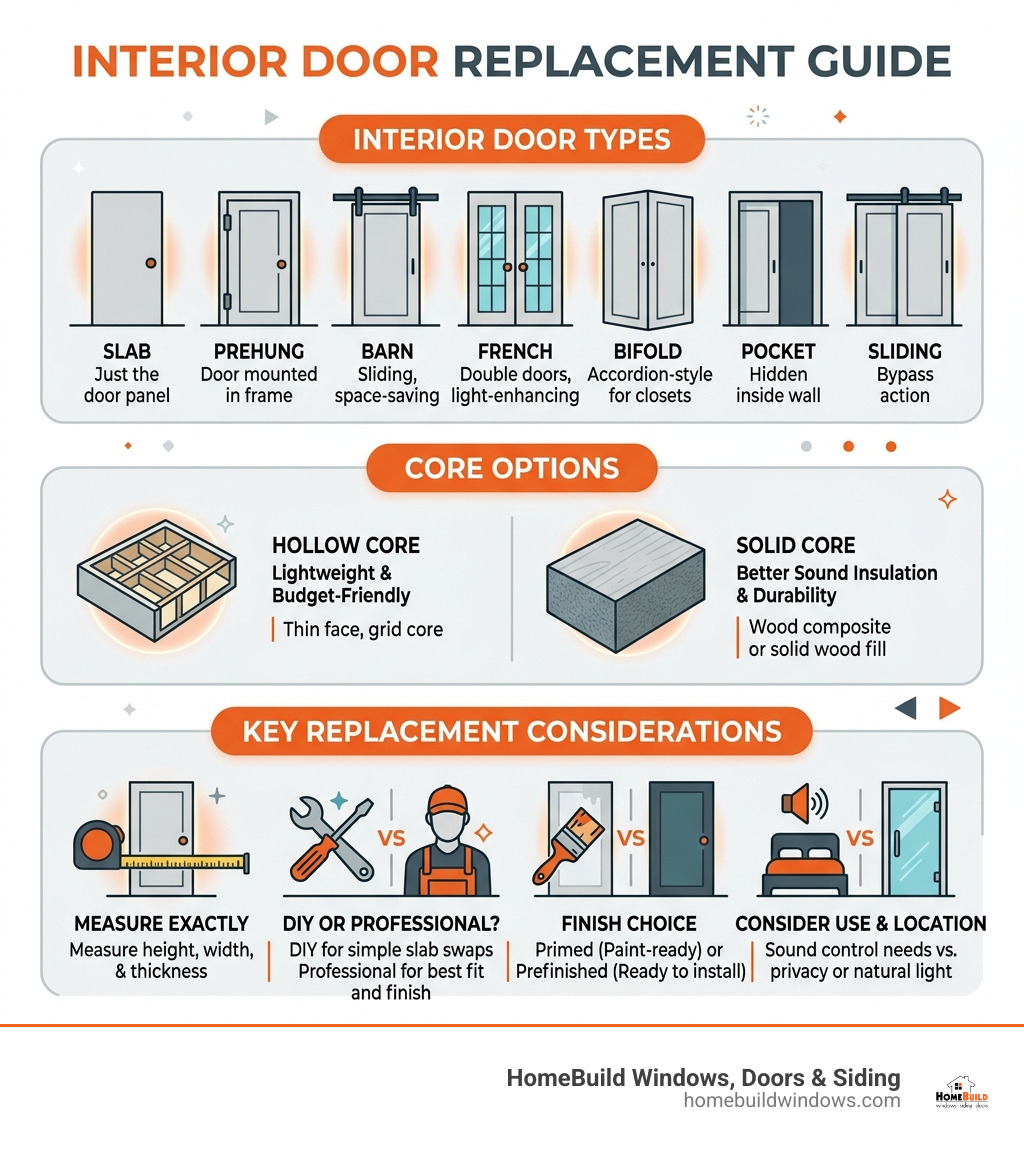
Key interior door replacement vocabulary:
When to Consider Interior Door Replacement for Your Home
Determining the right time for interior door replacement often comes down to a mix of functional necessity and aesthetic desire. In our experience working throughout Chicagoland, from Arlington Heights to Schaumburg, we see doors take a beating from both heavy daily use and the Midwest’s dramatic climate shifts.
Visible Damage and Warping
If you notice cracks, deep scratches, or holes in your door panels, it’s a clear sign that the structural integrity is compromised. More importantly, warping is a common issue in Illinois. Because our summers are humid and our winters are bone-dry, wood doors can expand and contract, eventually losing their square shape. When a door no longer sits flush in its frame, it’s time for a change.
Noise Reduction and Privacy
Do you hear every word of your teenager’s video games from across the hall? Older, hollow-core doors provide very little sound dampening. High-quality interior door replacement can reduce noise transmission by up to 50%, creating a much more peaceful environment for home offices or bedrooms.
Outdated Styles
Aesthetics matter. If your home still has the original “contractor-grade” flat doors from thirty years ago, upgrading to a modern Shaker-style or a sophisticated raised-panel design can instantly boost your property value. According to experts at Wayfair, replacing doors is one of the easiest ways to refresh a home’s style.
Sticking and Operation Issues
A door that sticks against the carpet or requires a shoulder nudge to close isn’t just annoying; it’s a sign of poor alignment or house settling. While some issues can be sanded down, persistent sticking usually indicates the need for a fresh start with a new slab or a pre-hung door replacement.
Selecting the Best Door Types and Materials
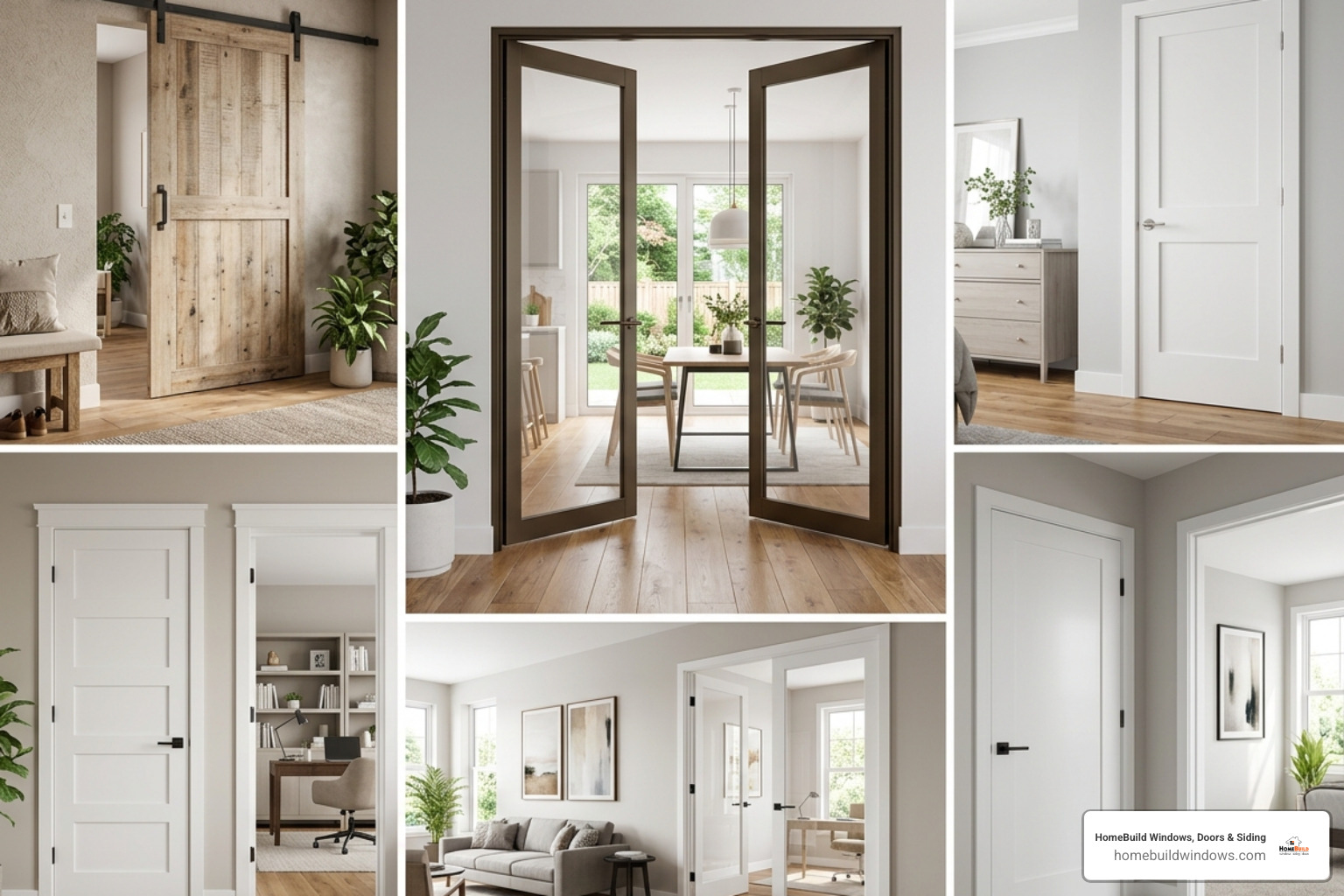
Choosing the right door involves more than just picking a pretty color. You need to consider how the door operates and what it’s made of.
- French Doors: Perfect for connecting a dining room to a living area, these use glass panels to allow light to flow while still providing a physical barrier.
- Barn Doors: A favorite for space-saving, these slide along a track on the wall. They are excellent for laundry rooms or master bathrooms where a swinging door would hit a vanity or appliance.
- Bifold and Sliding Doors: These are the workhorses of closets. Bifolds fold in on themselves, while sliders move past one another.
- Pocket Doors: These disappear entirely into the wall, though they usually require a more intensive installation process.
Slab vs. Prehung Interior Door Replacement
This is the most critical technical choice you’ll make.
- Slab Doors: This is just the door itself—no hinges, no frame, no handle. You would choose this if your existing door frame is perfectly square and in great condition. You’ll have to “mortise” (cut out) the spots for the hinges yourself to match the old frame.
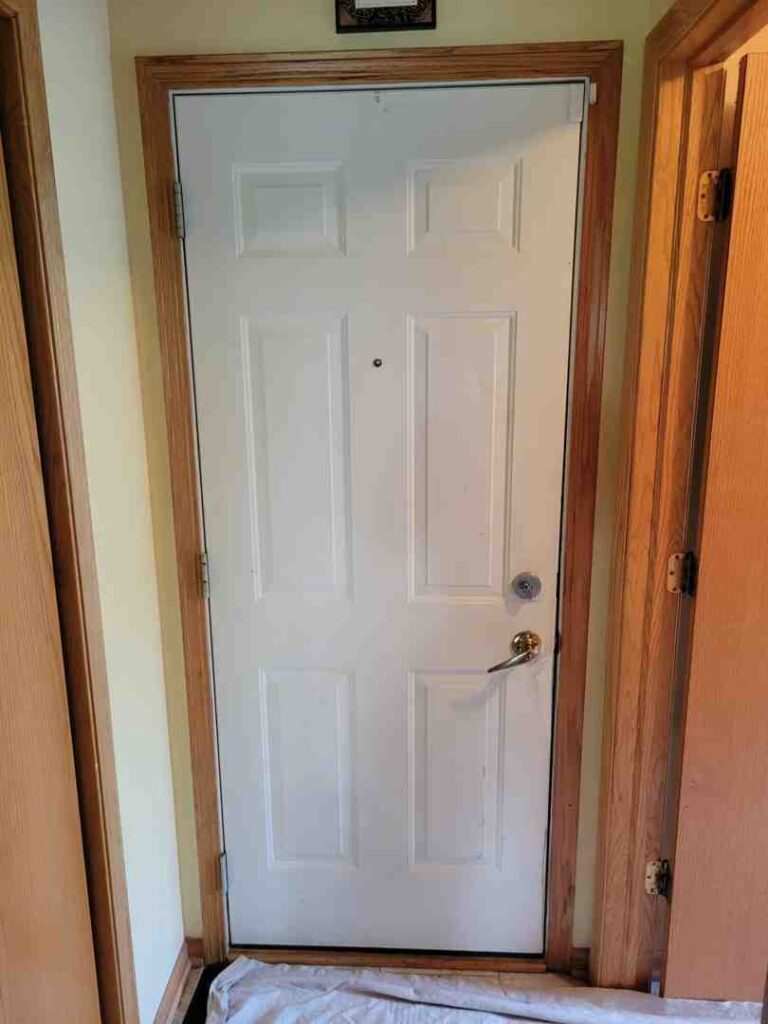
- Prehung Doors: These come already attached to a frame (jamb) with the hinges installed. This is the preferred choice if your old frame is damaged, out of square, or if you are creating a new opening. For more details on this method, check out our pre-hung door replacement guide.
Solid Core vs. Hollow Core Benefits
What’s inside your door matters as much as the outside.
- Hollow Core: These are lightweight and budget-friendly. They consist of a honeycombed cardboard interior wrapped in a wood veneer or MDF. They are easy to install but offer very little soundproofing.
- Solid Core: These are much heavier and provide a “hefty” feel. They are typically made of MDF with a dense center. Designers at Room for Tuesday often recommend solid core for bedrooms and bathrooms because they block sound much better than hollow options. Unlike solid wood, these engineered cores are also less likely to warp in the Chicago humidity.
Step-by-Step Guide to Removing and Installing Doors
If you are a seasoned DIYer, you might tackle a slab replacement yourself. Here is a high-level look at the process, though we always recommend professional help for precision results.
- Measure Three Times: Measure the width (top, middle, and bottom) and the height. Note the thickness (standard is usually 1 3/8 inches).
- Determine Swing: Stand with your back to the hinges. If the handle is on your left, it’s a left-handed door.
- Remove the Old Door: Tap out the hinge pins with a hammer and nail set. Lift the door away.
- Use the Old Door as a Template: Lay the old door on top of the new slab. Mark exactly where the hinges and the doorknob hole need to go.
- Trimming: If the new door is slightly too long, you may need to trim the bottom. Use a circular saw with a fine-tooth blade to prevent splintering.
- Mortising: Use a sharp chisel to cut out the shallow recesses for the hinges. As This Old House suggests, scoring the outline with a utility knife first helps prevent the wood from splitting.
- Hang and Test: Screw the hinges to the door, then align them with the frame and re-insert the pins. Check for even gaps (usually 1/8 inch at the top and sides).
Why Professional Installation Matters
While the steps above might seem straightforward, interior door replacement is a game of millimeters. A door that is off by just 1/16th of an inch can squeak, swing open on its own, or fail to latch.
At HomeBuild Windows, Doors & Siding, we bring a level of precision that is hard to achieve with standard home tools. As a locally owned contractor with over 20 years of experience, we ensure every project is owner-supervised. We aren’t just “handymen”; we are an Elite Platinum Pella® Certified Contractor and an Andersen Certified Contractor.
Our reputation in the Chicago suburbs, including places like Naperville, Glenview, and Palatine, is backed by:
- 200+ positive Google reviews
- Angi Super Service Award
- Nextdoor Neighborhood Faves recognition
- Fully licensed and insured status
When you choose professional door replacement services, you aren’t just buying a door; you’re buying peace of mind that the job is done right the first time, without the mess and frustration of a DIY project gone wrong.
Professional Interior Door Replacement Services
We work with the industry’s most trusted brands, including Pella, Marvin, Therma-Tru, and Simpson. Whether you need standard bedroom doors or custom-fitted French doors for your study, our installation team focuses on quality workmanship and durability. In the Midwest, a door needs to be more than just pretty—it needs to stand up to the test of time and weather.
Frequently Asked Questions about Interior Door Replacement
Can I replace a door without replacing the frame?
Yes! This is called a “slab” replacement. It is a great way to save on material if your current frames are in good shape and perfectly square. However, if the frame is sagging or damaged, a prehung door is a much better long-term solution.
How do I determine the door swing?
Stand in the doorway with your back against the hinge jamb. If the door swings to your right, it’s a right-handed door. If it swings to your left, it’s a left-handed door. Getting this right is crucial when ordering!
How much noise reduction do new doors provide?
Upgrading from a standard hollow-core door to a solid-core door can reduce noise by up to 50%. This makes a massive difference if you have a home office near a noisy kitchen or living room.
Conclusion
Updating your home with a fresh interior door replacement is an investment in your comfort and your home’s value. From improved sound insulation to a more cohesive interior design, the benefits are immediate.
HomeBuild Windows, Doors & Siding is proud to serve homeowners across Chicago and the North-West Suburbs with top-tier products and expert, owner-supervised installation. We understand the unique needs of Midwest homes and are dedicated to providing the high standards and attention to detail you deserve.
Ready to transform your home’s interior? Contact HomeBuild for door installation and replacement in Chicago today for a free estimate and let us help you find the perfect fit.