


Why Energy Efficient Windows Matter for Your Chicago Home
Energy efficient windows are designed to minimize heat transfer between your home and the outdoors, using features like multiple glass panes, low-emissivity coatings, and insulated frames. This leads to significant benefits:
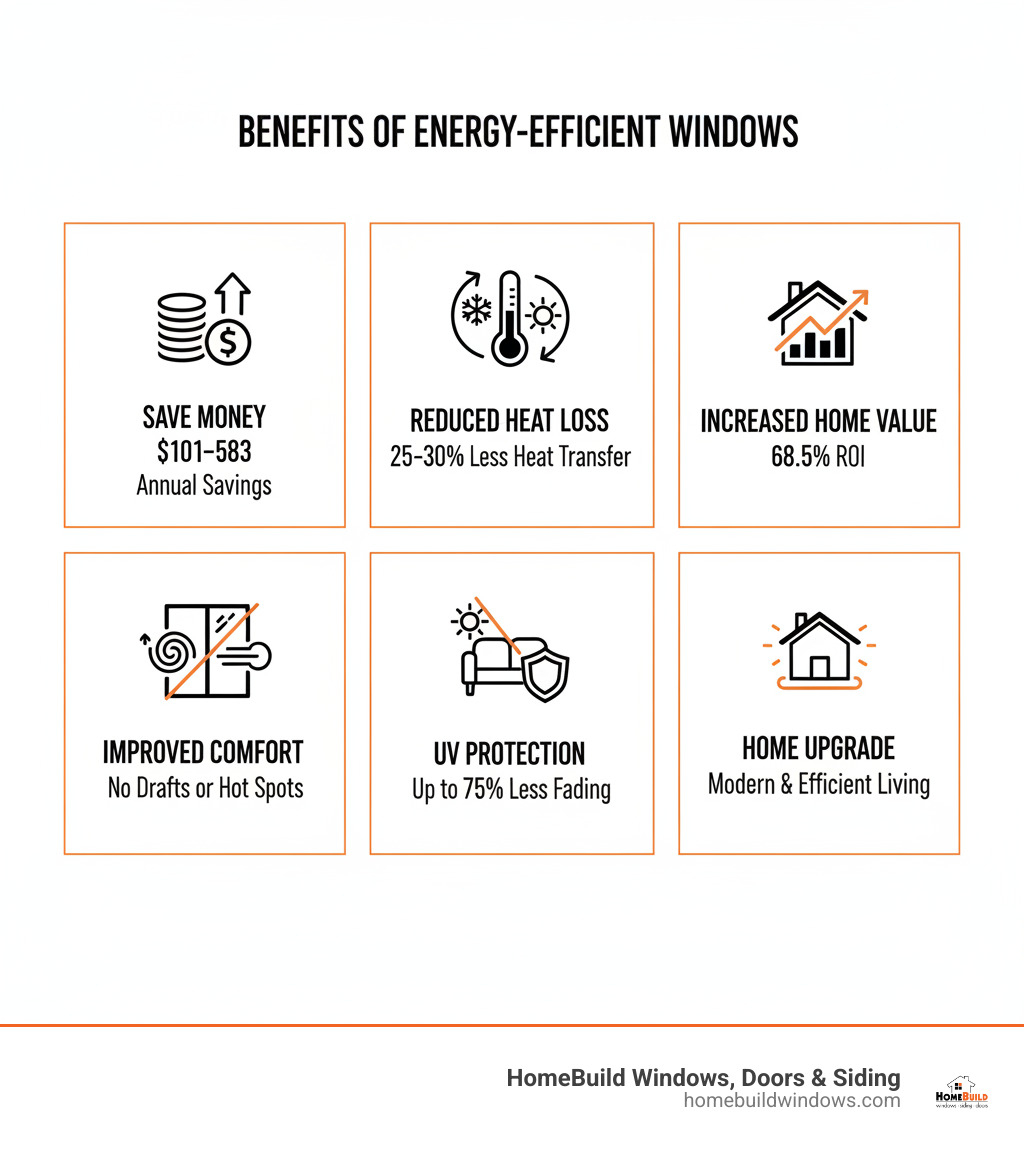
- Reduced Energy Loss: Cut heat loss through windows, which can account for up to 35% of a home’s total heat loss, by 25-30%.
- Lower Utility Bills: Save $101-$583 annually by replacing old single-pane windows with ENERGY STAR certified models.
- Improved Home Comfort: Eliminate cold drafts in winter and reduce unwanted heat gain in summer.
- Increased Home Value: Window replacement delivers an average 68.5% return on investment.
- Key Features: Look for double or triple-pane glass, Low-E coatings, argon or krypton gas fills, and insulated frames.
If you’ve noticed drafts, condensation between panes, or rising energy bills, your windows are likely costing you money. Modern energy efficient windows use advanced technology to keep your home comfortable year-round while significantly reducing heating and cooling costs.
As Steve Mlynek, founder and CEO of HomeBuild Windows, I have over 20 years of experience installing energy efficient windows throughout Chicago. I’ve helped thousands of homeowners reduce their energy bills and improve home comfort. This guide will walk you through everything you need to know to make an informed decision.
What Makes a Window Energy-Efficient?
An energy efficient window minimizes heat transfer, keeping your home warm in the winter and cool in the summer. This is accomplished through several carefully engineered components working together as a system. After installing thousands of windows across Chicago, I’ve seen how these features make a real difference in home comfort and energy costs. Let me walk you through what really matters.
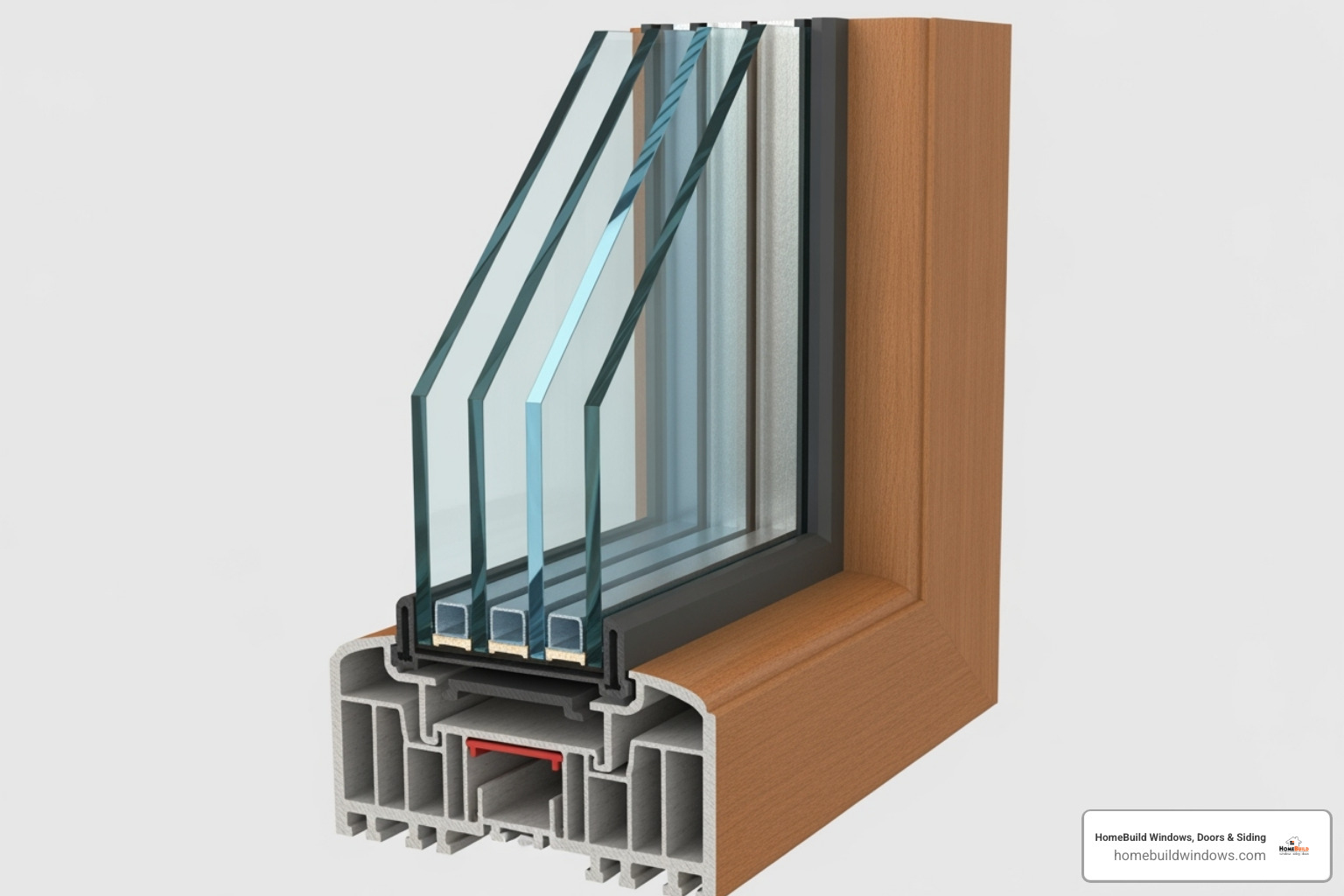
What are the key features of energy efficient windows?
The difference between an old, drafty window and a high-performance one comes down to a few key innovations.
Multiple glass panes are the foundation. Old single-pane windows are highly inefficient. Double-pane windows create an insulating air or gas-filled space between two panes, dramatically reducing heat transfer. For even greater performance, Triple-pane windows add a third pane, creating two insulating spaces. They can achieve U-factors as low as 0.8 W/m2.K, a significant improvement over the 1.2 W/m2.K or higher for many double-pane models. This translates to a noticeably more comfortable home.
Low-emissivity (Low-E) coatings are microscopically thin, transparent layers that reflect radiant heat. In winter, they keep heat in; in summer, they reflect exterior heat out. Low-E coatings can reduce heat loss and gain by up to 50% and block up to 75% of harmful UV rays that fade furniture and flooring.
Inert gas fills like Argon gas are sealed between the panes. Argon is denser than air, making it a better insulator. It’s clear, non-toxic, and odorless. Krypton gas offers even better thermal performance but at a higher cost.
Warm-edge spacers separate the glass panes and seal in the gas. Unlike traditional heat-conducting aluminum spacers, modern warm-edge spacers use materials like foam or silicone. This improves the window’s overall U-factor and reduces condensation at the edges.
These features combine to create superior Energy Efficient Glazing that delivers lower energy bills and better comfort.
How Do Frame Materials Impact Efficiency and Cost?
The frame material significantly affects a window’s insulation, durability, maintenance, and cost.
Vinyl frames are popular for their excellent insulation, low maintenance, and affordability. They never need painting and resist moisture, making them a great value for Chicago homeowners. The same material that makes vinyl siding energy efficient works wonderfully for window frames.
Wood frames offer timeless beauty and natural insulation. However, they require regular painting or staining to prevent rot and warping. Clad wood frames, which cover the exterior with aluminum or vinyl, offer a low-maintenance solution at a higher price.
Fiberglass frames are incredibly strong, stable, and resistant to extreme weather. They insulate exceptionally well, especially when filled with insulation. While they cost more than vinyl, their longevity often justifies the investment.
Composite frames blend wood fibers with polymers, offering the look of wood with improved resistance to moisture and decay.
Aluminum frames are durable but conduct heat rapidly, making them poor insulators. If considering aluminum, ensure it includes a “thermal break”—an insulating plastic strip that separates the interior and exterior frame components. Without it, aluminum is the least efficient option.
Decoding the Labels: How to Read Performance Ratings
Shopping for energy efficient windows can be confusing with all the technical terms and ratings. However, once you understand what these numbers mean, you can easily identify a high-performance window. The key is the label from the National Fenestration Rating Council (NFRC), which provides standardized, unbiased performance data.
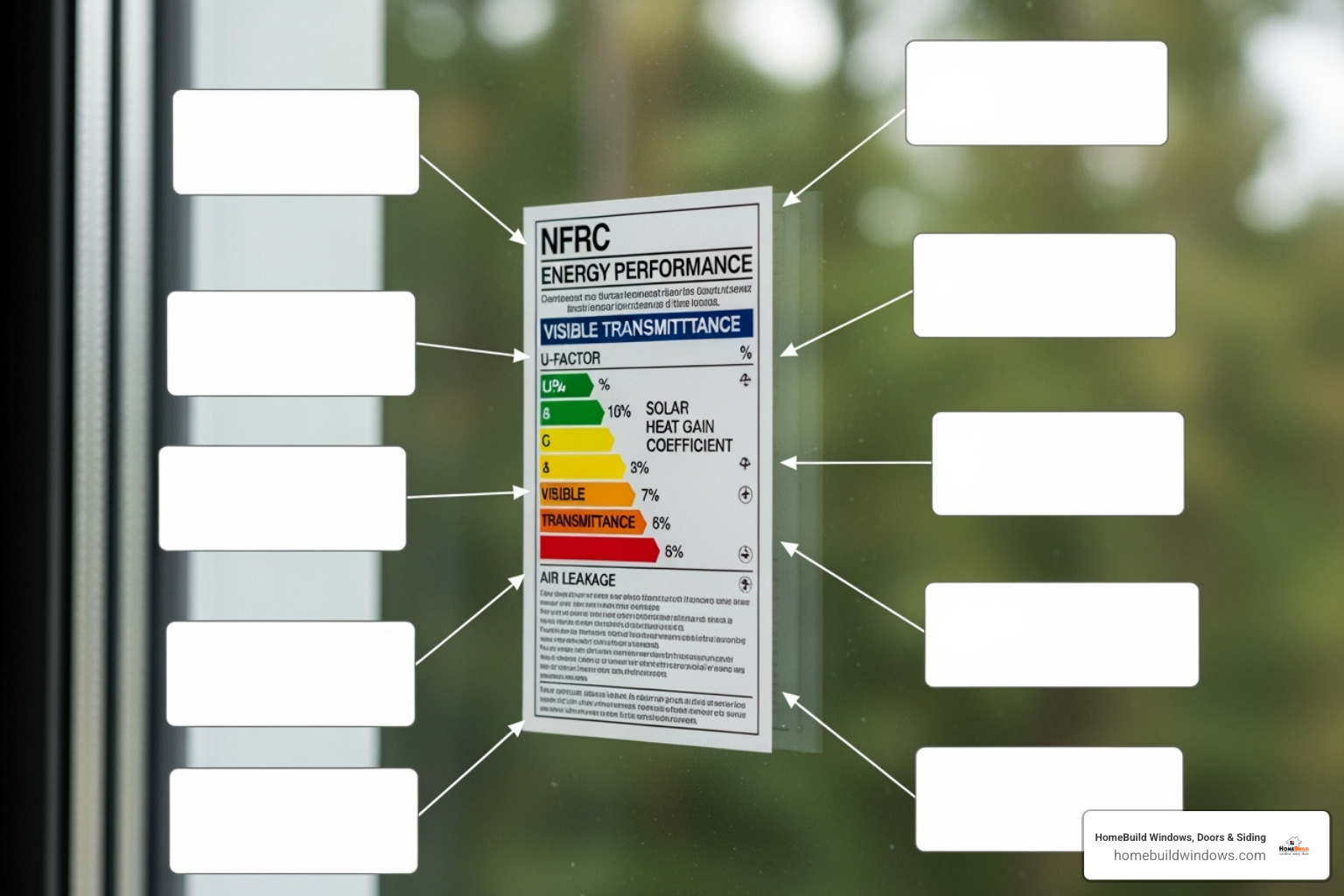
This system also determines if a window qualifies for ENERGY STAR, a designation from the U.S. EPA for products meeting strict efficiency guidelines. The Benefits of ENERGY STAR Qualified Windows, Doors, and Skylights include lower energy bills, improved comfort, and protection for your belongings from UV damage.
Key Performance Metrics Explained
Here are the five main numbers on an NFRC label and what they mean for your home:
- U-Factor: This is the most important metric for Chicago. It measures how well a window prevents heat from escaping. The lower the U-Factor, the better the insulation. For our climate, look for a U-Factor of 0.40 or lower.
- Solar Heat Gain Coefficient (SHGC): This measures how much solar radiation passes through the window. A lower number means less heat comes through, which is ideal for summer. An SHGC between 0.3 and 0.4 is often a good balance for our mixed climate.
- Visible Transmittance (VT): This measures how much natural light comes through. A higher number means brighter rooms. It’s a trade-off between light and heat gain.
- Air Leakage (AL): This measures how much air passes through cracks in the window assembly. A lower number means fewer drafts. Look for an AL of 0.3 or lower.
- Condensation Resistance (CR): This indicates how well a window resists moisture buildup. Higher is better, meaning less fogging on the interior glass during cold weather.
Understanding Climate Zones and Recommendations
The “perfect” window for Miami is wrong for Chicago. The U.S. Department of Energy divides the country into climate zones with different needs.
In northern climates like ours, the priority is keeping heat in during winter. This means focusing on a low U-Factor. In southern climates, the focus is on keeping heat out, so a low SHGC is more important.
This is why ENERGY STAR certification is climate-specific. A window certified for Texas might not meet the requirements for Illinois. For Chicago and the surrounding suburbs, we recommend windows with a U-Factor of 0.40 or lower to handle our cold winters. The Efficient Windows Collaborative offers helpful state-specific selection tools.
When shopping, always verify that the windows are certified for your climate zone to ensure they deliver the expected savings and comfort.
The Costs and Savings of Energy Efficient Windows
When considering energy efficient windows, the first question is usually about cost. While there is an upfront investment, the long-term payoff in energy savings, comfort, and increased home value makes it one of the smartest upgrades for your Chicago home.

Breaking Down the Costs
The cost of energy efficient windows varies widely. On average, homeowners pay around $1,337 per window, with a typical range of $150 to $4,000 before installation. A whole-house replacement can cost anywhere from $6,685 to $33,425.
The type of window is a major factor. Popular double-hung windows run $400 to $2,000 each, while casement windows are in a similar range of $400 to $2,400. Non-opening picture windows cost $300 to $2,000 and offer excellent efficiency. More complex styles like bay or bow windows are a larger investment, ranging from $1,030 to $8,300.
The frame material also impacts the budget. Vinyl is the most affordable, while fiberglass and composite are mid-to-high range. Wood frames, especially clad options, are typically at the higher end. Larger or custom-shaped windows will also cost more. For a complete breakdown, see our Window Replacement Cost guide.
Double-Pane vs. Triple-Pane: A Cost and Benefit Analysis
Double-pane windows are a huge upgrade from single-pane, costing $150 to $1,290 per window. They offer a great balance of efficiency and affordability.
Triple-pane windows are the top performers, typically running $400 to $3,540 per window. For the extra cost, you get superior heat retention, with a U-factor that can drop as low as 0.8 W/m2.K compared to a double-pane’s 1.2 W/m2.K or lower. In Chicago’s harsh winters, triple-pane windows excel. They also offer superior noise reduction, a great benefit for homes near busy streets.
For most Chicago homes, we recommend triple-pane windows for north-facing rooms and primary living spaces. Double-pane windows are a great choice for other areas or if budget is a primary concern. Our Window Replacement Guide: Double Pane vs. Triple Pane Windows offers more detail, and we also have specific information on Double Pane Window Replacement.
Potential Savings, Rebates, and ROI
This is where your investment pays off. Installing ENERGY STAR-certified windows can cut your energy bills every month. Homeowners replacing old single-pane windows save between $101 and $583 annually, representing an average 12% reduction in overall utility costs.
The federal government offers a federal tax credit to help with the cost. You can claim up to 30% of your project costs, with a maximum credit of $600 for windows installed through 2032. Our guide on Energy Efficient Home Upgrades explains how to maximize these benefits.
Finally, energy efficient windows increase your home’s resale value. According to Remodeling Magazine’s 2023 Cost versus Value Report, insulated vinyl window replacements deliver an average return on investment (ROI) of 68.5%. This is one of the highest ROIs of any home improvement project, potentially boosting your home’s market value by $12,000 or more.
Installation: Maximizing Your Investment
Even the most advanced energy efficient windows will fail to perform if installed incorrectly. Proper installation is the critical final step that ensures your investment pays off in comfort and energy savings.
Think of it this way: you wouldn’t buy a luxury car and have an amateur work on the engine. The same logic applies to your windows. Professional installation transforms a collection of glass and frames into a high-performance system for your home.
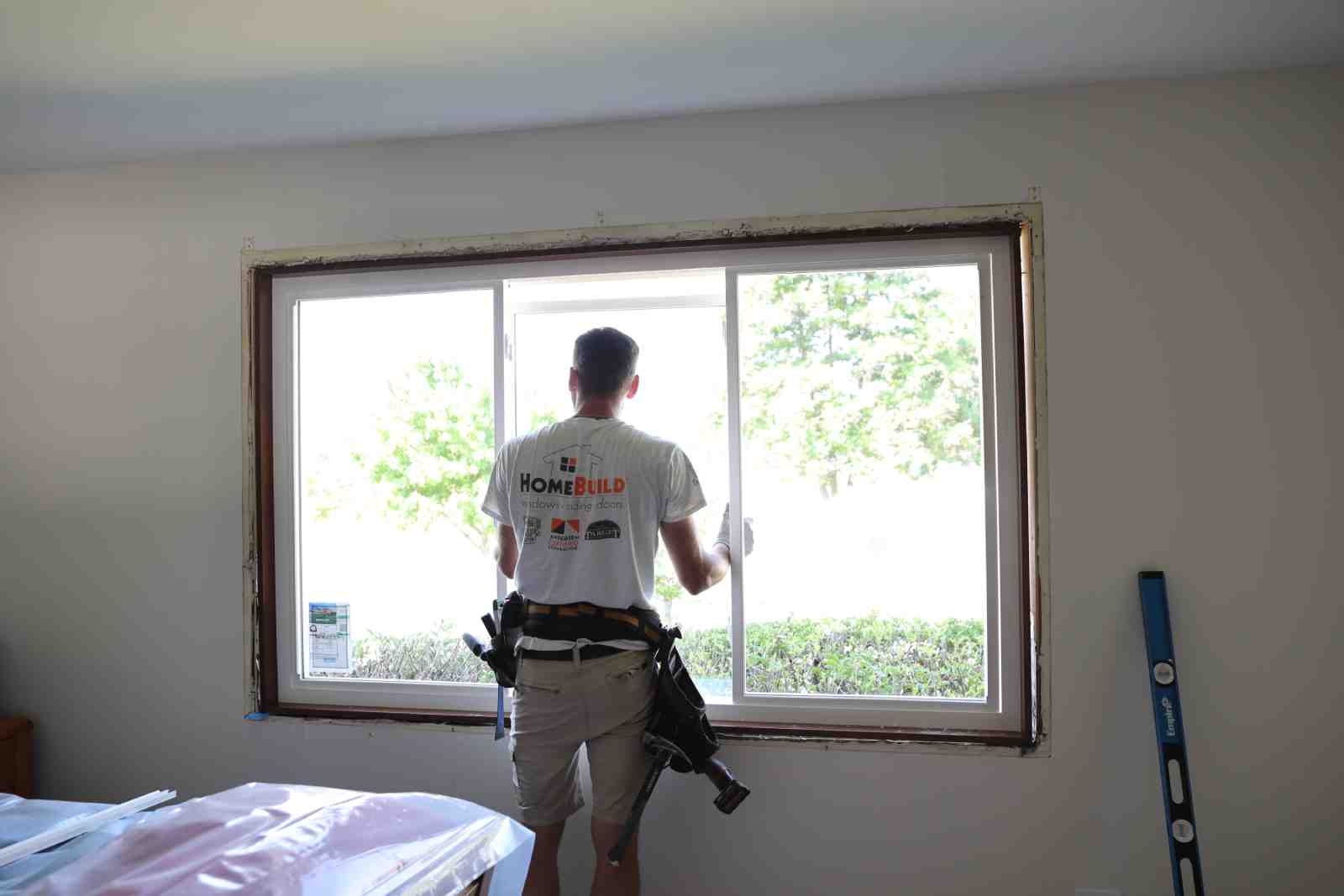
DIY vs. Professional Installation: Pros and Cons
The appeal of DIY is saving on labor costs, as window contractors typically charge $40–$65 per hour. However, the risks often outweigh the savings.
DIY installation requires specialized tools, precise measurements, and knowledge of building codes and sealing techniques. A small mistake can lead to big problems. Air leaks around poorly installed windows will negate your energy savings. Water infiltration can cause expensive structural damage, rot, and mold. An improperly set window may sag, warp, or fail prematurely.
Furthermore, many manufacturer warranties require professional installation. A DIY attempt could void your warranty, leaving you responsible for any future repairs. At HomeBuild Windows, we’ve seen that fixing a bad installation is always more costly than doing it right the first time. For more details, see our Window Installation Guide.
Why Quality Installation is Crucial
After two decades of installing windows in Chicago, I can confirm that installation quality is paramount. The most important factor is creating an airtight, insulated seal between the window and the wall. Even a tiny gap can undermine the window’s performance, forcing your HVAC system to work harder and erasing your expected energy savings.
Professionals use the correct flashing, caulking, and weatherstripping to prevent air and water leaks. Quality installation also ensures your windows operate smoothly and lock securely for years to come.
A critical consideration for Chicago homeowners is lead safety. If your home was built before 1978, it likely contains lead-based paint. Disturbing this paint during window replacement can release hazardous lead dust. Professional installers are trained in EPA-approved lead-safe work practices to Protect your family from lead exposure. This is a legal requirement and a serious health concern.
At HomeBuild Windows, we are highly recommended for our professionalism because we treat every installation with meticulous attention to detail, ensuring your investment in energy efficient windows delivers the comfort and savings you expect.
Frequently Asked Questions about Energy Efficient Windows
After installing windows in Chicago for over 20 years, we’ve heard every question. Here are answers to the most common ones we encounter.
What type of window is most energy-efficient?
The most energy-efficient window is a system of high-performance components working together. Triple-pane windows with fiberglass frames offer top-tier performance, especially for Chicago’s cold winters. Fiberglass is durable, provides excellent insulation, and can be filled with additional insulation to boost performance.
However, if budget is a concern, insulated vinyl frames with double-pane, Low-E glass provide an outstanding balance of efficiency and affordability. We install these in Chicago homes every week with excellent results.
The “best” window depends on your budget, climate, and your home’s specific needs. For a deeper comparison, see our guide on Triple Pane Windows.
How do energy efficient windows increase home value?
New energy efficient windows are a smart investment that adds real dollars to your home’s value in several ways.
First, they provide instant curb appeal, refreshing your home’s exterior and making a great first impression on potential buyers.
Second, savvy homebuyers look for ways to save on long-term costs. Marketing your home with new windows that promise lower utility bills is a powerful selling point.
Finally, the financial return is well-documented. Remodeling Magazine’s 2023 Cost versus Value Report shows an average return on investment (ROI) of 68.5% for vinyl window replacement—one of the best returns for any home improvement project.
How much can I really save with ENERGY STAR windows?
The savings are real and measurable. If you’re replacing old single-pane windows, you can expect to save $101–$583 annually on energy costs. Even upgrading from older double-pane, clear-glass windows can save $27–$197 per year.
Single-pane windows can be responsible for 25%–30% of your home’s heating and cooling energy loss. ENERGY STAR certified windows can lower household energy bills by an average of up to 13 percent nationwide when replacing single-pane windows.
Your actual savings will vary based on your local climate, utility rates, and your home’s unique characteristics (size, insulation, etc.). However, you will consistently use less energy to keep your home comfortable, which means more money in your pocket. For more information, explore our guide on Energy Efficient Home Upgrades.
Conclusion: Is Upgrading Worth It?
Yes, upgrading to energy efficient windows is absolutely worth it for most Chicago homeowners.
Your new windows will keep your home warmer in the winter and cooler in the summer. You’ll immediately notice fewer drafts and hot spots, along with a welcome drop in your monthly utility bills. The financial case is compelling: annual savings of $101–$583, a federal tax credit of up to $600, and an average 68.5% return on your investment when you sell.
Beyond the numbers is the daily comfort of living in a home that feels just right—quieter, more consistent temperatures, and protection for your furniture from fading UV rays.
However, the single most critical factor is professional installation. The best windows in the world won’t perform if they aren’t installed correctly. Air leaks, moisture problems, and poor energy performance are the results of a bad installation.
At HomeBuild Windows, we have over 20 years of experience installing windows throughout Chicago and the suburbs. Our team understands the challenges of local homes, including the need for lead-safe practices in older properties. We ensure every window is sealed, insulated, and installed to manufacturer specifications so you get the full performance you paid for.
If you’re ready to stop throwing money out your old windows, our Replacement Window Buying Guide is a great next step.
As a local Chicago company, we are committed to helping our neighbors improve their homes with top-quality products and expert installation. We serve homeowners throughout Chicago, Chicagoland, and the North-West Suburbs. Contact us for your energy efficient windows in Chicago today for a consultation. We’ll provide honest advice to help you find the perfect solution for your home.