


Why Awning Window Maintenance Keeps Your Home Comfortable and Efficient
Awning window maintenance is key to a comfortable, energy-efficient, and attractive home. These top-hinged windows, popular in Chicago, open outward to provide excellent ventilation even in rain, plus privacy and natural light.
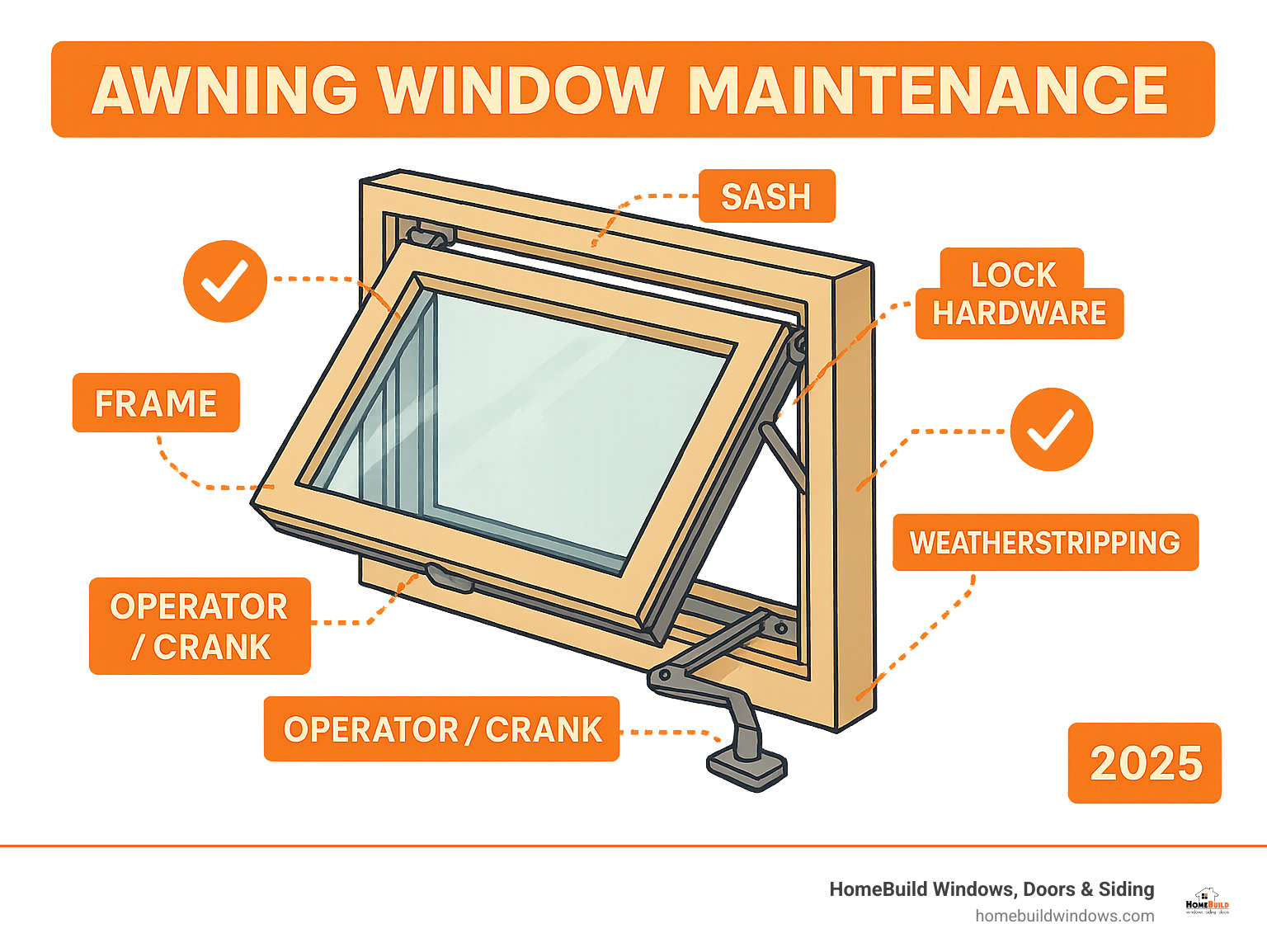
Essential Awning Window Maintenance Tasks:
- Monthly: Clean glass, frames, and tracks.
- Seasonally: Lubricate hinges and crank mechanisms with silicone spray.
- Bi-annually: Inspect and replace weatherstripping.
- Annually: Check all hardware for wear and proper operation.
- As needed: Seal gaps with caulk and address sticking issues.
Regular maintenance prevents common problems like cracked glass, damaged frames, and faulty hardware, boosting your home’s curb appeal and energy efficiency. Properly maintained awning windows can last for decades, preventing drafts and lowering energy costs.
I’m Steve Mlynek, CEO and founder of HomeBuild. With over 20 years of experience in window installation and maintenance in the Chicago area, my expertise in awning window maintenance has helped thousands of homeowners extend their windows’ lifespan and improve home energy efficiency.
Your Essential Awning Window Maintenance Checklist
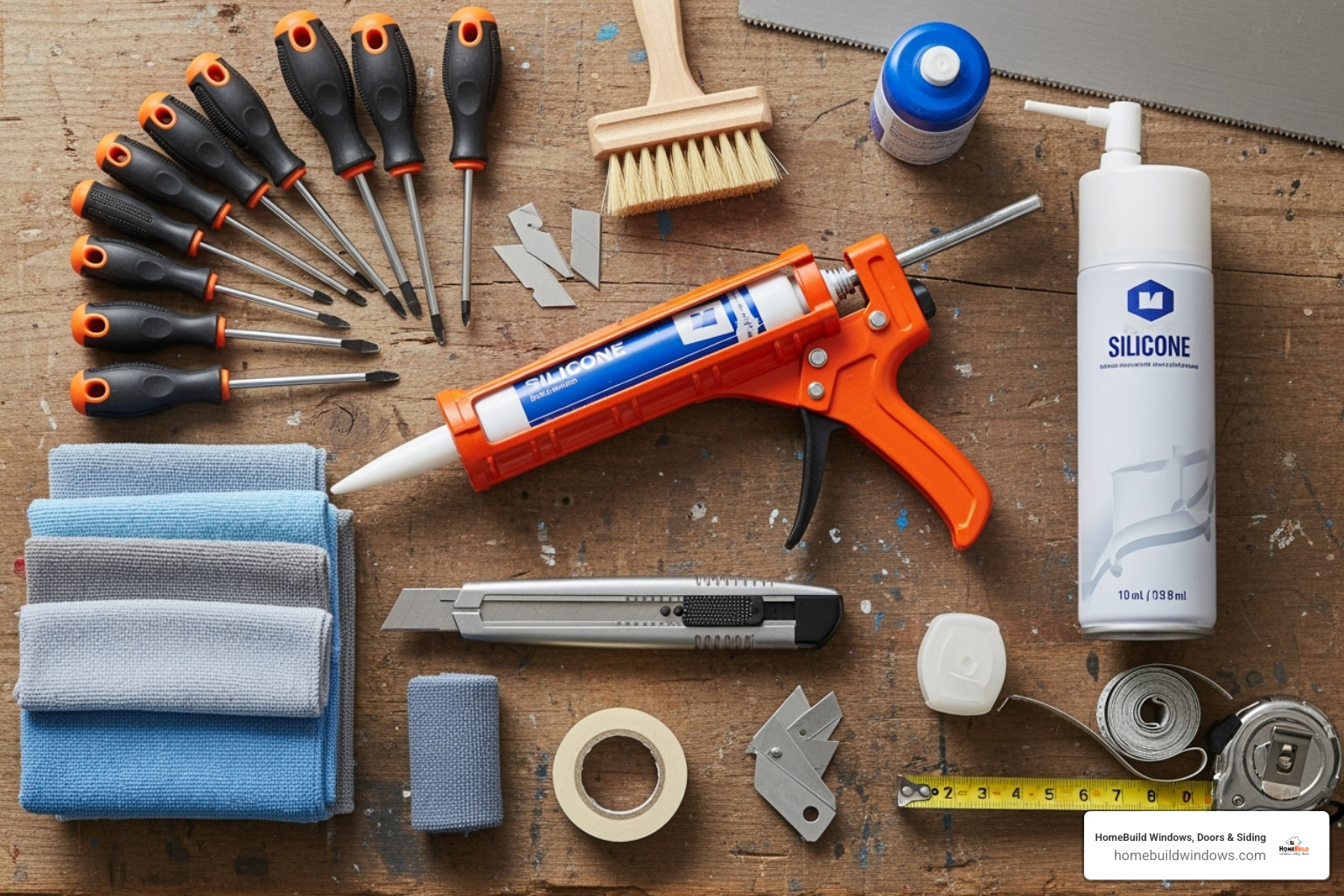
Your awning windows need regular tune-ups to run smoothly, just like a car. Routine inspection and seasonal care can prevent expensive surprises. While awning window maintenance is simple, it significantly impacts your windows’ performance and lifespan. Many homeowners neglect their windows until a problem arises, but a few simple annual tasks can keep them operating like new and protect your home.
The Importance of Regular Awning Window Maintenance
Regular awning window maintenance is about more than just looks; it prevents costly problems. Neglecting maintenance allows small issues to become major headaches: a tiny chip can lead to cracked glass, unsealed moisture can cause damaged frames, and unlubricated parts result in malfunctioning hardware.
Proper care also keeps your home comfortable and secure. Well-maintained windows boost curb appeal and ensure improved security as locks and mechanisms function correctly.
For Chicago residents, maintaining energy efficiency is crucial. Worn weatherstripping or failing seals lead to significant energy loss, potentially costing hundreds of dollars annually in wasted heating and cooling.
Tools and Materials for the Job
Gathering the right tools makes awning window maintenance easier. You’ll need:
- Cleaning Supplies: Soft cloths, a microfiber cloth for streak-free glass, a squeegee, a bucket, mild soap, and white vinegar for a natural glass cleaner.
- Mechanical Tools: Silicone-based lubricant (avoids attracting dirt), a screwdriver set, and a putty knife for cleaning tracks.
- Sealing Supplies: A caulk gun and fresh caulk.
- Safety Gear: Always use safety glasses and gloves.
Cleaning Your Awning Windows Inside and Out
Regular cleaning is foundational to awning window maintenance, preventing parts from sticking and wearing out. A key benefit of awning windows is the ability to clean both sides from inside, even on upper floors.
- Start with the Frame and Tracks: Remove screens. Clean the frame with soapy water and a soft cloth. Use a soft brush or vacuum to clear debris from the tracks.
- Clean the Glass: Use a commercial cleaner or a vinegar-water solution. Wet the glass and use a squeegee in overlapping top-to-bottom strokes, wiping the blade after each pass with a microfiber cloth to prevent streaks.
- Clean the Exterior: Open the window fully to access the outside glass from inside your home.
- Clean the Screens: Use soapy water, rinse well, and let them dry completely before reinstalling.
Lubricating Moving Parts for Smooth Operation
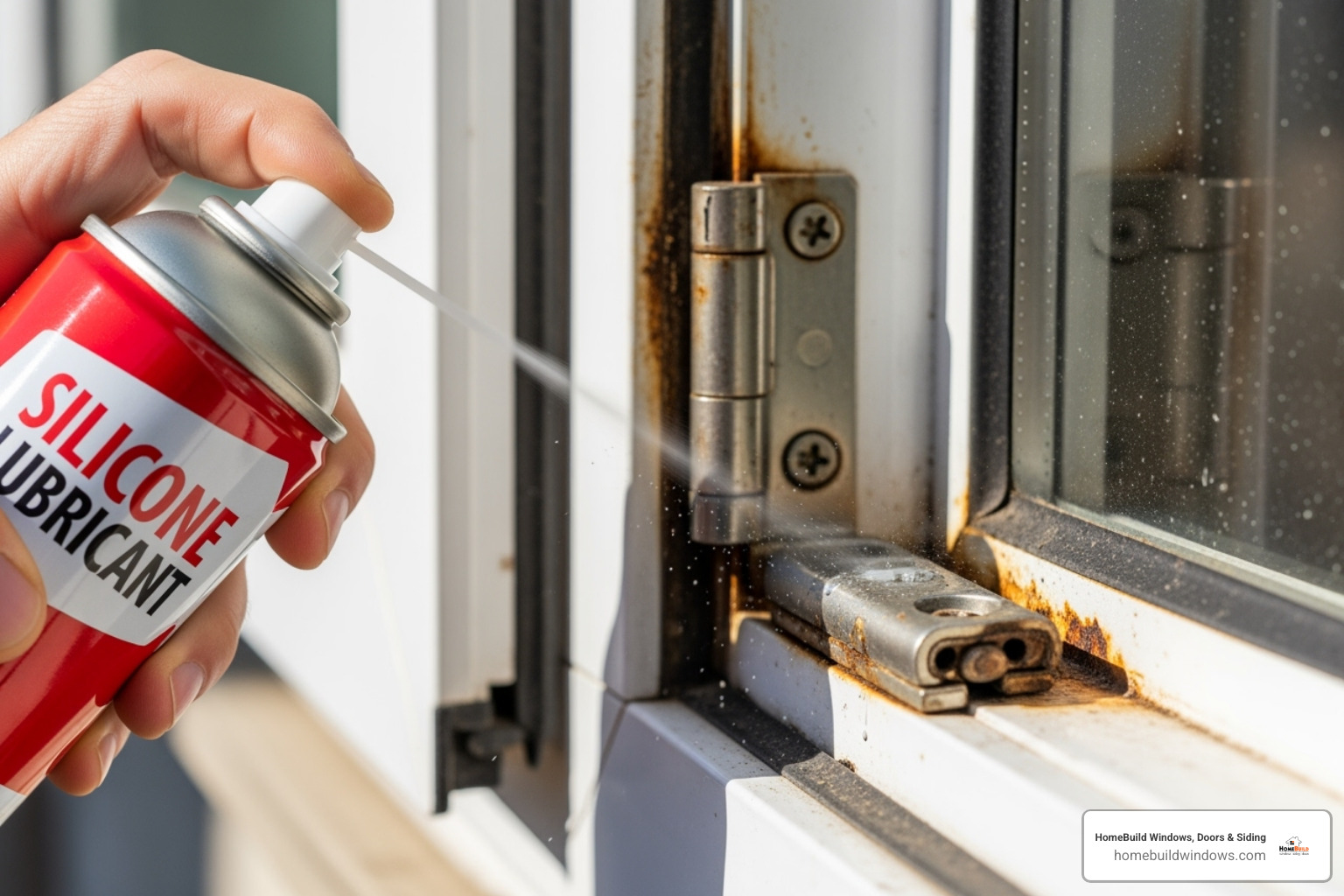
Stiff operation or grinding noises indicate a need for lubrication, a simple but crucial part of awning window maintenance. The hinges, operator (crank mechanism), and locks require regular attention, especially with Chicago’s weather extremes.
Always use a silicone-based lubricant. Unlike oil-based products that attract dirt and create a gummy residue, silicone spray provides clean, long-lasting lubrication.
First, clean the hardware with a soft cloth. Then, apply a light coat of silicone spray to all moving parts. Open and close the window several times to distribute the lubricant. You should notice an immediate improvement.
Lubricate your windows twice a year as part of your seasonal routine for years of smooth operation.
Inspecting and Replacing Weatherstripping
Weatherstripping is vital for preventing drafts and water damage. When it fails, you’ll notice higher energy bills and reduced comfort. As part of your awning window maintenance, inspect the weatherstripping around the sash for cracks, brittleness, or gaps. You might feel drafts or see water leaks after rain.
If replacement is needed, act promptly:
- Remove the old material: Carefully peel off adhesive-backed strips or pull weatherstripping from its channel.
- Clean the surface: Remove all old adhesive and debris for a proper seal.
- Apply the new seals: Measure and cut the new weatherstripping to fit. Press adhesive-backed types firmly into place, or push channel types securely into the groove.
Test the new seal by closing the window and checking for drafts. A good seal keeps your home comfortable and energy-efficient.
Troubleshooting Common Awning Window Problems
Even with diligent awning window maintenance, problems can arise due to daily use and Chicago’s weather. Fortunately, many common issues are simple to fix. Identifying problems early is the best way to prevent expensive repairs, saving you significant money in the long run.
Signs Your Awning Window Needs Repair
Recognizing the signs of trouble is a key part of awning window maintenance. Look out for these red flags:
- Difficulty opening or closing: Struggling with the crank suggests issues like dirty tracks or worn hinges.
- Sticking or jamming: If the sash catches or gets stuck, don’t force it. This indicates a problem that needs addressing.
- Grinding noises: These sounds usually mean the hardware needs lubrication or replacement, often from a dry or worn crank.
- Visible gaps: Gaps between the sash and frame when closed indicate misalignment, leading to drafts and leaks.
- Drafts or water leaks: These point to failing weatherstripping or compromised seals.
- Condensation between glass panes: This signals a failed seal in your insulated glass unit, reducing its insulating properties.
- Rotted wood: On wood frames, look for soft, discolored, or crumbling spots, which indicate water damage.
- Damaged hardware: Broken cranks, loose hinges, or faulty locks affect both function and security. For more details, check out our Awning Window Repair Tips for Optimal Performance.
Fixing Sticking, Jamming, or Misaligned Windows
A window that sticks or jams is frustrating but often fixable with targeted awning window maintenance.
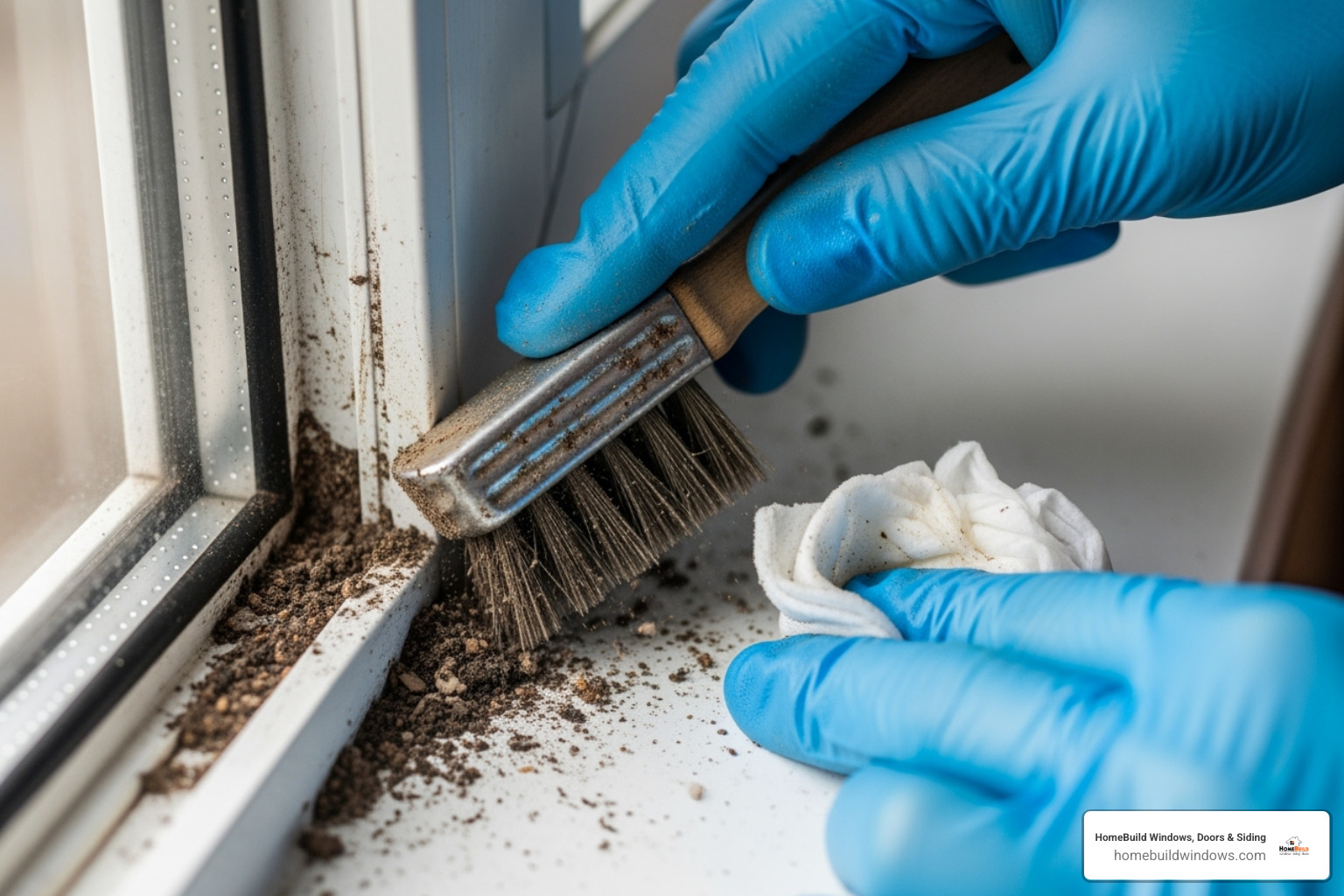
- Clean the tracks: Debris is a common culprit. Use a brush, vacuum, or plastic putty knife to clear the channels, then wipe them clean.
- Lubricate hardware: Apply silicone-based lubricant to hinges and the crank mechanism to reduce friction.
- Tighten loose hinge screws: Loose screws can cause the sash to sag and bind. Check and gently tighten all hinge screws.
- Adjust the crank mechanism: Minor adjustments to the operator’s arm or gears can fix alignment. Consult your owner’s manual for specific instructions.
- Check for frame warping: Extreme temperature changes in Chicago can sometimes warp frames. If you suspect this is the issue after trying other fixes, it may require professional help.
Sealing Leaks and Drafts
Drafts and leaks waste energy and reduce comfort. Addressing them is a key part of awning window maintenance that provides an immediate return on investment.
- Find the source: On a windy day, use a lit candle around the window frame to find air leaks (a flickering flame indicates a draft). For water leaks, have someone watch inside while you gently spray the window with a hose.
- Replace weatherstripping: Worn-out weatherstripping is a common cause of leaks. Replacing it creates a tight seal.
- Caulk gaps: Seal gaps between the window frame and the house structure. Clean the area, apply a bead of caulk, and smooth it for a clean finish.
- Check sash alignment: A misaligned sash won’t seal properly. This often relates to hinge or operator adjustments.
Sealing leaks provides immediate comfort, lowers energy bills, and prevents potential water damage.
Advanced Awning Window Maintenance: Replacing Parts
When cleaning and adjustments aren’t enough, parts may need replacement. This is more advanced awning window maintenance, but some tasks are manageable for a DIYer.
- Replacing the crank operator: If the crank is stripped or worn, it needs replacement. Disconnect the operator arms from the sash, unscrew the old unit from the frame, and install the new one in reverse order.
- Hinge replacement: This is a two-person job. Support the sash, release the hinges, and carefully remove it. Replace the old hinges with new ones, using the original screw holes if possible. Be cautious, as sashes are heavy.
- Full sash replacement: Necessary for broken glass or severe frame rot. This is also a two-person job requiring disconnecting all hardware and installing the new sash.
Safety is paramount. Wear safety glasses and gloves. Call a professional for work at heights or with large windows. Finding the right replacement parts can be difficult, so note your window’s brand and model. Know your limits; complex repairs or significant frame damage are best left to experts. For more on when to replace, visit our page on Window Replacement and Installation.
When to Repair, Replace, or Call a Professional
Sometimes, basic awning window maintenance isn’t enough. When problems persist after cleaning and adjustments, you must decide whether to repair, replace, or call a professional. Making the right choice between a simple fix and addressing an end-of-life window can save you money and frustration.
DIY Repair vs. Professional Help
While many awning window maintenance tasks are suitable for DIY, it’s important to know when to call a professional.
Good for DIY Repair:
- Simple tasks like cleaning tracks, replacing weatherstripping, lubricating hinges, and replacing a crank handle.
- Requires basic tools and is generally low-risk.
Call a Professional For:
- Complex issues like severe frame damage, broken glass, or mechanism failures.
- Situations requiring specialized tools or involving safety risks (e.g., working at heights).
- Repairs where preserving a warranty is important, as DIY work can void it.
- When you want the job done quickly and efficiently.
Call an expert for persistent problems, extensive rot or warping, or any repair you’re not comfortable performing.
Is It Time for a Full Window Replacement?
Even with excellent awning window maintenance, replacement eventually becomes more practical than repair. Here are signs it’s time for a new window:
- Persistent leaks: If drafts or water stains continue despite repeated repairs, the window’s structure is likely compromised.
- Significant frame damage: Extensive rot in wood frames or severe cracking and warping in vinyl/fiberglass frames means structural integrity is lost.
- Poor energy performance: Rising energy bills, constant drafts, or condensation between glass panes indicate your windows are no longer efficient.
- Multiple broken parts: If you’re constantly repairing the same window, the cumulative cost can exceed the price of a new one.
While repairs are cheaper upfront, a full replacement can offer long-term savings on energy bills and increase home value. Learn more by understanding the Window Replacement Cost.
Upgrading for Better Performance
If you decide to replace your windows, consider upgrading for better performance. Modern awning windows offer significant improvements over older models.
- Energy Efficiency: Look for features like double or triple-pane glass, Low-E coatings to reflect heat, and argon gas fills for superior insulation. For local homeowners, investing in Energy Efficient Windows Chicago is a smart choice that improves comfort and saves money.
- Hardware and Security: Modern hardware offers smoother, more durable operation. Advanced locking mechanisms provide improved security.
- Sound Insulation: Multi-pane windows with gas fills also significantly reduce outside noise, creating a quieter home.
Upgrading is an investment in your home’s long-term comfort, efficiency, and value.
Frequently Asked Questions about Awning Window Care
Here are answers to the most common awning window maintenance questions we receive from Chicago homeowners.
How often should I perform maintenance on my awning windows?
Regular awning window maintenance prevents major problems. We recommend this schedule:
- Monthly: Perform a quick cleaning of the glass, frames, and tracks to remove accumulated debris.
- Seasonally (Twice a year): In spring and fall, do a deep clean and lubricate all moving parts with a silicone-based spray.
- Annually: Conduct a full inspection. Check weatherstripping, test hardware, and look for any signs of wear or damage.
In a climate like Chicago’s, more frequent checks may be necessary due to harsh weather.
What is the best lubricant for awning window hardware?
Always use a silicone-based spray for awning window hardware. Unlike oil-based lubricants, which attract dirt and create a gummy paste that can cause jamming, silicone provides clean, long-lasting lubrication.
Apply a light coat to your hinges, crank mechanisms, and locking parts for months of smooth operation. A little goes a long way.
Can I clean the outside of a second-story awning window from inside?
Yes, you can clean the outside of second-story awning windows from inside your home. This is a key design feature that eliminates the need for ladders or professional cleaning services.
When you crank the window fully open, the top-hinged, outward-swinging design provides enough space to safely reach the exterior pane. This makes awning window maintenance much safer and more manageable, especially for multi-story homes. Ensure the window is stable before cleaning.
Conclusion
Regular awning window maintenance, broken down into simple tasks, is the key to long-lasting, efficient windows. Consistent care saves you money by preventing costly emergency repairs, extends the life of your windows, and keeps your home comfortable by eliminating drafts.
Many maintenance tasks, from cleaning to lubrication, are perfect for DIY. However, it’s important to recognize when a job requires professional expertise. There’s no shame in calling for help with complex issues.
For bigger challenges like difficult repairs, major upgrades, or full replacements, HomeBuild Windows is here to assist Chicago-area homeowners. We understand the demands of our local climate and provide solutions that last.
Our team offers top-quality products, expert installation, and competitive pricing, all backed by exceptional customer service. We believe your home deserves the best.
If you’re ready to upgrade or need professional help with your awning windows, Learn more about our Awning Windows Replacement services. Let us help you keep your home comfortable, efficient, and beautiful.