



What You Need to Know About Sliding Screen Door Assembly
Sliding screen door assembly is a straightforward DIY project that most homeowners can complete in about an hour with basic tools.
Here’s a quick overview of the process:
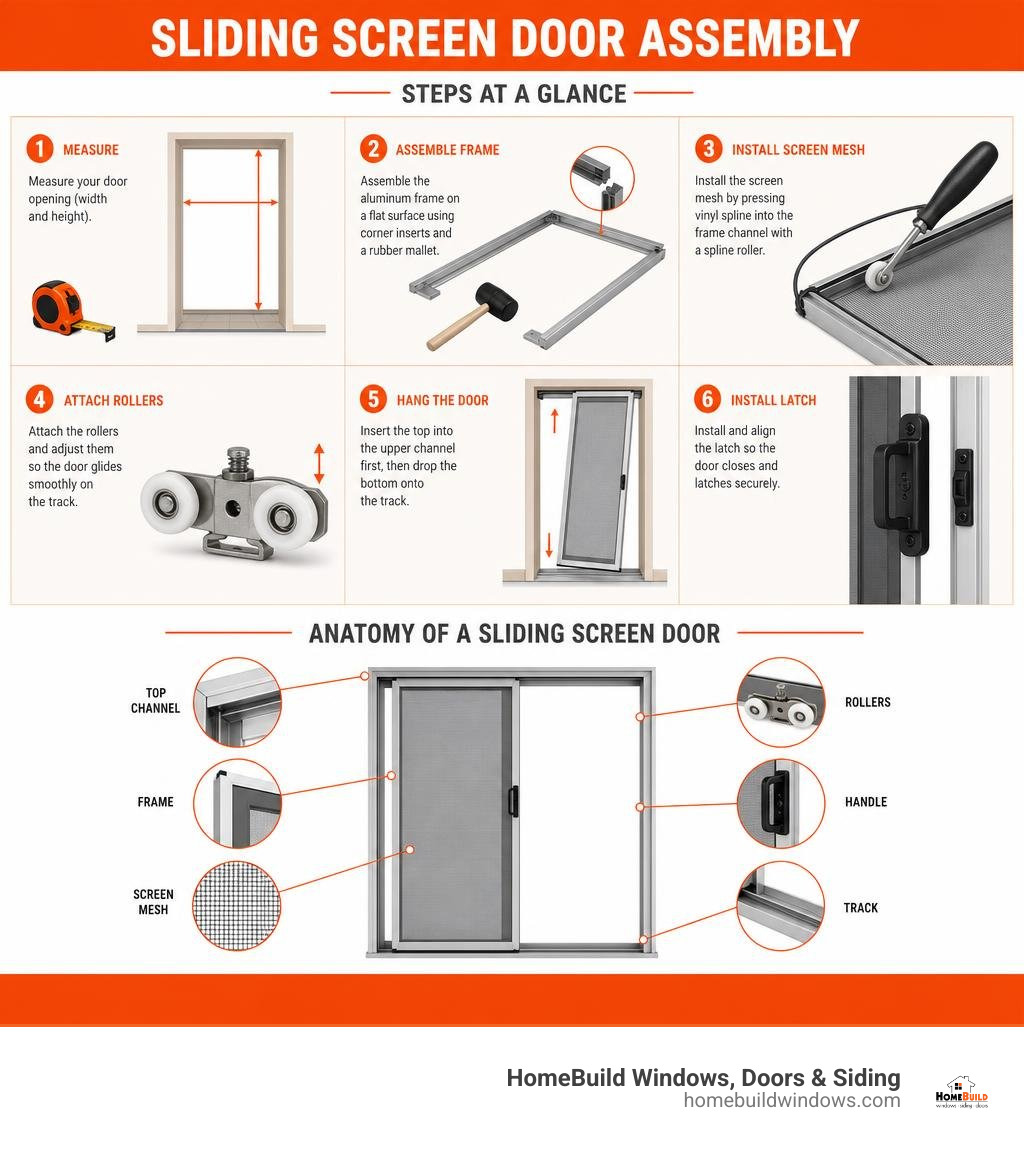
- Measure your door opening (width and height)
- Assemble the aluminum frame on a flat surface using corner inserts and a rubber mallet
- Install the screen mesh by pressing vinyl spline into the frame channel with a spline roller
- Attach the rollers and adjust them so the door glides smoothly on the track
- Hang the door by inserting the top into the upper channel first, then dropping the bottom onto the track
- Install and align the latch so the door closes and latches securely
A few things to know before you start:
- Most adjustable sliding screen doors fit openings between 78 and 81 inches tall
- Over 95% of U.S. patio door frames with roller tracks are compatible with standard adjustable-fit screen doors
- Upgrade options like PetScreen mesh are 7x stronger than standard fiberglass — worth considering if you have pets
I’m Steve Mlynek, CEO and founder of HomeBuild Windows, Doors & Siding, and with over 20 years of hands-on experience in door replacement and installation across Chicago and the surrounding suburbs, I’ve seen how a properly executed sliding screen door assembly makes a real difference in home comfort and function. Whether you’re tackling this yourself or considering a professional upgrade, this guide walks you through every step clearly.
Sliding screen door assembly terms to learn:
Essential Tools and Sizing for Sliding Screen Door Assembly
Before laying out your frame pieces or unrolling any mesh, getting the initial prep work right is key. Proper preparation ensures that your door operates seamlessly without binding, dragging, or popping off its track. Let’s start with how to measure your opening correctly and gather the right tools for the job.
Accurate Sizing for Your Sliding Screen Door Assembly
The most critical step in any sliding screen door assembly occurs before you even open a DIY kit: taking highly accurate measurements. If your measurements are off by even a fraction of an inch, the door may either fail to fit into the frame or slide out of its tracks constantly.
To measure your entryway accurately, grab a reliable measuring tape and follow these steps:
- Measure the Width: Measure from the inside of the door jamb on one side to the center of the locking jamb on the other. Do this at the top, middle, and bottom of the frame, and use the narrowest measurement.
- Measure the Height: Measure from the top of the bottom track (where the screen rollers will sit) straight up to the inside of the top U-channel.
- Account for Adjustments: Many modern knock-down kits feature adjustable top and bottom expanders that allow for height variations. However, if you are ordering a custom-sized door, you will need to input dimensions to the nearest 1/16 inch to achieve a perfect, rattle-free fit.
If you are using a specialized kit, such as the Adjustable Sliding Screen Door DIY Kit, you will have some built-in flexibility. These systems use proprietary fit technology that can expand or contract to accommodate height ranges between 78 and 81 inches. For older homes in historic Chicago neighborhoods or custom architectural layouts in Barrington, IL, custom-cut frames are often necessary to match unique structural settling. For more complex projects, reviewing our guide on Sliding Patio Door Installation can help clarify how screen tracks integrate with your overall patio door frame.
Required Tools and Materials
Having the right tools on hand will keep your assembly process moving quickly and prevent damage to the delicate screen materials. You do not need heavy-duty machinery for this project; a few standard household tools will do.
Gather the following items before beginning:
- Phillips screwdriver (for adjusting roller screws and mounting the latch)
- Spline roller tool (essential for pushing the vinyl spline into the frame channel)
- Utility knife (for trimming away excess screen mesh)
- Rubber mallet (to gently tap the frame corners together without denting the aluminum)
- Safety glasses (to protect your eyes when cutting spline or handling spring-loaded parts)
Additionally, you will need to choose the right screen mesh for your household’s specific needs. While standard fiberglass mesh is highly popular and provides excellent visibility, upgraded options are highly recommended depending on your lifestyle.
| Mesh Type | Durability | Best For | Key Features |
|---|---|---|---|
| Standard Fiberglass | Moderate | Standard homes, maximum airflow | Cost-effective, high visibility, flexible |
| PetScreen Mesh | Extremely High (7x stronger) | Homes with dogs or cats | Tear- and puncture-resistant, heavy-duty |
| Solar Screen Mesh | High | Sun-facing patios, hot summers | Blocks UV rays, reduces heat transfer |
| Tiny Insect (No-See-Um) | High | Wooded areas, lakeside homes | Extra-tight weave to block tiny pests |
Step-by-Step Guide to Sliding Screen Door Assembly and Mesh Installation
Now that you have gathered your tools and selected your materials, it is time to build. We recommend setting up your workspace on a large, clean, flat surface. A large workbench, a clean garage floor, or a sheet of plywood placed on sawhorses works beautifully to prevent scratches on your new extruded aluminum frame.
Frame Assembly and Corner Alignment
Most high-quality unassembled screen door kits utilize heavy-duty extruded aluminum frame rails. Extruded aluminum is highly rigid and resists bending far better than cheap roll-formed alternatives, which is crucial for surviving windy Chicagoland seasons.
To assemble the frame:
- Lay Out the Pieces: Arrange your top, bottom, and side frame rails on your flat work surface. Ensure the channels that hold the spline are all facing upward and aligned toward the inside of the perimeter.
- Insert the Corners: Slide the heavy-duty metal or composite corner inserts into the ends of the frame rails. These corners are designed to hold the frame square and prevent twisting.
- Secure with a Mallet: Use your rubber mallet to gently tap the frame rails over the corner inserts until the mitered corners meet flush. Avoid using a metal hammer, as this will scratch the powder-coat finish and dent the aluminum.
- Check for Squareness: Measure diagonally from the top-left corner to the bottom-right corner, then from the top-right to the bottom-left. If the two diagonal measurements are identical, your frame is perfectly square. This step is vital to ensure the door slides smoothly without binding. For further technical details on frame mechanics, you can consult resources like the Vinyl Sliding Glass Door Assembly Instructions.
Installing the Screen Mesh and Spline
With your frame securely squared, you are ready to roll in the screen mesh. This step requires a patient hand to avoid creating wrinkles or bowing the frame inward.
- Drape the Mesh: Unroll your chosen screen mesh over the assembled frame. Allow the mesh to overhang the outer edges of the frame by at least one to two inches on all sides.
- Secure the First Side: Start at one corner. Using the concave wheel of your spline roller, gently press the vinyl spline and the mesh down into the frame’s spline channel. Work your way slowly down the length of the rail.
- Maintain Gentle Tension: As you roll the spline into the opposite and adjacent channels, use your free hand to pull the mesh flat and taut. Do not pull too tightly, or you will bow the aluminum side rails inward. The goal is a flat, drum-tight surface without wrinkles.
- Roll the Corners: Use the pointed tip or the smaller edge of your spline tool to push the spline firmly into the mitered corners.
- Trim the Excess: Once the spline is fully seated around all four sides, use a sharp utility knife to trim away the excess mesh. Angle the blade outward, away from the screen face, and cut along the outer edge of the spline groove. Be careful not to slice your newly installed screen!
How to Install and Adjust Rollers and Latch Hardware
A screen door is only as good as its moving parts. Installing and adjusting the rollers and latch hardware correctly ensures the door glides effortlessly and locks securely when closed.
Roller Installation and Height Adjustments
Most modern screen doors utilize composite or steel rollers mounted on spring-loaded assemblies at the top and bottom corners of the door. Composite rollers are often preferred because they glide quietly, resist rust, and withstand seasonal moisture changes in the Midwest.
- Insert the Rollers: If your kit did not come with pre-installed rollers, slide the roller assemblies into the designated slots at the top and bottom corners of the frame rails. Secure them with the provided adjustment screws.
- Hang the Door: Lift the door and insert the top rollers into the upper head channel of your patio door frame. Push upward to compress the spring-loaded rollers, then swing the bottom of the screen door toward the bottom sill track.
- Guide the Bottom Rollers: Use a flat-head screwdriver or a putty knife to gently lift the bottom rollers over the edge of the sill track until they snap securely onto the metal rail.
- Adjust the Height: Locate the adjustment set screws on the edges of the screen door. Turning these screws clockwise will raise the door, while turning them counter-clockwise will lower it. Adjust all four corners so that the door sits level, sits slightly higher than 1/8 inch above the bottom track, and does not rub against the outer frame.
Setting Up the Latch and Strike Plate
An aligned latch keeps your home secure against pests and prevents windy days from blowing the screen door open.
- Orient the Handle: Ensure the operating handle is placed on the inside of the home, matching the side of your primary sliding glass door handle.
- Mark the Strike Plate Position: Slide the screen door almost closed. Mark the location where the latch hook meets the vertical door jamb.
- Pre-Drill and Mount: Pre-drill small pilot holes (typically 1/16 inch or 7/64 inch) into the metal door jamb to prevent the screws from binding or snapping. Secure the strike plate (or keeper) using the provided screws.
- Test the Toggle: Test the latch mechanism from both the inside and outside. Adjust the strike plate vertically or horizontally until the latch hook engages smoothly with a clean click.
Troubleshooting and Maintenance for Smooth Operation
Even a perfectly assembled sliding screen door requires occasional maintenance to keep it performing like new. Dust, pet hair, and seasonal grit can accumulate in the tracks, causing friction and alignment issues.
Fixing Common Sliding Screen Door Assembly Issues
If your door is sticky, heavy, or constantly derailing, try these simple troubleshooting fixes:
- Door Binding or Dragging: This is usually caused by dirt buildup or improperly adjusted rollers. Vacuum the bottom track thoroughly using a crevice tool. Avoid using heavy oils or grease on the tracks, as they attract dirt and create a sticky paste. Instead, apply a dry silicone lubricant spray to the rollers and track.
- Jumping the Tracks: If the door regularly pops off the track, the roller tension is likely too loose. Tighten the adjustment screws clockwise to lift the door and increase spring tension against the tracks.
- Sagging or Out-of-Square Openings: Older homes often experience settling, which can cause the top or bottom door tracks to sag. If your screen door binds in the middle of the opening but slides easily at the sides, you may need to shim the track or seek professional assistance to square the main door frame.
Seasonal Maintenance for Midwest Climates
Living in Chicagoland means preparing your home for extreme weather shifts, from hot, humid summers to freezing, snowy winters. Your sliding screen door is your first line of defense against seasonal pests, and keeping it in top shape requires a small amount of care.
- Check the Weatherstripping: Ensure the vinyl bug seal or woolpile weatherstripping along the back edge of the screen door is intact. If the bug seal is too wide and causes drag, you can easily trim it down along its tear-off grooves.
- Keep Tracks Clear: In the autumn, falling leaves and windblown debris can clog the bottom track. Clean the tracks regularly with a stiff utility brush and a vacuum.
- Winter Storage: While high-quality aluminum frames and PetScreen mesh are built to withstand freezing temperatures, removing your screen door during harsh winters and storing it in a garage or basement can extend its lifespan and prevent snow buildup from warping the frame.
Frequently Asked Questions About Sliding Screen Doors
What is the difference between standard fiberglass and PetScreen mesh?
Standard fiberglass mesh is highly affordable and offers great visibility, but it can tear easily under pressure from pet claws or children. PetScreen mesh is made from heavy-duty, vinyl-coated polyester. It is seven times stronger than standard fiberglass, making it virtually puncture-proof and highly resistant to scratching, dog clawing, and active households.
How do I adjust the screen door if it keeps jumping off the track?
If your door jumps off the track, it is usually because the rollers are adjusted too low, leaving too much play between the top of the door and the head channel. Use a Phillips screwdriver to turn the adjustment screws clockwise. This will push the rollers down, lifting the frame and securing it firmly within the upper and lower tracks.
Can I assemble a custom sliding screen door myself?
Yes! Unassembled knock-down kits make it very easy to build a custom-sized screen door at home in about an hour. However, if your patio door frame is warped, out of square, or requires specialized architectural integration, professional installation is highly recommended to ensure a perfect fit and long-term durability. For expert support, check out our Door Installation and Replacement Chicago services.
Conclusion
A smooth-sliding screen door is a simple upgrade that dramatically improves your home’s comfort, ventilation, and curb appeal. By following this guide, you can successfully tackle your sliding screen door assembly and enjoy fresh breeze throughout the warmer months.
However, if your existing patio door system is drafty, difficult to open, or showing signs of age, a simple screen replacement might only be a temporary fix. At HomeBuild Windows, Doors & Siding, we specialize in providing premium, energy-efficient exterior solutions tailored to the unique climate of Chicago and the surrounding northwest suburbs.
As an Elite Platinum Pella® Certified Contractor and an Andersen Certified Contractor, we bring over 20 years of trusted, owner-supervised experience to every project. Whether you are in Arlington Heights, Barrington, or Schaumburg, we work closely with you to deliver flawless workmanship backed by outstanding Google reviews.
Schedule a professional consultation for window and door replacement in Chicago with our team today, and let us help you elevate your home’s comfort and style!


