


Services

Roof Insurance Claim Assistance in Chicagoland
We Handle the Process, You Get the Roof


4.9/5
(180+ Reviews)
Angi Super Service Award
2025
Nextdoor Faves
2025
Owens Corning
Certified Installer
Illinois homeowners file tens of thousands of roof damage claims every year.
Most leave money on the table – not because their damage is not covered, but because they navigate the process alone. They miss supplement items the adjuster excluded. They do not know their coverage type is ACV instead of RCV. They accept the first scope without knowing it is negotiable. Or they receive a denial and assume the decision is final.
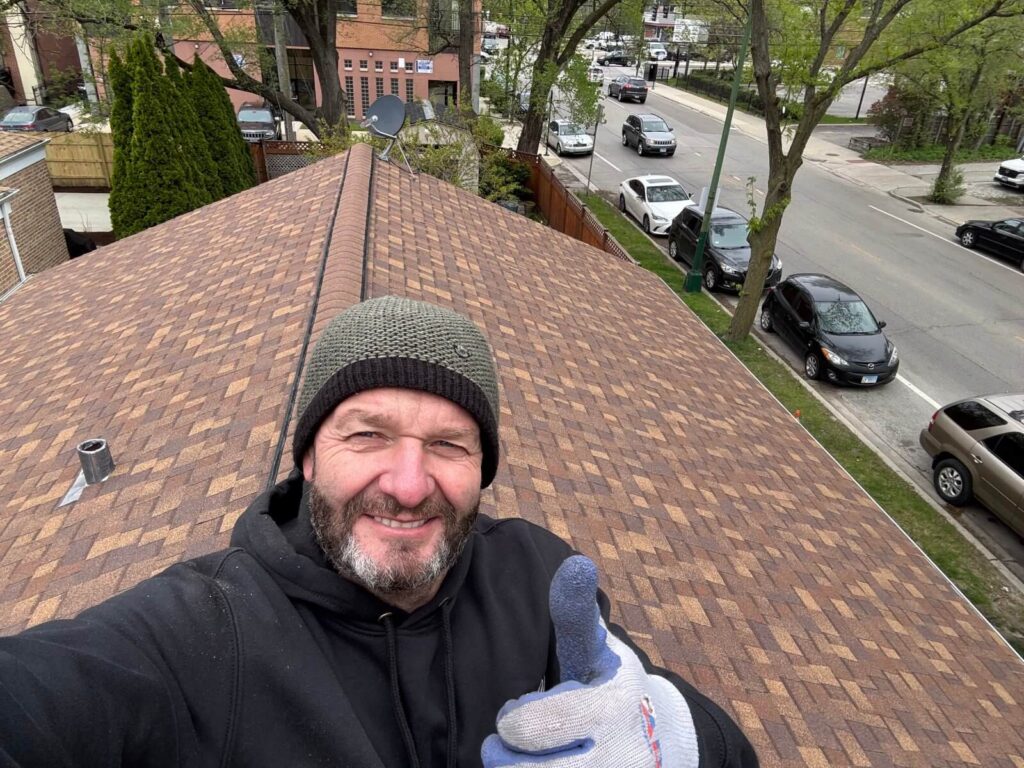
HomeBuild Roofing handles the complete insurance claim process for storm and hail damage across Chicago's Northwest and West suburbs.
That means the free inspection and photo documentation, the written claim-ready report, the adjuster accompaniment, the supplement review, and the appeal support if a claim is denied or underpaid. And when the claim is approved, the permanent repair using Owens Corning roofing systems under owner supervision.
What Is the Difference Between ACV and RCV Roof Insurance Coverage?
Two coverage types determine how much your insurer pays for a storm-damaged roof. Knowing which one you carry before you file changes your expectations and your strategy.

Actual Cash Value
Pays the depreciated value of your roof at claim time. A 15-year-old roof receives significantly less than current replacement cost. Common in older policies and increasingly applied to roofs past a certain age.

Replacement Cost Value
Pays the full cost to replace the roof with like-kind materials, minus your deductible – regardless of roof age. Produces materially better outcomes for homeowners with roofs over 10 years old.
To confirm your coverage type: check the declarations page of your homeowners policy, or call your carrier and ask directly.
The Difference Between ACV and RCV Coverage Determines How Much Your Insurer Pays
For homeowners across Chicagoland, this is the single most important policy question to answer before filing a claim – and most homeowners do not know the answer until they are already in the process.

Actual Cash Value (ACV)
Ppays what your roof is worth today, after depreciation. If your roof is 15 years old and depreciated at a standard rate, your insurer may pay 40 to 60 percent of replacement cost – and you cover the rest out of pocket, on top of your deductible. For a full roof replacement on a Chicagoland home, that gap is significant.
Replacement Cost Value (RCV)
Pays the full cost to replace the roof with like-kind materials at current prices, minus your deductible. Age and depreciation do not reduce the payout. For a homeowner with a 15-year-old roof, the difference between ACV and RCV on the same claim can be thousands of dollars.
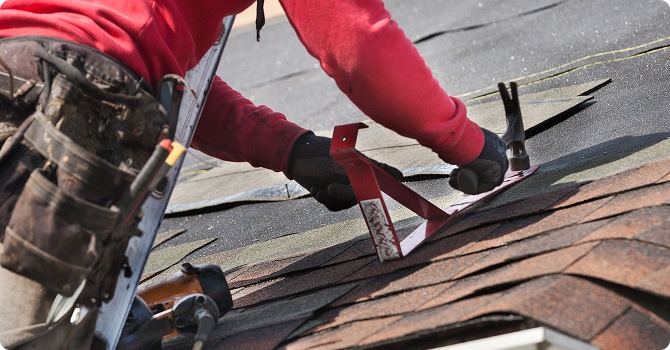
Illinois insurers have increasingly moved toward ACV coverage for roofs – particularly older roofs – through policy endorsements that homeowners do not always notice at renewal. A policy that was RCV when the home was purchased may be ACV today.
1
How to find out which coverage you carry:
Look at the declarations page of your homeowners policy for the term “ACV” or “Replacement Cost.” If it is not clear, call your carrier and ask specifically: “Is my roof covered at actual cash value or replacement cost value?” Ask before a storm, not after.
2
What HomeBuild does with this information:
When we review your policy before or during the claim process, we identify your coverage type and build the claim documentation accordingly. For ACV policies, we help homeowners understand the depreciation holdback and the steps to recover it once repairs are completed. For RCV policies, we ensure the full replacement cost scope is captured in the approved claim.
A Roofing Contractor Handles Most Chicagoland Claims - A Public Adjuster Is for Complex Disputes
This question comes up consistently from homeowners in Schaumburg, Hoffman Estates, and across the Northwest suburbs who want to understand their options before deciding how to proceed.

What a roofing contractor does in the claim process:
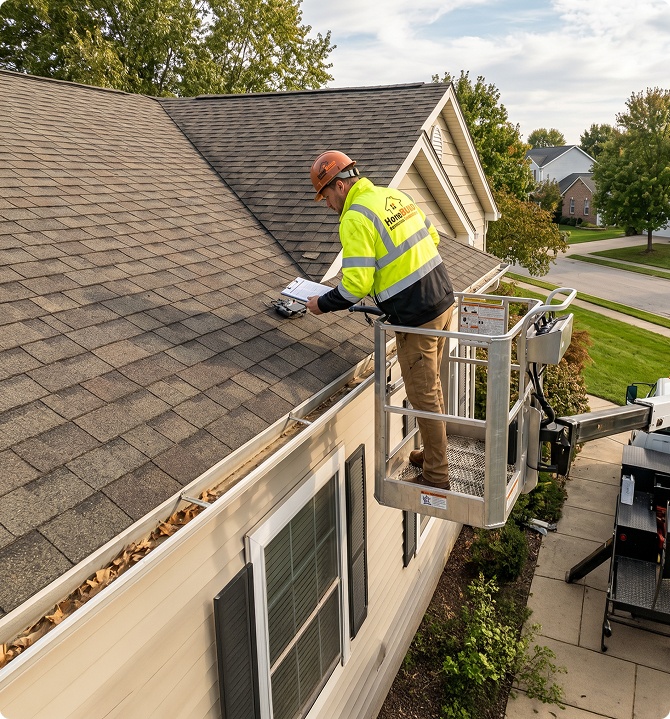
A licensed and experienced roofing contractor handles the full technical side of a storm damage claim. That includes the on-site inspection and damage documentation, the written scope of work formatted for insurance submission, the adjuster accompaniment to ensure all damage is represented, supplement filing to recover items missed in the initial adjuster report, and appeal documentation if a claim is denied. All of this falls within the standard scope of contractor services – no additional licensing is required, and no percentage of your claim is taken as a fee.
HomeBuild Roofing is built on a different promise: every project is owner-supervised, every crew is fully insured, and every roof is installed to manufacturer specifications, not shortcuts
What a public adjuster does:
A public adjuster is a licensed professional in Illinois authorized to negotiate insurance claims directly on behalf of a homeowner.
They review your policy, assess the damage, and negotiate with the insurer to maximize the approved settlement. Public adjusters typically charge 10 to 15 percent of the total claim payout as their fee.


When a public adjuster makes sense:
Most Chicagoland storm damage claims handled from the first inspection by an experienced roofing contractor do not require a public adjuster. The documentation, adjuster accompaniment, and supplement process handles the vast majority of underpaid or disputed claims without additional fees.
A public adjuster becomes more valuable when a claim has been formally denied after an appeal, when the scope dispute is severe and ongoing, or when the insurer is actively contesting causation with legal-level scrutiny. In those situations, a licensed public adjuster has tools available that a contractor does not – including direct negotiation authority and the ability to invoke appraisal clauses in the policy.
Our honest recommendation: Start with a contractor-led process. If the claim reaches a point where a public adjuster would materially change the outcome, we will tell you directly and can refer you to a licensed Illinois public adjuster we trust. We do not earn anything from that referral.
A Supplement Claim Recovers Items the Adjuster Missed or Undervalued
For homeowners in Palatine, Arlington Heights, and across Chicagoland, the adjuster’s first report is often not the final word on the approved scope. Supplements – additional claim submissions that add missed or undervalued items to an approved scope – are a normal and legitimate part of the insurance repair process.
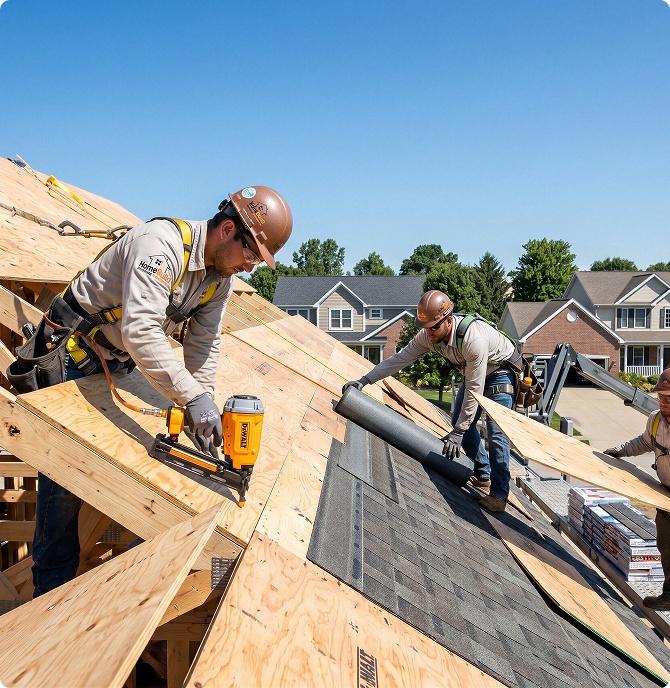
What adjusters commonly miss on Chicagoland roofs:

Code upgrade requirements.
Illinois building codes have changed since many Northwest suburban homes were built in the 1980s and 1990s. A full roof replacement on a pre-2000 home may require upgraded ice and water shield coverage beyond the eaves, updated drip edge installation along all rakes, and ventilation improvements to meet current energy and building codes. These upgrades are frequently covered under Ordinance and Law provisions in homeowners policies – but adjusters do not always include them in initial estimates. A HomeBuild scope includes every required code upgrade, documented with specific Illinois building code references.
Full system components.
An adjuster may approve replacement of the primary shingle surface and miss the starter strip, the hip and ridge caps, the ventilation components, or the underlayment – all of which are part of a complete roofing system replacement. Each excluded line item reduces the approved payout.
Secondary damage to related components.
Hail and wind damage to gutters, downspouts, vent caps, and flashing is often documented during our inspection and excluded from the adjuster’s initial scope. These items are part of the same storm event and are frequently recoverable through a supplement.
How we file supplements:
After receiving the adjuster’s report, we compare the approved scope line-by-line against our inspection documentation. Every item in our report that is absent or undervalued in the adjuster’s scope becomes a supplement item. We prepare the supplement documentation — including photos, scope narrative, code references, and pricing support — and submit it to your carrier before any repair work begins.
Supplements are a standard industry practice. A carrier that receives a well-documented supplement has a clear record of what was missed and why it should be included. Most are resolved without escalation.
A Denied Roof Claim in Illinois Can Be Appealed - and Often Successfully
A denial letter from your insurance carrier is not the end of the process. In Illinois, homeowners have clear rights to appeal a denied or underpaid claim, and the most common denial reasons are all contestable with the right documentation.
The three most common denial reasons and how each is appealed:
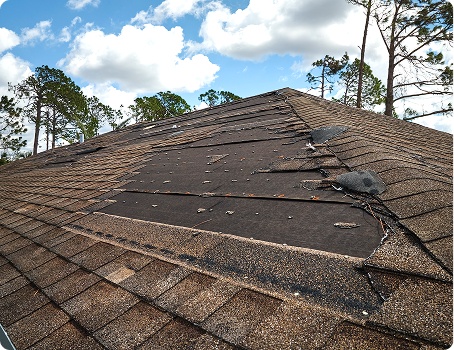
Pre-existing damage.
The insurer argues the damage existed before the storm. The appeal requires professional inspection documentation with date-stamped photos taken promptly after the specific storm event, National Weather Service confirmation of hail size and wind speed on the storm date, and a written assessment clearly separating storm-caused damage from any prior conditions. When this documentation is prepared from the beginning, the pre-existing argument has much less to stand on.
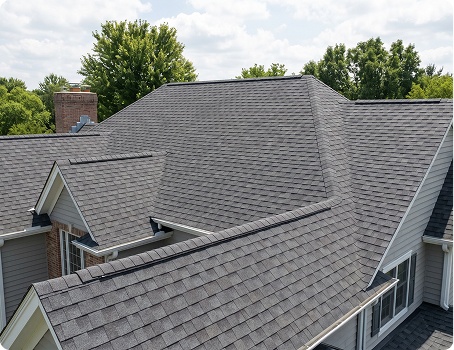
Cosmetic-only ruling.
The insurer accepts that damage occurred but classifies it as non-functional. The appeal requires documentation showing that the impact damage has compromised the shingle’s protective granule layer, accelerating UV degradation and reducing the roof’s remaining functional service life. Impact damage that shortens a 25-year shingle to 10 years of remaining service is a functional loss, not a cosmetic one.
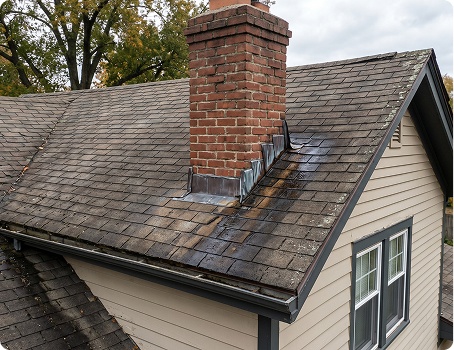
Wear-and-tear classification.
The insurer attributes damage to age rather than the storm event. The appeal combines NWS storm data with granule loss assessment, impact pattern analysis, and a contractor’s written statement that the damage pattern is consistent with the confirmed storm parameters rather than gradual weathering.
Three paths to appeal in Illinois:
1
Request the denial reason in writing and resubmit with additional documentation addressing the specific objection. This resolves most disputes.
2
Request a second independent adjuster inspection. You have the right under most Illinois policies to request a reinspection when you dispute the initial findings.
HomeBuild Roofing supports homeowners across Wheaton, Elmhurst, and the broader Chicagoland area through all three paths. We prepare the additional documentation for first-round appeals, are present for re-inspection visits, and can advise on when the IDOI process is the appropriate next step.
Filing a Storm Damage Claim Rarely Raises Your Insurance Rate in Illinois
This concern keeps a significant number of Chicagoland homeowners from filing claims they are entitled to – and in most cases, it is based on a misunderstanding of how Illinois insurers classify storm damage.
Storm damage is classified as a weather peril - an Act of God in insurance language. A single storm damage claim is treated differently from claims that suggest homeowner negligence or recurring maintenance failures.
Most Illinois carriers do not apply a rate surcharge to a single weather-event claim from a policyholder with a clean claim history.
The more common scenario is the opposite risk: a homeowner in Wheaton, Elmhurst, or Oak Brook declines to file because they are concerned about their premium. The insurer does not raise their rate. But the homeowner absorbs the full cost of a roof replacement that their policy would have covered – often $15,000 to $25,000 – out of pocket.
What actually influences premium increases:
- Multiple claims within a short period. Claims related to maintenance failures or recurring neglect. Claims in geographic areas where the insurer is re-underwriting storm risk across the board – which is an industry-wide trend in some Illinois markets that applies regardless of individual claim history.
- A single storm claim after a documented severe weather event is almost never the trigger.
Our recommendation: Review your policy, understand your coverage type, and do not make the decision about filing based on rate fear alone. Call us for a free inspection – if the damage is there, we will document it. If it is not worth a claim, we will tell you that too.
For damage that qualifies as an insurance claim, we handle the documentation side completely. Your job is to call us.
Our Full Roof Insurance Claim Process - Step by Step
HomeBuild Roofing manages every stage of the claim from the first inspection through the final repair. Here is how the process works in full.
1
Free On-Site Inspection and Documentation
We inspect the full roof system and all related components – every slope, all metal surfaces, all flashing and ventilation points. Every damage finding is photographed, measured, and documented. Date-stamped from day one.
2
Policy Review
We review your coverage type (ACV or RCV), your deductible, and your Ordinance and Law provisions before the claim is filed. You know exactly what your policy covers before the adjuster arrives.
3
Claim Filing Support
We walk you through how to file the claim with your carrier using our documentation package – what to say, what to submit, and what to expect in the response timeline.
4
Adjuster Accompaniment
A HomeBuild specialist is on-site for the adjuster visit. We walk the adjuster through our findings, reference our documentation, and ensure the approved scope reflects the full system damage – including code upgrade requirements adjusters commonly exclude from initial estimates.
5
Scope Review and Supplement Filing
After the adjuster report, we compare the approved scope against our full inspection documentation line by line. Every missing or undervalued item becomes a supplement submission, prepared with supporting documentation and filed before any repair begins.
6
Appeal Support (if needed)
If the claim is denied or the supplement is disputed, we prepare the documentation for a formal appeal – including additional inspection findings, NWS storm data, and written scope narrative addressing the specific denial reason.
7
Permanent Repair Under Owner Supervision
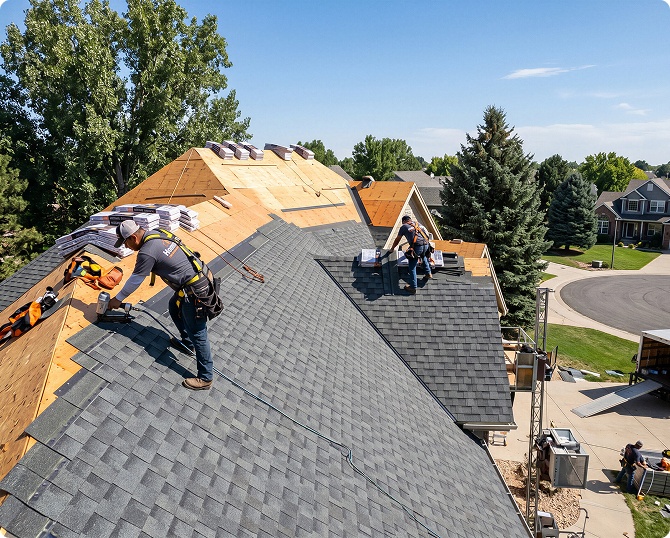
Once the scope is approved and finalized, we schedule and complete the repair or replacement using Owens Corning roofing systems, to manufacturer specifications, under direct owner supervision. The same standard on every project regardless of whether it is cash pay or insurance funded.
Roof Insurance Claim Assistance Across Chicago's Northwest and West Suburbs
HomeBuild Roofing provides full insurance claim assistance across Chicago’s Northwest and West suburban communities – the markets we know best and where we have been managing storm damage claims for more than 20 years.
Northwest Suburbs
West Suburbs
If your town is not listed, call us – we may still be able to serve your neighborhood. During widespread storm events affecting multiple communities at once, response windows may be extended. We will always tell you honestly when we can get there.
Frequently Asked Questions About Roof Insurance Claim Assistance in Chicagoland
What is the difference between ACV and RCV roof insurance coverage?
ACV (Actual Cash Value) pays the depreciated value of your roof at claim time – a 15-year-old roof may receive only 40-60% of replacement cost. RCV (Replacement Cost Value) pays the full cost to replace the roof at current prices, minus your deductible, regardless of age. Check your declarations page or call your carrier to confirm which coverage you carry.
Do I need a public adjuster or can a roofing contractor handle my claim?
A roofing contractor handles most Chicagoland storm damage claims — inspection, documentation, adjuster accompaniment, supplement filing, and appeal support. A public adjuster, licensed in Illinois to negotiate claims on your behalf, becomes more valuable when a claim is formally denied after an appeal or when the scope dispute is severe and ongoing. Most claims handled from day one by an experienced contractor do not reach that stage.
What is a supplement claim and when should I file one?
A supplement is an additional claim submission that adds items the adjuster missed or undervalued in the initial approved scope. Common supplement items include code-required upgrades, full system components like starter strips and ridge caps, and hail damage to gutters and vents. HomeBuild files supplements as a standard part of every insurance claim we handle.
Can I appeal a denied roof insurance claim in Illinois?
Yes. Illinois homeowners have the right to appeal denied claims. The three main paths are: resubmitting with additional documentation addressing the specific denial reason, requesting a second independent adjuster inspection, or filing a complaint with the Illinois Department of Insurance for mediation. HomeBuild supports all three paths.
Will filing a storm damage claim raise my insurance premium?
In most cases, no. Storm damage is classified as a weather peril in Illinois – a single claim from a policyholder with a clean history rarely triggers a rate surcharge. The more common risk is the opposite: homeowners who decline to file absorb $15,000 to $25,000 in replacement costs their policy would have covered.
How long does the claim process take from inspection to repair?
Timeline varies by carrier and claim complexity. Most straightforward claims move from inspection to approved scope in 2 to 4 weeks. Claims requiring supplements or appeals take longer – typically 4 to 8 weeks from first inspection to approved final scope. Once approved, most repairs are scheduled within 1 to 2 weeks.
Your Policy May Cover More Than You Think. Find Out With a Free Inspection.
Full claim management from the first inspection through adjuster accompaniment, supplement filing, and appeal support – at no additional cost beyond the repair itself. Two decades of Chicagoland claim experience. Owner-supervised every project.