


Services

Roof Inspections in Chicagoland
Free, No Obligation, Written Report


4.9/5
(180+ Reviews)
Angi Super Service Award
2025
Nextdoor Faves
2025
Owens Corning
Certified Installer
In Chicagoland, freeze-thaw cycles crack flashing seams every winter. Hail seasons strip granules from shingles every summer.
Wind events lift tabs along ridges every spring and fall. By the time any of this damage becomes visible from inside the house – a ceiling stain, a drip – the roof has usually been failing for months.
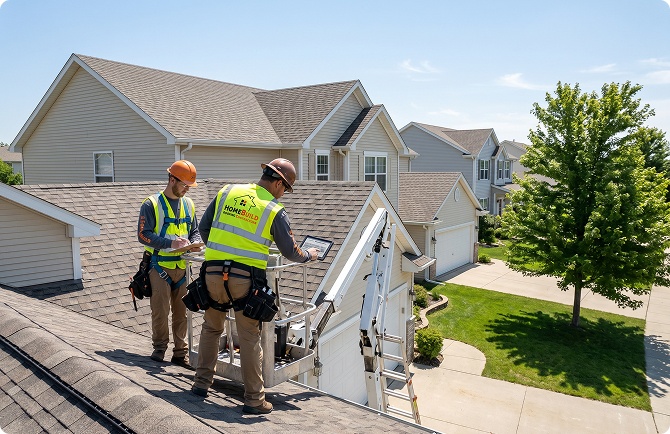
A professional roof inspection catches those failures before they reach the interior. It documents storm damage before the insurance claim window closes.
It tells a homeowner whether repair makes sense or whether a replacement is the right call. And it gives a seller the information they need to list a home without a roof condition question hanging over the transaction.
HomeBuild Roofing performs all three types of inspections across Chicago’s Northwest and West suburbs. Every inspection is free. Every finding is photographed and documented in writing. There is no obligation to proceed with any work, and there is no charge regardless of the outcome.
You do not need to become an expert in insurance policy language to get the roof your policy covers.
What Does a Roof Inspection Include?
A professional roof inspection covers the full system – not just the visible shingle surface. A HomeBuild inspection examines:

Shingles
condition, granule loss, curling, cracking, and missing tabs across all slopes
Flashing
chimney, valley, vent boots, skylight perimeters, and pipe penetrations
Ridge and hip
condition of caps and seal at the peak
Drip edge and eaves
installation condition and rust or displacement
Gutters and downspouts
attachment, blockage, and hail dent evidence
Soffit and fascia
water damage, rot, and animal entry points
Attic ventilation
intake and exhaust balance where accessible
Decking
soft spots or visible deterioration at accessible penetration points
Prior repair work
identifying patches that may indicate recurring issues
Overall remaining service life
written estimate of years remaining
Chicagoland Roofs Should Be Inspected at Least Once a Year- Twice After a Major Storm Season
For homeowners in Schaumburg, Hoffman Estates, and across the Northwest suburbs, once a year is the baseline. Twice a year – spring and fall – is the right standard for any roof past 15 years of service or on a home where the inspection history is unknown.
The reasoning follows Chicagoland’s two distinct damage cycles:
1
Spring inspection.
Winter is the hardest season on a Chicagoland roof. Freeze-thaw cycles flex every flashing seam dozens of times between December and March. Ice dams form at eaves when attic heat escapes unevenly, pushing water back under shingles. Heavy snow loads stress decking and ridge systems. A spring inspection – ideally between March and May – catches every failure the winter produced before the first heavy rain of the year drives water through it.
2
Fall inspection.
Summer and early fall bring Chicagoland’s hail season. A storm cell moving through the Northwest suburbs in July can strip granules, crack shingles, and bruise impact spots across an entire neighborhood in under 30 minutes – and leave no visible sign from the driveway. A fall inspection – ideally September or October – documents that damage while it is fresh, before the insurance claim window ages, and before winter adds a second layer of stress to an already compromised roof.
For roofs under 15 years old with no known storm history, one inspection per year is adequate. For roofs past 15 years, or for any roof after a confirmed severe hail or wind event, do not wait for the annual schedule. Schedule an additional inspection within 30 to 60 days of any significant storm.
A Roof Inspection Covers 12 Components Most Homeowners Never See from the Ground
Most Chicagoland homeowners can see the top surface of their roof from the driveway on a clear day – maybe two slopes if the lot is open. What they cannot see is the condition of anything in a valley, around a penetration, at the eave line, inside the soffit, or in the attic space. The components that fail first are almost always the ones least visible from street level. A
HomeBuild roof inspection covers every component of the full system:
1
Shingle surface condition.
Examined close-range across every slope for granule loss, curling, cracking, lifted tabs, missing sections, and hail impact marks. Granule loss is often the first sign of approaching end-of-life and the clearest post-storm signal for insurance documentation.
2
Chimney flashing.
Step flashing, counter flashing, and saddle condition inspected at every chimney – the single most common leak origin point on Chicagoland residential roofs.
3
Valley flashing.
Open and closed-cut valley condition examined. Valleys concentrate water from two converging slopes and fail earlier than flat sections of the same roof.
4
Vent boot condition.
Every plumbing stack, exhaust vent, and pipe penetration is inspected for cracked rubber boots and failed seals. A compromised vent boot is a 30-minute repair that prevents years of interior water damage.
5
Skylight perimeter flashing.
Examined for seal failure, curb separation, and glass-to-frame integrity. Skylight leaks are frequently misdiagnosed as ceiling condensation until a close inspection confirms the source.
6
Ridge and hip cap condition.
Caps at the roof peak and hip lines are the highest-wind-exposure components on the roof. Tab lifting, cracking, and seal failures appear here first after wind events.
7
Drip edge and eave detail.
Drip edge installation, rust, and displacement inspected along all eaves and rakes. Missing or improper drip edge is a common code deficiency on older Chicagoland homes.
8
Gutter attachment and condition.
Gutter attachment to fascia, slope toward downspouts, and hail dent evidence on gutter faces. Dented gutters are among the strongest corroborating evidence for a storm damage insurance claim.
9
Soffit and fascia.
Inspected for water damage, rot, paint failure, and animal entry points. Soffit condition often reveals whether persistent moisture from a minor roof leak has reached the roof edge over time.
10
Attic ventilation balance.
Intake at soffits and exhaust at ridge or powered vents checked for balance and blockage. Inadequate ventilation accelerates shingle deterioration from below and contributes to ice dam formation.
11
Decking condition.
Soft spots, rot, and delamination identified at accessible penetration points. Decking failures are invisible from the exterior – they only become clear during tear-off or through an attic access inspection.
12
Prior repair documentation.
Any visible patching, previous flashing repairs, or re-roofing evidence is noted. Recurring repair patterns often indicate a systemic issue that a one-time fix will not resolve.
Every finding is photographed with close-range detail and noted in the written report with a priority classification – urgent, near-term, or routine maintenance. You receive the full report with no obligation attached.
A Pre-Listing Roof Inspection Removes the Most Common Deal-Breaker in Illinois Real Estate
For homeowners in Palatine, Arlington Heights, and across the Northwest suburbs preparing to list a property, the roof is the single most common item that triggers inspection contingencies, repair demands, and renegotiation at closing. A pre-listing roof inspection changes that dynamic entirely.

Illinois buyers and their agents watch for two things on a roof: age and visible condition. A roof past 15 years of service triggers questions regardless of how it looks from the street.
A roof with missing shingles, visible granule loss, or any sign of storm damage triggers demands. The buyer’s inspector then confirms those concerns in writing, and the repair credit or price reduction negotiation begins.
A HomeBuild pre-listing inspection gives the seller the same information before any buyer sees the home. If the roof needs repairs, you complete them on your timeline, at your chosen contractor’s rate, before they become a buyer demand. If the roof is in good condition, the written report is disclosed to buyers at showing – removing the question before it is asked.
What a pre-listing inspection produces:
- A written report with photo documentation of the current roof condition, prioritized findings, and an honest assessment of remaining service life. This report can be provided directly to buyers or their agents as part of the disclosure package.
- A roof in verified good condition is a selling point. A roof with documented recent repairs is a closing-table confidence builder. A roof with an unknown condition is a liability that every experienced Illinois buyer’s agent will flag.
Illinois real estate inspection season runs heavily from March through August – the same window as Chicagoland’s hail season. Scheduling a pre-listing inspection before your listing date means you have time to address any findings before buyers arrive.
A Post-Storm Inspection Documents Damage Before Your Insurance Claim Window Closes
After a significant hail or wind event passes through Chicagoland, most homeowners do one of two things. They walk outside, look up at the roof, see nothing obviously wrong, and go back inside. Or they notice a ceiling stain weeks later, call a roofer, and discover the damage has been present since a storm three months ago.
In both cases, the right action was the same: schedule an inspection within 30 to 60 days of any confirmed severe weather event. A post-storm inspection does three things that matter to every Chicagoland homeowner:
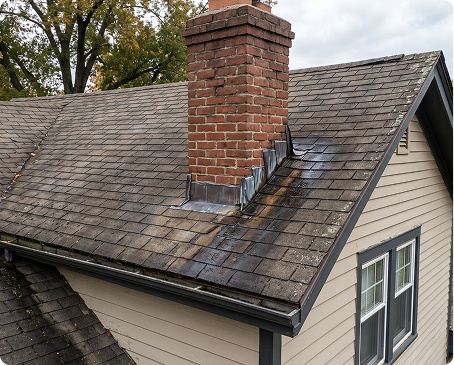
First, it confirms whether damage is present.
Hail bruising, granule loss, and soft impact spots are not visible from the ground. A trained roofing specialist on the roof surface finds damage in 30 minutes that a homeowner would never see from the driveway or even from a ladder at the gutter line.
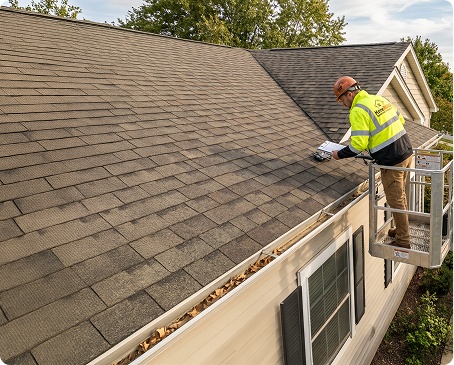
Second, it documents damage while evidence is fresh.
Insurance carriers are more likely to approve claims where damage is documented promptly after a storm event. Date-stamped photos taken close to the storm date, combined with National Weather Service event confirmation, produce a much cleaner claim record than documentation assembled six months later.

Third, it starts the clock on your claim timeline.
Most Illinois homeowners insurance policies require damage to be reported promptly – and most have a one-year filing window from the storm date. An inspection in the first 30 to 60 days gives you the full window to work with. An inspection in month eleven gives you almost none.
The inspection is free. If damage is present and worth a claim, we handle the full documentation and claim process from there. If damage is not present or is not claim-worthy, you receive a written report confirming the roof condition – which has its own value.
A Roofing Contractor Inspection and a Home Inspector Inspection Cover Different Ground
This question comes up regularly from homeowners in Wheaton, Elmhurst, and across the West suburbs who have already had a home inspection – either as part of a purchase or as a routine maintenance check – and want to know whether a separate roofing inspection adds anything. The short answer: yes, it does.
The two inspections cover fundamentally different scopes.
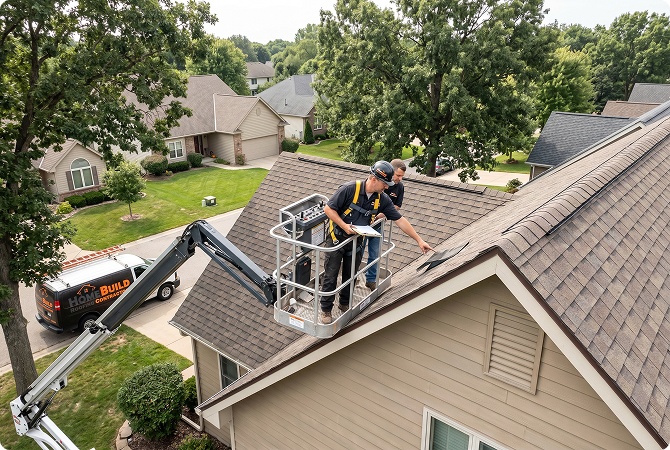
What a home inspector provides:
A licensed Illinois home inspector evaluates the entire property – structure, electrical, plumbing, HVAC, and the building envelope – in a single visit that typically runs two to three hours. The roof component of a home inspection is a general overview, usually conducted from the ground, from the edge of the roof, or from a single vantage point on the surface. The home inspector identifies obvious conditions: missing shingles, visibly damaged flashing, signs of leakage in the attic. The report notes conditions that warrant further evaluation by a specialist.
What a roofing contractor provides:
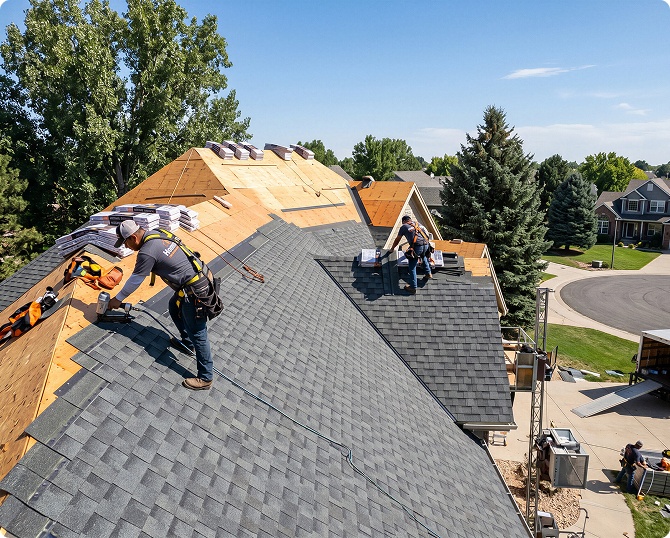
A roofing contractor inspection examines the roof system exclusively, from the full roof surface, with close-range access to every slope, every flashing point, every penetration, and accessible attic space. The inspection identifies specific failure points – cracked vent boots, individual flashing failures, early-stage granule loss patterns consistent with hail impact, soft spots in decking – that no ground-level or single-point inspection can confirm. The written report produced is specific enough to serve as the foundation for an insurance claim, a repair scope, or a pre-listing disclosure package.
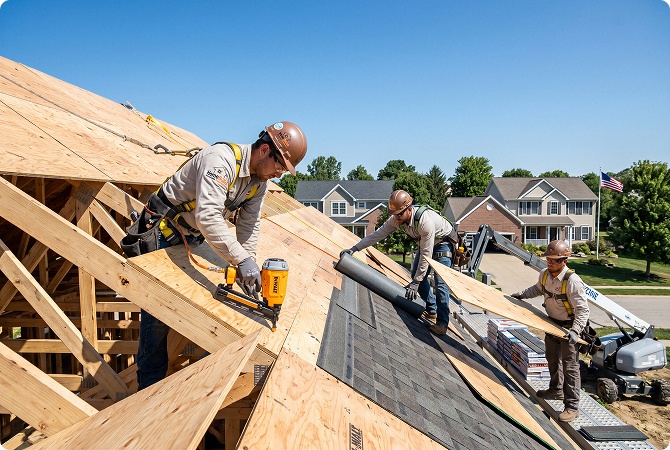
A home inspector who notes “roof shows signs of wear – further evaluation recommended” is giving you accurate guidance. The roofing contractor inspection is that further evaluation. The two inspections complement each other. If your home inspector flagged the roof as a concern, a HomeBuild inspection provides the specific, close-range findings that tell you exactly what the concern is and what it takes to address it.
Three Types of Roof Inspections - One Free Standard for All Three
HomeBuild Roofing performs all three inspection types across Chicagoland. Same process, same documentation standard, same written report – regardless of the reason for the inspection.
1
Preventive Inspection
Annual or biannual inspection for homeowners who want to stay ahead of failures. Best scheduled in spring after freeze-thaw season or in fall after hail and wind season. Identifies minor repairs before they become major ones and tracks remaining service life year over year.
2
Post-Storm Inspection
Inspection following any significant hail or wind event. Documents damage with date-stamped photos and written assessment for insurance claim submission. Scheduled within 30 to 60 days of the storm event wherever possible. Free – no obligation to file a claim or proceed with repairs.
3
Pre-Listing Inspection
Inspection for homeowners preparing to sell. Produces a written report suitable for buyer disclosure, identifies any repairs worth completing before listing, and removes roof condition as an inspection-contingency objection. Scheduled at any point before or during the listing process.
Free Roof Inspections Across Chicago's Northwest and West Suburbs
HomeBuild Roofing performs free roof inspections across Chicago’s Northwest and West suburban communities – with full crew availability and local response times throughout our service area.
Northwest Suburbs
West Suburbs
If your town is not listed, call us – we may still serve your neighborhood. After major storm events, inspection demand increases across Chicagoland. We schedule inspections in order of urgency and available slots – the sooner you call, the sooner we can get there.
Frequently Asked Questions About Roof Inspections Claim Assistance in Chicagoland
How often should a roof be inspected in Chicagoland?
Once a year is the baseline for roofs under 15 years old. Twice a year – spring and fall – is the right standard for roofs past 15 years or any roof after a confirmed severe storm event. Schedule an additional inspection within 30 to 60 days of any significant hail or wind event, regardless of the annual schedule.
What does a roof inspector check?
A HomeBuild roof inspection covers 12 components: shingle condition, chimney flashing, valley flashing, vent boots, skylight perimeter, ridge and hip caps, drip edge, gutter condition and hail dent evidence, soffit and fascia, attic ventilation balance, decking condition, and prior repair documentation. Every finding is photographed and included in a written report.
Do I need a roof inspection before selling my Illinois home?
It is strongly recommended. A pre-listing inspection gives you the same information a buyer’s inspector will find – before any buyer sees the home. If repairs are needed, you complete them on your timeline at your chosen rate. If the roof is in good condition, the written report becomes part of your disclosure package and removes roof condition as an inspection contingency.
What is the difference between a roofing contractor inspection and a home inspector?
A home inspector provides a general overview of the entire property, typically from ground level or a single vantage point. A roofing contractor inspection covers the full roof surface exclusively, with close-range access to every slope, flashing point, and penetration. The contractor report is specific enough to serve as the foundation for an insurance claim, repair scope, or pre-listing disclosure.
Is a free roof inspection worth it?
Yes. A roof inspection catches minor failures before they become major repairs, documents storm damage before the insurance claim window closes, and gives sellers the information they need to list without a roof question hanging over the transaction. The inspection costs nothing and produces a written report regardless of outcome.
Can a roof inspection find hidden damage not visible from the ground?
Yes – and that is the primary reason to schedule one. Hail bruising, cracked vent boots, early-stage flashing failures, and soft spots in decking are invisible from street level. A trained roofing specialist on the roof surface finds damage in 30 minutes that a homeowner would never see from the driveway, a ladder, or even from a home inspector’s ground-level assessment.
Find Out What Is Actually on Your Roof - For Free.
A written report. Photo documentation. Honest findings with no pressure attached. No obligation to proceed with any work – just a clear picture of your roof’s current condition from a team that has been inspecting Chicagoland roofs for more than 20 years.