


Key Considerations Before a Roof Replacement
Choosing the right material is the first big decision when planning a roof replacement asphalt shingles project. Asphalt shingles come in three primary grades: 3-tab, architectural (laminated), and luxury (designer). Each option handles Chicagoland weather differently during severe freeze-thaw cycles and winter snowstorms.
| Shingle Type | Average Cost (Installed per Sq) | Expected Lifespan | Wind Rating | Impact Rating | Best For |
|---|---|---|---|---|---|
| 3-Tab | $100 – $175 | 20 Years | 60 mph | Class 1–3 | Budget repairs, small outbuildings |
| Architectural | $150 – $275 | 25 – 30 Years | 110 – 130 mph | Class 3–4 | Standard residential homes |
| Luxury | $300 – $450+ | 30 – 50 Years | 130 mph | Class 4 | Premium aesthetics, historic homes |
When choosing shingles, check the manufacturer Warranty. Most architectural shingles offer limited lifetime coverage. They also feature algae resistance to stop ugly black streaks caused by airborne blue-green algae during humid Midwest summers.
Evaluating 3-Tab vs Architectural Roof Replacement Asphalt Shingles
Three-tab shingles are flat, single-layer products with cutouts that form three distinct tabs. They carry a low upfront price, but their basic construction limits their wind resistance to 60 mph. Strong wind gusts in Schaumburg or Hoffman Estates can lift and blow off single-layer tabs.
Architectural shingles feature two asphalt layers bonded together for maximum strength. They carry wind ratings up to 130 mph. Their multi-layered construction adds dimension and enhances curb appeal for local homes.
Choosing Impact-Resistant Asphalt Shingles for Hail and Wind
Hail strikes cause thousands of dollars in roof damage across Chicagoland every spring. Class 4 impact-resistant shingles pass Underwriters Laboratories (UL) 2218 testing. During this test, 2-inch steel balls drop from 20 feet high directly onto the shingle without cracking the back matting.
Class 4 shingles cost $40 to $80 more per square in raw materials than standard architectural shingles. However, hail damage insurance claims average $12,000 to $15,000 across Cook County and DuPage County. Homeowners who install Class 4 rated roofs often receive 20 to 30 percent insurance premium discounts in hail-prone regions. The initial material upgrade can pay for itself within three to five years.
Understanding Costs and Estimating Materials for Roof Replacement Asphalt Shingles
Understanding local labor, material quantities, and roof complexity helps prevent surprises on your invoice. Every home in the Chicago suburbs requires precise material calculations before installation begins.
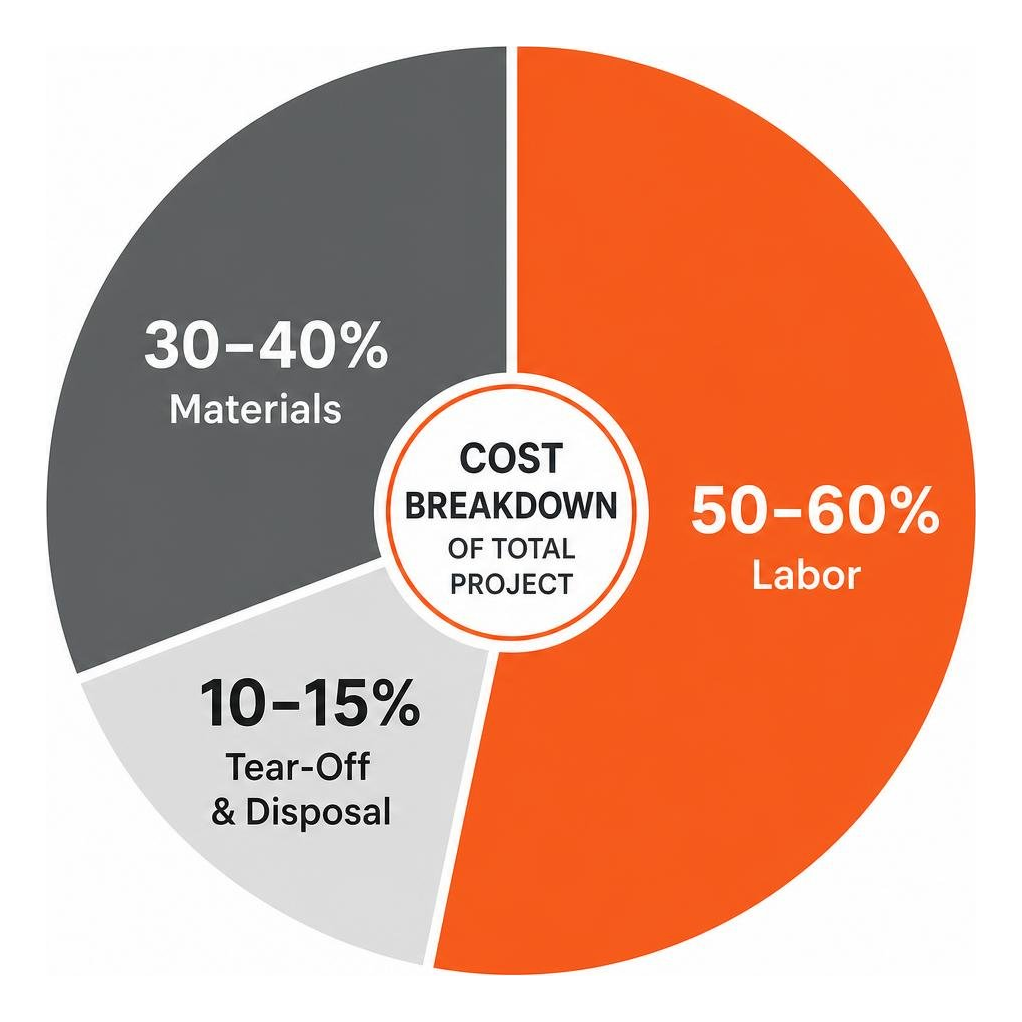
Labor accounts for 50 to 60 percent of total project costs. Tear-off and disposal run $1 to $2 per square foot. According to the 2026 Price Guide, a full mid-range replacement delivers roughly 61 percent ROI at resale. Homeowners can also explore flexible Financing options to spread out project costs over time.
Calculating Roofing Squares and Material Quantities
Roofers measure roofs in “squares.” One roofing square equals 100 square feet of surface area. Accurate measurements prevent material shortages and unnecessary delays during installation.
To estimate your roof:
- Calculate the ground footprint of your home.
- Multiply by a pitch adjustment factor (e.g., 1.12 for a medium 6/12 pitch roof).
- Add 10 to 15 percent for waste, cuts, and starters.
A standard 2,000 sq ft footprint home usually requires 22 to 28 squares of materials. Since standard architectural shingles are sold three bundles per square, that project requires between 66 and 84 bundles.
Key Factors Driving the Price of Your Roof Replacement
Four major factors drive the total project investment:
- Roof Pitch and Complexity: Steep roofs require special safety rigging, slowing down production speed. Multiple valleys, skylights, and dormers increase labor costs.
- Existing Layers: Tearing off a double layer adds $0.50 to $1.00 per square foot in extra labor and landfill tipping fees.
- Decking Condition: Damaged or rotted plywood sheathing must be replaced. According to Asphalt Shingle Roof Replacement: Lifespan, Materials & Installation Steps, deck repairs average $2 to $3 per square foot installed. Severe winter moisture and ice dams often rot roof decking along eave lines.
- Regional Labor Rates: Labor in high-cost metro areas like Arlington Heights and Villa Park adds 25 to 50 percent compared to national averages. Skilled local roofing crews ensure installations meet local building codes.
Essential System Components Beyond the Shingles
A reliable roof relies on an engineered system of components working together to seal out moisture. A complete system protects your home through severe winter snow loads and spring thunderstorms.
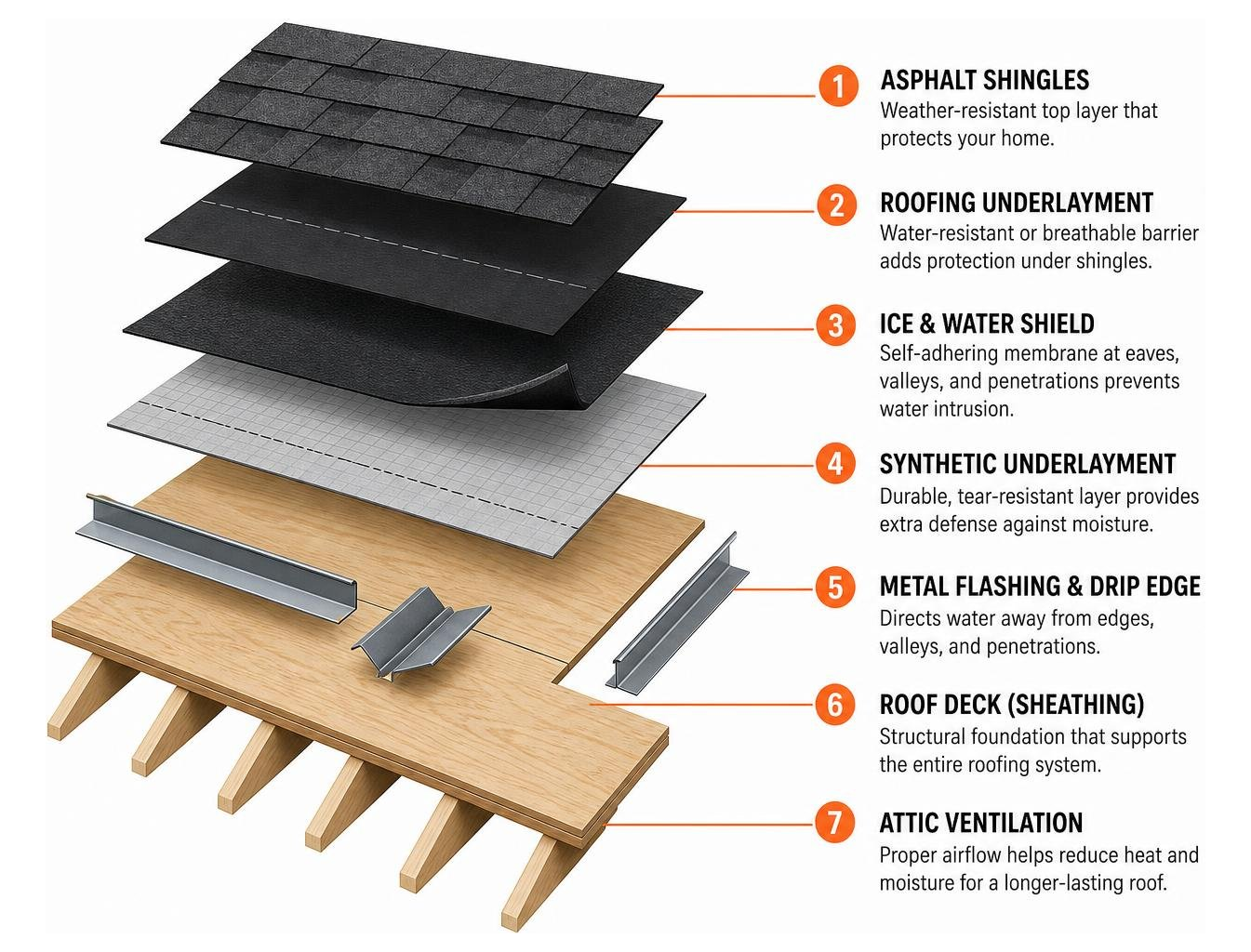
Every successful installation relies on high-performance materials like synthetic underlayment, drip edges, step flashing, and Owens Corning Duration Shingles. Synthetic underlayment acts as a second water barrier beneath your shingles. Drip edge metal directs runoff water safely into gutters.
Preventing Ice Dams with Ice and Water Shields in Chicagoland
Ice dams form during cold Chicago winters when heat escapes into the attic. Melted snow flows down the roof deck and freezes at the unheated eaves. This ice wall traps liquid water, forcing it up under the shingles.
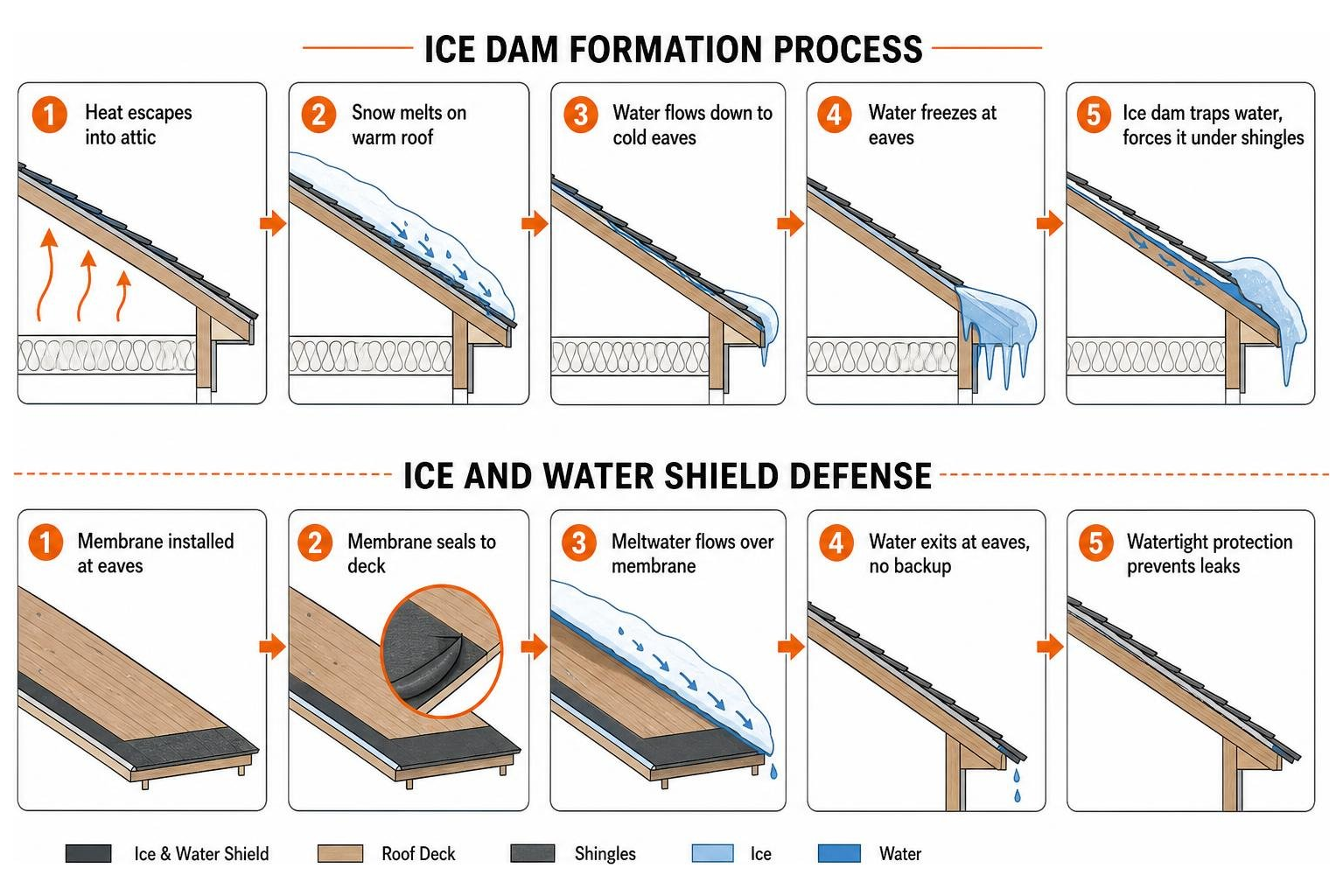
Self-adhering ice and water shield membranes stick directly to the bare wood deck. Building codes require installing this rubberized membrane along all eaves, valleys, and around chimneys to create a watertight seal. This defense stops backing-up water from damaging interior drywall and insulation.
Maximizing Longevity Through Balanced Roof Ventilation
Balanced Roof Ventilation keeps attic temperatures stable year-round. An ideal system balances intake air from soffit vents with exhaust air escaping through ridge vents along the peak.
Poor ventilation traps heat and humidity, which cooks shingles from underneath, causing them to blister, curl, and age prematurely. In winter, inadequate attic ventilation accelerates ice dam formation. Proper ventilation protects manufacturer warranties and lowers summer cooling bills for homeowners in Schaumburg and Deerfield.
Tear-Off vs. Recover: Should You Replace or Lay Over?

Building codes allow a maximum of two layers of shingles on a residential roof. Homeowners often ask if installing a second layer (a recover) is better than paying for a full tear-off. Tearing off old materials provides a clean slate for a brand-new roofing system.
Why Complete Tear-Off Beats a Layover Overlay
While a recover saves initial tear-off costs, a full replacement is almost always the smarter long-term choice:
- Hidden Deck Rot: You cannot inspect or repair soft, rotted plywood underneath an old layer without tearing it off. Wet Chicagoland snow loads will cause compromised decking to sag or fail.
- Shortened Lifespan: Trapped heat between shingle layers degrades new asphalt faster, cutting its service life by 10 to 20 percent.
- Adhesion Issues: Ice and water shields will not adhere to old shingles. Without direct contact with wood, ice dams can easily leak into your home.
- Future Costs: Future replacements require tearing off two heavy layers, doubling disposal fees later.
Schedule professional Roof Inspections to evaluate your deck condition before making your decision.
How to Choose a Qualified Roofing Contractor and Review Estimates
Selecting the right installer protects your long-term investment. Look for these essential credentials:
- Valid state roofing license and full general liability coverage
- Workers’ compensation insurance for every crew member
- Transparent, itemized written estimates showing fixed per-sheet deck pricing
- Manufacturer certifications that unlock extended warranty options
- Strong local reputation backed by verifiable customer reviews
If storm damage caused your roof failure, work with a professional contractor experienced in processing a Roof Insurance Claim. Experienced contractors meet with insurance adjusters directly to verify hail and wind loss.
At HomeBuild Roofing, we handle projects differently. Founded by Steve Mlynek in 2004, every project in Villa Park, Hoffman Estates, Schaumburg, and surrounding areas is owner-sold, owner-supervised, and owner-approved. We never pass your home off to sub-contractors or middlemen. We maintain a 4.9-star Google rating across 180+ reviews, backed by our Angi Super Service Award 2025 and Nextdoor Neighborhood Faves 2025.
Frequently Asked Questions About Roof Replacement
How long do asphalt shingles last in northern Illinois?
Standard architectural shingles last 20 to 30 years in Chicagoland. However, severe freeze-thaw cycles, high wind storms, heavy snow loads, and poor attic ventilation can shorten that lifespan. Annual inspections help extend total shingle service life.
What signs indicate I need a roof replacement asphalt shingles job?
Signs include widespread edge curling, granule loss in gutters, cracked shingles, ceiling leaks, or an age over 20 years. If granules accumulate in your downspouts, your shingles are rapidly wearing out.
How long does a full asphalt shingle replacement take?
A standard roof replacement takes 1 to 3 days for a 3 to 5 person crew. Project time depends on roof size, pitch, and weather conditions. HomeBuild crews work efficiently and clean up magnetic nail debris daily.
Conclusion
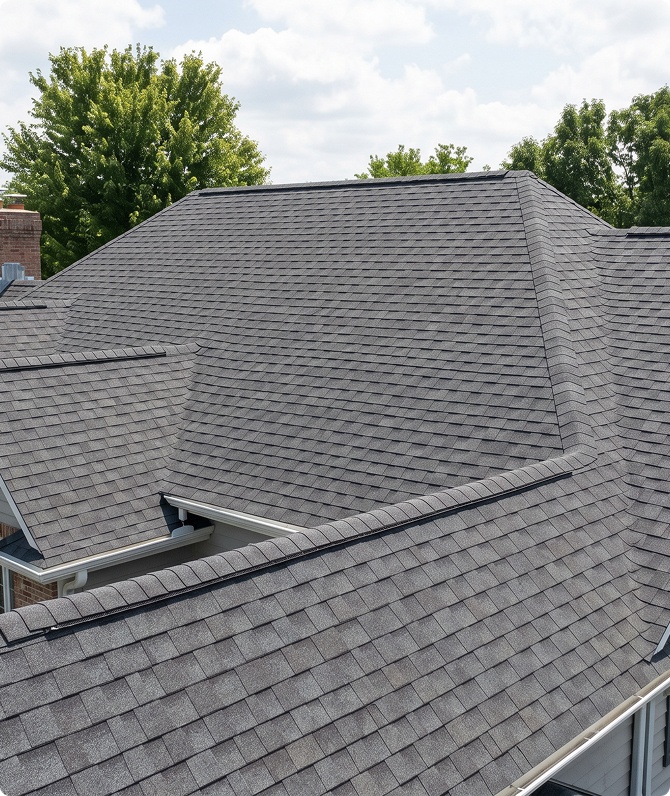
A roof replacement asphalt shingles project is a critical investment in your home’s structural health, safety, and resale value. Quality architectural shingles, full ice and water shields, and balanced ventilation protect your home. These system components keep your roof dry during harsh northern Illinois winters and severe summer storms.
When you work with HomeBuild Roofing, you get direct owner supervision on every single job. We serve Chicago and the West and Northwest suburbs with honest guidance and transparent pricing. Our quality workmanship is backed by a 4.9-star Google rating across 180+ reviews.
Ready to protect your home? Visit our Professional Roof Repair & Replacement Services page to schedule your free, no-obligation roof inspection!