


Services

Storm Damage Roofing in Chicagoland
Free Inspection, Full Insurance Claim Management


4.9/5
(180+ Reviews)
Angi Super Service Award
2025
Nextdoor Faves
2025
Owens Corning
Certified Installer
Chicagoland is one of the highest-frequency hail and severe wind markets in the United States.
Most roofs in the Northwest suburbs take a direct storm hit every three to five years. Some take one every season. The damage is not always dramatic – a fast-moving hail cell in April can leave bruised shingles and stripped granules across an entire neighborhood without a single homeowner noticing from the driveway.
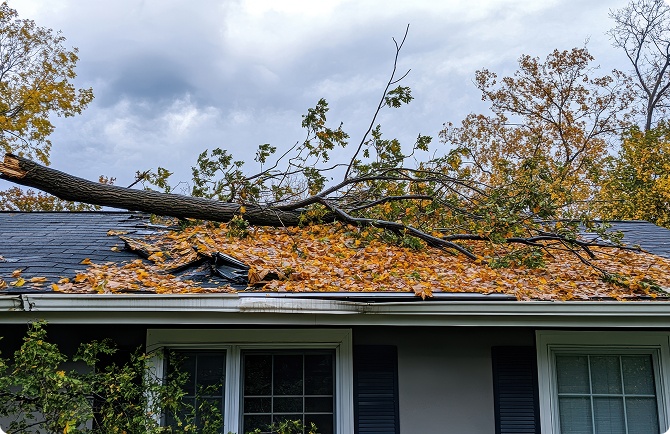
This page covers both wind and hail damage - what it looks like, what it means for your roof, and how HomeBuild Roofing manages the full insurance claim process from start to finish.
Full claim management means: free storm damage inspection with photo documentation, written scope of work, adjuster accompaniment so nothing gets missed or undervalued, claim submission support, and permanent repair using Owens Corning roofing systems once the claim is approved. The same owner-supervised process on every project.
If you had a storm pass through your area recently and have not had your roof inspected, this is the call to make. Most Illinois policies give you one year. Evidence of storm damage does not improve with time.
Storm and Hail Damage to Chicagoland Roofs Is Often Invisible from the Ground
For homeowners in Schaumburg, Hoffman Estates, and across the Northwest suburbs, this is the most important thing to understand about storm damage: the roof can sustain significant damage and show nothing visible from the street.
Hail does not work like most people imagine. A stone the size of a dime does not leave a hole in your roof – but it does knock granules off shingles, expose the asphalt mat to UV degradation, and create soft impact spots that accelerate shingle failure over the following two to three seasons. By the time a hail-damaged roof starts leaking, the storm that caused the damage may be 18 months in the past and your insurance window may have closed.
Here is what each type of storm damage actually looks like on the roof surface:

Roof age under 15 years
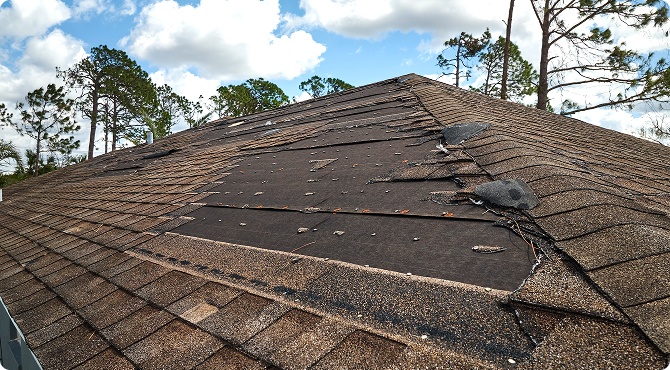
Hail damage on asphalt shingles: Circular bruise marks where the granule surface is knocked away, dark spots where the mat is exposed, soft depressions that feel like a bruise when pressed, and a consistent pattern of impact marks across the slope.
Hail damage on metal components
Dents on gutters, downspouts, vent covers, flashing caps, and AC units. Metal tells the story of a hail event clearly even when the shingles are not yet showing visible marks. Dented gutters are one of the strongest pieces of evidence for an insurance claim.
Wind damage on asphalt shingles
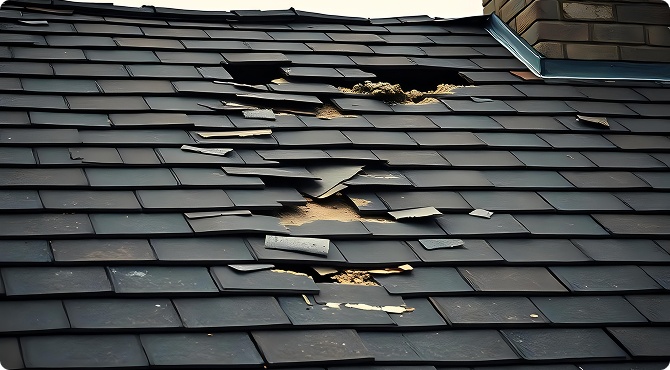
Lifted tabs along ridges and rakes where wind gets underneath first, cracked or creased shingles where tabs have flexed and broken, missing shingles in sections, and seal failures where shingles are no longer bonded flat to the surface below.
Damage from fallen debris
Visible punctures, torn sections, and crushed areas where branches or debris have hit the surface. Often accompanied by flashing displacement.
A Chicagoland hail event can cover a 20-mile path in under 30 minutes. Every home in that path may have damage. The ones whose owners call for an inspection in the first 60 days are the ones who get their roofs restored through insurance. The ones who wait often find themselves outside the claim window or fighting a wear-and-tear denial.
Homeowners Insurance Covers Wind and Hail Damage - When Documented Correctly
Standard homeowners insurance in Illinois covers sudden damage caused by wind, hail, and severe weather as a covered peril. That is the good news. The important qualifier is “sudden” – insurance covers storm damage, not gradual deterioration or deferred maintenance.
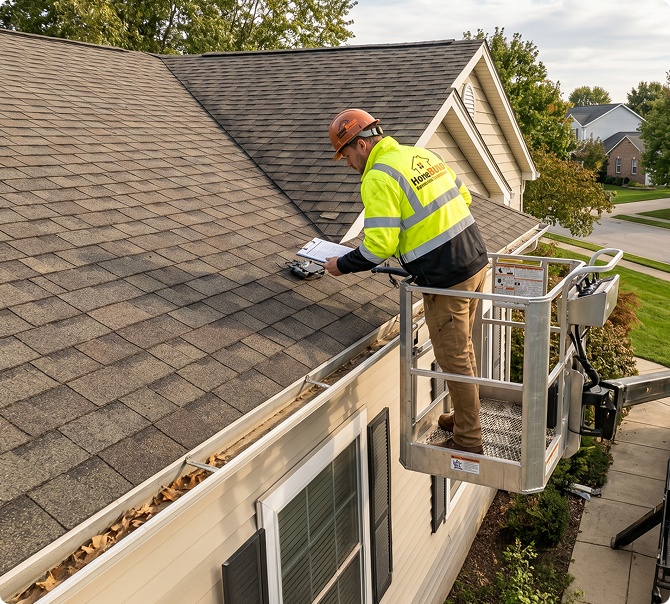
Insurance companies in Illinois know this distinction well. On roofs approaching 15 years of age, adjusters are trained to look for wear-and-tear arguments alongside legitimate storm damage.
A shingle that is both hail-bruised and granule-depleted from 15 years of UV exposure gives an adjuster room to argue that the damage is age-related rather than event-related. Without clear professional documentation, that argument sometimes succeeds. This is why documentation is not a formality – it is the foundation of a successful claim.
What a properly documented storm claim includes:
- Date-stamped photos of every damage point on the roof surface
- Photos of dented gutters, vents, and metal components as corroborating evidence
- Granule count and distribution assessment
- Written scope distinguishing storm-caused damage from any pre-existing conditions
- National Weather Service storm event data matching the storm date and location
- Contractor’s written assessment ready for insurance carrier submission
HomeBuild Roofing provides every one of these components as part of a standard storm damage inspection. The documentation we produce is written specifically to support a claim submission – not a general inspection report that needs to be translated into insurance language later.
Most Illinois Homeowners Have Less Than One Year to File a Storm Damage Claim
This is the deadline most Chicagoland homeowners do not know until it is too late. After a storm event, the clock starts immediately. Most Illinois homeowners insurance policies allow one year from the date of the storm to file a claim. Some policies – particularly older or specialty policies – run as short as six months.
For homeowners in Palatine, Arlington Heights, and the surrounding Northwest suburbs, Chicagoland storm season runs April through October. A hail event in May that goes uninspected until the following spring is a claim that may not be filed in time. And even within the claim window, early action matters.
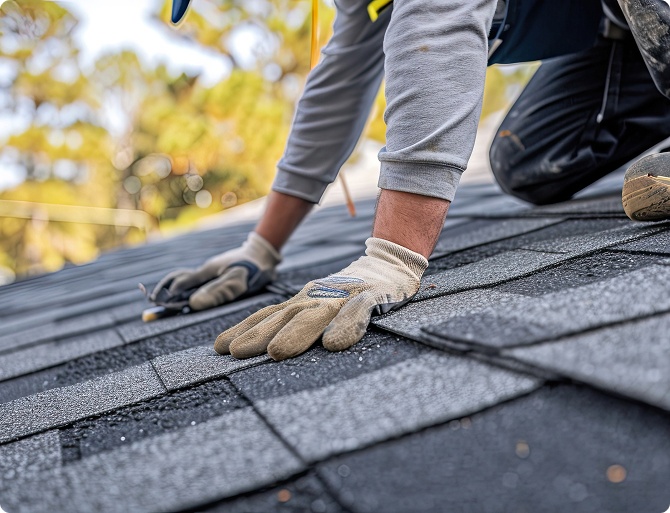
Why filing early produces better outcomes:
Evidence of storm damage degrades over time. Granule loss from a May hail event looks different in October than it did in June. Secondary weathering from sun and rain gradually changes the appearance of impact marks. Insurance companies are more likely to dispute the storm-causation argument on damage that has had six months to age, compared to damage documented within 30 days of the event.
Additionally, each storm season brings new weather events. A roof that takes a hail hit in spring and another in summer has overlapping damage from two separate events – which complicates the claim documentation if neither event was inspected promptly.
What to do after any Chicagoland storm event:
You do not need to see a leak or missing shingles to call for an inspection. A severe hail or wind event passing through your area is sufficient reason to schedule a free inspection.

The inspection costs nothing. The cost of a missed claim window – on a full roof replacement that your policy would have covered – is significant.
Insurance Adjusters Miss Damage That a Trained Roofer Finds on the Same Roof
When you file a storm damage claim, your insurance company assigns an adjuster to inspect the roof. The adjuster is a professional – but they work for the insurance carrier, not for you. Their job is to assess damage against your policy, which means they are also evaluating what the policy does and does not need to cover.
Across Chicagoland, in established older neighborhoods where homes were built in the 1980s and 1990s, adjusters routinely miss three categories of damage:
Full system damage vs. surface damage.
An adjuster may document missing shingles and approve replacement of that section. A trained roofer inspects the same roof and finds that the entire slope shows hail bruising, that the underlayment is compromised, that the ventilation components are damaged, and that the full system requires replacement – not a patch. The difference in scope is thousands of dollars.
Code-required upgrades.
Illinois building codes have changed since many Northwest suburban homes were built. A full roof replacement on an older home may require upgraded ice and water shield coverage, updated drip edge installation, or ventilation improvements to meet current code. These upgrades are often covered under “ordinance or law” provisions in homeowners policies – but adjusters do not always include them in initial estimates. A contractor who knows local code requirements identifies and documents every required upgrade as part of the claim scope.

Soft metal damage as corroborating evidence.
Hail dents on gutters, vent caps, and AC unit fins are some of the strongest evidence that a hail event caused roof damage – because metal records impact far more clearly than shingles. Adjusters who arrive days or weeks after a storm sometimes overlook metal evidence. A HomeBuild inspection photographs every dented metal component on the property as part of the documentation package.
HomeBuild Roofing is present at the adjuster visit on every storm damage project we handle. We walk the adjuster through our inspection findings, point to specific damage documentation, and make sure the approved scope reflects the actual condition of the roof.
Insurance Companies Deny Storm Claims for Three Predictable Reasons
Claim denials happen across the Chicago metropolitan area, and the reasons are almost always the same three. Knowing them in advance – and knowing how documentation counters each one – is the difference between a denied claim and a restored roof.
1
Pre-existing damage.
The insurer argues that the damage existed before the storm event and is therefore not a covered claim. This is the most common denial argument on roofs 12 years or older. The counter: professional inspection documentation that clearly separates storm-specific damage (hail impact marks, wind-lifted tabs, fresh granule loss) from any prior wear or aging conditions. When damage is documented and dated promptly after a storm, the pre-existing argument is much harder to sustain.
2
Cosmetic-only ruling.
The insurer accepts that hail or wind caused some damage but classifies it as cosmetic – meaning the shingles are marked but functionally intact. The counter: documentation showing that hail impact has compromised the shingle’s protective granule layer, accelerating UV degradation and shortening the roof’s remaining service life. Impact damage that reduces a shingle’s 25-year service window to 10 years is not cosmetic – it is functional damage with a measurable cost to the homeowner.
3
Wear-and-tear classification.
The insurer argues that the damage results from the roof’s age and normal weathering rather than the storm event. This argument is most common on roofs past 15 years of service. The counter: National Weather Service storm event data confirming hail size and wind speed on the specific storm date, combined with photo documentation of fresh impact marks consistent with the confirmed storm parameters.
HomeBuild Roofing prepares documentation specifically to address all three of these denial arguments before a claim is submitted. When homeowners in Wheaton, Elmhurst, and across Chicagoland come to us after a denial, the first thing we do is review the adjuster’s report against our inspection documentation – and in most cases, there is a clear gap between what the adjuster documented and what we found on the roof.
Our Full Storm Damage Claim Process - From First Inspection to Final Repair
HomeBuild Roofing manages the complete storm damage process. Here is every step, in order.
1
Free On-Site Storm Damage Inspection
A roofing specialist inspects the full roof system – every slope, every valley, all metal components, all flashing points. Every finding is photographed and documented. No charge, no obligation. This is the foundation of the entire claim.
2
Written Damage Report and Claim Scope
You receive a complete written report: photo documentation of all damage, written assessment distinguishing storm damage from any pre-existing conditions, National Weather Service event data, and a full scope of work formatted for insurance carrier submission.
3
Claim Filing Support
We walk you through how to file the claim with your carrier using our documentation. We advise on what to say, what to submit, and what to expect in the response timeline.
4
Adjuster Accompaniment
When the insurance adjuster visits, a HomeBuild roofing specialist is there. We walk the adjuster through our findings, point to documented damage, and make sure the approved scope includes all damaged components – including code-required upgrades and full system items that adjusters commonly exclude from initial estimates.
5
Scope Review and Supplement Filing (if needed)
After the adjuster’s report, we review the approved scope against our documentation. If items are missing or undervalued, we prepare a supplement for your carrier with supporting documentation. Supplementing is a normal part of the process – not a confrontation.
6
Permanent Repair or Replacement
Once the claim is approved and scope finalized, we schedule and complete the repair or full replacement using Owens Corning roofing systems, to manufacturer specifications, under owner supervision.
Storm Damage Roofing Across Chicago's Northwest and West Suburbs
HomeBuild Roofing handles storm damage inspections and full insurance claim management across Chicago’s Northwest and West suburban communities.
Northwest Suburbs
West Suburbs
After a major Chicagoland storm event, inspection demand increases sharply. We prioritize storm damage inspections and schedule them within 48 to 72 hours wherever possible. The sooner your roof is inspected and documented, the stronger your claim.
Frequently Asked Questions About Storm Damage Roofing in Chicagoland
Does homeowners insurance cover storm and hail damage to my roof?
HomeBuild Roofing installs Owens Corning shingles, including the Duration® series with SureNail® Technology. Owens Corning is one of the most recognized residential roofing brands in North America, backed by industry-leading manufacturer warranties.
How do I know if my roof has storm or hail damage?
From the ground, storm and hail damage is often invisible. Signs to watch for: granules collecting in gutters after a hail event, dents on gutters, vents, or flashing, lifted or missing shingles along ridges after high winds, and water stains on interior ceilings after the first rain following a storm. A free professional inspection is the only way to confirm the full extent of damage.
How long do I have to file a storm damage claim in Illinois?
Most Illinois homeowners insurance policies allow one year from the date of the storm to file a claim. Some older or specialty policies run as short as six months. After a Chicagoland hail event, we recommend scheduling an inspection within 30 days – early documentation produces the strongest claims.
Will my insurance company send an adjuster to inspect my roof?
Yes. Once you file a claim, your carrier assigns an adjuster to inspect the roof. HomeBuild Roofing attends every adjuster visit on storm damage projects we handle. We walk the adjuster through our inspection findings and make sure the approved scope reflects the actual damage – including items adjusters commonly miss.
What does storm damage look like on an asphalt shingle roof?
Hail damage appears as circular bruise marks where granules are knocked away, dark spots where the asphalt mat is exposed, and soft impact depressions across the slope. Wind damage shows as lifted tabs along ridges and rakes, cracked or creased shingles, and missing sections. Dented gutters and metal components are strong corroborating evidence of a hail event.
Can an insurance company deny my storm damage claim?
Yes – and it happens for three predictable reasons: pre-existing damage arguments, cosmetic-only rulings, and wear-and-tear classifications. HomeBuild prepares documentation specifically to counter all three before the claim is submitted. If you have already received a denial, contact us – we review adjuster reports and help identify documentation gaps.
Had a Storm Pass Through? Your Claim Window Is Already Running.
A free inspection. Complete documentation. Adjuster accompaniment. Full claim management from first call to final repair. The same owner-supervised standard on every project – backed by 180+ five-star reviews across Chicagoland.