


Why Every Chicagoland Homeowner Needs a Roof Inspection Before Winter
A roof inspection before winter can be the difference between a safe, warm home and a costly emergency repair in the middle of a Chicago freeze. Here’s what you need to know right now:
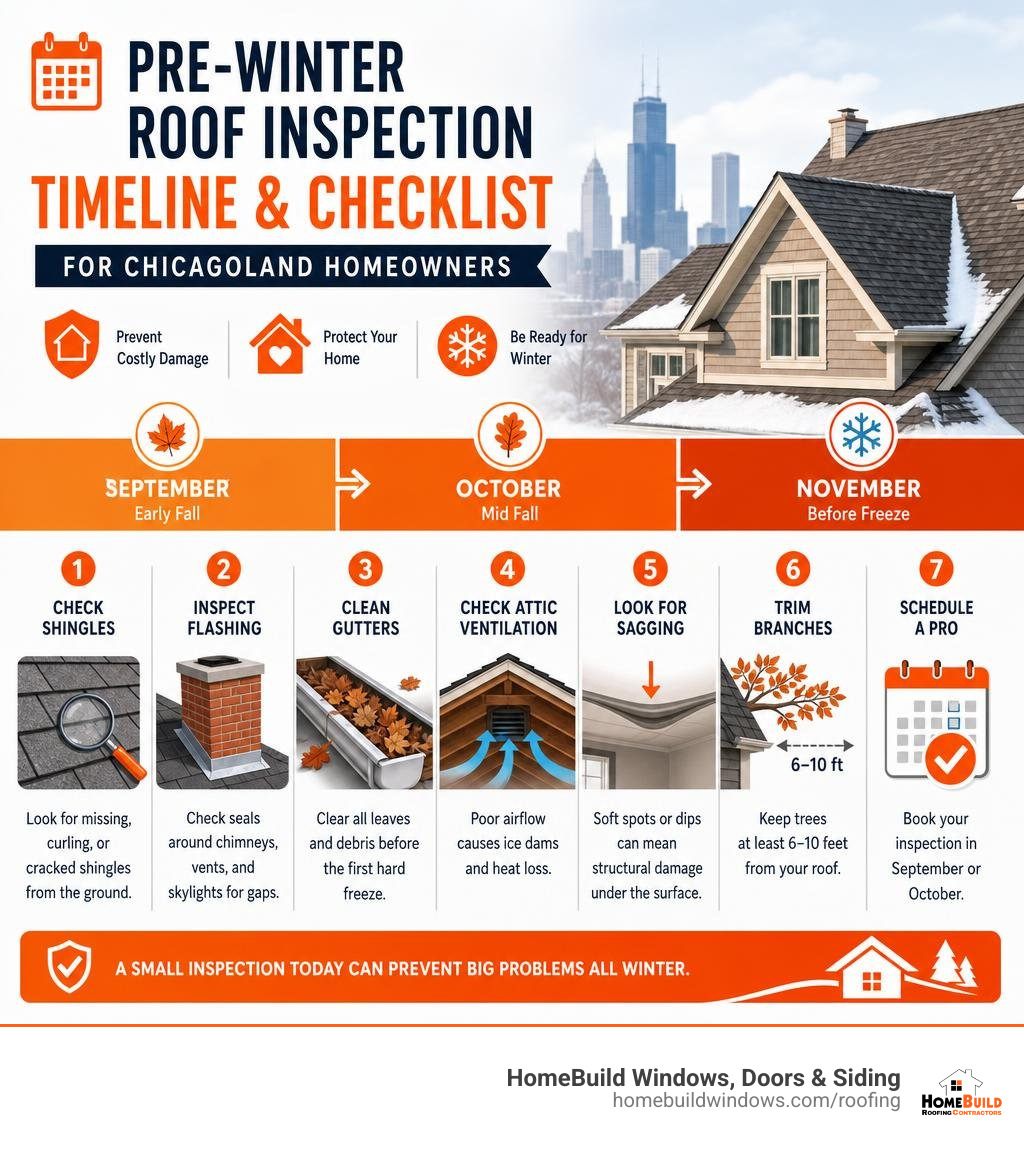
Quick Answer: Pre-Winter Roof Inspection Checklist
- Check shingles — look for missing, curling, or cracked shingles from the ground
- Inspect flashing — check seals around chimneys, vents, and skylights for gaps
- Clean gutters — clear all leaves and debris before the first hard freeze
- Check attic ventilation — poor airflow causes ice dams and heat loss
- Look for sagging — soft spots or dips can mean structural damage under the surface
- Trim overhanging branches — keep trees at least 6–10 feet from your roof
- Schedule a pro — book your inspection in September or October, before temperatures drop below freezing
Chicago winters are brutal. Freeze-thaw cycles, heavy snow loads, and ice dams put enormous stress on your roof every single year. A small crack or loose shingle that seems harmless in October can turn into a ceiling leak or structural failure by February.
The stakes are real. Approximately 73% of winter leak calls roofing contractors receive involve homes where no fall inspection or gutter service was done that year. In the Northwest and West suburbs — from Schaumburg to Villa Park — that kind of deferred maintenance adds up fast.
The good news? Most winter roof damage is preventable. A simple inspection in the fall catches the small problems before Chicago’s weather turns them into big ones.
I’m Steve Mlynek, CEO and founder of HomeBuild Windows, Doors & Siding. With over 20 years of home improvement experience serving Chicagoland homeowners, I’ve seen what a skipped roof inspection before winter can cost — and I’ve made it my mission to help homeowners get ahead of it. Let’s walk through exactly what to check, what to watch for, and when to call a pro.
Why a Roof Inspection Before Winter Saves Chicagoland Homeowners Money
Ignoring your roof in the fall is expensive. A small, hidden leak can rot your roof deck slowly. Once freezing temperatures hit, trapped water expands. This freeze-thaw cycle tears shingles apart.
A compromised roof also destroys your home’s energy efficiency. If warm air escapes through your attic, your heating system works overtime. Your heating bills will skyrocket during the freezing winter months.
Regular Roof Inspections find these issues early. We check for air leaks and compressed insulation. Fixing these issues before winter keeps your home warm and your utility bills low.
Emergency winter repairs cost significantly more than planned fall maintenance. Working on an icy roof is dangerous. The winter weather slows down progress. Getting a professional inspection in October protects your budget.
Common Winter Roof Hazards and How to Spot Them
Winter brings heavy snow loads and fierce winds. These conditions search for any weak spot on your roof.
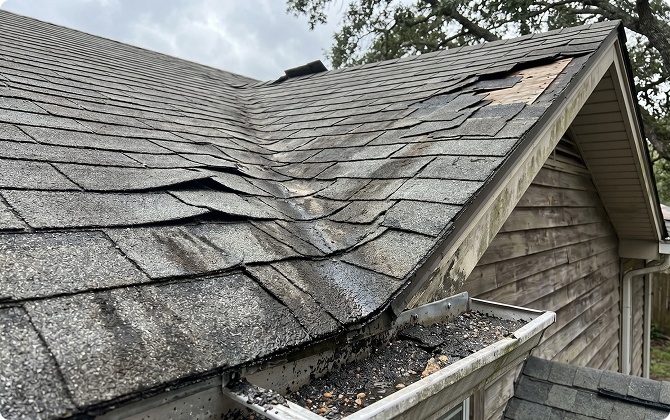
High winds can tear loose shingles right off. Heavy snow adds thousands of pounds of weight to your roof structure. If your roof has old storm damage, it might fail under this stress. You can learn more about identifying these risks on our Storm Damage Roofing in Chicagoland page.
Here is what to look for when comparing healthy shingles to compromised ones:
| Roof Feature | Healthy Condition | Compromised Condition (Winter Risk) |
|---|---|---|
| Asphalt Shingles | Flat, secure, fully covered in granules | Curled, cracked, missing, or bald |
| Roof Flashing | Tight, sealed, rust-free metal | Gapping, rusted, or cracked sealant |
| Roof Valleys | Clear of debris, intact shingles | Piled leaves, cracked valleys, lifting materials |
| Roof Line | Straight and even | Sagging, dipping, or curving |
Spotting Shingle Damage During a Roof Inspection Before Winter
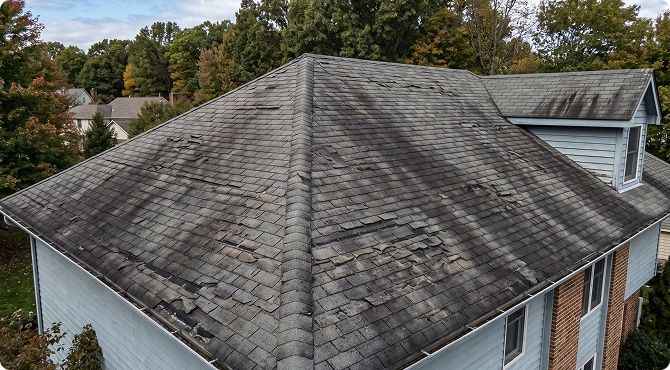
Asphalt shingles have a lifespan of 10 to 30 years. As they age, they lose their protective mineral granules. Look for dark spots or bald patches on your shingles.
Check for curling or clawing shingle edges. These shingles are brittle. Cold winter winds will easily snap them off. If you need a stronger option, consider upgrading to Architectural Shingle Roofing in Chicagoland before the snow falls.
Checking Flashing and Seals to Prevent Winter Leaks
Flashing is the thin metal installed around chimneys, vents, and valleys. It directs water away from these vulnerable areas.
Over time, the sealant around flashing cracks. Water gets behind the metal. When this water freezes, it pushes the flashing away from your chimney. This creates a direct path for water to enter your home. Secure these seals in the fall to avoid needing Emergency Roof Repair in Chicagoland during a blizzard.
The Role of Gutters and Attic Ventilation in Preventing Ice Dams
Ice dams are a major threat to homes in Schaumburg and Hoffman Estates. They form when heat escapes from your attic. This heat melts the snow on your upper roof.
The meltwater runs down to the cold roof edge and refreezes. This creates a thick ridge of ice. Water backs up behind this ice dam. It then seeps under your shingles and ruins your drywall.
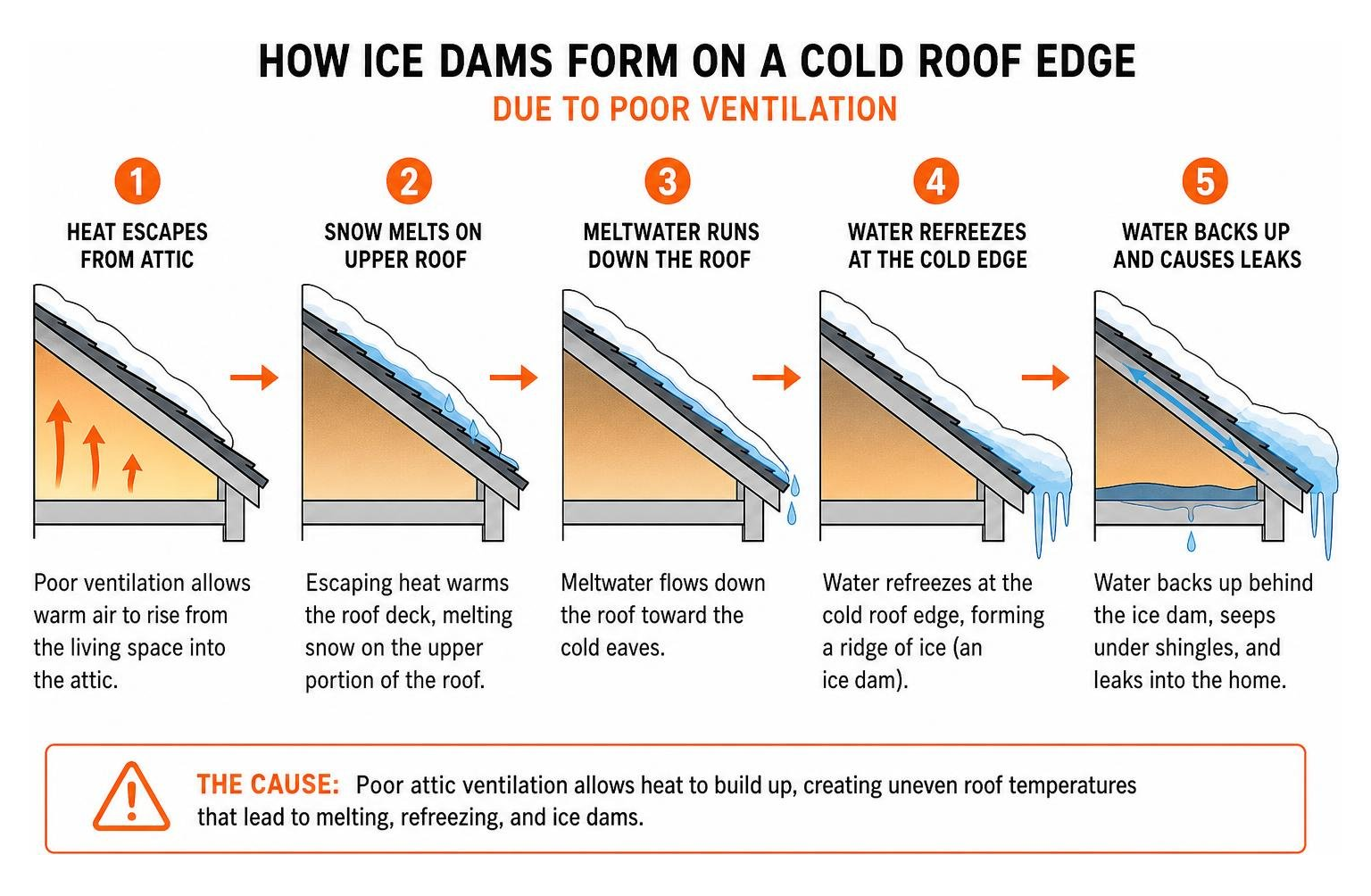
Over 90 percent of U.S. homes have underperforming or incorrectly installed attic ventilation systems. Good airflow keeps your roof temperature uniform. This prevents the uneven melting that causes ice dams.
Clean gutters are also critical. Clogged gutters trap water, which freezes solid. You can read more about this in this guide on Fall Roof Maintenance: Winter Preparation Checklist 2026 . Keep your gutters clear so meltwater can flow away safely. Learn how we optimize your attic airflow on our Roof Ventilation Attic Airflow in Chicagoland page.
Your DIY Ground-Level Inspection Checklist
You do not need to climb a ladder to check your roof. In fact, we advise staying on the ground. You can perform a safe visual check using a pair of binoculars.
- Scan the roof planes: Look for missing, cracked, or lifting shingles.
- Inspect the roofline: Check for any sagging or dipping.
- Look at the valleys: Ensure there are no piles of wet leaves or pine needles.
- Check the gutters: Look for sagging gutter sections or loose brackets.
- Examine the ground: Look for loose shingles or piles of shingle granules near downspouts.
- Check tree branches: Ensure no branches are within 6 to 10 feet of your shingles.
For more cold-weather checklist tips, you can review this helpful guide on Winter Roof Inspection CT: Cold-Weather Checklist Tips! . If you spot any red flags from the ground, call us to take a closer look.
Professional Assessments and Advanced Technology
Some roof damage is invisible from the ground. A professional inspection goes much deeper. We use advanced tools to find hidden issues safely.
Drone technology allows us to capture high-resolution photos of steep or slippery roofs. We do not have to walk on fragile, cold shingles. Thermal imaging cameras help us spot wet insulation and heat leaks. This ensures a thorough check without risking anyone’s safety. For more details on why fall timing is so critical, read about Pre-Winter Roof Inspections: Why Timing Matters – Mario Roof Inspection Service .
What to Expect During a Professional Roof Inspection Before Winter
A professional inspection covers both the outside and inside of your roof system.
First, we check the attic space. We look for rusted nails, mold, and compressed insulation. Rusted nails indicate high humidity and poor ventilation.
Next, we inspect the roof surface, flashing, and ventilation vents. We ensure your soffit vents are clear of insulation. We only use high-quality materials, including Owens Corning Roofing components, to ensure your roof is ready for winter.
Frequently Asked Questions About Pre-Winter Roof Care
When is the best time to schedule a pre-winter roof inspection in Chicago?
The best time is early autumn. Schedule your inspection between September and early November. This timing ensures we can make repairs before freezing temperatures arrive. Roofing sealants need temperatures above 40 degrees Fahrenheit to cure and bond correctly.
How do ice dams form and can a fall inspection prevent them?
Ice dams form when attic heat melts snow on the upper roof. The water refreezes at the cold gutters. A fall inspection prevents this by checking your insulation depth and attic ventilation. We ensure your attic stays cold, preventing the snow from melting unevenly.
Can you perform roof repairs or replacements during a Chicago winter?
We can perform emergency repairs in winter. However, replacing an entire asphalt shingle roof in freezing weather is difficult. Cold temperatures make shingles brittle and prevent adhesives from sealing. If your roof is failing, it is best to schedule a Roof Replacement in the fall.
Conclusion
Do not wait for the first winter storm to find a leak. A professional roof inspection before winter protects your home, lowers your energy bills, and gives you peace of mind.
At HomeBuild Windows, Doors & Siding, we do things differently. Founded by Steve Mlynek in 2004, every single project is owner-sold, owner-supervised, and owner-approved. We never use subcontractors or middleman managers.
We proudly serve homeowners across Chicago and the Northwest and West suburbs, including Schaumburg, Hoffman Estates, and Villa Park. We hold a 4.9-star Google rating across more than 180 reviews. We are fully licensed, insured, and honored to win the Angi Super Service Award 2025 and Nextdoor Neighborhood Faves 2025.
Contact us today to schedule your professional inspection or get an honest Roof Repair estimate before winter arrives!